
Reviewed · WORKSHOPS
Traditional Japanese Knife Sharpening Class in Kyoto
A knife-sharpening class may sound like a niche Kyoto activity, but it gives you something most sightseeing stops cannot: a practical skill tied to everyday Japanese cooking. In about two hours, you study steel and sharpening theory, then work your own blade across whetstones of different grits.
I like the hands-on format, since you do not simply watch a craftsman work. I also like the small maximum of six people, which gives the instructor room to correct your technique. Clement, one of the named instructors, is praised for explaining clearly while chatting with the group.
The main drawback is that the class requires patience and concentration. If you want a fast souvenir or a polished cooking demonstration, this may feel slow. The listed itinerary also names Kamo Onsen, while the meeting point is MUSASHI JAPAN Kyoto Sanjo, so check your booking details carefully before setting out.
Key points to know before booking
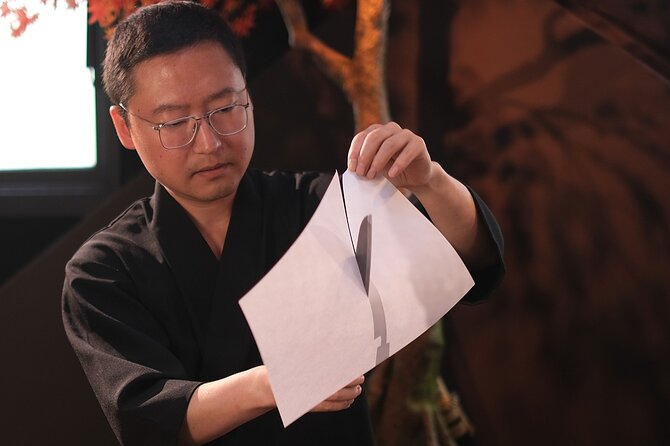
- You sharpen a knife yourself, rather than watching a demonstration only.
- Several whetstone grits introduce you to the stages of traditional sharpening.
- Clement may lead the session, offering instruction and conversation as you work.
- The group is limited to six people, a useful size for close guidance.
- Your sharpened knife goes home with you, giving the class a practical souvenir.
- The two-hour class costs $97.55 per person, with free cancellation up to 24 hours before the start time.
Why a Kyoto knife class is worth two hours
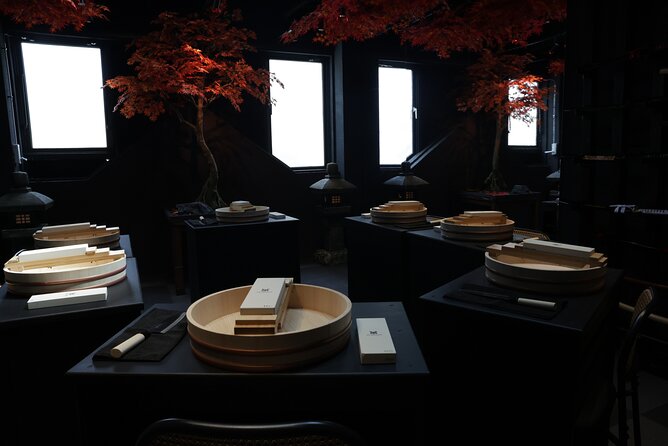
Kyoto offers no shortage of temples, gardens, and old streets. This class gives you a different way to connect with Japan: through an object you can use long after your trip ends.
Japanese kitchen knives are valued for their cutting ability and careful construction. Yet a good knife is only part of the story. Keeping an edge sharp requires the right angle, pressure, stone, and patience. The class puts those ideas into your hands instead of leaving them as shop talk.
I especially like that the lesson begins with context. You learn about the history of knives, different kinds of steel, and the basic theory behind sharpening before handling the whetstones. That order matters. Without it, the process can feel like rubbing metal on a rock and hoping for the best.
The class is aimed at cooking enthusiasts, craftspeople, and anyone who respects well-made tools. You do not need to be a professional cook to appreciate it. The attraction is the mix of useful instruction and a physical souvenir that carries some of your own effort.
More craft workshops in Kyoto:
- Kyoto: 45-Minute Tea Ceremony Lesson Experience
★ 4.3 · 2,378 reviews - Ramen Cooking Class at Ramen Factory in Kyoto
★ 5.0 · 1,937 reviews - Kyoto : Chopsticks Making Workshop in Gion with Engraving Option
★ 5.0 · 958 reviews
Meeting at MUSASHI JAPAN Kyoto Sanjo
The meeting point is MUSASHI JAPAN Kyoto Sanjo, a knife shop in the BiGBOSS building at Ishibashicho, Nakagyo Ward, Kyoto, postal code 604-8036. The location is near public transportation, making it practical to fit into a day of exploring central Kyoto.
You return to the same meeting point when the activity ends. That makes the class easy to pair with nearby plans, since you do not need to arrange a separate ride back from an outlying workshop.
Allow yourself enough time to find the shop. A specialist store inside a larger building can take a little more effort to locate than a famous temple entrance. Your mobile ticket should be ready, and your confirmation is issued at booking.
One detail deserves attention. The itinerary information identifies Kamo Onsen as the stop, but the stated start and end point is the MUSASHI JAPAN Kyoto Sanjo knife shop. The provided description centers on knife sharpening, not on an onsen visit. I would rely on the confirmed meeting instructions you receive after booking and contact the operator if the location remains unclear.
The opening lesson: knives, steel, and sharpening theory
The first part of the class gives you the foundation for the practical work. You learn about Japanese knife history and the types of steel used in blades. The information supplied does not specify every steel variety covered, so expect an introduction rather than a technical metallurgy course.
You also study sharpening theory. This likely means understanding why the angle and movement of the blade matter, how a stone removes metal, and why different grits are used at different stages. Those principles are more valuable than a single finished edge because they help you make sense of the process after you return home.
This section is particularly useful if you have never used a whetstone. Beginners often press too hard or move without a consistent angle. Expert supervision gives you a chance to correct those habits before they become fixed.
The class is not described as a broad cooking lesson. You are learning to maintain a tool, not preparing a meal or touring a restaurant kitchen. That distinction helps you decide if the activity matches your interests.
Working through different whetstone grits
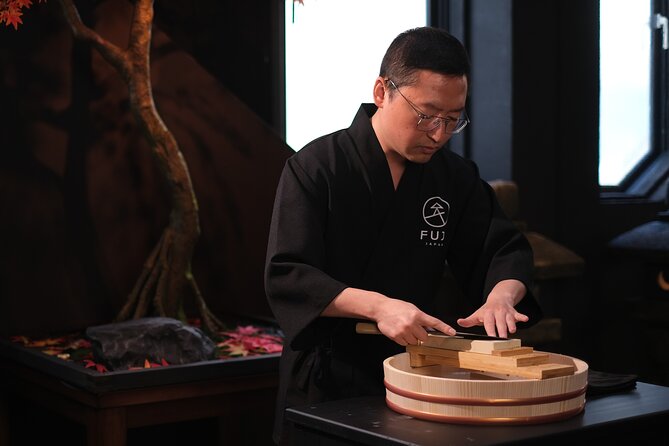
The main event is sharpening your own blade with whetstones of various grits. Each stone has a different role in shaping or refining the edge, so the process is not a single quick pass.
For you, the important part is learning the feel of the work. The stone, water, blade, and pressure all interact. You need to pay attention to the movement rather than rushing to the final result. That makes the class active, but it also means you should expect a little repetition.
The instructor watches your technique and guides you as you work. This is where the six-person limit matters. A large group would make individual correction harder, while a small group allows more direct attention around the stones.
Clement is specifically praised for being able to talk with the group while teaching. That suggests the class is not an austere, silent workshop. You can ask questions and stay engaged as the lesson develops. The supplied feedback describes the session as informative and singles out Clement’s leadership, so the quality of instruction is one of the strongest reasons to book.
The exact knife model is not specified in the available details. One participant took home santoku knives, so you may receive or work on a santoku-style blade, but you should not assume every booking uses the same knife. If the knife type matters to you, ask before booking.
A few more Kyoto tours worth putting on the shortlist
- PERFECT KYOTO 1-Day Bus Tour
★ 5.0 · 13,518 reviews - Kyoto: Fushimi Inari, Kinkakuji, Bamboo Grove 1 Day Bus Tour
★ 4.8 · 4,316 reviews - Kyoto: Tea Ceremony in a Traditional Tea House in Kiyomizu
★ 4.9 · 3,519 reviews - Kyoto Geisha Walking Tour: Gion District & Hidden Gems
★ 4.7 · 3,273 reviews
Taking home a knife you helped sharpen
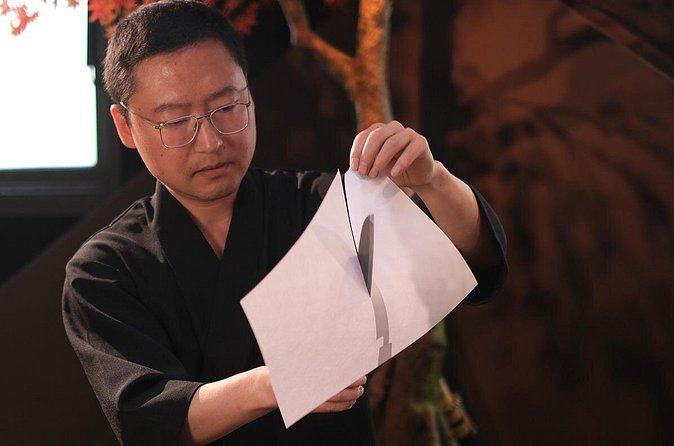
The final reward is simple and useful: you take home the knife you sharpened. That gives the souvenir more meaning than a standard shop purchase. You are not just buying a Japanese blade. You are bringing home a tool connected to a skill you practiced in Kyoto.
The knife also serves as a reminder of the lesson. Each time you use it, you may remember the careful movements, the different stones, and the need to keep a steady angle. That lasting connection is the strongest argument for the price.
The available information does not state the knife’s exact size, brand, steel, or whether it comes with special packaging. Do not book on the assumption that you can select from a full range of models unless the operator confirms it.
If you are flying home, check your airline and local transport rules before carrying the knife. The class details confirm that you can take it home, but they do not specify packing or baggage arrangements.
Is $97.55 a fair price?
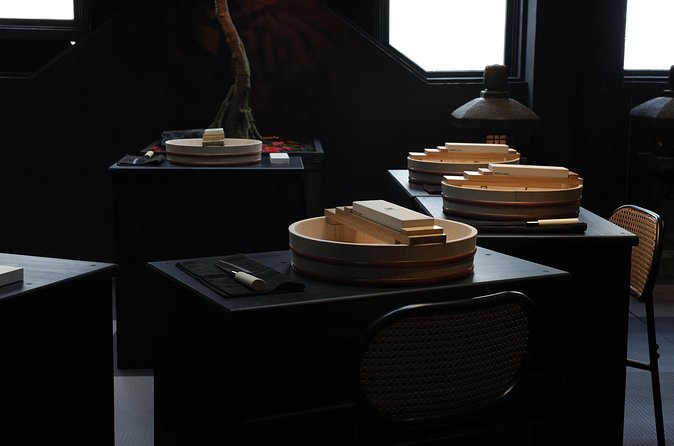
At $97.55 per person, this is not a cheap two-hour activity. You are paying more than you would for a basic knife bought from a shop, and the class is not designed as a bargain shopping stop.
The value comes from three parts: instruction, supervised practice, and the knife itself. A shop purchase gives you the object. This class adds an explanation of knife materials and sharpening theory, plus time working with whetstones under guidance.
I would consider the price reasonable if you already cook, collect tools, or care about learning a craft. The take-home knife helps justify the cost, particularly because you sharpen it yourself. It is less convincing for someone who only wants a casual souvenir and has no interest in maintaining knives.
The small group also supports the price. A maximum of six means the fee includes a more personal learning setting than a large demonstration. The value depends on how much attention you want from the instructor and how seriously you take the practical side.
Who will enjoy this class most?
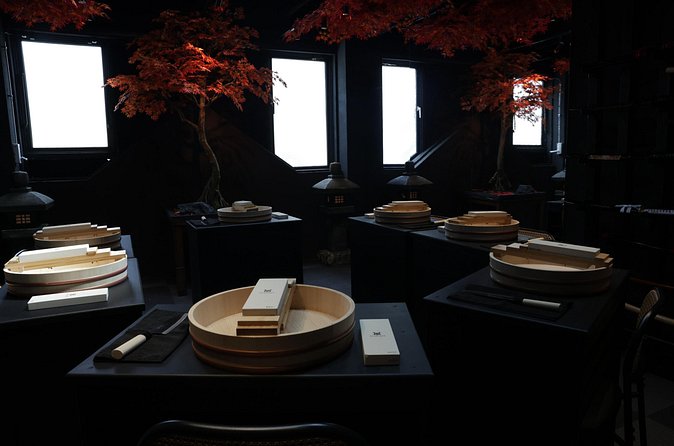
This class suits you if you enjoy activities that ask for focus rather than quick entertainment. You will get the most from it if you like cooking, handmade tools, Japanese craftsmanship, or practical skills that continue after vacation.
It is also a good choice for someone who wants a less predictable Kyoto memory. Temples and gardens are essential, but a sharpening lesson gives you a close look at a working tradition. You leave with an object that has a clear use, not only a place in your suitcase.
Cooks may find the activity especially useful because a sharp knife changes how food preparation feels. Craftspeople may appreciate the control and repetition involved. Even a beginner can take part, since the class is built around explanation and supervised practice.
You may want to skip it if you dislike hands-on work, have limited patience, or want a relaxed activity that requires no concentration. Two hours at a whetstone is not passive. The class asks you to listen, practice, and accept correction.
Timing and group size in your Kyoto schedule
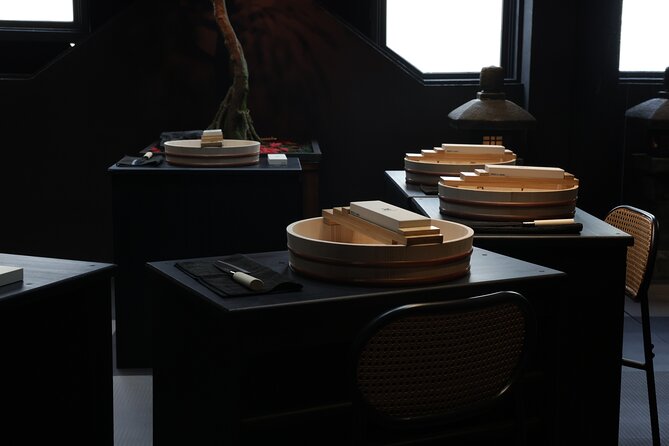
The class lasts approximately two hours. That is short enough to fit between other central Kyoto plans, but you should not treat it as a quick 30-minute stop. Add time for reaching the shop, finding the meeting point, and getting settled.
The group maximum is six people. This small size is one of the clearest practical advantages. You have a better chance of receiving individual help, and the class should feel less crowded than a standard workshop.
The activity ends where it begins, at the Kyoto Sanjo meeting point. That makes onward planning easier. You can continue through central Kyoto after class without arranging a transfer from a distant location.
The activity requires good weather. If poor weather forces cancellation, you are offered another date or a full refund. Free cancellation is available if you cancel at least 24 hours before the start time. Changes or cancellations inside that window are not accepted, and the amount paid is not refunded.
What makes the instruction important
Whetstone sharpening looks straightforward until you try to maintain a consistent angle and pressure. The class gives you a safer way to learn than experimenting alone with a valuable blade.
The theory section also protects you from treating every knife and stone in the same way. Different steels can respond differently, and different grits serve different purposes. The supplied details do not promise advanced instruction in every possible blade type, but they do confirm coverage of steel types and sharpening principles.
Clement’s contribution matters here. The only named instructor feedback identifies him as a strong leader who can explain the subject while keeping conversation going. That combination is useful in a small class, where a clear explanation can make the work less intimidating.
Your goal should not be perfection in two hours. Think of the session as a solid introduction that gives you the basic feel and vocabulary to keep learning. The finished knife is a welcome result, but the lasting benefit is knowing what to do the next time an edge begins to dull.
The practical souvenir factor
Many Japanese souvenirs are decorative or fragile. A sharpened kitchen knife is different because you can use it at home. It also gives you a reason to keep practicing the care techniques introduced in class.
The knife may appeal to people who want a gift with a story. Instead of saying you bought a blade in Kyoto, you can explain that you learned how to sharpen it with traditional whetstones. That personal connection gives the object more weight.
Still, confirm the exact knife arrangement if you have strong preferences. The available details do not identify the knife’s dimensions, handle style, steel, or brand. The mention of santoku knives provides a useful clue, not a guarantee for every session.
The class also may not be ideal if you already own advanced sharpening equipment and have years of experience. You could find the introductory theory too basic. Its best audience is someone keen to learn or improve, not necessarily a professional sharpener seeking specialist instruction.
Should you book the Kyoto knife-sharpening class?
Book it if you want a small, practical Kyoto activity with a real take-home result. The strongest reasons are the six-person limit, the chance to work on your own blade, the introduction to steel and whetstone technique, and the possibility of learning with Clement.
At $97.55, it makes sense when you value instruction as much as the knife. It is a weaker choice if you only want to shop for cutlery or if your schedule cannot spare two focused hours.
Before paying, verify the meeting details because Kamo Onsen appears in the itinerary information while MUSASHI JAPAN Kyoto Sanjo is the stated start and end point. If that point is confirmed, you are getting a compact, hands-on lesson near public transportation, with a useful souvenir and a skill you can continue using at home.
FAQ
How long does the Japanese knife sharpening class last?
The class lasts approximately two hours.
Where does the activity start and finish?
It starts and ends at MUSASHI JAPAN Kyoto Sanjo Knife Shop in the BiGBOSS building, Ishibashicho, Nakagyo Ward, Kyoto, postal code 604-8036.
How many people can join the class?
The activity has a maximum of six participants.
What will I learn during the session?
You will learn about knife history, steel types, sharpening theory, and the use of whetstones with different grits. You will then sharpen your own blade under guidance.
Can I take the sharpened knife home?
Yes. The activity allows you to take home the knife you sharpened during the class.
Can I cancel for a full refund?
Yes, if you cancel at least 24 hours before the experience start time. Cancellations or changes made less than 24 hours in advance are not refunded or accepted. If poor weather causes cancellation, you are offered another date or a full refund.
Newest Kyoto experiences on the site
- Whisk Your Own Matcha: A Zen Matcha Experience at Temple★ 3.6 · 7 reviews
- Treasures of Kyoto: Gion & historical Walking Tour★ 5.0 · 6 reviews
- Kyoto tea town for matcha lovers★ 5.0 · 16 reviews
- Uji: Private immersion into Kyoto’s tea and reglious culture★ 5.0 · 17 reviews
- Kyoto Matcha Green Tea Tour★ 4.5 · 23 reviews
- Uji and Wazuka Matcha Farm Half Day Private Guided Tour★ 5.0 · 21 reviews
- Utilising upcycled Matcha! Creating matcha incense (Uji, Kyoto)★ 5.0 · 6 reviews
- Sacred Temple Yoga Experience in Japan★ 5.0 · 3 reviews
Workshops, compared.

Ramen Cooking Class at Ramen Factory in Kyoto
Read our review →
Chopsticks Making Workshop in Gion with Engraving Option
Read our review →
Ramen Cooking Class at a Ramen Factory with Souvenir
Read our review →
Ninja 1-hour Hands-on Lesson by Japanese master in Kyoto -Entry
Read our review →
The Original Small-Group Sushi Making Class in Kyoto
Read our review →
Japanese Washoku Bento Small Group Cooking Class
Read our review →Browse the lists this tour appears in