
Reviewed · CONCERTS
Traditional Concert in Public bath near Kyoto Station
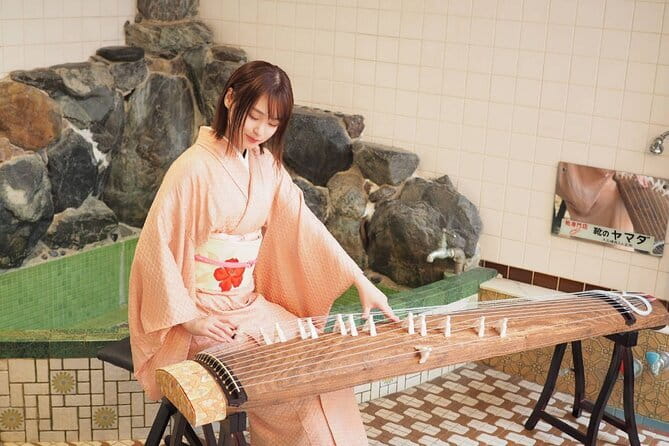
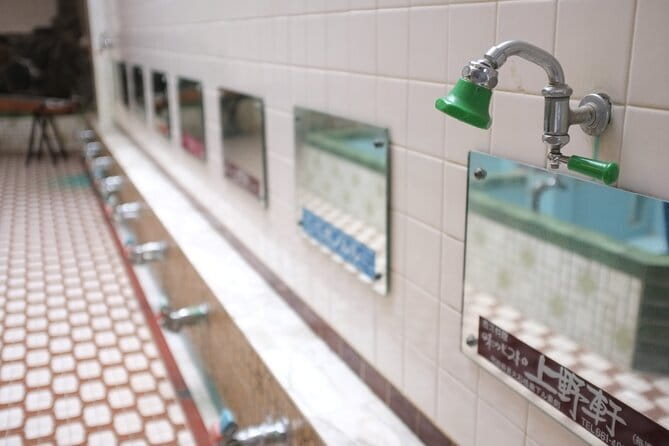
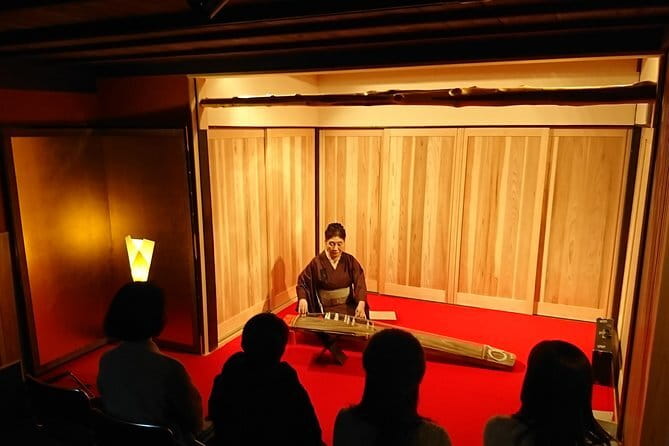
The unusual setting is the star here: Kujo-yu, a former Japanese sento near Kyoto Station, now hosts a one-hour concert of koto and shamisen music. High ceilings and tiled walls give the instruments a clear, ringing sound, while the old bathhouse design adds a sense of place you cannot get in a standard concert hall.
I like the intimate format and the changing program, which can move from classical Japanese pieces to modern arrangements and original compositions. I also like the price, about $32.52, for a focused cultural experience that fits neatly into an evening in Kyoto. The main consideration is that coffee, tea, and transportation are not included, so you will need to arrange your own way there and plan around the concert time.
Key points at a glance
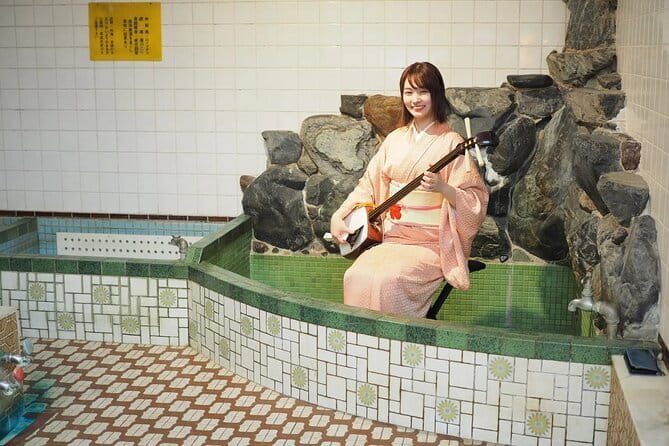
- A former public bathhouse: Kujo-yu has been renovated into a cultural space while keeping its distinctive sento character.
- Koto and shamisen music: You hear two central Japanese instruments in a setting that suits their bright, delicate tones.
- Acoustics shaped by tile: The high ceilings and tiled walls help carry the sound across the room.
- A changing repertoire: The program varies by season and performer, with classical, contemporary, and original pieces.
- A compact one-hour outing: The concert is easy to fit around sightseeing near Kyoto Station.
- About $32.52 per person: The price is reasonable if you want a cultural activity rather than a long meal or large stage show.
Why Kujo-yu makes the concert special
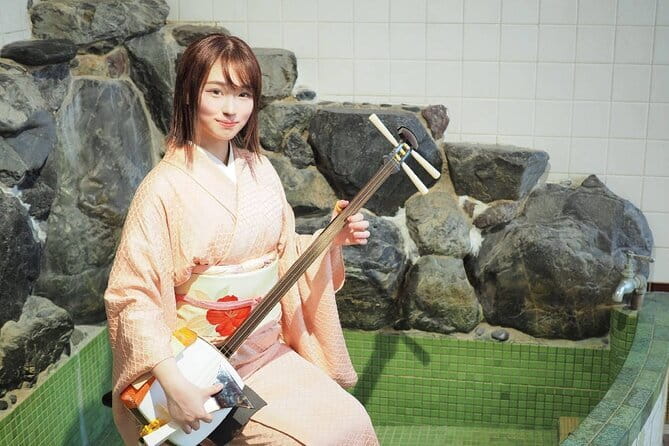
Many traditional music performances take place in formal halls, temples, or cultural centers. This one uses a former public bathhouse. That single choice changes the mood before the music even begins.
Kujo-yu was once a local sento, a neighborhood bathhouse where people came to wash and spend time in a familiar community setting. It has now been renovated as a shared cultural and work space, but the original bathhouse character remains important to the experience. You are not simply entering a room with Japanese decorations added later. The building itself gives the concert its identity.
Look around when you arrive. The high ceiling and tiled surfaces reflect the sound in a way that makes sense for the building’s original purpose. Those same features now help the plucked strings of the koto and shamisen travel through the room. You may notice how a single note lingers briefly, or how a quick run of notes spreads across the space.
That setting also keeps the event from feeling overly formal. The concert is intimate, compact, and tied to a real Kyoto neighborhood space. If you want an activity that feels connected to local life rather than another large attraction, this is a strong choice.
More traditional music evenings in Kyoto:
- Kyoto: Traditional Concert at Townhouse or Bathhouse
★ 4.9 · 224 reviews - Concerts Played with Traditional Instruments in Kyoto
★ 5.0 · 50 reviews - Kyoto: Japanese Koto & Shamisen Concert and Koto Class
★ 4.9 · 31 reviews
Hearing the koto and shamisen in their own setting
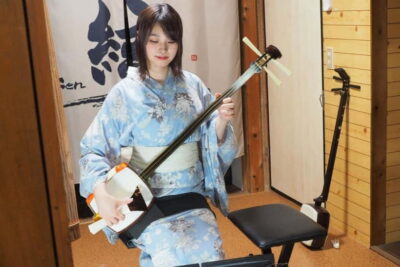
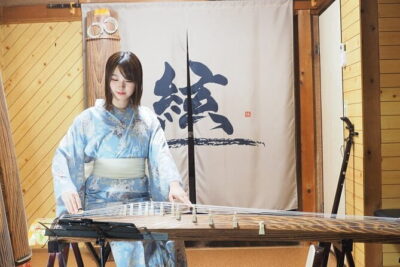
The concert centers on the koto and shamisen, two instruments with very different sounds.
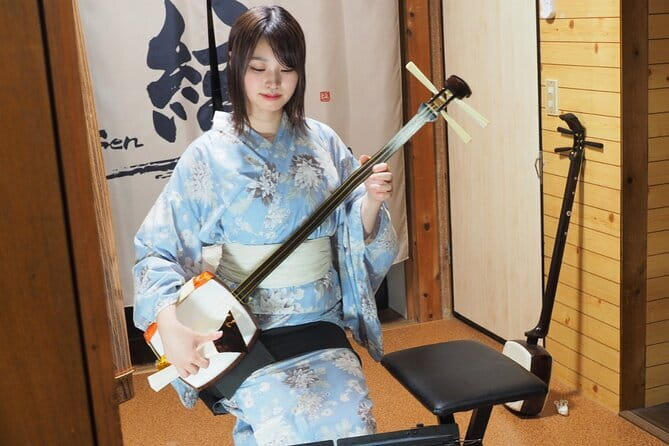
The koto is a long stringed instrument with a clear, finely shaped tone. Its music can sound delicate and spacious, but it can also become quick and highly detailed. The shamisen, played with a plectrum, has a more pointed sound and a distinct rhythmic quality. Hearing both in the same program gives you a useful introduction to the range of traditional Japanese string music.
You do not need a background in Japanese music to follow the performance. The value is in listening to the contrast between the instruments and noticing how the room affects the sound. The bathhouse walls are not neutral. They give the music a certain brightness and help the notes reach you without the heavy atmosphere of a large theater.
The program can include classical Japanese masterpieces, contemporary arrangements, and original compositions. That variety matters. A concert made only of older works might feel formal to someone new to the style. A program that includes newer arrangements can make the instruments feel more immediate and show how traditional sounds continue to be used.
Since the repertoire changes according to the season and the performers, you should not expect the exact same concert on every date. That is useful if you return to Kyoto and want to attend again. It also means the program details may not tell you everything in advance, so book this for the setting and the music rather than for one specific famous piece.
The one-hour format fits a Kyoto sightseeing day
The concert lasts about one hour. That is long enough to hear a substantial program, but short enough to add without giving up half a day.
You could place it before or after sightseeing around Kyoto Station, depending on the start time. The location is near public transportation, and private transportation is not included. You will need to make your own way to Kujo-yu, but the short duration keeps the planning simple once you arrive.
A one-hour event also works well for visitors who want a cultural activity without committing to an entire evening. You might pair it with dinner nearby, or use it as a quiet break from temples, shopping, and station crowds. The concert itself gives you a change of pace: you sit, listen, and let the room do some of the work.
The compact schedule is especially useful if you are building a Kyoto itinerary with several fixed bookings. It is less demanding than a full performance at a major theater, and it does not require you to understand a long presentation or take part in a group activity.
Still, do not treat the one-hour length as a reason to arrive at the last second. You need time to reach the former bathhouse and get settled. Your mobile ticket should be ready on your phone, and you should check the exact start time when booking.
What to expect at the Kujo-yu stop
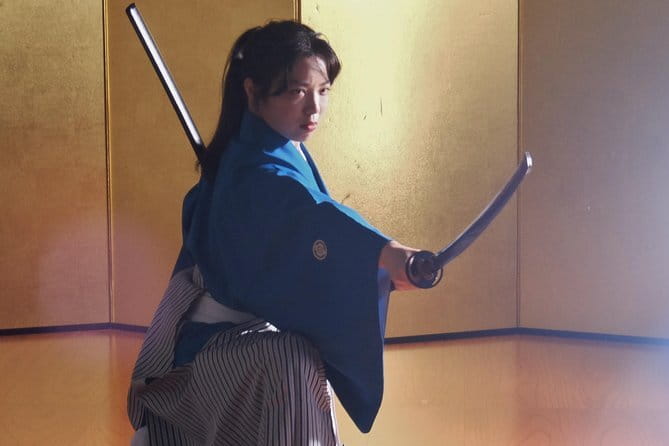
The experience has one main stop: Coworkation Space Kujo-yu, the renovated sento near Kyoto Station. Admission to the concert is included in your booking.
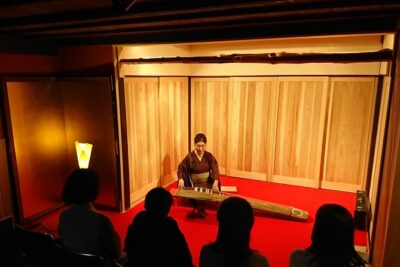
The space is the attraction as much as the performance. You can expect a former public bathhouse with tiled surfaces, high ceilings, and a design shaped by its earlier use. The building has been cared for and reworked rather than erased, giving the concert a strong visual setting before the first note is played.
The music begins in that distinctive room, with the koto and shamisen as the main focus. The sound is intended to blend with the space, so this is not simply a performer placed in an ordinary hall. The room’s shape and materials are part of what you are paying for.
The concert can move across several styles. Classical works provide a link to older Japanese musical traditions. Contemporary arrangements make the instruments easier to compare with sounds you may already know. Original compositions add another layer, showing what performers can create with these instruments today.
Because the performers and season affect the repertoire, each date may have its own character. That gives the event some freshness, but it also creates a small uncertainty. If you need a very specific piece or style, this may not be the right booking unless the program for your date is clearly stated.
A few more Kyoto tours worth putting on the shortlist
- PERFECT KYOTO 1-Day Bus Tour
★ 5.0 · 13,518 reviews - Kyoto: Fushimi Inari, Kinkakuji, Bamboo Grove 1 Day Bus Tour
★ 4.8 · 4,316 reviews - Kyoto: Tea Ceremony in a Traditional Tea House in Kiyomizu
★ 4.9 · 3,519 reviews - Kyoto Geisha Walking Tour: Gion District & Hidden Gems
★ 4.7 · 3,273 reviews
What the $32.52 price gets you
At about $32.52 per person, this is not the cheapest short activity in Kyoto. It is also not an unreasonable price for a ticketed live performance in a distinctive historic space.
The value comes from three things working together: the music, the building, and the time required. You are paying for a live concert, not a recorded demonstration. You are also visiting a former sento that has been given a new cultural purpose. Finally, the one-hour format means you do not need to give up a full afternoon.
The ticket price includes admission to the concert. Coffee and tea are not included, and private transportation is not included. Those exclusions are easy to understand, since the main product is the performance itself, but they matter if you are expecting a drink or a door-to-door transfer.
I would compare this price with the cost of another evening activity. If you prefer a short, focused cultural event, the price is fair. If you are mainly looking for a long performance or extensive instruction about the instruments, you may want to check the available program details before booking.
The experience also offers good value for repeat visitors to Kyoto. Famous temples and major attractions can begin to feel familiar after several trips. A concert in a renovated neighborhood bathhouse gives you a different way to spend an hour, especially if you have already seen the city’s best-known sights.
Who will enjoy this concert most
I would recommend this experience to anyone curious about Japanese music, architecture, or local cultural spaces. You do not need to be an expert in the koto or shamisen. The setting gives you an easy entry point, and the program’s mix of older and newer works keeps the concert from feeling like a specialist event.
It also suits couples, solo visitors, and small groups who want something quiet and memorable. The performance is short enough for a flexible schedule, and the venue provides a strong visual reason to attend even if traditional music is not normally at the top of your list.
Families may find the one-hour length manageable, although the provided information does not specify a minimum age or special children’s format. If you are booking with young children, consider whether they can sit quietly through a concert.
This is less suitable if you want a hands-on class. You are attending a performance, not learning to play the instruments. It may also disappoint someone looking for a large-scale show with extensive staging, lighting, or narration. The appeal is the close setting, the instruments, and the unusual room.
Practical planning before you book
Your mobile ticket is included, and booking confirmation is provided at the time of purchase. Keep the ticket easy to access on your phone so you do not have to search through email at the door.
The venue is near public transportation, but private transportation is not included. Plan your route before the day of the concert, especially if you are coming from another part of Kyoto. Since the activity is near Kyoto Station, it can be a sensible addition to a station-area itinerary, but you should still allow time to find the exact building.
The experience is listed as suitable for most people. No special physical requirements are provided, so you should not assume details about seating, step-free access, or other accessibility features. If you need a particular arrangement, confirm it with the provider, Gen, before booking.
You receive a full refund if you cancel at least 24 hours before the local start time. Cancellations or changes made less than 24 hours before the start are not accepted for a refund. That rule is straightforward, but it means you should wait until your Kyoto schedule is reasonably settled.
What makes the experience memorable
The strongest feature is not simply that the music is Japanese. Kyoto has many ways to hear or see traditional culture. The appeal here is the meeting of music and old bathhouse design.
The tiled walls recall the building’s everyday past, while the concert gives the space a new purpose. That contrast makes the hour easier to remember than a performance in a room designed for any type of event. You can hear how the architecture supports the instruments while also thinking about the people who once used the bathhouse as part of ordinary local life.
The changing program adds another useful touch. Classical masterpieces connect you with established musical traditions, while contemporary arrangements and original compositions prevent the performance from becoming a museum piece. You get a sense of continuity, with older instruments being used in both familiar and newer ways.
The experience also avoids the pressure of a long cultural program. You are not asked to spend hours decoding customs or following a packed schedule. You arrive, take in the room, listen to the performance, and leave with a sharper sense of how sound and place can work together.
Should you book the Kujo-yu concert?
Book it if you want a short, distinctive cultural experience near Kyoto Station and like the idea of hearing koto and shamisen in a renovated sento. The setting is unusual, the music covers both traditional and newer material, and the one-hour format is easy to fit into a busy visit.
Think twice if you need a specific published repertoire, a hands-on lesson, included refreshments, or private transportation. Those are not part of the experience.
For about $32.52, I see this as a good choice for a visitor who values atmosphere and authenticity over scale. The former bathhouse is the reason to go, and the music gives that setting a thoughtful new life.
FAQ
Where does the concert take place?
The concert takes place at Coworkation Space Kujo-yu, a renovated former Japanese sento near Kyoto Station in Kyoto.
How long does the experience last?
The concert lasts approximately one hour.
Which instruments are featured?
The performance features traditional Japanese instruments, including the koto and shamisen.
What type of music is performed?
The repertoire can include classical Japanese masterpieces, contemporary arrangements, and original compositions.
Is the program the same for every concert?
No. The repertoire changes according to the season and the performers.
How much does the concert cost?
The listed price is about $32.52 per person.
What does the ticket include?
The ticket includes admission to the concert.
Are coffee and tea included?
No. Coffee and tea are not included.
Is transportation included?
No. Private transportation is not included, although the venue is near public transportation.
Can I cancel for a full refund?
Yes. You can receive a full refund if you cancel at least 24 hours before the experience’s local start time. Cancellations or changes made less than 24 hours before the start are not accepted for a refund.
Newest Kyoto experiences on the site
- Treasures of Kyoto: Gion & historical Walking Tour★ 5.0 · 6 reviews
- Whisk Your Own Matcha: A Zen Matcha Experience at Temple★ 3.6 · 7 reviews
- Kyoto tea town for matcha lovers★ 5.0 · 16 reviews
- Uji: Private immersion into Kyoto’s tea and reglious culture★ 5.0 · 17 reviews
- Kyoto Matcha Green Tea Tour★ 4.5 · 23 reviews
- Uji and Wazuka Matcha Farm Half Day Private Guided Tour★ 5.0 · 21 reviews
- Utilising upcycled Matcha! Creating matcha incense (Uji, Kyoto)★ 5.0 · 6 reviews
- Sacred Temple Yoga Experience in Japan★ 5.0 · 3 reviews
Concerts, compared.
Concerts Played with Traditional Instruments in Kyoto
Read our review →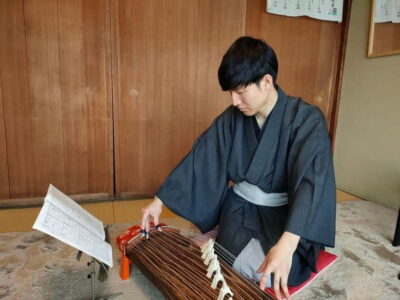
Browse the lists this tour appears in