
Reviewed · CONCERTS
Kyoto: Traditional Concert at Townhouse or Bathhouse
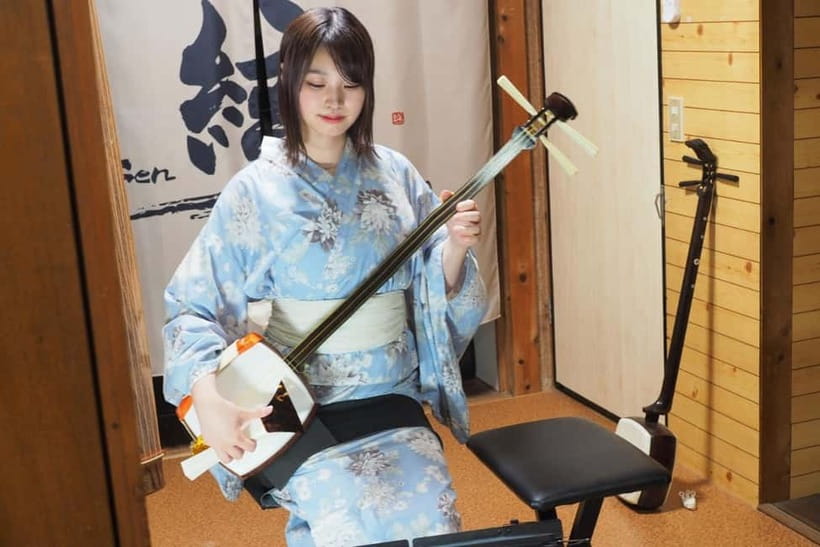
Kyoto’s temples tell you about Japan’s past. This small concert lets you hear it. A professional musician performs koto and shamisen just a few feet away, while a bilingual host explains the instruments, notation, and meaning behind the music. At the townhouse, the room can hold as few as 11 people, so the sound feels personal rather than packaged.
I like two things especially: the close-up musicianship, where you can watch every pluck and hand movement, and the plain-English explanations that make unfamiliar music easier to follow. The optional koto workshop adds real value, too. The main consideration is that the two venues offer very different experiences, and the bathhouse concerts run only irregularly on Mondays.
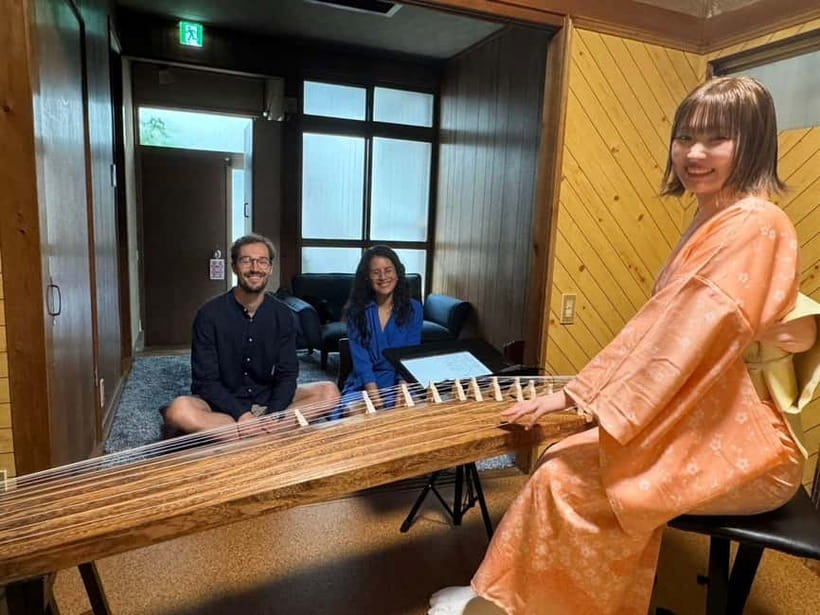
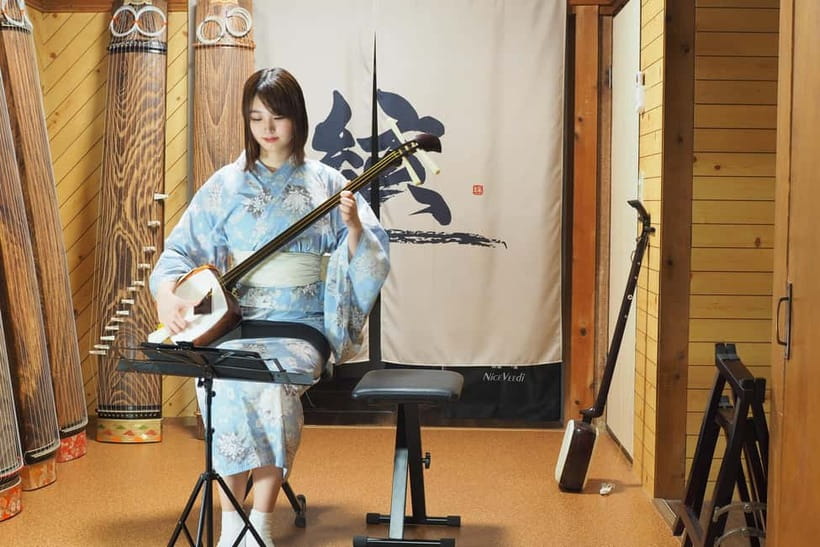
- A tiny townhouse setting: Solo koto and shamisen performances take place in a traditional home with a warm, living-room feel.
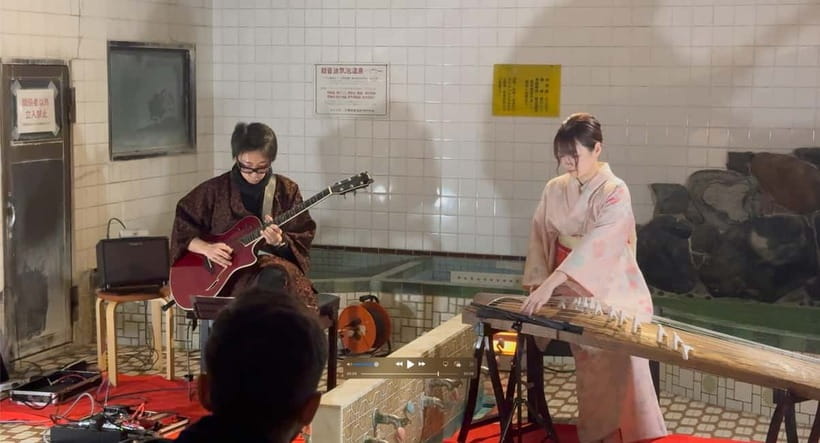
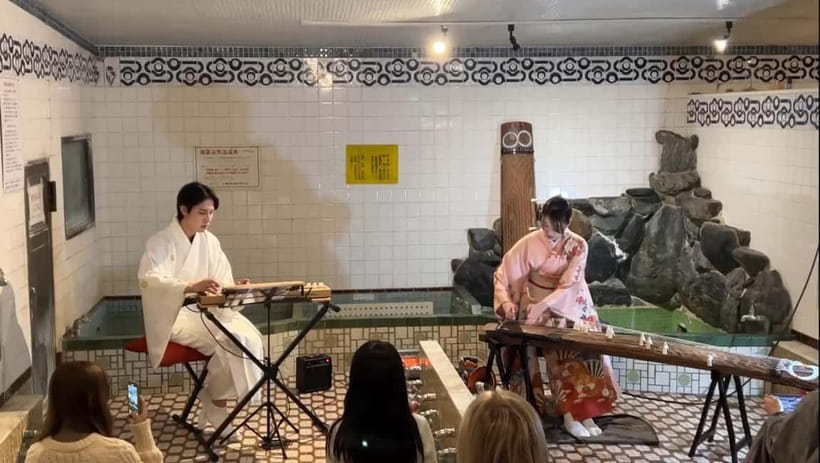
- A dramatic bathhouse hall: Tiled walls give duet performances a strong natural echo.
- Four or five musical pieces: Programs mix classical works, contemporary arrangements, songs, and original compositions.
- A hands-on koto lesson: Townhouse bookings can include a 35 to 40 minute beginner workshop.
- Direct contact with the artists: You can ask questions, take photos, and hear about the instruments from the performers and hosts.
- Easy Kyoto pairing: The concert fits neatly with Nijō Castle, Arashiyama, Kinkaku-ji, or Nishiki Market.
A Small Concert With a Very Kyoto Feeling
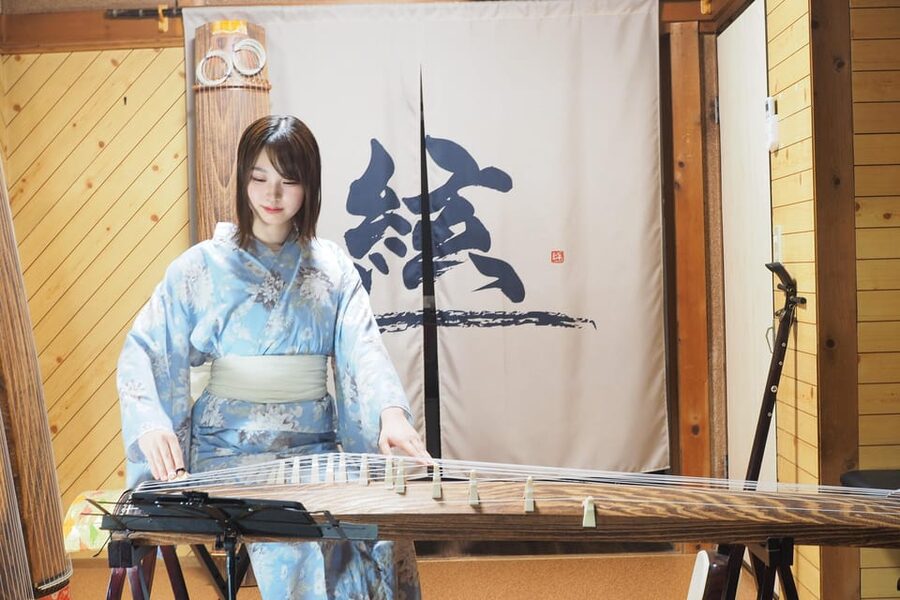
This is not a grand theater performance. It is closer to being invited into a Kyoto home for an hour of music and conversation. The townhouse holds about 11 people, though some sessions are smaller. A group of seven, nine, or even only a few people can make the evening feel almost private.
The setting matters. You sit on cushions or chairs in a traditional Japanese house, close enough to see the musician’s fingers work across the strings. The room is simple and intimate, and that helps you notice details that can disappear in a large hall: the bright snap of a shamisen pick, the long shimmer of a koto string, and the singer’s phrasing.
The host introduces the instruments before the performance begins. You learn what the koto and shamisen are made from, how they are held, and how musicians read their unusual forms of notation. The commentary is given in Japanese and English, so you are not left guessing at the structure of the music.
The hosts vary by session. Names that have appeared in the program include Gen, Shoei, Shima, Samuel, and Sofia. The musician also changes. Furan, Kyoko, Aoi, and other professional performers have appeared in different programs. Check the booking details if a particular artist matters to you, since the repertoire and performer are not fixed.
Choosing Between the Townhouse and Bathhouse
The traditional townhouse is the safer choice if you want intimacy, flexibility, and the workshop. It is offered almost every day, with solo programs built around four or five pieces. The musician may perform both koto and shamisen, and some programs include singing.
You will hear a personal selection rather than a standard greatest-hits show. Pieces can range from Japanese classical music to newer works, with examples such as Kajimakura, Chidorino Kyoku, and Kaede no Hana. The exact program changes with the performer and season.
The townhouse has a few practical drawbacks. It can feel snug when the room is near capacity, and the location may take a little patience to find. One useful tip is to save the map pin or use the longitude and latitude if the street address proves confusing. This is the sort of place where you may briefly wonder if you have taken a wrong turn, then discover a quiet home and a welcoming host.
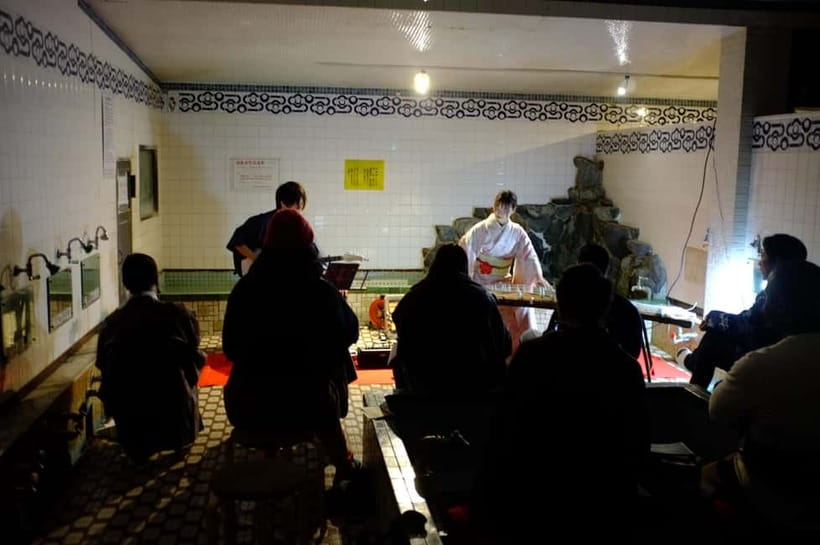
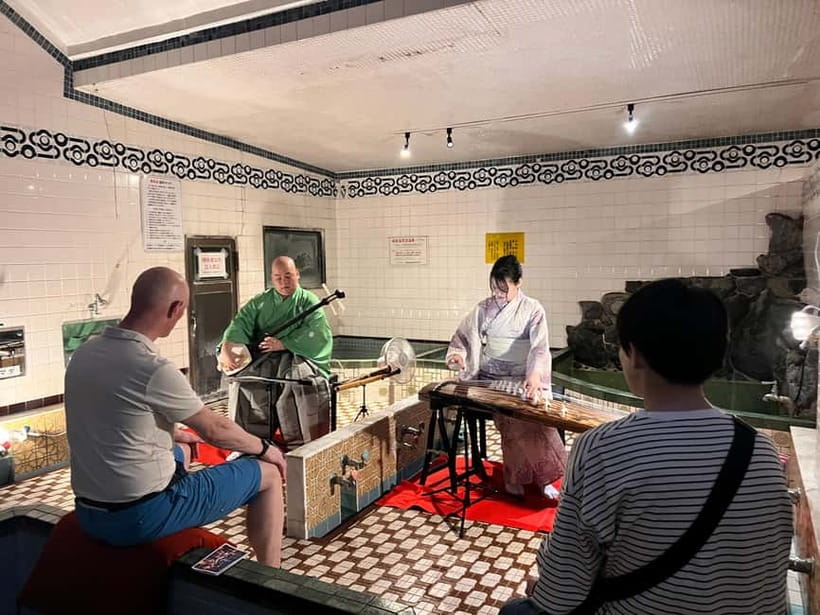
The historic bathhouse hall offers a different kind of evening. It holds up to about 30 people, and its tiled walls create a noticeable reverberation. Instead of a purely solo program, the koto is paired with another instrument. Depending on the date, that partner might be shamisen, shakuhachi, taishōgoto, flute, or guitar.
This venue is the better pick if you care about sound and musical collaboration. A duet has more range and motion, and the hall’s echo gives the performance a larger scale than the townhouse. The trade-off is scheduling. Bathhouse sessions are offered irregularly on Mondays, so you will need to check the calendar rather than assume one is available during your stay.
One important clarification: the bathhouse is a performance hall, not a bathing experience. Your ticket does not include bathing, food, drinks, or use of bathhouse facilities.
More traditional music evenings in Kyoto:
- Concerts Played with Traditional Instruments in Kyoto
★ 5.0 · 50 reviews - Kyoto: Japanese Koto & Shamisen Concert and Koto Class
★ 4.9 · 31 reviews - Traditional Concert in Public bath near Kyoto Station
★ 5.0 · 5 reviews
What Happens During the 45 to 105 Minutes
The shorter concert portion takes about 45 minutes. If you add the hands-on workshop, plan on roughly 80 to 105 minutes, depending on the format and timing. The experience usually follows this rhythm.
Arrival and seating
Allow five to ten minutes to check in and settle down. The townhouse uses cushions or chairs, while the bathhouse has rows of seats. You receive a short explanation of venue etiquette, which is useful if you are unfamiliar with removing shoes, sitting arrangements, or concert manners in a traditional Japanese space.
Meeting points vary by option, so read your confirmation carefully. Transport is not included, and you are responsible for reaching the correct venue.
Instrument introduction
The introduction lasts about 10 to 15 minutes. This is more than a quick name-and-point explanation. You learn about the parts of the koto and shamisen, the picks and bridges, the materials, and the notation musicians use.
This section makes the concert easier to appreciate. Traditional Japanese music may sound unfamiliar at first, but once you understand how the instruments are played, you begin listening for technique. The host can also explain the background of a piece and answer questions in English or Japanese.
A few more Kyoto tours worth putting on the shortlist
- PERFECT KYOTO 1-Day Bus Tour
★ 5.0 · 13,518 reviews - Kyoto: Fushimi Inari, Kinkakuji, Bamboo Grove 1 Day Bus Tour
★ 4.8 · 4,316 reviews - Kyoto: Tea Ceremony in a Traditional Tea House in Kiyomizu
★ 4.9 · 3,519 reviews - Kyoto Geisha Walking Tour: Gion District & Hidden Gems
★ 4.7 · 3,273 reviews
The concert
The performance itself runs about 25 to 30 minutes and includes four or five pieces. The townhouse program may feature solo koto, solo shamisen, or the musician moving between both instruments. Some performers also sing traditional Japanese songs.
The musical range is one of the strongest parts of the experience. You may hear an old classical work followed by a contemporary arrangement. Some programs are calm and lyrical. Others show off the sharper, more rhythmic side of the shamisen. The selection belongs to the individual musician, so each performance has its own character.
At the bathhouse, the program combines solo pieces with duets. The larger sound suits bold combinations such as koto and shakuhachi or koto and guitar. The tiled walls can make quiet notes linger, while a duet can fill the room with a much bigger sound than you might expect from traditional instruments.
Questions, photos, and conversation
After the concert, allow five to ten minutes for questions and photos. This is a real part of the experience, not a rushed exit. You can ask about the music, the instrument materials, the performer’s training, or the meaning of a piece.
The small audience helps here. You are not trying to speak over a crowd, and the host can respond to individual interests. You may also take photos with the performers. Be respectful during the music itself, and follow the host’s guidance about photography.
The optional koto workshop
The workshop is available only with traditional townhouse bookings. It takes about 35 to 40 minutes and is designed for complete beginners. You receive a sanitized instrument and instruction on basic posture, plucking, and playing a short phrase.
Do not expect to become a koto player in one sitting. The point is to understand the physical challenge and feel how the instrument responds. Even a simple phrase sounds more meaningful after you have tried to produce it yourself.
This is especially good for families with older children and for anyone who likes active cultural experiences. Babies under one year are not suitable for the activity, and the small room is better suited to people who can sit quietly during the performance.
Why the Music Feels More Accessible Than You Might Expect
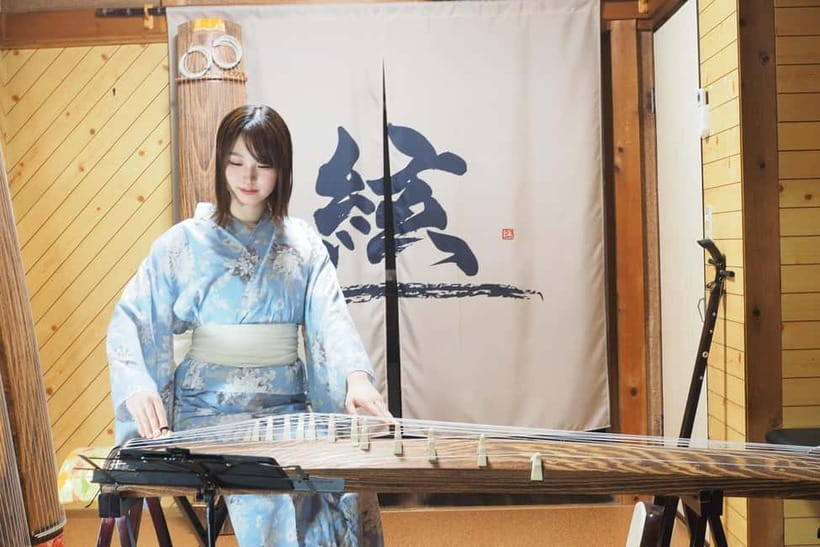
Koto and shamisen music can seem specialized if you have never heard it before. The bilingual introduction changes that. You are shown how the musician sits, how the strings are struck, and how the notation differs from Western sheet music.
The program also avoids presenting traditional music as something frozen in a museum. Classical pieces appear alongside contemporary works and original compositions. That contrast helps you hear the instruments as living tools, not simply relics of an earlier age.
The shamisen has a direct, percussive tone, while the koto can sound delicate, ringing, or surprisingly forceful. When singing is included, the voice adds another layer of expression. The effect can be peaceful, but it is not always soft. Some passages have real energy and dramatic weight.
The strongest moments come when the performance is allowed to breathe. In the townhouse, a quiet piece can make the room feel still. In the bathhouse, the echo becomes part of the music. I would not choose this activity if you want a fast-moving show with constant spectacle. I would choose it if you want to listen closely.
Fitting the Concert Into Your Kyoto Day
The location is useful for building a larger day, though exact travel times depend on the meeting point and traffic. From the Saiin area, Arashiyama takes about 25 minutes by walking to Saiin Station, taking the Hankyu line to Katsura, and transferring to the Randen Line.
Nijō Castle is about 20 minutes away and works well before or after the concert. The route includes a stop from Saiin on the Tozai subway line. Kinkaku-ji is roughly 20 minutes away by bus from Nishioji Sanjō, followed by a short walk.
Nishiki Market is about 25 minutes away by direct Hankyu ride to Karasuma or Kawaramachi. This is a practical pairing if you want lunch, snacks, or shopping before an evening performance.
Give yourself extra time if you are visiting the townhouse for the first time. Several people have found the address less obvious than expected, and a small residential street is not the place to arrive at the last second. Kyoto’s maps can be accurate while still leaving you unsure which entrance is correct.
Is $32 Good Value?
At $32 per person, the concert is priced like a modest cultural attraction, but the value depends on how you use it. The basic experience includes a live performance, bilingual commentary, four or five pieces, a question period, photos, and seating. That is a fair price for a professional musician in a very small room.
The townhouse option offers particularly good value if you add the workshop. You are not only watching a performance. You are receiving an introduction to the instruments and then spending up to 40 minutes trying one yourself.
The bathhouse option may appeal more to music lovers who care about acoustics and ensemble playing. It does not include bathing or refreshments, so you are paying for the concert setting and performance rather than a wider spa experience.
The price also compares well with large cultural shows where you see less of the performer and have no chance to ask questions. This activity is not the cheapest way to hear Japanese music, but it gives you more personal contact than a standard stage show.
Who Will Enjoy This Most
I would recommend the townhouse to first-time visitors who want a calm introduction to Japanese music. You do not need any prior knowledge, and the explanations keep the experience friendly rather than academic.
It is also a good choice for couples, solo visitors, families with older children, and anyone looking for a quieter break from crowded temples and busy shopping streets. The workshop makes it more engaging for children who might struggle with a full concert.
The bathhouse hall suits people who want a bigger sound and a duet format. It is also a good option for repeat visitors to Kyoto who have already seen the major temples and want a cultural activity with a different mood.
This may not suit you if you dislike sitting quietly, have limited time between fixed appointments, or want a show with English narration throughout every song. The commentary is bilingual, but the music remains the main event.
Booking and Practical Details
The activity costs $32 per person and lasts 45 to 105 minutes, depending on whether you choose the workshop. English and Japanese are available, and private or small-group bookings may be offered.
You can cancel up to 24 hours in advance for a full refund, and the reserve-now, pay-later option helps if your Kyoto schedule is still moving around. Still, check the exact venue before booking. The townhouse is offered almost every day, while the bathhouse follows an irregular Monday schedule.
Wear something comfortable for sitting. The townhouse provides cushions or chairs, so you are not required to sit on the floor, but the setting is compact. Arrive with enough time to locate the venue, especially if your booking confirmation gives a residential address.
Should You Book This Kyoto Concert?
Book it if you want close contact with Japanese music, a small audience, and enough explanation to understand what you are hearing. The townhouse is my practical recommendation for most people because it offers more dates and includes the optional workshop. Choose the bathhouse if its Monday schedule matches your plans and you prefer duets with a larger echoing sound.
This is not a substitute for a full evening concert hall performance. It is more personal than grand, more conversational than formal, and at its best, wonderfully quiet. For $32, it gives you a memorable way to hear Kyoto rather than simply look at it.
FAQ
How much does the Kyoto traditional concert cost?
The experience costs $32 per person.
How long does the activity last?
The concert experience lasts between 45 and 105 minutes. The longer option includes the optional hands-on koto workshop.
What instruments will I hear?
You may hear koto and shamisen. Bathhouse programs can also pair the koto with shakuhachi, taishōgoto, flute, guitar, or another instrument.
What is the difference between the two venues?
The traditional townhouse offers solo performances in a cozy setting for up to about 11 people. The historic bathhouse hall holds up to about 30 people and offers solo and duet programs with natural reverberation from tiled walls.
Is the koto workshop included?
The workshop is optional and available only with traditional townhouse bookings. It lasts about 35 to 40 minutes and is designed for beginners.
Is the experience offered in English?
Yes. The activity is available in English and Japanese, with bilingual commentary explaining the instruments, notation, and repertoire.
Do I need prior knowledge of Japanese music?
No. The introduction is designed for people with little or no previous knowledge of traditional Japanese instruments.
Does the bathhouse booking include bathing?
No. The bathhouse option is for the concert hall only. Bathing, food, drinks, and transport are not included.
Can I cancel the booking?
Yes. You can cancel up to 24 hours in advance for a full refund. You can also reserve now and pay later.
Newest Kyoto experiences on the site
- Treasures of Kyoto: Gion & historical Walking Tour★ 5.0 · 6 reviews
- Whisk Your Own Matcha: A Zen Matcha Experience at Temple★ 3.6 · 7 reviews
- Kyoto tea town for matcha lovers★ 5.0 · 16 reviews
- Uji: Private immersion into Kyoto’s tea and reglious culture★ 5.0 · 17 reviews
- Kyoto Matcha Green Tea Tour★ 4.5 · 23 reviews
- Uji and Wazuka Matcha Farm Half Day Private Guided Tour★ 5.0 · 21 reviews
- Utilising upcycled Matcha! Creating matcha incense (Uji, Kyoto)★ 5.0 · 6 reviews
- Sacred Temple Yoga Experience in Japan★ 5.0 · 3 reviews
Concerts, compared.
Concerts Played with Traditional Instruments in Kyoto
Read our review →
Traditional Concert in Public bath near Kyoto Station
Read our review →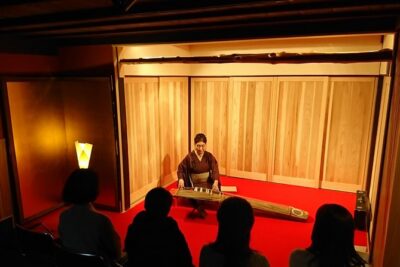
Browse the lists this tour appears in