
Reviewed · KYOTO CYCLING TOURS
Full Day Biking Tour Exploring the Best of Kyoto
Kyoto is easier to understand from a bicycle seat. This full-day ride links famous temples and shrines with quiet lanes, traditional homes, riverside stretches, and ordinary neighborhoods that a bus tour simply cannot reach. You cover roughly 18 to 20 miles, depending on the group and route, so this is sightseeing with real exercise attached.
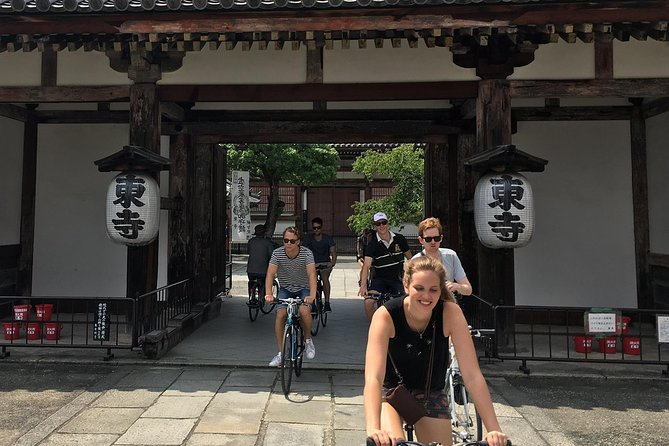
I like the small group of up to eight and the mix of major sights with less-visited places such as Nishi Honganji. I also like that lunch, water, a Cannondale bicycle, and a helmet are included. The main catch is stamina: a long day of riding and walking can leave you tired, especially in warm weather.
Key points to know before booking
- About 18 to 20 miles of cycling: The route is mostly flat, but you will be active for much of the day.
- Seven major Kyoto stops: You visit temples, shrines, the Imperial Palace grounds, Gion, and Fushimi Inari.
- A small group of no more than eight: This allows the guide to manage city riding and answer questions.
- Lunch and water are included: The meal is a useful break, often at a local-style noodle or family restaurant.
- Guides shape the day: Guides named in past bookings include Jay, Karl, Juan, Paul, Indra, Jamie, Jaimie, and Quinn.
- Best for confident riders aged 13 and older: You must be comfortable on a bicycle and in moderate physical shape.
Why a bicycle works so well in Kyoto
Kyoto’s major sights are spread across a broad city. Walking between them takes too long, while public transport can leave you with crowded stations, transfers, and a final walk. A bicycle gives you a useful middle ground: you cover serious distance without losing contact with the streets.
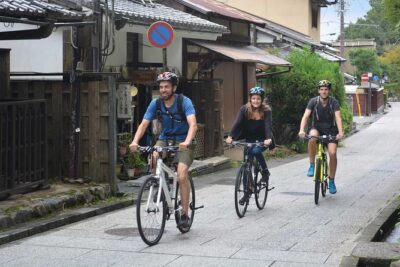
The route also lets you see the city between the headline attractions. You might pass traditional houses, quiet lanes, local shops, river views, and smaller shrines on the way to the big stops. That is one of the strongest reasons to book this rather than a standard sightseeing bus.
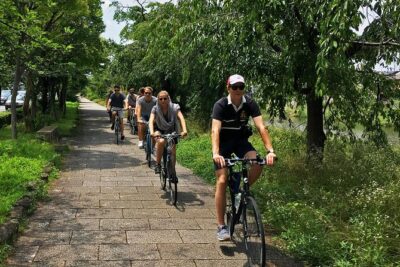
The riding is mainly on streets and smaller roads. Several riders found the route safe and easy to follow, with a generally flat profile. Still, Kyoto is a real city, not a closed cycle park. You need to pay attention, follow the guide, and feel comfortable riding around other people and vehicles.
The day lasts about seven to eight hours. Some groups have ridden close to 18 miles, while others have reached about 20 miles and walked more than 14,000 steps. The exact effort depends on the pace, stops, weather, and group. Plan this as an active day, not a gentle pedal between a few landmarks.
More bike days around Kyoto:
- Hidden Kyoto E-Biking tour
★ 5.0 · 1,843 reviews - Bike Tour Exploring North Kyoto plus Lunch
★ 5.0 · 1,087 reviews - Arashiyama Bamboo Forest & Hidden Gems Bike Tour (Early Bird)
★ 5.0 · 613 reviews
Starting near Kyoto Station with a proper bike fitting
The meeting point is Cycle Kyoto at 7 Higashikujō Nishisannōchō, in Minami Ward. It is close to Kyoto Station, with one past booking describing the shop as roughly one block south of the station. Public transport is nearby, which makes the start fairly practical.
You meet the guide and the rest of the group at the shop, choose or receive a fitted bicycle, and get a helmet before setting off. The standard bike is a high-quality Cannondale. This matters over a full day, since a poorly fitted or basic rental bike can make a long ride far less pleasant.
Bring only what you want to carry. One rider noted that the bicycle has a small front pouch for a phone and wallet, but not much room for a day bag. If you bring a backpack, you may carry it for the whole ride. A small bag is the sensible choice.
Nishi Honganji, a huge wooden temple with few crowds
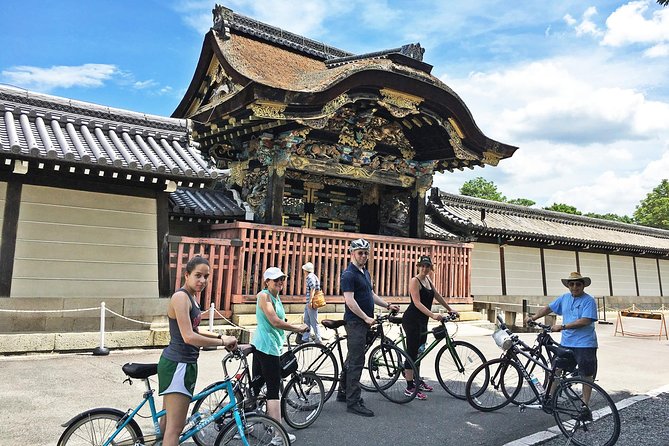
Nishi Honganji is an excellent early stop because it gives you a quieter start than Kyoto’s most famous attractions. It is one of the city’s less visited religious sites and includes one of the largest wooden buildings in the world.
You have about 15 minutes here, so this is an introduction rather than a long temple visit. Look up at the scale of the wooden structure and listen to the guide’s explanation before the group moves on. The brief stop works well as a contrast to the crowds later in the day.
This is also a useful reminder that Kyoto’s appeal is not limited to the best-known names. You see a major religious site without spending much of your day waiting in lines or moving through packed grounds.
Kitano Tenmangu and a calmer shrine visit
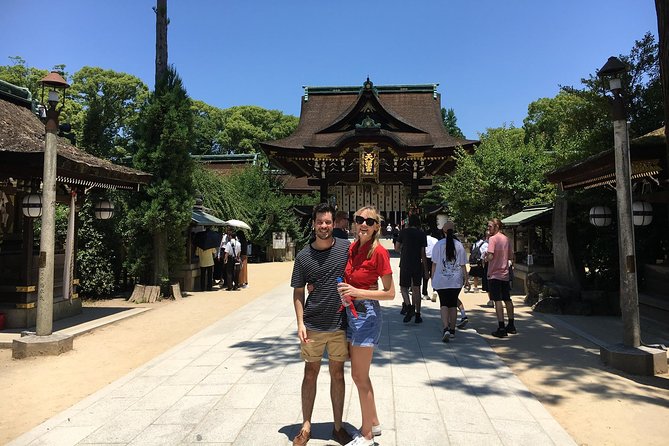
The next stop is Kitano Tenmangu Shrine, with about 20 minutes to look around. This is an active place of worship, so the experience is less about rushing through a checklist and more about watching local shrine life alongside the architecture.
The guide explains the shrine’s past and helps you notice details you might otherwise miss. The stop is described as tranquil, which makes it a welcome pause before Kinkaku-ji. You can enjoy the setting, observe people coming to pray, and get a better sense of how these places function beyond tourism.
Because the visit is short, you should not expect every corner of the shrine grounds. The value comes from having a guide give the place a clear frame, then moving on before the day loses momentum.
Same city, a completely different kind of day:
- PERFECT KYOTO 1-Day Bus Tour
★ 5.0 · 13,518 reviews - Kyoto: Fushimi Inari, Kinkakuji, Bamboo Grove 1 Day Bus Tour
★ 4.8 · 4,316 reviews - Kyoto: Tea Ceremony in a Traditional Tea House in Kiyomizu
★ 4.9 · 3,519 reviews - Kyoto Geisha Walking Tour: Gion District & Hidden Gems
★ 4.7 · 3,273 reviews
Kinkaku-ji, Kyoto’s famous Golden Pavilion
Kinkaku-ji is the most instantly recognizable stop on the route. The Golden Pavilion reflects across its pond and is one of Japan’s most visited attractions. You receive commentary here and have time to pause, take photographs, or get an ice cream.
The allotted stop is about 30 minutes. That is enough to see the principal view and enjoy the grounds, but not enough for a slow, detailed visit. Crowds can affect the pace, particularly at a place this famous. The bicycle tour’s advantage is that it gets you here as part of a larger city route rather than using the entire morning for one temple.
I would treat Kinkaku-ji as a visual highlight, not the place to seek solitude. The quieter stops before and after it balance the experience.
Riding through the former Imperial Palace grounds
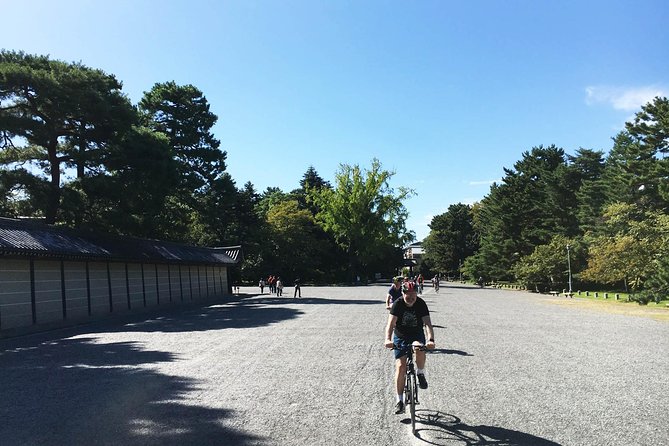
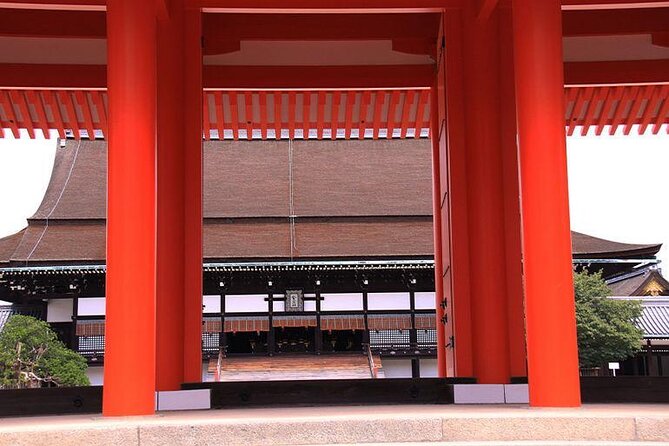
The itinerary includes a ride through the grounds of the former seat of Japan’s imperial family. The listed schedule does not give this stop a separate number or a precise time, but it is an important part of the route.
Cycling through these grounds gives you a change of scale. After intimate temple spaces and busy streets, the broad grounds provide room to ride and a chance to hear about Kyoto’s role as Japan’s imperial capital. The guide’s explanation adds the historical link that a quick pass-through would miss.
This part also shows why the bicycle matters. You are not simply being delivered to isolated attractions. You are moving through the city’s historic center and seeing how the large spaces connect with the surrounding streets.
Gion, geisha culture, and the need for respectful behavior
The tour then reaches Gion, Kyoto’s famous geisha district. The stop lasts about 15 minutes and introduces the area’s hidden world, including the possibility of seeing a geisha or maiko moving between appointments.
Keep expectations sensible. A glimpse is never guaranteed, and Gion is a working neighborhood rather than a stage set. The best approach is to listen, keep your distance, avoid blocking narrow lanes, and follow the guide’s lead.
A short guided stop is useful here because the district can be misunderstood when seen only through photographs. The guide can explain the role of the entertainers and point out how the area fits into Kyoto’s older neighborhoods. You get context without turning the visit into a hunt for people.
Tofuku-ji and a quick bridge view
Tofuku-ji is a large Zen temple and one of the country’s oldest and most important Zen sites. The listed stop is only about five minutes, so you should think of it as a scenic pause rather than a full temple visit.
The bridge offers a view across the temple grounds, and the spacious setting gives your legs a short break. The quick timing may disappoint you if Tofuku-ji is high on your personal list. If so, note the temple and consider returning on your own another day.
As part of this tour, the brief stop works because the route has several other priorities. You get a taste of the complex without sacrificing the final major sight, Fushimi Inari.
Fushimi Inari and the torii-lined finish
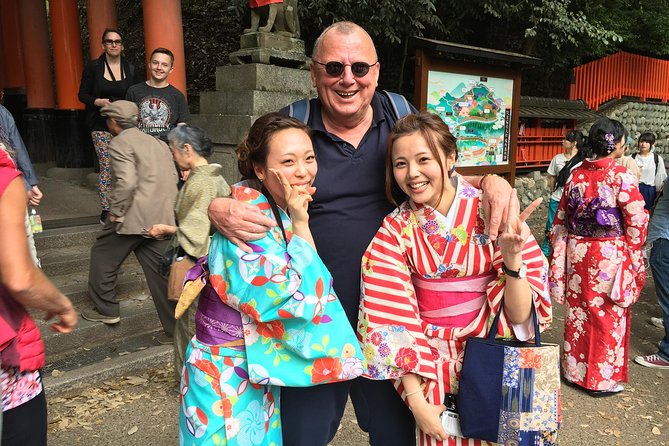
Fushimi Inari-taisha is the final major stop and one of Kyoto’s most visited attractions. Its long corridors of orange torii gates can be confusing and crowded, especially near the lower sections.
The guide chooses a route through the shrine grounds and helps the group handle the crowds. You have about 20 minutes, which is enough for a strong introduction and photographs, but not for a long climb through every gate. The full mountain route takes much longer than this stop allows.
This is a smart ending for the day. Fushimi Inari is visually powerful, but it can be tiring after hours on a bicycle. You receive help with orientation, see the most accessible section, and then return to the shop rather than trying to fit a full hike into an already demanding day.
Lunch, water, and the real value of the $119.38 price
The price is $119.38 per person. That is not a bargain basement bicycle rental, but it includes the bicycle, helmet, bottled water, lunch, a full day of guiding, and entrance to Kinkaku-ji where specified.
The bigger value is the route design. Renting a bicycle alone would not give you the same sequence of stops, historical explanations, or help navigating between crowded areas. You also avoid spending much of the day planning connections between distant parts of Kyoto.
Lunch helps make the price easier to justify. Past groups have eaten at a local-style noodle house or family restaurant, including a spot in Gion, though the exact restaurant can vary. The meal has been described as substantial and surprisingly good. Tell the operator about dietary requirements in advance.
Water is included, but you should still arrive ready for exercise. In warm weather, you may sweat even on flat streets. Comfortable clothes, practical shoes, sun protection, and a small bag will make the day easier.
The guides can make or break the experience
The tour depends heavily on the person leading it. Guides named in past bookings include Jay, Karl, Juan, Paul, Indra, Jamie, Jaimie, and Quinn. They have different personalities, but the strongest pattern is clear: the best guides combine solid history with humor, practical organization, and a feel for the group’s pace.
Guides have explained Buddhist temples, Shinto shrines, geisha culture, imperial history, and the meaning behind the thousands of torii gates at Fushimi Inari. Some have also taught simple Japanese phrases and numbers, adding a light human touch to the historical material.
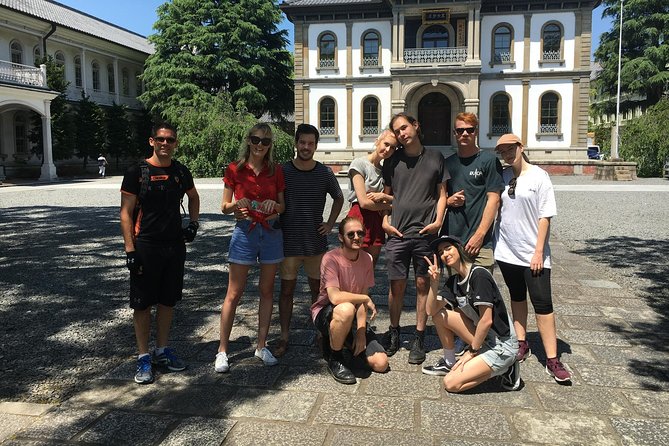
The small group helps here. With no more than eight riders, the guide can keep an eye on the group, make occasional adjustments, and answer questions without addressing a crowd. The tradeoff is that your experience may feel less polished if your particular guide is unclear or not a good match for your interests.
Who should book this Kyoto bike tour
This suits you if you want a broad first look at Kyoto and enjoy being active. It is especially useful early in a visit, since you see many areas you may want to revisit at a slower pace later.
It also works well for families with older children and teenagers. Riders must be at least 13, and children need to be comfortable on a bike. Past groups have included teens, but the distance still matters. A young rider who tires easily may struggle by the final stop.
You should think twice if you dislike long rides, need a slow temple visit, or want lots of free time at each attraction. The tour gives you breadth rather than maximum time inside any one site. It also requires moderate physical fitness and good weather.
The activity begins and ends at the Cycle Kyoto shop. Free cancellation is available up to 24 hours before the start time. The operator may offer another date or a full refund if poor weather or an insufficient number of bookings forces cancellation.
Should you book it?
Book this tour if you want to see a large portion of Kyoto in one active day, with a guide handling the route and explaining what you are seeing. The strongest features are the small group, the mix of famous and quieter sites, the included lunch, and the chance to use back streets rather than moving only between transport hubs.
Skip it if your ideal Kyoto day means lingering at one or two temples, avoiding city cycling, or carrying a large bag. At $119.38, it is best value for someone who wants an organized overview and will actually use the full day of riding. Arrive ready to pedal, and you should finish with a useful map of Kyoto in your head, plus several places worth returning to.
FAQ
How long does the Kyoto bike tour last?
The tour lasts approximately seven to eight hours.
How much does the experience cost?
The listed price is $119.38 per person.
What is included in the price?
The price includes use of a high-quality Cannondale bicycle, a helmet, bottled water, and lunch. Entrance to Kinkaku-ji is included where specified.
How many people can join the tour?
The activity has a maximum of eight travelers.
What age must riders be?
Riders must be at least 13 years old and comfortable riding a bicycle.
How physically demanding is the tour?
You need a moderate level of physical fitness. The route can cover about 18 to 20 miles of cycling, and the day also includes walking at the sights.
Where does the tour begin and end?
It begins at Cycle Kyoto, 7 Higashikujō Nishisannōchō, Minami Ward, Kyoto, 601-8003, Japan. It ends back at the same meeting point.
Which Kyoto sights are included?
The route includes Nishi Honganji, Kitano Tenmangu Shrine, Kinkaku-ji, the former Imperial Palace grounds, Gion, Tofuku-ji, and Fushimi Inari-taisha Shrine.
Can dietary requirements be accommodated?
Dietary requirements must be provided ahead of time.
What is the cancellation policy?
You can cancel at least 24 hours before the start time for a full refund. Cancellations or changes made less than 24 hours before the start time are not refunded or accepted. Weather or minimum-group cancellations may result in another date or a full refund.
Newest Kyoto experiences on the site
- Treasures of Kyoto: Gion & historical Walking Tour★ 5.0 · 6 reviews
- Whisk Your Own Matcha: A Zen Matcha Experience at Temple★ 3.6 · 7 reviews
- Kyoto tea town for matcha lovers★ 5.0 · 16 reviews
- Uji: Private immersion into Kyoto’s tea and reglious culture★ 5.0 · 17 reviews
- Kyoto Matcha Green Tea Tour★ 4.5 · 23 reviews
- Uji and Wazuka Matcha Farm Half Day Private Guided Tour★ 5.0 · 21 reviews
- Utilising upcycled Matcha! Creating matcha incense (Uji, Kyoto)★ 5.0 · 6 reviews
- Sacred Temple Yoga Experience in Japan★ 5.0 · 3 reviews
Kyoto Cycling Tours, compared.
Arashiyama Bamboo Forest & Hidden Gems Bike Tour (Early Bird)
Read our review →
5 Top Highlights of Kyoto Full Day Bike Tour (E-bike option)
Read our review →
Afternoon Kyoto Bike Tour: Bamboo Forest, Monkeys & Hidden Spots
Read our review →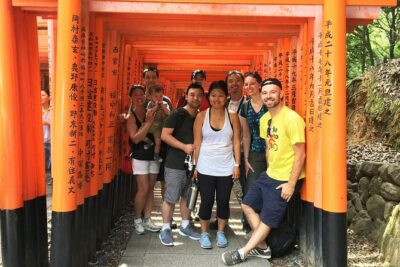
South Kyoto in a Nutshell: Gentle Backstreet Bike Tour!
Read our review →
Browse the lists this tour appears in