
Reviewed · KYOTO CYCLING TOURS
E-Bike Tours of the highlights of Kyoto!!!
Kyoto is easier to understand from a bicycle than from a crowded bus. This tour links temples, shrines, quiet lanes, rivers, and old neighborhoods while your guide handles the route. Philippe, Kevin, Niall, and other guides bring local context to places that can otherwise blur together.
I like the small maximum group of eight and the way the route uses back streets instead of forcing you onto busy main roads. I also like that the e-bike turns a long day of sightseeing into manageable sections, with time to walk through gardens and temple grounds.
The main catch is that the East and West courses visit different sights, yet the full list can look like one giant itinerary. Check which course you are booking. You should also be comfortable riding for several hours and walking around temple grounds.
Key points to know before you book
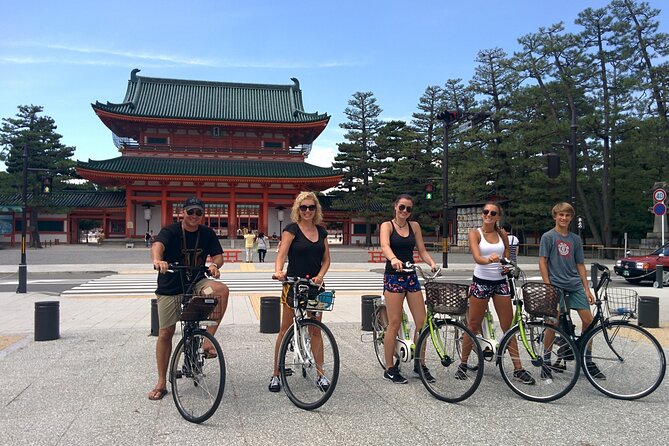
- East Course: Heian Shrine, Ginkakuji, and the Philosopher’s Walk, with quieter roads and garden time.
- West Course: Kinkakuji, Ryoan-ji, and Arashiyama Bamboo Forest, a strong choice for first-time Kyoto visitors.
- E-bikes are included: They help with distance and make Kyoto’s mostly flat roads less tiring.
- The ride is broken into sections: You cycle between sights, then stop to walk, listen, take photos, and explore.
- Guides add real local detail: Philippe, Kevin, and Niall are praised for explaining religion, homes, daily life, and Kyoto’s past.
- Lunch is not included: Some groups buy prepared food locally and have a picnic, but plan and pay for this yourself.
Why a bicycle works so well in Kyoto
Kyoto’s famous sights are spread across a wide area. Trains and buses work for certain journeys, but they do not always take you through the small lanes and residential streets that give the city its character.
On an e-bike, you can cover more ground without spending the whole day waiting for transport. The ride also gives you a better sense of how Kyoto fits together. You pass houses, shops, shrines, temple gates, river paths, and older parts of town rather than seeing each attraction as an isolated stop.
The route is not a nonstop cycling test. You ride in manageable stretches, park or stop near a sight, then spend time walking and listening. That balance matters. A six-hour day on a bike sounds demanding, but a day made up of cycling, temple visits, garden walks, photo stops, and conversation feels much more varied.
The e-bike is especially useful if you have not cycled recently. It does not remove the need to steer, watch traffic, and stay alert, but it reduces the effort required on longer stretches. One important note: the tour still calls for moderate physical fitness. You should be comfortable riding in city conditions and walking through temple grounds.
More bike days around Kyoto:
- Hidden Kyoto E-Biking tour
★ 5.0 · 1,843 reviews - Bike Tour Exploring North Kyoto plus Lunch
★ 5.0 · 1,087 reviews - Arashiyama Bamboo Forest & Hidden Gems Bike Tour (Early Bird)
★ 5.0 · 613 reviews
Choosing between the East and West courses
The two routes offer different versions of Kyoto.
The East Side Course is the calmer, more garden-focused option. It includes Heian Shrine, Ginkakuji, and the Philosopher’s Walk. You also get more time around the eastern temple district, where the route can feel less packed than Kyoto’s biggest tourist corridors.
The West Side Course concentrates on three heavyweight sights: Kinkakuji, Arashiyama Bamboo Forest, and Ryoan-ji. It gives you some of Kyoto’s best-known views, but these places can be very busy. If you want the city’s classic postcard stops, this is likely the better fit.
The tour provider has clarified the course divisions, but you should still confirm the exact route at booking. Do not assume one outing covers every stop listed in the overall description. The duration can range from about three and a half to six hours, with the usual day taking roughly five and a half hours.
Heian Shrine and its quiet garden
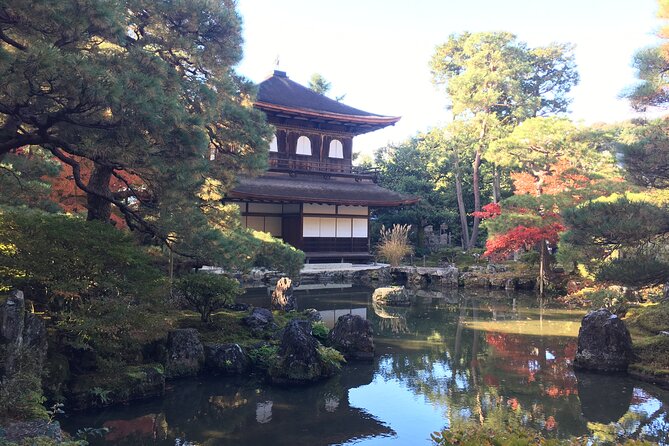
On the East Course, Heian Shrine provides a grand introduction to Kyoto’s imperial past. The shrine is a recreation of the old imperial capital, with a large-scale design that feels different from the more intimate temples later in the day.
The garden is the real reason to allow plenty of time here. It includes three large ponds and broad areas of nature, giving you room to slow down after riding through the city. Your guide can explain the shrine’s role and point out details you might miss if you simply walked through the main gate, took a photo, and left.
I like this stop because it gives the tour a quiet reset. You are not just ticking off another famous building. You have time to sit, look, and let the setting do some of the work.
Admission is included. The one limitation is that this stop belongs to the East Course, not the West Course.
Ginkakuji and the art of the Japanese garden
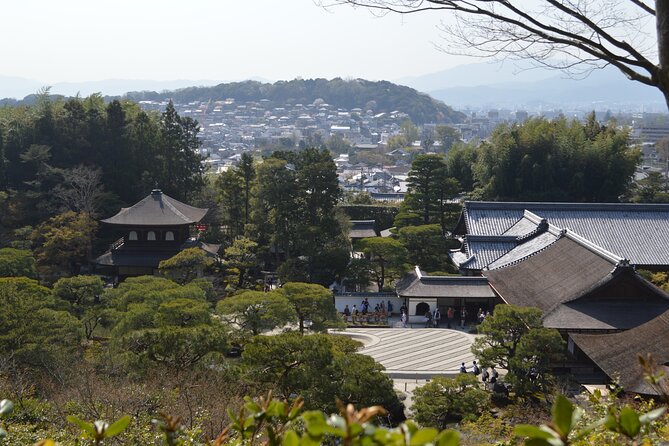
Ginkakuji, often called the Silver Pavilion, is one of Kyoto’s best places to study garden design. The grounds are valued as much for their carefully shaped paths, moss, sand, and plantings as for the temple itself.
A guide is useful here because the garden is easy to admire but harder to interpret. The shapes, materials, and spaces have meaning within Japanese design, and the stop becomes more rewarding when someone explains what you are looking at.
You will spend about an hour here, including admission. That is enough time for a measured walk rather than a rushed glance. Expect walking on temple paths, so comfortable shoes matter even though the cycling itself is assisted.
Ginkakuji can draw large numbers of visitors. The e-bike does not make the temple quieter, but the route lets you approach it through a more personal city experience before you enter the grounds.
Same city, a completely different kind of day:
- PERFECT KYOTO 1-Day Bus Tour
★ 5.0 · 13,518 reviews - Kyoto: Fushimi Inari, Kinkakuji, Bamboo Grove 1 Day Bus Tour
★ 4.8 · 4,316 reviews - Kyoto: Tea Ceremony in a Traditional Tea House in Kiyomizu
★ 4.9 · 3,519 reviews - Kyoto Geisha Walking Tour: Gion District & Hidden Gems
★ 4.7 · 3,273 reviews
The Philosopher’s Walk by bicycle
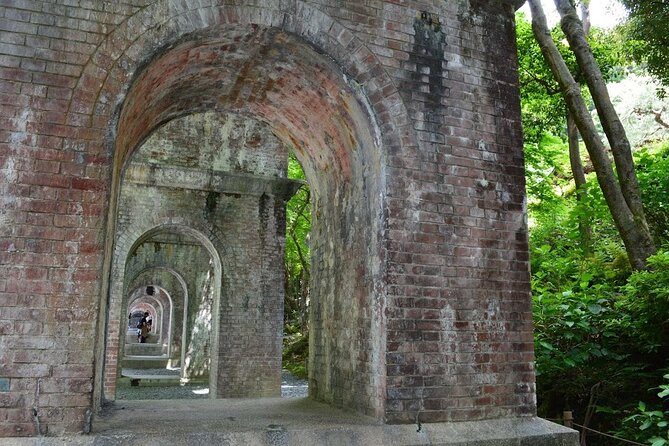
The Philosopher’s Walk follows a canal through leafy surroundings. On the East Course, you ride along part of this well-known path for about 40 minutes.
This is one of the tour’s most pleasant transitions. Instead of moving from one attraction to another on a major road, you get a slower stretch beside water and trees. It is also a good place for photographs, though the path can require careful riding when other people are present.
The ride here captures what this experience does best: it joins major sights with ordinary movement through Kyoto. You are not sitting behind glass on a coach. You are noticing the pace of the city, the changing buildings, and the spaces between the monuments.
The Philosopher’s Walk is exclusive to the East Course. If this path is high on your list, select that route rather than the West itinerary.
Kinkakuji and the Golden Pavilion
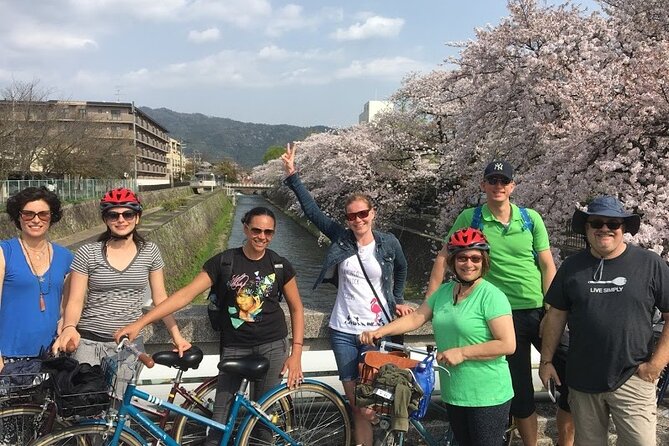
The West Course visits Kinkakuji, Kyoto’s famous Golden Pavilion. The upper levels are covered in real gold leaf, and the building’s reflection over the water makes it one of the city’s most instantly recognizable views.
You spend about 45 minutes here, with admission included. That is enough for the main viewing area and the grounds, but do not expect a private or slow visit. Kinkakuji is one of Kyoto’s busiest sights, and the experience is more about seeing the striking exterior and setting than entering the pavilion.
The guide adds value by explaining where Kinkakuji fits into Kyoto’s religious and cultural story. Without context, the stop can become a quick photo opportunity. With a good explanation, the building and garden have more meaning.
This is a strong choice for a first visit, especially if you want to see one of Kyoto’s signature images. It is less suited to anyone hoping for a quiet, solitary temple experience.
Arashiyama Bamboo Forest
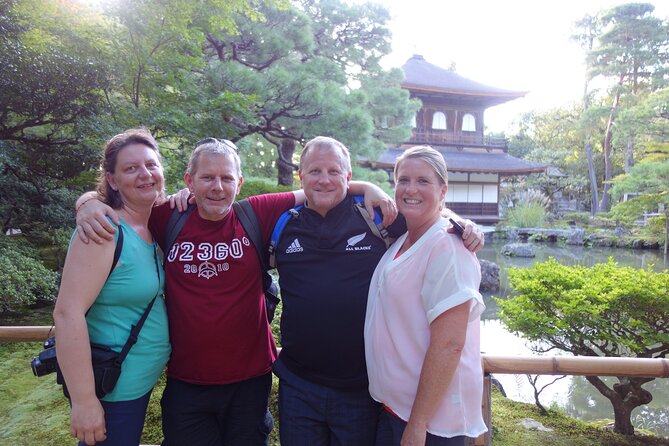
The Arashiyama Bamboo Forest is another West Course highlight. You get about 30 minutes here, without a separate admission charge.
The bamboo grove is visually unusual and worth seeing, but it is also one of Kyoto’s most photographed places. The short stop is sensible. You can walk into the grove, take in the tall bamboo, and get photographs without allowing one crowded path to dominate the whole day.
The surrounding Arashiyama area adds natural appeal, but the grove itself can feel tightly packed. Your guide may help you approach it efficiently, yet no tour can guarantee empty paths.
I would choose the West Course for the combination of Kinkakuji, Arashiyama, and Ryoan-ji, not for the bamboo alone. Together, the three stops provide a broad picture of Kyoto’s gardens, architecture, and famous scenic spaces.
Ryoan-ji and its famous rock garden
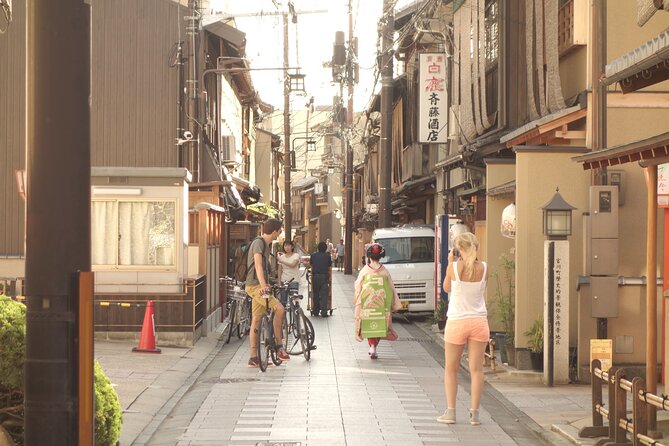
Ryoan-ji is known for its dry rock garden, one of the world’s most famous examples of this style. The arrangement is spare: rocks, gravel, and a carefully framed viewing space. Its appeal comes from what is not there as much as what is.
You get about 40 minutes at the temple, with admission included. This is a place where your guide’s explanation can make a real difference. The garden invites questions about symbolism, design, and the way people experience silence and space in a temple setting.
Do not expect an action-packed stop. Ryoan-ji rewards patience. Sit or stand quietly, look for a while, and let the simplicity contrast with the crowds and movement elsewhere in Kyoto.
For me, this is one of the strongest West Course stops because it offers something different from the bright gold of Kinkakuji and the tall bamboo of Arashiyama.
The guides are a major part of the value
The strongest guide names associated with this tour are Philippe, Kevin, and Niall. Their styles may differ, but the consistent strength is the amount of context they bring to the ride.
Philippe is described as passionate about Kyoto, with an artistic eye for small details and a strong grasp of Japanese culture. His explanations cover both legends and documented history. He has also led routes around quieter areas, including the Kamo River, Gion lanes, and less crowded streets.
Kevin is praised for being friendly, adaptable, and well informed about Japanese religion, traditions, homes, and daily life. He speaks multiple languages and has been willing to adjust the day around road closures, festivals, and group interests.
Niall is described as an engaging storyteller who mixes historical information with personal observations about Kyoto. He has led rides along the river and through temple areas while keeping the pace relaxed.
Your guide can also shape the lunch break. Some groups have chosen prepared food at a local grocery store and eaten it as a picnic. That is not included in the price, but it can be a pleasant way to keep lunch casual and local rather than losing time at a formal restaurant.
Is the $109.43 price fair?
At $109.43 per person, the tour is not the cheapest way to see Kyoto. It is fair value if you want a guide, an e-bike, admission to several listed sights, and a well-planned route in one day.
The bicycle rental, guide, landing fees, and facility fees are included. Lunch is not. The value also depends on how much you would otherwise spend on taxis or separate admissions, though you should not book this simply as a transport deal. You are paying for the route and the explanations as much as the bicycle.
The small group helps. A maximum of eight is large enough to keep the price below a private tour but small enough for the guide to answer questions and make occasional adjustments. It also makes the ride less awkward than joining a large cycling group.
If you only want to see one or two temples, explore independently. If you have limited time and want an organized day that connects several parts of Kyoto, the price makes more sense.
Practical details that affect your day
The meeting point is Kyoto Fun E-Bike Tours & Rentals at 222-2 Koyamachō, Kita Ward. The tour ends back at the same meeting point, so do not plan to finish at a temple or train station.
You receive a mobile ticket, and confirmation is provided when you book. The meeting point is near public transportation, which helps with arrival and departure, but give yourself enough time to reach it.
Wear comfortable clothes and shoes. The tour involves both cycling and walking, and temple grounds can require more time on foot than the itinerary minutes suggest. Bring water, especially in warm weather, and expect the route to be affected by conditions.
The experience requires good weather. If poor weather cancels the tour, you can choose another date or receive a full refund. You can cancel for a full refund up to 24 hours before the start time. Changes or cancellations inside that window are not accepted, and a minimum number of participants is required for the tour to operate.
Who should book this Kyoto bike tour?
This is a good match for couples, friends, and active families with older children who are comfortable on bicycles. It suits you especially well if you want more than a list of temple names. The guides talk about religion, architecture, homes, customs, and everyday life, giving the ride a human scale.
It is also a smart choice for a short Kyoto stay. You can see a large part of the city in one organized day, then return to a favorite neighborhood later on your own.
I would hesitate if you dislike cycling in city streets, tire easily, or want complete control over your schedule. The e-bike helps, but it does not turn the outing into a sightseeing bus. You must still ride, watch your surroundings, and stay with the group.
Should you book it?
Book this tour if you want to connect Kyoto’s major temples with quieter roads, river paths, old neighborhoods, and useful local stories. Choose the East Course for Heian Shrine, Ginkakuji, and the Philosopher’s Walk. Choose the West Course for Kinkakuji, Arashiyama, and Ryoan-ji.
The best reason to go is not simply the number of sights. It is the way the bicycle links them. You get the big names, but you also see the spaces between them, where Kyoto feels less like a checklist and more like a lived-in city.
FAQ
How long does the Kyoto e-bike tour last?
The experience lasts about three and a half to six hours, with the usual tour taking approximately five and a half hours.
Which Kyoto sights are on the East Course?
The East Course includes Heian Shrine, Ginkakuji Temple, and the Philosopher’s Walk. The Philosopher’s Walk is visited only on the East Course.
Which sights are on the West Course?
The West Course includes Kinkakuji Temple, Arashiyama Bamboo Forest, and Ryoan-ji Temple.
Is the e-bike rental included?
Yes. The e-bike rental, guide, landing fees, and facility fees are included in the price.
Is lunch included?
No. Lunch is not included. Some groups choose prepared food from a local grocery store and have a picnic, but you should expect to pay for lunch yourself.
Where does the tour start and finish?
The tour starts at Kyoto Fun E-Bike Tours & Rentals, 222-2 Koyamachō, Kita Ward, Kyoto. It ends back at the same meeting point.
Newest Kyoto experiences on the site
- Treasures of Kyoto: Gion & historical Walking Tour★ 5.0 · 6 reviews
- Whisk Your Own Matcha: A Zen Matcha Experience at Temple★ 3.6 · 7 reviews
- Kyoto tea town for matcha lovers★ 5.0 · 16 reviews
- Uji: Private immersion into Kyoto’s tea and reglious culture★ 5.0 · 17 reviews
- Kyoto Matcha Green Tea Tour★ 4.5 · 23 reviews
- Uji and Wazuka Matcha Farm Half Day Private Guided Tour★ 5.0 · 21 reviews
- Utilising upcycled Matcha! Creating matcha incense (Uji, Kyoto)★ 5.0 · 6 reviews
- Sacred Temple Yoga Experience in Japan★ 5.0 · 3 reviews
Kyoto Cycling Tours, compared.
Arashiyama Bamboo Forest & Hidden Gems Bike Tour (Early Bird)
Read our review →
5 Top Highlights of Kyoto Full Day Bike Tour (E-bike option)
Read our review →
Full Day Biking Tour Exploring the Best of Kyoto
Read our review →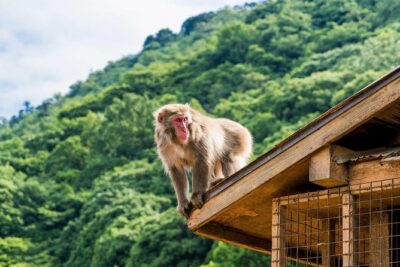
Afternoon Kyoto Bike Tour: Bamboo Forest, Monkeys & Hidden Spots
Read our review →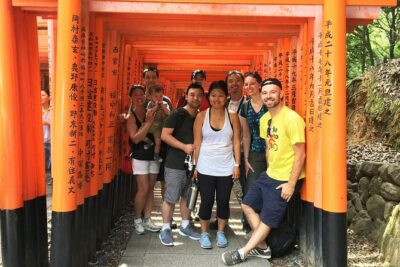
South Kyoto in a Nutshell: Gentle Backstreet Bike Tour!
Read our review →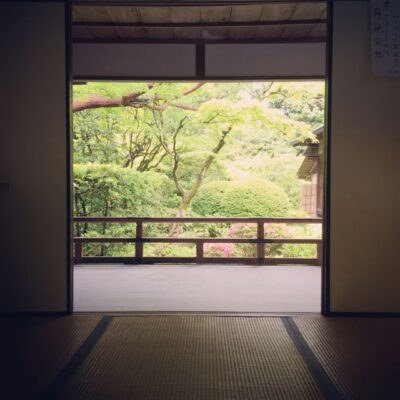
Browse the lists this tour appears in