
Reviewed · KYOTO CYCLING TOURS
Kyoto: City Secrets eBike Tour
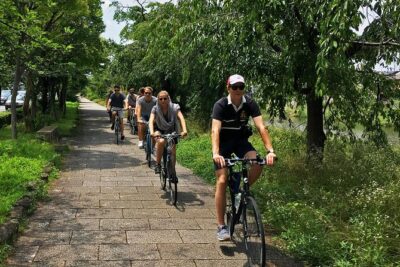
Kyoto’s best surprises are often reached by turning away from the main street. This 9-kilometer e-bike ride links famous sights with quiet lanes, mountain roads, Zen gardens, shrines, old cafés, and places most first-time visitors would miss. I like the easy pace and the way guides such as Yuta, Henry, Sean, and Michael bring history and local customs into the ride. The small group, capped at eight, also makes it easier to ask questions and ride safely.
I especially like the mix of the Golden Pavilion with calmer places such as Daitoku-ji and a Zen Buddhist monastery. A traditional tea stop, old mochi shop, and leafy backstreets add flavor beyond the usual temple checklist. The main consideration is that this is still a real bike ride: most of it is manageable, but hills, descents, cobbled paths, and tight turns require confidence on a bicycle.
Key points to know before you book
- A 9-kilometer route with electric assistance: The motor helps on hills and keeps the ride comfortable, but you still need to pedal and control the bike.
- Famous Kyoto beside quieter Kyoto: The route can include the Golden Pavilion, a historic Geisha district, shrines, Zen temples, and lesser-visited neighborhoods.
- Small groups of no more than eight: Guides can check on your pace, comfort, and safety more easily than on a large coach tour.
- A strong cultural focus: Expect explanations of Japanese history, Zen Buddhism, religion, social customs, and daily life.
- A few memorable food and drink stops: Depending on the route and timing, you might visit a traditional tea room, a very old mochi shop, or a centuries-old café.
- Good planning matters: Choose from 9 am, 9:30 am, or 1 pm departures, arrive 15 minutes early, and allow 225 minutes for the full outing.
Why an e-bike works so well in Kyoto
Kyoto is spread across a broad plain with hills rising around it. The major sights are not always close together, and the city’s narrow streets can make a taxi or bus feel slow, especially at busy times. A bicycle lets you cover more ground while still noticing temple gates, small streams, wooden homes, and quiet residential lanes.
The electric assistance matters most when the route reaches an incline. You are not signing up for a hard athletic ride, but you should be able to ride a bicycle confidently. The motor makes the 9-kilometer distance accessible to many people, including families with teenagers, yet it does not remove the need for balance, braking, and awareness.
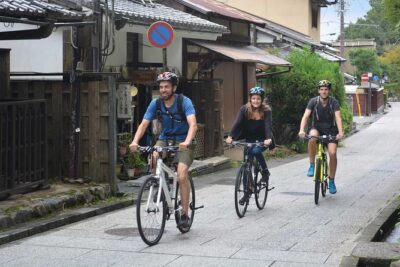
The cycling is designed around side streets and calmer roads where possible. Guides take the lead and help the group move through the city, but you still need to follow Japanese traffic rules. Keep left, watch traffic lights, and pay attention on descents, cobbles, and narrow turns. One section includes a more noticeable hill followed by a rewarding downhill stretch with views, so this is not a flat sightseeing circuit from start to finish.
More bike days around Kyoto:
- Hidden Kyoto E-Biking tour
★ 5.0 · 1,843 reviews - Bike Tour Exploring North Kyoto plus Lunch
★ 5.0 · 1,087 reviews - Arashiyama Bamboo Forest & Hidden Gems Bike Tour (Early Bird)
★ 5.0 · 613 reviews
Starting at NORU with a small group
You meet at NORU, the base for NORU Kyoto City Cycling Tours. The tour is offered in English, and each departure has no more than eight participants. That size is a real advantage here. A guide can remember names, adjust the pace, explain a temple without shouting, and stop to check that everyone is comfortable.
You choose a morning departure at 9 am or 9:30 am, or an afternoon start at 1 pm. Arrive 15 minutes early. This is not a minor suggestion: missing the departure can mean losing the booking, and no-shows are not refundable.
The supplied bikes, helmets, and entrance fees are included. Several guides receive particularly strong praise for being friendly, careful, and engaging. Yuta is often noted for his warm manner, safety checks, and interest in Zen Buddhism. Henry is praised for his energy and broad knowledge of Japanese history. Sean is known for guiding groups through backstreets and answering questions in detail, while Michael brings an easy, personal style to the ride.
The Golden Pavilion gives you the famous Kyoto moment
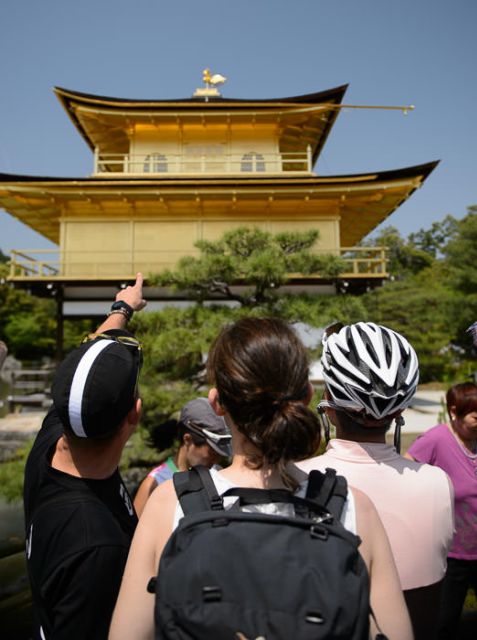
The Golden Pavilion is the best-known stop on this route, and for good reason. Its gold-covered exterior beside the pond is one of Kyoto’s most recognizable views. It is also one of the busier sights, so do not expect complete solitude here.
What makes the stop useful is the contrast with the rest of the ride. You get the classic image, then move away from the heaviest tourist flow toward smaller streets and quieter religious sites. The tour does not ask you to spend the whole day waiting in lines at one major temple. It uses the Golden Pavilion as one part of a wider picture of Kyoto.
Bring patience for photographs and keep your group moving when asked. The attraction can feel crowded, particularly at popular times of year. The guide’s explanations help give the stop meaning beyond taking a picture, but the real reward of this tour comes from what follows.
Backstreets, old Geisha quarters, and the shrine of knowledge
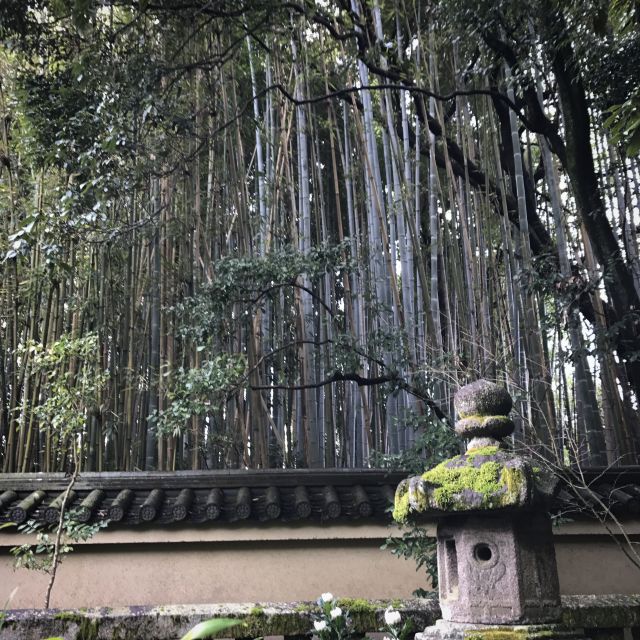
The ride continues through older parts of Kyoto, including a historic Geisha district. Cycling here gives you a better sense of how religious monuments sit beside ordinary neighborhoods. Instead of moving from one isolated sight to another by bus, you see the spaces between them.
The route also visits Kyoto’s shrine of knowledge. The supplied information does not name the shrine, so you should think of this as a cultural and religious stop rather than book the tour around a specific title. Your guide explains what the shrine represents and how it fits into Japanese life.
This part of the outing is where the small group pays off. You can stop for a question about Shinto customs, ask about the district’s past, or get help understanding a gate, statue, or ritual. The guides do not simply point at buildings. They add context about religion, history, local manners, and the way Kyoto functions today.
You may also pass mountain streams, leafy lanes, bamboo areas, and neighborhoods that do not appear on a standard first-day route. The scenery changes quickly, which is one of the pleasures of cycling.
Same city, a completely different kind of day:
- PERFECT KYOTO 1-Day Bus Tour
★ 5.0 · 13,518 reviews - Kyoto: Fushimi Inari, Kinkakuji, Bamboo Grove 1 Day Bus Tour
★ 4.8 · 4,316 reviews - Kyoto: Tea Ceremony in a Traditional Tea House in Kiyomizu
★ 4.9 · 3,519 reviews - Kyoto Geisha Walking Tour: Gion District & Hidden Gems
★ 4.7 · 3,273 reviews
Zen gardens and Daitoku-ji bring the quiet
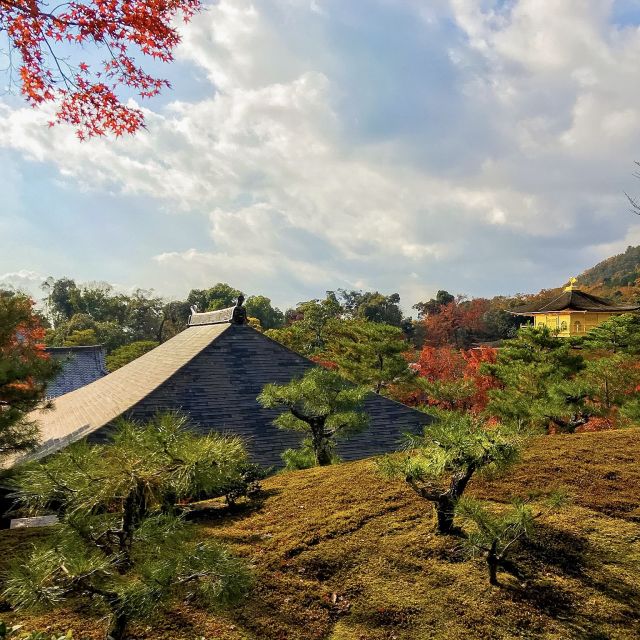
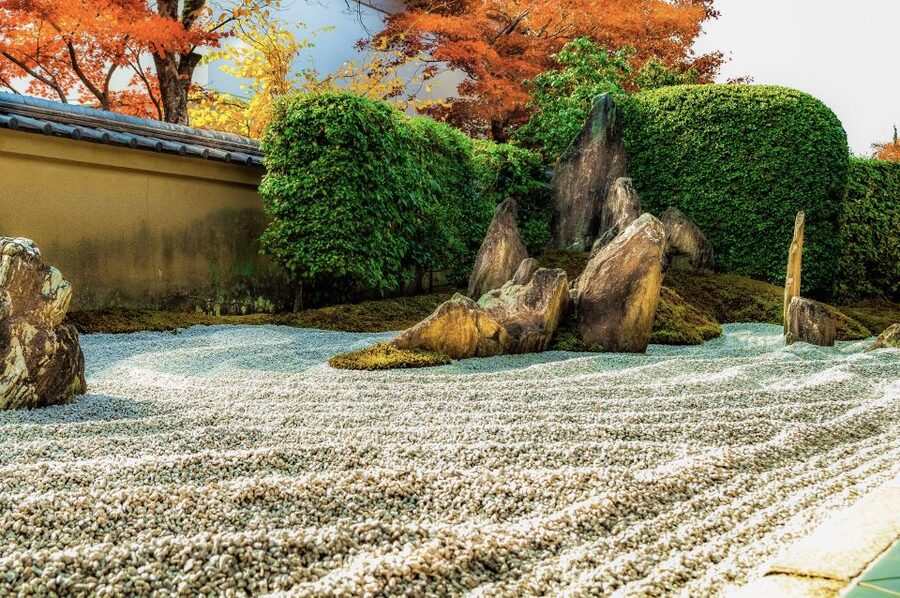
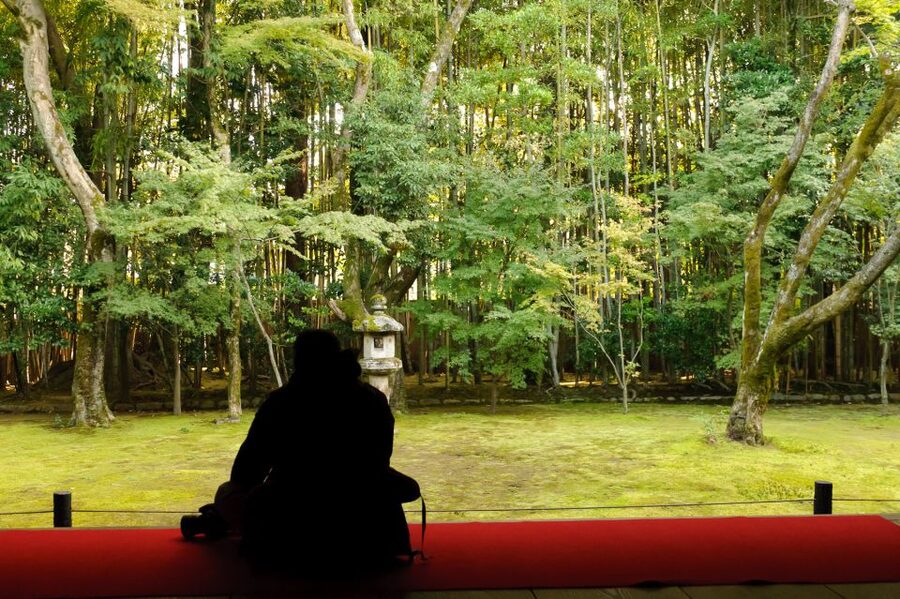
The strongest part of the ride for me is the move from famous monuments to Zen spaces. Daitoku-ji and a Zen Buddhist monastery are among the places connected with this experience. These stops give you room to slow down, sit, and consider the ideas behind the gardens and buildings.
A Zen garden is not just a pretty arrangement of stones and gravel. The guide can help you notice the use of space, quiet, and restraint. Yuta’s background and interest in Zen Buddhism can make this section especially meaningful, but any guide can provide historical and cultural explanation in English.
Do not expect every visit to feel identical. Routes and stops can change with timing, access, weather, and the group. Still, the stated focus is clear: this is designed to include peaceful temple and garden settings rather than only packed headline sights.
The quiet can be striking after the city streets. One route section reaches mountain roads where the sound of birds replaces much of the urban noise. That change of mood is one reason to choose this ride instead of a bus-based sightseeing tour.
Tea, mochi, and a very old café
Food stops are not the main purpose, but they add a welcome human touch. Depending on the day’s route, you might stop at a traditional tea room, receive sweet treats with tea, or visit a family-run mochi shop described as roughly 1,000 years old. Another reported highlight is a café with a history stretching back about 1,000 years.
These stops matter because they connect grand temples with everyday customs. A small sweet or cup of tea can make Japanese food culture easier to understand than another quick photograph at a gate. It also gives you a chance to rest, especially in warm weather.
Do not treat these food details as guaranteed menu items. The core inclusion is the guided ride, bicycles, helmets, and entrance fees. Refreshments and tastings can depend on the route, timing, and operating conditions.
How hard is the ride?
The tour is suitable for people aged 13 and over who can ride a bicycle with confidence. Anyone under 140 centimeters, or 4 feet 6 inches, is not suitable according to the stated requirements.
Most of the route is described as easy, and the electric bikes reduce the effort on inclines. Still, you should be comfortable starting, stopping, steering, and riding near other people. One portion may include a steep hill, a fast descent, cobbled surfaces, and tight turns. If you rarely ride a bicycle, this is not the best place to test your skills.
The guide’s role is important. Yuta and other guides are praised for watching the group, checking on comfort, and choosing quieter roads when possible. That helps, but it cannot replace your own attention. In Kyoto, look for red traffic lights, stay on the left, and follow the guide’s instructions.
Hot weather also changes the experience. The route includes breaks, and guides may provide water or refreshments, but you should dress for the season and be ready for sun or humidity. In rain, the supplier may cancel the tour, with a full refund for weather-related cancellation. One outing continued after a wet start with ponchos, but weather handling can vary.
Is $127 a fair price?
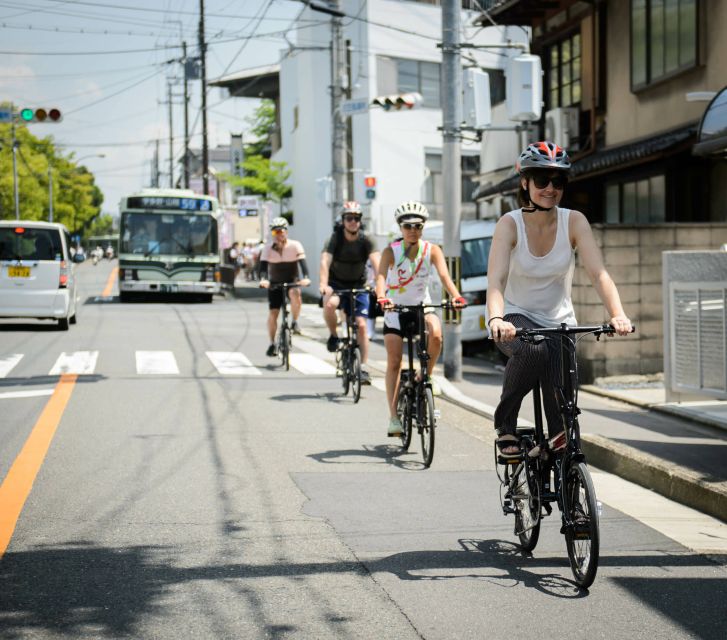
At $127 per person, this is not the cheapest way to see Kyoto. You are paying more than a self-guided bicycle rental or a walk through one temple district. The value comes from what is bundled together: a 225-minute guided route, an e-bike, a helmet, entrance fees, an English-speaking guide, and a small group.
The time savings matter. You can connect the Golden Pavilion, older neighborhoods, shrine visits, Zen settings, and quieter roads without planning every turn or working out local transport between each stop. You also get explanations that a map or audio guide may not provide.
The price makes the most sense if you want orientation early in your Kyoto stay, or if you have limited time and want a broad look at the city. It is less compelling if you prefer to linger for hours at one temple, avoid cycling, or explore entirely on your own.
I would also consider the guide factor. The strongest part of this experience is the human connection and local interpretation. The route is useful, but a good guide turns a sequence of sights into a connected story about Kyoto.
Who should book this Kyoto bike tour?
I would recommend it to active couples, families with teenagers, and return visitors who want a side of Kyoto beyond the busiest temples. It also works well on your first afternoon if you want a gentle orientation, provided you are comfortable on a bike.
The ride is especially useful for anyone who has already seen the main central sights and wants older neighborhoods, quiet religious spaces, mountain roads, and local food traditions. It gives you ideas for places to revisit on foot later.
I would hesitate to recommend it to anyone with poor bike confidence, limited balance, or a strong dislike of traffic. I would also think twice if your main aim is a slow, detailed temple visit. This is a moving tour, with several stops and regular transitions.
Book it if you want Kyoto’s famous face and its quieter side in the same half-day. Skip it if you want to remain indoors, avoid hills, or set your own pace at every stop. For many visitors, the combination of safe e-biking, Zen gardens, and small neighborhood discoveries offers better value than another standard coach excursion.
FAQ
Where does the Kyoto City Secrets eBike Tour meet?
The meeting point is NORU.
How long does the tour last?
The tour lasts 225 minutes, or 3 hours and 45 minutes.
How far do you ride?
The planned route covers about 9 kilometers.
What departure times are available?
The stated departure times are 9 am, 9:30 am, and 1 pm.
How early should I arrive?
You should arrive 15 minutes before your scheduled departure. Arriving at the departure time may mean missing the tour, and a missed departure is non-refundable.
Is the tour conducted in English?
Yes. The tour includes an English-speaking live guide.
How many people are in the group?
The group is limited to eight participants.
Are bikes and helmets included?
Yes. Bikes and helmets are included, along with entrance fees to the attractions visited.
Who can take part in the ride?
The tour is designed for people aged 13 and over who can ride a bicycle confidently. It is not suitable for people under 140 centimeters, or 4 feet 6 inches.
Newest Kyoto experiences on the site
- Treasures of Kyoto: Gion & historical Walking Tour★ 5.0 · 6 reviews
- Whisk Your Own Matcha: A Zen Matcha Experience at Temple★ 3.6 · 7 reviews
- Kyoto tea town for matcha lovers★ 5.0 · 16 reviews
- Uji: Private immersion into Kyoto’s tea and reglious culture★ 5.0 · 17 reviews
- Kyoto Matcha Green Tea Tour★ 4.5 · 23 reviews
- Uji and Wazuka Matcha Farm Half Day Private Guided Tour★ 5.0 · 21 reviews
- Utilising upcycled Matcha! Creating matcha incense (Uji, Kyoto)★ 5.0 · 6 reviews
- Sacred Temple Yoga Experience in Japan★ 5.0 · 3 reviews
Kyoto Cycling Tours, compared.
Arashiyama Bamboo Forest & Hidden Gems Bike Tour (Early Bird)
Read our review →
5 Top Highlights of Kyoto Full Day Bike Tour (E-bike option)
Read our review →
Full Day Biking Tour Exploring the Best of Kyoto
Read our review →
Afternoon Kyoto Bike Tour: Bamboo Forest, Monkeys & Hidden Spots
Read our review →
South Kyoto in a Nutshell: Gentle Backstreet Bike Tour!
Read our review →Browse the lists this tour appears in