
Reviewed · KYOTO ZEN MEDITATION
Kyoto: Zen Garden, Zen Mind (Private)
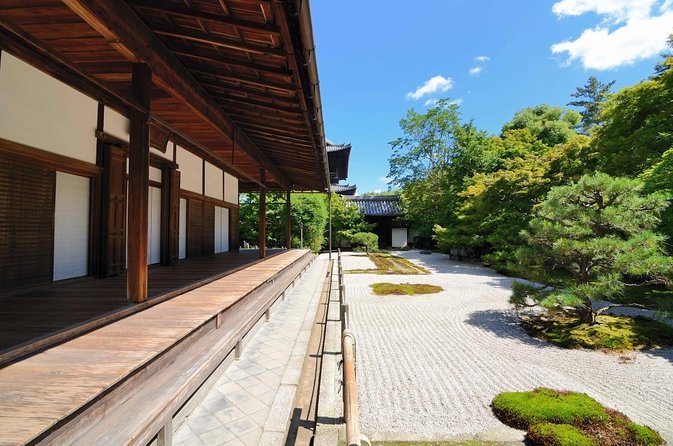
Kyoto’s Zen gardens can look simple at first: a few rocks, carefully raked gravel, perhaps a mossy bank. The trick is knowing what to look for. On this private walking tour, Andrew, a garden designer with 15 years of experience, explains how design, Buddhism, Shinto, history, and daily life meet in these quiet temple spaces.
I like the small private format, which lets you ask questions and follow your own interests. I also like the route through three important temple sites, including the celebrated Nanzen-ji complex, with the freedom to reach places that buses and cars cannot.
The main consideration is cost. The tour is $380 per group of up to four, and the booking details also list ¥1,600 per person in temple admission fees. That can be good value for a small group, but it is a serious price for one or two people.
Key points to know before booking
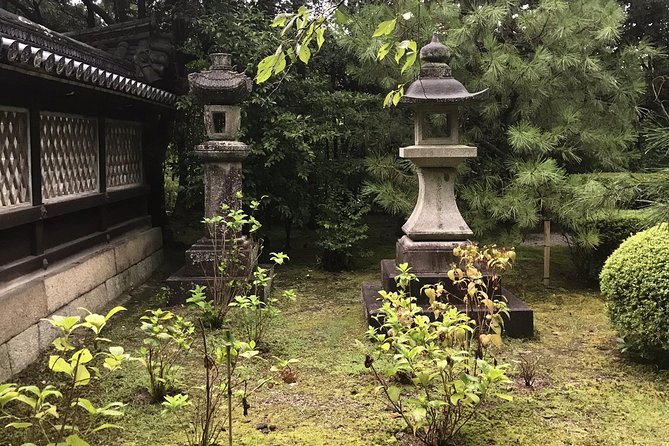
- Andrew brings a designer’s eye: He explains how rocks, gravel, empty space, planting, and viewpoint shape a Zen garden.
- Three temple stops fit into 3.5 hours: You visit Konchi-in, Tenjuan, and Nanzen-ji in one focused walk.
- This is a private tour: Only your group takes part, so questions and discussion can shape the outing.
- The route is on foot: Starting at Keage Station and ending in front of Nanzen-ji, the walk reaches spots inaccessible to buses.
- Religion is part of the story: Expect discussion of Zen, Buddhism, Shinto, Japanese aesthetics, and Kyoto’s culture.
- Budget for temple tickets: The listed admission total is ¥1,600 per person, separate from the $380 group price.
Why a garden designer changes the way you see Kyoto
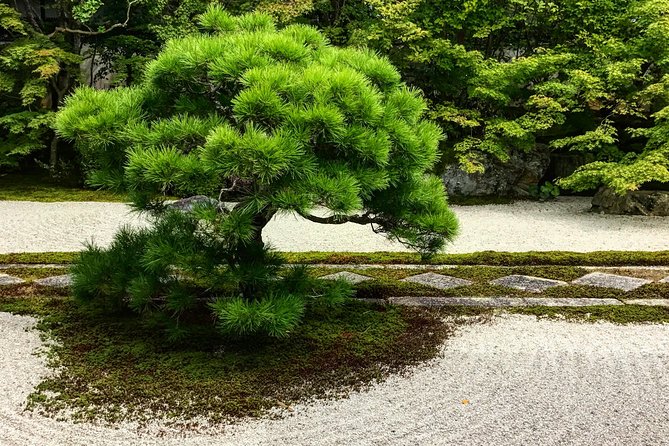
The value of this outing is not simply seeing attractive temple grounds. Kyoto has plenty of gardens, but many are difficult to understand without context. A rock arrangement may suggest mountains, islands, animals, or a Buddhist idea. A patch of empty gravel may be as deliberate as a stone or tree.
Andrew’s training in garden design gives him a useful way to explain these choices. He also brings a personal interest in the spiritual side of Zen gardens, so the conversation goes beyond names and dates. You can expect connections between garden construction, Japanese religion, history, social customs, and present-day life in Kyoto.
That mix is what makes the tour useful early in a Kyoto visit. Once you understand a few design principles, you can look at gardens on your own with sharper eyes. The tour does not simply hand you facts. It gives you a way to read spaces that might otherwise seem quiet but puzzling.
The private format helps here. You are not trying to keep up with a large group or waiting for a guide to finish a standard speech. If you are curious about religion, architecture, gardening, or aesthetics, you can ask direct questions. Andrew has also been known to adjust the discussion to match a group’s interests and spend extra time when needed.
More zen sittings and garden visits in Kyoto:
- Kyoto Zen Meditation & Garden Tour at a Zen Temple with Lunch
★ 5.0 · 441 reviews - Kyoto: Zen Experience in a Hidden Temple
★ 5.0 · 437 reviews - Kyoto: Tea Ceremony Meditation – Make Matcha with Tea Master
★ 4.8 · 406 reviews
Starting at Keage Station and entering the Nanzen-ji area
The meeting point is at Keage Station in Kyoto’s Higashiyama Ward. This is a practical starting place because the route heads into the Nanzen-ji area on foot, rather than requiring a bus to thread through Kyoto’s busy streets.
The walking element matters. You approach the temple grounds at a human pace, with time to notice how the area changes as you leave the station behind. The tour ends at Nanzen-ji in Sakyo Ward, in front of the temple, so you finish in a major Kyoto sightseeing zone rather than returning to the starting point.
The total duration is about three and a half hours. Each of the three listed stops receives about an hour, though the exact pace can depend on questions, walking speed, and the group’s interests. Wear shoes you can comfortably use for a sustained walk, and leave room in your schedule for the tour to feel thoughtful rather than rushed.
This is not a bus tour with a quick photo stop. You move between temple sites on foot, and the walking is part of the experience. If you prefer to cover a large part of Kyoto by vehicle, this will feel slow. If you want access to temple grounds and side paths that vehicles cannot reach, the format makes good sense.
Konchi-in: a focused lesson in Zen garden design
The first stop is Konchi-in, a sub-temple of Nanzen-ji. You spend about an hour here, which gives Andrew time to explain the garden rather than simply point out its most famous view.
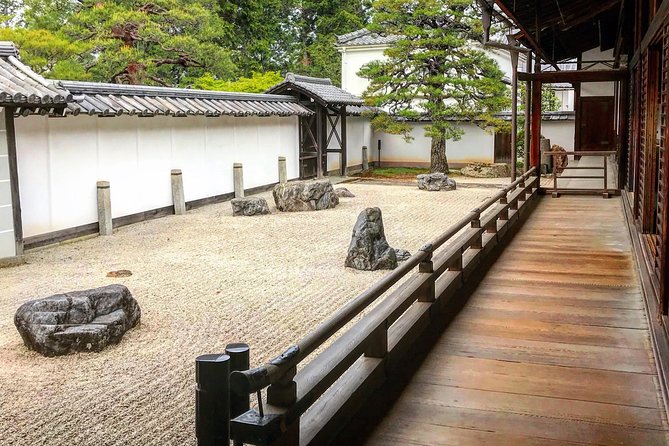
This is likely to be the most design-focused part of the tour. Andrew can draw your attention to relationships between stones, gravel, planting, borrowed scenery, and open space. The point is not to memorize a vocabulary list. It is to see how the garden directs your attention and suggests meaning without spelling everything out.
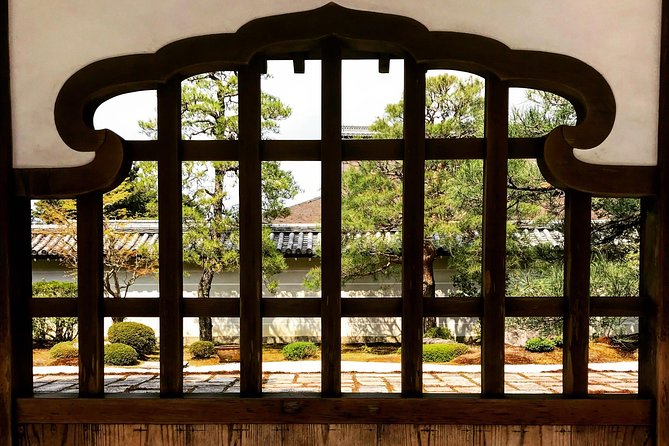
You may also begin to understand why Zen gardens are not just decorative courtyards. Their arrangement can support contemplation, but the effect depends on proportion, framing, restraint, and the position from which you look. A designer’s explanation helps you notice that the garden is composed for a particular viewpoint and mood.
Konchi-in is a good first stop because it sets up ideas that return later. If you are new to Japanese gardens, the hour gives you time to ask basic questions without feeling behind. If you already know something about Zen design, you can use the private format to discuss construction, symbolism, and the practical decisions behind the composition.
Tenjuan: comparing one temple garden with another
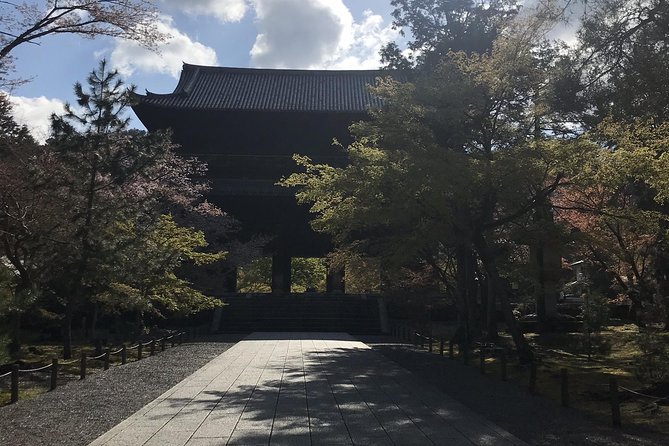
Next comes Tenjuan, another sub-temple of Nanzen-ji. The planned time is about an hour, and the change from Konchi-in is important. Seeing two gardens within the same temple complex lets you compare them rather than treating each as an isolated sight.
This is where the tour’s structure becomes especially useful. Andrew can show you how different gardens handle similar concerns: rocks, gravel, moss, water, planting, enclosure, and views. You begin to see that there is no single formula for a Zen garden. The same broad tradition can produce different moods and visual rhythms.
A comparison also makes the spiritual discussion more concrete. Instead of hearing general statements about Zen or Japanese aesthetics, you can connect those ideas to choices you are looking at directly. The garden becomes a practical example of how restraint, suggestion, and attention work together.
The quieter setting can appeal to anyone who finds Kyoto’s famous sights tiring. The tour is designed around temple gardens rather than a long checklist of landmarks, so the pace is calm and focused. Still, keep your expectations realistic. This is not a performance or a large cultural show. Its appeal comes from close looking and conversation.
A few more Kyoto tours worth putting on the shortlist
- PERFECT KYOTO 1-Day Bus Tour
★ 5.0 · 13,518 reviews - Kyoto: Fushimi Inari, Kinkakuji, Bamboo Grove 1 Day Bus Tour
★ 4.8 · 4,316 reviews - Kyoto: Tea Ceremony in a Traditional Tea House in Kiyomizu
★ 4.9 · 3,519 reviews - Kyoto Geisha Walking Tour: Gion District & Hidden Gems
★ 4.7 · 3,273 reviews
Nanzen-ji: the larger setting and final perspective
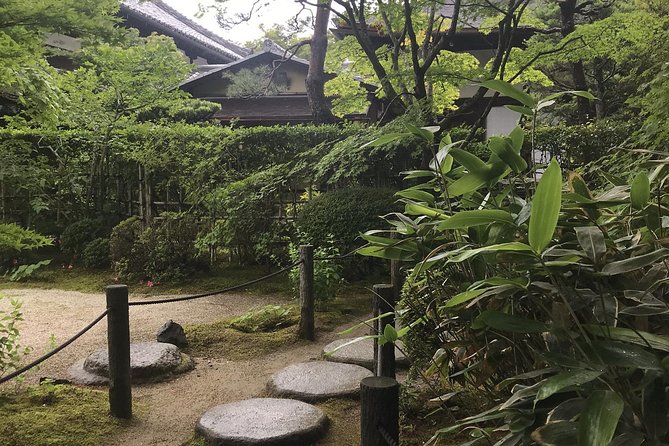
The final stop is Nanzen-ji, the head temple of the Nanzen-ji Zen monastery. You spend about an hour here, bringing the tour from individual sub-temples to the wider religious complex.
Nanzen-ji gives the earlier garden lessons a broader setting. By this point, you have already considered how gardens are built and how Buddhist ideas can inform their design. Here, Andrew can connect those ideas to the history and role of the temple itself, as well as to Shinto and Buddhist practices in Japan.
The final hour also gives you a chance to ask the questions that came up along the way. Perhaps you want to understand why one rock arrangement feels formal while another feels spare. Perhaps you are more interested in how Zen relates to ordinary life in Kyoto. A private guide can follow that thread instead of moving on because the next stop is scheduled.
The tour ends in front of Nanzen-ji. That is convenient if you want to continue exploring the area afterward, though the activity itself does not promise extra sightseeing or transportation after the finish. You are left at a useful Kyoto landmark with the rest of your day still open.
What the $380 group price really means
The listed price is $380 per group of up to four people. That is not a per-person charge, so the value improves considerably if you can fill the group. At four people, you are paying about $95 each before temple admissions. For two people, the effective cost is $190 each, and for one person it is the full $380 alone.
That pricing makes the tour best suited to a family, two couples, or a small group of friends who want a private guide. It may also make sense for serious garden enthusiasts who would rather pay for expert discussion than join a broad city sightseeing tour.
The booking information separately lists total temple admission at ¥1,600 per person. The stop details also identify admission tickets as part of the visit, so there is a mismatch in the way the costs are presented. I would confirm exactly how the ticket charge is handled before paying, and I would budget the ¥1,600 per person to avoid surprises.
The price includes the walking tour and Andrew’s guided explanation. It does not include a meal or a broader Kyoto sightseeing package. You are paying for focused time with a specialist, not for transportation between many attractions.
Who will get the most from this experience

I would choose this tour if you want to understand why Kyoto’s gardens look the way they do. It is particularly well suited to you if you have an interest in:
- Japanese garden design and construction
- Zen Buddhism, Shinto, and Japanese religious traditions
- Kyoto’s history and modern cultural life
- Quiet temple visits with time for discussion
- Photography or visual composition
- A private outing that can follow your questions
It is also a strong choice for a first visit to Kyoto if you want a framework for later sightseeing. After three and a half hours with Andrew, temple gardens may stop looking like arrangements of rocks and gravel and start looking like carefully built arguments about space, nature, attention, and belief.
I would not choose it if your main goal is to see as many famous sights as possible in a short time. You are visiting three related sites, not racing across the city. The walking route and quiet pace reward patience.
The activity is listed as suitable for most people and near public transportation. No special level of fitness is specified, but you should be comfortable walking between the meeting point and temple grounds for several hours. The tour requires good weather, and poor weather can lead to a new date or a full refund.
Booking details that matter
Confirmation is provided when you book, and the experience uses a mobile ticket. The tour is private, so only your own group participates.
Free cancellation is available up to 24 hours before the local start time. Cancellations or changes made inside that 24-hour window are not refunded or accepted. Since the outing depends on good weather, check the forecast before you go and keep some flexibility in your Kyoto schedule.
The tour is booked, on average, about 53 days ahead. That does not guarantee that every date sells out, but it suggests you should reserve early if your Kyoto dates are fixed, especially if you want a particular morning or afternoon.
My verdict: book it for understanding, not just sightseeing
I would book this tour if gardens are more than a backdrop for photographs. Andrew’s combination of garden design, Zen philosophy, Buddhism, Shinto, history, and contemporary Kyoto gives the outing real depth. The strongest reason to go is the chance to learn how to look.
The $380 price is easier to justify with four people. With one or two people, you need a strong interest in the subject to make the cost feel comfortable, especially after adding the listed temple admissions.
Choose it for a calm, private walk through Konchi-in, Tenjuan, and Nanzen-ji, with time to ask questions and compare what you see. Skip it if you want a fast overview of Kyoto’s biggest landmarks. For the right audience, this can change the way you see every Japanese garden that follows.
FAQ
How long does the Kyoto Zen garden tour last?
The tour lasts approximately 3 hours and 30 minutes.
How many people can join the private tour?
The price covers one private group of up to four people. Only your group participates.
Who leads the tour?
Andrew leads the tour. He is a landscape designer with 15 years of experience and a strong interest in Zen gardens and their spiritual meaning.
Which temples and gardens are included?
The route includes Konchi-in, Tenjuan Temple, and Nanzen-ji Temple.
How much time is planned at each stop?
About one hour is planned at each of the three temple stops.
Where does the tour start?
The meeting point is at Keage Station, at Higashikomonozacho in Kyoto’s Higashiyama Ward.
Where does the tour finish?
The tour ends in front of Nanzen-ji in Nanzenji Fukuchicho, Sakyo Ward.
Are temple admission fees included?
The booking information lists total temple admission as ¥1,600 per person under items not included. The stop details also identify admission tickets as included, so confirm the exact ticket arrangement before booking.
Is the tour available in poor weather?
The experience requires good weather. If it is canceled because of poor weather, you will be offered another date or a full refund.
Can I cancel for a full refund?
Yes. You can cancel at least 24 hours before the local start time for a full refund. Cancellations or changes made less than 24 hours before the start time are not accepted.
Newest Kyoto experiences on the site
- Treasures of Kyoto: Gion & historical Walking Tour★ 5.0 · 6 reviews
- Whisk Your Own Matcha: A Zen Matcha Experience at Temple★ 3.6 · 7 reviews
- Kyoto tea town for matcha lovers★ 5.0 · 16 reviews
- Uji: Private immersion into Kyoto’s tea and reglious culture★ 5.0 · 17 reviews
- Kyoto Matcha Green Tea Tour★ 4.5 · 23 reviews
- Uji and Wazuka Matcha Farm Half Day Private Guided Tour★ 5.0 · 21 reviews
- Utilising upcycled Matcha! Creating matcha incense (Uji, Kyoto)★ 5.0 · 6 reviews
- Sacred Temple Yoga Experience in Japan★ 5.0 · 3 reviews
Kyoto Zen Meditation, compared.
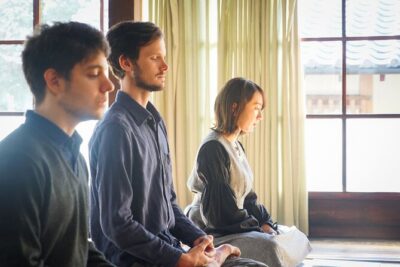
Kyoto Zen Meditation & Garden Tour at a Zen Temple with Lunch
Read our review →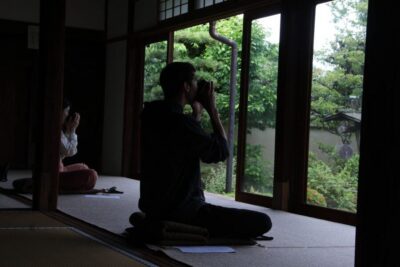
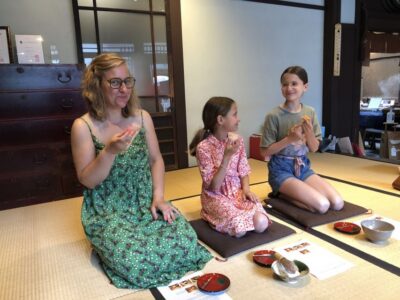
Tea Ceremony Meditation – Make Matcha with Tea Master
Read our review →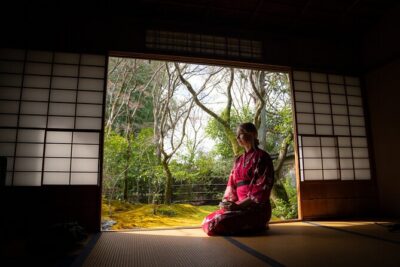
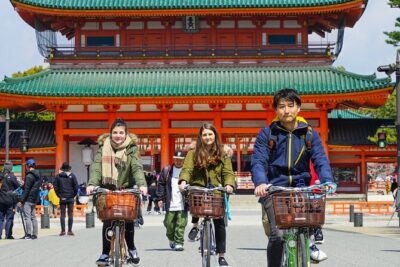
4.5-Hour Kyoto Bike Tour with Lunch and UNESCO Zen Temples
Read our review →
Zen Meditation and Garden Tour at a Temple with Lunch
Read our review →
Arashiyama Guided Tour, Bamboo, Monkey, Zen Temple
Read our review →Browse the lists this tour appears in