
Reviewed · HISTORICAL TOURS
Private Guided Historical Sightseeing Tour in Kyoto
Kyoto’s biggest challenge is choosing what to see first. This private half-day tour tackles seven major sights, from the orange gates of Fushimi Inari to the lanes of Gion, giving you a quick introduction without asking you to plan every train, walk, and taxi yourself. The route covers a lot of ground, and the right guide can add useful context at each stop.
I like two things here: the private format, which lets the guide adjust the pace, and the mix of temples, shrines, food, and old entertainment districts. Guides including Julian, Johannes, Robert, Ricardo, Andrea, and Ken have been praised for clear explanations and friendly help. The main concern is serious: several bookings suffered from no-shows, late details, or poor contact with the operator, so confirm everything before you set out.
Key points to know before booking
- Seven major Kyoto stops in about four hours: You see Fushimi Inari, Kiyomizu-dera, Kennin-ji, Yasaka Shrine, Nishiki Market, Pontocho, and Gion.
- A truly private outing: Only your group participates, making it easier to ask questions or slow the pace.
- A good first look at eastern and central Kyoto: The route combines famous religious sites with food streets and traditional neighborhoods.
- Guides can make or break the day: Julian, Johannes, Robert, Ricardo, Andrea, Ken, Diego, and Oscar have all been singled out for strong guiding.
- The operator has a mixed record for communication: Some bookings involved guides who never arrived, unanswered messages, or last-minute details.
- The price is $85 per person: That can be fair for private guiding, but the value depends heavily on reliable confirmation and a well-organized guide.
Seven Kyoto landmarks packed into four hours
This is not a slow temple walk. It is a fast, wide-ranging introduction to Kyoto, with roughly 30 minutes at most stops and an hour in Pontocho. You will see famous places, hear the basic cultural story behind them, and get help connecting the city’s scattered sights.
The short schedule has a clear advantage. If Kyoto is your first stop in Japan, you can quickly learn how the main districts fit together. The tradeoff is that each place gets only a brief visit. You will not have time for a long climb at Fushimi Inari, a quiet afternoon in a temple garden, or an extended food crawl at Nishiki Market.
Because this is private, your guide can sometimes adjust the rhythm. Ricardo, for example, was praised for matching the pace of an older group, while Oscar was described as accommodating during a short visit. That flexibility matters more here than it would on a fixed bus tour.
More history-led days in Kyoto:
- Kyoto Gion: 2-Hour Geisha Culture & History Walking Tour
★ 5.0 · 1,186 reviews - Kyoto Gion Historical Walking Tour
★ 5.0 · 188 reviews - Historical Kyoto E-Bike Tour
★ 5.0 · 181 reviews
Fushimi Inari Taisha and its famous orange gates
The tour begins at Fushimi Inari Taisha, one of Kyoto’s most recognizable Shinto shrines. Its long rows of orange torii gates climb the lower slopes of Mount Inari, creating one of the city’s most memorable walks.
With only 30 minutes, expect an introduction rather than a full mountain hike. Your guide can explain the shrine’s connection to Inari, the Shinto deity associated with rice and prosperity, and show you how to approach the shrine respectfully. The setting is atmospheric even on a short visit, but the brief stop means you may only walk through the first section of gates.
This is one place where comfortable shoes help. The route includes walking, stairs, and changing surfaces. If you want to walk farther up the mountain, ask the guide at the start of the tour what can be shortened later.
Kiyomizu-dera and the wooden terrace
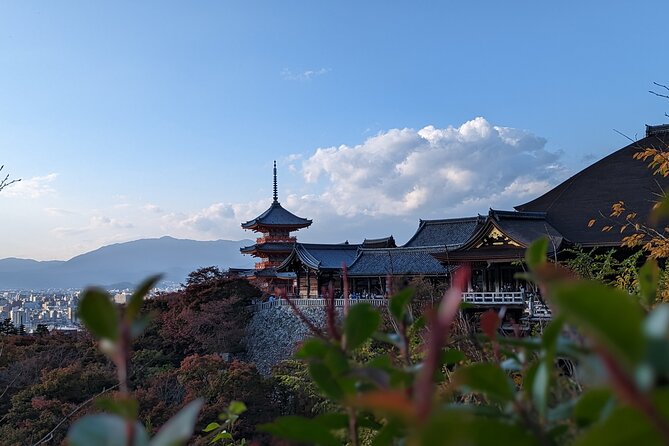
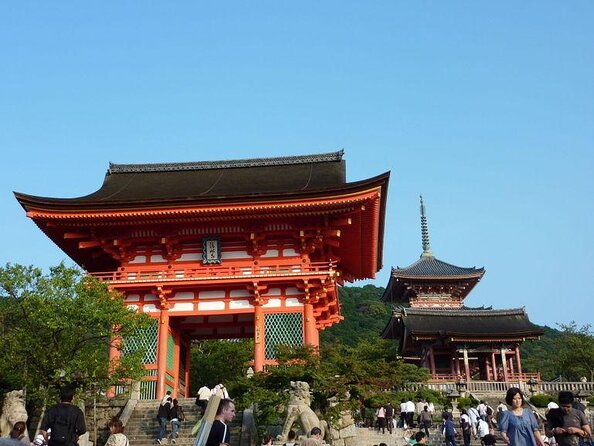
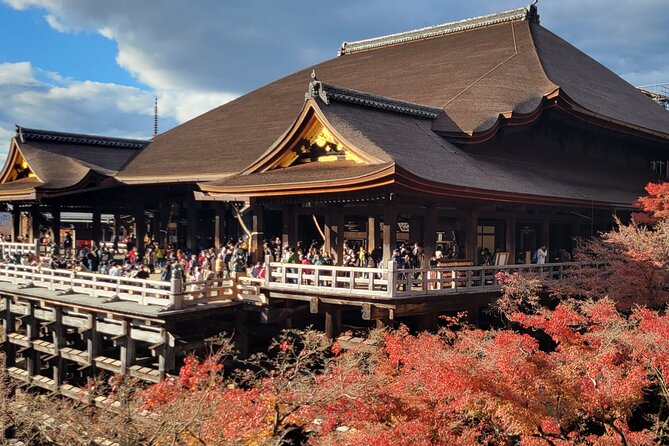
Kiyomizu-dera brings you to one of Kyoto’s grandest temple settings. Its wooden terrace looks across the eastern hills and gives the visit a strong visual payoff, even if your time inside the grounds is limited.
The temple is also useful for understanding how religion and daily life overlap in Kyoto. You will see worshippers, visitors, gates, slopes, and small religious details rather than a silent museum display. A good guide can explain the temple’s importance and point out features that are easy to pass without context.
The stop is listed at 30 minutes, so do not expect to see every corner. The approach can be crowded and uphill, and the wooden terrace is only one part of a larger complex. Still, for a first visit, this is a sensible use of half an hour.
Kennin-ji for a quieter Zen pause
Kennin-ji offers a change of mood after the large crowds around Kiyomizu-dera. It is a Zen temple in the Gion area, with a calmer setting and a more contemplative feel.
Your guide can explain the role of Zen Buddhism and the visual language of temple spaces. The visit is especially useful if you want more than a checklist of famous buildings. You may find the half-hour stop too short if you care about gardens, artwork, or sitting quietly, but it gives the route a needed pause.
The guides who earned the strongest praise were not simply pointing out buildings. Robert, Johannes, and Julian were described as explaining religious ideas, Japanese culture, and the meaning of each site in clear English. That sort of explanation is what turns a quick temple visit into a useful lesson.
A few more Kyoto tours worth putting on the shortlist
- PERFECT KYOTO 1-Day Bus Tour
★ 5.0 · 13,518 reviews - Kyoto: Fushimi Inari, Kinkakuji, Bamboo Grove 1 Day Bus Tour
★ 4.8 · 4,316 reviews - Kyoto: Tea Ceremony in a Traditional Tea House in Kiyomizu
★ 4.9 · 3,519 reviews - Kyoto Geisha Walking Tour: Gion District & Hidden Gems
★ 4.7 · 3,273 reviews
Yasaka Shrine and Kyoto’s living traditions
Yasaka Shrine sits near Gion and gives you a look at a working Shinto site. Its colorful gates and open grounds make it easy to visit during a tight schedule, and the shrine remains tied to Kyoto’s festivals and local customs.
The 30-minute stop should give you time to see the main approach, observe worship practices, and ask about Shinto traditions. One particularly good account of the tour described learning about Shinto and trying street food along the way, which points to the value of asking your guide to connect the shrine to ordinary Kyoto life.
Do not expect a formal ceremony or a long religious lecture. The strength of this stop is its place in the larger route: after temples and before the food and entertainment districts, it helps you see that Kyoto’s sacred spaces are part of the city’s daily rhythm.
Nishiki Market, where the schedule gets tasty
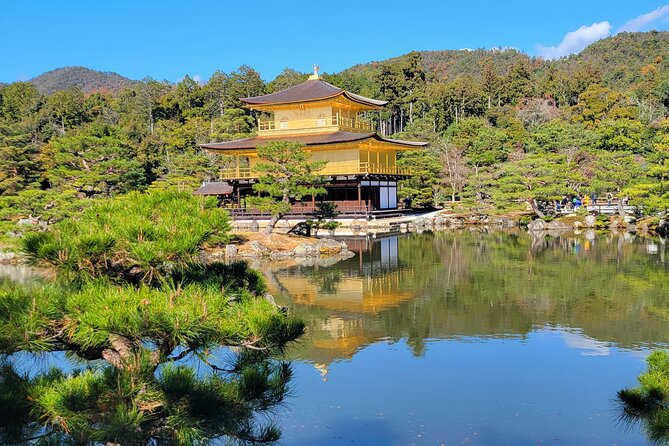
Nishiki Market is the food stop. The narrow shopping street is lined with stalls and small businesses selling Kyoto specialties, snacks, pickles, seafood, sweets, and other foods. The provided tour description presents it as a place to explore local cuisine, but the exact tasting arrangements are not specified.
Use your 30 minutes wisely. Ask the guide what is worth trying, and be clear if you have allergies, dietary restrictions, or foods you avoid. A private guide can help you choose rather than leaving you to guess, but you should not assume tastings are included in the $85 price.
Nishiki can feel crowded, especially at popular times. It is not ideal for a relaxed meal during this tour. Think of it as a brief introduction to Kyoto’s food culture, with the option to return later if you find something you want to explore properly.
Pontocho Alley beside the Kamogawa River
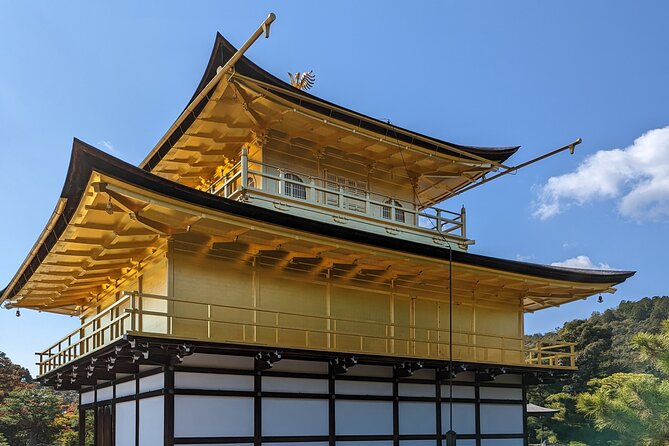
Pontocho receives the longest scheduled visit, one hour. That makes sense. This narrow district is best appreciated at walking speed, with traditional facades, small restaurants, and a strong connection to Kyoto’s evening dining culture.
Your guide can explain how Pontocho relates to Kyoto’s historic entertainment districts and point out the difference between a public lane and the private establishments behind its doors. Keep your expectations sensible. Seeing a traditional neighborhood does not guarantee entry to restaurants or a geisha encounter.
The tour description also connects Pontocho with the Kamogawa River. That setting gives you a useful break from temple grounds and market lanes. If your guide is good at reading the group, this may be the part of the tour where you can ask for restaurant ideas or advice for the rest of your stay. Andrea was specifically praised for offering restaurant recommendations.
Gion and the limits of a geisha sighting
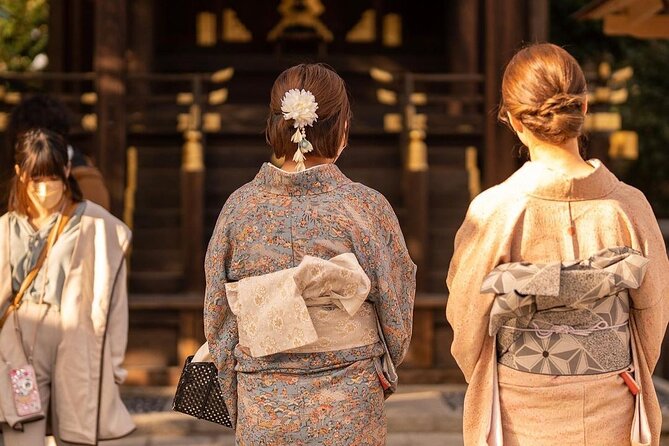
The final stop is Gion, Kyoto’s best-known historic entertainment district. Its traditional streets and wooden facades make it one of the most photogenic parts of the city, but it is also a place where respectful behavior matters.
A guide can explain the difference between geisha and maiko, describe the district’s cultural role, and help you understand what you are seeing without turning local residents into a spectacle. One account noted spotting an authentic geisha, but you should treat that as a lucky possibility, not a promised feature of the tour.
Thirty minutes is enough for an orientation walk. It is not enough to explore every lane or understand the district in depth. The stop works best as a first look, followed by a return visit on your own if you want to take more time.
What the private format is really worth
At $85 per person, the price sits in the reasonable range for a private four-hour introduction, especially if you are traveling with family or friends and the fee is spread across the group. You are paying for a guide, route planning, and the ability to ask questions directly rather than joining a large fixed group.
The value drops if you want extended time at each shrine. Seven stops in four hours means frequent transitions. You may spend part of the tour moving between sites rather than standing in front of them.
Transportation appears to be flexible. One guide used trains, walking, and taxis in a well-planned sequence, while another picked up the group at its hotel. Pickup is offered, but the exact arrangement should be confirmed before the day. The tour is near public transportation, and most people can participate, but the route includes walking and temple approaches.
The admission information needs care. Each stop is marked as including admission, yet one booking reported that the guide did not know entry costs had already been paid, and another account stated that admissions were not included. Confirm what your booking covers before arrival, and keep a little cash available for any expense not covered.
The guides can be excellent, but the company needs checking
The strongest part of this experience is the human guide. Julian was praised for passion and command of Kyoto’s history. Johannes received especially strong marks for warmth, cultural explanations, and help with practical details. Robert was noted for explaining Japanese history and culture in depth, while Ricardo adapted the route to an older group’s pace.
Andrea answered questions and suggested restaurants. Ken was described as friendly, empathetic, and well informed about Japanese history and culture. Diego reduced the risk of getting lost by meeting the group at its hotel, and Oscar handled a short visit well.
That is a substantial list of good guides. It also reveals the central uncertainty: you may receive a first-rate personal introduction, but the operator’s administration has been inconsistent.
Several bookings involved guides who did not arrive. In some cases, the phone number did not work and messages went unanswered. Other problems included a one-hour wait, a late start because the guide received details only on the morning of the tour, and confusion between a noon meeting time in the app and a 1 p.m. time given by the guide.
You should contact the provider before the cutoff, confirm the meeting time and place in writing, and save the guide’s direct contact if you receive it. Do not rely on a last-minute message alone. If you have a flight delay, contact the company as soon as possible, since one booking could not be rearranged after delayed communication.
Who will get the most from this tour
I would consider this tour if you have only a few hours in Kyoto and want a private orientation. It suits first-time visitors who want the major eastern and central sights explained by a local guide rather than pieced together from a phone.
It also suits families and small groups with different walking speeds. The private setup gives you a better chance of asking for breaks, changing emphasis, or spending more time on food, religion, or old neighborhoods.
I would be more cautious if you have a full week in Kyoto and prefer slow travel. You can visit these areas at your own pace and spend much longer at each place. The tour is also not ideal for anyone seeking a serious food tour, a full Fushimi Inari hike, or detailed temple study.
The experience requires good weather. If poor weather cancels it, you are offered another date or a full refund. Cancellation is free up to 24 hours before the start time, while changes or cancellations inside that window are not accepted. If the minimum number of participants is not met, you are offered another date, another experience, or a full refund.
Should you book it?
Book this tour if you value a private guide, have limited time, and want a fast introduction to Kyoto’s temples, shrines, food street, and old entertainment districts. The best guides can add real meaning, adjust the pace, and offer useful restaurant advice that you would not get from a map.
I would not book it without confirming the guide, time, pickup point, admissions, and working contact number. The itinerary is appealing, and the guide quality can be excellent, but the operator’s communication record creates a real risk. If you receive firm confirmation and are comfortable with a brisk schedule, $85 can be fair value. If reliable logistics matter more than convenience, plan a backup or choose a better-established operator.
FAQ
How long does the Kyoto sightseeing tour last?
The tour lasts approximately four hours.
Is this a private tour?
Yes. Only your group participates in the activity.
What places are visited?
The route includes Fushimi Inari Taisha Shrine, Kiyomizu-dera Temple, Kennin-ji Temple, Yasaka Shrine, Nishiki Market, Pontocho District, and Gion.
Is hotel pickup available?
Pickup is offered. The exact pickup location and meeting details should be confirmed before the tour.
How much does the tour cost?
The listed price is $85 per person.
Are admission tickets included?
The tour information marks admission as included at the stops, but one booking reported confusion about admissions and another stated they were not included. Confirm this directly before the tour.
Can most people participate?
Most people can participate, although the route includes walking between sites and temple approaches.
What happens if bad weather cancels the tour?
You will be offered a different date or a full refund.
What is the cancellation policy?
You can cancel up to 24 hours before the start time for a full refund. Cancellations or changes made less than 24 hours before the start time are not accepted.
Newest Kyoto experiences on the site
- Treasures of Kyoto: Gion & historical Walking Tour★ 5.0 · 6 reviews
- Whisk Your Own Matcha: A Zen Matcha Experience at Temple★ 3.6 · 7 reviews
- Kyoto tea town for matcha lovers★ 5.0 · 16 reviews
- Uji: Private immersion into Kyoto’s tea and reglious culture★ 5.0 · 17 reviews
- Kyoto Matcha Green Tea Tour★ 4.5 · 23 reviews
- Uji and Wazuka Matcha Farm Half Day Private Guided Tour★ 5.0 · 21 reviews
- Utilising upcycled Matcha! Creating matcha incense (Uji, Kyoto)★ 5.0 · 6 reviews
- Sacred Temple Yoga Experience in Japan★ 5.0 · 3 reviews
Historical Tours, compared.
Kyoto Gion: 2-Hour Geisha Culture & History Walking Tour
Read our review →
Nijo Castle World Heritage Guided Tour with Admission
Read our review →
Nara History Guided Half Day Bus Tour with Lunch
Read our review →
Private car tour Let’s uncover secrets of majestic Kyoto history
Read our review →Browse the lists this tour appears in