
Reviewed · KYOTO FOOD TOURS
Kyoto Food Tour of 10 Tastings with Wagyu, Mochi & More Surprises
Kyoto’s food culture makes the most sense when you eat your way across the city. This Karasuma-to-Gion route combines a restaurant stop, Nishiki Market, the Kamo River area, and a final matcha tasting, with about 10 foods and drinks along the way.
I like the small maximum of 10 people, which keeps the outing more personal than a large food crawl. I also like the range: pork cutlet and katsudon, yuba tofu and handmade fish cakes, Wagyu sushi, mochi, sake, beer, and Kyoto-style okonomiyaki. The main caution is value. At $142 per person, you are paying for guiding, access, and several tastings, not simply the retail cost of the food.
The tour gets its best marks for friendly guides and an easygoing walk through Nishiki Market. Guides named Yuma and Tomoro have been singled out for being warm and helpful. Still, some guides may speak softly or offer less food history than you expect, so this suits curious eaters more than serious culinary students.
Key points to know before booking
- Karasuma to Gion route: You begin near Karasuma Oike Station and finish close to Yasaka Shrine and Gion Shijo Station.
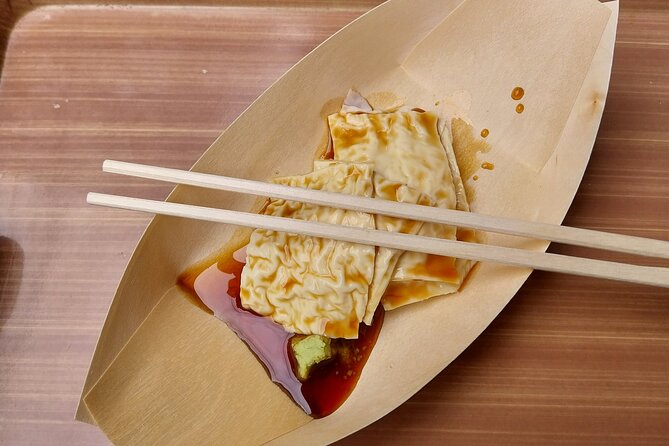
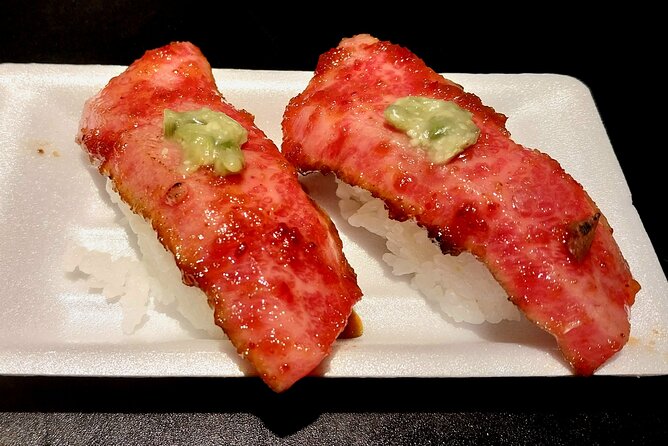
- Ten tastings and drinks: Expect yuba tofu, katsudon, okonomiyaki, Wagyu sushi, fish cakes, daifuku mochi, beer, sake, tea, and a secret dish.
- Nishiki Market takes center stage: About 90 minutes are set aside for local foods, crafts, and market stalls.
- Small group format: The tour accepts no more than 10 people, a useful size for narrow streets and small eateries.
- A walking tour, not a seated meal: You walk from Karasuma to Gion for roughly three and a half hours, so wear good shoes.
- Menu changes are possible: Food and stops can shift with weather, availability, and seasonal conditions.
What the Kyoto food tour actually offers
This is a walking food tour with a clear eastward route through central Kyoto. You meet near Karasuma Oike, work through food stops around Shijo and Nishiki Market, cross toward Pontocho and the Kamo River, then finish in Gion with tea.
The stated menu includes 10 tastings, though the exact order and selection can change. You should expect small portions rather than full meals at every stop. By the end, you will have eaten enough to count this as lunch or an early dinner, but the experience is built around variety.
That variety is the strongest reason to book. Kyoto is often associated with refined kaiseki cuisine and tea ceremony, but this tour also shows the everyday side of the city: fried pork cutlet, savory pancakes, fish cakes, sweets, sake, and market snacks.
The tour costs $142 per person. That is a serious price for three and a half hours, especially if you judge it only by the food on the plate. The value improves if you want a guide to handle the route, explain unfamiliar dishes, introduce you to small eateries, and connect the food with places such as Nishiki Market, Pontocho, the Kamo River, and Gion.
More food tours in Kyoto:
- Kyoto Night Foodie Tour in Gion (9+ dishes + 6 Sake tastings)
★ 5.0 · 1,762 reviews - Kyoto: Insider Sake Brewery Tour with Sake and Food Pairing
★ 5.0 · 704 reviews - Kyoto Nishiki Market Food and Culture Walking Tour
★ 5.0 · 412 reviews
Meeting at Karasuma Oike
The starting point is in front of the Starbucks across from Exit 5 of Subway Karasuma Oike Station. The guide carries an orange umbrella, which should make the meeting point easier to spot in a busy part of Kyoto.
The first 10 minutes are used for introductions and an outline of the tour. This is practical rather than exciting, but it helps you understand the pace before the eating begins.
You do not get hotel pickup or drop-off. That is not a problem for most people because the meeting point is near public transportation, but you need to build in time to find Exit 5 and reach the Starbucks. Arriving early is wise, since a late start can be hard to recover from on a timed food route.
First stop: katsudon with a Kyoto touch
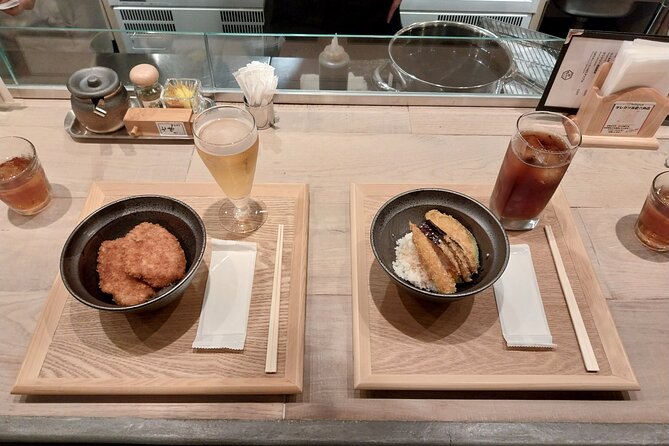
The first food stop is Kyoto Tonkatsu Katsuda Shijo Kawaramachi. Here you try a traditional Japanese dish with a local twist, listed as katsudon with a sweet Kyoto-style flavor.
Katsudon usually pairs a breaded pork cutlet with egg and sauce over rice. The tour uses this familiar dish as an easy introduction to regional flavor. If you have eaten Japanese food before, this gives you a recognizable starting point. If you are new to it, the combination is filling and approachable.
The stop lasts about 30 minutes. Since this is one of the more substantial foods on the route, it also gives you a useful base before the market tastings begin.
One point to keep in mind: the overall menu leans toward hearty and fried foods. That will suit you if you enjoy tonkatsu and savory snacks. If you prefer fresh vegetables, raw seafood, or lighter dishes, the selection may feel less balanced.
Nishiki Market, Kyoto’s long food corridor
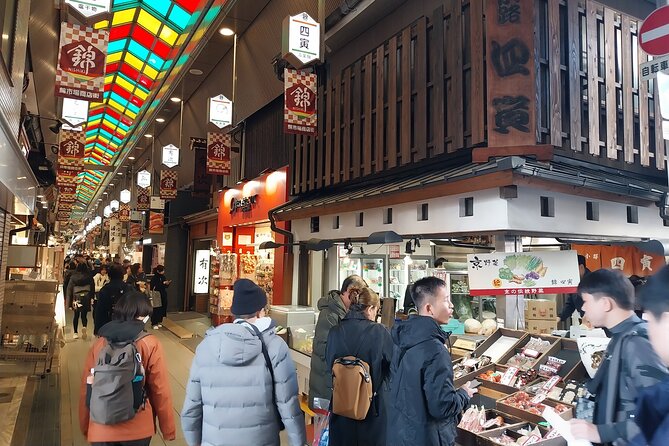
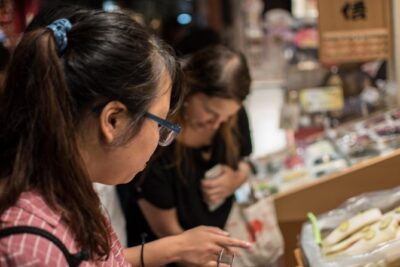
The tour spends about 90 minutes at Nishiki Market, the most important food section of the day. The market runs for roughly 400 meters, with stalls and shops selling local ingredients, prepared foods, and handmade products.
You are introduced to local artisans and their trades while tasting Kyoto specialties. This gives the market more shape than simply walking through and buying random snacks. You get a reason for each stop, plus a guide who can help explain what you are eating.
The tasting list includes yuba tofu, one of Kyoto’s best-known preparations. Yuba is made from the thin skin that forms on the surface of heated soy milk. The tour includes a presentation, so you are not merely handed a sample without context.
You also try freshly made fish cakes in different flavors. These provide a useful contrast to the pork and savory pancake later in the outing. Their handmade quality is part of the appeal, though the exact flavors can vary.
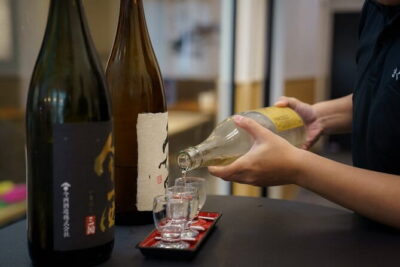
A tasting of Kyoto sake is included, along with a glass of draft beer. The alcohol is not an extra-cost add-on, but you should tell the operator in advance about dietary or other requirements. The route also includes daifuku mochi with a seasonal fruit filling. This gives the meal a soft, sweet finish within the market portion.
Nishiki Market is also where the pace can become less predictable. It is a working market, not a private tasting room. Space can be tight, and the route may change if a stall is unavailable or conditions are poor. You should expect to stand, walk, and eat in small portions rather than settle into one long meal.
Same city, a completely different kind of day:
- PERFECT KYOTO 1-Day Bus Tour
★ 5.0 · 13,518 reviews - Kyoto: Fushimi Inari, Kinkakuji, Bamboo Grove 1 Day Bus Tour
★ 4.8 · 4,316 reviews - Kyoto: Tea Ceremony in a Traditional Tea House in Kiyomizu
★ 4.9 · 3,519 reviews - Kyoto Geisha Walking Tour: Gion District & Hidden Gems
★ 4.7 · 3,273 reviews
Between the market and Gion
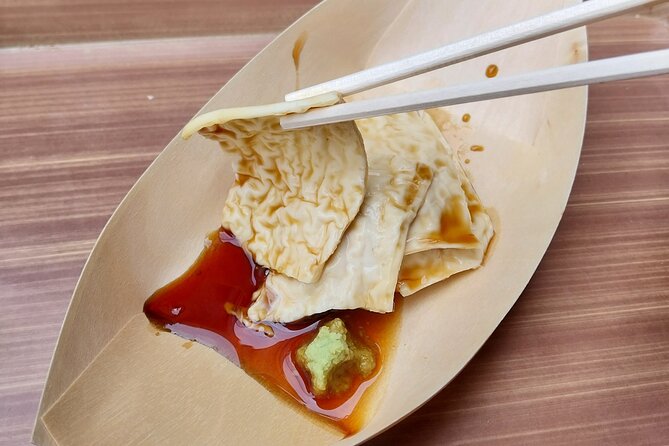
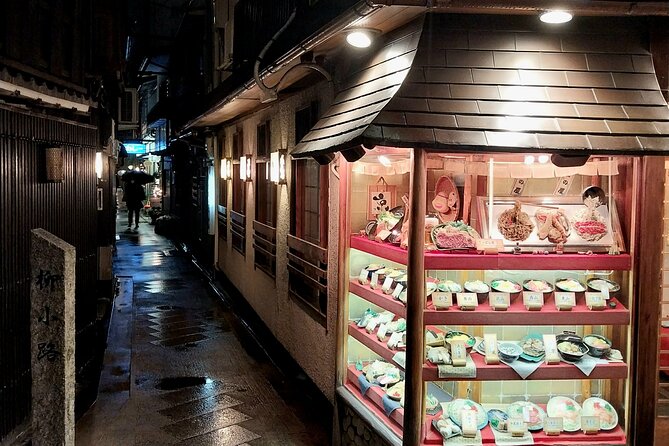
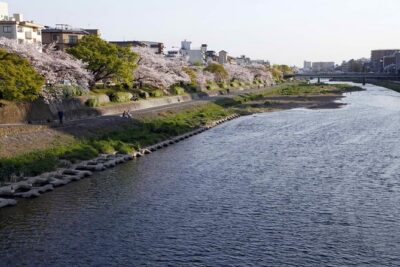
After Nishiki Market, the route heads toward Gion. The walk includes views of Pontocho and the Kamo River before you reach the Gion area.
This is one of the tour’s better ideas. Food tours can feel like a string of unrelated restaurants, but this route gives you a geographic story. You move from the Karasuma side of central Kyoto toward the traditional streets around Gion, with the river and Pontocho providing a change of pace.
The walking section lasts about 30 minutes. It is not a sightseeing tour in the full sense, and you should not expect long visits inside major attractions. Still, it helps you see how the food districts connect.
Wear comfortable shoes. The tour lasts about three and a half hours and includes a fair amount of walking, standing, and moving through market lanes. Anyone with limited stamina should consider that before booking.
Okonomiyaki in Gion
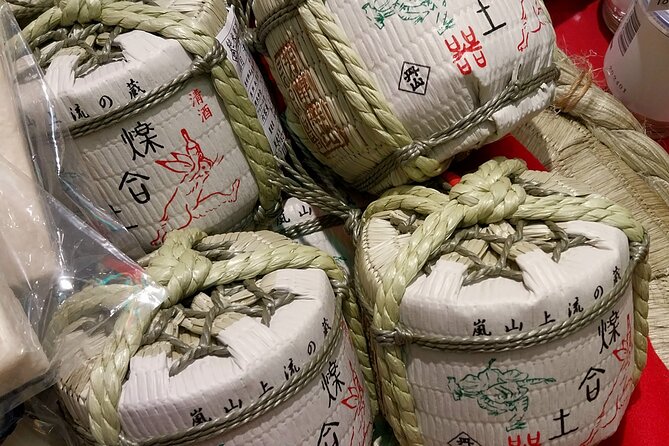
Once in Gion, you stop for Kyoto-style okonomiyaki in a small, quaint restaurant. This is a savory pancake cooked with a mix of ingredients and topped with a sauce and other garnishes.
The 30-minute stop offers a proper rest after the market and street walking. It also brings a warmer, more filling dish into the menu. If the earlier tastings leave you hungry, this is likely to be one of the more satisfying portions.
The phrase Kyoto-style matters here because regional cooking often changes the balance of ingredients, toppings, and preparation. The tour does not promise a particular recipe beyond a Kyoto preparation, so you should treat this as a regional sample rather than a full cooking lesson.
Some food feedback has described the overall selection as too fried or too ordinary for the price. That criticism is worth taking seriously. The tour gives you range, but not every bite will feel rare or elaborate. Its strength is seeing several parts of Kyoto food culture in one outing.
Matcha and the final tasting
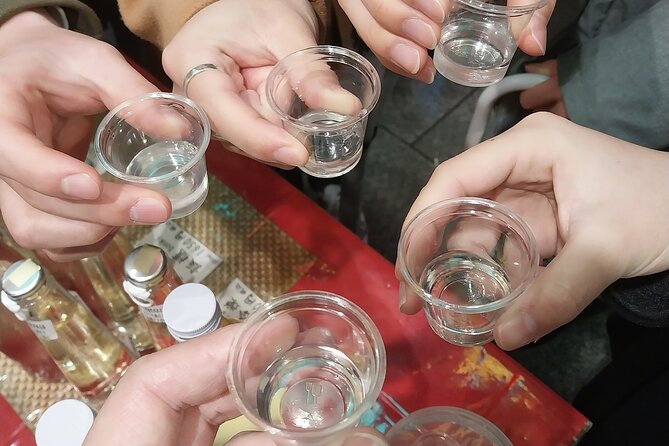
The final stop focuses on tea. Kyoto is strongly linked with tea ceremony, and the tour visits a well-known matcha venue where you receive a hot or cold tea, depending on the season and selection.
This is a fitting end to a route through Gion. After pork, rice, market snacks, sweets, alcohol, and okonomiyaki, tea provides a quieter final note.
The tea stop lasts about 20 minutes. Since the exact selection depends on the season, you may not receive the same preparation on every date. The tour ends at the entrance to the Minami Gion district, close to Gion Shijo Station on the Keihan Line and a short walk from Yasaka Shrine.
That ending is useful for planning the rest of your day. You can continue to Yasaka Shrine, return by subway, or explore Gion without retracing the route to Karasuma.
What the guide adds, and where it may fall short
A good guide makes this kind of tour worth more than buying the same foods yourself. You need someone to keep the group moving, explain unfamiliar ingredients, manage the stops, and add local context to the market and neighborhoods.
The small group limit of 10 helps. It is easier to hear a guide and easier to gather near a food stall than it would be with 20 or 30 people. The guides Yuma and Tomoro have received especially warm praise for being friendly and pleasant company.
The weak point is consistency. Some feedback describes a guide who was too quiet, had only moderate English, or gave limited background on the dishes. The operator does not promise a professional chef or culinary specialist. You should book this for a social food walk, not for a detailed lecture on Japanese food history.
If you want the most from the guide, ask questions as you go. Ask how yuba is made, what makes the katsudon local, how the fish cakes differ, and how the matcha stop fits Kyoto’s tea culture. A quieter guide may give short answers, but direct questions can still make the experience more useful.
Food restrictions and changing menus
Dietary needs should be sent to the operator before the tour. The information specifically asks you to make contact in advance so the team can try to accommodate you.
The menu and itinerary can change because of weather, location availability, seasonal conditions, and other circumstances. That matters here because much of the experience depends on market stalls and small restaurants. You should enjoy the named foods as a guide to the experience, not as an absolute guarantee of every item.
The tour requires good weather and a minimum number of participants. If poor weather or low enrollment causes cancellation, you are offered another date or experience, or a full refund.
Who should book this Kyoto food walk?
I would recommend it to you if you are visiting Kyoto for the first time, want to sample many dishes without planning every stop, and enjoy walking between meals. It also works well for people who want a gentle introduction to Nishiki Market, Pontocho, the Kamo River, and Gion in one outing.
The small group makes it a better choice than a large bus-based food experience. The orange umbrella meeting signal, central subway start, and Gion finish also make the route fairly simple to fit into a day of sightseeing.
I would be more cautious if you are a serious food enthusiast seeking high-end Kyoto cuisine, extensive culinary instruction, or a menu centered on fresh and delicate dishes. The experience includes fried and filling foods, and some portions may feel like ordinary market fare rather than a special meal.
The 96 percent recommendation rate and 4.9 rating from 85 reviews indicate strong overall satisfaction, but the less positive feedback points to the key tradeoff: the quality of the guide’s explanations can affect how much value you feel you receive.
Is the $142 price fair?
The answer depends on what you are buying. If you compare the price with the cost of purchasing individual market snacks, the tour may seem expensive. You could certainly buy some of the same types of food yourself for less.
You are also paying for the route, the guide, restaurant coordination, the small group, and a planned sequence that begins near Karasuma and ends in Gion. For a first visit, that structure can save time and reduce the stress of choosing unfamiliar stalls.
I see the price as fair for someone who values convenience and guided access, but high for someone who mainly wants to eat cheaply. The tour works best as a first-day orientation to Kyoto food, not as your only food experience in the city.
Should you book the Kyoto Food Tour?
Book it if you want a compact introduction to Kyoto dishes, enjoy a three-and-a-half-hour walk, and like moving from restaurant food to market bites and tea. The route, small group, Gion finish, and broad menu are its strongest features.
Skip it if you want a quiet seated meal, detailed chef-level instruction, or a mostly fresh and refined menu. At $142, you should be comfortable paying for the guide and the experience around the food, not just the food itself.
For the best fit, wear good walking shoes, arrive early at Exit 5 of Karasuma Oike Station, share dietary needs ahead of time, and keep your schedule flexible in case a stop changes.
FAQ
Where does the Kyoto food tour begin?
It begins in front of the Starbucks across from Exit 5 of Subway Karasuma Oike Station, at the Kyoto Sanjo Karasuma Building.
Where does the tour end?
The tour ends at the entrance to the Minami Gion district, near Gion Shijo Station on the Keihan Line and a short walk from Yasaka Shrine.
How long does the tour last?
The experience lasts approximately three hours and 30 minutes.
How many people can join the tour?
The maximum group size is 10 people.
What foods are included?
The listed tastings include yuba tofu, katsudon, okonomiyaki, Wagyu sushi, fresh fish cakes, daifuku mochi with seasonal fruit, and a secret dish.
Are drinks included?
Yes. The tour includes a glass of draft beer, a tasting of several Kyoto sakes, and Japanese tea served hot or cold.
Is hotel pickup included?
No. Hotel pickup and drop-off are not included.
Do I need to wear comfortable shoes?
Yes. The experience involves a fair amount of walking from Karasuma to Gion, so comfortable shoes are recommended.
Can dietary requirements be accommodated?
You should contact the operator in advance with any dietary requirements so they can try to accommodate them.
What happens if the tour is canceled?
If you cancel at least 24 hours before the start time, you can receive a full refund. If poor weather or the minimum group size causes cancellation, you are offered another date or experience, or a full refund.
Newest Kyoto experiences on the site
- Whisk Your Own Matcha: A Zen Matcha Experience at Temple★ 3.6 · 7 reviews
- Treasures of Kyoto: Gion & historical Walking Tour★ 5.0 · 6 reviews
- Kyoto tea town for matcha lovers★ 5.0 · 16 reviews
- Uji: Private immersion into Kyoto’s tea and reglious culture★ 5.0 · 17 reviews
- Kyoto Matcha Green Tea Tour★ 4.5 · 23 reviews
- Uji and Wazuka Matcha Farm Half Day Private Guided Tour★ 5.0 · 21 reviews
- Utilising upcycled Matcha! Creating matcha incense (Uji, Kyoto)★ 5.0 · 6 reviews
- Sacred Temple Yoga Experience in Japan★ 5.0 · 3 reviews
Kyoto Food Tours, compared.
Kyoto Night Foodie Tour in Gion (9+ dishes + 6 Sake tastings)
Read our review →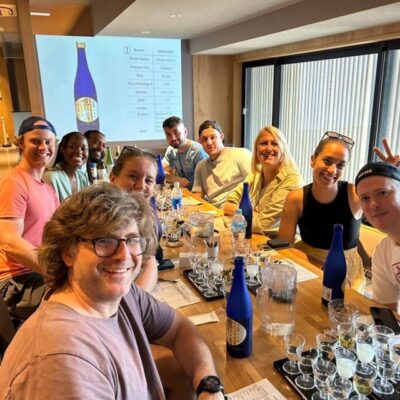
Insider Sake Brewery Tour with Sake and Food Pairing
Read our review →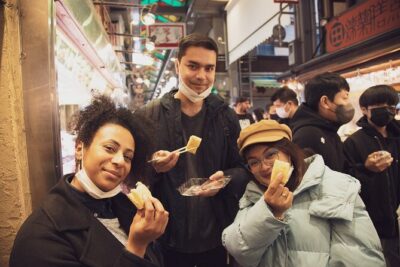
Kyoto Nishiki Market Food and Culture Walking Tour
Read our review →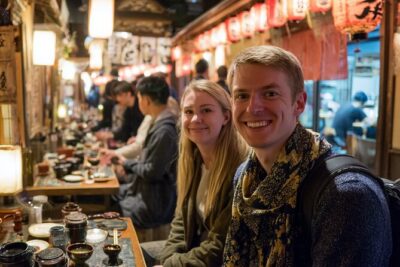
Browse the lists this tour appears in