
Reviewed · GION DISTRICT TOURS
Kyoto: Gion Magical Night Walking Tour
Gion feels most atmospheric after dark, when lanterns glow, temple grounds quiet down, and the famous lanes are easier to appreciate without daytime crowds. This walk links the district’s geisha traditions with its shrines, pagodas, and old streets, giving you a useful cultural frame instead of just a string of photo stops.
I like the small-group format, which makes it easier to ask questions and keeps the walk less intrusive in a residential area. I also like the route’s range: Gionmachi Minamigawa, Yasui-Konpiragu, Ninenzaka and Sannenzaka, several religious sites, and Yasaka Shrine. The main consideration is physical effort. Slopes, stairs, and roughly 100 minutes on foot make comfortable shoes essential.
Key points to know
- Quiet evening atmosphere: See Gion when streetlights and shrine lanterns replace much of the daytime noise.
- Geisha culture explained: Learn about Maiko and Geiko, their place in Kyoto society, and appropriate etiquette.
- Small group setting: The highlights describe a maximum of eight people, while the additional booking information lists a maximum of ten.
- A well-connected route: Start at Minamiza Theater and finish in northern Gion, near other evening dining and sightseeing options.
- More than a photo walk: The route includes shrines, a large Kannon statue, a historic garden and tea house, pagodas, and traditional streets.
- Good value at $29.60: You get nearly two hours of guided context for less than the cost of many major Kyoto attractions.
Why Gion works better after dark
Gion is one of Kyoto’s most famous districts, and that fame can work against it. During the day, narrow streets fill with tour groups, photographers, shoppers, and people hoping to catch sight of a Maiko or Geiko. At night, the mood changes.
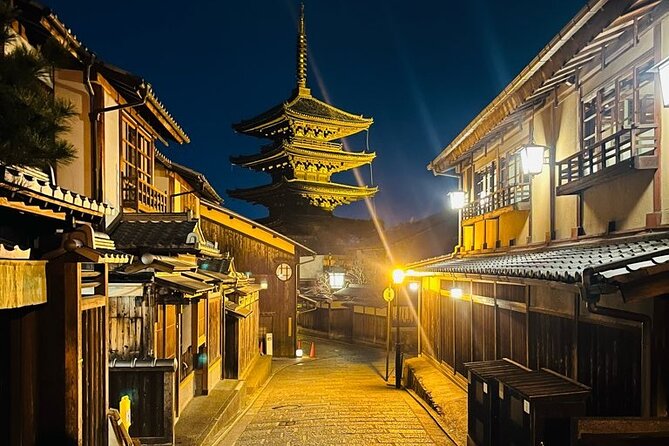
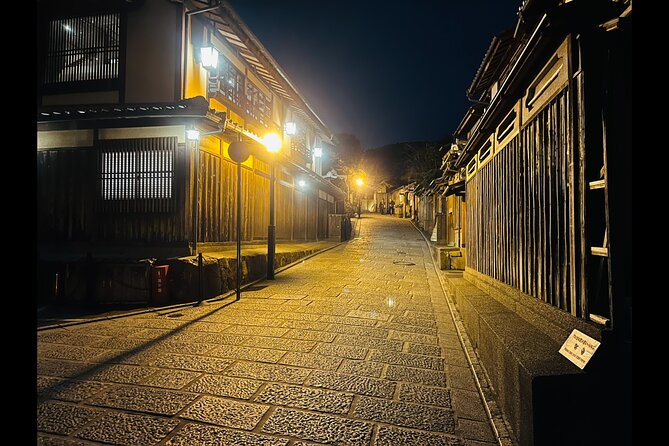
You still see the district’s traditional facades and stone lanes, but the pace is calmer. Lanterns at shrines and temples give the route a softer look, and the evening light can make familiar streets feel quite different. Several people who took the walk at around 7:30 found the area quiet and well lit, which is exactly the point of choosing this tour instead of simply visiting Gion in the middle of the day.
The title calls it a magical night walk, but this is not a theatrical show. The magic comes from ordinary Kyoto details: a shrine gate under lantern light, a pagoda rising above a narrow road, or a quiet lane that you might pass without understanding on your own.
The guide supplies that missing context. You learn why the area matters, how religious customs fit into daily life, and how geisha culture developed within Kyoto’s entertainment districts. That makes the walk useful even if you have already seen Gion during daylight.
More ways to walk Gion:
- Kyoto Geisha Walking Tour: Gion District & Hidden Gems
★ 4.7 · 3,273 reviews - Kyoto: Gion Magical Night Walking Tour with Geisha Trivia
★ 4.9 · 2,393 reviews - Kyoto: Gion Geisha District Walking Tour – Stories of Geisha
★ 4.7 · 2,187 reviews
Meeting at Minamiza Theater
The tour begins at Minamiza Theater, at the east end of Shijo Bridge. The supplied meeting address places the group in the theater’s second-floor west lobby. It is a practical starting point because Minamiza is a major, recognizable building in central Gion, near public transportation.
Arrive with enough time to locate the correct lobby. The exact meeting point matters here, since one unhappy booking involved a missed connection between the participant and the operator. That appears to have been a communication problem rather than a regular feature of the tour, but I would still save the meeting address on your phone and check it before leaving your hotel.
From Minamiza, the route moves into Gion’s traditional streets. The walk ends at 625 Gionmachi Kitagawa, placing you farther inside the district rather than returning you to the theater. Plan your evening around that finish point.
Gionmachi Minamigawa and the world of Maiko and Geiko
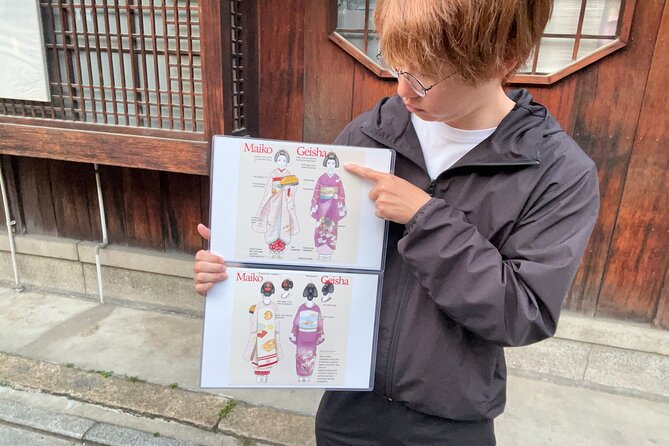
The first named stop is Gionmachi Minamigawa, one of Kyoto’s best-known streets. This is where the guide begins to explain Gion’s geisha culture, including the distinction between Maiko and Geiko and their place in Kyoto society.
The wording matters. A Maiko is an apprentice, while a Geiko is a fully trained professional in Kyoto terminology. The tour does not treat them as costumes or props. Instead, it gives you background on their work, training, and relationship with the district.
You might see a Maiko or Geiko during the walk, but there is no guarantee. If you do, the stated etiquette is simple: greet her with a smile and say Konnichiwa. The guide’s role is especially helpful here because Gion requires restraint. You are entering a working neighborhood, not a stage set.
Some guides bring personal connections to their explanation. One guide shared family ties to a Geisha and showed family photographs, while other guides, including Karen, Ricky, May, Hina, Pam, and Sho, were praised for adding local stories and answering questions. The guide you receive is not guaranteed, but the range of names gives you an idea of the personal tone this tour can have.
Allow about ten minutes at this first stop. That is enough for an introduction, not a long lecture. If geisha culture is your main reason for booking, pay close attention and ask questions early.
Yasui-Konpiragu and Kyoto’s relationship shrines
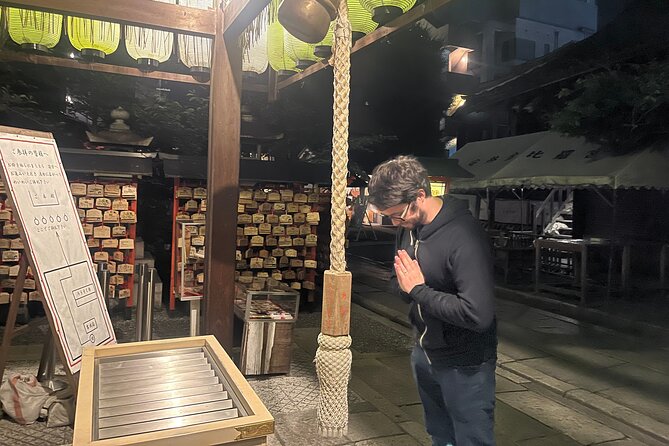
The next stop is Yasui-Konpiragu, a shrine associated with forming relationships and breaking harmful ones. Its tradition serves both sides of personal life: it can help people separate from bad relationships, while married couples or partners may visit with hopes of strengthening their bond.
That makes the shrine more interesting than a quick architectural stop. It shows how Japanese religious sites often address practical hopes and worries, not only grand historical events. The guide explains the customs and the meaning behind the site, so you are not left wondering why people visit.
You have about ten minutes here. It is a short visit, but the stop adds a human scale to the route. Gion is often sold through its elegant streets and geisha associations. Yasui-Konpiragu reminds you that local shrines also function as places where people bring private concerns.
More Kyoto after dark:
- Night Walk in Gion: Kyoto’s Geisha District
★ 4.5 · 2,003 reviews - Kyoto Night Foodie Tour in Gion (9+ dishes + 6 Sake tastings)
★ 5.0 · 1,762 reviews - Kyoto Gion Night Walk & Geisha District Guided Tour
★ 5.0 · 786 reviews - Kyoto Ghost Tour: Dark Tales, Urban Legends, Bamboo Forest Night
★ 5.0 · 625 reviews
Ninenzaka, Sannenzaka, and the old Kyoto streets
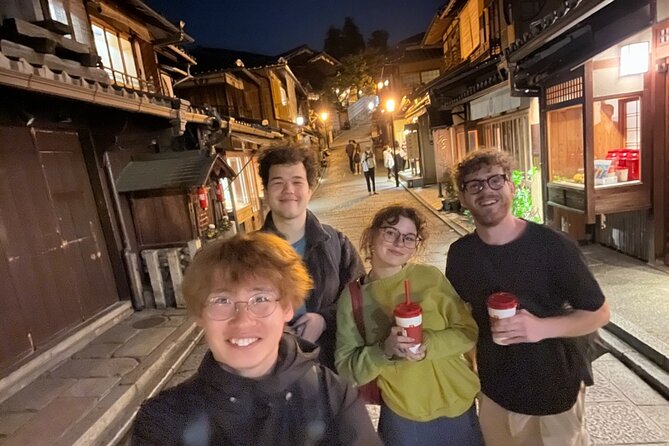
The walk then reaches Ninenzaka and Sannenzaka, the traditional lanes leading toward Kiyomizu-dera Temple. The route includes about 20 minutes in this area, which is the longest time given to any single named street section.
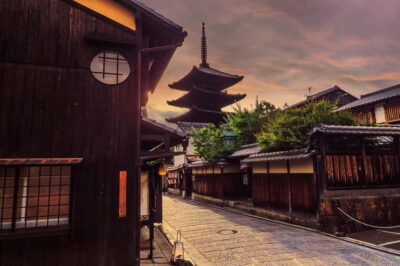
This is one of the strongest parts of the experience for photographs. The roads preserve a traditional Kyoto townscape, and Yasaka Pagoda is a major visual highlight. At night, the combination of sloped lanes, old-style buildings, and illuminated religious sites gives the area a quieter character than it has during peak daytime hours.
You should not expect a long visit inside Kiyomizu-dera itself. The route leads near the temple rather than promising an admission visit. That distinction is important if you want detailed temple interiors or a full tour of the Kiyomizu-dera grounds.
The slopes also explain the walking warning. Ninenzaka and Sannenzaka are not flat, easy pavement. You will walk uphill in places and manage stairs, so sandals with little support are a poor choice. Visitors who are comfortable walking generally found the pace manageable, but you should not book this as a seated sightseeing activity.
The unnamed Kannon site and a 400-year-old memorial temple
Two parts of the route are described without clear names in the supplied details, but their features are specific.
One site was built in 1955 to honor the victims of World War II. Its main feature is a very large statue of Kannon, the Buddhist figure associated with compassion. This stop changes the tone of the walk. After streets tied to entertainment and romance, you encounter a place shaped by remembrance and mourning.
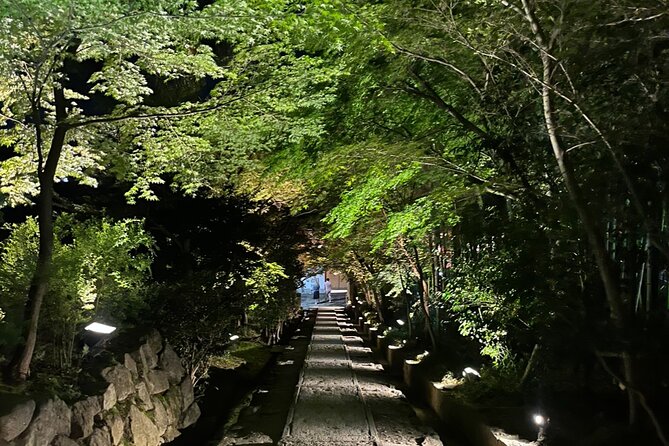
The second site was built about 400 years ago by the wife of a shogun to mourn her husband. Its grounds include a garden, a 400-year-old tea ceremony house, and a bamboo grove. These details make it one of the more substantial cultural stops, even though the supplied schedule does not give it a separate time allotment.
I would treat these stops as guided orientation rather than full temple tours. The walk lasts only about 1 hour and 40 minutes, so the guide must keep the group moving. You get the story, the setting, and time for some photographs, but not an exhaustive visit to every garden feature.
At night, the contrast between the memorial statue, old garden spaces, and bamboo grove can be especially striking. The guide’s explanation is what makes the stops worthwhile, since some of the sites may not be obvious priorities if you are choosing places from a map.
Yasaka Shrine and the end of the walk
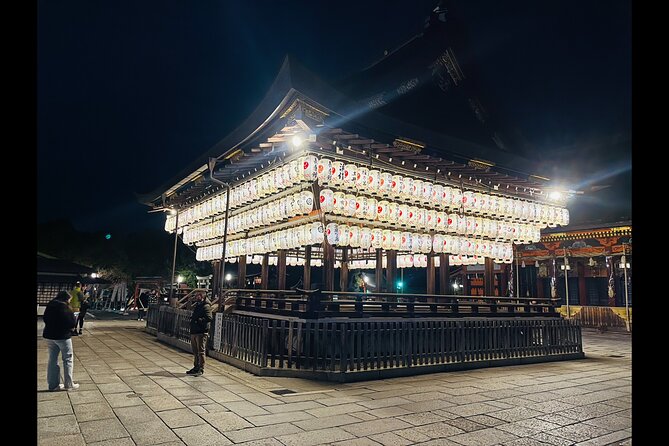
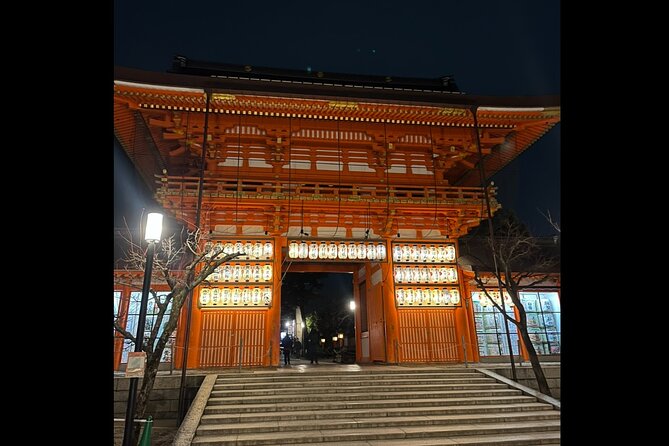
The final named stop is Yasaka Shrine, also called Gion-san. It is the head shrine of roughly 2,300 related shrines across Japan and is associated with protection from bad luck, good fortune, and beauty.
Yasaka Shrine is a fitting finish because it connects the local streets to a much wider religious network. You are not simply looking at an attractive gate or lantern. You are seeing one of the central institutions of the district, a place tied to festivals, prayer, and Gion’s identity.
The stop lasts about ten minutes. That gives you time to take in the shrine grounds and ask final questions without turning the tour into a long formal temple visit. From here, the group finishes at Gionmachi Kitagawa.
The location works well for continuing your evening, but there is no return transfer to Minamiza. If you have a dinner reservation near the starting point, allow time to walk back or arrange transportation. If you plan to keep exploring Gion, the end point is more convenient.
What the small group changes
The tour’s small-group promise is one of its most useful features. The highlights set the maximum at eight, while the additional information says the activity can have up to ten participants. Either way, this is far more manageable than a large bus group moving through narrow streets.
A small group lets you hear the guide at shrines and on side streets. It also gives you room to ask about Maiko and Geiko, local religious customs, or the meaning of a particular building. Guides such as Karen, Ricky, May, Hina, Pam, and Sho were singled out by name in the supplied material, with repeated praise for warmth, humor, personal stories, and clear explanations.
Language ability may vary by guide. One otherwise positive account noted that Sho was still learning English and sometimes needed extra time with questions. That is a fair consideration if you need highly detailed English interpretation. The broader pattern suggests an engaging local guide, but individual communication styles will differ.
The group size also matters ethically. Gion has become sensitive to intrusive sightseeing, particularly around Maiko and Geiko. A compact group is easier to manage respectfully than a crowd blocking a lane or surrounding a performer.
Is $29.60 a fair price?
At $29.60 per person, this is a modestly priced guided walk for nearly two hours. You are paying less for admission than for interpretation: the listed stops are free, but a guide helps you understand why they matter and how they connect.
That is good value if you want cultural background and would otherwise walk through Gion without knowing what you are seeing. The route covers several major areas in one outing, including shrines, pagodas, traditional streets, a Kannon statue, a garden site, and Yasaka Shrine.
The value is weaker if you want a long temple visit, a guaranteed Maiko or Geiko sighting, or a photography-only tour. You might see a Maiko or Geiko, but the schedule cannot promise one. The guide also has to keep the group moving to fit all these locations into 100 minutes.
The price makes the tour particularly useful on a first Kyoto visit. It gives you orientation early in your stay, and you can later return to the places that interest you most. It also suits repeat visitors who have walked Gion before but want the streets explained.
Who should book this Gion walk?
I would recommend it to you if you want:
- A first look at Gion without daytime crowds
- Straightforward explanations of Maiko, Geiko, and local etiquette
- A compact route through several shrines and traditional streets
- A small group rather than a large organized outing
- Night photography opportunities around pagodas, gates, and lanterns
- A gentle cultural introduction after a day of sightseeing
Families can also make good use of the walk. One guide handled many questions from children aged 12 and 14 with patience, and the mixture of stories, shrines, and visual stops gives younger visitors more to engage with than a lecture-heavy tour.
I would skip it if you dislike hills and stairs, need an entirely flat route, or want a detailed interior visit at every temple. I would also avoid booking it solely to see geisha. Sightings are possible, but they depend on chance and should never be treated as the product.
The tour requires good weather. If poor weather cancels it, you are offered another date or a full refund. You can cancel for a full refund up to 24 hours before the start time, but cancellations inside that window are not refunded. Most people can participate, and service animals are allowed, but the walking requirement remains the key practical issue.
Should you book the Kyoto Gion Magical Night Walking Tour?
Book it if you want Gion to make sense, not just look pretty. For $29.60, the strongest return is the guide’s explanation of geisha culture, shrine customs, and the stories behind places you might otherwise pass without noticing.
Choose a comfortable pair of shoes, save the Minamiza meeting address, and expect a brisk route with slopes and stairs. If you accept that this is a cultural walking introduction rather than a guaranteed geisha encounter or full temple tour, it is a smart, fairly priced way to meet Kyoto after dark.
FAQ
How long does the Gion Magical Night Walking Tour last?
The tour lasts approximately 1 hour and 40 minutes.
How much does the tour cost?
The listed price is $29.60 per person.
Where does the tour begin?
The meeting point is Minamiza Theater in Kyoto, at Nakanocho in Higashiyama Ward. The specified location is the theater’s second-floor west lobby.
Where does the tour end?
The walk ends at 625 Gionmachi Kitagawa in Kyoto’s Higashiyama Ward.
What places are visited?
The route includes Gionmachi Minamigawa, Yasui-Konpiragu, Ninenzaka and Sannenzaka, Yasaka Shrine, and additional religious sites featuring a large Kannon statue, a garden, a tea ceremony house, and a bamboo grove.
Is the tour suitable for people who dislike hills and stairs?
No. The activity is not recommended for people who are not comfortable walking on slopes and stairs.
Can I cancel for a full refund?
Yes. You must cancel at least 24 hours before the experience’s start time for a full refund. Cancellations or changes made within 24 hours are not accepted for a refund.
More Walking Tours in Kyoto
- Kyoto Gion Geisha District Walking Tour – The Stories of Geisha
★ 5.0 · 1,441 reviews - Nishiki Market Brunch Walking Tour (7 Tastings + Brunch)
★ 5.0 · 1,355 reviews - Kyoto Arashiyama Walking Tour: Bamboo, Monkeys, Gardens & Secrets
★ 5.0 · 1,216 reviews - Kyoto Gion: 2-Hour Geisha Culture & History Walking Tour
★ 5.0 · 1,186 reviews
Newest Kyoto experiences on the site
- Treasures of Kyoto: Gion & historical Walking Tour★ 5.0 · 6 reviews
- Whisk Your Own Matcha: A Zen Matcha Experience at Temple★ 3.6 · 7 reviews
- Kyoto tea town for matcha lovers★ 5.0 · 16 reviews
- Uji: Private immersion into Kyoto’s tea and reglious culture★ 5.0 · 17 reviews
- Kyoto Matcha Green Tea Tour★ 4.5 · 23 reviews
- Uji and Wazuka Matcha Farm Half Day Private Guided Tour★ 5.0 · 21 reviews
- Utilising upcycled Matcha! Creating matcha incense (Uji, Kyoto)★ 5.0 · 6 reviews
- Sacred Temple Yoga Experience in Japan★ 5.0 · 3 reviews
Gion District Tours, compared.
Kyoto Geisha Walking Tour: Gion District & Hidden Gems
Read our review →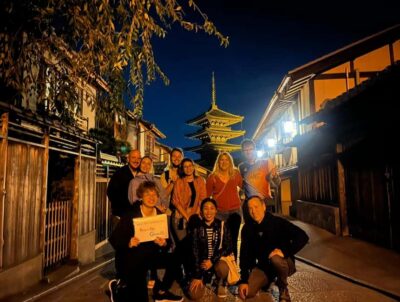
Gion Magical Night Walking Tour with Geisha Trivia
Read our review →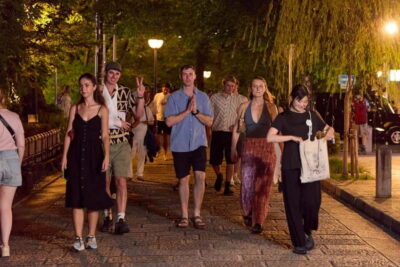
Gion Geisha District Walking Tour – Stories of Geisha
Read our review →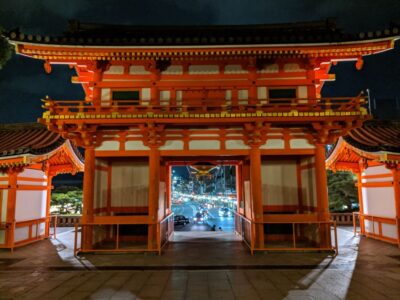
Best of Kyoto: Gion, Geisha, Pagodas & Cobblestones
Read our review →
Kyoto Night Foodie Tour in Gion (9+ dishes + 6 Sake tastings)
Read our review →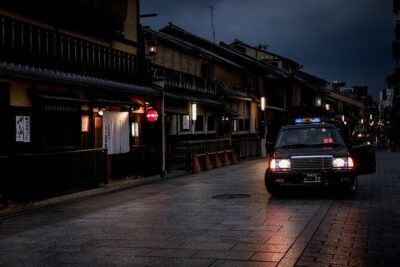
Kyoto Gion Geisha District Walking Tour – The Stories of Geisha
Read our review →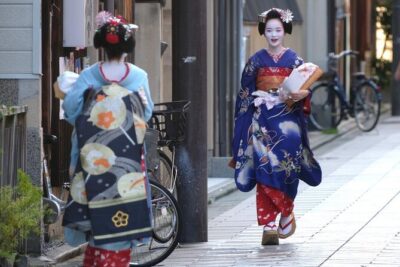
Kyoto Gion: 2-Hour Geisha Culture & History Walking Tour
Read our review →Browse the lists this tour appears in