
Reviewed · KYOTO PRIVATE CAR TOURS
Luxury Kyoto 1-Day Private Car Tour with Nara & Osaka Options
Kyoto’s famous sights are spread across the city, so this private car tour gives you a practical way to see several of them in one day without wrestling with trains, buses, and crowded transfers. You can visit Kinkaku-ji, Arashiyama, Gion, and Fushimi Inari with your own English-speaking guide, then adjust the pace to suit your group.
I like the hotel pickup and drop-off, along with parking, fuel, expressway fees, bottled water, and professional photos. I also like the flexible route, especially if you want to swap Kyoto for Nara or Osaka. The main caution is space: six people found the rear seat cramped, so ask about the vehicle before booking for a larger group.
Key points
- One private vehicle for 8 to 9 hours: Your group travels together, with no strangers joining the tour.
- Photos are part of the service: The guide can take professional travel photos, even in less-than-perfect weather.
- Kyoto’s major sights fit into one day: Kinkaku-ji, Arashiyama, Tenryu-ji, Gion, and Fushimi Inari are included in the usual route.
- Nara and Osaka can be added by arrangement: The plan is not limited to the standard Kyoto circuit.
- Transport costs are covered: Parking, gasoline, expressway fees, and hotel transfers are included.
- Admission and meals cost extra: You pay for your own food, your guide’s meals, and entrance fees.
A private car is the smart part of this Kyoto day
At $185 per person, this is not a budget sightseeing shuttle. It is a private day with a driver-guide, hotel pickup, a vehicle, road costs, and photography. The value improves if you are traveling with family or friends and would otherwise need several taxis or a complicated mix of public transport.
The car also helps with Kyoto’s geography. Kinkaku-ji is in the northwest, Arashiyama sits farther west, Gion is in the historic center, and Fushimi Inari is south of central Kyoto. Reaching all of these places in one day by public transport is possible, but it takes planning and patience.
You should still expect walking at every major stop. The car gets you between districts, not through temple grounds, bamboo paths, shrine approaches, or old streets. Wear shoes that can handle uneven pavement and bring layers, since you will move between open-air sites and shaded paths.
The tour lasts about 8 to 9 hours. That is enough time for a strong first look at Kyoto, but not enough for a slow visit at every temple, a long meal, and a full climb through all the torii gates at Fushimi Inari. Your guide can adjust the order and length of stops, but you will need to decide what matters most.
More day trips down to Nara:
- Osaka/Kyoto:Kinkakuji,Arashiyama,FushimiInariShrine,NaraPark
★ 4.1 · 1,596 reviews - Kyoto/Osaka: Nara, Fushimi Inari Taisha, Arashiyama Bus Tour
★ 4.7 · 1,275 reviews - Osaka/Kyoto: Arashiyama, Nara & Fushimi Inari Shrine w/Lunch
★ 4.4 · 754 reviews
Kinkaku-ji gives you the classic Kyoto photograph
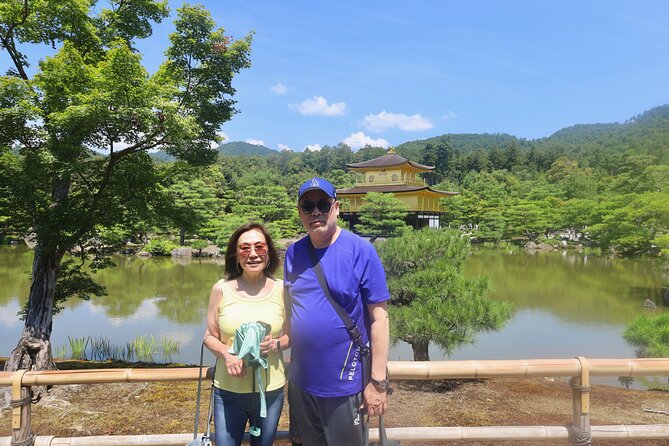
The day usually begins at Kinkaku-ji, the Golden Pavilion. The gold-covered temple sits beside a pond, with carefully arranged gardens around it. The view is designed for a quick visual impact: temple, reflection, water, and trees in one frame.
You get about an hour here. That is a sensible amount of time for the main view and a walk through the grounds, though anyone who enjoys gardens may want longer. Admission is not included, so keep extra money available for this and other paid temple visits.
This is one of the places where the photography service can be useful. The guide can help position you for a group photograph rather than leaving you to rely on a passing stranger. You will also want a little patience, since the most familiar view can become crowded.
Kinkaku-ji is a visual stop more than a quiet one. If you want a long, reflective temple visit, the schedule may feel brisk. If you want to see one of Kyoto’s most recognizable sights without spending half a day there, the hour works well.
Arashiyama combines bamboo, river views, and temple gardens
Arashiyama receives three separate parts of the day: Bamboo Forest Street, the wider Arashiyama district, and Tenryu-ji Temple. That division makes sense because these are different experiences, even though they sit close together.
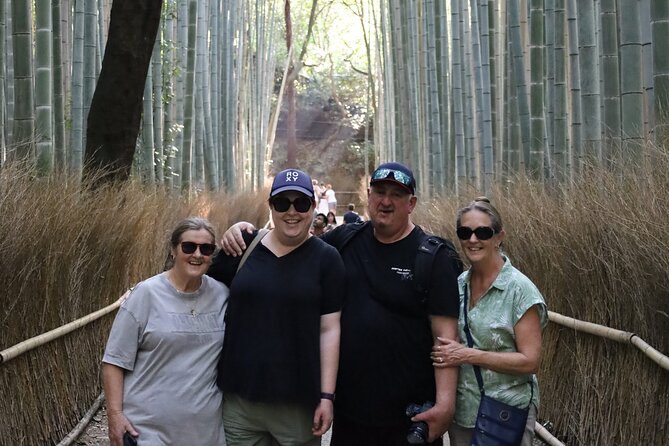
The bamboo path takes about an hour. Tall green stalks rise on both sides of the walkway, creating one of Kyoto’s most memorable scenes. The path is not a wilderness trail. It is a popular public route, and the appeal comes from the height of the bamboo and the gentle sound of the leaves.
Your guide can help you make the most of the time by keeping the stop focused. You will not have hours to wander every side street, so decide if you want photos, a slow walk, or a quick look before moving on.
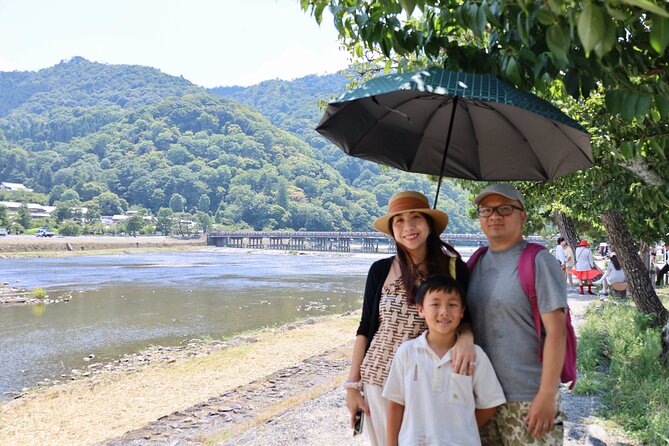
The wider Arashiyama stop adds a different note. You can walk near Togetsukyo Bridge, browse local shops, and get a feel for the district beyond the bamboo path. One hour is enough for a short stroll and some photos, but it is not enough to explore every temple and shop in the area.
Tenryu-ji follows with about 30 minutes. This UNESCO World Heritage Zen temple is known for its garden and its calm, simple design. The gardens express the Japanese idea of wabi-sabi, where age, change, and restraint matter more than decoration.
Admission is extra, and half an hour is a compact visit. I would treat Tenryu-ji as a focused garden stop rather than a full temple exploration. If this is the place you most want to study, tell your guide early and consider shortening another stop.
Arashiyama is also where the schedule can begin to feel full. Bamboo Forest Street, Togetsukyo Bridge, shops, and Tenryu-ji all compete for your attention. The private format helps, since your guide can respond to your energy and interests instead of following a fixed group timetable.
Gion adds old streets and living cultural traditions
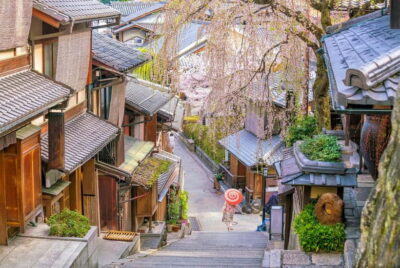
Gion receives about 30 minutes, giving you a short walk among traditional wooden teahouses and narrow streets. The district is tied to Kyoto’s geiko and maiko traditions, and a guide can explain the difference between seeing old architecture and understanding the people and customs connected with it.
Half an hour is enough to get a sense of the area, but it is not a full Gion visit. You may want more time for side streets, shops, or a meal, especially if Kyoto’s traditional neighborhoods are your main reason for booking.
The private guide is useful here because context matters. A simple walk past wooden buildings can feel flat without an explanation of what the district is used for and how geiko and maiko culture fits into Kyoto life. The guide’s English ability has been praised, and Ryu in particular has been described as clear, friendly, and easy to communicate with.
Keep your expectations respectful. Gion is not a stage set built for photographs. You are walking through a real historic district, so follow your guide’s advice about photography and avoid blocking narrow streets.
More days that pair Kyoto with Osaka:
- One-Day Tour of Kyoto’s Highlights from Osaka/Kyoto
★ 4.5 · 1,092 reviews - Full Day Guided Tour to Kyoto and Nara from Osaka by Van
★ 5.0 · 420 reviews - Nara Afternoon Tour from Kyoto or Osaka
★ 4.5 · 390 reviews - Kyoto Morning Tour from Kyoto or Osaka
★ 4.0 · 281 reviews
Fushimi Inari ends the day with vermilion torii gates
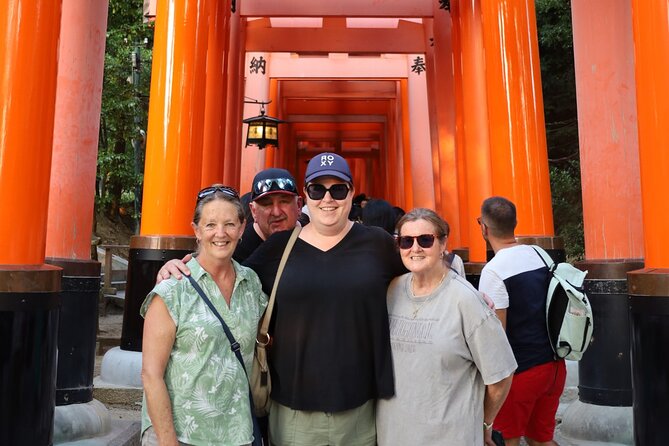
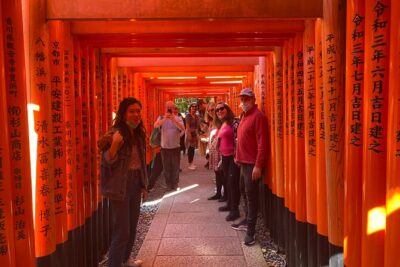
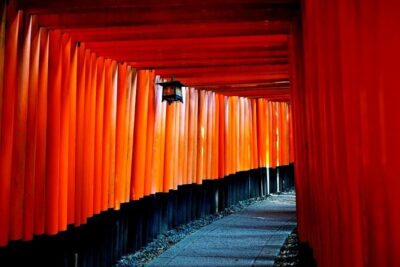
Fushimi Inari Taisha is scheduled for about an hour. Its hillside path is lined with thousands of vermilion torii gates, creating the famous tunnel effect seen in photographs of Kyoto.
An hour lets you enter the shrine grounds and walk through an opening section of the torii route. It does not allow a relaxed climb across the entire hillside. If you want to go farther uphill, you may need to shorten earlier stops or ask the guide to build the day around Fushimi Inari.
The shrine is free to enter according to the tour information, though the general notes also advise that admission fees for attractions are not included. The safest approach is to budget for any paid site and confirm the day’s planned entrances with your guide.
Ending here can work well because the shrine offers a strong final image and a change from temples and shopping streets. It can also be tiring after a full day of walking. Good shoes and realistic expectations matter more than trying to cover every gate.
Nara and Osaka give the private format more range
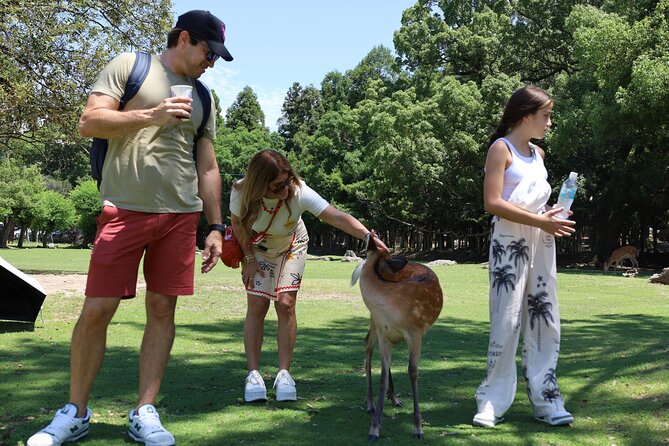
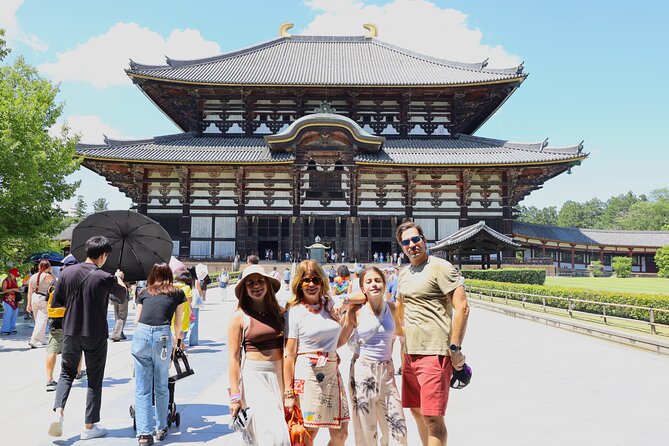
The experience can be arranged from Kyoto, Osaka, or Nara, and flexible itineraries are available for different starting points. A Nara-focused day can include Deer Park and the Great Buddha, while other plans may combine Kyoto with Nara or create a route from Osaka.
This flexibility is useful if you are staying outside Kyoto or have already visited some of the standard sights. You can ask for a route built around your group’s priorities rather than repeating places you have already seen.
The tradeoff is time. Kyoto, Nara, and Osaka are separate destinations, so adding more cities can turn the day into a broad introduction instead of a detailed visit. You should decide if you prefer several headline sights or a slower look at fewer places.
Confirm the exact route at booking. The standard schedule described here is a Kyoto circuit, while the Nara and Osaka options are flexible rather than a single fixed program. The private format gives you room to shape the day, but it does not remove the distances between cities.
The guide makes the difference
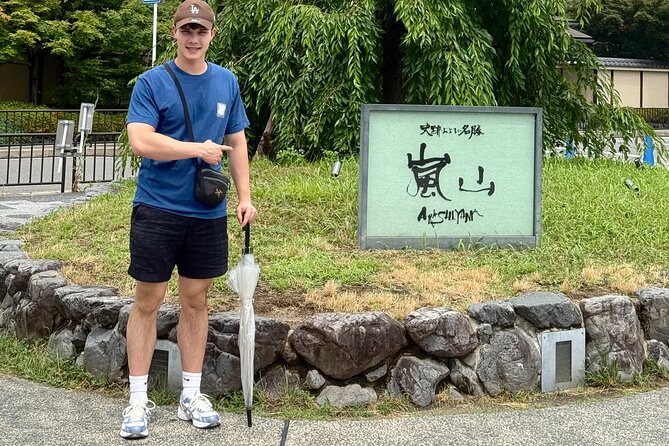
The strongest part of this experience is the guide’s role. You are not simply hiring a car. You are getting an English-speaking guide who can explain each place, adjust the timing, answer questions, and take photographs.
Ryu has guided several departures and is described as professional, friendly, flexible, and easy to understand in English. He has also been able to fit in requested stops and adjust the schedule during the day. Talha has been described as punctual, pleasant, and helpful, including when a group wanted convenience-store stops and an added stop.
The specific guide may vary, so ask who is assigned to your date if that matters to you. The descriptions point to a service style that is polite and accommodating, but every private tour depends on the person leading it.
The photography is a worthwhile extra. You can enjoy the day without assigning one member of your group to carry the camera and take every picture. The service has also worked in rain, with photos still providing useful memories of the day.
What the $185 price really covers
The $185 per-person price includes more than admission to sights. You receive a private air-conditioned vehicle, hotel pickup and drop-off, an English-speaking guide, parking, gasoline, expressway fees, bottled water, and professional travel photos.
That package can be good value for a family or small group that wants convenience. It is less compelling if you are a solo visitor who is comfortable with trains and buses, or if you plan to visit only one or two sites.
Plan for additional costs. Lunch is not included, personal expenses are extra, and entrance fees are paid separately. You are also responsible for your guide’s meal. These costs are ordinary for a private full-day tour, but they should be included in your budget before you compare the price with a self-guided day.
The real benefit is control. You can pause for a requested stop, change the pace, and return to your hotel without figuring out a late connection. That convenience has practical value in Kyoto, especially when your day includes several districts.
Group size and comfort need a closer look
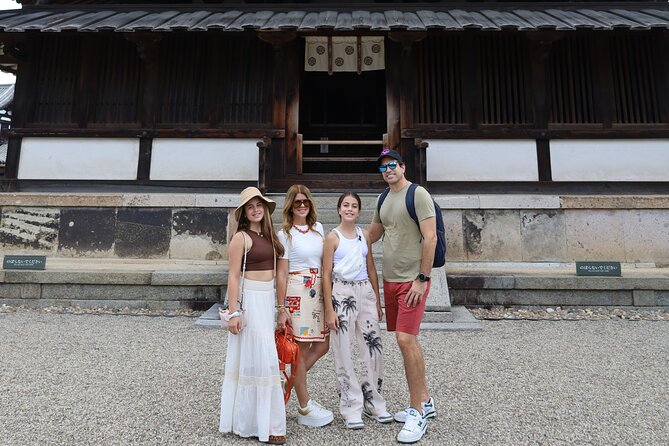
This is a private tour for your group only, not a shared bus. Most people can participate, service animals are allowed, and the pickup service makes the day easier for families and groups carrying bags or dealing with mobility concerns.
Vehicle space deserves a direct question. A group of six found that three people in the back seat felt cramped. That does not make the tour unsuitable for six, but it means you should ask about the vehicle size and seating arrangement before paying.
The air conditioning and bottled water are welcome during a long day. Still, the car is a transfer base, not a place where you spend the whole day. You will repeatedly get out, walk, stand, and climb.
The tour requires good weather. If poor weather forces cancellation, you can receive a different date or a full refund. You can also cancel for a full refund up to 24 hours before the start time, but changes or cancellations inside that window are not accepted.
Who should book this Kyoto tour?
I would choose this tour if you want Kyoto’s major sights in one day and value a guide who can handle the driving, route, explanations, and photos. It suits families, couples, first-time visitors, and culture lovers who prefer a private schedule to a large group.
It is also a good match if you are staying in Osaka or Nara and want a private route rather than arranging several train connections. The Nara option is especially useful if the Great Buddha and Deer Park are higher priorities than a full Kyoto temple circuit.
I would hesitate if you want long visits at each site, a slow lunch, or a complete hike through Fushimi Inari. The schedule covers a lot, and the stops are timed for highlights. I would also hesitate for six adults unless the vehicle is confirmed to be comfortable.
Should you book it?
Book this tour if time, transport, and flexibility matter more to you than the lowest possible price. The guide can adjust the pace, include requested stops, explain the cultural setting, and take photographs while you enjoy the day.
Before booking, confirm your pickup city, preferred route, guide, vehicle size, and which sites you want to enter. If you accept a full day of highlights rather than an unhurried study of every temple, the tour offers a useful and comfortable way to meet Kyoto.
FAQ
How long does the private Kyoto car tour last?
The tour lasts approximately 8 to 9 hours.
What sights are included in the usual Kyoto route?
The usual route includes Kinkaku-ji Temple, Bamboo Forest Street, the Arashiyama district, Tenryu-ji Temple, Gion, and Fushimi Inari Taisha.
Are hotel pickup and drop-off included?
Yes. Hotel pickup and drop-off are included.
Are meals and admission fees included?
No. You pay for your own lunch and personal expenses, your guide’s meal, and admission fees at attractions.
Can the tour start from Osaka or Nara?
Yes. Flexible itineraries are available from Kyoto, Osaka, or Nara, and Nara and Osaka options can be arranged.
What happens if I need to cancel?
You can cancel at least 24 hours before the start time for a full refund. Cancellations or changes made less than 24 hours before the start time are not accepted for a refund.
More Private Car Days in Kyoto
- Private Kyoto Tour with Licensed Guide & Vehicle (Max 15 persons)
★ 5.0 · 417 reviews - Kyoto: Private Customizable Day Tour with Guide and Vehicle
★ 4.9 · 334 reviews - Kyoto: Private Highlights Tour with Guide and Luxury Vehicle
★ 4.6 · 316 reviews - Explore Kyoto | Private Tour – Local English Driver(guide option)
★ 4.5 · 203 reviews
Newest Kyoto experiences on the site
- Treasures of Kyoto: Gion & historical Walking Tour★ 5.0 · 6 reviews
- Whisk Your Own Matcha: A Zen Matcha Experience at Temple★ 3.6 · 7 reviews
- Kyoto tea town for matcha lovers★ 5.0 · 16 reviews
- Uji: Private immersion into Kyoto’s tea and reglious culture★ 5.0 · 17 reviews
- Kyoto Matcha Green Tea Tour★ 4.5 · 23 reviews
- Uji and Wazuka Matcha Farm Half Day Private Guided Tour★ 5.0 · 21 reviews
- Utilising upcycled Matcha! Creating matcha incense (Uji, Kyoto)★ 5.0 · 6 reviews
- Sacred Temple Yoga Experience in Japan★ 5.0 · 3 reviews
Kyoto Private Car Tours, compared.
Private Kyoto Tour with Licensed Guide & Vehicle (Max 15 persons)
Read our review →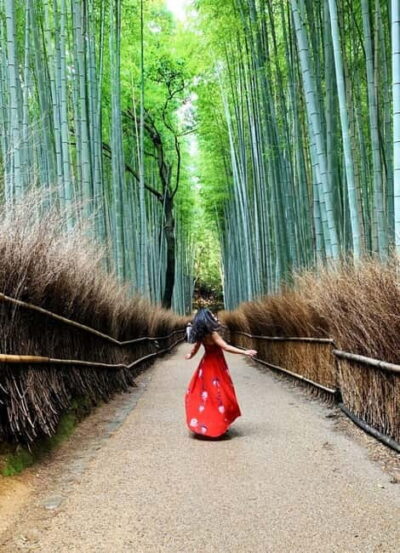
Explore Kyoto | Private Tour – Local English Driver(guide option)
Read our review →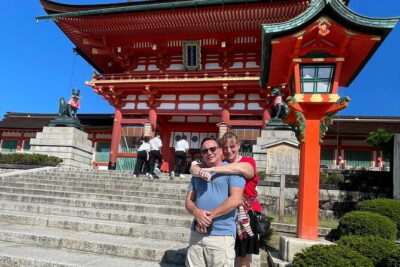
Kyoto Private Car Tour – Full Day with Local Guide & Nara Option
Read our review →
Kyoto Private 6 hour Tour: English Speaking Driver Only, No Guide
Read our review →Browse the lists this tour appears in