
Reviewed · KYOTO CALLIGRAPHY CLASSES
Private Japanese Calligraphy in Kyoto – Learn Shodō with a Master
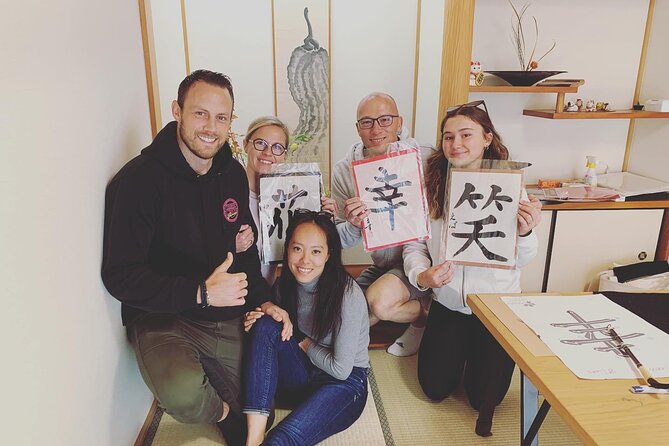
The most memorable part of this Kyoto experience is its setting: you learn Shodō, Japanese calligraphy, inside a local home rather than in a large studio packed with other visitors. Aya Ito, who has practiced calligraphy for more than 55 years, leads the private class with help from her husband, Manabu.
I like the one-group-only format, because Aya can correct your hand position and brush movement as you work. I also like the finished keepsake: you choose a kanji, practice it, and take home artwork made by you, not a souvenir pulled from a shop shelf.
The main drawback is the tight one-hour schedule. If you want a long lesson, detailed cultural discussion, or several large pieces, you may feel rushed. Finding the home can also take care, so bring clean socks and allow time to locate the entrance.
Key points to know before booking
- Private lesson near Nijo Castle: Your group has the room and teacher to itself at a Kyoto home.
- Aya Ito leads the class: She brings more than 55 years of calligraphy practice to a calm beginner-friendly lesson.
- You make your own souvenir: Choose a favorite kanji and write your name in Japanese.
- A short, focused activity: The class lasts about one hour, making it easy to fit into a busy Kyoto day.
- Bring clean socks: The lesson takes place in a tatami room, and bare feet are not permitted.
- Best for motivated children and adults: Children under 12 cannot be accommodated, while older children can take part if they are interested.
Learning Shodō in a Kyoto home
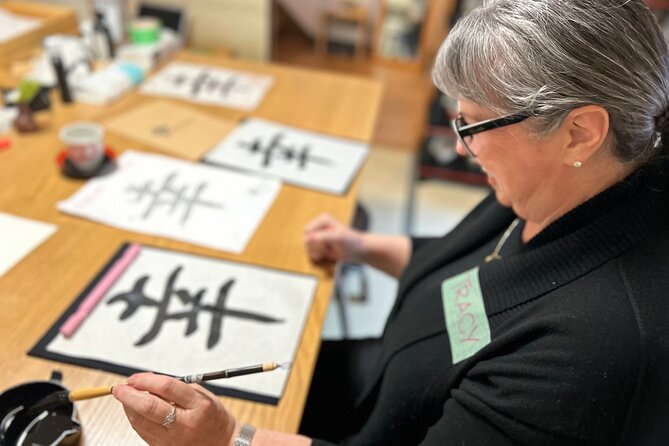
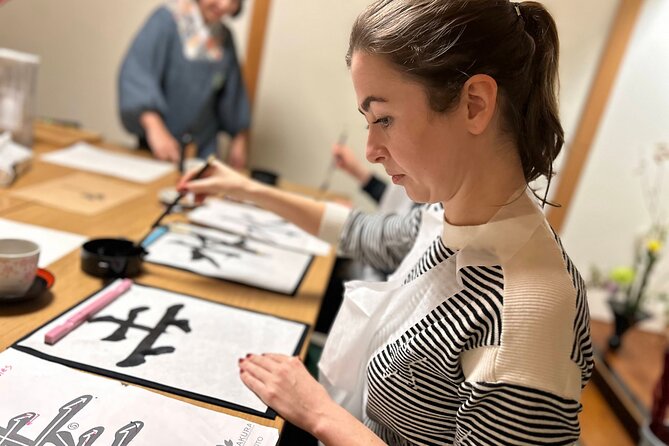
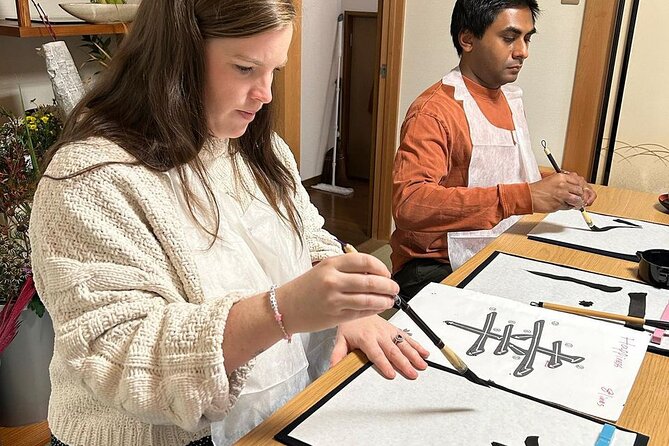
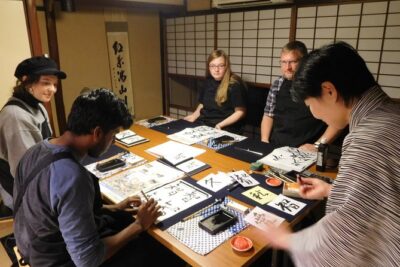
This is not a demonstration where you watch an artist work and then leave. You sit at the table, hold the brush, load it with ink, and try to guide each stroke yourself.
That difference matters. Japanese calligraphy looks simple from across the room, but the brush responds to pressure, angle, speed, and the amount of ink. A short line can look heavy or weak depending on how you begin and finish it. Aya’s job is to slow the process down and show you what your hand should do.
The atmosphere is personal. The class takes place in a welcoming home with a studio room prepared for calligraphy. You remove your shoes before entering the tatami room, so clean socks are essential. Bare feet are considered impolite in this setting.
Aya teaches in English and Japanese. The English instruction is useful for first-time students who need clear guidance on brush movements and character shapes. You can also ask questions about calligraphy, Japanese customs, or the meaning of the character you choose.
Aya and Manabu have offered tea and traditional Japanese sweets during some sessions, and they may take photographs of your class and share them afterward. These touches are not the main reason to book, but they help the visit feel like time spent in a real home rather than a quick craft stop.
More calligraphy classes in Kyoto:
- Kyoto: Calligraphy class at Buddhist temple in city center
★ 5.0 · 167 reviews - Kyoto: Japanese Calligraphy Class
★ 4.8 · 89 reviews - Kyoto: Japanese Calligraphy Workshop
★ 4.7 · 84 reviews
What happens during the one-hour class
The visit begins at SAKURA Experience Japanese Culture Nijo Home, at 660 Izumicho in Nakagyo Ward. The house is about 200 meters west of the front of Nijo Castle, a useful landmark when you are finding your way.
Once inside, Aya introduces the art and explains the basic idea behind Shodō. You will learn that calligraphy is not only about copying a symbol correctly. The movement of the brush, the balance of the character, and the state of mind behind the stroke all matter.
You then practice with the supplied tools and paper. The class is designed for beginners, so you do not need previous calligraphy experience. Aya is patient and encouraging, which is especially helpful if you are nervous about making a mistake.
You work through brush movements before attempting a final piece. The practical lesson is simple but important: do not treat the brush like a pen. You use controlled movements and let the brush create thick and thin lines through pressure and direction.
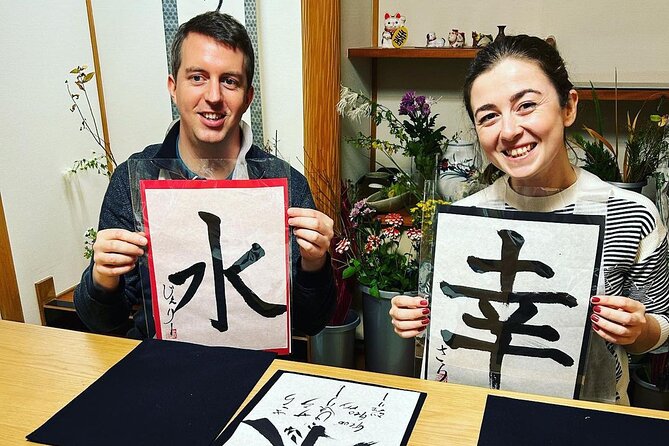
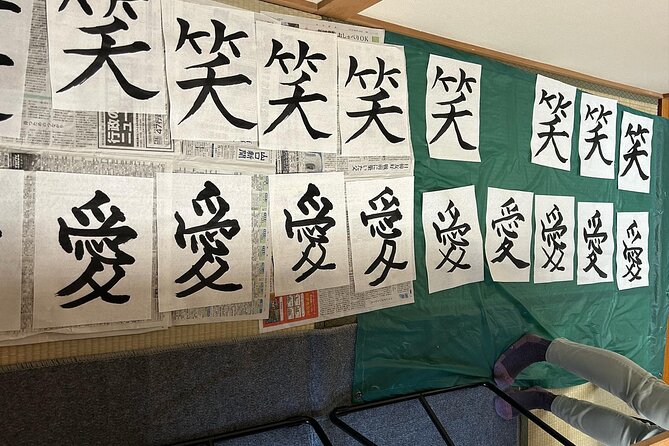
Next, you choose a kanji character. You may select a character that has personal meaning, such as one connected to family, strength, peace, love, or another idea you want to remember from Japan. The information provided for the class does not promise an unlimited selection or a long consultation, so arrive with a general idea if you already have a favorite.
You can also write your name in Japanese. This is a nice addition, but time is limited. A long name may take much of the session, especially if you are still learning the brush basics. If writing your name matters most to you, tell Aya at the start rather than waiting until the end.
The class finishes with your artwork to take home. Some participants have produced several examples, while others have focused on one or two finished pieces. Your result will depend on your pace, the complexity of the character, and how much time you spend practicing.
Why the private format matters
A private class is worth more here than it might be in a standard painting workshop. Calligraphy depends on small corrections. If your wrist is too stiff or your brush is leaning in the wrong direction, a teacher needs to see it quickly.
With only your group present, you can ask the same question more than once without holding up a room full of strangers. You can also work at your own level. One person may want careful help with every stroke, while another may prefer to practice independently after a short demonstration.
The private arrangement also creates room for conversation. Aya has answered questions about Japanese culture beyond the mechanics of writing, and Manabu sometimes helps welcome the group. The result can feel more like a cultural exchange than a fixed classroom presentation.
There is a limit, though. Private does not mean unlimited. The scheduled session lasts about an hour, and the activity has a clear structure. If you stop practicing early, the class will not turn into a long private lecture automatically. One piece of direct feedback described the session as feeling rushed, and that is a fair consideration for anyone hoping for a serious art course.
Think of this as a well-guided introduction, not a full apprenticeship. You will learn the basic feel of the brush, produce personal artwork, and gain some cultural context. You will not master Japanese calligraphy in one sitting.
Aya Ito’s teaching style
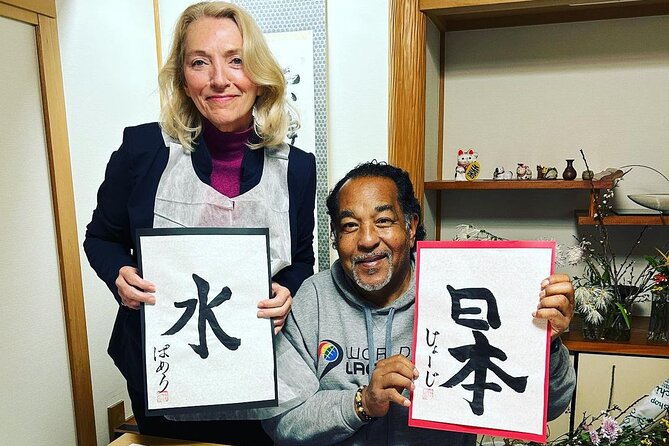
Aya’s long experience is one of the strongest reasons to choose this class. More than 55 years of practice gives her a deep familiarity with the discipline, and she understands how intimidating the first attempt can feel.
The teaching style is gentle rather than formal or demanding. Beginners receive hands-on guidance, encouragement, and practical corrections. Several people have found the class suitable even when they arrived apprehensive about their artistic ability.
That matters because calligraphy can punish hesitation. You may worry that your first line looks poor, then press too hard and make the next one worse. A calm teacher helps you keep going. Aya’s approach focuses on improvement rather than perfection.
She also explains the background of calligraphy and the role of brush movements. The amount of cultural explanation can vary with the pace of your group. Some sessions include a short history lesson, while others place more weight on practice. If the cultural side interests you, ask questions as you go rather than expecting a long formal talk.
The language option is English and Japanese. This is a practical point for international visitors. You can receive instruction in English, but the class is still a Japanese cultural experience in a Japanese home, so simple, direct questions will work best.
A few more Kyoto tours worth putting on the shortlist
- PERFECT KYOTO 1-Day Bus Tour
★ 5.0 · 13,518 reviews - Kyoto: Fushimi Inari, Kinkakuji, Bamboo Grove 1 Day Bus Tour
★ 4.8 · 4,316 reviews - Kyoto: Tea Ceremony in a Traditional Tea House in Kiyomizu
★ 4.9 · 3,519 reviews - Kyoto Geisha Walking Tour: Gion District & Hidden Gems
★ 4.7 · 3,273 reviews
Your artwork and what you take home
The finished work is the best reason to schedule this class instead of simply visiting a museum or watching a demonstration. You leave with a personal reminder of Kyoto that records your own effort.
The activity includes the paper, ink, brushes, and other calligraphy tools needed for the lesson. You do not have to pack supplies or shop for equipment beforehand. If you become interested in continuing at home, a local shop has been recommended to some participants for buying brushes and related tools.
Do not expect every finished piece to look like Aya’s work. That is not a weakness. Her brush control comes from decades of practice, while you are learning in an hour. The value is in understanding the process and taking home something you made under her guidance.
Your chosen kanji may carry more meaning than a generic souvenir. You can select a character connected to a personal idea, and writing your name adds another layer. If you want artwork for a specific occasion, such as a family gift or a child’s room, say so early and keep the design manageable.
One useful caution concerns expectations around famous phrases. Wabi-sabi, for example, can be difficult for beginners to write, and its use as home decoration is not as straightforward in Japan as it may be abroad. Aya can help you choose a workable character, but you should not assume that every popular phrase has the same cultural use in Japan.
Getting to the Nijo Castle area
The meeting point is in central Kyoto, close to Nijo Castle and public transportation. The address is 660 Izumicho, Nakagyo Ward, Kyoto, postal code 604-0015.
The location itself is convenient, but finding the exact entrance can be the least smooth part of the experience. A Google Maps pin may be accurate while the street-view image shows a different location. Look at the map pin and the surrounding streets rather than relying only on the photograph displayed in the app.
Use Nijo Castle as your visual reference, and allow extra time. The home is roughly 200 meters straight west from the front of the castle. Read the arrival instructions carefully, including any map link or entrance photograph sent after booking.
Do not arrive at the last second. If you are more than 15 minutes late, the class may not be able to start, and no refund is offered for that missed session. Kyoto’s streets can look similar, and public transportation delays can happen, so contact the provider as soon as possible if you are delayed.
The activity ends back at the same meeting point. Private transportation is not included, so you make your own way there and continue independently afterward.
Price, timing, and overall value
The listed price is $77.51 per person. That is not the cheapest one-hour activity in Kyoto, but it includes a private class, an experienced instructor, all calligraphy materials, guidance in choosing and writing a kanji, and finished artwork to take home.
The value depends on what you want. If you are looking for a quick, low-cost craft, the price may feel high for a one-hour session. If you value personal instruction, a local home setting, and a useful souvenir, the cost is easier to justify.
I especially like the fact that you do not pay separately for brush and paper rental. You also avoid the uncertainty of joining a large group where the teacher has little time for each person. Group discounts are available, which can improve the value for families or friends booking together.
The class is often booked well ahead, with an average advance booking time of 54 days. That suggests you should reserve before your Kyoto dates are fully packed. Free cancellation is available up to 24 hours before the start time. Changes or cancellations inside that window are not accepted for a refund.
At one hour, this fits nicely on a day when you are visiting Nijo Castle or exploring central Kyoto. It is also a sensible indoor plan during rain. Just remember that the short duration means you should decide what you most want from the lesson before you arrive.
Who should book this calligraphy class
I would choose this for adults, couples, families with older children, and anyone who wants a hands-on cultural activity rather than another sightseeing stop. It is especially suitable if you like bringing home a personal object with a story behind it.
Children under 12 cannot be accommodated. Older children can take part, but motivation matters. A child who wants to try brush writing may enjoy the class, while a child who is simply being dragged along may find the quiet setting and careful practice difficult.
This is also a good choice for people who feel they are not artistic. You do not need polished handwriting or previous experience. Aya’s patient instruction gives you a way into the art without requiring you to perform for anyone.
I would think twice if you want a long technical workshop, a formal tea ceremony, or a broad sightseeing tour. The class is focused on calligraphy. It offers some cultural explanation, but it does not replace a museum visit or a full day of traditional arts.
Should you book it?
Book this class if you want private instruction in a real Kyoto home, a calm break from busy sightseeing, and artwork you make yourself. Aya’s 55 years of practice, careful guidance, English instruction, and warm hosting make the experience particularly strong for beginners.
Go in with sensible expectations. One hour gives you an introduction, not mastery. You may feel rushed if you want to write a long name or produce many finished pieces, and you must take the location, socks requirement, age limit, and strict late-arrival rule seriously.
For most visitors who want one personal cultural activity in Kyoto, I would book it. Bring clean socks, start looking for the house early, and decide your preferred kanji before the brush touches the paper.
FAQ
How long does the Japanese calligraphy class last?
The class lasts approximately one hour.
Where does the calligraphy class take place?
It takes place at SAKURA Experience Japanese Culture Nijo Home, at 660 Izumicho, Nakagyo Ward, Kyoto, 604-0015, Japan.
Is the class private?
Yes. Only your group participates, so no other guests join your session.
Who teaches the class?
Aya Ito leads the class. She has practiced Japanese calligraphy for more than 55 years. Her husband, Manabu, may also help host the session.
Is the class offered in English?
Yes. The activity is offered in English and Japanese.
Do I need previous calligraphy experience?
No. The class is designed as an introduction, and beginners receive guidance on brush movements and writing kanji.
Can I take my artwork home?
Yes. Your finished calligraphy artwork is included and can be taken home.
Can children join the class?
Children under 12 cannot be accommodated. Older children may participate if they are motivated and able to take part in the quiet learning environment.
What should I bring to the class?
Bring or wear clean socks because the lesson takes place in a tatami room and bare feet are not permitted. You should also allow extra time to find the entrance, since the map street-view image may not match the exact home.
Newest Kyoto experiences on the site
- Whisk Your Own Matcha: A Zen Matcha Experience at Temple★ 3.6 · 7 reviews
- Treasures of Kyoto: Gion & historical Walking Tour★ 5.0 · 6 reviews
- Kyoto tea town for matcha lovers★ 5.0 · 16 reviews
- Uji: Private immersion into Kyoto’s tea and reglious culture★ 5.0 · 17 reviews
- Kyoto Matcha Green Tea Tour★ 4.5 · 23 reviews
- Uji and Wazuka Matcha Farm Half Day Private Guided Tour★ 5.0 · 21 reviews
- Utilising upcycled Matcha! Creating matcha incense (Uji, Kyoto)★ 5.0 · 6 reviews
- Sacred Temple Yoga Experience in Japan★ 5.0 · 3 reviews
Kyoto Calligraphy Classes, compared.
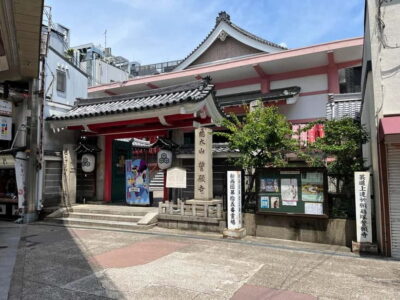
Calligraphy class at Buddhist temple in city center
Read our review →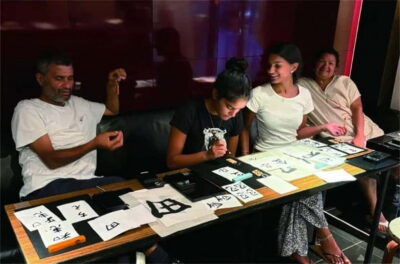
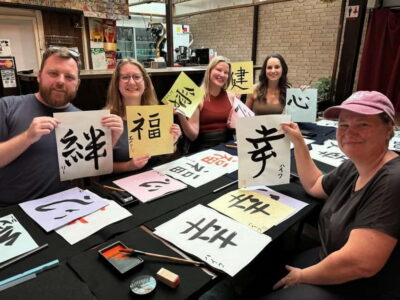
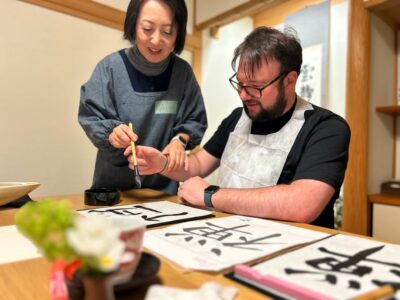
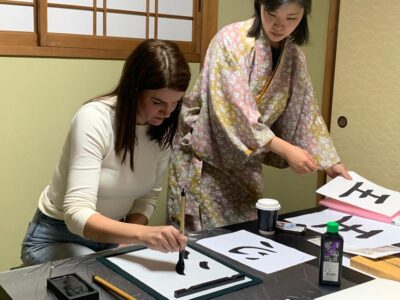
Kyoto Ninenzaka : Japanese Calligraphy Class in Townhouse
Read our review →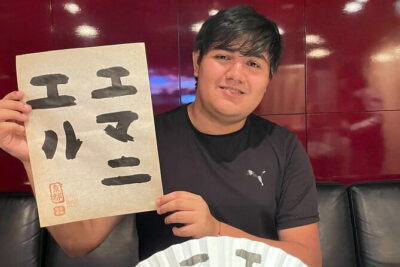
Japanese Calligraphy – Shodo – Lesson (near Kyoto Station)
Read our review →
Browse the lists this tour appears in