
Reviewed · KYOTO CALLIGRAPHY CLASSES
Kyoto Ninenzaka : Japanese Calligraphy Class in Townhouse
Kyoto’s Ninenzaka is a fine place to slow down and try something with your hands. In this 50-minute Japanese calligraphy class, you learn shodō in a townhouse near Kiyomizu Temple, working with brush, ink, paper, and simple kanji. The peaceful setting gives the lesson more meaning than a quick souvenir stop.
I like the small-class feel and patient instruction, which give you room to ask questions and correct your brushwork. I also like the location, tucked at the end of the alley beside the Starbucks on Ninenzaka, so you can pair the class with Kiyomizu Temple and Kyoto’s old streets. The main drawback is the short length: you will learn the basics, not become a calligraphy expert.
Key points to know before booking
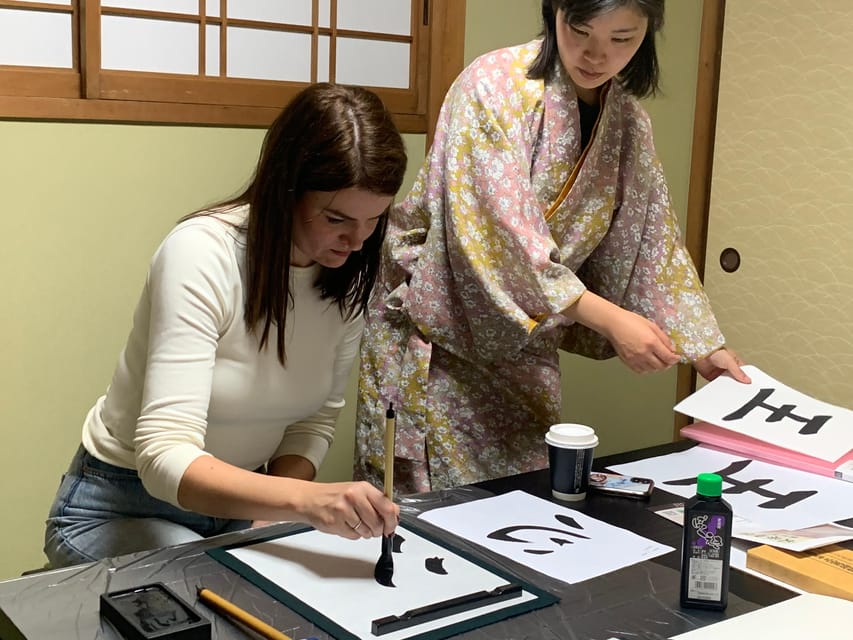
- You practice real shodō tools: Use a brush, ink stick, inkstone, paper, and paperweight rather than simply copying a printed character.
- The class is near Kiyomizu Temple: Find the venue at the end of the alley next to the Starbucks on Ninenzaka.
- Patient guidance suits complete beginners: No Japanese language or art background is needed, and English instruction is available.
- Your finished calligraphy goes home with you: The class provides a personal souvenir rather than a mass-produced trinket.
- Wear socks and clothes that can get dirty: Socks are required, and replacement socks cost extra if you arrive without them.
- The lesson is compact: In 50 minutes, you cover tools, brush control, basic strokes, kanji, and cultural context.
A quiet Kyoto lesson beside Ninenzaka
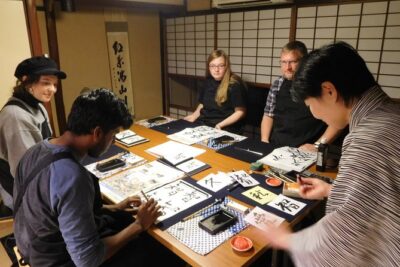
The setting does much of the work here. Ninenzaka is one of the most atmospheric parts of Kyoto, with sloping lanes, traditional buildings, tea shops, and a direct connection to the Kiyomizu Temple area. After the crowds and photography stops outside, stepping into a townhouse for a calm, hands-on lesson changes the pace of your day.
You should not expect a grand performance or a long formal ceremony. This is a practical introduction to shodō. You sit down, listen to the instructor, handle the tools, and practice. That simple format is the appeal.
The meeting point can be easy to miss if you are rushing. Look for the Starbucks on Ninenzaka, then follow the alley beside it toward the end. Since transportation is not included, plan your route to the area before class and allow time to find the townhouse. The location works best as part of a Kiyomizu Temple outing, not as a stand-alone trip across Kyoto.
More calligraphy classes in Kyoto:
- Kyoto: Calligraphy class at Buddhist temple in city center
★ 5.0 · 167 reviews - Kyoto: Japanese Calligraphy Class
★ 4.8 · 89 reviews - Kyoto: Japanese Calligraphy Workshop
★ 4.7 · 84 reviews
What the first few minutes teach you about shodō
The lesson begins with an introduction to Japanese calligraphy and its place in Japanese traditions. This matters because shodō is not just handwriting with a larger brush. The shape, order, pressure, and balance of each stroke all affect the finished character.
You learn basic ideas behind the practice and how seasonal themes and expressions can appear in calligraphy. That cultural context keeps the activity from feeling like a simple craft session. Even if you know no kanji, you can understand that each character carries structure and visual weight.
The instructor also introduces the basic tools. You learn about brushes, ink sticks, inkstones, paper, and paperweights, including how to use and care for them. For many people, this is one of the most interesting parts because the materials are unfamiliar and the process has its own rhythm.
The tools also create the right kind of limitation. A brush does not behave like a pencil. Ink flows according to pressure, speed, and the amount of moisture on the brush. You cannot force a perfect line by going back over it again and again. The mark is made, accepted, and studied.
Brush control is the real beginner lesson
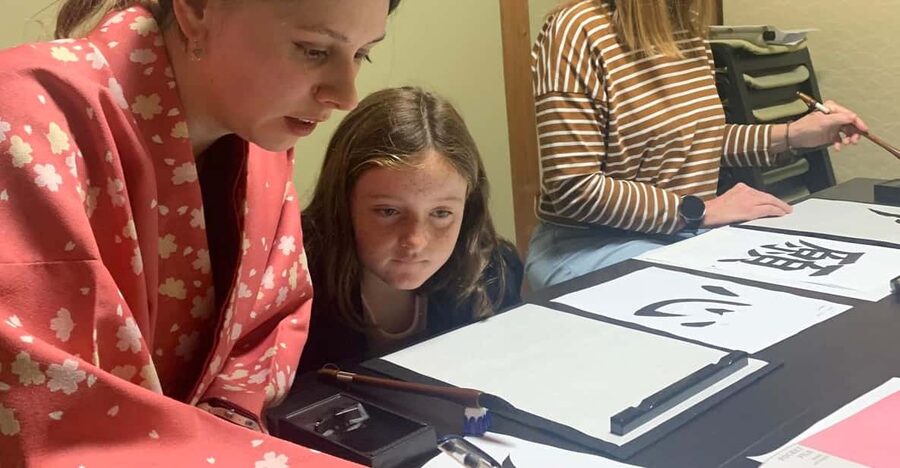
Holding the brush correctly sounds simple until you try to keep it steady. The instructor shows you how to position your hand and adjust pressure as you move. You work on the relationship between the brush tip and the paper, rather than relying only on your wrist.
The early practice focuses on lines, strokes, dots, and sweeps. These exercises may look basic, but they give you a clear sense of how calligraphy is built. A vertical line can be firm or hesitant. A horizontal line can be smooth or uneven. A dot can be short and controlled or too heavy.
I like this part because it gives you something useful right away. You do not need to know Japanese to see the difference between a confident stroke and a nervous one. You can also understand why the instructor’s careful guidance matters. Small changes in pressure can alter the width and character of the mark.
The activity has an unhurried atmosphere, but the schedule is still tight. You are not likely to spend a long time repeating every exercise. If you want detailed correction on each stroke, ask questions early. The English-speaking host or greeter can guide you, and the class is designed for beginners, but 50 minutes passes quickly.
Preparing the paper creates a calm pause
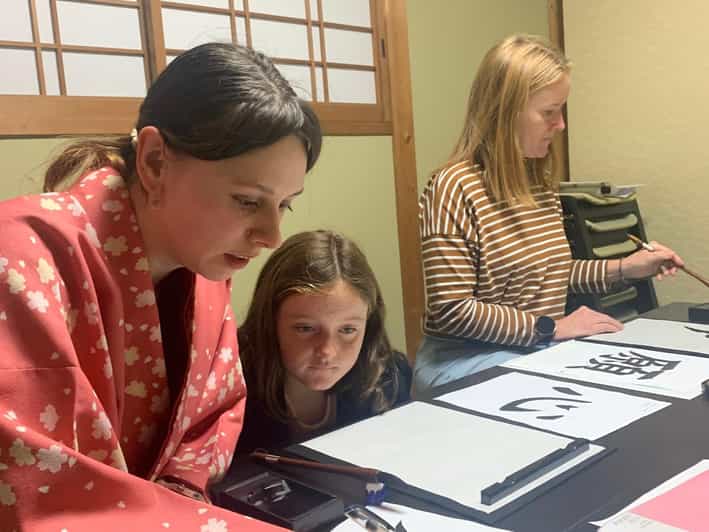
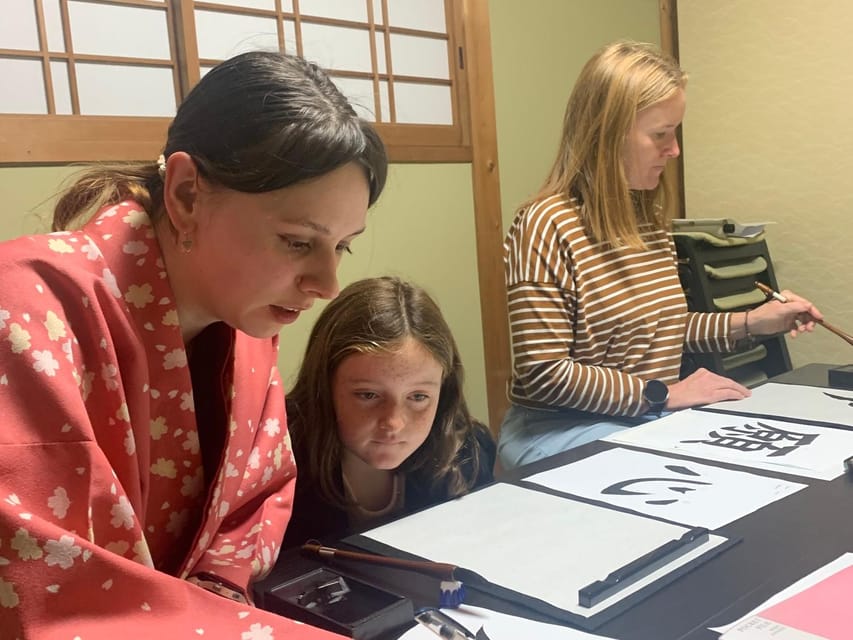
Before writing the main character, you learn how to use the paper and paperweight. This preparation may seem like a minor step, yet it is part of what makes the session feel different from ordinary drawing.
The paper must be placed and held in a way that lets the brush move cleanly. The paperweight keeps it from shifting while you work. These small actions slow you down and help you pay attention before the first mark is made.
That pause is valuable in the middle of a Kyoto sightseeing day. You may have spent the morning moving between temples, shops, and busy lanes. Here, the focus narrows to the paper in front of you, the brush in your hand, and the next stroke.
You should bring clothes that can get dirty. Ink can stain fabric, and the activity is hands-on. Socks are required, so wear them or pack a pair. If you arrive without socks, the venue can provide them for a fee.
More craft workshops in Kyoto:
- Kyoto: 45-Minute Tea Ceremony Lesson Experience
★ 4.3 · 2,378 reviews - Ramen Cooking Class at Ramen Factory in Kyoto
★ 5.0 · 1,937 reviews - Kyoto : Chopsticks Making Workshop in Gion with Engraving Option
★ 5.0 · 958 reviews - Kyoto: Samurai Sword Class by Experts in Traditional Arts
★ 4.9 · 657 reviews
Writing basic kanji and finding balance
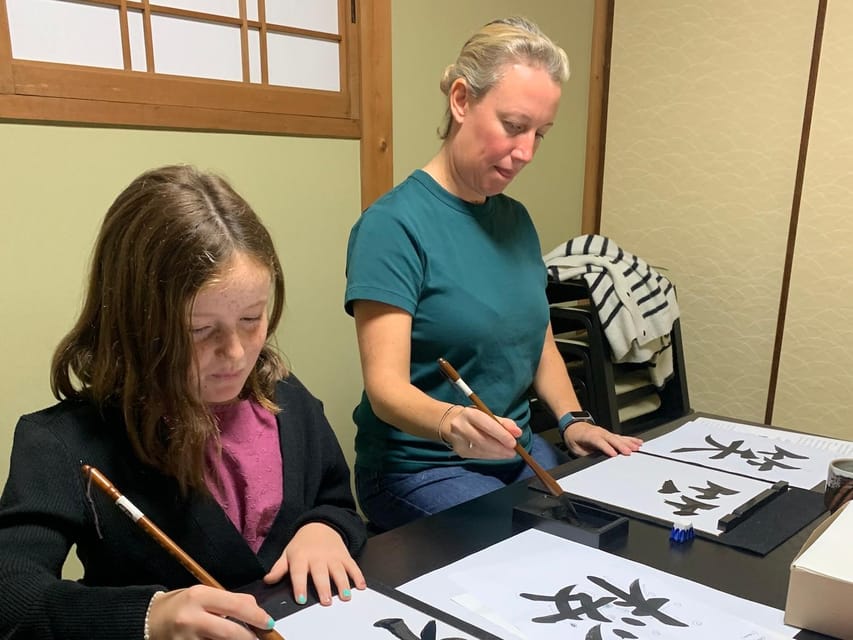
Once you have practiced the individual marks, you move on to simple kanji characters. The instructor helps you think about vertical and horizontal balance, spacing, and where each part of the character sits on the paper.
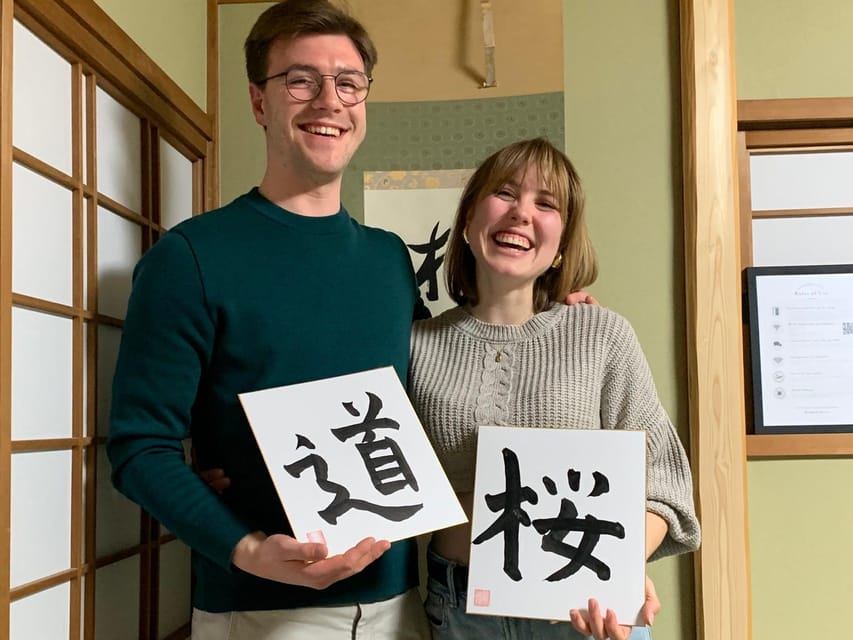
This is where the lesson becomes personal. Your finished character will not look exactly like the model, and that is part of the point. You see how your pressure, speed, and brush angle shaped the result. With guidance, you can make adjustments on the next attempt.
The class is not presented as an advanced study of Japanese writing. You will not cover a large number of characters in less than an hour. Instead, you learn the foundations well enough to understand what you are doing and produce a piece you can keep.
The final calligraphy serves as your souvenir. That gives the activity more staying power than a short demonstration. You can take home something made by your own hand, along with the memory of learning why the character looks the way it does.
An original booklet about calligraphy is included as well. It gives you something to refer to after the class and helps put the basic techniques into context.
What the reviews reveal about the teaching
The strongest praise centers on the instructors. One recent booking described them as kind, patient, and excellent teachers, while another praised the master and assistant for showing numerous techniques and offering frequent guidance.
That distinction matters. A calligraphy class can become frustrating if the teacher demonstrates once and leaves you to copy alone. Here, the available feedback points to a more involved teaching style, with a small class giving you opportunities to ask questions.
The group size is not specified as a fixed maximum, so you should not assume a private lesson. Still, the available experience indicates that the class can be small enough for direct help. If personal feedback is important to you, consider booking ahead rather than relying on a last-minute place.
The class has earned a rating of 5 from 59 reviews, and the most useful praise is specific: people enjoyed the small setting, the patient instruction, and leaving with a handmade kanji symbol. Those are the elements I would use to judge the activity, not just the perfect score.
There is one practical language point. English is available, but bookings made the day before or on the same day may be conducted in English if the original request cannot be accommodated. That is not a problem for most beginners, but plan ahead if you need a particular language arrangement.
Is $49 a fair price for 50 minutes?
At $49 per person, this is not the cheapest short activity in Kyoto. The value depends on what you want from the hour.
You are paying for an instructor, careful guidance, calligraphy materials, a cultural explanation, an original booklet, and a finished piece to take home. You also get a convenient location near one of Kyoto’s major sightseeing areas. If you already plan to visit Kiyomizu Temple and Ninenzaka, the class fits neatly into your day without requiring a separate long journey.
The price makes less sense if you want an extended art workshop or advanced instruction. Fifty minutes gives you an introduction, not a full course. You will learn the tools, practice basic brushwork, and write simple kanji, but you should not expect a large portfolio or a long personal project.
For me, the best value comes from the combination of place and activity. A generic craft lesson could happen anywhere. Practicing calligraphy in a Kyoto townhouse, close to the old streets and temple district, connects the activity to the city around you.
Kimono rental is not included and costs extra. If wearing a kimono is important to you, add that expense before comparing the total cost with other cultural activities.
Who should book this Kyoto calligraphy class?
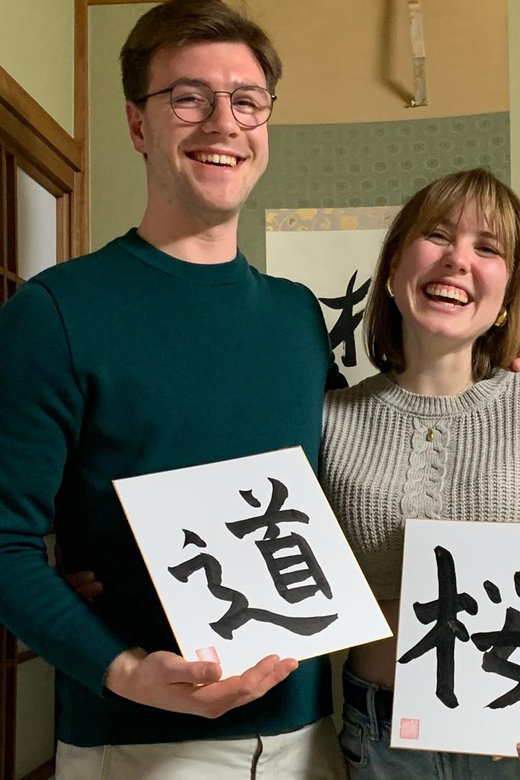
This class suits you if you want a calm cultural activity between major sightseeing stops. It works especially well for first-time visitors who want more than photographs of temples but do not have time for a full-day workshop.
You do not need to read Japanese. You do not need drawing experience. The instruction begins with the tools and brush position, so complete beginners can take part.
It also suits couples, friends, and families with older children. Children under 10 are not suitable for the class, so check the age of everyone in your group before booking. Children age 10 and up may enjoy the clear physical challenge of controlling the brush, though the activity still requires quiet attention.
This may not be the right pick if you dislike sitting still, want a lively group activity, or need a wheelchair-accessible setup. Non-folding wheelchairs and electric wheelchairs are not permitted. Non-folding strollers are also not allowed, and baby strollers are listed among the prohibited items.
Large bags and luggage cannot be brought in. Selfie sticks, smoking, alcohol, drugs, and noisy behavior are not allowed. These rules fit the quiet nature of the townhouse, but they mean you should arrive with only what you need.
How to fit the class into your Ninenzaka day
The location is easiest to use as part of a walking route. You can visit Kiyomizu Temple and then continue through the Ninenzaka streets toward the Starbucks landmark and the nearby alley. Or you can take the class first, then explore the lanes with your calligraphy piece safely finished.
Do not count on transportation being part of the booking. You arrange your own way to the venue, and the meeting point depends on finding the alley beside the Starbucks. Give yourself extra time, especially if you are unfamiliar with Kyoto’s sloping streets and crowded temple district.
The 50-minute duration makes the class easy to place between other plans. Still, avoid scheduling something immediately afterward if you want time to finish your work, collect your belongings, and leave without rushing. The lesson is short, but the surrounding area can take longer to cross than the map suggests.
You can cancel up to 24 hours in advance for a full refund, and the reserve-now, pay-later option keeps your plans flexible. Same-day and previous-day requests may be harder to accommodate, so early booking is the sensible choice if your Kyoto schedule is fixed.
Final call: a good short activity with a clear limit
I would book this class if I wanted a personal souvenir, a quiet break from temple crowds, and a gentle introduction to an important Japanese art. The patient instruction and small-class feel are its biggest strengths, while the Ninenzaka location makes it easy to add to a day near Kiyomizu Temple.
I would skip it if I wanted advanced calligraphy, a long workshop, or a broad tour of Japanese culture. The class is brief and focused. At $49, it earns its price through the teaching, setting, tools, booklet, and handmade keepsake, not through the amount of time alone.
Bring socks, wear clothes you do not mind staining, and arrive ready to concentrate. If that sounds appealing, this is a practical and memorable way to put a little Kyoto into your own handwriting.
FAQ
Where does the calligraphy class meet?
It meets near Kiyomizu Temple, at the end of the alley next to the Starbucks on Ninenzaka.
How long does the activity last?
The class lasts 50 minutes.
How much does the experience cost?
The listed price is $49 per person.
Do I need Japanese or art experience?
No. The class is beginner friendly, and no Japanese language or art experience is needed.
What language is used during the class?
English is available. For bookings made the day before or on the same day, the class may be conducted in English if the requested arrangement cannot be accommodated.
What will I learn?
You will learn about calligraphy and its history, calligraphy tools, brush handling, paper preparation, basic strokes, and simple kanji characters. The class also introduces seasonal themes and expressions connected with Japanese culture.
What is included?
Experienced instructors, careful guidance, and an original booklet about calligraphy are included.
Do I need to bring anything?
Bring socks and clothes that can get dirty. Socks are required, and the venue can provide them for a fee if you do not have any.
Can children or wheelchair users join?
Children under 10 are not suitable for the activity. Non-folding wheelchairs, electric wheelchairs, non-folding strollers, and baby strollers are not allowed.
Newest Kyoto experiences on the site
- Treasures of Kyoto: Gion & historical Walking Tour★ 5.0 · 6 reviews
- Whisk Your Own Matcha: A Zen Matcha Experience at Temple★ 3.6 · 7 reviews
- Kyoto tea town for matcha lovers★ 5.0 · 16 reviews
- Uji: Private immersion into Kyoto’s tea and reglious culture★ 5.0 · 17 reviews
- Kyoto Matcha Green Tea Tour★ 4.5 · 23 reviews
- Uji and Wazuka Matcha Farm Half Day Private Guided Tour★ 5.0 · 21 reviews
- Utilising upcycled Matcha! Creating matcha incense (Uji, Kyoto)★ 5.0 · 6 reviews
- Sacred Temple Yoga Experience in Japan★ 5.0 · 3 reviews
Kyoto Calligraphy Classes, compared.
Calligraphy class at Buddhist temple in city center
Read our review →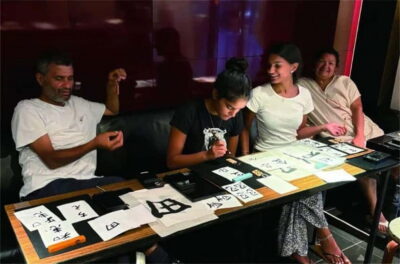
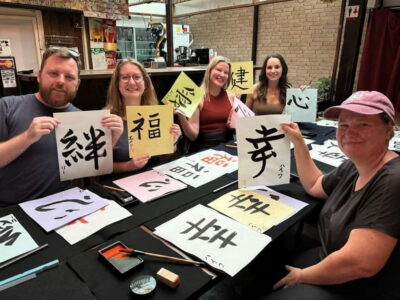
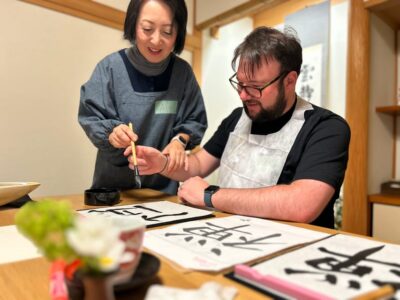
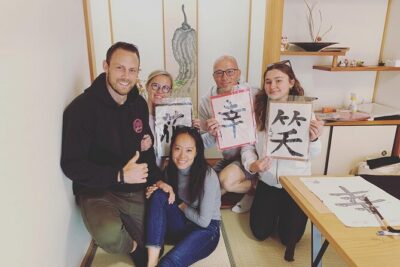
Private Japanese Calligraphy in Kyoto – Learn Shodō with a Master
Read our review →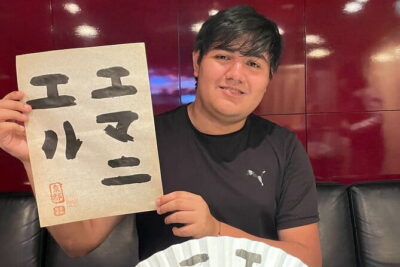
Japanese Calligraphy – Shodo – Lesson (near Kyoto Station)
Read our review →
Browse the lists this tour appears in