
Reviewed · KYOTO TEA CEREMONIES
Uji Walking Tour – Byodo-in temple and Tea Ceremony from Kyoto
Uji gives you three strong reasons to leave central Kyoto for half a day: a traditional tea ceremony, a riverside walk, and Byodo-in Temple, the Buddhist landmark pictured on Japan’s 10-yen coin. The trip begins with a short JR train ride from Kyoto Station, so you spend your time seeing Uji rather than sitting in a tour bus.
I like the compact route and the small maximum group of 12. I also like that the tour handles the train fare, tea ceremony, and Byodo-in admission, while an English-speaking government-licensed guide explains what you are seeing. The main drawback is the pace: if the schedule slips, your time at Byodo-in can become very short, and stopping for photos may mean hurrying to catch up.
Key points at a glance
- Uji by JR train: Travel about 20 minutes each way from Kyoto Station, with non-reserved seating.
- Taihoan tea ceremony: Spend about 20 minutes in a tatami room, with matcha or sencha depending on the day.
- Byodo-in Temple: Visit the Heian-period temple and its garden, with possible limits on entry to Phoenix Hall.
- Ujibashi Bridge: Photograph one of Japan’s oldest bridges and walk along the Uji River.
- Small group size: The tour accepts no more than 12 people, which helps on narrow streets and trains.
- Fast four-hour format: A useful introduction to Uji, but not a relaxed day of temple wandering.
Why Uji makes a good half-day from Kyoto
Uji is close enough to Kyoto for an easy morning trip, yet it feels different from the city center. The town is closely tied to Japanese tea, and its river, bridge, temples, and traditional streets create a clear sense of place without requiring a full day.
This tour connects Uji’s main sights in a practical order. You arrive by train, walk to Ujibashi Bridge, continue through Nakanoshima Park, pause for tea, and finish at Byodo-in before returning to Kyoto. You get a useful first look at Uji without having to work out the route, train tickets, or temple admission on your own.
The tour starts at 8:20 a.m. at the JTB Sunrise Tours desk in the AVANTI building near Kyoto Station. It ends near Kyoto Station around 12:30 p.m. That timing works well if you want your afternoon free for another Kyoto sight, lunch, or a slower visit to a neighborhood temple.
The tradeoff is clear. Four hours is enough for an overview, not enough for every corner of Uji. You should think of this as a guided introduction rather than a leisurely day trip.
More tea days out in Uji:
- Uji: Green Tea Tour with Byodoin and Koshoji Temple Visits
★ 4.8 · 72 reviews - Uji: UNESCO Heritage & Tea Ceremony Walking Tour
★ 4.6 · 54 reviews - Matcha Grinding Experience and Walking Tour in Uji Kyoto
★ 5.0 · 26 reviews
The 20-minute train ride from Kyoto Station
The JR train ride to Uji takes about 20 minutes. The tour uses rapid or local JR service with non-reserved seating, and the transportation cost is included. You may sit together, but a seat is not guaranteed, so be ready to stand if the train is crowded.
This is a sensible way to reach Uji. You avoid a larger coach and see how the town connects to Kyoto by ordinary public transport. The short ride also leaves more time for walking and sightseeing.
The train arrangement requires a little discipline. Keep your group together, listen for instructions, and avoid lingering on the platform to take photographs. The tour is conducted on foot after arrival, and the schedule can tighten quickly if the group loses time.
Comfortable walking shoes matter. This is not a bus tour, and the route includes streets, park paths, bridge crossings, and temple grounds. The tour is suitable for most people, but anyone who dislikes walking at a brisk pace should take the time limit seriously.
Ujibashi Bridge and the Uji River
Ujibashi Bridge is one of the first major sights on the route. It is believed to have been built originally sometime in the seventh century, making it one of Japan’s oldest bridges. A small projection called the san-no-ma provides a good place for views and photographs.
The bridge is more than a quick photo stop. It introduces Uji’s connection to the river and gives your guide a natural point to explain the town’s past. From here, the route continues toward Nakanoshima Park, an island area in the Uji River.
The riverside portion is one of the tour’s most appealing features. You get a break from Kyoto’s dense streets and a chance to see Uji at a slower scale. The walk also helps explain why the town became associated with tea, temples, water, and seasonal scenery.
Nakanoshima Park can be skipped if the Uji River is at a high water level or conditions make the visit impractical. That is worth knowing if the riverside walk is your main reason for booking. The bridge visit and the rest of the route can still continue, but the exact order and arrival times may change.
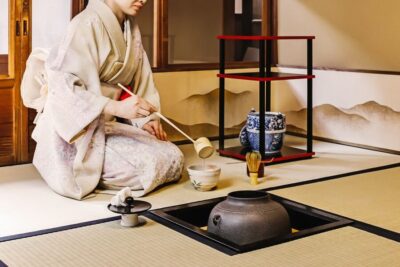
A 20-minute tea ceremony at Taihoan
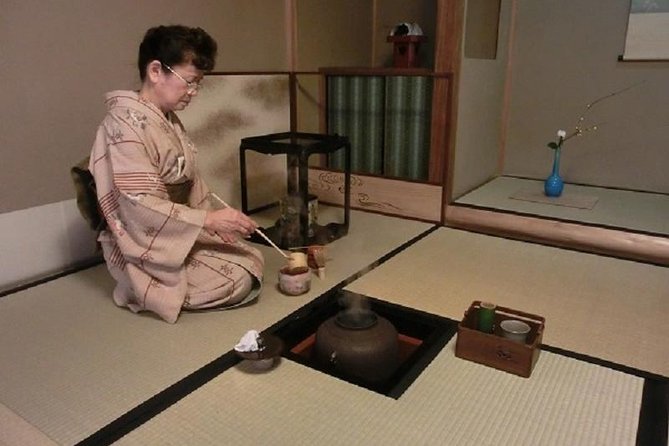
The tea stop at Taihoan is the cultural center of the morning. Uji is one of Japan’s best-known tea towns, so this is not a random refreshment break. It connects the place you are visiting with one of its most important traditions.
The ceremony lasts about 20 minutes. Depending on the day, you may receive matcha or sencha, and you cannot choose between the two. The tea procedure may also be shared with other customers, so expect a genuine introductory experience rather than a private performance.
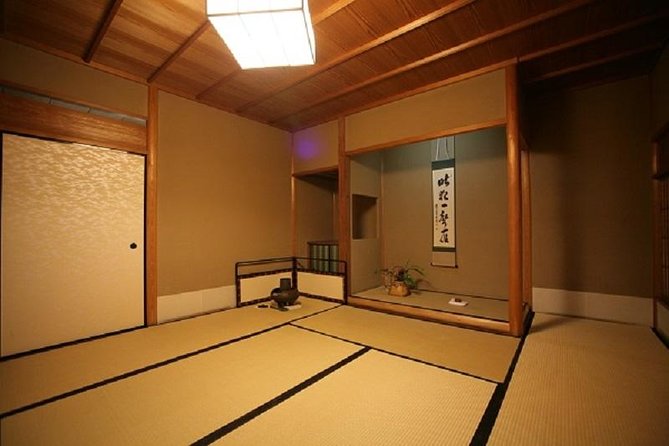
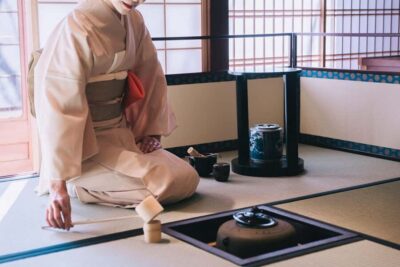
The tea room uses tatami flooring. Wear socks, since bare feet are not suitable for the room. Video recording is not allowed, but you can focus on the gestures, utensils, and quiet rhythm of the ceremony instead of treating it as a photo stop.
I like this part because it gives the tour a human scale. Byodo-in is visually impressive, but the tea ceremony explains an everyday cultural practice through a short, structured encounter. You do not need prior knowledge, and the English-speaking guide can help you understand the basic manners and meaning.
The short duration also limits what the experience can cover. If you want to learn detailed tea preparation or spend a long time practicing, this will feel brief. If you want a first look at the formality of Japanese tea without committing to a long class, 20 minutes is a practical fit.
More tea ceremonies in Kyoto:
- Kyoto: Tea Ceremony in a Traditional Tea House in Kiyomizu
★ 4.9 · 3,519 reviews - Kyoto: Tea Ceremony Ju-An at Jotokuji Temple
★ 4.9 · 3,207 reviews - Kyoto: 45-Minute Tea Ceremony Lesson Experience
★ 4.3 · 2,378 reviews - Kyoto: Table-Style Tea Ceremony at a Kyo-Machiya
★ 4.9 · 1,211 reviews
Byodo-in Temple and the Phoenix Hall
Byodo-in is the tour’s major historic sight. Built near the end of the Heian period, the temple includes a Buddha statue, additional religious images, and a garden. Its Phoenix Hall appears on the Japanese 10-yen coin, so you may already recognize its central image before arriving.
The temple is part of the Historic Monuments of Ancient Kyoto UNESCO World Heritage site. That status reflects its importance, but the best reason to visit is the setting: the hall, water, garden, and reflections create a carefully balanced view that rewards a few quiet minutes.
Admission to Byodo-in is included. Entry to the Phoenix Hall itself may not be possible when the site is crowded. If that happens, JPY 300 is refunded at the location. This is an important distinction: you should expect to see the temple grounds, but direct entry into the hall is not guaranteed.
The schedule is the biggest concern here. The entire temple visit is listed at about 50 minutes, but delays earlier in the morning can reduce your actual time. A rushed visit may leave only 15 minutes for the grounds and museum, which is not enough for many people who want to study the architecture and exhibits.
You should also understand the route’s priorities. The guide is trying to cover Uji Bridge, the park, tea, Byodo-in, and both train journeys in one morning. If you stop for every photograph, read every display, or move slowly through the garden, you may need to catch up with the group.
What the guide adds to the visit
A national government-licensed English guide accompanies the tour. The value is not simply translation. A guide can connect the bridge, tea ceremony, and temple into one story about Uji instead of leaving you to view them as separate stops.
The tour’s maximum of 12 people is helpful. A small group is easier to move through the station, easier to gather on a bridge, and less awkward in a tatami room. It also gives you a better chance to hear instructions and ask a question.
Small does not mean private. The tea ceremony may include other customers, and the group still has to follow public train schedules and temple crowd conditions. You should expect a shared experience with a guide, not a custom-designed private tour.
The guide also has to manage a tight clock. That makes the quality of timekeeping just as important as the explanations. Listen carefully at each stop, and tell the guide if you need help staying with the group rather than wandering off for a photograph.
Is $96.06 a fair price?
At $96.06 per person, the tour is not the cheapest way to visit Uji. You could arrange the train and temple visit yourself for less, especially if you are comfortable navigating Kyoto’s rail system and researching the sights in advance.
The price makes more sense if you want several pieces bundled together: return transportation from Kyoto, a licensed English-speaking guide, the Taihoan tea ceremony, and Byodo-in admission. You are also paying for a fixed route and a morning without planning every detail.
The value depends on your preferred pace. If you want efficient orientation and cultural context, the package is reasonable. If your priority is lingering at Byodo-in, taking repeated photographs, or exploring Uji’s streets independently, the tight schedule may not feel worthwhile.
The fact that the tour is often booked far ahead suggests you should not leave it until the last moment if your dates are fixed. Confirmation is subject to availability and is provided within 48 hours of booking.
Who should book this Uji tour?
I would recommend it to a first-time visitor who wants to see Uji without giving up an entire day. It suits you if you enjoy walking, prefer a small group, and want an English-speaking guide to handle the train connection and explain the cultural details.
It is also a good choice if you have never attended a tea ceremony. The 20-minute format offers a clear introduction without taking over your day, and the combination with Byodo-in gives you both living culture and historic architecture.
Families and older visitors should consider the pace carefully. Most people can participate, but the tour uses public transport, non-reserved train seats, and continuous walking. Participants under 18 need written parental permission, and anyone under 15 or not yet in middle school must be accompanied by a parent or guardian.
You may want a different plan if Byodo-in is your main goal. An independent visit would give you more control over the museum, garden, and Phoenix Hall entry. This tour is strongest when you value variety and guidance more than long, quiet temple time.
Practical details before you go
Meet at 8:20 a.m. at the JTB Sunrise Tours desk in the basement level of AVANTI, near Kyoto Station. The return is near Kyoto Station at about 12:30 p.m., though traffic, train timing, and crowd levels can alter the schedule.
Wear shoes that are easy to walk in, and wear socks for the tatami tea room. Bring only what you need, since staying organized helps the group move quickly between the station, bridge, park, tea house, and temple.
The tour uses mobile tickets and includes the listed transport, tea ceremony, and Byodo-in admission. Fees beyond those inclusions are your responsibility. Free cancellation is available until 24 hours before the start time. Later cancellations and changes are not accepted for a refund.
Should you book it?
Book this tour if you want a well-organized first taste of Uji with tea, a river walk, and Byodo-in in one morning. The small group, included train travel, and cultural explanation make it easier than arranging every part yourself.
Skip it if you need an unhurried temple visit or dislike keeping up with a group. The key question is simple: do you want to sample several sides of Uji, or spend most of your time with Byodo-in? For the first goal, this tour is a useful fit. For the second, go independently and give the temple more time.
FAQ
How long does the Uji walking tour last?
The tour lasts approximately 4 hours and 10 minutes. It starts at 8:20 a.m. and usually ends near Kyoto Station around 12:30 p.m.
Is transportation from Kyoto to Uji included?
Yes. The tour includes the JR train journey from Kyoto Station to Uji Station and the return trip. Trains use rapid or local service with non-reserved seating, so a seat is not guaranteed.
Is the tea ceremony included?
Yes. The Taihoan tea ceremony is included and lasts about 20 minutes. Depending on the day, the experience may use matcha or sencha, and you cannot select which type.
Can the tour enter the Phoenix Hall at Byodo-in?
Entry to Phoenix Hall is not guaranteed if the temple is crowded. If the tour cannot enter, JPY 300 is refunded at the location.
What should I wear for the tour?
Wear comfortable shoes suitable for walking. The tea ceremony takes place in a tatami room, so you should wear socks.
How large is the tour group?
The tour has a maximum of 12 participants. It is a walking tour using public transportation, not a bus tour.
More Walking Tours in Kyoto
- Kyoto Geisha Walking Tour: Gion District & Hidden Gems
★ 4.7 · 3,273 reviews - Kyoto: Gion Magical Night Walking Tour with Geisha Trivia
★ 4.9 · 2,393 reviews - Kyoto: Gion Geisha District Walking Tour – Stories of Geisha
★ 4.7 · 2,187 reviews - Night Walk in Gion: Kyoto’s Geisha District
★ 4.5 · 2,003 reviews
More Temples in Kyoto
- Arashiyama Bamboo, Temple, Monkeys, or Secret Sake Brewery
★ 4.8 · 886 reviews - Kyoto: Arashiyama Bamboo Forest, Monkeys, Matcha & Temple Tour
★ 5.0 · 759 reviews - Kyoto Zen Meditation & Garden Tour at a Zen Temple with Lunch
★ 5.0 · 441 reviews - Kyoto: Zen Experience in a Hidden Temple
★ 5.0 · 437 reviews
Newest Kyoto experiences on the site
- Treasures of Kyoto: Gion & historical Walking Tour★ 5.0 · 6 reviews
- Whisk Your Own Matcha: A Zen Matcha Experience at Temple★ 3.6 · 7 reviews
- Kyoto tea town for matcha lovers★ 5.0 · 16 reviews
- Uji: Private immersion into Kyoto’s tea and reglious culture★ 5.0 · 17 reviews
- Kyoto Matcha Green Tea Tour★ 4.5 · 23 reviews
- Uji and Wazuka Matcha Farm Half Day Private Guided Tour★ 5.0 · 21 reviews
- Utilising upcycled Matcha! Creating matcha incense (Uji, Kyoto)★ 5.0 · 6 reviews
- Sacred Temple Yoga Experience in Japan★ 5.0 · 3 reviews
Kyoto Tea Ceremonies, compared.
Tea Ceremony in a Traditional Tea House in Kiyomizu
Read our review →
Tea Ceremony in 100-year-old Kyo-Machiya Townhouse
Read our review →
Browse the lists this tour appears in