
Reviewed · KYOTO TEMPLE TOURS
The Way of Tea: Kyoto Crafts, Hidden Temples & Wabi-Sabi Walk
Kyoto’s tea culture makes the most sense when you see it in the streets, temples, shops, and tools that surround it. This walk begins in Gion, visits Kennin-ji and another temple garden, then ends with a hands-on matcha ceremony in a traditional house. The tea ceremony is the heart of the experience, but the walk gives it useful context.
I like two things here. First, the group is capped at seven, so you should have a fair chance to ask questions. Second, the price includes admission to two temples, a guide, matcha, the ceremony, and photos. The main consideration is communication: one low-scoring account described a guide who spoke very softly and was difficult to understand in English.
What makes this Kyoto experience worth your time
- A clear tea-to-temple theme: You connect matcha, ceramics, wabi-sabi, gardens, and temple life rather than treating them as separate sights.
- A small group of up to seven: This is a better setup for questions than a large walking crowd.
- Kennin-ji plus another temple: You receive admission to two temples, including one of Kyoto’s major historic temple sites.
- A raku tea bowl stop: You see why handmade tea bowls are valued for their individual shape, texture, and character.
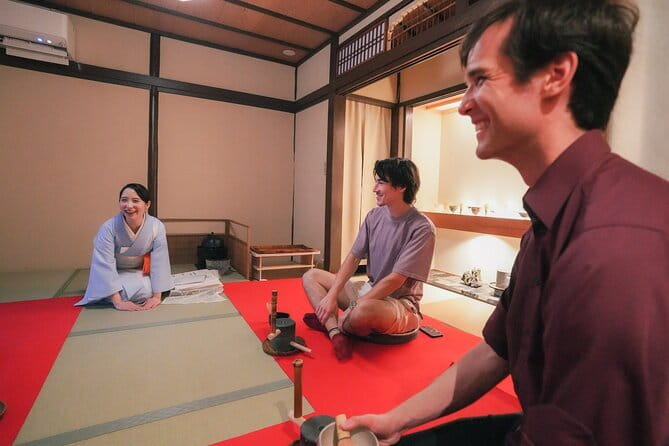
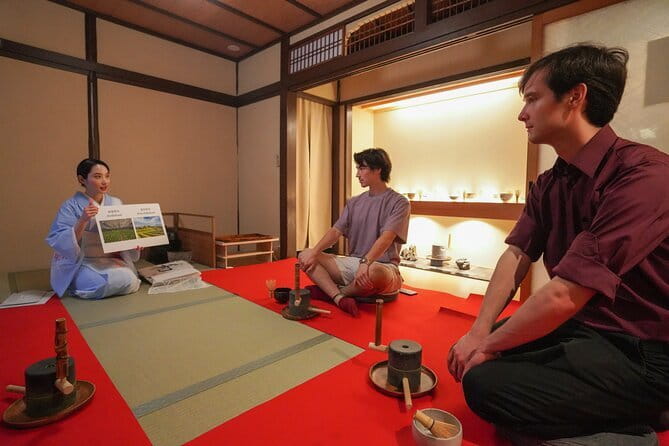
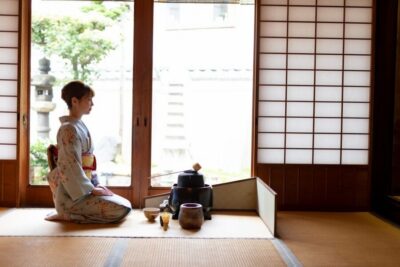
- A full tea ceremony at the end: A tea master guides you through making tea in a traditional Japanese house.
- A walk with a fixed route: Your guide handles the navigation from Gion to the temple and craft stops, so you can focus on the places around you.
Gion is the right place to begin
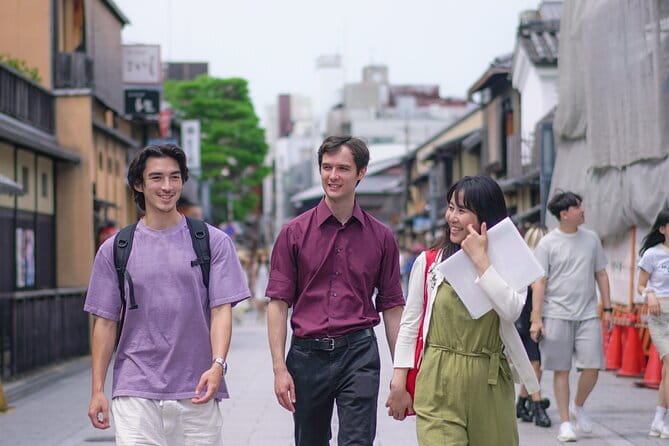
Meet in front of the Statue of Izumo-no-Okuni, just outside Exit 5 of Gion Shijo Station on the Keihan Line. Look for the guide holding an orange Magical Trip Tour signboard. This is a useful meeting point because it is beside public transportation and easy to identify, but arrive early. The operator says the group leaves on time and does not offer a refund or rescheduling if you miss the start.
The opening half-hour takes you through Gion while introducing the history of Japanese tea and the way matcha is made. You also visit a well-known matcha shop. This first stop matters because it gives you a simple frame for the rest of the walk: tea is not only a drink, but also a reason to pay attention to preparation, utensils, setting, and hospitality.
The Gion portion is not a long museum lecture. You spend about 30 minutes here, so expect a focused introduction rather than a full study of Kyoto’s tea traditions. If you want a slow neighborhood stroll with time for shopping, this tour may feel brisk. If you want a structured beginning and a guide to point out what matters, the pace should work well.
More temples worth an hour in Kyoto:
- Kyoto: Tea Ceremony Ju-An at Jotokuji Temple
★ 4.9 · 3,207 reviews - Arashiyama Bamboo, Temple, Monkeys, or Secret Sake Brewery
★ 4.8 · 886 reviews - Kyoto: Arashiyama Bamboo Forest, Monkeys, Matcha & Temple Tour
★ 5.0 · 759 reviews
Kennin-ji adds a temple to the tea story
From Gion, the tour continues to Kennin-ji Temple. You spend about 30 minutes here, with admission included. Kennin-ji is an important stop because it gives you the setting that makes Kyoto’s traditional arts easier to understand: quiet spaces, careful design, and a long connection between religious life and artistic practice.
Thirty minutes is enough to see the temple with purpose, but not enough for every building, garden, and work of art. Your guide’s explanations will shape how much you get from the visit. One point to keep in mind is that the experience is not designed as a specialist temple tour. It uses Kennin-ji as one part of a larger tea and craft story.
The tour includes admission to two temples in total. Kennin-ji is the named temple, while the second comes later with the garden stop. That is a useful value point, since you are not paying separate entrance fees as the walk progresses.
Craft shops bring wabi-sabi down to earth
After the temple, you visit craft shops for about 30 minutes. This section helps shift the experience from large historic sites to the objects used in daily Japanese culture. You may find this especially useful if you enjoy ceramics, tableware, or handmade goods more than formal sightseeing.
The tour then gives ceramics special attention at a tea bowl shop. The raku teacup is the focus, and the guide explains how each bowl has its own character, background, and meaning. That detail is central to the wabi-sabi theme. Instead of looking for perfect symmetry or factory-like sameness, you are asked to notice the marks and irregularities that make a handmade piece distinct.
This stop is also practical for shoppers. The supplied details do not promise purchases, prices, or shipping services, so treat the shop visit as an educational stop rather than a guaranteed shopping opportunity. If you are tempted by a bowl, ask the guide or shop staff about cost and delivery before buying.
A quiet temple garden slows the pace
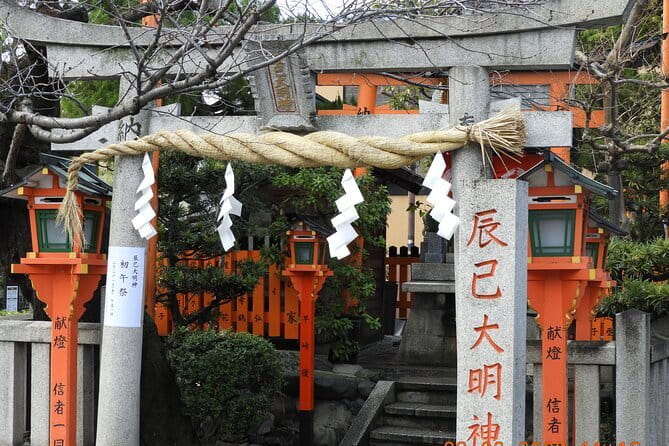
The next 30-minute stop takes you to another temple and garden. It is described as a quieter place, which gives the walking route a change of mood after Gion, the main temple, and the shops. The garden also supports the wabi-sabi theme by giving you a place to notice restraint, age, space, and small visual details.
Do not expect a long period for silent sitting. The stop is still part of a guided route, and the group has a fixed schedule before the tea ceremony. You will get the most from it if you pay attention to what the guide connects to tea culture rather than trying to cover every corner independently.
Because two temple admissions are included, this is also where the second admission is likely applied. The precise temple name is not provided in the tour details, so you should not book this expecting a particular famous site beyond Kennin-ji.
More walking tours in Kyoto:
- Kyoto Geisha Walking Tour: Gion District & Hidden Gems
★ 4.7 · 3,273 reviews - Kyoto: Gion Magical Night Walking Tour with Geisha Trivia
★ 4.9 · 2,393 reviews - Kyoto: Gion Geisha District Walking Tour – Stories of Geisha
★ 4.7 · 2,187 reviews - Night Walk in Gion: Kyoto’s Geisha District
★ 4.5 · 2,003 reviews
The tea house is the payoff
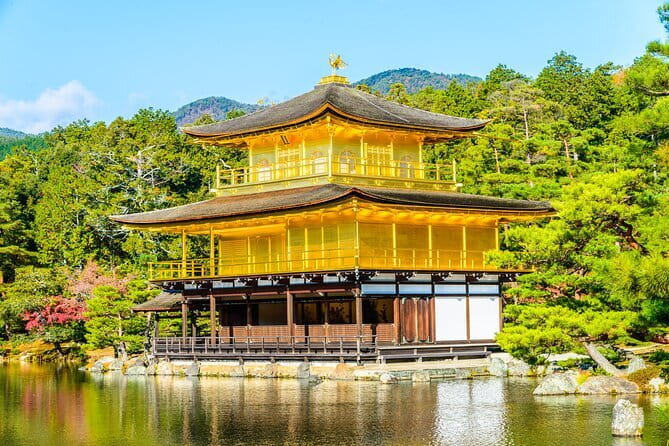
The final stop lasts one hour and takes place at Chayu, a tea experience in a traditional Japanese house. Here, a tea master instructs you as you make and drink matcha. This is more useful than watching a ceremony from a distance because you get to handle the process under guidance.
The ceremony also gives the earlier stops a purpose. You have already heard about matcha, seen tea-related craftwork, considered the qualities of a raku bowl, and walked through temple spaces. Now you use that background in a real tea setting. The wabi-sabi idea becomes less abstract when you consider the bowl, the tea, the movement, and the room together.
The ceremony is available to children aged six and older. Younger children may come on the tour, but one adult must remain outside the tea facility with them during this part. That rule matters for families because the tea stop lasts a full hour, not just a quick tasting.
Matcha and the tea experience are included. Additional food and drinks are not, so do not expect a meal or a broader snack service as part of the booking.
How the schedule works in real life
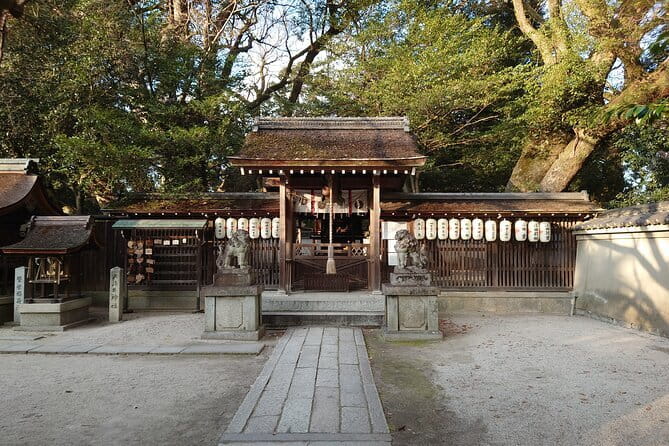
The experience is described as approximately three hours and 30 minutes. The included-services section also refers to three hours with a local guide, while the listed stops add up to about three hours: four 30-minute stops and one hour for tea. I would plan around three and a half hours, allowing a little room for walking between locations.
The route begins at Gion Shijo Station and ends at the tea experience location at 4-chōme-172-7 Kiyomizu in Kyoto’s Higashiyama Ward. You do not return to the starting point. That is convenient if you plan to continue around Kiyomizu, but less convenient if you leave a bag or make a dinner reservation back near Gion.
Wear shoes you can walk in comfortably. The tour combines neighborhood streets, temple grounds, craft shops, and a traditional house. Kyoto’s weather can be severe, with summer temperatures reaching 40°C and winter lows around -5°C. In hot months, bring water and sun protection. In cold months, dress for standing and walking outdoors.
The experience may be cancelled in unsuitable weather for safety reasons. Free cancellation or rescheduling is available until 24 hours before the start time. Changes made inside that window are not accepted, so keep your schedule firm on the day.
What the small group changes
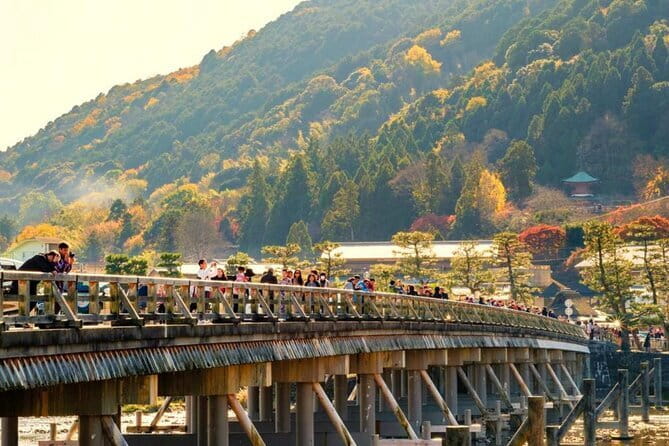
A maximum of seven people is one of the strongest practical features. You can usually hear the guide more easily than in a large group, and questions about tea bowls, temple details, or ceremony steps should be easier to ask.
That said, a small group does not guarantee perfect communication. One account rated the experience two out of five and described a guide who spoke very softly, whose English was hard to follow, and who seemed uncertain about some of the places visited. The same account noted that the guide tried to be helpful. This appears to be an individual problem rather than a pattern suggested by the overall 4.9 rating from 41 ratings and 98 percent recommendation figure, but it is worth knowing if clear spoken explanation is your top priority.
There may be other people in your group, even though the group size is limited. The provider does not give guide names in advance, so you cannot select a particular guide based on language style or background.
Is $94.45 a fair price?
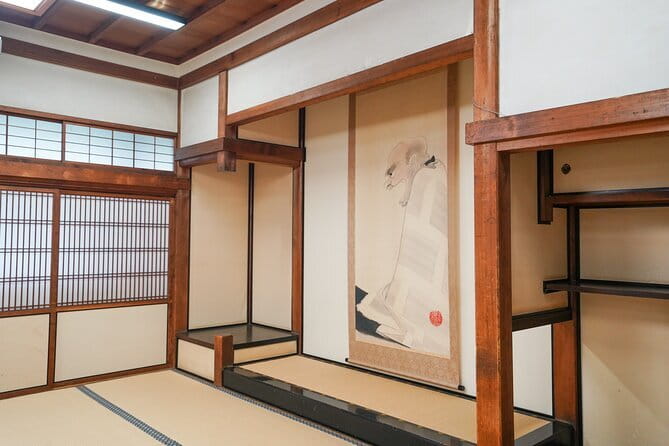
At $94.45 per person, this is not the cheapest way to see a Kyoto temple or taste matcha. The value comes from combining several paid elements into one short route: an English-speaking local guide, admission to two temples, a one-hour tea ceremony, matcha, and photos taken during the walk.
I consider the price reasonable if you want all of those pieces and would otherwise book them separately. The tea ceremony is the main cost-saving feature because it is a full guided activity rather than a simple cup of matcha at a café. The two temple admissions add value, too, especially if you appreciate having one booking cover the route.
The price is less attractive if you mainly want free neighborhood walking or a long, detailed temple visit. The time at each temple and craft stop is short, and additional food and drinks cost extra. You are paying for a compact introduction with a strong final activity, not an entire day of Kyoto sightseeing.
Who should book this walk?
I would recommend it to first-time Kyoto visitors who want an organized introduction to tea culture without spending a full day on a formal cultural program. It also suits anyone who likes handmade ceramics, traditional houses, temple gardens, and small-group instruction.
Families can book it if children are six or older for the tea ceremony. Families with younger children need to plan for one adult to sit out that part, which may make the experience less satisfying for the whole group.
This is also a good choice if you prefer a guide to handle directions. You begin in Gion and finish in Kiyomizu, with several stops in between. You do not need to build the route yourself or work out temple admissions along the way.
I would be more cautious if you need highly detailed historical commentary, have difficulty hearing soft speech, or want plenty of time for shopping and independent temple exploration. The route moves on a schedule, and the quality of the experience depends partly on how clearly your assigned guide explains each stop.
My booking advice
Book this experience if you want a well-organized tea introduction with enough temple and craft context to make the final ceremony more meaningful. The small group, included admissions, matcha, and tea master instruction make $94.45 a fair price for a three to three-and-a-half-hour program.
Skip it if your main goal is a leisurely Gion walk, extensive temple study, or a flexible afternoon with no fixed ending point. For most visitors who want to try a real tea ceremony without arranging several separate activities, this is a sensible Kyoto choice. Arrive early, prepare for the weather, and keep the rest of your schedule flexible after the tea house.
FAQ
Where does the tour begin?
It begins in front of the Statue of Izumo-no-Okuni, just outside Exit 5 of Gion Shijo Station on the Keihan Line. The guide holds an orange signboard marked Magical Trip Tour.
Where does the tour end?
It ends at the tea experience location at 4-chōme-172-7 Kiyomizu, Higashiyama Ward, Kyoto, after the tea ceremony.
How long does the experience last?
The tour is described as approximately three hours and 30 minutes. The individual stops total about three hours, so plan for roughly three to three and a half hours.
What is included in the price?
The price includes the tea ceremony, matcha, admission to two temples, an English-speaking local guide, and photos taken during the tour.
Are food and other drinks included?
No. Additional food and drinks are not included.
How many people can join?
The maximum group size is seven people. There may be other participants in your group.
Can children join the tea ceremony?
Children aged six and older can take part in the tea ceremony. Younger children may join the walking tour, but one adult must accompany them outside the tea facility during the ceremony.
What happens if I am late or need to cancel?
The tour starts on time, and you cannot join, reschedule, or receive a refund if you miss the group. Free cancellation and rescheduling are available until 24 hours before the start time. Changes made less than 24 hours before the tour are not accepted.
Newest Kyoto experiences on the site
- Treasures of Kyoto: Gion & historical Walking Tour★ 5.0 · 6 reviews
- Whisk Your Own Matcha: A Zen Matcha Experience at Temple★ 3.6 · 7 reviews
- Kyoto tea town for matcha lovers★ 5.0 · 16 reviews
- Uji: Private immersion into Kyoto’s tea and reglious culture★ 5.0 · 17 reviews
- Kyoto Matcha Green Tea Tour★ 4.5 · 23 reviews
- Uji and Wazuka Matcha Farm Half Day Private Guided Tour★ 5.0 · 21 reviews
- Utilising upcycled Matcha! Creating matcha incense (Uji, Kyoto)★ 5.0 · 6 reviews
- Sacred Temple Yoga Experience in Japan★ 5.0 · 3 reviews
Kyoto Temple Tours, compared.
Arashiyama Bamboo, Temple, Monkeys, or Secret Sake Brewery
Read our review →
Arashiyama Bamboo Forest, Monkeys, Matcha & Temple Tour
Read our review →
Kyoto Zen Meditation & Garden Tour at a Zen Temple with Lunch
Read our review →

Arashiyama Bamboo, Temple, Matcha, Monkeys & secret spots
Read our review →
Calligraphy class at Buddhist temple in city center
Read our review →Browse the lists this tour appears in