
Reviewed · KYOTO NIGHT TOURS
See What You Can’t See by Day — Explore Kyoto at Night by E-Bike
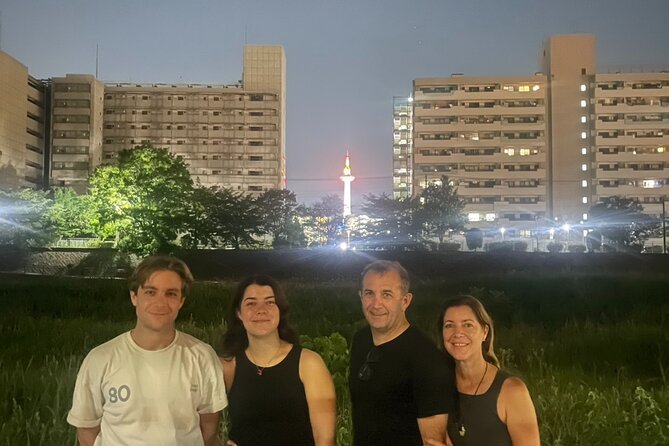
Kyoto after dark is at its best from the seat of an e-bike. You glide past quiet canals, temple gates, and old lanes instead of lining up at crowded daytime sights. I like the clear safety briefing and the chance to stop for photographs when something catches your eye. The route also links major landmarks with smaller local streets, giving you a broader feel for Kyoto than a single temple visit.
I especially like the small maximum of five people and the easy pace promised by the e-bikes. Guide Yuki is repeatedly praised for patient instruction, thoughtful explanations, and personal touches such as arranging a birthday cake and gift. The main consideration is weather: this is an outdoor ride, and a cancellation or change may be needed if conditions are poor.
Key points at a glance
- Kyoto after dark: See Nishi Hongan-ji, Shirakawa Canal, Nanzen-ji, Heian Shrine, and the Kamo River under evening light.
- Small group size: The tour accepts no more than five people, which makes it easier to ask questions and pause for photos.
- Beginner-friendly e-bikes: A briefing covers bicycle use, hand signals, and night-riding safety before you set off.
- A personal guide: Yuki is known for calm instruction, local stories, and keeping riders comfortable.
- A mix of famous and ordinary Kyoto: You pass old alleys, neighborhood streets, waterways, and the former Nintendo headquarters.
- Good value for a short evening: At $117.28 per person, the price is highest for solo visitors but more reasonable for a small private-style outing.
Why Kyoto at night works so well by bicycle
Kyoto can feel crowded and hurried during the day. At night, the city changes its tone. Temple buildings are quieter, canals reflect scattered lights, and the old streets become more pleasant to pass through slowly.
An e-bike is a useful middle ground. You cover more ground than on foot, but you remain close to the details that disappear from a bus window. You can notice a traditional building, a narrow lane, or a waterway and pause without rearranging an entire group.
The route is not only a sightseeing loop around one district. It connects the area near Kyoto Station with western and eastern parts of the central city, then returns to the starting point. The riding itself is part of the experience, but the frequent stops keep it from becoming a fitness challenge.
The tour lasts about three hours. That is long enough for several major sights without taking an entire day from your Kyoto schedule. It also means you should arrive ready to ride rather than treat this as a series of long temple visits. The listed stops generally allow around 20 minutes each, with shorter time at the starting point and Kamo River.
More bike days around Kyoto:
- Hidden Kyoto E-Biking tour
★ 5.0 · 1,843 reviews - Bike Tour Exploring North Kyoto plus Lunch
★ 5.0 · 1,087 reviews - Arashiyama Bamboo Forest & Hidden Gems Bike Tour (Early Bird)
★ 5.0 · 613 reviews
Getting started at The Thousand Kyoto
You meet at a Clew share-cycle port in front of Seikouin Wagatazizou, behind The Thousand Kyoto, at 570 Higashishiokōjichō. The meeting point is near Kyoto Station, but pay attention to the instruction that the bicycles are behind the hotel near the temple, not simply at the hotel entrance.
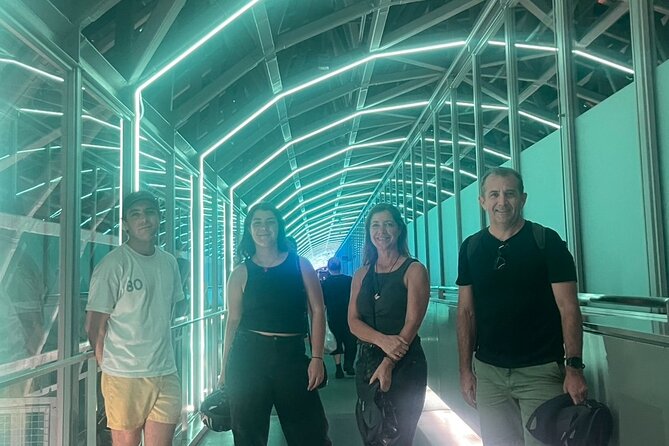
The first 15 minutes are important. Your guide explains how to use the bicycle, reviews cycling hand signals, and covers safety. This is one of the strongest parts of the arrangement because night cycling feels much easier when you know what to do before entering city streets.
The tour provides a bicycle and an Incom-installed cycling helmet. You should still arrive in clothes suitable for sitting on a bike for several hours and bring anything you need for the evening, since the experience is built around continuous outdoor movement.
The tour is limited to five people. That size matters here. You can hear the guide more easily, ask for a slower explanation, and stop for a photograph without holding up a large group. The route is also described as private in the sense that the guide can pause at places that catch your eye.
Nishi Hongan-ji and Kyoto’s older streets
The first temple stop is Nishi Hongan-ji, the head temple of the Jodo Shinshu Hongwanji-ha sect. Its major buildings are registered World Heritage sites, giving this stop real architectural weight early in the ride.
At night, you should expect the emphasis to be on the exterior setting and atmosphere rather than a long indoor temple visit. The 20-minute stop is enough to look around and hear context from the guide, but not enough for a full, unhurried exploration of every building.
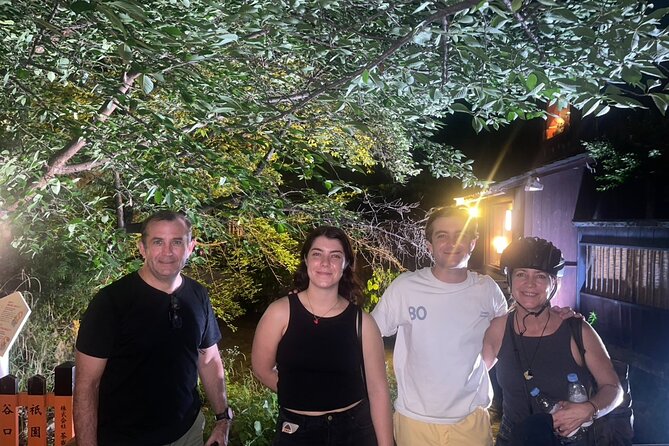
The route also allows time for old streets and alleys. This is where the small-group format earns its keep. If a lane or building catches your attention, you may be able to stop for a photograph instead of following a rigid schedule. I like this part because it gives the ride a local texture that a checklist of famous sights cannot provide.
Still, you should keep your expectations sensible. This is not a dedicated architecture tour, nor is it a full temple study. You are sampling several areas of Kyoto in one evening.
Shirakawa Canal and the old tea district atmosphere
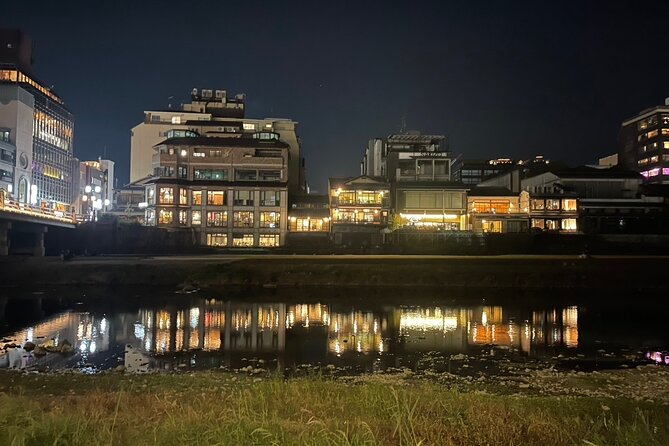
Shirakawa Canal is one of the prettiest parts of the route. The street developed as a chaya-machi, an area associated with teahouses, and its old buildings line the water in a distinctly Kyoto setting.
The canal is especially suited to an evening ride. Water, traditional buildings, and seasonal plants create a calmer scene than a large public square. Cherry blossoms can add seasonal color, though the tour does not promise any particular bloom period.
The stop lasts about 20 minutes. That gives you time to walk your bicycle, look along the canal, and take photographs. You should not expect a long visit inside traditional establishments, since the experience focuses on passing through the district and enjoying its streetscape.
This section is a good reason to choose the tour over a simple bike rental. You get the bicycle, but also someone who decides where to slow down and helps connect the view with Kyoto’s older social traditions.
More Kyoto after dark:
- Kyoto: Gion Magical Night Walking Tour with Geisha Trivia
★ 4.9 · 2,393 reviews - Night Walk in Gion: Kyoto’s Geisha District
★ 4.5 · 2,003 reviews - Kyoto Night Foodie Tour in Gion (9+ dishes + 6 Sake tastings)
★ 5.0 · 1,762 reviews - Kyoto Gion Night Walk & Geisha District Guided Tour
★ 5.0 · 786 reviews
Shomen-dori and Nintendo’s former headquarters
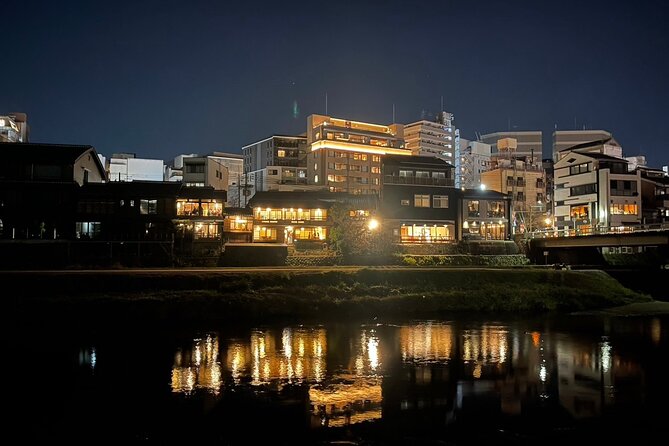
The ride then passes through a local part of Kyoto along Shomen-dori Street. The unusual sight here is the former headquarters of Nintendo, a large building with a strong historical connection to the company.
This is not presented as a Nintendo museum or an interior visit. Think of it as a quick exterior stop and a surprising piece of modern Kyoto encountered between temples and canals. That contrast is valuable. Kyoto is not only shrines, gardens, and wooden houses. It is also a living city shaped by businesses, neighborhoods, and changing industries.
The stop should appeal to anyone who likes finding unexpected connections in a destination. If you are a serious Nintendo fan, keep your expectations in check because the information provided does not include entry, exhibits, or a behind-the-scenes visit.
The Lake Biwa Canal near Nanzen-ji
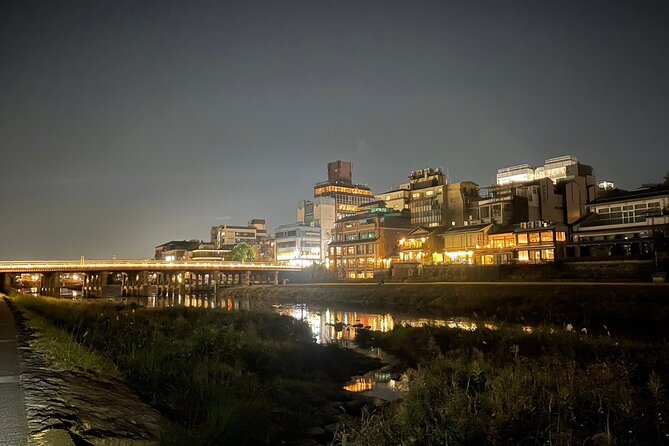
The next portion follows the Lake Biwa Canal around Nanzenji Fukuchichō and Nanzenji Kusakawachō. This waterway links Kyoto with Lake Biwa and helped provide water to the city while supporting its development.
The canal gives the ride a change of pace. Instead of moving through enclosed streets, you follow a long waterway where the flow of the route is easier to appreciate. Two separate stops are listed in this canal area, each with about 20 minutes, so the guide has room to explain the water system and let you enjoy the surroundings.
I like this part for its sense of place. You are not simply looking at a pretty canal. You are seeing infrastructure that helped Kyoto grow. That kind of detail makes the route more meaningful without turning the evening into a lecture.
The exact amount of riding between the stops is not specified, so the canal section may feel leisurely rather than packed. If you want a fast, athletic ride, this is probably not the right tour. If you prefer scenery and explanation, it fits well.
Nanzen-ji and Heian Shrine after sunset
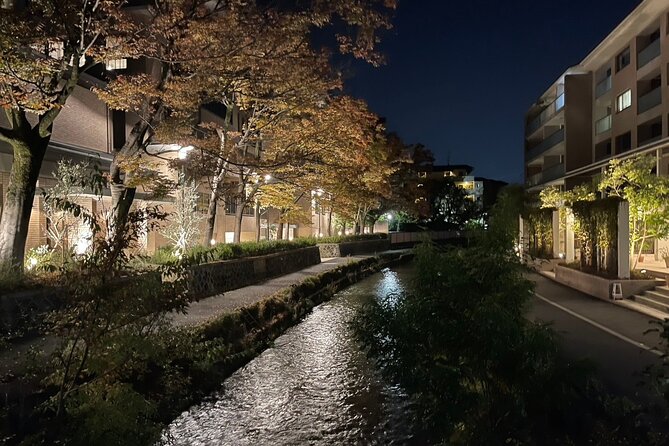
Nanzen-ji is regarded as especially important among Kyoto’s Five Mountains. Its main temple and gate create a powerful setting, and the grounds include a beautiful waterway connected with the canal system.
The 20-minute stop gives you time to take in the scale of the temple precinct. Evening light can make large gates and walls feel particularly dramatic, though the tour does not promise special illumination or full access to every part of the grounds.
Next comes Heian Shrine, founded to mark the 1,100th anniversary of Kyoto becoming the capital of Heian-kyo. Emperor Kanmu, the 50th emperor, is enshrined there, and the large red torii is one of the city’s most recognizable sights.
These two stops work well together. Nanzen-ji gives you an older temple setting, while Heian Shrine offers a grander, more open civic and religious space. The stop at Heian Shrine is listed at about 20 minutes, so treat it as an evening viewing rather than a complete shrine visit.
One practical point: lighting conditions can change how much detail you see. The guide’s explanations matter more after dark because you may not be able to inspect every architectural feature as clearly as you could in daylight.
Ending beside the Kamo River
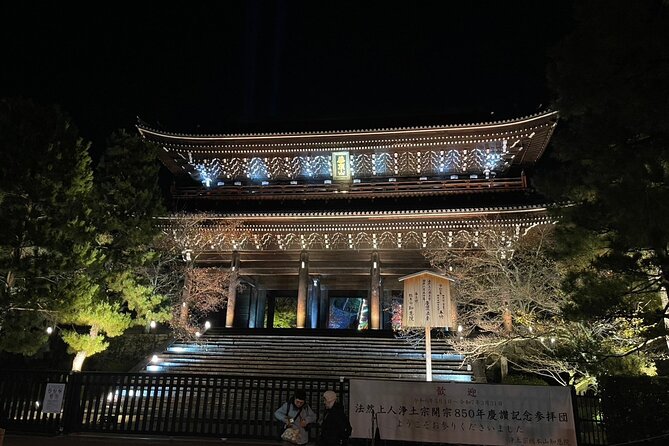
The final scenic stop is the Kamo River near Hokodencho. You can relax along the riverbed, ride beside the water, and put your feet in the river at the end to cool down.
After several hours on a bicycle, this is a sensible finish. It gives the group a chance to stop moving and enjoy Kyoto in a simple way rather than ending at a busy intersection. The listed time is about 10 minutes, so do not expect an extended riverside picnic or a long swim.
The river stop also reinforces the main idea of the tour: Kyoto is rewarding between the major sights. A short pause by the water can be as memorable as another formal landmark, especially after the city has quieted down.
From there, you return to the original meeting point and return the bicycle. The activity ends at the starting location, leaving you free to continue exploring Kyoto on your own.
What the $117.28 price really buys
At $117.28 per person, this is not the cheapest way to rent a bicycle for an evening. You are paying for the guide, e-bike, helmet, safety instruction, route planning, and the convenience of a small group.
The value improves if you are traveling with two to five people and want a guided experience rather than a bicycle with no local context. A guide can handle the route, explain the landmarks, and keep the evening moving while you focus on the scenery.
The price is harder to justify if you are a confident cyclist who already knows Kyoto and only wants transportation. It is also less suitable if your main goal is spending a long time inside one temple or shrine. This tour gives you breadth, atmosphere, and company rather than depth at a single site.
The birthday surprise arranged by Yuki, including a cake and gift, shows the kind of personal attention that can make a small-group outing feel special. That detail cannot be guaranteed for every booking, but it suggests the guide is willing to tailor the experience when circumstances allow.
Who will enjoy this ride most
I would choose this for couples, families with capable young riders, and first-time visitors who want an evening introduction to several parts of Kyoto. It also suits people who find walking tours tiring but still want to see more than one neighborhood.
Children under 10 can join if they are taller than 140 centimeters and can ride a bicycle. They pay the same fee as adults. Since the tour lasts about three hours and takes place at night, parents should decide based on the child’s riding ability and comfort, not only the height requirement.
The tour also suits riders who are unsure about cycling in a foreign city. The safety explanation, hand-signal briefing, and patient guidance from Yuki can help you get comfortable quickly. One past rider began without much confidence and finished riding comfortably, which is a useful sign for cautious cyclists.
You should think twice if you dislike cycling, have difficulty riding after dark, or want a weather-proof activity. The tour depends on good weather, and poor conditions can lead to a new date or a full refund.
Practical details before you book
The experience includes a Mandarin and Japanese-speaking guide, a bicycle, a cycling helmet with an Incom communication system, and the use of the e-bike during the tour. Confirmation arrives when you book, and most people can participate.
Free cancellation is available up to 24 hours before the local start time. Cancellations or changes made within 24 hours are not refunded or accepted, so keep your evening plans firm once that deadline passes.
Bring a mobile phone because the booking uses a mobile ticket, and arrive with enough time to find the Clew port behind The Thousand Kyoto. Since the start and finish are the same, you do not need to arrange a separate ride back from the final stop.
The route includes city streets, temple areas, canals, and a riverbank. You should expect a mixture of riding and standing or walking at stops, not three hours of constant pedaling.
Should you book this Kyoto night e-bike tour?
Book it if you want a small, guided introduction to Kyoto after dark, especially if you value atmosphere, local streets, and several different sights in one evening. The combination of Nishi Hongan-ji, Shirakawa Canal, the Lake Biwa Canal, Nanzen-ji, Heian Shrine, Nintendo’s former headquarters, and the Kamo River gives you plenty of variety.
I would be most likely to book it for a first or second night in Kyoto, when a guide can help you get oriented. Yuki’s patient teaching and personal style are meaningful advantages, particularly for families and riders who are not fully confident on an e-bike.
Skip it if you want a deep visit inside temples, a strenuous cycling workout, or the lowest possible price. For most people who want an easy ride, a few memorable sights, and a calmer side of Kyoto, the cost is reasonable for the amount of guiding and equipment included.
FAQ
Where does the Kyoto night e-bike tour start?
It starts at a Clew share-cycle port at 570 Higashishiokōjichō, near The Thousand Kyoto and behind the hotel, in front of Seikouin Wagatazizou.
Where does the tour end?
The tour ends back at the original meeting point after the bicycle is returned.
How long does the experience last?
The tour lasts approximately three hours.
How many people can join?
The maximum group size is five people.
Are children allowed to participate?
Children under 10 can participate if they are at least 140 centimeters tall and can ride a bicycle. They pay the same fee as adults.
What is included in the price?
The price includes a cycling guide, an Incom-installed cycling helmet, and use of the bicycle. The guide speaks Mandarin and Japanese.
What happens if the weather is poor?
The activity requires good weather. If it is canceled because of poor weather, you will be offered another date or a full refund.
Newest Kyoto experiences on the site
- Treasures of Kyoto: Gion & historical Walking Tour★ 5.0 · 6 reviews
- Whisk Your Own Matcha: A Zen Matcha Experience at Temple★ 3.6 · 7 reviews
- Kyoto tea town for matcha lovers★ 5.0 · 16 reviews
- Uji: Private immersion into Kyoto’s tea and reglious culture★ 5.0 · 17 reviews
- Kyoto Matcha Green Tea Tour★ 4.5 · 23 reviews
- Uji and Wazuka Matcha Farm Half Day Private Guided Tour★ 5.0 · 21 reviews
- Utilising upcycled Matcha! Creating matcha incense (Uji, Kyoto)★ 5.0 · 6 reviews
- Sacred Temple Yoga Experience in Japan★ 5.0 · 3 reviews
Kyoto Night Tours, compared.
Gion Magical Night Walking Tour with Geisha Trivia
Read our review →
Kyoto Night Foodie Tour in Gion (9+ dishes + 6 Sake tastings)
Read our review →
Kyoto Gion Night Walk & Geisha District Guided Tour
Read our review →
Kyoto Ghost Tour: Dark Tales, Urban Legends, Bamboo Forest Night
Read our review →

Kyoto Night All-Inclusive Eats and Streets, Gion and Beyond
Read our review →
Kyoto Nighttime All-Inclusive Eats and Streets, Gion and Beyond
Read our review →Browse the lists this tour appears in