
Reviewed · KYOTO GEISHA & MAIKO EXPERIENCES
Private Kyoto Geisha Districts Walking Tour
Kyoto’s geisha districts are best understood on foot, where a narrow lane, a quiet temple gate, or a simple wooden facade can tell you more than a quick photo stop. This private tour links Kennin-ji Temple, Pontocho, Miyagawacho, and Gion in one carefully timed walk.
I like the one-to-one attention of a private group and the chance to ask direct questions about geisha and maiko culture. I also like that guides such as Koichiro, Mickey, and Yuko have helped visitors notice details they might otherwise pass without seeing. The main drawback is simple: seeing a geisha is possible, not promised, and four hours on foot can feel long in poor weather.
Key points at a glance
- Kennin-ji Temple sets the tone: You begin with one of Kyoto’s oldest Zen temples and an included admission ticket.
- Four districts fit into one walk: The route connects Kennin-ji, Pontocho, Miyagawacho, and Gion without adding a separate transportation charge.
- A private guide changes the experience: Only your group participates, so you can ask questions and move at a comfortable pace.
- Geisha sightings are never guaranteed: You might see maiko or geisha, but the tour is worthwhile even when the lanes are quiet.
- The walk ends where it starts: Meet at Gion-Shijo Station and return to the same meeting point.
- Weather matters: The activity requires good weather, and a cancellation for poor conditions brings the choice of another date or a full refund.
Why this Kyoto walk works
This is not a performance or a guaranteed meeting with a geisha. It is a guided look at several connected parts of Kyoto’s traditional entertainment districts, with a Zen temple added for cultural balance.
That distinction matters. If your only goal is to photograph a maiko, you may leave disappointed. If you want help understanding why these streets look and feel different from the rest of central Kyoto, the tour makes more sense.
You get roughly four hours with an English-speaking local guide. Because the activity is private, only your own group takes part. That gives you room to ask about customs, architecture, temple practice, or the difference between a geisha and a maiko without trying to speak over a larger crowd.
The price is $234.11 per person. That is a serious cost for a walking tour, but the value depends on your group size and how much you use the guide. A private tour can be expensive for one or two people, while group discounts may make it more reasonable for a family or a small party. The included temple entrance fee is useful, but it is the guide’s local context and flexible attention that account for most of the price.
More geisha and maiko evenings in Kyoto:
- Kyoto Geisha Walking Tour: Gion District & Hidden Gems
★ 4.7 · 3,273 reviews - Kyoto: Gion Magical Night Walking Tour with Geisha Trivia
★ 4.9 · 2,393 reviews - Kyoto: Gion Geisha District Walking Tour – Stories of Geisha
★ 4.7 · 2,187 reviews
Starting at Kennin-ji Temple
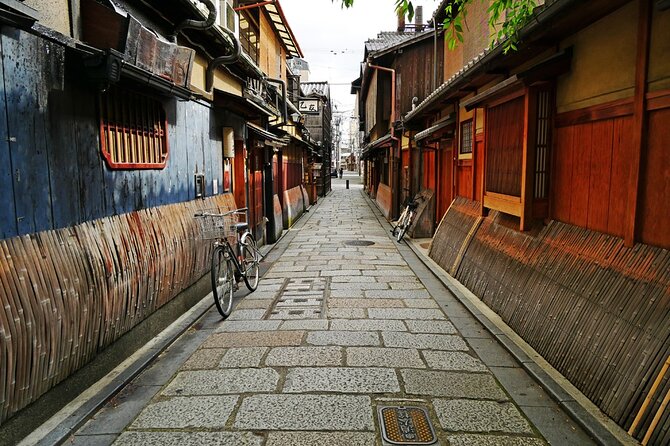
Kennin-ji is a strong first stop because it gives you quiet space before the tour moves into Kyoto’s entertainment districts. Founded in 1202 by the monk Eisai, it is one of the city’s oldest Zen temples and is connected with the Rinzai school of Zen Buddhism.
You spend about 45 minutes here, with admission included. That is enough time for your guide to explain the temple’s place in Kyoto and point out features you might miss if you simply wandered through on your own.
The contrast with the later streets is part of the appeal. At Kennin-ji, the mood is shaped by temple buildings, gardens, and Zen teachings. Later, you will walk through lanes associated with restaurants, teahouses, geisha, and maiko. Seeing both sides in one outing helps you understand that Kyoto’s old districts are not a single museum-like world. Religious life and traditional entertainment have long existed close together.
I would pay close attention to the guide here rather than rushing to take pictures. The temple is not treated as a quick backdrop. Its 45-minute visit gives the tour a proper cultural beginning, and the included admission keeps you from having to handle an extra payment during the walk.
Pontocho’s narrow evening lanes
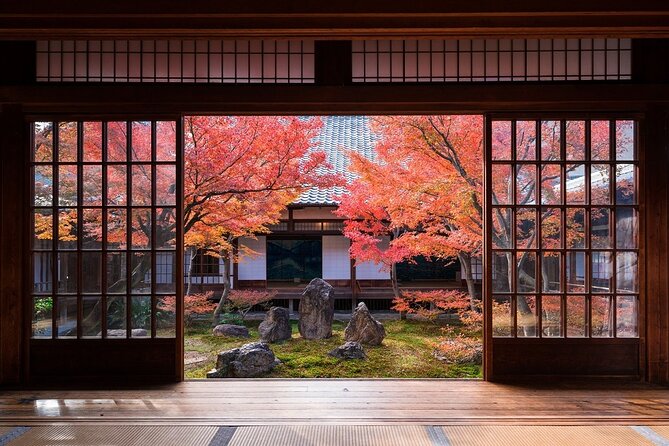
From Kennin-ji, the tour continues to Pontocho, a narrow historic alley between the Kamogawa River and Kiyamachi Street. You spend about 30 minutes here, and there is no separate admission charge.
Pontocho is known for traditional wooden buildings and dining establishments. Its narrow scale is the main attraction. You are not looking at a broad avenue with grand monuments. You are following a compact lane where architecture, lanterns, entrances, and the possibility of a meal behind a closed door create the atmosphere.
A guide is especially useful in Pontocho because much of what makes the district interesting is easy to overlook. The buildings may appear modest, and many establishments are private or reserved for particular customers. Your guide can explain what you are seeing without suggesting that every doorway is open for public inspection.
This is also a place where good manners matter. Keep your voice low, do not block the lane, and do not photograph people entering private establishments without permission. The area is not a stage set. People work and dine here.
The 30-minute stop is brief, so expect an introduction rather than a full restaurant or nightlife experience. Lunch, dinner, drinks, and other food are not included. The tour is about the district itself, not a tasting program.
Miyagawacho and the chance to see maiko
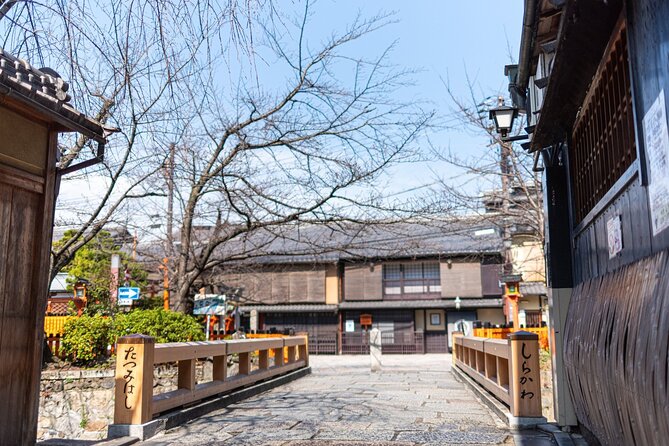
Miyagawacho is another historic geisha district, known for its maiko and geisha culture. The tour allows about 30 minutes here, with no admission fee.
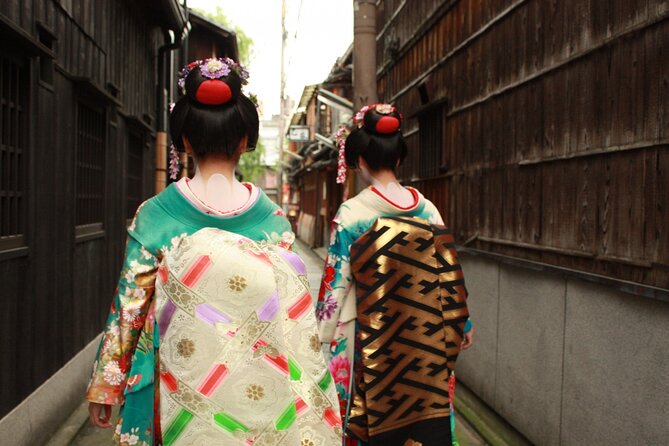
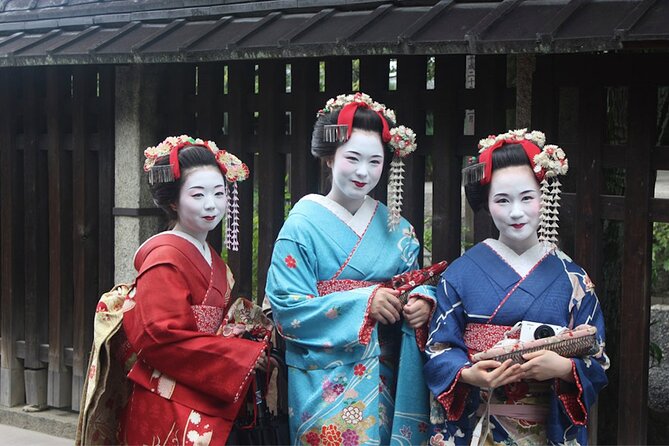
This is one of the most anticipated sections, but you should set your expectations correctly. You might see a maiko or geisha moving through the district, yet the tour does not guarantee an encounter. Sightings can be rare, and the timing of a four-hour walk cannot control who happens to be on the street.
That uncertainty does not make the stop pointless. Miyagawacho gives you a chance to see stone-paved streets and traditional surroundings tied to seasonal events and performances. The district is also associated with the spring Miyako Odori dance performances, although this walking tour does not include a performance ticket.
If you do see a maiko or geisha, treat the moment with respect. Do not assume that a person in traditional dress is available for a photo or conversation. A good guide can help you observe without turning the encounter into a disturbance.
The people who have taken this tour have been especially pleased when luck delivered a sighting. One group saw three geisha with Koichiro and Mickey, while another had a real maiko encounter with Yuko. Those moments sound memorable, but they also underline the important point: they were fortunate additions, not the promised product.
More walking tours in Kyoto:
- Night Walk in Gion: Kyoto’s Geisha District
★ 4.5 · 2,003 reviews - Kyoto Gion Geisha District Walking Tour – The Stories of Geisha
★ 5.0 · 1,441 reviews - Nishiki Market Brunch Walking Tour (7 Tastings + Brunch)
★ 5.0 · 1,355 reviews - Kyoto Arashiyama Walking Tour: Bamboo, Monkeys, Gardens & Secrets
★ 5.0 · 1,216 reviews
Two hours through Gion
Gion receives the longest portion of the tour, about two hours. That makes sense. It is not just one short lane but a wider area with several streets, establishments, and stories tied to Kyoto’s traditional entertainment culture.
The walk includes three of Kyoto’s best-known geisha districts and takes you along paths connected with the city’s past. One mentioned area is Gojyorakuen, once known as a notorious red-light district. That history adds a more complicated layer to the polished image many people have of Gion.
Expect your guide to provide context as you walk rather than lead you through a series of formal attractions. The value is in connecting the streets to the people and customs associated with them. A wooden exterior, a discreet entrance, or a lane that looks ordinary can carry meaning that is not obvious at first glance.
Two hours also means this is the part of the tour where comfortable shoes matter most. The exact route may change according to conditions on the day. You should be ready for steady walking and for some standing while the guide explains what you are seeing.
Gion can be especially appealing if you have already visited Kyoto’s major temples and want a different side of the city. It is less useful if you are looking for a meal, shopping time, or a staged cultural show. Those are not included.
What a private guide adds
A private format is the tour’s clearest advantage. You are not assigned to a large group, and only your party takes part. That makes it easier to stop for a question or ask the guide to explain something in more detail.
The named guides connected with this experience include Koichiro, Mickey, and Yuko. The individual you receive may vary, but the feedback gives you a useful sense of what to look for: punctuality, clear explanations, and careful attention to the group.
Yuko, in particular, has been praised for pointing out things that are easy to miss without local experience. Koichiro has been described as pleasant, timely, and able to take the group to places they might not have found alone. Koichiro and Mickey were also credited with looking after their group well during a walk that included several unexpected geisha sightings.
That kind of personal care matters in a district where etiquette can be unclear. You may have questions about where you can stand, what you can photograph, or how to behave near a working teahouse. A private guide can answer in the moment.
Still, a private tour is not automatically better for everyone. If you prefer to explore quietly at your own pace, four hours with a guide may feel structured. The price is also harder to justify for a solo participant than for a family or group sharing the experience.
Timing, walking, and practical details
The tour lasts about four hours and begins at Gion-Shijo Station, at 1 Chome Miyagawasuji in Kyoto’s Higashiyama Ward. It ends back at the same meeting point, which makes planning the rest of your day easier.
Transportation fees are not included. The route is designed as a walk, so you should not expect a private vehicle between stops. You will need to budget separately for getting to the meeting point and for any transport after the tour.
Food and drinks are also not included. Pontocho and Gion are associated with traditional dining, but this experience does not take you to lunch or dinner. Eat beforehand or plan a meal afterward.
The activity is near public transportation, and most people can participate. The available information does not provide a precise distance or accessibility breakdown, so anyone concerned about walking, uneven streets, or standing time should ask the operator before booking.
The itinerary can change according to conditions on the day. This is sensible in an active district where streets, weather, and local activity can affect the route. The tour requires good weather. If poor weather forces cancellation, you are offered another date or a full refund.
Confirmation is sent within 48 hours, subject to availability. The cancellation policy is strict: the booking is non-refundable and cannot be changed for any reason. That makes travel insurance or careful scheduling worth considering, especially because you are booking an expensive private experience well in advance.
The tour is booked, on average, 40 days before the date. That suggests you should not wait until the last minute if your Kyoto schedule is fixed.
Who will get the most from this tour
I would recommend this walk to a first-time Kyoto visitor who wants a clear introduction to geisha districts without trying to piece together several locations alone.
It also suits families and small groups. The private format lets you adjust explanations to different ages and interests, and group discounts may improve the value. A family can ask basic questions without feeling self-conscious, while experienced Japan visitors can focus on social customs, architecture, or district history.
The tour is a good fit if you care about context more than checking off monuments. Kennin-ji supplies a temple visit, but Pontocho, Miyagawacho, and Gion are mainly experienced from the street. You are paying for interpretation and access to local understanding, not a long list of admission tickets.
I would be more cautious if you have limited mobility, dislike walking, or want a guaranteed geisha meeting. I would also think twice if you are mainly seeking food, entertainment, or a dance performance. None of those is included.
Should you book the Kyoto Geisha Districts Walking Tour?
Book it if you want a private, guide-led introduction to Kyoto’s traditional districts and you value explanations that connect small street details to the city’s customs. The combination of Kennin-ji, Pontocho, Miyagawacho, and Gion gives you a useful range in four hours.
Do not book it on the assumption that you will meet a geisha. That may happen, as it did for some groups with Koichiro, Mickey, and Yuko, but it is luck rather than a promise.
At $234.11 per person, this is best for a group that will make full use of the private guide. For the right party, the personal attention and well-planned route can justify the cost. For a solo visitor on a tight budget, a self-guided walk may be better value. Schedule it on a dry day, wear comfortable shoes, and treat the districts as working neighborhoods rather than a photo set.
FAQ
How long does the Kyoto Geisha Districts Walking Tour last?
The tour lasts approximately four hours. The listed stops include about 45 minutes at Kennin-ji Temple, 30 minutes in Pontocho, 30 minutes in Miyagawacho, and two hours in Gion.
Is this a private tour?
Yes. Only your group participates, and the experience is led by an English-speaking local guide.
Will I definitely see a geisha or maiko?
No. The tour does not guarantee that you will see or meet geisha or maiko. Sightings are possible but can be rare.
What is included in the price?
The price includes an English-speaking local guide and the entrance fee for one temple or shrine location, which is Kennin-ji Temple on this route.
Are food, drinks, and transportation included?
No. Lunch, food, drinks, and transportation fees are not included.
Where does the tour begin and end?
The meeting point is Gion-Shijo Station at 1 Chome Miyagawasuji, Higashiyama Ward, Kyoto. The activity ends back at the same meeting point.
Newest Kyoto experiences on the site
- Treasures of Kyoto: Gion & historical Walking Tour★ 5.0 · 6 reviews
- Whisk Your Own Matcha: A Zen Matcha Experience at Temple★ 3.6 · 7 reviews
- Kyoto tea town for matcha lovers★ 5.0 · 16 reviews
- Uji: Private immersion into Kyoto’s tea and reglious culture★ 5.0 · 17 reviews
- Kyoto Matcha Green Tea Tour★ 4.5 · 23 reviews
- Uji and Wazuka Matcha Farm Half Day Private Guided Tour★ 5.0 · 21 reviews
- Utilising upcycled Matcha! Creating matcha incense (Uji, Kyoto)★ 5.0 · 6 reviews
- Sacred Temple Yoga Experience in Japan★ 5.0 · 3 reviews
Kyoto Geisha & Maiko Experiences, compared.
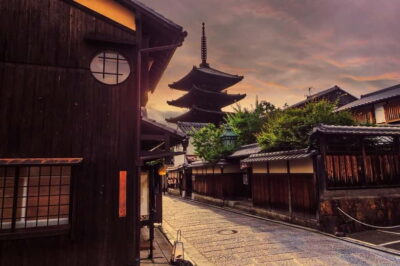
Kyoto Geisha Walking Tour: Gion District & Hidden Gems
Read our review →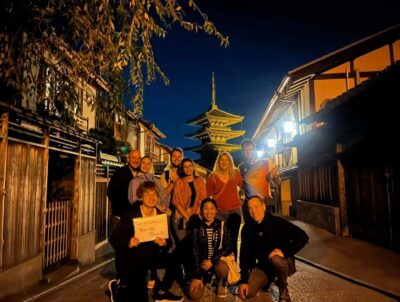
Gion Magical Night Walking Tour with Geisha Trivia
Read our review →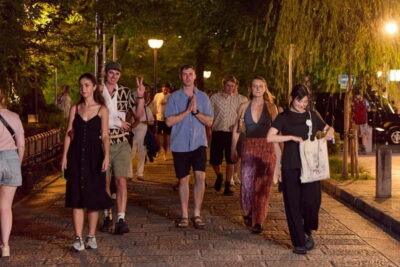
Gion Geisha District Walking Tour – Stories of Geisha
Read our review →
Best of Kyoto: Gion, Geisha, Pagodas & Cobblestones
Read our review →
Kyoto Gion Geisha District Walking Tour – The Stories of Geisha
Read our review →
Kyoto Gion: 2-Hour Geisha Culture & History Walking Tour
Read our review →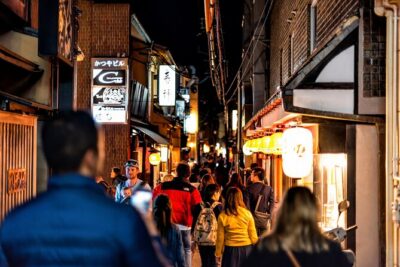
Kyoto Gion Night Walk & Geisha District Guided Tour
Read our review →Browse the lists this tour appears in