
Reviewed · KYOTO CYCLING TOURS
Pedal through Kyoto’s Past: A Private Biking Odyssey
Kyoto’s greatest sights make more sense when you move between them at bicycle speed. This six-hour private ride begins near Nishi Hongan-ji and can lead through Gion, past Kinkaku-ji’s gold-covered pavilion, beneath the red gates of Senbon Torii, or toward the Imperial Palace and Tōfuku-ji.
I like the private format, which gives your group a guide instead of a fixed crowd, and I like the chance to cover more ground than you could on foot. The guide may also shape the day around the places that interest you most. Tomomi, one named guide, is praised for her cultural and historical knowledge, friendly manner, and attention to detail.
The main drawback is the price: $1,369 per group of up to two is a serious spend for a six-hour activity. You also need to be comfortable cycling, and this tour is not suitable for children under 13 or anyone who cannot ride a bike.
Key points for your Kyoto cycling day
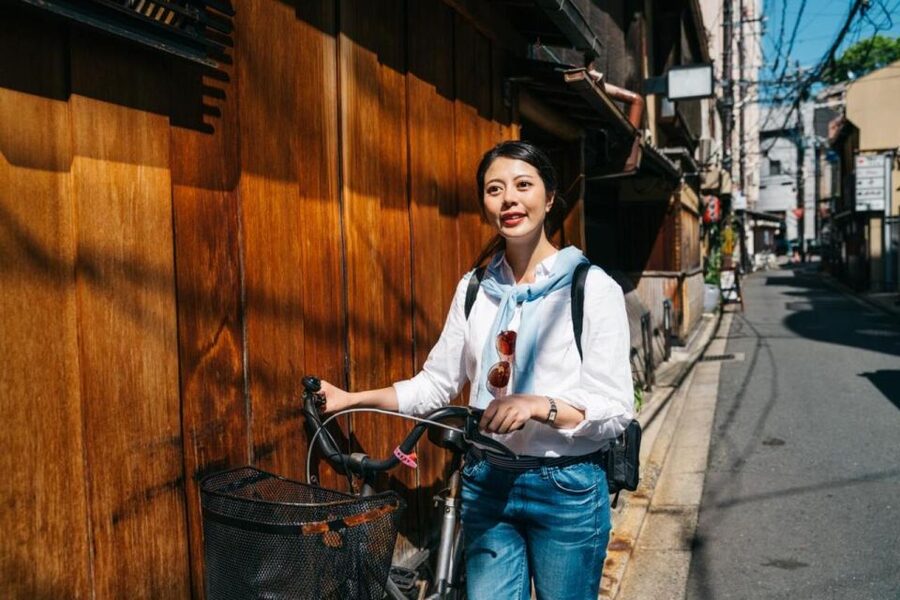
- A private route for up to two people: You ride with your own group and a local guide, not with a large shared party.
- Several major Kyoto sights may fit into one day: The route can include Gion, Kinkaku-ji, Senbon Torii, the Imperial Palace, or Tōfuku-ji.
- The start is near Nishi Hongan-ji: Your guide provides the exact meeting details.
- Six hours on a bicycle: This is a full touring day, not a short temple visit with a quick ride attached.
- Four guide languages are available: English, Spanish, German, and Chinese are listed.
- Tomomi receives especially warm praise: Her history knowledge, cultural explanations, friendliness, and careful attention are highlighted.
Starting near Nishi Hongan-ji

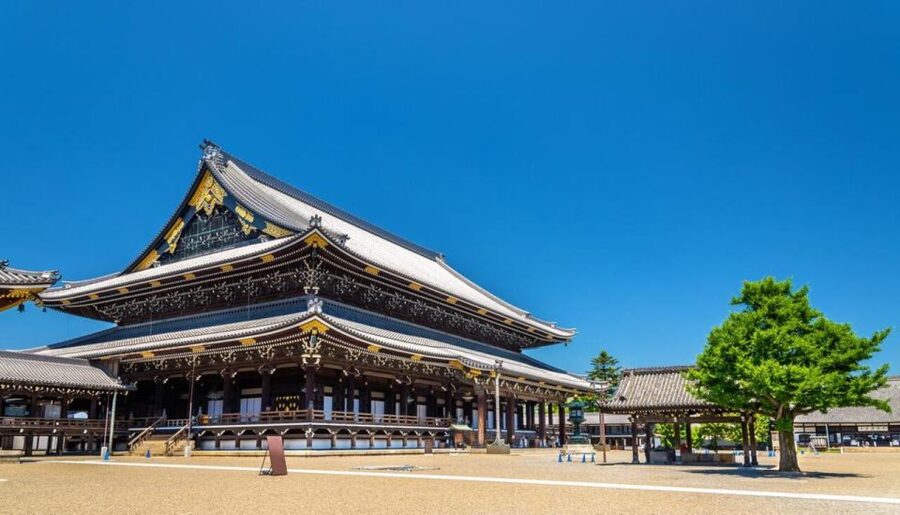
The tour begins near Nishi Hongan-ji, a sensible place to start a Kyoto history lesson. This important temple complex gives you an early look at the city’s Buddhist traditions before the ride moves toward other famous sights.
The exact meeting point is not fixed in the information provided. Your guide will give you more details, so check those instructions before heading out. Arrive with enough time to find the area and get settled on the bike. A private tour is only useful if you are ready to roll when the six-hour clock starts.
Your guide provides the bicycle and leads the day. The description does not specify the bike type, helmet arrangements, saddle adjustments, or the road surfaces, so ask about those points before booking if they matter to you. You should also be ready for a sustained ride. Six hours can feel long if cycling is not already part of your normal sightseeing routine.
The strongest reason to choose this format is not simply speed. A bicycle lets you connect separate parts of Kyoto without spending the day waiting for vehicles or walking every block. You can see how the city changes from temple grounds to old neighborhoods and major tourist sights in a single outing.
More bike days around Kyoto:
- Hidden Kyoto E-Biking tour
★ 5.0 · 1,843 reviews - Bike Tour Exploring North Kyoto plus Lunch
★ 5.0 · 1,087 reviews - Arashiyama Bamboo Forest & Hidden Gems Bike Tour (Early Bird)
★ 5.0 · 613 reviews
Gion, where Kyoto’s old image comes alive
Gion is one of the tour’s headline stops. Its historic streets are linked with geisha culture, traditional buildings, and Kyoto’s carefully preserved old-town character. Riding through the district gives you a useful sense of scale. You are not just arriving at one famous building, taking a photo, and leaving. You are moving through a neighborhood with a distinct identity.
Your guide can add meaning to what you see. This is where a local guide matters most. The streets may look simple at first glance, but the cultural background is not always obvious from the outside. The information specifically highlights explanations about emperors, monks, and geishas, so expect the day to connect places with the people and traditions behind them.
Gion is also a place where you should behave quietly and respectfully. It is a working neighborhood, not a stage set. Stay alert while cycling, follow your guide’s instructions, and avoid treating residents or performers as photo subjects.
The tour does not promise a particular geisha encounter, performance, or private access. Think of Gion as a historic district to pass through and understand, not as a guaranteed entertainment stop.
Kinkaku-ji and Kyoto’s golden landmark
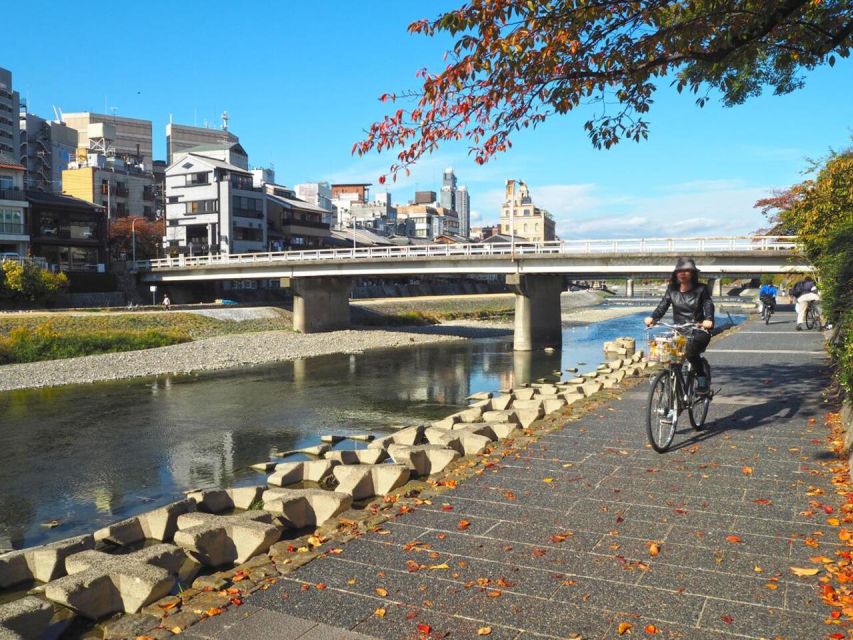
Kinkaku-ji, often called the Golden Pavilion, supplies the tour’s most instantly recognizable sight. The pavilion’s golden exterior gives this stop its visual punch, and the description places the bicycle ride beneath its golden eaves.
The value of arriving by bike is practical. You can connect Kinkaku-ji with other parts of Kyoto rather than treating it as an isolated excursion. The stop also gives your guide an opening to explain the religious and cultural setting around the building, rather than leaving you with only its famous appearance.
Still, keep your expectations grounded. The information confirms a visit to Kinkaku-ji, but it does not state how long you will stay, whether an admission ticket is included, or whether you will enter every part open to the public. Personal expenses are not included, so budget separately for anything outside the guided ride.
A bicycle does not erase the crowds at a famous temple. The private group keeps your tour party small, but it does not mean the temple grounds will be private. That distinction matters if you are hoping for a quiet, empty view.
Senbon Torii and the red-gate corridor
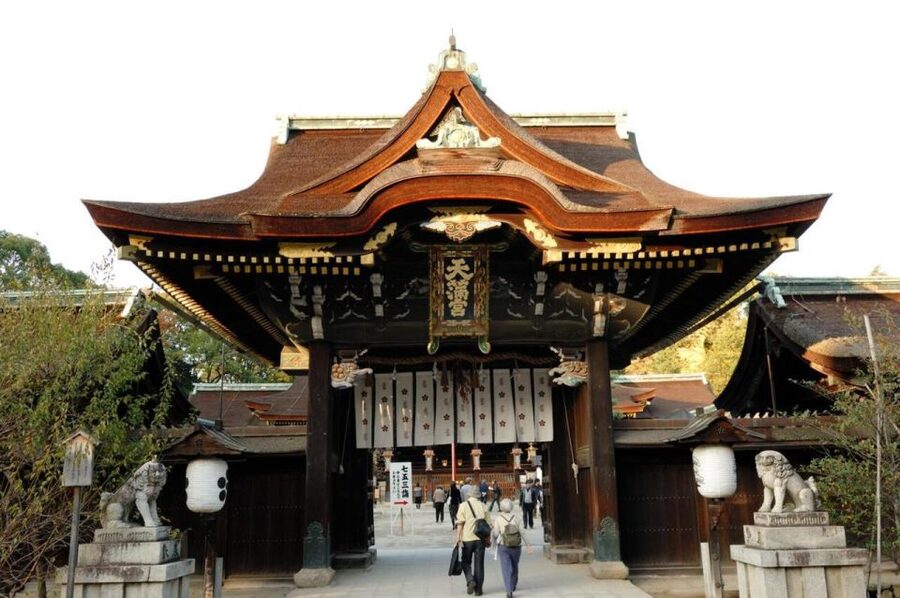
The Senbon Torii section brings a different mood. Instead of Kinkaku-ji’s single golden pavilion, you get a long sequence of vermilion gates. The gates create one of Kyoto’s most memorable visual corridors, and the tour description presents navigating them as a central part of the day.
This is a useful contrast with Gion and Kinkaku-ji. You move from a historic neighborhood to a famous temple setting and then into a passage defined by repetition, color, and movement. Your guide can help explain why the gates matter, giving the sight more context than a quick walk through with no background.
Do not assume every section of a torii route is suitable for cycling. The available information does not spell out exactly where you ride, where you walk, or how much time you spend at the site. Follow the guide’s directions and expect that some portions may be explored on foot.
The same practical warning applies here as at Kinkaku-ji. Senbon Torii is a major Kyoto attraction, and the private format controls the size of your own group, not the number of other people in the area.
Same city, a completely different kind of day:
- PERFECT KYOTO 1-Day Bus Tour
★ 5.0 · 13,518 reviews - Kyoto: Fushimi Inari, Kinkakuji, Bamboo Grove 1 Day Bus Tour
★ 4.8 · 4,316 reviews - Kyoto: Tea Ceremony in a Traditional Tea House in Kiyomizu
★ 4.9 · 3,519 reviews - Kyoto Geisha Walking Tour: Gion District & Hidden Gems
★ 4.7 · 3,273 reviews
The Imperial Palace and Tōfuku-ji options
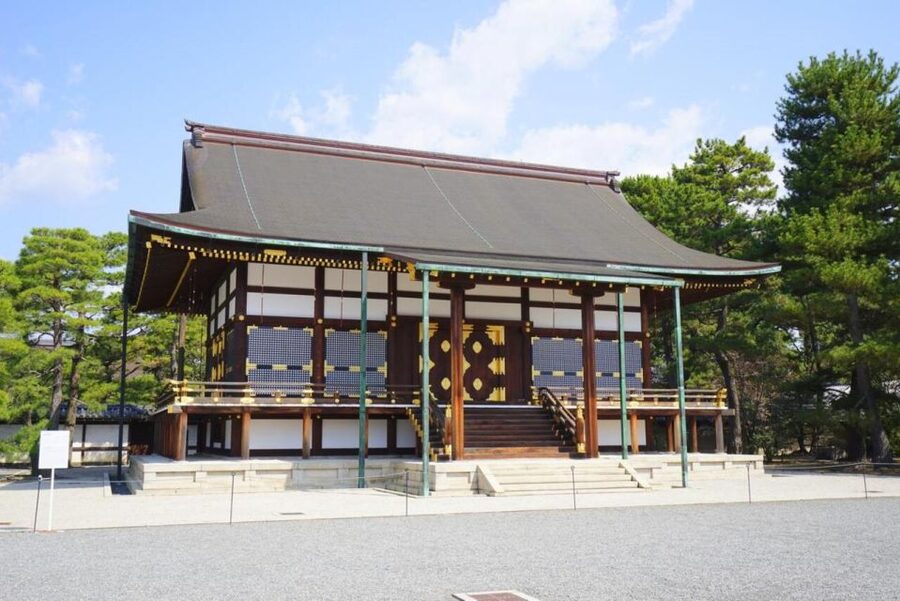
The itinerary can also include the Imperial Palace or Tōfuku-ji. These possibilities make the tour less rigid than a simple checklist of three fixed stops, though you should confirm the intended route when booking or meeting your guide.
The Imperial Palace offers a different angle on Kyoto. The city was closely tied to Japan’s imperial court, and a stop here can help connect the modern streets to the world of emperors referenced in the tour description. It may suit you if political and court history interest you more than another temple visit.
Tōfuku-ji is described as a seasonal highlight. That makes it particularly appealing if your visit lines up with the time of year when its grounds are at their best. The supplied information does not promise a specific seasonal display, so treat this as a possible feature rather than a guaranteed spectacle.
These alternatives also show why a private guide can be useful. Your group may be able to discuss which sights matter most to you, although the exact flexibility of the route is not stated. Ask whether the guide chooses the stops in advance or adjusts them on the day.
What a private guide changes
A private tour is a different product from a low-cost group bicycle outing. You pay for a guide who works with only your party, which can make explanations easier to follow and reduce the awkwardness of a large group stopping at every corner.
It also gives you room to ask questions. If you want more background on Buddhist temples, geisha culture, imperial Kyoto, or the symbolism of the torii gates, say so early. If you prefer a faster ride with more sightseeing time, make that clear too. The tour is described as your own group’s experience, but the amount of route customization is not guaranteed.
Tomomi is the only guide named in the supplied information. If she leads your day, you can expect a guide praised for detailed knowledge of Kyoto’s culture and history, along with a pleasant and friendly manner. Do not assume she will be your guide unless your booking confirms it.
Guides are listed in English, Spanish, German, and Chinese. That range is helpful if you want to discuss history in a language you speak comfortably. Confirm your preferred language before booking.
Price, pace, and practical value
At $1,369 per group of up to two, this is an expensive Kyoto activity. The price works out to $684.50 per person when two people share it, before personal expenses. For one person, the cost is the full group price, so solo visitors receive poor value on the stated rate.
The price may make sense for a couple who wants a dedicated guide, a bicycle, and a full six-hour route through several important parts of Kyoto. You are paying for private attention and the ability to see more than one district in a day.
It is harder to justify if your main aim is simply to visit Kinkaku-ji, Gion, or Senbon Torii. You can likely see individual sights through other arrangements, and this tour does not include personal expenses. The value depends on how much you want the guide’s historical explanation and the convenience of a private bicycle route.
The reserve-now, pay-later option gives you some booking flexibility, and cancellation is free up to 24 hours before the activity for a full refund. Those terms reduce the risk of committing far ahead, but they do not change the high base price.
The six-hour duration also affects value. You get a substantial day rather than a brief introduction, but you need the stamina for it. People who cannot ride a bike and children under 13 should not book this activity.
Who should book this ride

I would consider this tour for two adults who already enjoy cycling and want a guided Kyoto day built around movement. It suits you if you prefer seeing several districts rather than spending the entire day at one temple.
It is also a good match if history and local explanation matter as much as photographs. A guide can connect Gion, Kinkaku-ji, Senbon Torii, the Imperial Palace, and Tōfuku-ji into a larger story about Kyoto.
I would hesitate if you want a slow, unstructured temple day, if you dislike cycling in an unfamiliar city, or if you are traveling on a tight budget. The price is too high to overlook, and the tour is not designed for younger children or non-cyclists.
Before booking, ask for the exact meeting point, confirm the guide language, and check which stops are planned. Also ask about the bicycle equipment and how much of the route is ridden versus walked. Those details are not provided and could affect your comfort.
Should you book Pedal through Kyoto’s Past?
Book it if you are a confident cyclist, value a private guide, and want one long day linking Kyoto’s famous sights with neighborhood-level movement. The small group and language choices are genuine advantages, and Tomomi’s praise for detailed cultural explanations makes the guiding element especially appealing if she is available.
Skip it if $1,369 feels hard to defend or if you only want a quick visit to one or two landmarks. This is a premium private experience, not a budget way to get around Kyoto. For the right pair, it can turn a scattered list of famous places into a connected day. For everyone else, the cost deserves careful thought.
FAQ
How long is the biking tour?
The tour lasts six hours.
How much does the experience cost?
The price is $1,369 per group of up to two people.
Is the tour private?
Yes. It is offered only for your own group.
Where does the tour meet?
The meeting area is near Nishi Hongan-ji Temple. Your guide provides more information about the exact meeting point.
Is a bicycle included?
Yes. A bicycle is included.
Is a local guide included?
Yes. A professional local tour guide is included.
Which languages are available?
Guides are listed for English, Spanish, German, and Chinese.
Which Kyoto sights can the tour include?
The route can include Gion, Kinkaku-ji, Senbon Torii, the Imperial Palace, or Tōfuku-ji.
Can children join the tour?
Children under 13 are not permitted according to the activity information.
Can I cancel for a refund?
Yes. You can cancel up to 24 hours in advance for a full refund.
Newest Kyoto experiences on the site
- Treasures of Kyoto: Gion & historical Walking Tour★ 5.0 · 6 reviews
- Whisk Your Own Matcha: A Zen Matcha Experience at Temple★ 3.6 · 7 reviews
- Kyoto tea town for matcha lovers★ 5.0 · 16 reviews
- Uji: Private immersion into Kyoto’s tea and reglious culture★ 5.0 · 17 reviews
- Kyoto Matcha Green Tea Tour★ 4.5 · 23 reviews
- Uji and Wazuka Matcha Farm Half Day Private Guided Tour★ 5.0 · 21 reviews
- Utilising upcycled Matcha! Creating matcha incense (Uji, Kyoto)★ 5.0 · 6 reviews
- Sacred Temple Yoga Experience in Japan★ 5.0 · 3 reviews
Kyoto Cycling Tours, compared.
Arashiyama Bamboo Forest & Hidden Gems Bike Tour (Early Bird)
Read our review →
5 Top Highlights of Kyoto Full Day Bike Tour (E-bike option)
Read our review →
Full Day Biking Tour Exploring the Best of Kyoto
Read our review →
Afternoon Kyoto Bike Tour: Bamboo Forest, Monkeys & Hidden Spots
Read our review →
South Kyoto in a Nutshell: Gentle Backstreet Bike Tour!
Read our review →Browse the lists this tour appears in