
Reviewed · NARA DAY TRIPS
Osaka & Nara: Private Tour with English speaking guide
Nara’s deer, Todai-ji’s Great Buddha, Osaka Castle, Dotonbori, and the city’s retro Shinsekai district make for a big, busy day. This private tour lets you cover both cities without wrestling with trains, station maps, or a rental car. The vehicle is the real time-saver.
I like the hotel pickup and private transport, especially for families or anyone using a walker. I also like the chance to see both Japan’s temple-centered old capital and Osaka’s food-and-neon side in one outing. The main concern is guide quality. Some guides, including Musa, Nihon, Haider, and Noor ul Badr, received strong praise for being helpful and informative. Other bookings produced little more than a driver, so confirm that your guide will actually accompany and explain the sights.
Key points before you book
- Ten hours covers a lot: Nara Park and Todai-ji come first, followed by a long list of Osaka stops.
- The private vehicle saves effort: Parking, tolls, and driving are included, with drop-off in Osaka or Kyoto.
- Guide quality needs checking: Some named guides were praised for patience and detailed explanations, while other bookings reported a driver-only service.
- Entry tickets are extra: Budget separately for Todai-ji, Osaka Castle, the aquarium, and Umeda Sky Building if you go inside.
- Lunch needs clarification: Shinsekai is scheduled for 1.5 hours, but lunch costs and the exact restaurant are not included.
- The plan is ambitious: You will see many places, but most stops are short introductions rather than slow visits.
A private day from Nara’s deer to Osaka’s neon
This is not a quiet, single-theme excursion. It is a sweeping sampler of the Kansai region, moving from Nara’s Buddhist temples to Osaka’s castle, shrines, aquarium, observation deck, canal district, and old entertainment quarter.
For a group of up to six, the $455 price works out to about $76 per person when full. That is fair if you value door-to-door transport and a private schedule. For two people, the per-person price is much higher, and you may get better value from trains and individual sightseeing tickets unless convenience matters most.
The day is best for first-time visitors who want a broad introduction. You will not get a deep visit at every stop. The strength is range: one vehicle, one guide, and a clear route through two major destinations.
More day trips down to Nara:
- Osaka/Kyoto:Kinkakuji,Arashiyama,FushimiInariShrine,NaraPark
★ 4.1 · 1,596 reviews - Kyoto/Osaka: Nara, Fushimi Inari Taisha, Arashiyama Bus Tour
★ 4.7 · 1,275 reviews - Osaka/Kyoto: Arashiyama, Nara & Fushimi Inari Shrine w/Lunch
★ 4.4 · 754 reviews
Nara Park: deer, gardens, and a gentle start
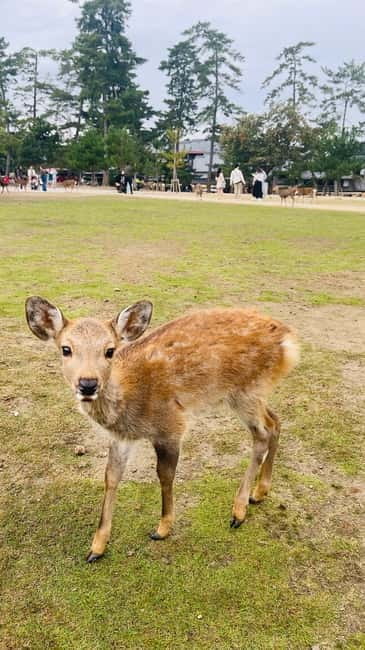
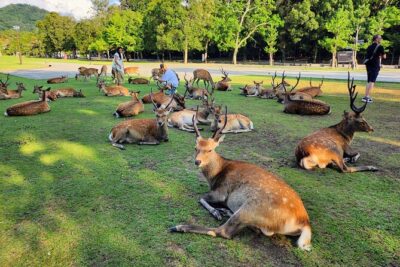
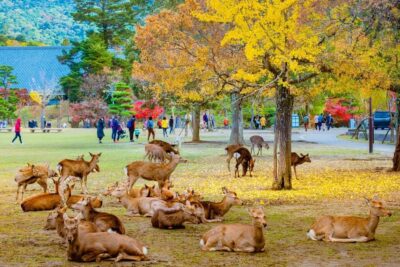
The first stop is Nara Park, where sacred deer roam freely. You get about an hour for a guided visit, photos, walking, and some free time.
The deer are the memorable part, but keep your attention on your belongings and follow local instructions around them. This is a place for a slow stroll, not a rushed photo stop. The park gives you an immediate sense of Nara’s older, quieter character before the day turns toward Osaka.
For couples, this may be the most relaxed section of the tour. Families will also appreciate the open setting and the simple fun of seeing deer at close range. If you want extended time in the park, tell your guide early. The schedule has many later stops, so an hour can pass quickly.
Todai-ji and the Great Buddha
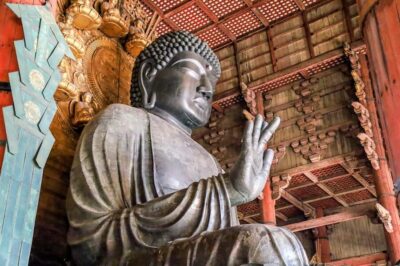
Todai-ji receives another hour. This is the spiritual centerpiece of the Nara portion, with the Great Buddha housed in an enormous wooden temple hall.
Your guide should add context here, not simply point you toward the entrance. The building, the scale of the Buddha, and the role of the temple in Japanese Buddhism make this one of the day’s most important visits. It is also one of the places where an English-speaking guide can make a real difference.
Admission is not included, so plan for an additional ticket. The supplied schedule also highlights Kasuga Taisha Shrine in the general description, but Kasuga Taisha is not listed among the timed itinerary stops. If that shrine matters to you, ask before booking. With ten hours already packed, adding it may require dropping another Osaka sight.
Lunch in Shinsekai, with an important question to ask
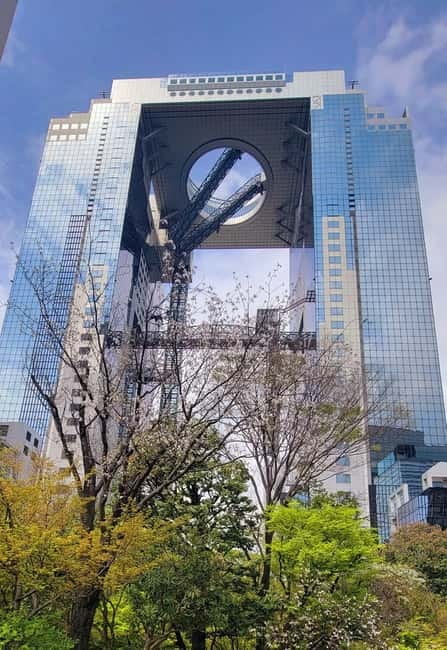
The plan assigns 1.5 hours to Shinsekai for lunch. The description refers to a Japanese meal, with seasonal kaiseki cuisine or premium wagyu beef depending on your preference.
That sounds more formal than a typical Shinsekai stop, so ask exactly what is arranged. Lunch is not listed among the inclusions, and personal expenses are excluded. Confirm the restaurant, menu, reservation, and price before you set out.
Shinsekai itself is worth seeing beyond the meal. Its colorful streets and retro feel offer a different side of Osaka from the polished castle grounds and modern Umeda district. If you prefer casual Osaka food, this is also the natural place to look for local specialties such as takoyaki and okonomiyaki, though the exact meal choice should be confirmed with the operator.
More days that pair Kyoto with Osaka:
- One-Day Tour of Kyoto’s Highlights from Osaka/Kyoto
★ 4.5 · 1,092 reviews - Full Day Guided Tour to Kyoto and Nara from Osaka by Van
★ 5.0 · 420 reviews - Nara Afternoon Tour from Kyoto or Osaka
★ 4.5 · 390 reviews - Kyoto Morning Tour from Kyoto or Osaka
★ 4.0 · 281 reviews
Osaka Castle in a 90-minute window
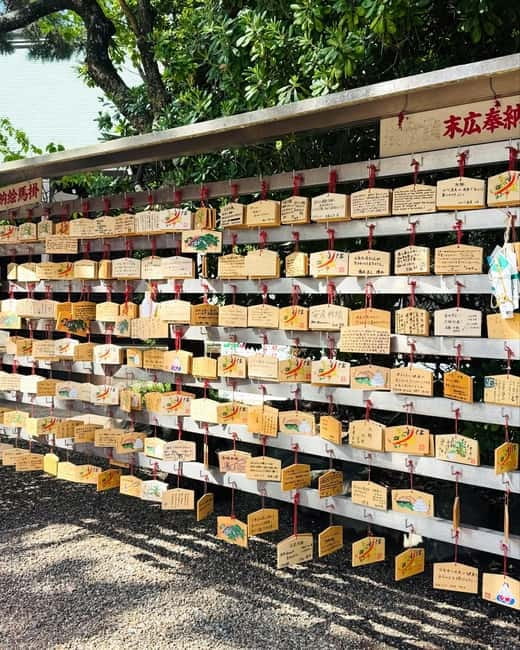
After Nara, the route turns to Osaka Castle. You get about 1.5 hours for sightseeing, photos, walking, and free time.
The castle grounds, moats, and gardens provide good photo settings. The stop works well as an introduction to Osaka’s political and military past, but do not assume you will have time for every interior exhibit and surrounding garden path. Osaka Castle is large, and the schedule gives you enough time for a useful visit, not an all-afternoon exploration.
Entry tickets are extra. Ask whether the guide plans to enter with you or wait outside. That distinction matters here, as well as at the other paid attractions. A driver who simply drops you at the gate will give you a different experience from a guide who walks with you and explains what you are seeing.
Shitennoji, one of the day’s quieter stops
Shitennoji is scheduled for 45 minutes. That is a short visit, but it adds a calmer religious site to a day otherwise filled with major attractions.
The shrine and temple stops can blur together if you are moving too fast, so this is another point where guiding matters. Ask for a simple explanation of what makes Shitennoji distinct and what you should notice in the architecture and grounds.
The general description also names Sumiyoshi Taisha Shrine, while the detailed timed route lists Shitennoji instead. These are not the same place. Confirm which one you will visit before departure, especially if Sumiyoshi’s red bridge and traditional setting are priorities for you.
Kaiyukan Aquarium: a change of pace
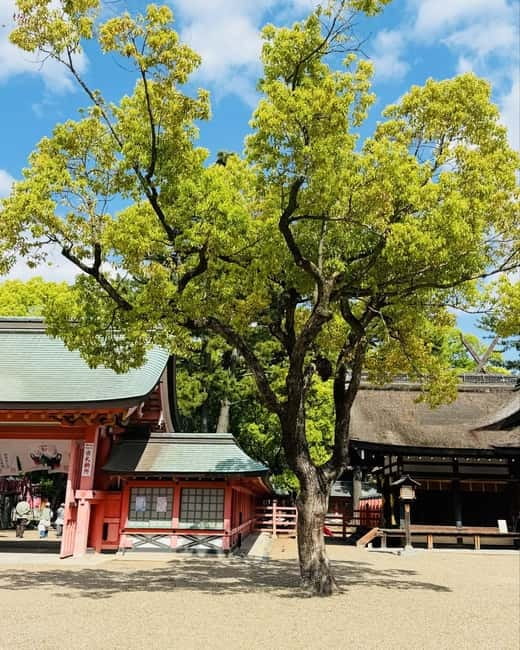
The Osaka Aquarium Kaiyukan gets about 1.5 hours. After temples, castle grounds, and shrines, the aquarium offers an indoor change of pace.
The experience centers on Pacific marine life, with the chance to see large sea creatures and other exhibits. The schedule also mentions dolphin and whale watching, but do not read that as a guarantee of a separate live show. Ask what is included in the aquarium visit and which tickets you need to buy.
This stop can work well for children, mixed-age groups, or anyone needing a break from outdoor walking. It can also be crowded and time-sensitive. If the aquarium is a major reason for booking, tell your guide so you do not lose too much time at earlier stops.
Umeda Sky Building and the city from above
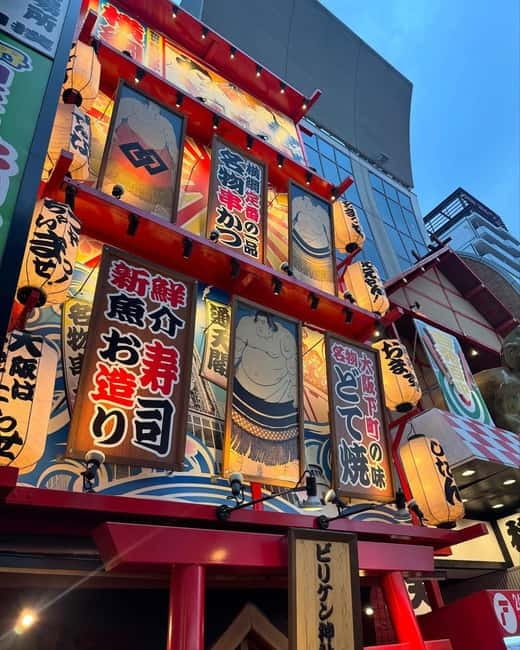
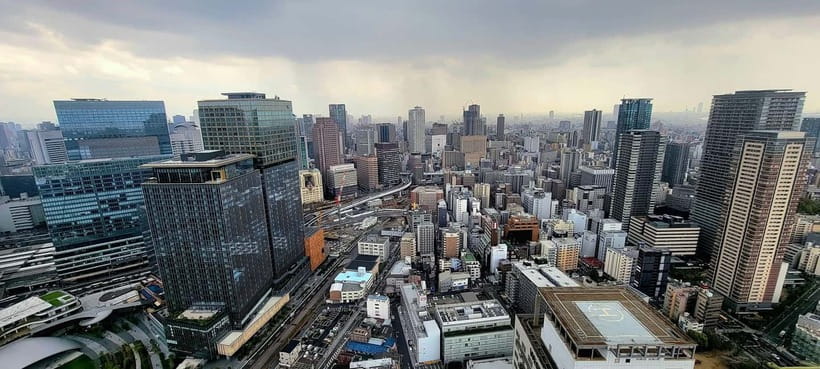
The Umeda Sky Building is allotted one hour for photos, free time, and sightseeing. It gives the day a modern Osaka finish before the evening districts.
The attraction is the view from above, although admission is not included. One hour is enough for the main observation experience if access is smooth, but not for lingering over every part of the building.
This is a useful stop for photographers. It also helps you understand Osaka’s scale after spending the morning among temples and parks. Ask whether your guide will accompany you to the observation area or direct you to it and wait below.
Dotonbori after dark
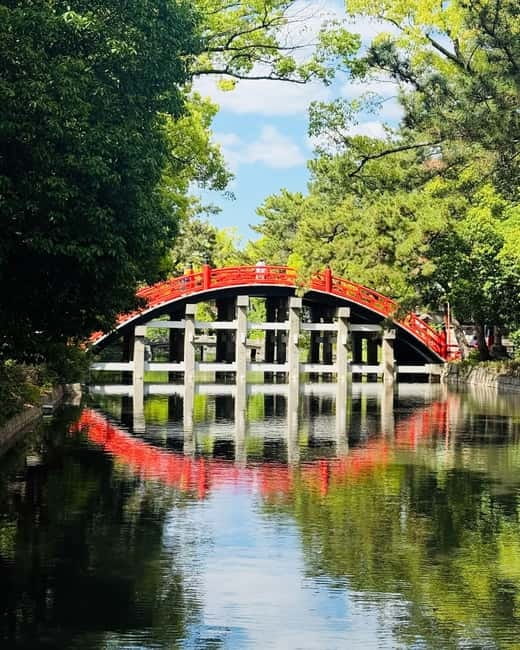
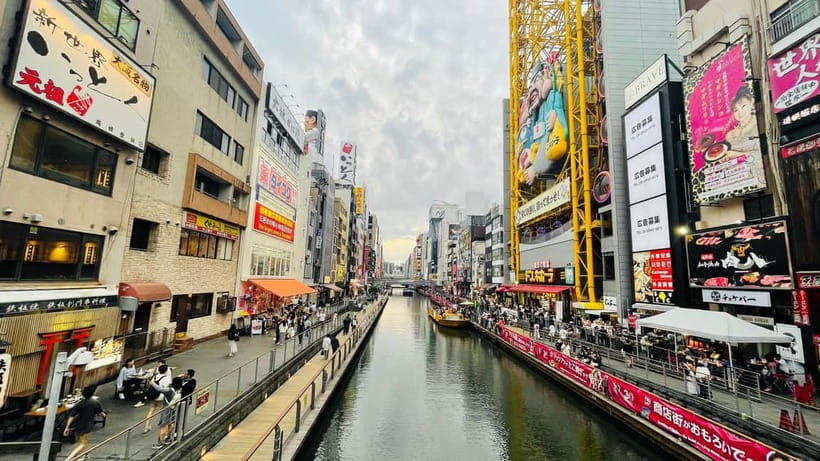
Dotonbori gets about an hour. The canal, neon signs, shopping streets, and food stalls make this the most energetic stop on the route.
I would use this time for a short walk and a few targeted food choices rather than trying to eat a full meal while also seeing the district. Takoyaki and okonomiyaki are the obvious local picks, but personal spending is on you.
One hour is enough to get the flavor of Dotonbori and take photos. It is not enough for a thorough shopping session, a long restaurant meal, and a full canal-area walk. Tell your guide what matters most so the stop has a clear purpose.
Shinsekai’s retro Osaka character
Shinsekai appears in the route as a 1.5-hour lunch and sightseeing stop. Its old-fashioned streets provide a contrast to Dotonbori’s bright commercial energy.
The district is useful for seeing a more local, nostalgic side of Osaka. It is also a practical place to eat, but again, confirm whether lunch is included or simply scheduled there. The tour price covers the vehicle, guide, parking, tolls, and ten hours of service, not personal expenses or attraction tickets.
The order of Shinsekai and the other Osaka stops may change during the day. Traffic, opening times, and your lunch choice can affect the sequence. A private tour gives you some room to adjust, but it does not create extra hours.
What the guide quality means for your day
The strongest part of this experience can be the guide. Musa was praised for making a Kyoto pickup easy and explaining the sights clearly. Nihon was described as punctual, patient, attentive, and able to answer questions in detail. Haider received praise for being informative, flexible, and considerate of a traveler using a walker. Noor ul Badr and Sam also received strong marks for making the day comfortable.
There is a serious warning on the other side. Some bookings reported that the assigned person acted only as a driver, spoke very little English, and gave little or no explanation at the stops. One group ended the tour after four hours because the service did not match the promised guide experience.
The current rating is 3.9 out of 5 from 15 ratings. That mixed result tells me to confirm the service in writing. Ask these questions before the cancellation window closes:
- What is the guide’s name?
- Will the guide leave the vehicle and accompany you at each attraction?
- Are explanations provided in English at the sites?
- Which stops are included in the final route?
- Who pays for and arranges attraction tickets?
Do not assume that private transport automatically means a private guided tour. Get that point clear.
Vehicle comfort, accessibility, and pickup details
The private vehicle is a major advantage. You avoid changing trains between Osaka, Nara, and the separate Osaka districts. Parking and tolls are included, and the tour ends with a hotel drop-off in Osaka or Kyoto.
Wheelchair access is supported, and one guide was specifically praised for taking care of a father using a walker. Still, you should state your mobility needs at booking. The route includes walking at parks, temple grounds, castle grounds, shrines, and city streets.
Pickup is available from Osaka and Kyoto, but the details need attention. Hotel pickup from Osaka is included in the basic description. Pickup outside Osaka, including Kyoto, Kobe, and Nara, carries an extra 15,000 yen charge. Airport and port pickup are not offered.
Wear comfortable shoes and bring sunscreen and a camera. Smoking is not allowed in the vehicle. These are small points, but a ten-hour day with repeated walks can feel long if you start in stiff shoes.
Is $455 good value?
For six people, $455 is a reasonable convenience price. The group shares a private vehicle, guide, parking, tolls, and a full ten-hour service. That can be especially useful when some members are older, children are along, or you want to return to the hotel without navigating late-day train connections.
For two people, the value is less clear. You pay the same group rate but still need to cover entry tickets, lunch, and any extra pickup charge. If you are comfortable using public transport, the private option is mainly buying comfort, time control, and reduced planning work.
The price also depends on receiving the service advertised. A driver who only transfers you between attractions does not offer the same value as a guide who walks with you and explains Nara and Osaka. That is why guide confirmation is more important here than a small price difference.
Who should book this day?
I would consider this tour if you want to see a wide range of sights in one day, prefer a private vehicle, or are traveling with a group of up to six. It suits first-time visitors who would rather get an overview than spend a full day at one temple or neighborhood.
It also fits families and travelers with mobility concerns, provided you explain those needs ahead of time. Hotel pickup and private drop-off remove much of the day’s transport work.
I would hesitate if you want long, thoughtful visits at every attraction, guaranteed specialist guiding, or a relaxed pace. The schedule is full, several entries cost extra, and the guide service has not been consistent for every booking.
Should you book it?
Book this tour if the private vehicle and broad coverage matter most, and confirm the guide’s name and duties before paying. Ask specifically about the conflicting shrine stops, the lunch arrangement, entry tickets, and the Kyoto pickup surcharge.
The best version of this day gives you Nara’s deer and Great Buddha, Osaka Castle, modern city views, and evening food districts without transport headaches. The weak version is simply a long car ride with drop-offs. Your decision should rest on one point: written confirmation that you are getting an English-speaking guide, not only a driver.
FAQ
How long is the Osaka and Nara private tour?
The tour lasts 10 hours.
Where can pickup and drop-off take place?
Pickup and drop-off locations are listed in Osaka and Kyoto. Hotel pickup is available from Osaka. Pickup outside Osaka, including Kyoto, Kobe, and Nara, carries an extra 15,000 yen charge.
Is airport or port pickup available?
No. Airport and port pickup are not offered.
How many people can join the private tour?
The price is for a private group of up to six people.
What is included in the tour price?
The price includes a private vehicle, a professional English-speaking guide, parking, tolls, and 10 hours of tour service.
Are attraction entry tickets included?
No. Entry tickets are not included.
Is lunch included?
Lunch is scheduled in Shinsekai for about 1.5 hours, but personal expenses are excluded. Confirm the restaurant, menu, and price before booking.
Is the tour wheelchair accessible?
Yes, the activity is listed as wheelchair accessible. You should still explain your specific mobility needs in advance.
Can I cancel for a full refund?
Yes. You can cancel up to 24 hours in advance for a full refund.
Newest Kyoto experiences on the site
- Treasures of Kyoto: Gion & historical Walking Tour★ 5.0 · 6 reviews
- Whisk Your Own Matcha: A Zen Matcha Experience at Temple★ 3.6 · 7 reviews
- Uji: Private immersion into Kyoto’s tea and reglious culture★ 5.0 · 17 reviews
- Kyoto tea town for matcha lovers★ 5.0 · 16 reviews
- Kyoto Matcha Green Tea Tour★ 4.5 · 23 reviews
- Uji and Wazuka Matcha Farm Half Day Private Guided Tour★ 5.0 · 21 reviews
- Utilising upcycled Matcha! Creating matcha incense (Uji, Kyoto)★ 5.0 · 6 reviews
- Sacred Temple Yoga Experience in Japan★ 5.0 · 3 reviews
Nara Day Trips, compared.
Kinkakuji,Arashiyama,FushimiInariShrine,NaraPark
Read our review →
Nara, Fushimi Inari Taisha, Arashiyama Bus Tour
Read our review →
Arashiyama, Nara & Fushimi Inari Shrine w/Lunch
Read our review →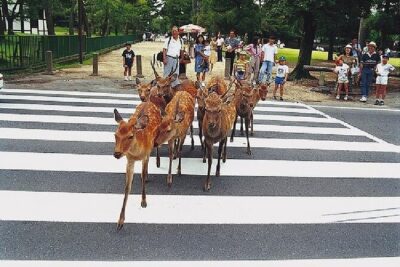
Full Day Guided Tour to Kyoto and Nara from Osaka by Van
Read our review →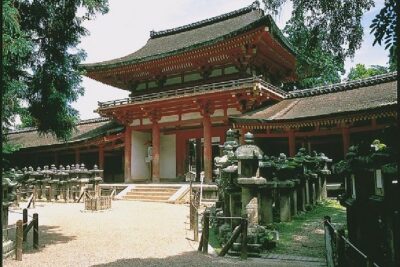
Browse the lists this tour appears in