
Reviewed · NARA DAY TRIPS
Nara 8hr Private Tour – Kyoto DEP. with Licensed Guide
Nara’s great strength is its mix of monumental Buddhism, quiet shrine paths, old wooden streets, and shambling deer. This private day trip lets you choose three or four sights instead of racing through a fixed checklist, and guides such as Junichi, Taku, Ken, Yuka, and Masaaki have tailored days around history, food, children, gardens, or less-visited temples. I like the freedom to shape the day, and I like having a local guide explain why Nara mattered as Japan’s ancient capital.
The main drawback is that the $201.51 per-person price does not include trains, local transport, entrance fees, lunch, or a private vehicle. You also need to meet the guide on foot in the designated Kyoto area, so confirm the meeting point and your preferred sites before you go.
Key points to know before booking
- Choose three or four sites: Build the day around major sights, gardens, old streets, museums, or temples farther from central Nara.
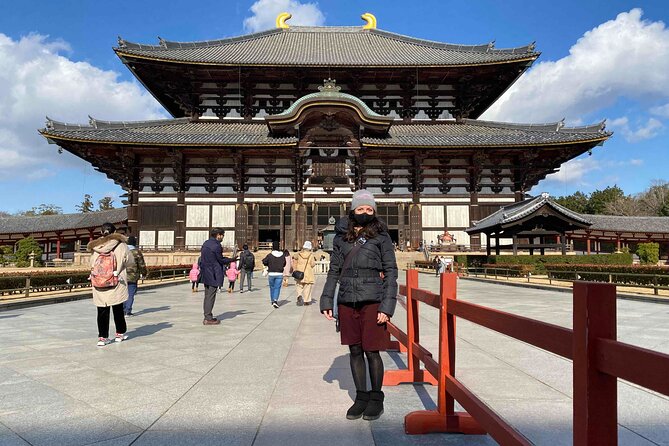
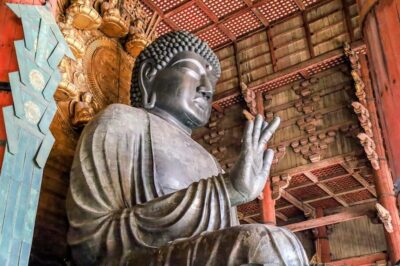
- Todaiji is the anchor: The giant Buddha and enormous wooden hall give the day its biggest visual moment.
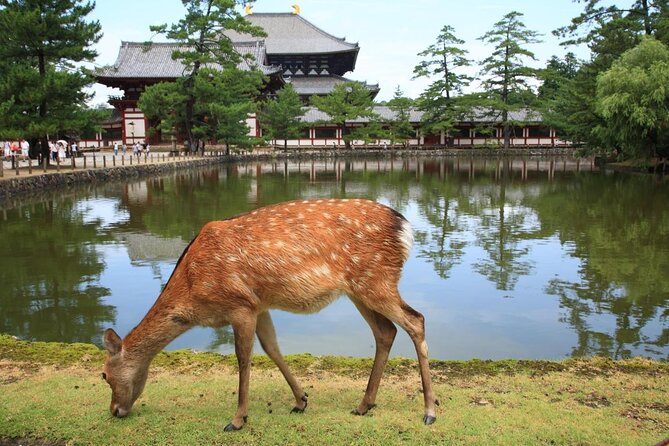
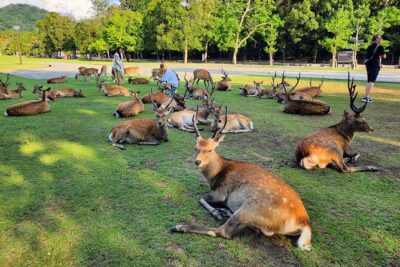
- The deer are part of the setting: Nara Park adds a playful, slightly chaotic touch to a serious cultural day.
- Private means flexible: Guides can adapt the pace for families, hot weather, sore feet, food needs, or special interests.
- Transport is extra: The guide fee covers guiding, not trains, buses, taxis, admission tickets, or lunch.
- Plan carefully: Eight hours sounds generous, but Nara has more worthwhile places than one day can hold.
Why a private Nara day works so well
Nara is close enough to visit from Kyoto, yet it feels different from the city’s more polished temple circuit. Here, deer wander through a historic park, stone lanterns line wooded paths, and huge Buddhist buildings appear between trees and open lawns.
A private guide is useful because Nara’s sights are spread across a broad area. You can spend the day on the central cluster around Nara Park, or use your limited time for places such as Horyuji, Yakushiji, Toshodaiji, or the Heijo Palace site. You will not see everything. The benefit is choosing what matters most to you.
The strongest part of this experience is the human guide. Junichi has been praised for building the day around personal interests and for adding local knowledge from growing up in Nara. Taku has guided visitors through both historic sites and modern stops such as sake tasting, cafes, and shaved ice. Ken has designed routes around teenagers and helped explain Japanese history in a clear way. Yuka has adjusted itineraries for visitors who specifically wanted to see Yakushiji.
Those details matter. You are not simply hiring someone to point at buildings. You are paying for help connecting the places, religions, architecture, and daily life of Nara.
The tour has a rating of 4.9 from 115 ratings, with 98 percent recommending it. That is an excellent record, though one poor experience specifically raised concern about spoken English. The guides are government licensed and multilingual, but speaking ability can vary from person to person. If clear English is especially important to you, request a guide who is comfortable discussing your subject of interest.
More day trips down to Nara:
- Osaka/Kyoto:Kinkakuji,Arashiyama,FushimiInariShrine,NaraPark
★ 4.1 · 1,596 reviews - Kyoto/Osaka: Nara, Fushimi Inari Taisha, Arashiyama Bus Tour
★ 4.7 · 1,275 reviews - Osaka/Kyoto: Arashiyama, Nara & Fushimi Inari Shrine w/Lunch
★ 4.4 · 754 reviews
Starting from Kyoto without a private car
The experience lasts about eight hours and begins with a guide meeting you on foot within a designated area of Kyoto. Transportation fees are not included, and no private vehicle is provided.
That arrangement keeps the base price lower than a chauffeured day trip, but it puts some responsibility on you. You need to budget for the journey between Kyoto and Nara, plus local trains, buses, or taxis if your chosen sites are spread out. Ask how the proposed route will work before the day begins.
A few past itineraries included hotel pickup or drop-off, but the official arrangement says pickup is on foot. Treat hotel service as something to confirm, not something automatically included.
The day is best for people who can walk for several hours. Most visitors can participate, and service animals are allowed, but this is not a vehicle-based sightseeing tour. Summer heat, rain, crowds, and hills can make the day tiring. One guide had to manage a rainy afternoon, while another worked through heat and heavy crowds. Comfortable shoes and a flexible attitude are more useful here than a packed schedule.
Todaiji and the Great Buddha
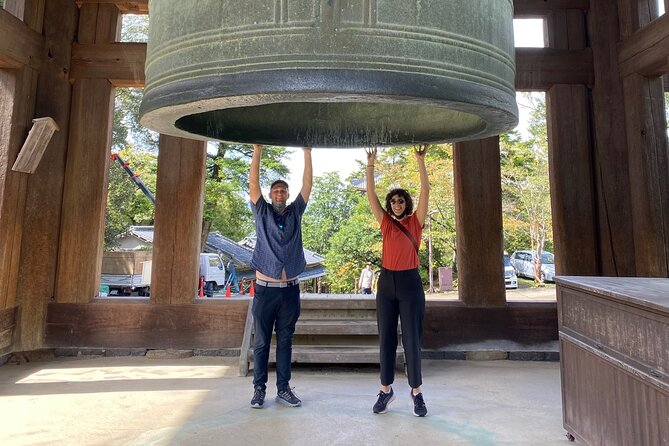
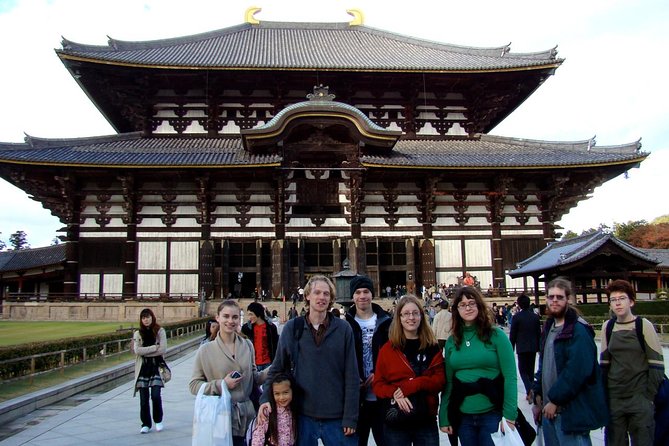
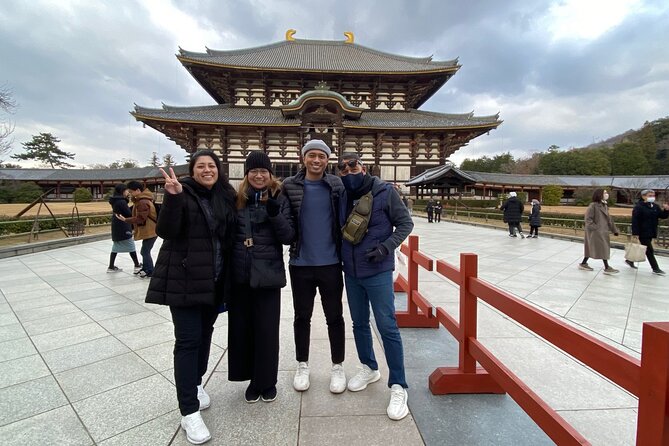
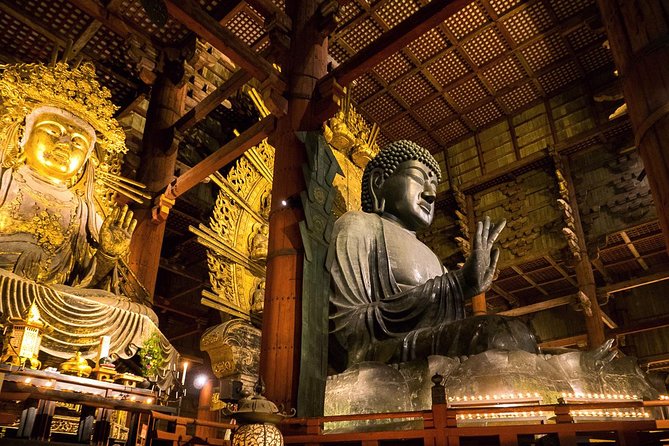
For most people, Todaiji is the essential stop. Founded in 752, it served as the head temple for provincial temples across Japan. Its main hall, the Daibutsuden, contains the enormous bronze Vairocana Buddha.
The scale is the point. You approach through the Nandaimon Gate, then enter one of the most impressive wooden religious buildings in Japan. Inside, the Buddha is not a small devotional figure tucked into a side chapel. It dominates the room and gives you a direct sense of the ambition of Nara’s early Buddhist state.
Allow time to look beyond the famous statue. Your guide can explain the relationship between the temple, the imperial court, and the spread of Buddhism. A popular tradition involves squeezing through a hole in a pillar said to be the same size as the Buddha’s nostril. Children often enjoy it, though adults may find the queue and tight fit less appealing.
Admission to Todaiji is extra. The itinerary assigns 30 minutes to the stop, but that is a short visit for anyone who wants to examine the hall, Buddha, gates, and surrounding buildings. If Todaiji is your priority, tell the guide you would rather go deeper here than collect too many quick stops.
Nara Park and its famous deer
Nara Park, established in 1880, links many of the city’s major sights. It is not simply a green break between temples. It is where the deer, shrine paths, museums, and Buddhist buildings come together.
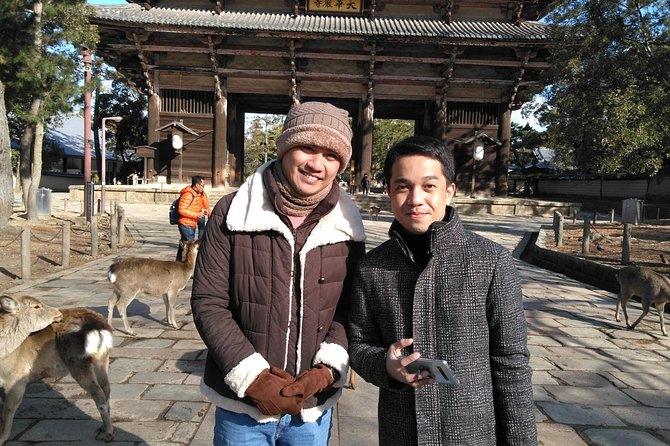
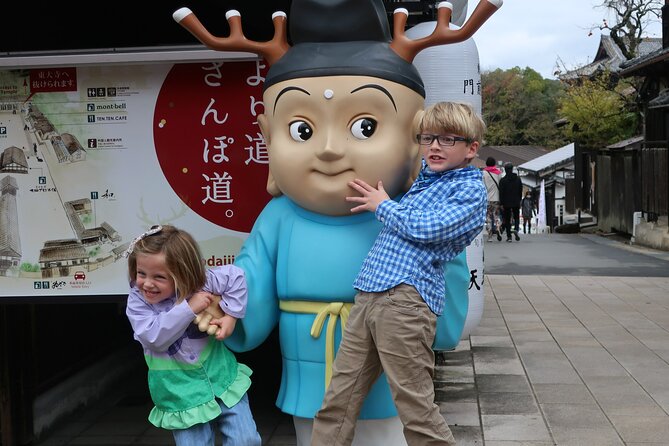
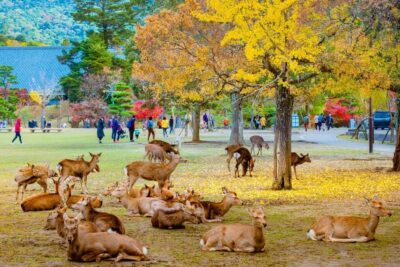
The free-roaming deer are the lighthearted part of the day. You can watch them graze, approach visitors, and wander through the park with surprising confidence. Feeding them can be entertaining, but follow local instructions and take care with food around your hands and bags. They are accustomed to people, not tame household animals.
The park is free, though individual attractions inside it charge admission. It can become crowded, especially around Todaiji and during school excursions or major holiday periods. One family found the children lining up to try the pillar opening almost as memorable as the Buddha itself. That is typical of Nara: a serious religious site can suddenly become a lively family scene.
A few more Kyoto tours worth putting on the shortlist
- PERFECT KYOTO 1-Day Bus Tour
★ 5.0 · 13,518 reviews - Kyoto: Fushimi Inari, Kinkakuji, Bamboo Grove 1 Day Bus Tour
★ 4.8 · 4,316 reviews - Kyoto: Tea Ceremony in a Traditional Tea House in Kiyomizu
★ 4.9 · 3,519 reviews - Kyoto Geisha Walking Tour: Gion District & Hidden Gems
★ 4.7 · 3,273 reviews
Kasuga Taisha and the wooded shrine route
Kasuga Taisha is Nara’s best-known Shinto shrine. It was founded when the capital moved to Nara and is dedicated to the deity associated with protecting the city.
The approach is one of the most atmospheric parts of the central route. Stone lanterns line the way through trees, creating a strong change of mood after the open spaces of Nara Park. The shrine offers a useful contrast with Todaiji. At Todaiji, you encounter the weight and scale of state-sponsored Buddhism. At Kasuga, you see Shinto architecture, sacred groves, lanterns, and a more enclosed ritual setting.
The shrine itself is free to visit, while some inner areas may require a ticket. If you enjoy religious architecture, ask your guide about the links and differences between Shinto and Buddhism. Several guides have made this comparison a major part of the day for visitors with an interest in Japanese religion.
Wakakusayama for open views
Wakakusayama is the grass-covered hill behind Nara Park, between Todaiji and Kasuga Taisha. At roughly 350 meters, it offers broad views over Nara.
This is a good choice if you want fresh air and a view rather than another interior. It also changes the rhythm of the day. After temple halls and shrine paths, the open hillside gives your legs and eyes a break.
The hill is not included in the base price if admission is required, and climbing adds effort to an already active day. You should choose it only if the weather is suitable and you are comfortable trading some indoor sightseeing for the view.
Naramachi and old merchant houses
Naramachi is the former merchant district, with traditional houses, warehouses, small shops, cafes, and narrow streets. It is one of the best choices if you want to see how ordinary urban life fit around Nara’s grand religious institutions.
The area is especially useful after Todaiji and Kasuga because it brings the day down to human scale. Instead of monumental gates and giant statues, you see preserved residences, shopfronts, tatami rooms, and details from traditional domestic design.
Some historic homes are open to the public, and the district has places to stop for food or browsing. A private guide can help you notice features that are easy to miss, such as the construction of merchant houses and the way the old streets were arranged. Naramachi also works well for families because it offers a slower, less formal stretch of the day.
Kofukuji and the five-story pagoda
Kofukuji was the family temple of the Fujiwara clan, one of the most powerful aristocratic families in the Nara and Heian periods. Its five-story pagoda is one of the familiar views in central Nara.
The temple helps explain how religious institutions and political families were connected. It is also a convenient addition to a Nara Park route, though some buildings and museum areas charge admission. If you want Buddhist sculpture and architecture, Kofukuji can be a better use of time than adding another distant temple.
A guide may also point out the relationship between Kofukuji and nearby Naramachi. Together, they show both the elite religious world and the merchant quarter that grew around it.
Isuien and Yoshikien gardens
Isuien is a Japanese garden designed around borrowed scenery. Its views incorporate features such as Todaiji’s Nandaimon Gate and Wakakusayama. The garden gives you a quieter pause, with carefully arranged water, plants, paths, and framed views.
Yoshikien, beside the Yoshikigawa River, is another pleasant garden near the central sights. It is a sensible choice if your ideal Nara day includes gardens rather than a long list of temples.
Both gardens require admission, and neither is likely to satisfy someone who wants only major monuments. I would choose one garden for a balanced first visit, especially in spring or autumn, rather than trying to fit in every religious building. The guide can help match the garden to your pace and interests.
Horyuji, Yakushiji, and the farther temples
Horyuji is one of Japan’s oldest temples, founded in 607 by Prince Shotoku. It contains some of the world’s oldest surviving wooden buildings and important Buddhist art.
This is a major choice for anyone focused on early Japanese architecture and Buddhist history. One family considered its morning at Horyuji the highlight of a five-day Japan trip, especially because of the old wooden structures, clear air, and artworks. The tradeoff is distance and time. Choosing Horyuji may mean giving up several central Nara stops.
Yakushiji was built in the late seventh century for the recovery of Emperor Tenmu’s sick wife. Its strict symmetry and East Pagoda, first built more than 1,300 years ago, make it a strong pick for architecture lovers.
Toshodaiji was founded in 759 by Ganjin, a Chinese priest invited to Japan to train Buddhist priests and improve religious practice. It offers another important link between Japan and the wider Buddhist world.
These sites make sense when you have a clear interest in early temples, Buddhist sculpture, or architecture. They are less useful if your main goals are deer, Todaiji, and old-town streets. Tell the guide what you want to understand, not just where you want to go.
Shin-Yakushiji, museums, and the old capital
Shin-Yakushiji was founded during the Nara period for an ailing emperor and is devoted to Yakushi Buddha, the Buddhist figure associated with healing. It is a quieter choice for visitors who want a less central temple and a more focused religious setting.
The Nara National Museum, established in 1889, centers on Japanese Buddhist art. This is a good rainy-day alternative or a smart choice for anyone who wants sculpture and objects rather than more buildings. Admission is extra.
The Heijo Palace Site Historical Park marks the former capital, Heijo-kyo, which served as Japan’s capital during most of the Nara period from 710 to 794. The palace area once stretched about one kilometer by one kilometer. It gives you a wider view of Nara as a planned imperial capital, rather than only a collection of temples.
What the $201.51 price really buys
At $201.51 per person, this is not the cheapest way to see Nara. You still pay for transportation, admissions, lunch, and personal expenses. A larger group may receive a discount, and a private tour can become better value when several people share the guide cost.
The real purchase is time and interpretation. A guide can help you avoid wrong turns, arrange a route around your priorities, explain religious customs, assist with food choices, and adjust the pace. One guide helped locate a vegetarian restaurant. Others suggested ramen, tofu, sake tasting, cafes, and local sweets.
The value is strongest if you care about context or have only one day. It is weaker if you are happy to visit Todaiji, walk through the park, and explore independently. You can reach Nara on your own, but coordinating central sights with Horyuji or Yakushiji takes more planning.
Who should book this day
I would recommend this tour to families, first-time visitors, couples, and anyone who wants to understand the connection between Nara’s temples, shrines, capital-city history, and everyday culture. It also suits visitors with a specific goal, such as Buddhist art, gardens, old houses, vegetarian food, or architecture.
It is a good fit for families because guides have adapted routes for teenagers and children. It can also work well for older adults if you agree on a slower pace and limit the number of sites.
I would not book it expecting a private car, a fixed all-inclusive price, or a relaxed ride between every monument. Confirm the walking requirements, meeting place, chosen sites, guide language, and extra costs before the day.
Should you book the Nara private tour?
Book it if you want Nara to make sense, not just look pretty. The deer and giant Buddha are easy to enjoy alone, but a strong guide can connect them to Japanese religion, politics, architecture, and local life.
Choose three or four sites with care. For a first visit, Todaiji, Nara Park, Kasuga Taisha, and Naramachi make a balanced central route. Replace one with Isuien for gardens, Kofukuji for Buddhist art, or Horyuji if early architecture is your main interest.
The tour earns its price through flexibility and personal attention. Just remember that transport and admissions are extra, and the day involves substantial walking. If those conditions suit you, this is one of the better ways to turn a crowded one-day visit into a clear and memorable introduction to Nara.
FAQ
How long does the Nara private tour last?
The tour lasts approximately eight hours.
Where does the tour begin?
The guide meets you on foot within a designated area of Kyoto. The official arrangement does not include a private vehicle.
How many sites can I visit?
You can choose three to four sites from the available list, with the route customized around your interests.
Are transportation costs included?
No. Transportation fees are not included, so you must pay for trains, buses, taxis, or other transport used during the day.
Are entrance tickets included?
No. Entrance fees are generally extra. The guide’s entry fees are covered only for sights listed under the tour’s expected stops.
Is lunch included?
No. Lunch and personal expenses are not included.
Can I cancel for a full refund?
Yes. You can cancel at least 24 hours before the start time for a full refund. Cancellations or changes made less than 24 hours before the start time are not accepted for a refund.
Newest Kyoto experiences on the site
- Treasures of Kyoto: Gion & historical Walking Tour★ 5.0 · 6 reviews
- Whisk Your Own Matcha: A Zen Matcha Experience at Temple★ 3.6 · 7 reviews
- Kyoto tea town for matcha lovers★ 5.0 · 16 reviews
- Uji: Private immersion into Kyoto’s tea and reglious culture★ 5.0 · 17 reviews
- Kyoto Matcha Green Tea Tour★ 4.5 · 23 reviews
- Uji and Wazuka Matcha Farm Half Day Private Guided Tour★ 5.0 · 21 reviews
- Utilising upcycled Matcha! Creating matcha incense (Uji, Kyoto)★ 5.0 · 6 reviews
- Sacred Temple Yoga Experience in Japan★ 5.0 · 3 reviews
Nara Day Trips, compared.
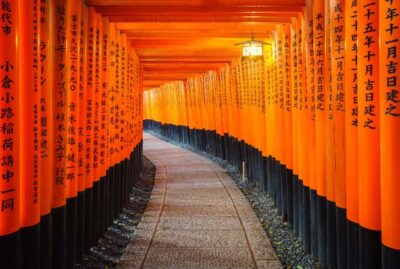
Kinkakuji,Arashiyama,FushimiInariShrine,NaraPark
Read our review →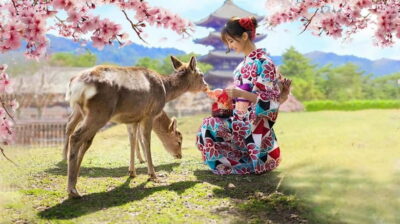
Nara, Fushimi Inari Taisha, Arashiyama Bus Tour
Read our review →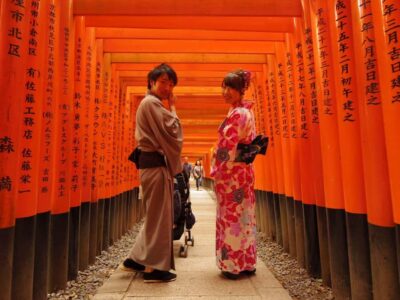
Arashiyama, Nara & Fushimi Inari Shrine w/Lunch
Read our review →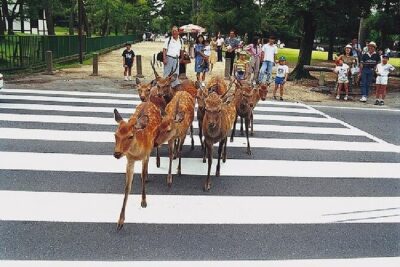
Full Day Guided Tour to Kyoto and Nara from Osaka by Van
Read our review →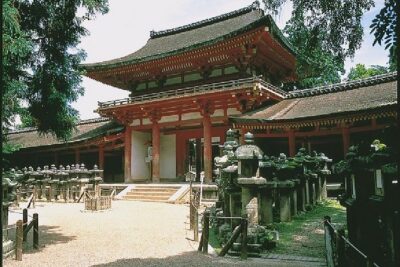
Browse the lists this tour appears in