
Reviewed · KYOTO GEISHA & MAIKO EXPERIENCES
Kyoto: Tea Ceremony with Maiko Premium
The main draw here is simple: you get close to a maiko, not just a costumed performer across a stage. She explains her life, guides you through making matcha, answers questions, dances twice, and joins a lighthearted traditional game. I especially like the direct Q&A and the photo opportunity, since they turn a formal-looking cultural display into a real conversation.
I also like the way the 90 minutes are divided among several activities, and the fact that children can enjoy the games and questions. The tradeoff is the setting: this takes place in a modern building with tables, stools, and company advertising, not an ochaya or a traditional tatami room.
Why this Kyoto maiko experience is worth considering
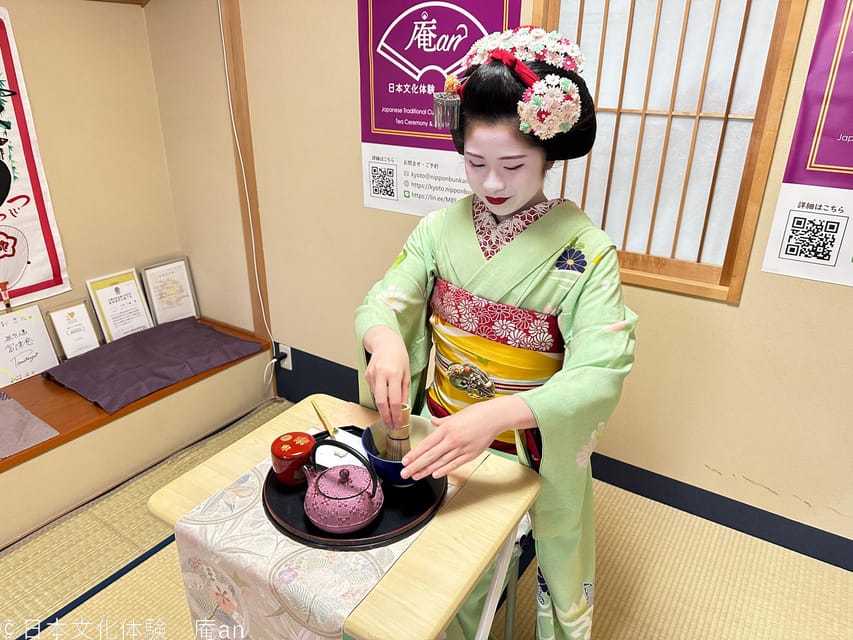
- A maiko leads the matcha lesson: You prepare your own tea after watching her demonstration, with two dried Japanese sweets.
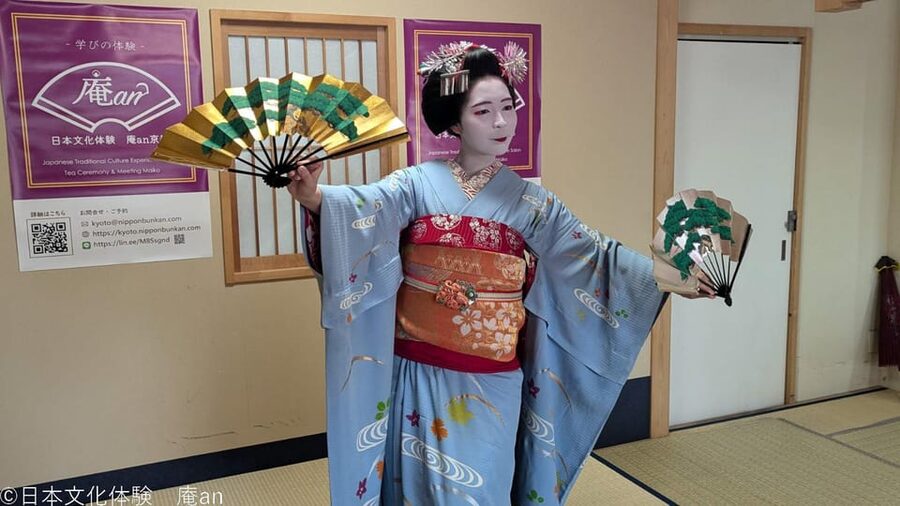
- Two traditional dances are included: The dances may reflect the seasons, romance, or daily life, and are often the most graceful part of the program.
- The Q&A is unusually direct: You can ask about training, routines, clothing, and life as a maiko.
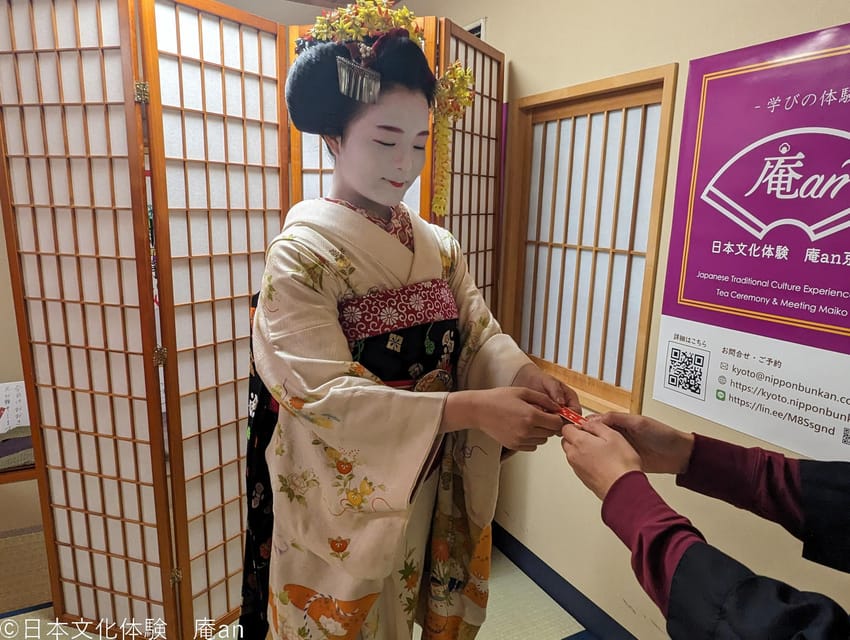
- Photos are taken up close: You have a chance to sit beside the performer and receive a Senjafuda lucky charm.
- The premium format adds the fun parts: Games and dances are included, not just the tea demonstration.
- The location is easy to reach: It is a one-minute walk from Exit 1 of Gojo Station, though you must use stairs inside the building.
Meeting a maiko near Gojo Station
The venue is one minute from Exit 1 of Gojo Station on the Subway Karasuma Line. The entrance faces Gojo-dori, so finding the building should be manageable, but arrive early enough to avoid a last-minute search.
The setting matters here. You are not entering a traditional geisha district teahouse or an old wooden townhouse. The program takes place in a building, in a relaxed room with tables and stools. That makes the experience easy for many people, but it also limits the atmosphere.
I would arrive about 15 minutes early. You cannot expect the session to wait for late arrivals, and some people have enjoyed seeing the maiko arrive before the program begins. The building has no elevator, so you need to use stairs to reach the venue. Anyone with mobility concerns should take that seriously before booking.
The room may also be used by people having lunch or dinner. That can make the event feel less private than a quiet tea gathering. You are joining a shared cultural activity, not receiving a private appointment.
More geisha and maiko evenings in Kyoto:
- Kyoto Geisha Walking Tour: Gion District & Hidden Gems
★ 4.7 · 3,273 reviews - Kyoto: Gion Magical Night Walking Tour with Geisha Trivia
★ 4.9 · 2,393 reviews - Kyoto: Gion Geisha District Walking Tour – Stories of Geisha
★ 4.7 · 2,187 reviews
What the 90-minute program actually includes
The schedule is carefully packed. The listed program runs from the opening greeting through tea, questions, photos, a dance performance, and a game. The maiko normally leaves around the 75-minute mark, followed by chat time before you depart at about 90 minutes.
Actual timing can vary. One booking included roughly 70 minutes of activity, so do not treat every minute as guaranteed performance time. Still, the format gives you plenty to do, and the pace is generally not described as rushed.
The premium option is important. It includes the dances and games that give the visit much of its personality. If you book only for a tea demonstration, you will miss the parts that help you understand maiko entertainment traditions.
Making matcha and eating Japanese sweets
The tea portion begins with a demonstration. The maiko shows you how to prepare matcha, then you make your own cup. This is a basic hands-on lesson rather than a long, highly formal tea ceremony.
That distinction is useful. If you have studied Japanese tea ceremony and expect strict etiquette, tatami seating, and a carefully staged ritual, this program may feel casual. If you want an approachable introduction, the format works well. You get to handle the whisk, follow the steps, and taste the tea instead of only watching.
Two dried Japanese sweets are included. They provide the traditional sweet contrast to matcha and give you a small taste of how tea is served. A free snack and drink are also listed, though the matcha is the central beverage. Additional drinks may be available for purchase at moderate prices.
The tea itself is described as a normal matcha serving, not a rare or highly specialized tasting. I see that as a strength for first-time visitors, since the lesson stays friendly and accessible. Tea experts may want a more formal ceremony elsewhere.
The Q&A: the most useful part for curious visitors
The questions and answers are where this program gives you something a short photo stop cannot. You can ask about the maiko’s training, daily life, clothing, hairstyle, and traditions. The program presents maiko culture as a living practice that continues in modern Kyoto.
Questions are handled through Japanese, with English translation provided as much as possible if requested. The quality of translation can affect the flow, so contact the provider in advance if English support is important to you. Some sessions have included a host who spoke both Japanese and English, while other groups relied more on translation.
The answers can also correct a common misunderstanding. Maiko and geiko are not simply actors in costumes hired for a tourist photo. Their clothing, makeup, hairstyles, discipline, and performance work are tied to a demanding traditional profession. One explanation describes training toward becoming a geiko as taking about five years.
You should still keep questions respectful and concise. This is an opportunity to learn directly from the performer, not an invitation to treat her personal life as a spectacle.
More tea ceremonies in Kyoto:
- Kyoto: Tea Ceremony in a Traditional Tea House in Kiyomizu
★ 4.9 · 3,519 reviews - Kyoto: Tea Ceremony Ju-An at Jotokuji Temple
★ 4.9 · 3,207 reviews - Kyoto: 45-Minute Tea Ceremony Lesson Experience
★ 4.3 · 2,378 reviews - Kyoto: Table-Style Tea Ceremony at a Kyo-Machiya
★ 4.9 · 1,211 reviews
Two dances that show the skill behind the costume
The maiko performs two traditional dances. Their themes may include the seasons, love stories, or ordinary life. The movement is controlled and elegant, with small gestures carrying much of the meaning.
This is usually the quietest and most striking section of the program. The kimono, hairstyle, posture, and hand movements all work together, but the performance is not merely about appearance. The dance shows the practice and precision required by the profession.
Depending on availability, a geiko may appear instead of a maiko. A geiko is an experienced performer, while a maiko is an apprentice. That substitution is not a downgrade, but it does mean you should book with an open mind about exactly who will lead the session.
Some participants have been pleasantly surprised by a geiko appearance. Others booked specifically to see a maiko. If the distinction matters greatly to you, ask the provider before reserving, though the information makes clear that substitutions can happen.
The game makes this more than a stage show
After the formal portions, the maiko invites volunteers to join a simple traditional game. You can participate, or simply clap and watch. The tone is playful, and children often have as much fun here as adults.
This section also reveals the hospitality side of maiko culture. The performer is not only presenting a rehearsed dance. She is engaging with the room, encouraging players, and helping the group feel involved.
Do not worry if you dislike public participation. Volunteers are welcome, but watching is fine. The game is a bonus, not a test of your Japanese ability or confidence.
Photos and the Senjafuda gift
You get a chance to take a commemorative photo beside the maiko. A Senjafuda, a small lucky charm associated with the performer, is presented as a special gift.
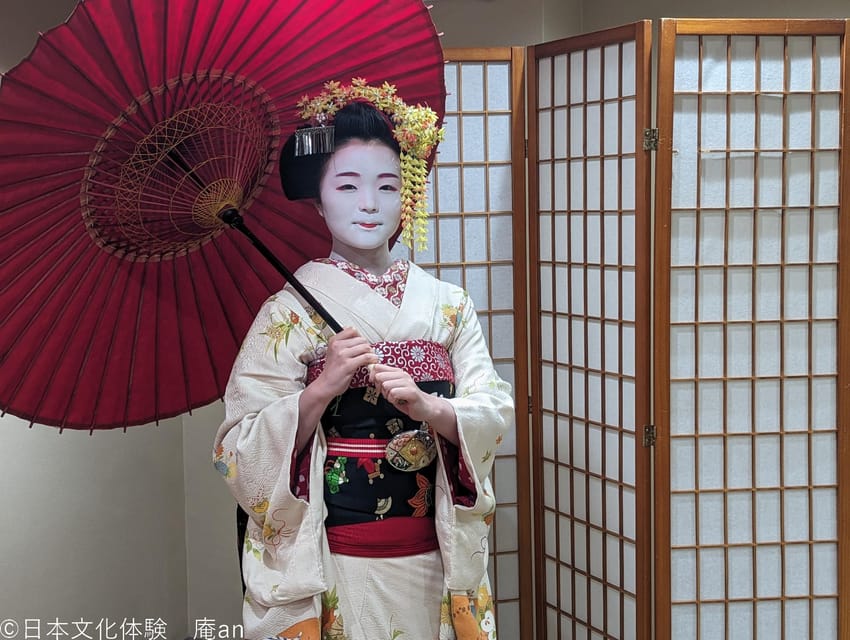
This is one of the clearest advantages over a standard cultural performance. You leave with a personal photograph and a small physical reminder of the meeting. Photo and video opportunities are available during parts of the presentation, but follow the staff’s instructions so the performance is not interrupted.
There is one practical weakness: the photo backdrop includes large advertisements and a QR code. If you care about polished pictures, the commercial background may bother you. You can still capture a memorable image, but the setting will not look like a traditional Kyoto interior.
Price, premium seating, and overall value
The listed price is $50 per person for 90 minutes. For Kyoto, that is a reasonable price if you value direct contact, a hands-on activity, and a performance in one booking.
The value depends on what you want. A formal tea ceremony in a traditional room may cost more and offer a stronger sense of place. A stage performance may provide better production values. This program combines several elements for less money, but it does so in a plain modern venue.
Premium seating costs extra:
- SS seat, first row: 3,300 yen
- S2 seat, second row: 2,200 yen
- S3 seat, third row: 1,100 yen
The main $50 price is already described as the Premium experience, with the dance and game included. Seat upgrades may be worth considering if you want clearer views and better photos. I would especially consider a front seat for families with children or anyone who wants to see the dance movements closely.
The program is free for children under two when they sit on a parent’s lap. If a seat or meal is needed, the regular one-person fee applies. Children under two are the only children specifically covered by that policy.
Who will enjoy this most
I would recommend this to first-time visitors who want an easy introduction to maiko culture without committing to a long evening. It works particularly well for families, since the game, questions, and photo session break up the quieter tea and dance portions.
It also suits visitors who want cultural context, not only a picture. The Q&A helps explain why the clothing, training, and movements matter. If you are curious about how an old profession continues in present-day Kyoto, this is a practical way to learn.
You may want something else if your priority is atmosphere. The modern room, stools, plain wall, and advertising backdrop do not create the feeling of a private Kyoto teahouse. The experience offers access and interaction rather than architectural authenticity.
It is also not ideal for anyone expecting a fully English-led tour. The instructor language is Japanese, and English assistance is offered as much as possible when requested. Contact the provider before booking if you need full interpretation.
Timing, cancellation, and small practical details
The operation hours are 10:00 to 17:00, and reservations received after 17:00 are processed the next day. The session itself lasts 90 minutes, but arrive early because late arrivals cannot be accommodated.
Cancellation is free up to eight days in advance for a full refund. After a cancellation fee applies, changing the date or time can create another specified charge. The provider does not cover your transportation costs if you cancel, so leave enough space in your Kyoto schedule.
The experience provider is B.B.Advisors Inc. AN KYOTO. Since the performer may be a maiko or geiko and the language support varies, it is sensible to contact the provider before booking with special requests.
Should you book the Kyoto maiko premium experience?
Book it if you want a compact, friendly introduction to maiko culture with real interaction. The strongest reasons are the direct Q&A, two dances, hands-on matcha making, close-up photos, and game. At $50, that combination is good value for a first visit.
Skip it if you need a traditional room, a formal tea ceremony, or a fully English-speaking guide. The venue is functional rather than atmospheric, and the backdrop may weaken your photos.
For most visitors, the best approach is to treat this as an accessible cultural meeting, not a private geisha-house experience. Arrive early, request English support in advance, choose a better seat if photos matter, and keep your expectations focused on conversation, performance, and participation.
FAQ
Where is the tea ceremony with maiko held?
The venue is a one-minute walk from Exit 1 of Gojo Station on Kyoto’s Subway Karasuma Line. The entrance faces Gojo-dori.
How long does the experience last?
The full program lasts about 90 minutes. The maiko’s main program ends around 75 minutes, followed by chatting time before departure.
Is the performer always a maiko?
No. Depending on availability, a geiko may lead the program instead of a maiko.
What activities are included?
You watch a matcha demonstration, prepare your own tea, eat two dried Japanese sweets, ask questions, take photos, watch two dances, play a simple game, and receive a Senjafuda charm.
Is English available?
The instructor language is Japanese. English translation is provided as much as possible if you request it, and you should contact the provider in advance if you need English support.
Is the venue a traditional Japanese house?
No. The program takes place in a building with tables and stools, not an ochaya or traditional Japanese house.
Can children join for free?
Children under two can join free when sitting on a parent’s lap. If a seat or meal is required, the regular one-person fee applies.
Newest Kyoto experiences on the site
- Treasures of Kyoto: Gion & historical Walking Tour★ 5.0 · 6 reviews
- Whisk Your Own Matcha: A Zen Matcha Experience at Temple★ 3.6 · 7 reviews
- Kyoto tea town for matcha lovers★ 5.0 · 16 reviews
- Uji: Private immersion into Kyoto’s tea and reglious culture★ 5.0 · 17 reviews
- Kyoto Matcha Green Tea Tour★ 4.5 · 23 reviews
- Uji and Wazuka Matcha Farm Half Day Private Guided Tour★ 5.0 · 21 reviews
- Utilising upcycled Matcha! Creating matcha incense (Uji, Kyoto)★ 5.0 · 6 reviews
- Sacred Temple Yoga Experience in Japan★ 5.0 · 3 reviews
Kyoto Geisha & Maiko Experiences, compared.

Kyoto Geisha Walking Tour: Gion District & Hidden Gems
Read our review →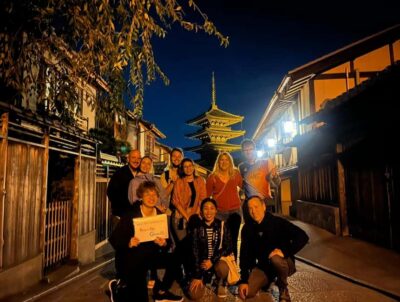
Gion Magical Night Walking Tour with Geisha Trivia
Read our review →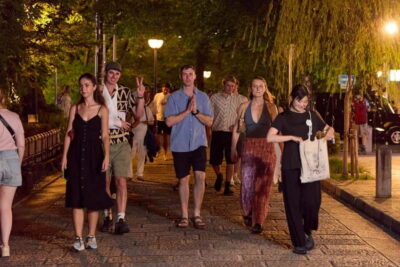
Gion Geisha District Walking Tour – Stories of Geisha
Read our review →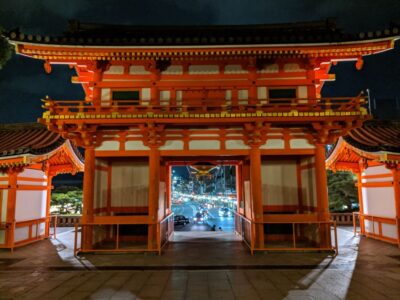
Best of Kyoto: Gion, Geisha, Pagodas & Cobblestones
Read our review →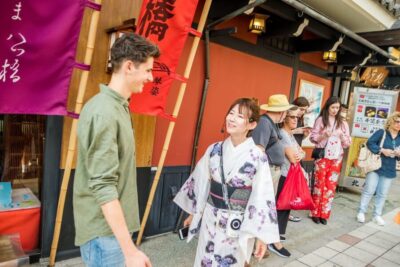

Kyoto Gion Geisha District Walking Tour – The Stories of Geisha
Read our review →
Kyoto Gion: 2-Hour Geisha Culture & History Walking Tour
Read our review →
Kyoto Gion Night Walk & Geisha District Guided Tour
Read our review →Browse the lists this tour appears in