
Reviewed · KYOTO CYCLING TOURS
Kyoto Shogun Cycling Tour
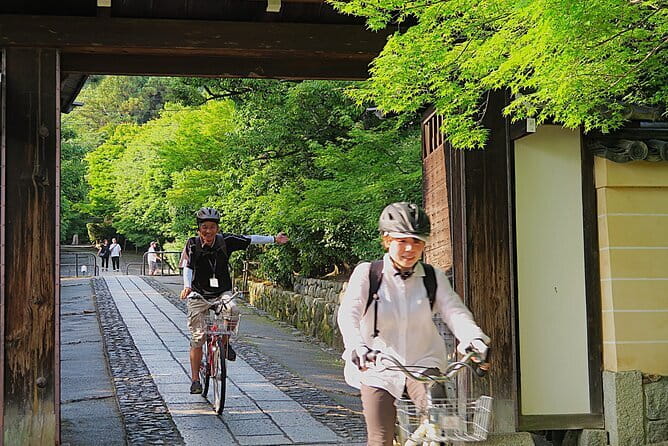
Kyoto’s shogun-era story makes more sense from a bicycle. You start near the Golden Pavilion, then ride toward Toji-in Temple and Nijo Castle, following an easy downhill route through the city rather than spending the morning inside a tour vehicle.
I like the small private groups, limited to two to six people per guide, and the way admission to all three main sights is included. I also like the practical rain plan: you can continue by bike with a poncho or switch to walking and public transport if the weather turns sour.
The main drawback is the price, $153.50 per person, which is a serious spend for three and a half hours. You also need to be comfortable riding on city roads, and the cancellation terms should be checked carefully before booking.
Key points to know before you ride
- Three major stops in 3.5 hours: Kinkakuji, Toji-in, and Nijo Castle each receive about an hour, with the final castle visit taking around 90 minutes.
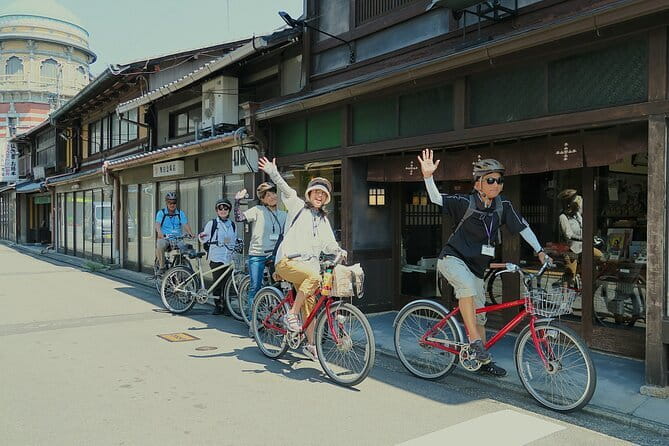
- A private, small-group ride: Two to six people can join one guide, so the pace and conversation should feel more personal than on a large coach tour.
- History with a clear storyline: The route links the Ashikaga Shoguns at Kinkakuji and Toji-in with the Tokugawa rulers at Nijo Castle.
- Guides add real value: Seiya, Yanai-san, Makoto, Yasunobu Yagyu, Kaz, JJ, and Nozomi have led comparable Kyoto cycling routes, often explaining temples, shrines, Gion, and the Imperial Palace.
- Rain is not an automatic cancellation: Rainwear is supplied, and you may choose cycling in a poncho or a walking tour using buses or the metro.
- The route is not for every child: Children must be at least 10 years old, at least 145 centimeters tall, and able to ride safely on the road without help.
Starting at Wara Tenjin and riding into Kyoto’s past
The ride begins at Wara Tenjin-mae in Kinugasa, in Kyoto’s northwest. That matters because the first two sights are close to the historic northwest temple district, while the route finishes at the Kyoto Cycling Tour Project terminal near Kyoto Station.
The tour description calls the route easy and downhill. That is encouraging if you want to cover more ground without turning your morning into a workout, but downhill does not mean traffic-free. You will still need to ride safely on city roads and follow your guide’s directions.
A helmet, bicycle, and rainwear are included. The equipment is described simply as suitable for the tour, and past outings have used bikes that were easy to ride. Still, if you are nervous on two wheels, be honest with yourself before booking. The operator requires children to ride unassisted, and the same practical standard applies to adults.
The small-group setup is one of the strongest parts of the experience. With two to six people per guide, you can ask questions without shouting across a crowd. If your party has seven to 12 people, an extra guide can be arranged, so larger family groups may still be able to ride together.
More bike days around Kyoto:
- Hidden Kyoto E-Biking tour
★ 5.0 · 1,843 reviews - Bike Tour Exploring North Kyoto plus Lunch
★ 5.0 · 1,087 reviews - Arashiyama Bamboo Forest & Hidden Gems Bike Tour (Early Bird)
★ 5.0 · 613 reviews
Kinkakuji, where gold meets shogun power
Your first stop is Kinkakuji, better known as the Golden Pavilion. You leave the bikes and walk through the gardens around the famous gold-covered building, with about an hour set aside for the visit.
The pavilion is not just a pretty photograph. It was linked to the Ashikaga Shoguns and served as a center of government during that period. That gives your guide a useful opening lesson: Kyoto’s temples were not always quiet places of worship. Some were tied closely to political power, wealth, and court life.
The garden visit is important because the building itself can be viewed quickly. The grounds give you time to slow down and see how the pavilion works with the water, planting, and surrounding paths. I would treat this as a guided introduction rather than a long private meditation. Kinkakuji is one of Kyoto’s best-known sights, so it can feel busy, and the visit follows a set route.
Having admission included saves you one small task and makes the $153.50 price easier to assess. You are paying not only for the bicycle but also for entry, route planning, and a guide who can connect the site to the rest of Kyoto’s political story.
Toji-in and the quieter side of Zen design
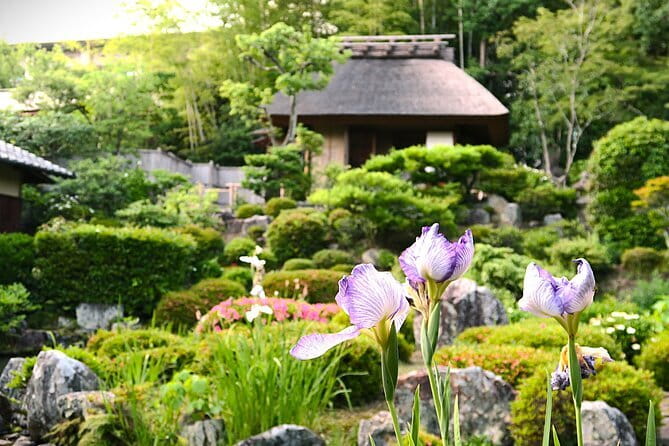
Toji-in Temple offers a change of mood. After the famous Golden Pavilion, you visit a quieter historic temple with its interior, garden, and small teahouse. The scheduled visit is about an hour.
This is where the tour’s idea of wabi-sabi comes into play. The term points toward a Zen-influenced appreciation of simplicity, age, restraint, and imperfection. Rather than rushing from one famous photograph to the next, you get time to sit with the temple hall, look across the groomed garden, and consider the more subdued side of Japanese aesthetics.
Toji-in is also tied to the Ashikaga family, serving as their resting place. That makes it a good companion to Kinkakuji. The first stop shows the public face of shogun power, while Toji-in gives you a quieter look at remembrance and religious life.
The tour information says the guide takes you through the temple interiors. That is a useful distinction. You are not simply stopping outside for a quick explanation. You can expect the guide to help you read the building and garden, although the exact amount of time spent indoors may depend on the day and the pace of your group.
A matcha service is not included. If you want tea, you should expect to pay separately rather than assume it is part of the temple visit.
Nijo Castle and the closing chapter of the shoguns
The final stop is Nijo Castle, with about 90 minutes devoted to the grounds. This is the largest visit on the route and the place where the tour’s political story reaches its finish.
Nijo Castle was the Kyoto residence of the Tokugawa Shogunate, the ruling family that followed the Ashikaga period. It also marked the beginning of the end of shogun rule and witnessed events that helped shape modern Japan.
You will see ornamental carvings and grand buildings across the castle grounds. The setting gives your guide plenty to explain: the difference between a castle used as a military fortress and one designed as a formal residence, the role of Kyoto in national politics, and the shift from shogun government toward a new political order.
The 90-minute slot is sensible. Nijo Castle is not a quick roadside stop, and rushing through it would weaken the whole theme of the ride. At the same time, you should not expect an entire afternoon here. If you are fascinated by Japanese castles and political history, you may wish you had longer. The advantage is that the bicycle makes it possible to connect three distinct sites in one morning or afternoon.
Same city, a completely different kind of day:
- PERFECT KYOTO 1-Day Bus Tour
★ 5.0 · 13,518 reviews - Kyoto: Fushimi Inari, Kinkakuji, Bamboo Grove 1 Day Bus Tour
★ 4.8 · 4,316 reviews - Kyoto: Tea Ceremony in a Traditional Tea House in Kiyomizu
★ 4.9 · 3,519 reviews - Kyoto Geisha Walking Tour: Gion District & Hidden Gems
★ 4.7 · 3,273 reviews
What the guides add to the ride
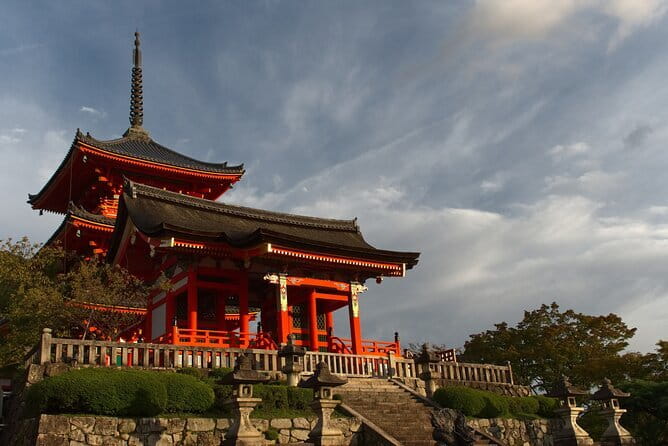
The guide is the part of this experience that can turn a pleasant bike outing into a memorable one. Several guides have led comparable Kyoto routes, including Seiya, Makoto, Nozomi, Yasunobu Yagyu, Kaz, JJ, and Yutaka Kaneda.
Seiya has been praised for clear English, strong knowledge of Kyoto, and the ability to keep a 12-year-old engaged. That last point is worth noting if you are booking for a family. A guide who can switch between history, humor, and simple explanations is much more useful than someone who only recites dates.
Makoto has made room for local events during a ride, including a festival, and is described as personable and willing to add extra time. Nozomi has guided routes covering Shinto and Buddhist temples, Gion, and the Imperial Palace. Yasunobu Yagyu has brought local tips and a broader view of Kyoto’s people and culture into the ride.
Some cycling routes led by these guides have included more than the three stops listed here, such as the Imperial Palace, riverside paths, geisha districts, and the bamboo forest. Do not assume all those places are part of this specific Shogun tour. They do show, however, that the guide may be able to place the scheduled stops within a wider picture of Kyoto if time and route conditions allow.
English ability has been a strong feature across the guide team. That matters most at Kinkakuji and Nijo Castle, where a few basic facts do not explain the political changes behind the buildings.
Timing, transport, and the price question
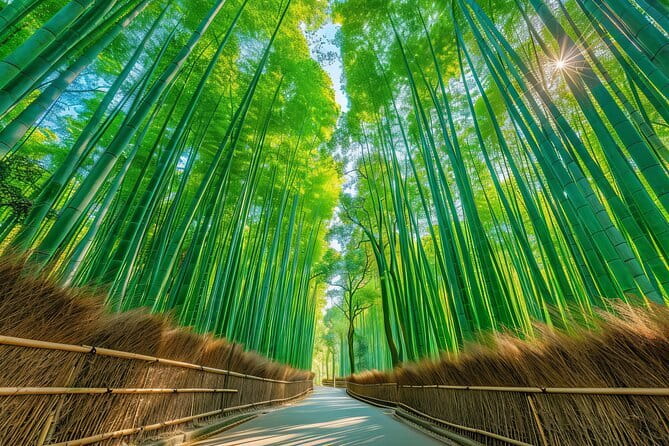
The tour lasts about three hours and 30 minutes. The stated schedule gives one hour at Kinkakuji, one hour at Toji-in, and 90 minutes at Nijo Castle. Allow some flexibility around those times because urban cycling, temple entrances, and group pace can affect the day.
The start and finish are not the same. You begin at Wara Tenjin-mae in the Kinugasa area and finish at the Kyoto Cycling Tour Project terminal near Kyoto Station. That is helpful if you want to continue with trains or other transport after the ride, but it means you should plan how to reach the starting point in advance.
At $153.50 per person, the tour is not a budget bicycle rental. The value comes from the combination of a guide, bicycle, helmet, rainwear, three admission tickets, and a private group format. If you would otherwise pay for separate transport between the temples and castle, then the price becomes easier to justify.
I would book it for a first or second visit to Kyoto when you want context and efficient sightseeing. If you already know the city well, speak Japanese, and prefer to linger alone at each temple, renting a bicycle and visiting independently could cost less. You would also lose the guide’s historical links and local route planning.
Rain plans and other practical limits
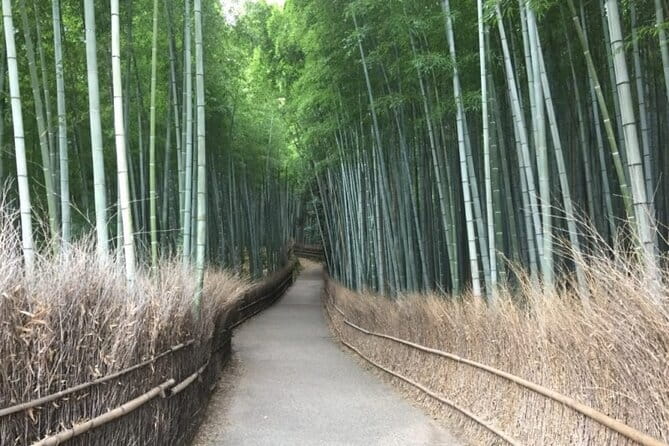
The tour operates in rain. You can continue by bicycle with a free rain poncho, or change to a walking tour that uses public transport, with buses or the metro included in the tour fee.
That choice is a real strength. Kyoto weather can change your plans quickly, and a rain option keeps the day from collapsing. Still, cycling in rain is not the same experience as cycling in clear weather. If you dislike wet roads or reduced visibility, choose the walking and public transport option.
Most people can participate, but you must be able to ride safely on the road without help. Children need to be at least 10 years old and 145 centimeters or taller. The tour is private, so only your group takes part.
There is a contradiction in the supplied booking terms. One section says you can receive a refund if you notify the operator at least three days before the tour date by 18:00 Japan time. Another says the experience is non-refundable and cannot be changed for any reason. I would ask KCTP to confirm the rule in writing before paying, especially because the price is substantial.
Confirmation is sent within 48 hours, subject to availability. The minimum group size is two people, so a solo booking is not accepted. If the minimum number is not met and the tour is canceled, you are offered another date or experience, or a full refund.
Who should book the Kyoto Shogun Cycling Tour?
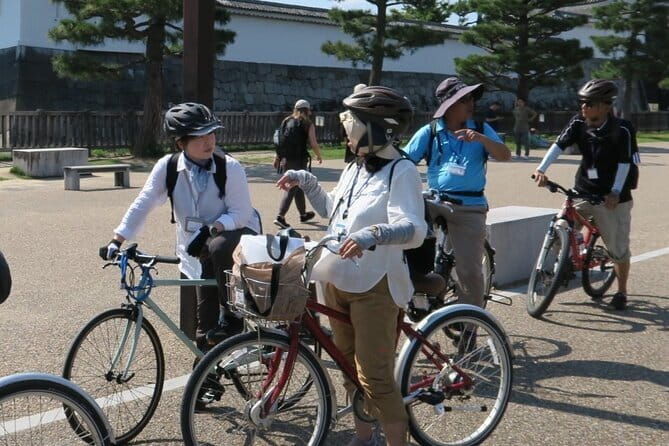
I would choose this ride if you want to connect famous temples with a clear historical theme instead of visiting them as separate photo stops. It suits couples, families with older children, and small groups who like asking questions and moving at a steady pace.
The route is especially useful if you want to see Kinkakuji and Nijo Castle in one outing without arranging several bus trips. You also get Toji-in, which gives the day a calmer and more reflective middle section.
I would hesitate if you are not confident on a bicycle, if you want a slow half-day at each site, or if $153.50 feels too high for a short tour. Check the cancellation rule, confirm the meeting point, and remember that matcha is extra.
FAQ
How long does the Kyoto Shogun Cycling Tour last?
The tour lasts approximately three hours and 30 minutes.
Where does the tour start?
It starts at Wara Tenjin-mae, Kinugasa Oharaicho, Kita Ward, Kyoto, 603-8351, Japan.
Where does the tour end?
The tour ends at the Kyoto Cycling Tour Project Kyoto Station Cycle Terminal, 552-13 Higashiaburanokojicho, Shimogyo Ward, Kyoto, 600-8235, Japan.
Which sights are included?
The scheduled stops are Kinkakuji Temple, Toji-in Temple, and Nijo Castle. Admission tickets are included.
Is the tour suitable for children?
Children must be at least 10 years old, at least 145 centimeters tall, and able to ride a bicycle safely on the road without assistance.
What happens if it rains?
You may continue by bicycle with a free rain poncho, or switch to a walking tour using buses or the metro. The public transport cost is included in the tour fee.
Is matcha included?
No. Matcha service is not included in the tour price.
Should you book it?
Book this tour if you want a guided, small-group route that turns three major Kyoto sights into one connected story about the Ashikaga and Tokugawa Shoguns. The price is high, but the included admissions, equipment, private format, and strong guide support make it reasonable for the right visitor.
I would skip it only if you prefer independent temple visits, cannot ride comfortably on city roads, or need flexible cancellation terms. For everyone else, this is a smart way to cover Kyoto’s northwest sights while learning why they mattered.
Newest Kyoto experiences on the site
- Treasures of Kyoto: Gion & historical Walking Tour★ 5.0 · 6 reviews
- Whisk Your Own Matcha: A Zen Matcha Experience at Temple★ 3.6 · 7 reviews
- Kyoto tea town for matcha lovers★ 5.0 · 16 reviews
- Uji: Private immersion into Kyoto’s tea and reglious culture★ 5.0 · 17 reviews
- Kyoto Matcha Green Tea Tour★ 4.5 · 23 reviews
- Uji and Wazuka Matcha Farm Half Day Private Guided Tour★ 5.0 · 21 reviews
- Utilising upcycled Matcha! Creating matcha incense (Uji, Kyoto)★ 5.0 · 6 reviews
- Sacred Temple Yoga Experience in Japan★ 5.0 · 3 reviews
Kyoto Cycling Tours, compared.
Arashiyama Bamboo Forest & Hidden Gems Bike Tour (Early Bird)
Read our review →
5 Top Highlights of Kyoto Full Day Bike Tour (E-bike option)
Read our review →
Full Day Biking Tour Exploring the Best of Kyoto
Read our review →
Afternoon Kyoto Bike Tour: Bamboo Forest, Monkeys & Hidden Spots
Read our review →
South Kyoto in a Nutshell: Gentle Backstreet Bike Tour!
Read our review →Browse the lists this tour appears in