
Reviewed · KYOTO WALKING TOURS
Kyoto: Private Walking Tour with a Local
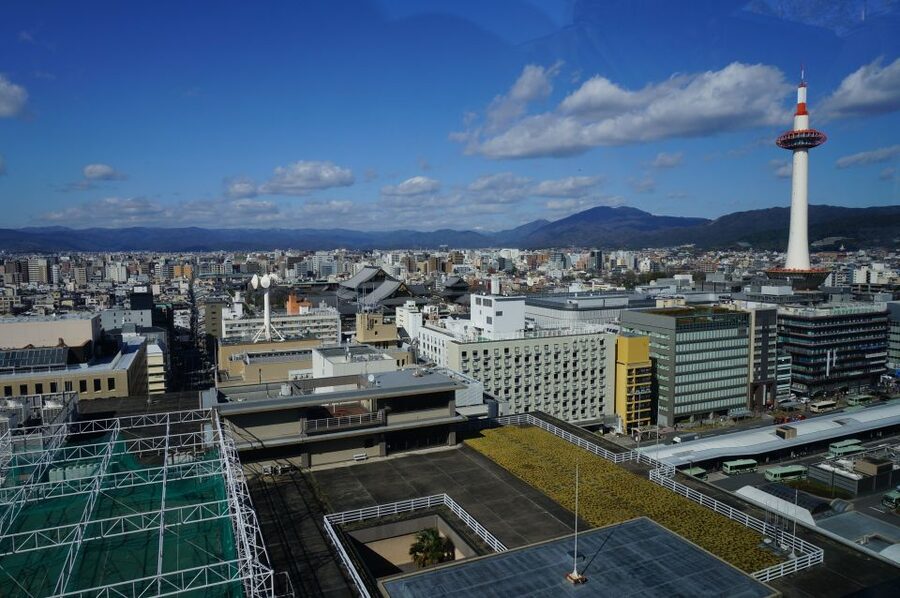
Kyoto is far more rewarding when you can adjust the day as you go. This private walk pairs you with a local guide who can steer you toward a quiet temple, a favorite café, street art, a market, or a useful train route instead of delivering a fixed speech. Maha has taken visitors to less-visited shrines and a riverside restaurant, while Agustin added a small temple away from the main autumn crowds.
I like the one-to-one format, which lets you ask practical questions without holding up a group. I also like the help with everyday Kyoto, from finding a preferred café to learning buses and trains. The main drawback is that this is a flexible introduction, not a guaranteed checklist of Kyoto’s famous sights. Entry fees, meals, and city transport cost extra, and the value is strongest when your group wants personal guidance.
Key points at a glance
- A route built around you: Tell your guide if you care most about temples, food, shopping, art, neighborhoods, or transport.
- Private from start to finish: You get your own local guide rather than joining a fixed group with a set script.
- Useful Kyoto orientation: Guides can help explain buses, trains, meeting points, and practical ways to move around.
- Quieter places are possible: Past routes have included a lesser-known temple, a shrine, and a riverside restaurant away from the busiest circuits.
- Three to six hours: The length gives you room for a short introduction or a substantial half-day walk.
- Plan for extra costs: Attractions, food, drinks, taxis, public transport, and optional activities are not included.
A private introduction to Kyoto, not a standard sightseeing circuit
The central idea is simple: you meet a local and shape the walk together. You can request a particular starting time, and pickup is available from your hotel lobby or outside your Airbnb if it is in the city center and can be described by a central landmark or intersection.
Two listed meeting options are Maccha House Kyoto Kawaramachi and the Kyoto City Office for Gender Equality Promotion. Those locations may be useful if you are not staying in central Kyoto, but the hotel or Airbnb pickup option makes the start easier for many visitors.
Your guide may begin with a general orientation, then adjust the route once you explain what you want from Kyoto. First-time visitors can use the time to understand the city’s layout and transport. On a return visit, you can skip the obvious stops and focus on food, small shops, local neighborhoods, street art, or a particular interest such as Japanese netsuke.
That flexibility matters in Kyoto. The city’s famous places can consume an entire day, yet a little local advice can help you decide what is truly worth your limited time. A private guide can also slow down when you have questions or move on when a stop is not holding your interest.
More walking tours in Kyoto:
- Kyoto Geisha Walking Tour: Gion District & Hidden Gems
★ 4.7 · 3,273 reviews - Kyoto: Gion Magical Night Walking Tour with Geisha Trivia
★ 4.9 · 2,393 reviews - Kyoto: Gion Geisha District Walking Tour – Stories of Geisha
★ 4.7 · 2,187 reviews
What the three to six hours can include
There is no fixed list of stops promised, so you should think of this as a custom walking session rather than a ticketed attraction tour. The route can include photo stops, guided sightseeing, scenic views, and time to talk about Kyoto as you walk.
A shorter three-hour visit works well for a first orientation. You might cover one central area, learn how to use local transport, stop at a temple or shrine, and finish with food or shopping advice. One past booking used only two hours to review a Kyoto plan and work out transportation, then continued to a first attraction. That kind of practical help can save time during the rest of your trip.
With five or six hours, you have more room to connect several interests. You might combine a major shrine with a market, stop at a café, and use public transport to reach another part of town. You should not assume that every far-flung sight will fit comfortably into one walk, though. Kyoto is spread out, and travel between districts can take time.
The route may be especially useful if you want to see less crowded places. One guide, Agustin, took a visitor to a temple outside the main tourist path during the autumn color season. Another guide, Maha, included a temple and shrine that were not part of other tours, followed by a restaurant in a village beside the river.
Those examples show the advantage of explaining your priorities before the walk. If you simply ask to see everything, you may spend the day moving between famous sites. If you name a few clear interests, your guide has a better chance of building a sensible route.
Local stories, food tips, and the small details
A strong part of this experience is the conversation between stops. The guides are not limited to formal facts. They can share personal impressions of neighborhoods, explain customs, and suggest where to eat, browse, or wander later in your stay.
The practical suggestions may be more valuable than another list of temples. One guide showed a visitor a small café that became a favorite stop for the rest of the visit. Another recommended a restaurant beside the river where the sashimi was especially well received. A guide also helped one visitor shop in a supermarket, which is exactly the sort of ordinary task that can feel awkward during a first visit to Japan.
You can also bring a very specific interest. Agustin later sent information about a museum exhibition and an antique shop after learning that the visitor wanted to find Japanese netsuke. That suggests a useful approach: tell the local guide about your interests when booking, not only after you meet.
Food advice comes with a small limitation. Meals and drinks are not included, and the guide’s favorite restaurant is only a recommendation, not part of the tour price. If you want to eat during the walk, budget for your own meal and clarify whether the stop will be a quick snack or a longer sit-down break.
Famous Kyoto sights, if they fit your priorities
The flexible format does not exclude major attractions. Past routes have included Fushimi Inari Shrine, Higashi Honganji Temple, and Nishiki Market. One visitor walked to the top of the Fushimi Inari shrine with a guide, then visited Higashi Honganji and explored the market.
Still, you need to set expectations. The tour does not promise entrance to any particular temple, shrine, market, museum, or show. If you want a specific attraction included, you must request it and pay the guide’s entrance fee as well as your own.
That extra cost is reasonable in a private arrangement, but it can affect the budget. If a temple requires admission, both your entry and the guide’s entry may be needed. Ask about this when you discuss the route so the day does not become more expensive than expected.
The same applies to a geisha performance or optional activity. One older booking included a performance, but that should not be treated as a standard feature of this experience. Consider it an example of what a flexible guide may help arrange, not something included automatically.
Same city, a completely different kind of day:
- PERFECT KYOTO 1-Day Bus Tour
★ 5.0 · 13,518 reviews - Kyoto: Fushimi Inari, Kinkakuji, Bamboo Grove 1 Day Bus Tour
★ 4.8 · 4,316 reviews - Kyoto: Tea Ceremony in a Traditional Tea House in Kiyomizu
★ 4.9 · 3,519 reviews - Kyoto: Tea Ceremony Ju-An at Jotokuji Temple
★ 4.9 · 3,207 reviews
Transport help can be the real value
Kyoto’s buses, trains, and walking routes can be confusing on a first visit. This walk can help you understand how to get around, not just where to stand for photographs. Guides have explained buses and city travel, helped with train planning, and even assisted with finding the correct meeting place.
You can choose to use public transport or a taxi during the walk, but you pay those costs yourself. A private car can also be requested, so ask about the arrangement and price before booking if you do not want a fully walking-based outing.
The tour is described as a walking experience, so comfortable shoes are essential. That sounds obvious, but a route that includes a shrine, a market, and a neighborhood café can involve more time on your feet than expected. If you have limited mobility, state your needs clearly when arranging the tour. A guide named Maha prepared a Kyoto visit for a wheelchair user with limited mobility, and the experience was adapted with care.
The activity is wheelchair accessible, but accessibility depends on the exact route, surfaces, slopes, and transport choices. A private guide gives you more room to adjust than a large group, yet you should still discuss the places you want to visit before the day begins.
How the guides shape the experience
The guide assigned to you may change, and the past names include Nicolo, Kokoro, Agustin, Maha, Toan, Iago, Cristobal, Ahmed, Jason, and others. Their backgrounds and styles will differ, so it is better to focus on the structure of the experience than expect one particular person.
Nicolo received praise for being accommodating and helpful. Maha appears often in past bookings, with routes involving quieter sights, food, families, a baby, French practice for a teenager, and a wheelchair-friendly plan. Toan led a walk that combined Fushimi Inari, Higashi Honganji, and Nishiki Market.
That range is important. You can use the guide as a sightseeing companion, a cultural explainer, a food adviser, or a transport coach. The experience works best when you treat the first conversation as a planning session rather than waiting for the guide to reveal a secret route without input.
Language support is listed in English, Spanish, and German. The private setting also makes it easier to pause and ask for clarification than it would be in a large group.
Price, length, and what your $82 buys
At $82 per person, the cost is fair if you have a small group and want a route built around your interests. You are paying for private time, a local guide, and the ability to change the pace and focus. For a couple or family, that can be more useful than paying separate admission for a long list of places you do not care about.
The value is less clear for a solo visitor who only wants basic facts at famous sights. In that case, a group tour or self-guided plan may cost less. This experience earns its price through personal attention, local suggestions, and the time saved by avoiding poor transport choices.
Remember that the $82 does not cover entrance fees, meals, drinks, personal purchases, optional activities, public transport, taxis, or a private car. The tour can also involve a guide’s admission fee when you visit a paid attraction.
Children under three join free. Children aged three to twelve receive a 50 percent discount. That makes the private format more attractive for families, especially if you need to pause, change the route, or keep younger children interested.
Free cancellation is available up to 24 hours before the start time. You can also request a particular start time, subject to availability.
Who should book this Kyoto walk
I would choose this for a first visit if I wanted to understand Kyoto quickly before tackling the major sights alone. It is also a good fit for a repeat visitor who has already seen the headline temples and wants help with food, shopping, smaller neighborhoods, or a personal interest.
Families may appreciate the flexible pace and private setting. The past bookings include a five-month-old baby, a thirteen-year-old practicing French, and a wheelchair user with limited mobility. Those examples do not guarantee a perfect route for every family, but they show why a private walk can be easier to adapt.
This is less suitable if you want a polished lecture, guaranteed access to specific attractions, or a fixed list of Kyoto highlights. It is also not the best choice if you dislike walking or want all transport and admission costs folded into one price.
Before you meet, prepare three things: your top interests, any mobility concerns, and the places you have already seen. Add one practical request, such as food recommendations, train help, or a quieter temple. That gives your guide something useful to work with.
Should you book the Kyoto private walking tour?
Book it if you value conversation, flexibility, and local advice more than a fixed sightseeing checklist. The strongest part is the chance to shape a private route around your own Kyoto, whether that means Fushimi Inari and Nishiki Market, a quiet temple, a riverside meal, or simple help with buses and trains.
Skip it if you want guaranteed entry to famous attractions or a low-cost group tour. At $82 per person before extras, it makes the most sense for couples, families, and small groups who will use the guide’s personal attention. With an overall rating of 4.6 from 118 bookings, the experience has a strong record, but your result will depend on how clearly you explain what you want.
FAQ
How long is the private Kyoto walking tour?
The tour lasts between 3 and 6 hours. You can check available starting times when booking and request a specific time.
Where can the tour begin?
Pickup is available from your hotel lobby or outside your Airbnb if it is in the city center and can be identified by a central landmark or intersection. Two listed pickup options are Maccha House Kyoto Kawaramachi and the Kyoto City Office for Gender Equality Promotion.
Is the tour private?
Yes. The activity is for a private group and includes a customized walking tour with a local guide.
Which languages are available?
The listed guide languages are English, Spanish, and German.
Are entrance fees included?
No. Entrance fees are not included. If you want to visit a paid attraction, you must also cover the local guide’s entrance fee.
Are food and drinks included?
No. Meals and drinks are separate, along with personal expenses and optional activity costs.
Does the tour include public transportation?
No. You may use public transport or a taxi during the walk, but you pay those costs yourself. A private car can be requested as an additional arrangement.
Is the tour suitable for children and wheelchair users?
Children under three can join free, while children aged three to twelve receive a 50 percent discount. The activity is wheelchair accessible, and a past route was prepared for a visitor with limited mobility. Tell the provider about your needs so the route can be planned accordingly.
Newest Kyoto experiences on the site
- Treasures of Kyoto: Gion & historical Walking Tour★ 5.0 · 6 reviews
- Whisk Your Own Matcha: A Zen Matcha Experience at Temple★ 3.6 · 7 reviews
- Kyoto tea town for matcha lovers★ 5.0 · 16 reviews
- Uji: Private immersion into Kyoto’s tea and reglious culture★ 5.0 · 17 reviews
- Kyoto Matcha Green Tea Tour★ 4.5 · 23 reviews
- Uji and Wazuka Matcha Farm Half Day Private Guided Tour★ 5.0 · 21 reviews
- Utilising upcycled Matcha! Creating matcha incense (Uji, Kyoto)★ 5.0 · 6 reviews
- Sacred Temple Yoga Experience in Japan★ 5.0 · 3 reviews
Kyoto Walking Tours, compared.
Kyoto Geisha Walking Tour: Gion District & Hidden Gems
Read our review →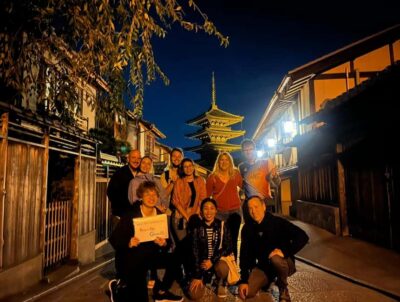
Gion Magical Night Walking Tour with Geisha Trivia
Read our review →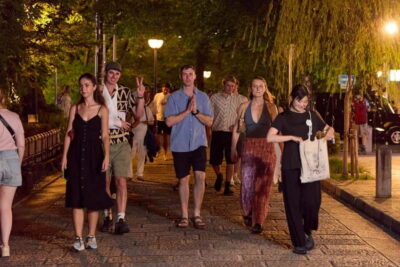
Gion Geisha District Walking Tour – Stories of Geisha
Read our review →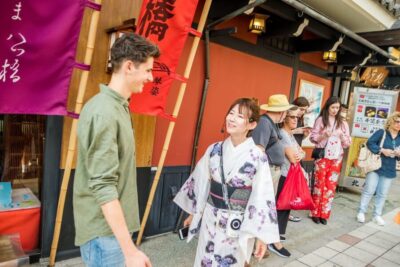
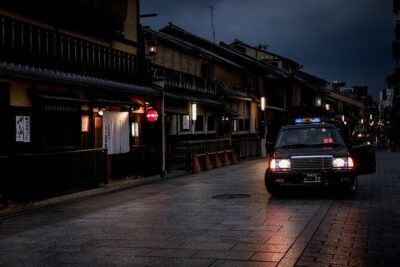
Kyoto Gion Geisha District Walking Tour – The Stories of Geisha
Read our review →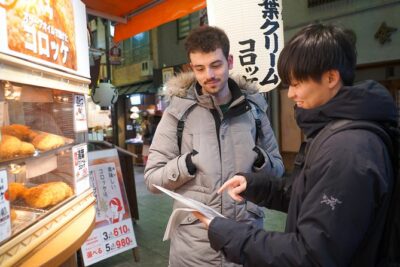
Nishiki Market Brunch Walking Tour (7 Tastings + Brunch)
Read our review →
Kyoto Arashiyama Walking Tour: Bamboo, Monkeys, Gardens & Secrets
Read our review →
Kyoto Gion: 2-Hour Geisha Culture & History Walking Tour
Read our review →Browse the lists this tour appears in