Reviewed · GUIDED
Kyoto: Private Tour with Local Licensed Guide
Kyoto is easiest to understand when someone helps you connect the dots. This private walking tour lets you choose famous sights such as Fushimi Inari, Kinkakuji, and Kiyomizu-dera, or leave the plan to a local guide who knows how to link temples, neighborhoods, buses, and trains.
I like the custom route and the fact that every guide holds Japan’s national Tour Guide-Interpreter certification. I also like the practical help: guides such as Kazuo, Yuka, Haru, and Akira have helped families, seniors, and first-time visitors cover a lot without getting lost in Kyoto’s transit maze.
The catch is that this is not a private-car tour. Entrance fees, meals, and transportation cost extra, and ambitious plans can mean a full day of walking and transfers. You need to choose your stops carefully.
Key points to know before booking
- Pick your own Kyoto: Select two or three places for four hours, three or four for six hours, or four to six for eight hours.
- Meet a licensed local guide: Guides such as Kazuo, Yuka, Noriko, Michi, and Haru bring local knowledge, cultural context, and practical city skills.
- Expect walking and public transit: The tour includes hotel or station pickup on foot, but a private vehicle is not included.
- See Kyoto at your pace: Your guide can add coffee breaks, photo stops, shopping suggestions, restaurant advice, or quieter temples.
- Plan around crowds: Early starts help at popular places such as Fushimi Inari and Nishiki Market.
- Good for small groups: The private group limit is seven people, making this a useful choice for families and friends traveling together.
Why a private Kyoto guide can save your day
Kyoto looks compact on a map, but its sights spread across several districts. Fushimi Inari is in the south, Arashiyama is far to the west, Kinkakuji sits in the northwest, and Gion and Kiyomizu-dera occupy the eastern side of the city.
Trying to combine all of them in one day can produce a lot of time on buses and very little time at the sites. A private guide helps you decide what fits. The strongest part of this experience is not simply getting explanations at a temple. It is having someone adjust the plan when traffic, crowds, weather, or family energy changes.
Your guide contacts you before the tour to discuss your preferred places. This matters. Several guides have helped guests reshape plans before the meeting day, and some have sent exact meeting-point photos and phone numbers. That small step can make a busy Kyoto morning much calmer.
The guides also bring different personalities and local backgrounds. Kazuo has been praised for handling complex transport plans and explaining customs and religion in clear English. Yuka has worked especially well with families and larger groups. Michi has helped visitors understand shrine etiquette, fortunes, food, and restaurant choices. Noriko has adjusted routes to avoid traffic and add scenic stops.
You cannot request a specific guide with certainty from the basic tour details, but the range of guide experience is a real strength. You are booking the format first, then being matched with a certified local professional.
A few more Kyoto tours worth putting on the shortlist
- PERFECT KYOTO 1-Day Bus Tour
★ 5.0 · 13,518 reviews - Kyoto: Fushimi Inari, Kinkakuji, Bamboo Grove 1 Day Bus Tour
★ 4.8 · 4,316 reviews - Kyoto: Tea Ceremony in a Traditional Tea House in Kiyomizu
★ 4.9 · 3,519 reviews
Choosing between four, six, and eight hours
A four-hour tour is best for a focused introduction. Choose two or three nearby areas, such as Kiyomizu-dera, Higashiyama, and Gion, or Fushimi Inari followed by a nearby district. This length can work well after arriving in Kyoto, especially if you want help getting oriented before exploring alone.
A six-hour tour gives you room for three or four major stops. It is probably the best balance for most people. You can visit a major temple, a shrine, a market, and a traditional neighborhood without turning the whole day into a race.
An eight-hour tour is for a full Kyoto day. You might connect Fushimi Inari, Kiyomizu-dera, Gion, and Nishiki Market, or spend the day in western Kyoto around Arashiyama. You can see more, but the larger plan makes transit time important. Ask your guide to be realistic about distances.
Your guide may suggest removing a stop rather than squeezing it in. That is good advice. Kyoto rewards time spent looking, listening, and walking down side streets. A list of six famous sites is less useful if you only have twenty minutes at each one.
Fushimi Inari and the famous red gates
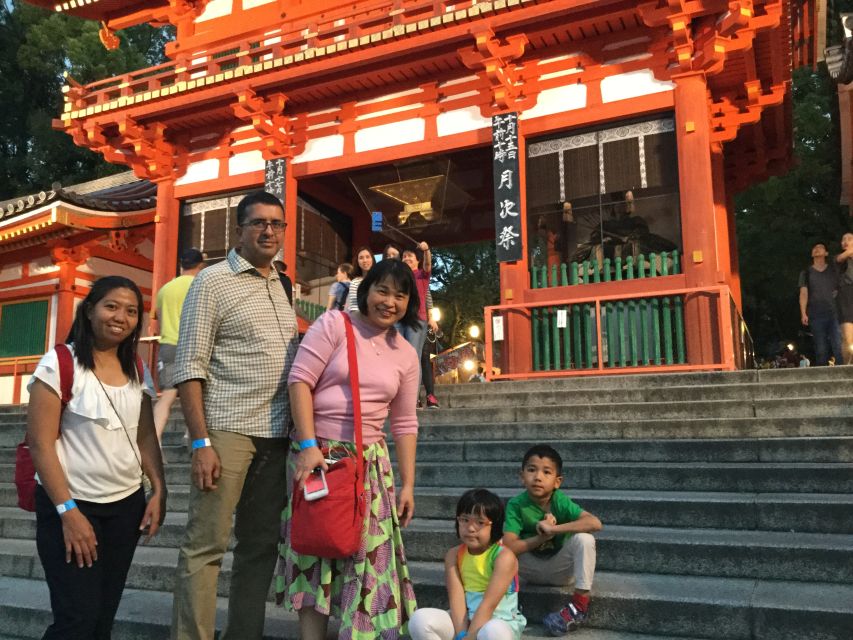
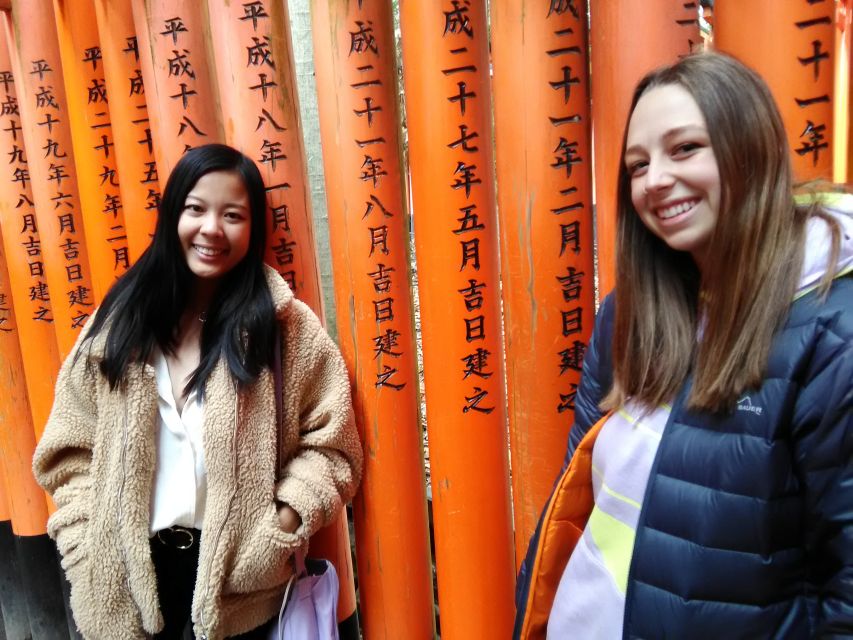
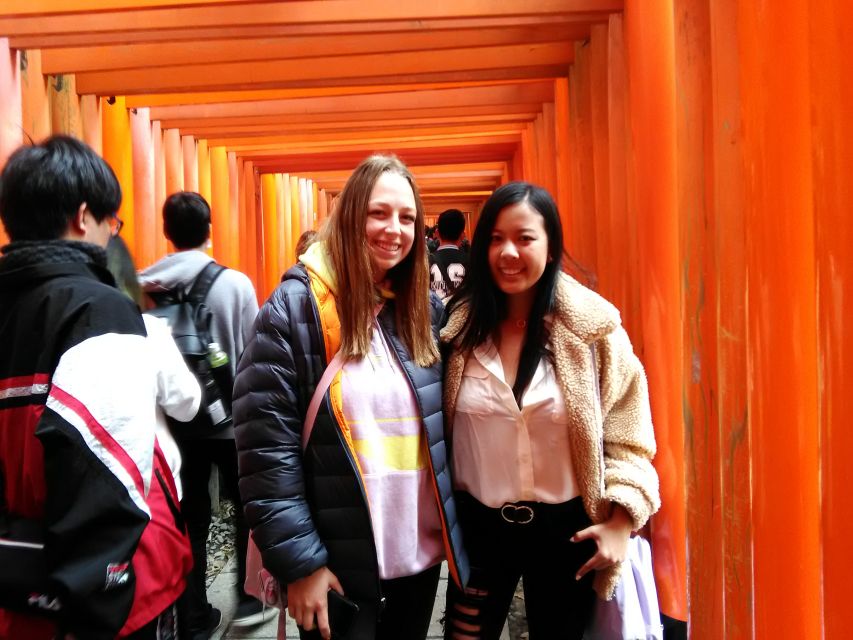
Fushimi Inari-taisha is one of Kyoto’s signature sights. Its long corridor of vermilion torii gates climbs into the wooded hills behind the shrine. The gates were donated over many years, and their repeated forms create a strong visual path from the ordinary city into a sacred setting.
Your guide can explain how to behave at a Shinto shrine, including the basic approach to the entrance, the purification area, and prayer. That context helps the place feel like more than a photo stop.
The main drawback is crowds. One person visiting at 9:30 in the morning found the shrine very busy, and that is useful warning. Ask for an early start if Fushimi Inari is a priority. Even then, the lower gates may be crowded. If you have time and energy, walking farther uphill can bring a quieter experience, but your guide should help you judge how far fits your schedule.
Kinkakuji, Ryoanji, and northern Kyoto
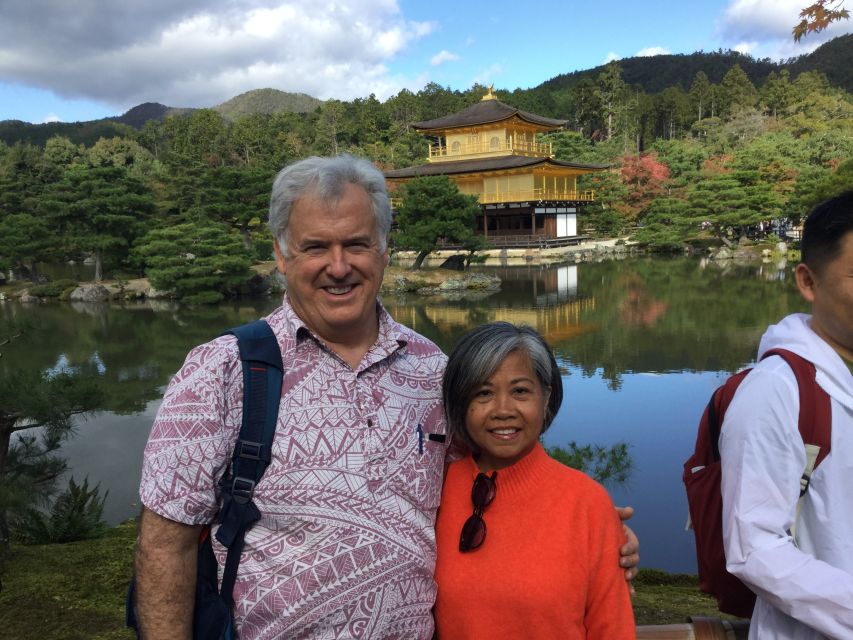
Kinkakuji, the Golden Pavilion, is famous for the gold-covered reliquary hall reflected in its pond. The building is viewed from a set path rather than entered, and the visit is fairly structured. The pleasure comes from the composition: gold, water, garden, and hills behind.
I would pair Kinkakuji with nearby northern sights instead of crossing the entire city afterward. Ryoanji offers a very different mood, with its famous dry garden and quiet viewing space. Ninna-ji adds another important temple setting. These visits work well for someone interested in garden design, Buddhist traditions, and imperial connections.
The area can become crowded, and your movement is partly guided by the temple paths. Your private guide will not make the crowd disappear, but can explain what you are seeing and help you use the available time wisely.
Same city, a completely different kind of day:
- Kyoto Geisha Walking Tour: Gion District & Hidden Gems
★ 4.7 · 3,273 reviews - Kyoto: Tea Ceremony Ju-An at Jotokuji Temple
★ 4.9 · 3,207 reviews - Kyoto: Gion Magical Night Walking Tour with Geisha Trivia
★ 4.9 · 2,393 reviews - Kyoto: 45-Minute Tea Ceremony Lesson Experience
★ 4.3 · 2,378 reviews
Kiyomizu-dera, Higashiyama, and Gion
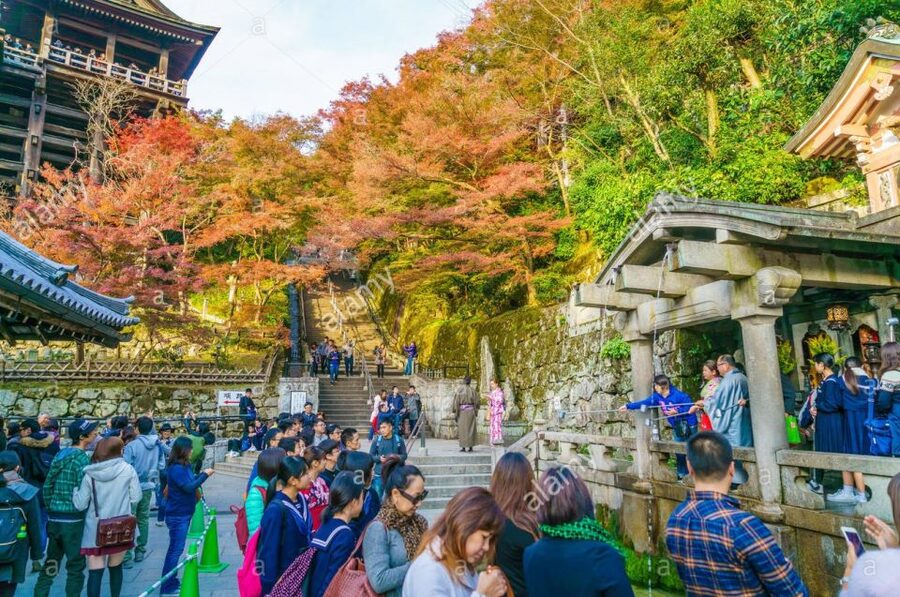
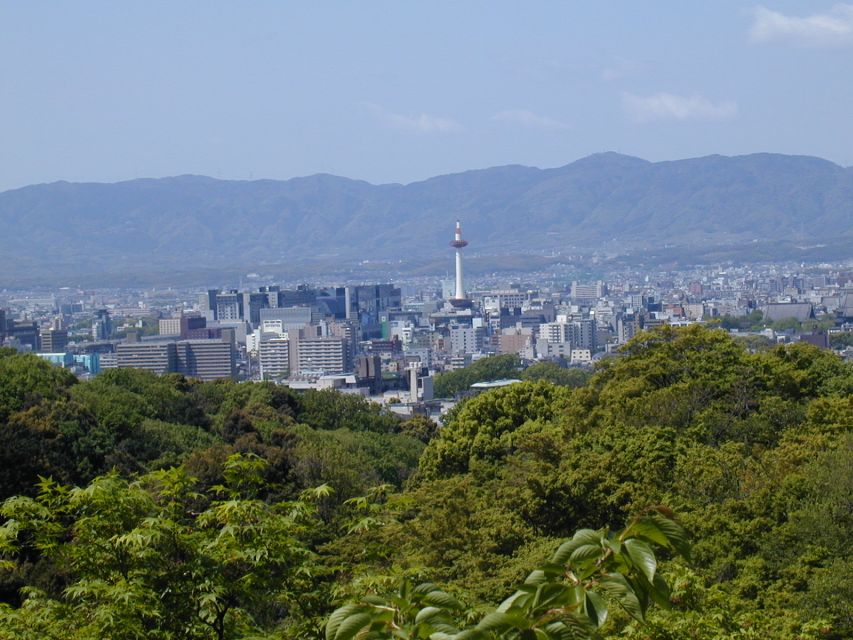
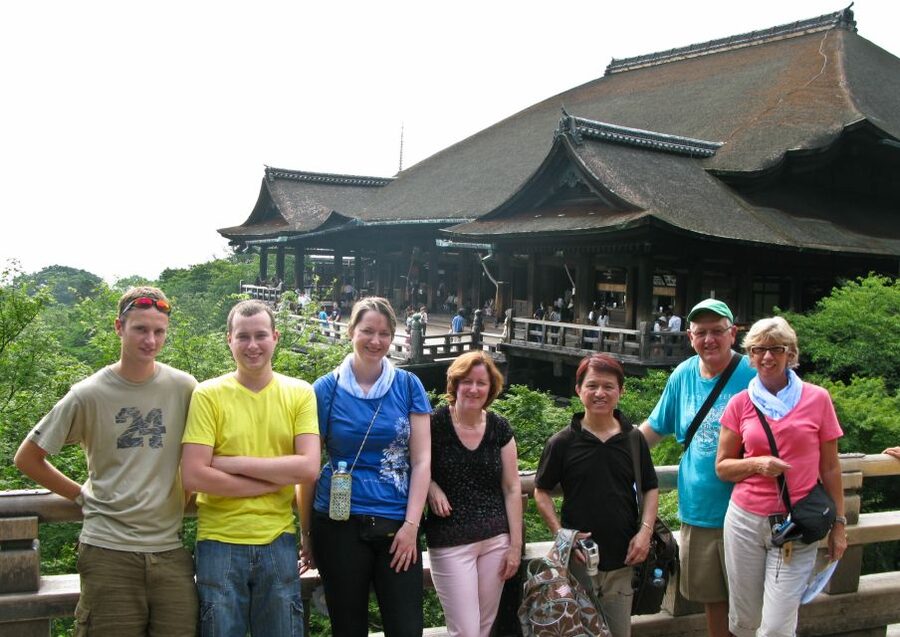
Kiyomizu-dera is one of the best choices for a first visit to Kyoto. Its large wooden veranda gives you a broad view across the city, while the temple grounds include several buildings, pathways, and religious features to explore.
The walk downhill from the temple toward Gion is part of the experience. Higashiyama’s lanes are lined with shops selling sweets, crafts, ceramics, souvenirs, and other Kyoto goods. Some stretches feel highly commercial, but they also make it easy to combine sightseeing with a snack or a little shopping.
A guide can explain the difference between a temple and a shrine, point out local customs, and help you decide where to pause. The route includes slopes and uneven surfaces, so tell your guide about mobility needs before the day begins. The tour is listed as wheelchair accessible, but the exact route and transport plan should be discussed in advance.
Gion is best treated as a historic district, not as a stage set. You may walk past traditional buildings, restaurants, and narrow lanes, but you should respect private spaces and avoid blocking entrances. Your guide can help you enjoy the area without treating it like a photo prop.
Nishiki Market, Pontocho, and eating advice
Nishiki Market is useful when you want to connect Kyoto sightseeing with food. The covered shopping district offers small bites, ingredients, sweets, and shops. It can be crowded, especially around popular travel periods, so keep your group together and do not expect a quiet meal at every stall.
Pontocho gives you a different evening feel, with a narrow lane of restaurants near the Kamo River. Gion also has many dining choices, from casual snacks to more formal meals. Food and drinks are not included, but your guide can recommend places based on your interests.
This is one of the tour’s more practical benefits. A guide may help you understand what you are looking at, explain ordering customs, or point you toward a restaurant after the formal tour ends. One guide helped arrange a sushi meal in Gion, while another directed a group to a favorite ramen spot.
Do not assume that every restaurant recommendation will suit your budget or dietary needs. Tell your guide what you want before the day ends, and ask about reservations if needed.
Arashiyama and western Kyoto
Arashiyama is not a quick add-on to eastern Kyoto. The district has enough to fill much of a day, especially if you want to visit the Bamboo Forest Street, Togetsukyo Bridge, Tenryu-ji, Okochi Sanso Garden, Jojakkoji, Nisonin, Gioji, or the temple at Otagi Nenbutsu-ji.
The bamboo path is photogenic but often crowded. Tenryu-ji provides a more complete temple and garden visit, while the bridge gives you a broad view of the river and surrounding hills. The smaller temples listed for Arashiyama offer a slower route if you want to move away from the busiest center.
For an eight-hour tour, Arashiyama can be the main theme. For six hours, choose only a few stops. Trying to combine Arashiyama with Fushimi Inari and Kiyomizu-dera usually means substantial transit time.
Other western and southern options include Daikaku-ji, Katsura Imperial Villa, Yoshimine-dera, Toji, and Byodoin Temple. Some sites require careful timing or advance arrangements, so discuss them with your guide before finalizing the day.
Less obvious choices for repeat visits
If you have already seen the Golden Pavilion and Fushimi Inari, ask about a quieter mix. Ginkakuji, Nanzenji, the Nanzenji Suirokaku aqueduct, Tofuku-ji, and Maruyama Park offer different views of Kyoto’s temples, gardens, and public spaces.
The Kyoto Imperial Palace and Shugakuin Imperial Villa suit visitors interested in court life and formal gardens. Kibune offers a change of setting outside the city center. Daikaku-ji and Yoshimine-dera can make sense for someone who prefers less central stops, though the final route depends on the time available.
The tour’s value is highest when you tell the guide what you have already seen. A first-time visitor may want the classics. A repeat visitor may gain more from a planned neighborhood walk and two less familiar temples.
How the walking and transport really work
This is described as a walking tour, but Kyoto sightseeing usually involves local trains, buses, or taxis between districts. Those fares are not included, and you should carry Japanese yen for transport costs.
The guide meets you in your hotel lobby or at a requested train station about ten minutes before pickup. Hotel pickup is on foot if your accommodation is within a reasonable distance. A private vehicle is not part of the standard booking.
That arrangement keeps the price lower than a car-based private tour, but it also means you share the city’s streets and transit system. I see that as a strength if you want to learn how Kyoto works. It is less ideal if your group has limited stamina or wants door-to-door transport.
A private vehicle can be arranged separately, but it must be booked at least five days in advance. Confirm the added price and route before relying on that option.
Is $106 per person good value?
At $106 per person, the tour is not the cheapest way to see Kyoto. You still pay for temple admission, food, and transportation. For a group of two, the cost may feel significant. For a private group of four to seven, the price becomes easier to justify because you are paying for a dedicated guide rather than joining a large coach group.
The value comes from saved time and better choices. A good guide can direct you to the correct bus or train, plan the order of stops, explain customs, and adjust the day when a site is too crowded. Several guides have helped groups see four or five major places in six hours by combining walking with public transport.
I would consider the tour particularly worthwhile if you have only one day in Kyoto, are traveling with children or an older family member, or feel uneasy about navigating Japanese transit. If you have a week in Kyoto and enjoy planning, you may prefer to visit some sites independently and use a guide for one focused day.
The provider allows cancellation up to 24 hours before the start for a full refund, and you can reserve without paying immediately. Your booking is not fully confirmed until the guide contacts you, so watch for that message and respond with your preferred sights.
Who should book this Kyoto tour?
I recommend it most for first-time visitors who want a strong start, families who need a flexible pace, and small groups with a clear list of priorities. It also works well for repeat visitors who want local advice rather than another standard sightseeing route.
The tour is less suited to anyone seeking a private car, a fixed luxury service, or a guaranteed list of six distant sites in four hours. It also requires you to accept rain or shine conditions and some walking.
Choose the four-hour option for a focused neighborhood visit. Choose six hours for the best balance of range and comfort. Choose eight hours if you want a full day and are prepared to use local transport.
Final verdict: book it for a smarter first day
I would book this tour for a first or short visit to Kyoto, especially with a six-hour plan and an early start. Ask your guide to combine two or three major sights with one neighborhood or food stop, rather than chasing every famous name.
The strongest reason to book is the personal planning. Guides such as Kazuo, Yuka, Haru, Noriko, Michi, and Akira have helped groups handle transport, history, customs, photos, meals, and changing schedules. That can turn Kyoto from a string of impressive sites into a city you understand.
Book it if you value time, context, and flexibility. Skip it if you prefer total independence and are happy to research routes, fares, temple customs, and restaurant choices yourself.
FAQ
How long does the private Kyoto tour last?
You can choose a four-hour, six-hour, or eight-hour tour. The suggested number of places is two to three for four hours, three to four for six hours, and four to six for eight hours.
Is the tour private?
Yes. It is a private group experience with a maximum of seven passengers.
What languages are available?
Guides are available in English and Japanese.
Does the tour include a private vehicle?
No. The standard experience is a walking tour. Public transportation or local taxis may be used between sites, and a private vehicle can be arranged separately if booked at least five days in advance.
Are transportation and entrance fees included?
No. Public or private transportation, temple and shrine entrance fees, food, and drinks are not included. Carry Japanese yen for transportation costs.
Can I choose the places I visit?
Yes. You can request places from the supplied list, including Fushimi Inari, Kiyomizu-dera, Gion, Nishiki Market, Arashiyama, Kinkakuji, Nijo Castle, and many others. Discuss your choices with the guide after booking.
Where does the guide meet me?
The guide can meet you in your hotel lobby or at a requested train station. Hotel pickup is on foot when the accommodation is within a reasonable distance. The guide waits about ten minutes before the scheduled pickup time.
Can I cancel for a refund?
You can cancel up to 24 hours before the tour starts for a full refund. The experience operates in rain or shine, and the provider contacts you before the tour to confirm the arrangements.
Newest Kyoto experiences on the site
- Treasures of Kyoto: Gion & historical Walking Tour★ 5.0 · 6 reviews
- Whisk Your Own Matcha: A Zen Matcha Experience at Temple★ 3.6 · 7 reviews
- Kyoto tea town for matcha lovers★ 5.0 · 16 reviews
- Uji: Private immersion into Kyoto’s tea and reglious culture★ 5.0 · 17 reviews
- Kyoto Matcha Green Tea Tour★ 4.5 · 23 reviews
- Uji and Wazuka Matcha Farm Half Day Private Guided Tour★ 5.0 · 21 reviews
- Utilising upcycled Matcha! Creating matcha incense (Uji, Kyoto)★ 5.0 · 6 reviews
- Sacred Temple Yoga Experience in Japan★ 5.0 · 3 reviews
Guided, compared.
Kyoto Early Morning Tour with English-Speaking Guide
Read our review →
Kyoto 6hr Private Tour with Government-Licensed Guide
Read our review →Early Morning Tour with English-Speaking Guide
Read our review →
Nijo-jo Castle and Ninomaru Palace Guided Tour
Read our review →
Kyoto Gion Night Walk & Geisha District Guided Tour
Read our review →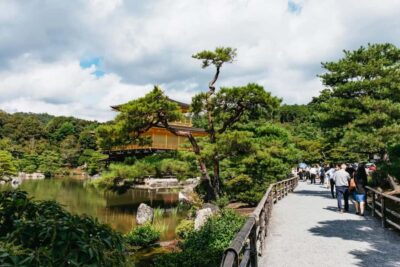
Nijo Castle, Kiyomizu & Fushimi Inari Guided Tour
Read our review →