
Reviewed · KYOTO WALKING TOURS
Kyoto Philosophy Walk with Philosopher (Private/6.5 hour)
Kyoto is easy to admire and surprisingly hard to understand. This private walk gives you a guide who connects temple gates, gardens, shrines, and an old aqueduct to bigger questions about Buddhism, Shinto, simplicity, and modern Japanese thought. Hiroki is both a nationally licensed guide and a philosophy researcher, so the conversation is the main event.
I like two things right away: the route includes famous sights such as Ginkaku-ji and the Philosopher’s Walk, but also quieter corners such as Konchi-in; and the private format lets you ask questions without holding back. Hiroki has also guided visitors through lesser-seen areas and can adjust the experience to your interests. Plan for cash, stairs, and a full day on foot, plus extra money for lunch, admission fees, and local transport.
Key points to know before booking
- Philosophy drives the walk: You discuss Pure Land Buddhism, Shinto, Zen simplicity, enlightenment, and the meeting of Japanese and Western philosophy.
- Hiroki leads the tour: He is a nationally licensed guide and trained philosophy researcher, with a teaching style built around dialogue.
- The route mixes major and lesser-known places: Ginkaku-ji and the Philosopher’s Walk share the day with Yoshida Shrine, Suirokaku, and Konchi-in.
- It is a private 6.5-hour experience: Only your group takes part, with about one hour for lunch and time for transport and backstreet walking.
- Budget ¥2,350 per person beyond the tour fee: The stated estimate is ¥1,600 for temple admission and ¥750 for public transport, with lunch extra.
- Wear comfortable shoes: You walk about one mile on the Philosopher’s Path, use public transport, and climb stairs at a two-story building.
Why this Kyoto walk feels different
Most temple tours give you dates, names, and a quick explanation of what to look at. This one asks what the places mean. At Higashi Hongan-ji, the starting question is the Pure Land. At Yoshida Shrine, you consider Shinto and its view of the sacred world. At Ginkaku-ji, the focus shifts to the Japanese preference for restraint and simplicity.
That approach suits you if you enjoy asking why, not just what. You are not signing up for a silent stroll with a stream of facts. You should expect conversation, interpretation, and time to test your own ideas with the guide.
The private setup matters here. Philosophy works better when you can pause and ask a plain question, admit that an idea is confusing, or steer the talk toward religion, art, history, or modern life. Hiroki has been praised for being flexible, managing time well, and shaping the day around what his group wanted to explore.
There is a practical limit. This is not the best choice if you want a fast checklist of Kyoto highlights or a guide who does all the talking. The day has several short stops, and the real value comes from discussion. If you prefer a brisk sightseeing route with little interpretation, you may find the pace too reflective.
More walking tours in Kyoto:
- Kyoto Geisha Walking Tour: Gion District & Hidden Gems
★ 4.7 · 3,273 reviews - Kyoto: Gion Magical Night Walking Tour with Geisha Trivia
★ 4.9 · 2,393 reviews - Kyoto: Gion Geisha District Walking Tour – Stories of Geisha
★ 4.7 · 2,187 reviews
Starting at Higashi Hongan-ji and the idea of the Pure Land
The meeting point is the Bus Ticket Centre and Information Centre near Kyoto Station. The tour begins at 9:00 a.m., a useful start time for a six-and-a-half-hour program that needs to cover several parts of the city.
Your first stop is Higashi Hongan-ji Temple, about a ten-minute walk from the station area. You spend around 30 minutes here, with no admission fee listed for this stop. The subject is the Pure Land, one of the major ideas in Japanese Buddhist tradition.
Hiroki uses the temple as a place to consider what the Pure Land means rather than treating it as a term to memorize. That gives you a way into Japanese Buddhism through belief and practice, not just architecture. You can ask how the idea fits into everyday religious life and how it differs from the image of Buddhism many visitors bring from home.
This opening stop also helps set the tone. You are beginning with an idea, then using a real place to make it easier to discuss. For some people, this will be the most rewarding part of the morning. For others, the religious vocabulary may feel demanding at first.
Yoshida Shrine and Shinto’s sacred world
At Yoshida Shrine, you spend another 30 minutes exploring the question of Shinto. The shrine is described as one of Kyoto’s oldest, and until about 150 years ago it was also connected with government-sanctioned religious authority.
The tour presents Yoshida Shrine as a place to consider Shinto pantheism, the sense that sacred presence can be found throughout the natural world. You do not simply look at the shrine buildings and move on. You are encouraged to think about how Shinto differs from a single-founder religion and how sacred space works in Japan.
This stop adds balance to the Buddhist discussion at Higashi Hongan-ji. Kyoto’s religious identity is not one neat story. Buddhist temples, Shinto shrines, local customs, political power, and philosophical ideas overlap. A guide with a research background can help you hold those layers together without reducing them to a few stock phrases.
You should allow for a change of subject and mood here. The tour is not presenting one complete religious system. It is comparing different ways of seeing the world, which is more useful but also asks more of you.
Ginkaku-ji and the appeal of simplicity
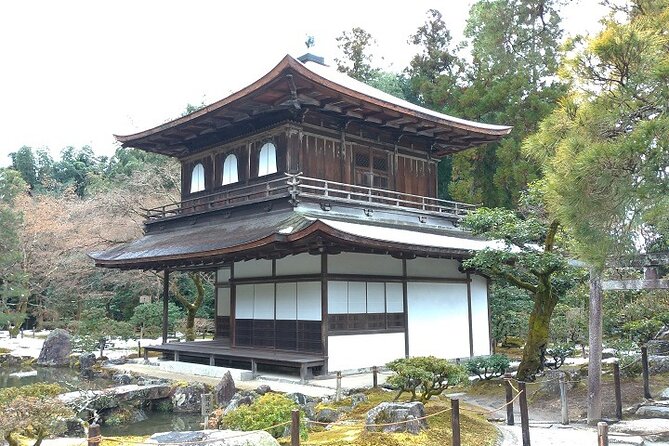
Ginkaku-ji, the Silver Pavilion, receives about 45 minutes. It is a Zen temple and a UNESCO World Heritage site, with an admission fee not included in the tour price.
The question here is the background of the Japanese idea that less can be more. Ginkaku-ji gives you a strong setting for discussing restraint, quiet beauty, and the value of simple forms. The point is not just that the temple grounds look pleasing. You consider why simplicity became such an important ideal in Japanese culture and how Zen thinking shaped that ideal.
This is one of the tour’s most accessible subjects. You do not need a philosophy degree to notice the contrast between decoration and restraint. Hiroki can help turn that observation into a wider discussion about Japanese aesthetics and religious thought.
The drawback is cost and timing. Admission is extra, and 45 minutes is enough for an informed visit but not for a long, unhurried exploration of every part of the grounds. Since the tour includes several later stops, you are choosing interpretation and variety over spending a whole morning at one temple.
Same city, a completely different kind of day:
- PERFECT KYOTO 1-Day Bus Tour
★ 5.0 · 13,518 reviews - Kyoto: Fushimi Inari, Kinkakuji, Bamboo Grove 1 Day Bus Tour
★ 4.8 · 4,316 reviews - Kyoto: Tea Ceremony in a Traditional Tea House in Kiyomizu
★ 4.9 · 3,519 reviews - Kyoto: Tea Ceremony Ju-An at Jotokuji Temple
★ 4.9 · 3,207 reviews
Walking the Philosopher’s Path with a researcher
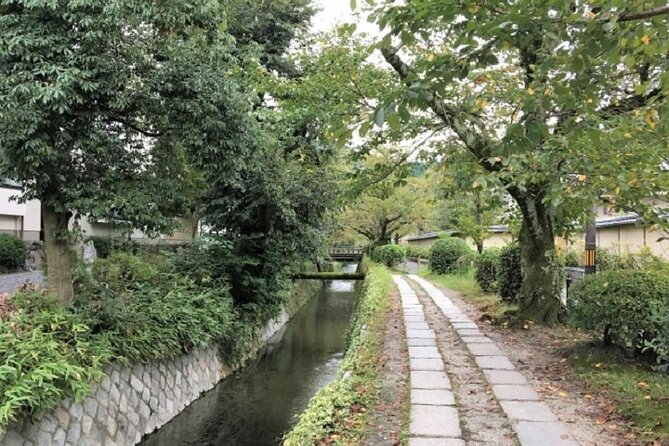
The Philosopher’s Walk is the heart of the experience, with about one hour set aside for the path itself. You walk roughly one mile, so comfortable shoes are essential. The route is free to enter, but you should expect a steady period of walking rather than a quick transfer between sights.
Here the discussion turns to Japanese modern philosophy and its response to Western philosophical traditions. This is where Hiroki’s background as a philosophy researcher becomes most useful. You can ask how Japanese thinkers handled ideas arriving from Europe and North America, and how those ideas met older Buddhist and Shinto ways of thought.
The path also gives the conversation room to breathe. Instead of standing in one temple courtyard while a guide gives a short talk, you walk and discuss. That format can make abstract subjects feel more natural. You might start with a question about Japanese philosophy and end up comparing different ideas about self, nature, religion, or society.
Hiroki has also taken groups beyond the obvious sightseeing points along this route. That is important because the Philosopher’s Walk itself is well known. The added value is not simply seeing it. It is the chance to use the walk as a moving classroom, with room for side streets and less-visited areas around the main route.
Keep your expectations realistic. The supplied schedule allows one hour on the path, not an entire afternoon. The remaining time includes local transport, backstreet walking, and a lunch break, so this is a guided route through the area rather than a slow, open-ended wandering session.
Nanzen-ji’s aqueduct and the question of protecting place
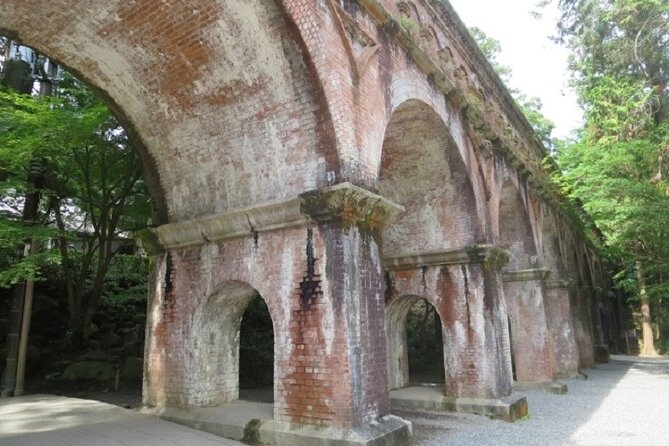
The next stop is Nanzenji Suirokaku, a Western-style brick aqueduct built as part of the Meiji-era canal project. You spend about 15 minutes here, and there is no admission fee listed for the aqueduct itself.
The contrast is the point. The aqueduct sits near a traditional Buddhist temple, bringing modern infrastructure and older religious surroundings into the same view. Hiroki uses it to ask what an ideal setting should protect and how a city can introduce new structures without erasing what was already there.
This is a short stop, but it gives the tour a welcome change of subject. You move from ideas about religion and philosophy to questions about planning, preservation, and the visual relationship between old and new.
Because only 15 minutes is planned, do not expect a long architectural lecture. Think of it as a focused pause that helps you look at Kyoto as a living city rather than a collection of preserved monuments.
Sanmon Gate and three steps toward awakening
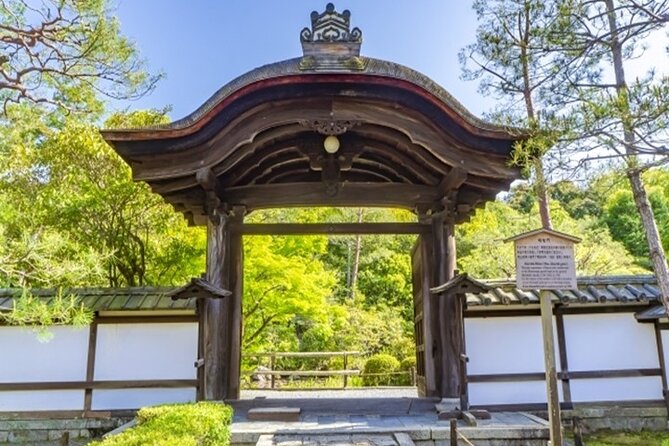
At Nanzen-ji’s Sanmon Gate, you spend about 15 minutes considering Buddhist enlightenment. The gate is two stories high, and its name refers to three steps toward liberation. Admission is not included.
The structure gives the subject a physical form. You are looking at a gate associated with movement from one state to another while discussing what awakening means in Buddhism. That is a useful example of the tour’s method: a building or garden becomes a prompt for a larger question.
There is one clear practical issue. The route includes a two-story building with stairs only. If climbing stairs is difficult for you, ask about the route before booking. The general information says most people can take part, but it also specifically warns that this building has no lift access.
Konchi-in and the Zen garden test
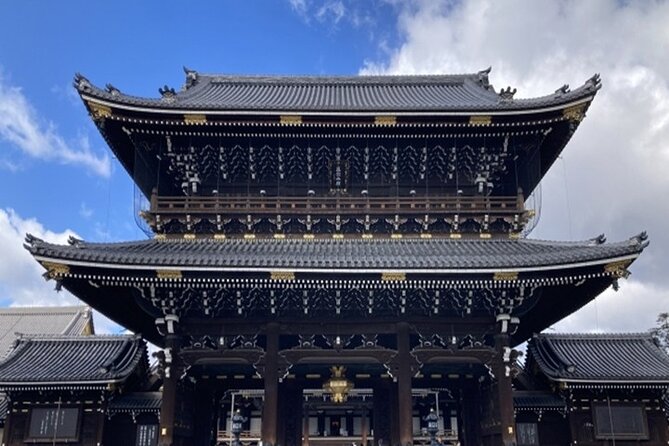
Konchi-in takes about 30 minutes and is described as a temple known especially among Japanese history enthusiasts. Admission is not included.
The subject is the authentic Zen garden and the Japanese religious ideas expressed through it. This is a good final major stop because it brings several threads together: simplicity, contemplation, religious practice, and the question of how a designed space guides your attention.
You are not asked to treat a Zen garden as decoration alone. The conversation helps you consider how rocks, gravel, empty space, and arrangement can create meaning without a written explanation. If you enjoy gardens but often wonder what you are supposed to notice, this part of the tour can give you a more useful framework.
The small-scale feel of Konchi-in is also a welcome contrast after Ginkaku-ji. You get another chance to look closely at Zen design without making the entire day about Kyoto’s best-known temples.
Lunch, transport, and the real length of the day
The listed stop times add up to about three hours and 45 minutes. The rest of the 6.5-hour day includes one hour for lunch and about one hour and 45 minutes for public transportation and walking through back streets near the sights.
Lunch is not included, and the tour does not specify a restaurant or menu. Bring enough money for your own meal and drinks, and remember that the day is long enough for a proper break. The lunch hour is also useful because sustained philosophical conversation can be tiring, especially if you are concentrating through a second language.
Local transport costs about ¥750 per person. You pay this separately, along with roughly ¥1,600 per person for temple entrance fees. At $230 per person, the tour is not a low-cost way to see Kyoto. For a private half-day-plus experience with a specialist guide, though, the value lies in the access to conversation and interpretation, not in transportation or included tickets.
Group discounts are available, though the exact discount is not provided. A private group may find the price easier to justify when divided among several people, especially if everyone enjoys the same intellectual focus. Solo participants and couples should compare the cost with a standard private sightseeing guide and decide how much the philosophy component matters to them.
Who will get the most from Hiroki’s tour
I would choose this experience if you enjoy religion, philosophy, Japanese art, cultural history, or long conversations that do not end with a single correct answer. It also suits you if you have already seen Kyoto’s basic sights and now want a framework for understanding them.
The tour can work well for a private family group, friends with shared interests, or a couple who prefer a thoughtful day to a crowded group excursion. Hiroki’s flexibility is useful if you want to ask questions, adjust the emphasis, or spend more time on a subject that catches your attention.
You may want a different tour if you dislike walking, stairs, public transport, or paying entrance fees separately. You should also think twice if you need a tightly timed sightseeing schedule. This program includes a lunch hour and backstreet walking, and its pace leaves room for conversation.
The strongest praise connected with Hiroki’s guiding points to clear knowledge of Japanese culture, good time management, kindness, and flexibility. One account described several days of guiding with him, not just this walk, and emphasized how well he adapted plans to personal interests. Another described the experience as a journey with a friend, which captures the informal, discussion-based feel better than a standard temple tour does.
Practical details before you reserve
The tour starts at 9:00 a.m. at the Bus Ticket Centre and Information Centre, 902 Higashishiokōjichō, Shimogyo Ward, Kyoto 600-8216. It ends back at the same meeting point.
You receive confirmation when booking, and the tour is near public transportation. It is a private activity, so only your group takes part. Mobile tickets are supported.
Wear supportive shoes and dress for a full day outside. Carry cash for the ¥1,600 in temple admission and ¥750 in transportation, as well as lunch and drinks. The cancellation terms allow a full refund if you cancel at least 24 hours before the start time. Changes or cancellations inside that window are not accepted.
Should you book this philosophy walk?
Book it if you want Kyoto to raise questions, not just provide photo stops. Hiroki’s combination of licensed guiding and philosophy research gives the day a clear identity, and the private format lets you shape the conversation.
Skip it if your main goal is maximum sightseeing for the lowest price, or if stairs and a mile of walking would be a problem. At $230 per person before meals, admission, and transport, the cost is fair only if you value thoughtful explanation and personal exchange.
For the right person, this is a memorable way to connect Higashi Hongan-ji, Yoshida Shrine, Ginkaku-ji, the Philosopher’s Walk, and Nanzen-ji into one intellectual route through Kyoto. You leave with more than a list of places. You leave with better questions to ask when you visit the next temple or shrine.
FAQ
How long is the Kyoto Philosophy Walk?
The experience lasts approximately 6 hours and 30 minutes. The scheduled stops total about 3 hours and 45 minutes, with one hour for lunch and about 1 hour and 45 minutes for public transportation and walking between places.
Where does the tour start and end?
It starts at 9:00 a.m. at the Bus Ticket Centre and Information Centre, 902 Higashishiokōjichō, Shimogyo Ward, Kyoto 600-8216. The tour ends back at the meeting point.
Is this a private tour?
Yes. Only your group participates in the activity.
What does the tour price include?
The $230 per person price includes the guide fee. Lunch, drinks, temple entrance fees, and public transportation are separate.
How much extra money should I prepare?
The listed estimate is ¥1,600 per person for temple entrance fees and ¥750 per person for public transportation. You should also bring money for lunch and beverages. Cash is specifically recommended for the entrance fees.
Is the route suitable for everyone?
Most people can participate, but the route includes about one mile of walking and a two-story building with stairs only. Comfortable shoes are recommended, and anyone concerned about stairs should ask about the route before booking.
Newest Kyoto experiences on the site
- Treasures of Kyoto: Gion & historical Walking Tour★ 5.0 · 6 reviews
- Whisk Your Own Matcha: A Zen Matcha Experience at Temple★ 3.6 · 7 reviews
- Kyoto tea town for matcha lovers★ 5.0 · 16 reviews
- Uji: Private immersion into Kyoto’s tea and reglious culture★ 5.0 · 17 reviews
- Kyoto Matcha Green Tea Tour★ 4.5 · 23 reviews
- Uji and Wazuka Matcha Farm Half Day Private Guided Tour★ 5.0 · 21 reviews
- Utilising upcycled Matcha! Creating matcha incense (Uji, Kyoto)★ 5.0 · 6 reviews
- Sacred Temple Yoga Experience in Japan★ 5.0 · 3 reviews
Kyoto Walking Tours, compared.
Kyoto Geisha Walking Tour: Gion District & Hidden Gems
Read our review →
Gion Magical Night Walking Tour with Geisha Trivia
Read our review →
Gion Geisha District Walking Tour – Stories of Geisha
Read our review →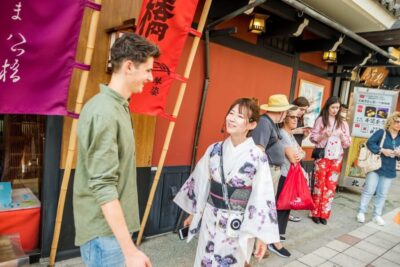
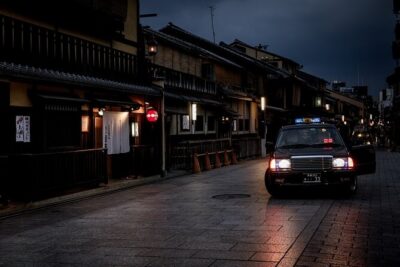
Kyoto Gion Geisha District Walking Tour – The Stories of Geisha
Read our review →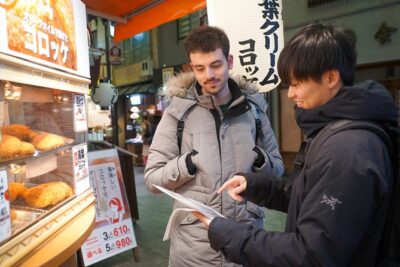
Nishiki Market Brunch Walking Tour (7 Tastings + Brunch)
Read our review →
Kyoto Arashiyama Walking Tour: Bamboo, Monkeys, Gardens & Secrets
Read our review →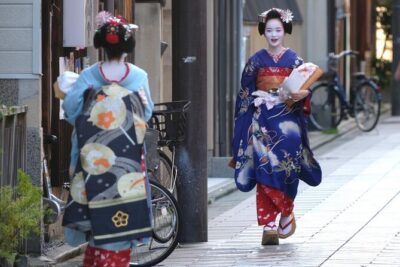
Kyoto Gion: 2-Hour Geisha Culture & History Walking Tour
Read our review →Browse the lists this tour appears in