
Reviewed · NARA DAY TRIPS
Kyoto, Nara and Osaka private up to 9 pax picked up from Kyoto
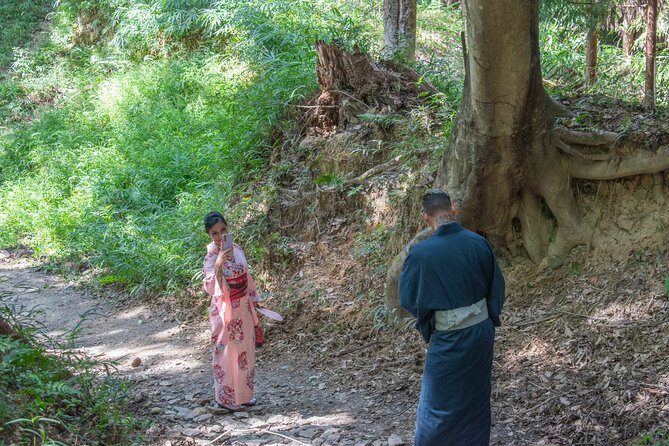
This private experience pairs Kyoto’s famous sights with quieter temple stops that many visitors miss. Guide Takashi drives your group, explains the culture, and can help with photos, local snacks, and a drop-off suited to your evening plans.
I like the peace and variety: you can walk beneath the torii at Fushimi Inari, then sit quietly in a moss garden or explore a temple rarely visited because of its location. I also like the flexibility of hotel pickup and private transport for groups of up to nine.
The main caution is the mismatch in the supplied details. The tour is described as about seven hours, while the three-city example is described as 12 hours, and the detailed stop list covers Kyoto rather than all three cities. Confirm your chosen route before paying.
Key points to know before booking
- Three-city concept: The experience can be arranged around Kyoto, Nara, and Osaka, but the exact option and length need confirmation.
- Quiet Kyoto temples: Rengeji, Myomanji, Koryu-ji, and Koetsuji offer a calmer side of the city than the headline sights.
- Takashi as your guide: He provides cultural background, drives your party, and has been praised for English communication and photography.
- Private group of up to nine: Your party travels together, with pickup in Kyoto and a choice of drop-off location.
- Food along the way: Nakamuraken offers Kyoto sweets, while the wider three-city plan can include deer crackers, matcha tasting, and Osaka street food.
- A busy plan on paper: Eight Kyoto stops require brisk pacing, especially if you also expect Nara and Osaka in the same day.
The first question: which tour are you actually booking?
The most important planning point is to separate the headline idea from the detailed schedule. The experience is presented as a chance to see Kyoto, Nara, and Osaka in one day, with an example that includes Fushimi Inari, Nara’s Todai-ji and deer park, Osaka’s Dotombori, and Abeno Harukas.
Yet the supplied duration is approximately seven hours, while the three-city example is described as a 12-hour tour. The detailed stop-by-stop plan is also a Kyoto route with eight stops. Those are very different days.
I would contact Amazing Kyoto Experience before booking and ask for four precise answers:
- Is the selected option the seven-hour Kyoto tour or the 12-hour three-city tour?
- Which stops are included in that specific option?
- Is pickup and drop-off within Kyoto?
- Are admission costs included, or are the listed free admissions simply describing the sites?
This is not a minor detail. Kyoto, Nara, and Osaka are separate cities, and a day that includes all three will leave less time at each stop than a focused Kyoto outing. If you want depth and quiet temple time, choose the Kyoto route. If your priority is seeing several major sights in one ambitious day, confirm the three-city plan and accept a faster pace.
More day trips down to Nara:
- Osaka/Kyoto:Kinkakuji,Arashiyama,FushimiInariShrine,NaraPark
★ 4.1 · 1,596 reviews - Kyoto/Osaka: Nara, Fushimi Inari Taisha, Arashiyama Bus Tour
★ 4.7 · 1,275 reviews - Osaka/Kyoto: Arashiyama, Nara & Fushimi Inari Shrine w/Lunch
★ 4.4 · 754 reviews
Fushimi Inari begins with Kyoto’s biggest visual hit
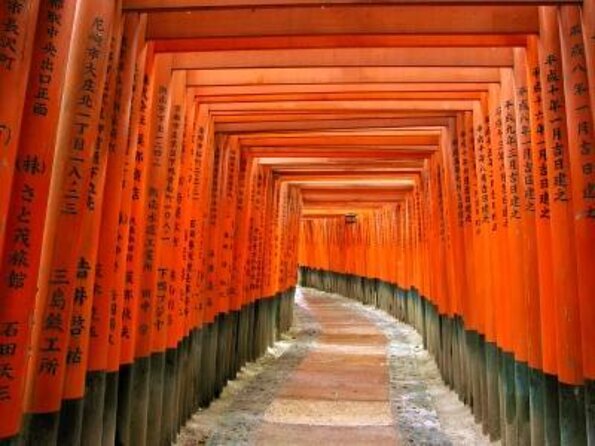
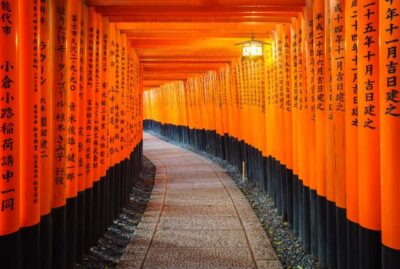
Fushimi Inari-taisha is the natural attention-grabber. Thousands of vermilion torii gates climb the mountain, creating one of Japan’s most recognizable walks. The shrine grounds cover the mountain itself, so this is more than a quick photo stop at a single building.
The stated time is two hours, making Fushimi Inari the longest stop on the detailed Kyoto schedule. That gives you room to see more than the first cluster of gates. The route also includes a bamboo forest trail and quieter stretches where birdsong replaces the chatter near the entrance.
You should still set expectations. Two hours is enough for a meaningful visit, but not for every path on the mountain. Wear comfortable shoes, and be ready for slopes and steps. If your tour also includes Nara and Osaka, ask how much of this two-hour visit remains in the three-city version.
Rengeji and Myomanji trade crowds for calm
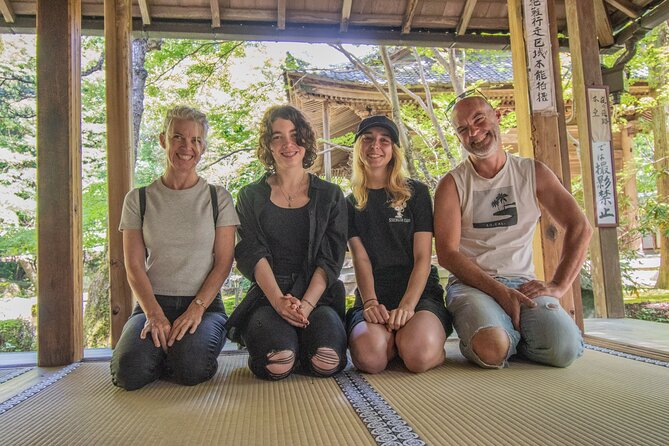
Rengeji is described as a moss garden that few people reach because its location is distant and inconvenient. That inconvenience is part of the appeal. You are not simply checking off another famous name. You are visiting a place where the garden and the open tatami room create a slower, quieter scene.
The planned hour here should suit anyone who likes gardens, stillness, and traditional interiors more than packed sightseeing streets. A moss garden rewards patient looking. You may notice the arrangement of stones, the texture underfoot, and the way the room frames the garden better than you would during a quick ten-minute stop.
Myomanji offers another change of mood. It is described as one of northern Kyoto’s larger temples, with countless small rocks arranged to form a broad garden. The site also provides a way to discuss major divisions within Japanese Buddhism, which gives the stop more substance than a simple garden visit.
Both temples are less familiar than Kinkakuji or Fushimi Inari. That is good for travelers who have already seen Kyoto’s standard highlights, but it can be less satisfying if this is your first and only Kyoto day and you want every famous sight. The private format lets you discuss that tradeoff with Takashi rather than follow a fixed large-group script.
Koryu-ji adds an early Kyoto connection
Koryu-ji receives only 30 minutes in the detailed plan, so treat it as a short cultural stop rather than a full temple visit. Its origins are linked to the Hata people, a group described as Korean-rooted and active in Japan during the fifth and sixth centuries.
The temple later suffered a fire in the eighth century and continued afterward. That detail gives the place a useful connection to Kyoto’s long religious and cultural development. You will likely have time for a focused look, an explanation, and a few photographs, not an unhurried exploration of every feature.
This is where a private guide can help. A short visit can feel thin if you do not know what you are looking at. With clear explanation from Takashi, the stop has a purpose. Without that context, you may prefer to spend the half hour at one of the larger temples.
More days that pair Kyoto with Osaka:
- One-Day Tour of Kyoto’s Highlights from Osaka/Kyoto
★ 4.5 · 1,092 reviews - Full Day Guided Tour to Kyoto and Nara from Osaka by Van
★ 5.0 · 420 reviews - Nara Afternoon Tour from Kyoto or Osaka
★ 4.5 · 390 reviews - Kyoto Morning Tour from Kyoto or Osaka
★ 4.0 · 281 reviews
Kinkakuji is famous for a reason
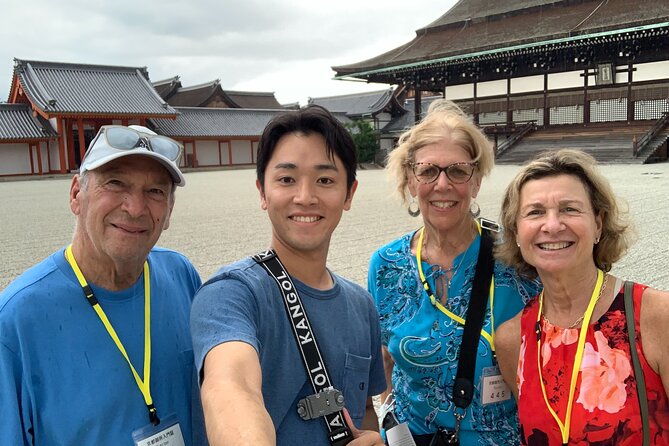
Kinkakuji, the Golden Pavilion, is the classic Kyoto stop on this route. The upper two floors are covered with gold leaf, and the building was originally the villa of shogun Yoshimitsu Ashikaga before becoming a temple after his death.
The scheduled hour gives you time to see the pavilion and its garden area at a reasonable pace. Still, this is one of Kyoto’s most photographed places, so it is less private and reflective than Rengeji or Koetsuji. The value here is recognition and visual impact. You are seeing the sight that appears in countless Kyoto guides, but in person the gold against the garden makes the visit worthwhile.
If your day includes all three cities, ask if Kinkakuji remains in the plan. It is an obvious candidate for a tight schedule because it can draw a crowd and requires time to reach, but removing it would change the character of a first Kyoto visit.
Koetsuji shows the artistic side of temple life

Koetsuji receives 30 minutes and is connected with an artist skilled in tea ceremony, calligraphy, and other arts. Its garden and tea-related objects make it a useful stop for understanding how religious spaces in Japan also became places for artistic practice.
This is a compact visit, but it complements the larger temples. Kinkakuji gives you a famous building. Koetsuji offers a closer look at design, gardens, and the arts that shaped elite culture. The contrast helps keep the day from becoming a parade of similar wooden halls.
Half an hour will pass quickly. You will want Takashi to point out what matters most, since the stop is not built around a long walk or a single dramatic landmark. It works best for you if small details and cultural background interest you.
Nakamuraken brings in a local sweet stop
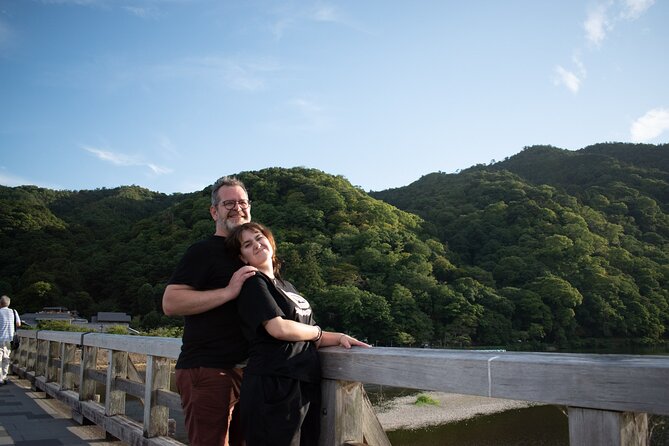
Nakamuraken is a 30-minute break at a local dessert shop. The specialties listed include Mochifu, a pounded rice sweet with a texture different from standard mochi, and shaved ice flavored with yuzu or matcha.
This is the kind of stop that makes a private day feel less mechanical. You can try a Kyoto-style sweet, take a break from temple roofs, and ask questions about ingredients and local food customs. One detail from the guide’s response is especially useful: Takashi remembers guests enjoying pickle samples and buying them from a nearby stand. That suggests he pays attention to small food experiences, not just major monuments.
The stop may not appeal if you are avoiding sweets or prefer to use every minute for temples. For most people, though, a short food pause is welcome after several cultural sites. If you have dietary restrictions, ask what is available before the day begins, since no specific dietary information is provided.
Matsuo Shrine closes the Kyoto route with water and local life
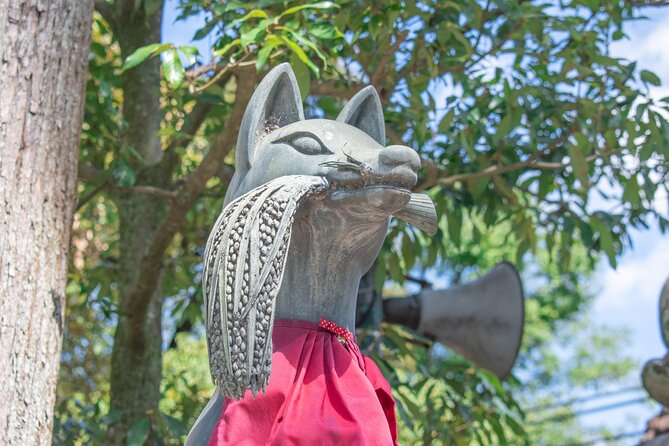
Matsuo Shrine is linked to the powerful Hata family and is loved by households in the surrounding area. Its large koi pond, where feeding is allowed, gives the visit a simple, hands-on quality.
The half-hour schedule makes this a light final stop. You can see the shrine, spend time by the pond, and feed the fish if that activity is operating during your visit. It is less about a major landmark and more about seeing a place used and appreciated by the nearby community.
That local feel is a good counterpoint to Kinkakuji. The most famous sights show you Kyoto’s public face. Matsuo Shrine offers a smaller neighborhood connection. If the route feels too full, this is another stop to discuss with your guide rather than assume every listed location must be visited.
What the Nara and Osaka option adds
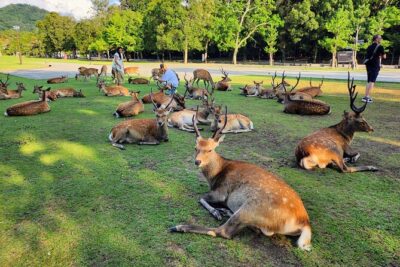
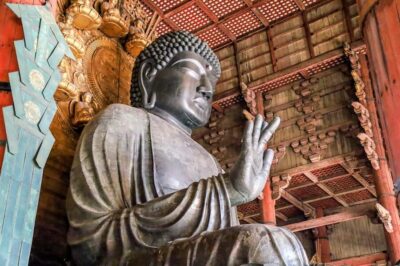
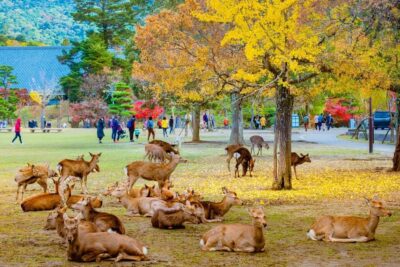
The three-city example changes the day from a focused Kyoto tour into a broad sampler. In Nara, the plan includes Todai-ji, with its massive Great Buddha hall, and Nara Park, where you can feed deer with crackers. It also mentions a secret temple and matcha tasting in a peaceful setting.
Those experiences appeal for different reasons. Todai-ji supplies scale and ceremony. Nara Park adds an easy, memorable interaction with the deer. Matcha tasting gives the day a quiet pause after the larger sights.
Osaka brings a different mood. Dotombori is planned for walking and local dishes from street-side shops, while Abeno Harukas offers a high-rise observatory and city views. This is a strong finish if you want food and a modern skyline after temples and shrines.
The drawback is time. The three cities cover a lot of ground, and the supplied information does not give travel times between them. You should not expect the same unhurried attention at the Kyoto temples if you select the 12-hour example. Ask for a written schedule so you know how long you will have in each place.
Private transport and group size affect the value
The price is listed as $329.02 per person, with group discounts available. That is a substantial day-tour price, but private transport and a group size of up to nine can make the cost more reasonable when shared among family or friends.
The value is strongest for a group that wants door-to-door service and a flexible route. You avoid organizing several separate train journeys, coordinating a large party, and deciding how to fit quiet temples around major sights. Pickup is available from a Kyoto hotel, and a chosen drop-off location can help you continue to a restaurant afterward.
The value is weaker if you are a solo visitor or a couple comfortable using public transportation. Kyoto’s rail and bus network can be less expensive, and a self-guided day gives you more control over how long you stay at each site. You are paying here for a driver, a private guide, local suggestions, and the ability to tailor the day.
The mobile ticket and confirmation at booking make the practical side simple. Most people can participate, and the activity is near public transportation, although the private pickup means you may not need to use it during the tour.
What Takashi adds to the day
Takashi is the named guide associated with the experience. The strongest praise focuses on his English communication, cultural explanations, photography, and ability to find peaceful places. Those details matter because this route depends on interpretation.
At Fushimi Inari, he can help you understand that the shrine is not just a line of gates. At the smaller temples, he can explain why a garden, tea object, or stone arrangement deserves attention. At Nakamuraken, he can point you toward local sweets and other food experiences.
The private setup also lets you ask for photographs without holding up a large group. One family specifically appreciated his photography and his attention to small discoveries such as pickle samples. You should still communicate your priorities at the start. Tell him if you want fewer stops with more time, or famous sights over quiet temples.
Who will get the most from this experience?
I would recommend the Kyoto-focused version to families, small groups, and first-time visitors who want a driver and cultural guide without joining a bus tour. It also suits repeat visitors who have already seen the major temples and want places such as Rengeji, Koetsuji, and Matsuo Shrine.
The three-city version suits people who want a broad first look at Kyoto, Nara, and Osaka and understand that each place will receive limited time. It is a good fit for a short Japan visit when seeing several headline sights matters more than lingering.
I would hesitate if you dislike a full schedule, want long meals, or prefer to explore independently. The detailed Kyoto route already lists eight stops, and the three-city plan adds major sights across a wide area. That is a lot for one day.
Free cancellation is available up to 24 hours before the start time. Changes or cancellations within 24 hours are not accepted for a refund. Alcohol consumption requires a minimum age of 18.
Should you book it?
Book this experience if you value a private vehicle, hotel pickup, direct cultural explanation, and a mix of famous Kyoto sights and quieter temples. Takashi’s strength appears to be the human side of the day: good communication, photos, local sweets, and places that do not feel chosen only for their fame.
Before booking, confirm the exact option. The seven-hour duration, the 12-hour three-city example, and the eight-stop Kyoto schedule do not describe the same pace. If the route is clearly confirmed and the price works for your group, this can be a useful way to see Kyoto with less logistical work. If you want a relaxed day, choose the focused Kyoto version and treat Nara and Osaka as separate outings.
FAQ
Where does the tour take place?
The experience is based in Kyoto, with pickup offered from Kyoto hotels. The advertised three-city option can include Kyoto, Nara, and Osaka.
How long does the tour last?
The supplied duration is approximately seven hours. The example three-city plan is described as a 12-hour tour, so you should confirm the length of your selected option before booking.
Is hotel pickup available?
Yes. Pickup is available if you are staying in Kyoto, and the tour takes you directly to the sites.
Can I choose the drop-off location?
Yes. The experience allows you to choose a drop-off location, including a place that works for continuing to a restaurant after the tour.
How many people can join the private tour?
The private experience is available for groups of up to nine people. Only your group participates.
What are some of the Kyoto stops?
The detailed Kyoto route includes Fushimi Inari-taisha, Rengeji Temple, Myomanji Temple, Koryu-ji Temple, Kinkakuji, Koetsuji Temple, Nakamuraken, and Matsuo Shrine.
Is the tour suitable for most people?
Yes. The supplied information says most travelers can participate, and the experience is near public transportation.
What is the cancellation policy?
You can cancel up to 24 hours before the start time for a full refund. Cancellations or changes made within 24 hours are not accepted for a refund.
Newest Kyoto experiences on the site
- Treasures of Kyoto: Gion & historical Walking Tour★ 5.0 · 6 reviews
- Whisk Your Own Matcha: A Zen Matcha Experience at Temple★ 3.6 · 7 reviews
- Kyoto tea town for matcha lovers★ 5.0 · 16 reviews
- Uji: Private immersion into Kyoto’s tea and reglious culture★ 5.0 · 17 reviews
- Kyoto Matcha Green Tea Tour★ 4.5 · 23 reviews
- Uji and Wazuka Matcha Farm Half Day Private Guided Tour★ 5.0 · 21 reviews
- Utilising upcycled Matcha! Creating matcha incense (Uji, Kyoto)★ 5.0 · 6 reviews
- Sacred Temple Yoga Experience in Japan★ 5.0 · 3 reviews
Nara Day Trips, compared.
Kinkakuji,Arashiyama,FushimiInariShrine,NaraPark
Read our review →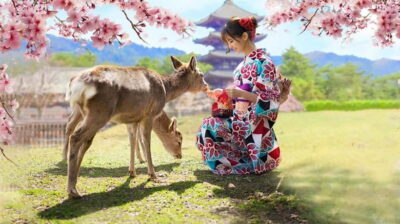
Nara, Fushimi Inari Taisha, Arashiyama Bus Tour
Read our review →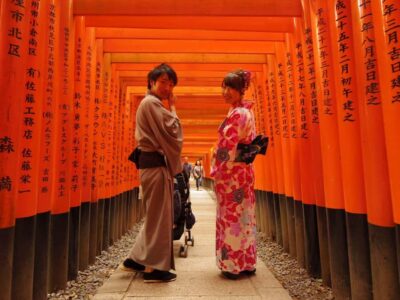
Arashiyama, Nara & Fushimi Inari Shrine w/Lunch
Read our review →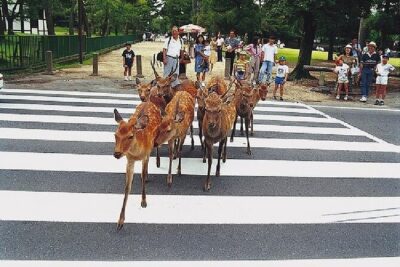
Full Day Guided Tour to Kyoto and Nara from Osaka by Van
Read our review →
Browse the lists this tour appears in