
Reviewed · GION DISTRICT TOURS
Kyoto: Meet the Geisha Maiko with Gion Walking Tour
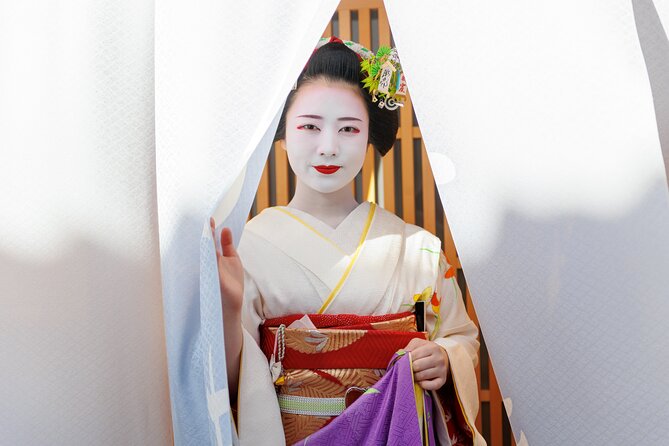
The rarest part of this Kyoto tour happens indoors: you enter a private ochaya, meet a working maiko and retired geiko, watch a classical dance, and ask questions through your guide. That is a far more respectful way to learn about geisha culture than chasing a hurried figure down a Gion alley.
I like the walk through Gion Shirakawa, Tatsumi Bridge, Hanamikoji Street, and nearby temple grounds because it gives the performance a setting and context. I also like the live translation and question period, which turns a pretty dance into a real conversation about training, work, and daily life.
The main caution is pace. The walking portion can feel repetitive, and some guests have found the translation difficult to hear. At roughly $109.43, this is a culture tour built around access and conversation, not a cheap sightseeing stroll or a meal with entertainment.
Key points to know before booking
- A private ochaya visit: Enter a traditional entertainment house that is normally closed to casual drop-in visitors.
- Two generations of geisha culture: Meet a maiko in training and a retired geiko, then compare their experiences.
- A real performance: Watch a classical Japanese dance, with shamisen music sometimes provided by the house mother.
- A guide-led Gion walk: See Gion Shirakawa, Tatsumi Bridge, Hanamikoji Street, Tatsumi Daimyojin Shrine, and temple grounds.
- Questions are part of the program: Your guide translates the conversation, so you can ask about customs and the geisha way of life.
- Dress and access matter: Wear socks, comfortable shoes, and clothing suitable for stairs to the second-floor performance room.
Why the ochaya visit is the heart of the tour
Kyoto’s geisha districts are easy to photograph from the outside. The wooden facades, lanterns, narrow lanes, and carefully dressed performers make Gion feel like a film set. But the street view tells only a small part of the story.
The private ochaya visit gives you access to the social world behind those facades. An ochaya is not simply a cafe, a public tea room, or a place where you stop for a cup of green tea. It is a traditional entertainment house where geiko and maiko perform for invited clients. The distinction matters, since the value of this tour rests largely on entering a place that is not normally open to casual sightseeing.
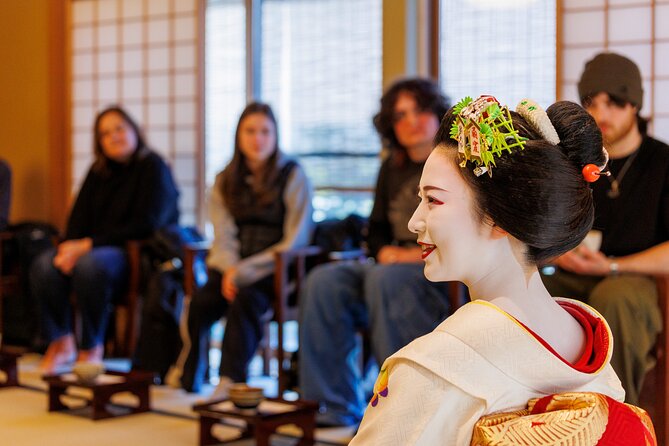
Inside, you meet a maiko, an apprentice who is still training, and a retired geiko, a fully trained performer who has left that professional life. The pairing gives you two viewpoints rather than a single staged introduction. You can hear about the tradition from someone still practicing it and someone who has already completed that chapter.
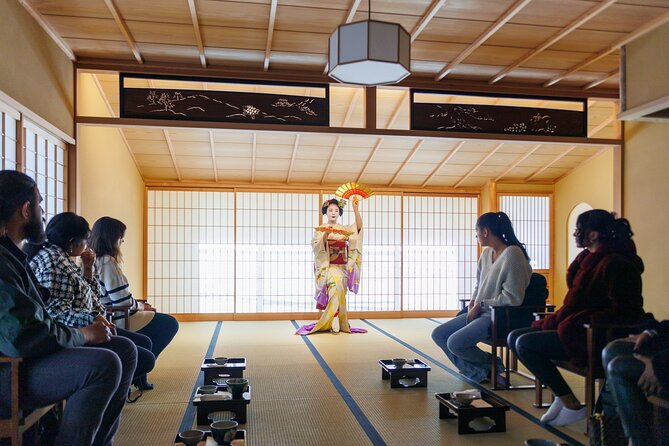
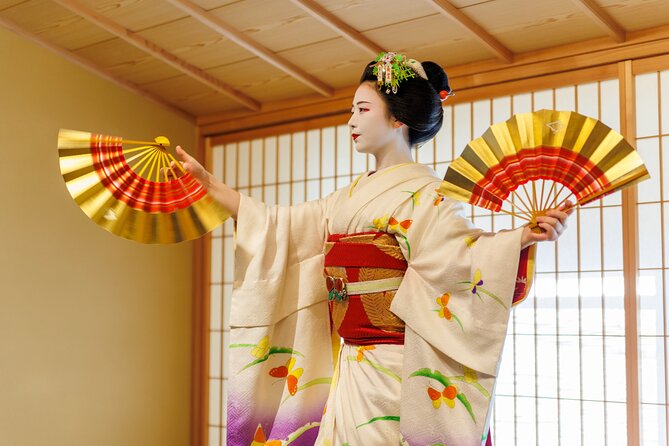
The dance is the visual centerpiece. It is graceful and controlled, but it is not a pop show designed to keep a crowd shouting. Expect a formal performance rooted in classical Japanese arts. In some sessions, the house mother, or okaasan, accompanies the maiko on shamisen, the traditional three-stringed instrument.
After the performance, the question period makes the visit more personal. Your guide translates, allowing you to ask about the work, clothing, training, customs, and the modern life of a maiko or geiko. That exchange is where the tour earns much of its price.
More ways to walk Gion:
- Kyoto Geisha Walking Tour: Gion District & Hidden Gems
★ 4.7 · 3,273 reviews - Kyoto: Gion Magical Night Walking Tour with Geisha Trivia
★ 4.9 · 2,393 reviews - Kyoto: Gion Geisha District Walking Tour – Stories of Geisha
★ 4.7 · 2,187 reviews
Starting with Gion Shirakawa and Tatsumi Bridge
The experience begins at Miyagawasuji, then moves through Gion. The walking portion lasts about an hour and a half before the performance and conversation at the private house, though the exact timing can stretch beyond three hours.
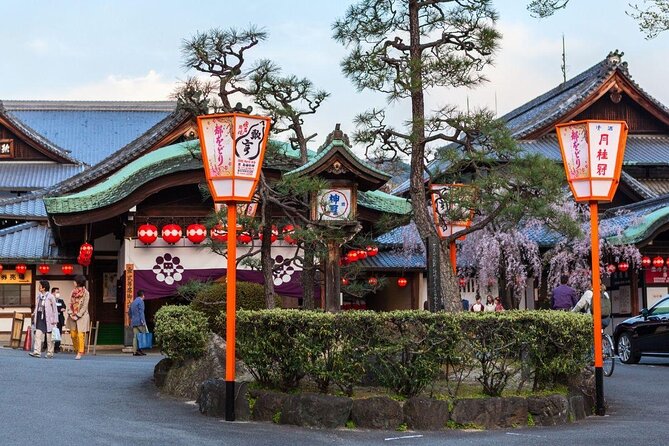
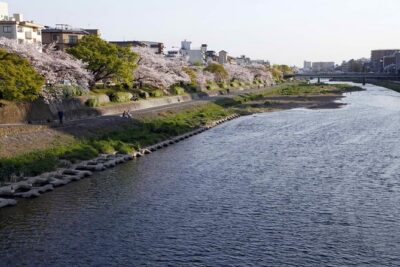
Gion Shirakawa is one of the prettiest parts of the district. The canal, willow trees, wooden buildings, and narrow lanes create the classic Kyoto picture. Your guide explains who geiko and maiko are, how they live and work, and why the district developed around traditional entertainment.
This is also where a guide is useful. On your own, you may notice costumes and architecture without understanding the rules behind them. A good guide helps separate a geiko from a maiko, explains the apprentice system, and places the neighborhood’s customs in context.
At Tatsumi Daimyojin Shrine, the group pauses briefly. The small Shinto shrine is associated with protection, good fortune, and safety, especially for travelers and warriors. It is not a major temple visit, and the stop lasts only about five minutes, but it adds a local religious detail to the walk.
Tatsumi Bridge is another quick pause. The small traditional bridge sits beside wooden machiya houses and narrow lanes. It is a fine spot for orientation and photos, though the area is compact. Do not expect a long attraction visit here. The value comes from seeing how the shrine, bridge, canal, and old houses fit together.
Please keep your manners in mind. Gion is a working neighborhood, not an outdoor theater. Do not block doorways, enter private lanes, or photograph people without permission. The tour’s structure helps you observe the area without turning the performers into street targets.
Hanamikoji Street, Gion Corner, and the temple grounds
Hanamikoji Street is the district’s best-known thoroughfare, lined with wooden machiya buildings, restaurants, tea houses, and shops. It is attractive, but it can also feel more commercial and crowded than the quieter lanes around Shirakawa.
Your guide points out the role of the street and the buildings connected with geisha entertainment. You may see the exteriors of houses where performers meet clients, but this is not a chance to enter them. The private ochaya visit later is the important distinction.
The route also passes near Gion Corner, a venue known for presenting several forms of traditional Japanese performance. The supplied itinerary describes it as a point of interest rather than an included show, so you should not expect a separate Gion Corner performance as part of this tour.
The walk includes the precinct of Kyoto’s oldest Zen Buddhist temple, located beside Gion. You do not enter the temple buildings. Instead, you pass through the grounds, as local people do, and get a quiet contrast to the geisha district.
This part of the route is best for people who want cultural explanation rather than a long list of major monuments. If your main goal is temple architecture, the walk may feel light. If you want to understand how old religious spaces and entertainment neighborhoods sit side by side, it adds useful background.
Several people have found the walking portion less memorable than the meeting with the maiko. I think that is a fair expectation to set. The walk is an introduction, not a full Kyoto history tour. Some streets may feel like a loop, with repeated explanations about tea houses and geisha life. The conversation inside the ochaya is the part that makes this booking unusual.
Meeting the maiko and retired geiko in Miyagawasuji
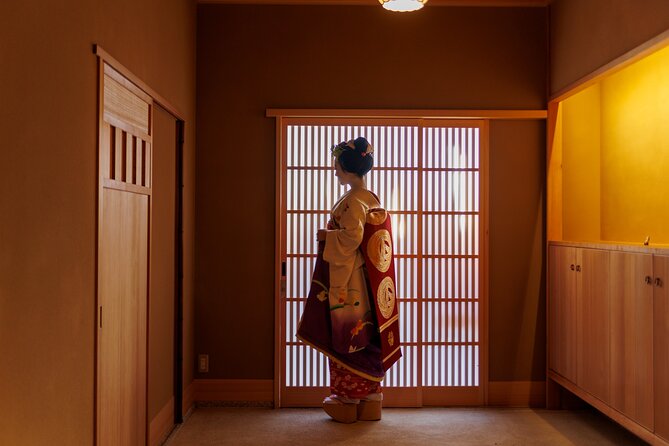
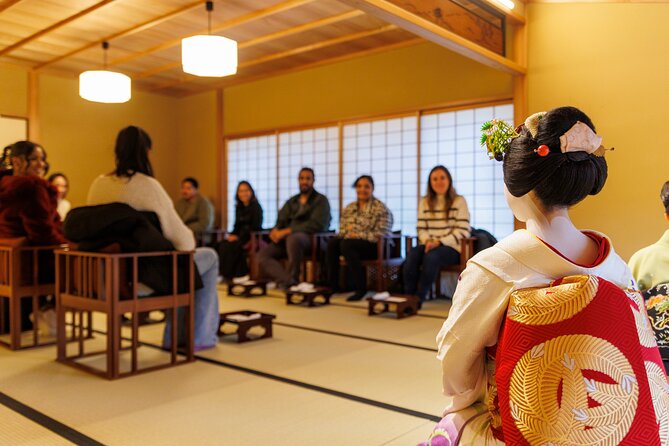
The group ends at a special private house in Miyagawasuji. The performance takes place upstairs on the second floor, and you must use stairs. The room is described as intimate, with some sessions involving only around ten people, although the tour can accept up to 30 participants.
That difference matters. A small group should give you a better chance to hear the discussion and ask a question. A full group of 30 could feel less personal, especially if the guide or performers speak softly. The operator has acknowledged that audibility can sometimes be an issue, so sit near the front if you can and ask the guide to repeat anything you miss.
The maiko’s dance is followed by interaction with the performers. This is not the same as spotting a geisha on the street. You have time to sit, listen, and ask questions in an appropriate setting. Your guide acts as interpreter, which is essential for a meaningful exchange.
The personal stories are the strongest reason to choose this experience. Geisha culture is often reduced to costumes, makeup, and dance. The conversation gives you a clearer sense of the discipline behind the appearance and the difference between a maiko and a geiko.
Names of guides praised for their warmth, explanations, and translation include Haruki, Takuma, Tamuka, Miko, Ayako, Mika, Machiko, Ellie, Yoko, Naomi, and Chiko. Guide quality can vary by departure, but the tour clearly depends on having a guide who can explain Japanese customs in English and carry questions back and forth.
One practical point: photography and video are allowed only during the performance and designated photo session. If you want to post pictures on social media, ask the maiko directly for permission first. That rule is not a minor formality. It is part of showing respect to people who are working and sharing a private cultural space.
More geisha and maiko evenings in Kyoto:
- Best of Kyoto: Gion, Geisha, Pagodas & Cobblestones
★ 4.9 · 2,058 reviews - Night Walk in Gion: Kyoto’s Geisha District
★ 4.5 · 2,003 reviews - Kyoto Gion Geisha District Walking Tour – The Stories of Geisha
★ 5.0 · 1,441 reviews - Kyoto Gion: 2-Hour Geisha Culture & History Walking Tour
★ 5.0 · 1,186 reviews
How much value do you get for $109.43?
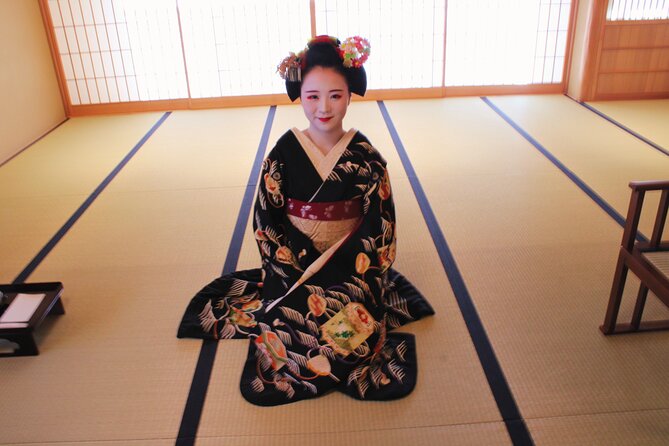
At about $109.43 per person, this is expensive for a three-hour walking tour. You can see Gion streets without paying an admission fee, and many Kyoto cultural performances cost less when purchased on their own.
The price makes more sense if you think of the booking as access to the private house, not as a standard neighborhood walk. The performance, live translation, Q&A, and chance to meet both a maiko and retired geiko are the features you cannot easily arrange independently.
It is less convincing for anyone mainly seeking food, drinks, or a long sightseeing route. Extra food and drink are not included, and the tour does not provide hotel pickup, hotel drop-off, or transportation to the meeting point. You pay for the setting, the performers, the guide, and the cultural exchange.
I would also compare the group size and start time before booking. A smaller group will improve the question period. A larger group can make the room less intimate and make soft translation harder to follow.
The 98 percent recommendation rate and 4.9 rating indicate that the experience works very well for its intended audience, but they do not erase the real weaknesses. Some people have found the walk too long, the meeting point hard to identify, or the English translation too quiet. The tour company has also received criticism about the tour taking longer than expected.
Practical details that can make the evening smoother
Wear comfortable walking shoes. The route includes several streets and district lanes, and the tour runs in rain or shine.
Wear clean socks. You must have socks at the performance venue, and bare feet are not acceptable. On rainy days, do not arrive at the house with wet clothing or wet socks. Use an umbrella during the walk and dry yourself before entering.
The meeting point is in Miyagawasuji, in Kyoto’s Higashiyama Ward. It is near public transportation, but it is not described as a large landmark. Give yourself extra time to locate it, especially if you are unfamiliar with Kyoto’s narrow streets.
The activity is not suitable for children under 10. You also need moderate physical fitness, since the route involves walking and the performance room is upstairs.
Free cancellation is available if you cancel at least 24 hours before the scheduled start time. Cancellations or changes made later are not accepted for a refund. The operator does not cover incidental hotel or bullet train costs if the tour is canceled for organizer-related reasons.
Because the tour may run longer than planned, avoid booking a tight dinner reservation immediately afterward. A little breathing room will make the evening more pleasant.
Who will enjoy this Kyoto experience most?
I would choose this tour if you want a respectful introduction to geisha culture and prefer meeting performers in a proper setting rather than photographing them on the street. It suits first-time Kyoto visitors who want a cultural activity with explanation, translation, and a live performance.
It is also a good choice if you have already visited Higashiyama and want an evening activity nearby. The route works well after sightseeing in that part of town, provided you leave enough time to reach the meeting point.
You may want another option if your priority is food, drinks, temple interiors, or a fast-paced tour of famous sights. The walking portion is not broad, and the performance will not appeal to everyone. You also need patience for a formal presentation and a question period that may repeat some information from the walk.
Families with older children can enjoy it, but the under-10 rule is firm. Anyone with difficulty walking or using stairs should consider the second-floor venue before booking.
Should you book the Gion maiko tour?
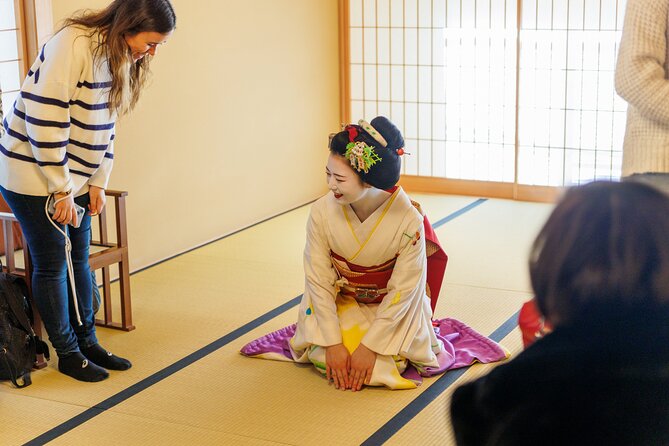
Book it if the chance to enter a private ochaya and speak with a maiko and retired geiko feels worth more to you than a conventional sightseeing tour. The dance, shamisen music, translation, and Q&A create a rare look at a living Kyoto tradition.
Skip it if you want a short stroll, a meal, or guaranteed quiet translation in a very small group. The walking route can be repetitive, the meeting point takes care to find, and $109.43 is a serious price for three hours.
My advice is simple: choose this for access and conversation, not for the street walk alone. Arrive in comfortable shoes and socks, keep your schedule open, respect the photography rules, and sit close enough to hear. Done on those terms, it can become one of the most distinctive cultural encounters in Kyoto.
FAQ
How long does the Kyoto geisha and Gion walking tour last?
The tour lasts about three hours, though it may run longer on some days.
What places are included in the walking portion?
The route includes Gion Shirakawa, Tatsumi Daimyojin Shrine, Tatsumi Bridge, Hanamikoji Street, the area near Gion Corner, and the grounds of a nearby Zen Buddhist temple.
Do I enter a private ochaya?
Yes. The final portion takes place inside a private ochaya, described as a traditional entertainment house that is normally not open to casual visitors.
Who will I meet at the private house?
You meet a maiko and a retired geiko. The visit includes a performance and time for questions.
Is the performance translated into English?
Your tour guide translates the conversation so you can understand the maiko and retired geiko and ask questions.
Can I take photographs or record video?
Photography and video are allowed only during the performance and photo session. Ask the maiko directly before posting any pictures on social media.
Do I need to wear socks?
Yes. Socks are required at the performance venue. On rainy days, wet socks and wet clothing are not allowed inside.
Is the tour suitable for children?
Children under 10 are not permitted. The tour also requires moderate physical fitness and includes stairs to the second-floor performance room.
What happens if I need to cancel?
You can receive a full refund if you cancel at least 24 hours before the local start time. Cancellations or changes made less than 24 hours before the start are not refundable.
More Walking Tours in Kyoto
- Nishiki Market Brunch Walking Tour (7 Tastings + Brunch)
★ 5.0 · 1,355 reviews - Kyoto Arashiyama Walking Tour: Bamboo, Monkeys, Gardens & Secrets
★ 5.0 · 1,216 reviews - Kyoto: Izakaya Bars Guided Walking Tour
★ 4.9 · 815 reviews - Kyoto Gion Night Walk & Geisha District Guided Tour
★ 5.0 · 786 reviews
Newest Kyoto experiences on the site
- Treasures of Kyoto: Gion & historical Walking Tour★ 5.0 · 6 reviews
- Whisk Your Own Matcha: A Zen Matcha Experience at Temple★ 3.6 · 7 reviews
- Kyoto tea town for matcha lovers★ 5.0 · 16 reviews
- Uji: Private immersion into Kyoto’s tea and reglious culture★ 5.0 · 17 reviews
- Kyoto Matcha Green Tea Tour★ 4.5 · 23 reviews
- Uji and Wazuka Matcha Farm Half Day Private Guided Tour★ 5.0 · 21 reviews
- Utilising upcycled Matcha! Creating matcha incense (Uji, Kyoto)★ 5.0 · 6 reviews
- Sacred Temple Yoga Experience in Japan★ 5.0 · 3 reviews
Gion District Tours, compared.
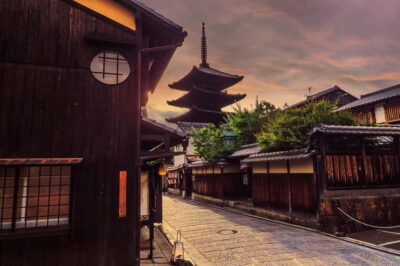
Kyoto Geisha Walking Tour: Gion District & Hidden Gems
Read our review →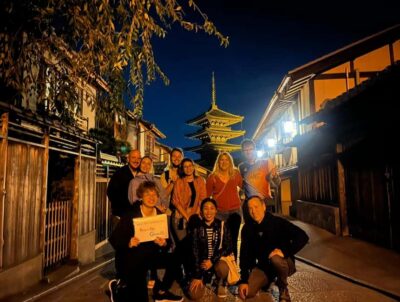
Gion Magical Night Walking Tour with Geisha Trivia
Read our review →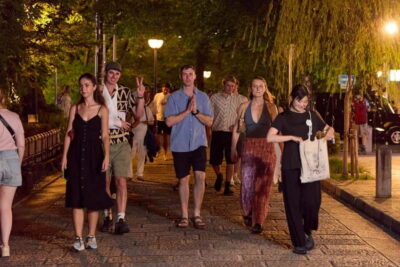
Gion Geisha District Walking Tour – Stories of Geisha
Read our review →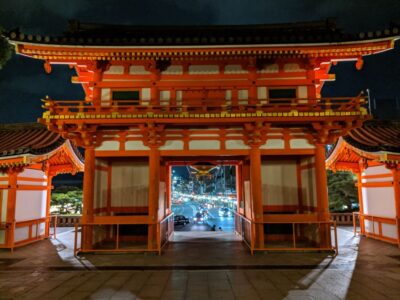
Best of Kyoto: Gion, Geisha, Pagodas & Cobblestones
Read our review →
Kyoto Night Foodie Tour in Gion (9+ dishes + 6 Sake tastings)
Read our review →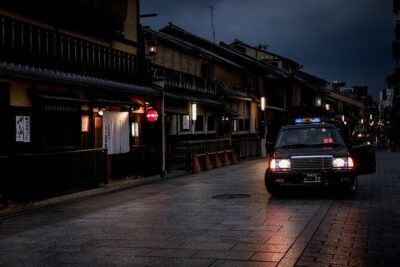
Kyoto Gion Geisha District Walking Tour – The Stories of Geisha
Read our review →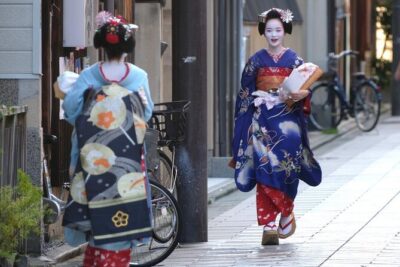
Kyoto Gion: 2-Hour Geisha Culture & History Walking Tour
Read our review →Browse the lists this tour appears in