
Reviewed · GION DISTRICT TOURS
Kyoto: Meet the Geisha Maiko with Gion Walking Tour
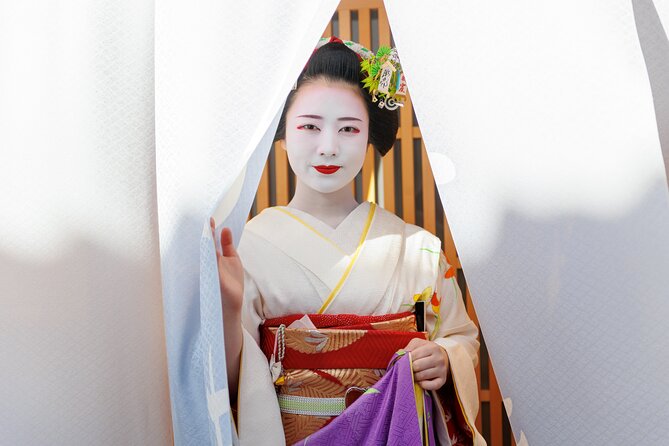
Kyoto’s most special cultural encounters often happen behind closed doors, and this tour takes you into a private ochaya, or traditional teahouse, in Miyagawasuji. You’ll watch a maiko perform one or two dances, meet a former geiko, and ask direct questions about training, work, and daily life.
I like the thoughtful Gion walk before the visit, especially the stops along the Shirakawa Canal and Hanamikoji Street. I also like the unusually personal Q&A, which turns a beautiful performance into a real cultural exchange. Guides such as Mika, Tom, Naomi, Takuma, and Eric have helped make the history and translation clear for English speakers.
The main thing to consider is timing. The dance itself may last only a few minutes, while the rest of the roughly 90-minute teahouse visit centers on conversation and questions. The complete outing can run longer than expected, and the private venue is upstairs with no elevator.
Key points to know before booking
- A private ochaya visit: Enter a venue that is normally difficult for independent visitors to access.
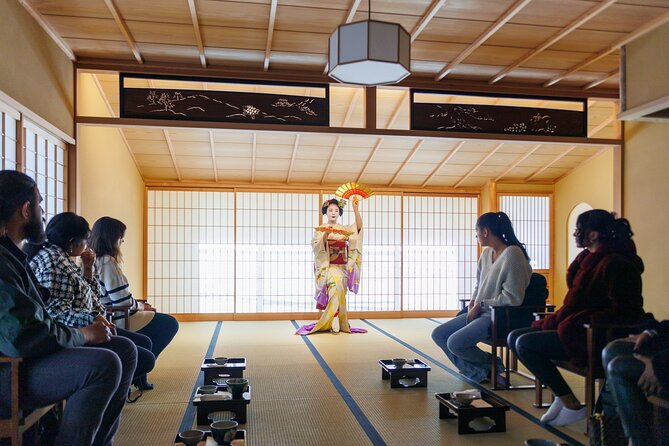
- A maiko performance: See one or two traditional dances, accompanied by the quiet formality of the setting.
- Direct conversation: Ask a maiko and former geiko about training, customs, and life in Kyoto’s flower districts.
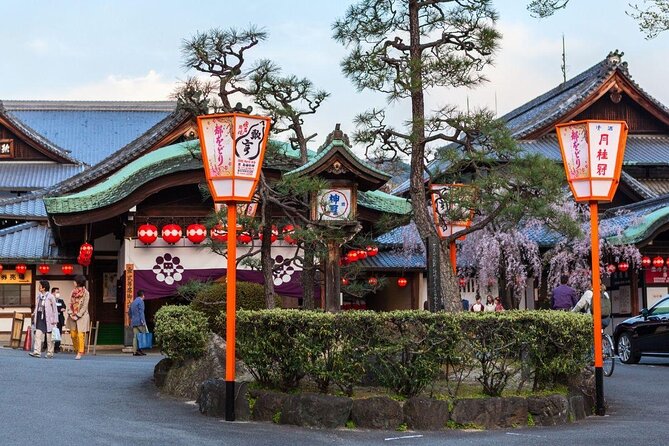
- A 70 to 80-minute Gion walk: Visit the Shirakawa Canal, Tatsumi-jinja Shrine, Hanamikoji Street, Gion Corner, and the area around Kenninji Temple.
- Photos with the maiko: Photography is allowed during the performance and designated photo session, with permission needed before posting images online.
- Useful practical limits: Wear socks, expect stairs, and note that the activity is not suitable for children under 10 or people using wheelchairs.
Why this Gion experience feels different
Many Kyoto visitors see maiko hurrying through Gion and catch only a glimpse of colorful kimono, elaborate hair, and white makeup. This experience gives you a setting where you can slow down and learn what you are seeing.
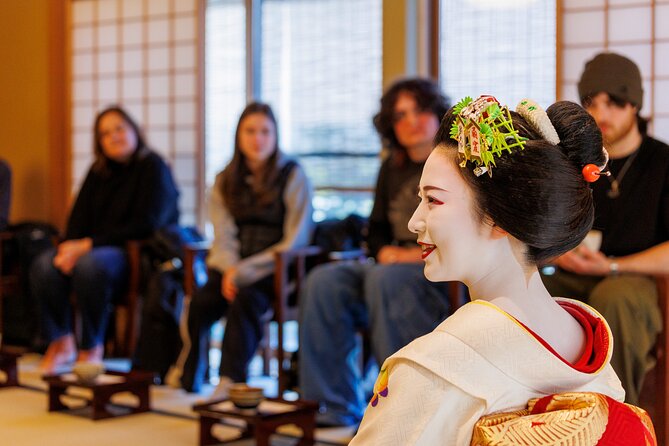
The visit begins with a walk through Gion, then moves into a private residence and performance space. Inside, a maiko performs one or two dances, followed by time with the maiko and a former geiko or teahouse owner. Your guide translates questions and explains customs, so you are not left guessing about the details.
That combination matters. A short dance can be lovely, but without context it may pass quickly. Here, you learn about the discipline behind the performance and the difference between a maiko, an apprentice, and a geiko, the Kyoto term for a fully trained geisha.
The tone is intimate rather than theatrical. You are not simply watching a stage show and leaving. You sit close enough to appreciate the costume, controlled movements, and formal gestures, then take part in a conversation. The experience is still carefully arranged, but it gives you a more human view of a demanding traditional art.
More ways to walk Gion:
- Kyoto Geisha Walking Tour: Gion District & Hidden Gems
★ 4.7 · 3,273 reviews - Kyoto: Gion Magical Night Walking Tour with Geisha Trivia
★ 4.9 · 2,393 reviews - Kyoto: Gion Geisha District Walking Tour – Stories of Geisha
★ 4.7 · 2,187 reviews
Starting beside the Kamo River
You can begin at the Izumo-no-Okuni statue near Gion-Shijo, or choose the kimono rental option at the Wargo Kyoto Kimono Rental Gion-Shijo store. The meeting point depends on the option you book.
If you rent a kimono, you change first and then walk about three minutes to the Izumo-no-Okuni statue on your own. Your guide waits there. Give yourself enough time for the fitting, and remember that the walking tour continues outdoors in normal weather, so choose footwear and clothing you can manage comfortably.
The statue honors Izumo no Okuni, the performer traditionally associated with the origins of kabuki. It is a fitting place to begin an outing centered on Japanese performance, though the main subject here is the geiko and maiko tradition of Kyoto.
The kimono option adds visual fun and makes the photo session more memorable. It also adds another layer of timing, so do not plan a tight train connection at the end of the tour.
Shirakawa Canal and Tatsumi-jinja Shrine
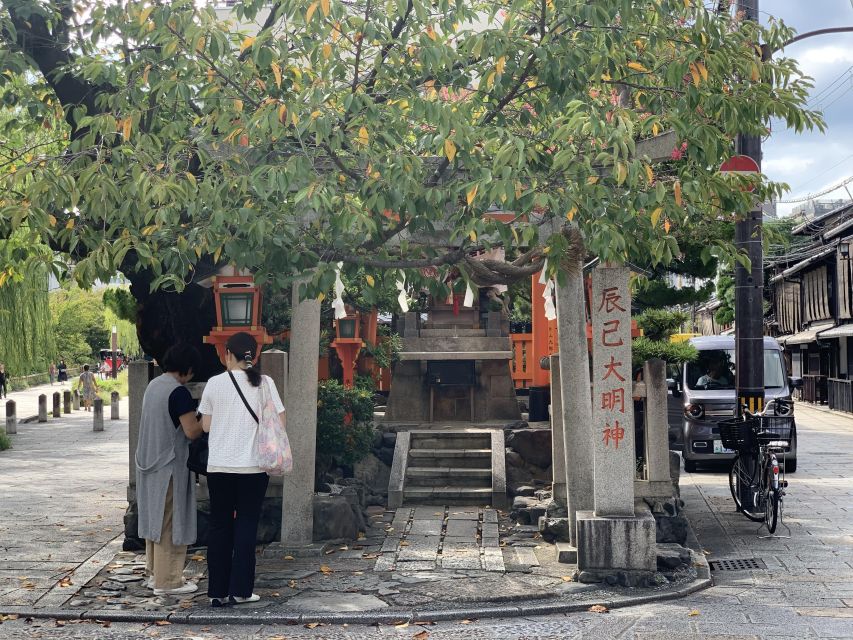
The first walk follows the Shirakawa Canal, one of Gion’s most atmospheric stretches. Water, traditional facades, narrow lanes, and small bridges create the kind of setting that helps you understand why Gion is so closely linked with Kyoto’s performing arts.
Your guide explains how the district works and points out places connected with maiko and geiko life. This is not simply a photo walk. The information helps you read the streets with more care and reminds you that Gion is a working neighborhood, not an open-air theater.
The stop at Tatsumi-jinja Shrine is short, about five minutes. It is a small pause rather than a full shrine visit, so do not expect a long look around the grounds. Its value is in the setting and the explanation, not in the amount of time spent there.
Guides vary by departure. Names associated with this tour include Mika, Naomi, Tom, Takuma, Eric, Chiko, Ayako, Yuko, and Ellie. The strongest part of the guiding is often the translation and explanation at the teahouse, but the walking portion gives you useful background first.
Hanamikoji Street, Gion Corner, and Kenninji
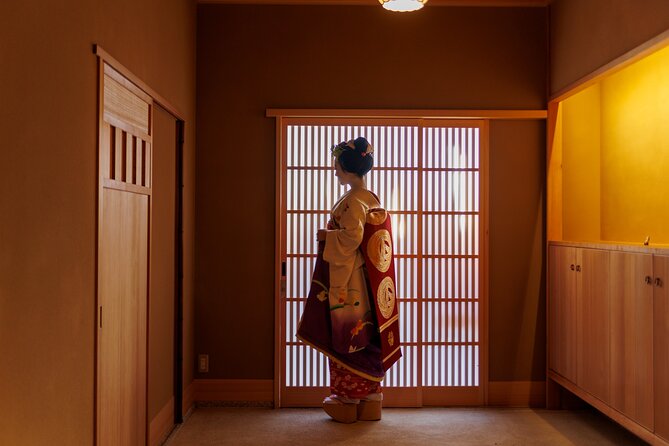
Hanamikoji Street offers another look at Gion’s traditional architecture. The road is well known, and you will likely share it with other people taking photos, but the guide helps you notice the teahouses and closed entrances that are easy to pass without understanding.
Gion Corner appears on the route as a point of local cultural reference. The itinerary does not promise an indoor show there, so treat this as a guided stop rather than a second performance.
The group then reaches the area around Kenninji Temple for a photo stop and about 15 minutes of sightseeing. This is one place where expectations matter. The temple is part of the route, but the tour does not provide an extended temple visit or a full interior tour. If Kenninji is high on your Kyoto list, plan a separate visit.
The walk lasts about 70 to 80 minutes in total. That is enough time to gain a sense of Gion without turning the day into a long city hike. In hot weather, however, the walk can feel tiring, and there may not be a café break built into the schedule. Bring water and allow extra comfort time if you are visiting in summer.
More geisha and maiko evenings in Kyoto:
- Best of Kyoto: Gion, Geisha, Pagodas & Cobblestones
★ 4.9 · 2,058 reviews - Night Walk in Gion: Kyoto’s Geisha District
★ 4.5 · 2,003 reviews - Kyoto Gion Geisha District Walking Tour – The Stories of Geisha
★ 5.0 · 1,441 reviews - Kyoto Gion: 2-Hour Geisha Culture & History Walking Tour
★ 5.0 · 1,186 reviews
Arriving in Miyagawasuji
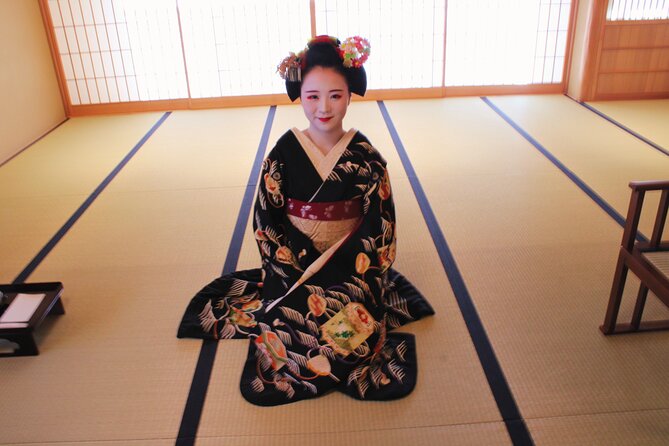
The walking portion ends in Miyagawasuji, another of Kyoto’s traditional flower districts. The area is less familiar to many first-time visitors than central Gion, which makes the change of setting part of the experience.
You then enter the private venue for the main program, which lasts about 90 minutes. The performance space is on the second floor and can be reached only by stairs. This makes the tour unsuitable for wheelchair users and difficult for anyone with significant mobility limits.
You must wear socks inside. On rainy days, the venue does not permit wet clothing or wet socks, so use an umbrella during the walk and arrive dry. This rule is easy to overlook, but it is important because the visit takes place in a traditional private setting.
The small-group format is another advantage. Group size can vary, but the experience is offered in a small group, and some departures have had only around seven people. A smaller room and fewer people make it easier to hear the translator and ask questions.
The maiko performance and the former geiko
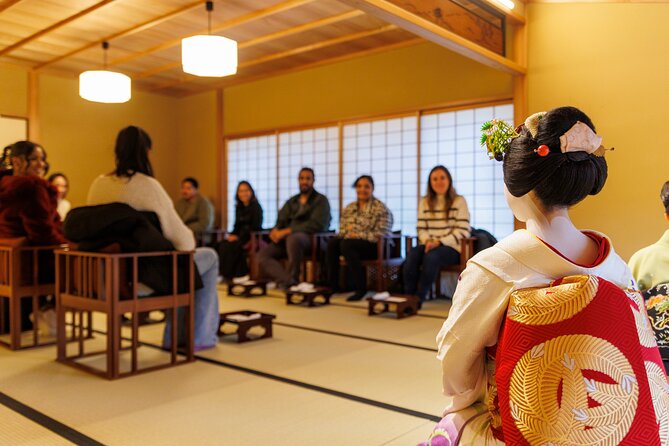
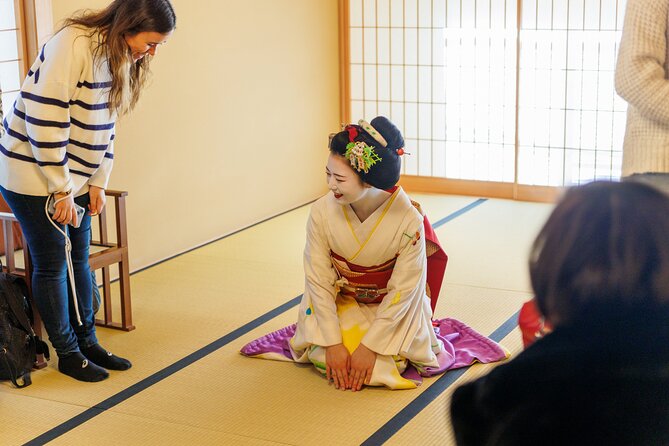
The maiko enters in formal dress, with an elaborate kimono, traditional makeup, and styled hair. The visual impact is immediate, but the performance is more than a costume display. The dance depends on restraint, precise hand movements, posture, and timing.
You will see one or two dances. The exact length can vary, and one dance may be quite short, sometimes less than five minutes. That is worth understanding before you book. If you want a long stage performance, this is not the right format. If you want close access followed by conversation, the short dance works as the opening to a larger encounter.
A former geiko also takes part in the visit. Her presence gives you a second viewpoint, with more years of experience and a different perspective on the profession. The teahouse owner may also speak with the group, adding practical detail about the venue and the customs surrounding it.
The presentation is generally followed by questions rather than a formal lecture. You can ask about training, the meaning of the dances, clothing, work in the flower districts, and the path from maiko to geiko. The guide translates, which is especially important when questions become personal or involve subtle cultural points.
Some sessions may include traditional hospitality such as matcha and Japanese sweets, but the core included elements are the performance, conversation, Q&A, and photo session. Treat the tea service as a possible part of the setting, not the main promise of the activity.
Photos, privacy, and good manners
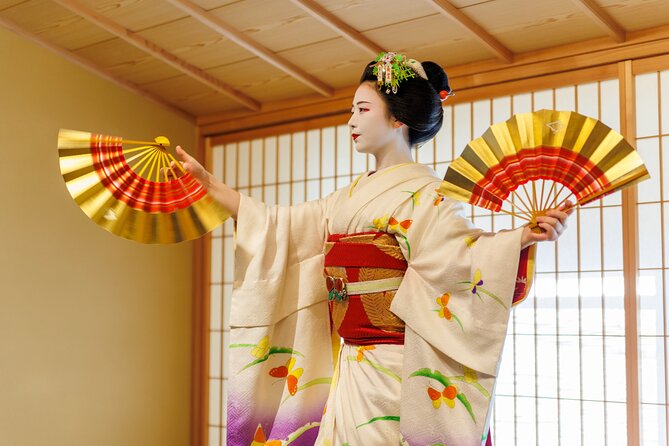
The photo session gives you a chance to take a personal picture with the maiko. Photography and video are allowed during the performance and the designated photo session only. Keep your camera ready, but do not photograph during the rest of the visit unless the guide says it is allowed.
If you want to post photos of the maiko online, you must ask her directly for permission first. Videos cannot be uploaded online. These rules are not minor fine print. They protect the performers and help maintain the trust that makes a private meeting possible.
I would keep your phone away during the conversation and listen closely. The best part of the visit may be an answer that does not translate well into a quick photograph. You will have a better time if you treat the maiko and former geiko as working artists, not as costumed photo props.
What the $106 price is buying
At $106 per person, this is not a cheap Gion walk. You are paying for a local guide, roughly 70 to 80 minutes of walking, access to a private venue, live performance, translation, conversation, Q&A, and a photo opportunity.
The value depends on what you want from Kyoto. If you only need a quick introduction to Gion, you can walk the district on your own for free. If you want a longer dance show, a dedicated theater performance may suit you better.
The price makes more sense for you if private access and direct questions matter. Traditional teahouses are not usually open for casual drop-in visits, and independent visitors may have no practical way to arrange this kind of meeting. The former geiko’s stories and the guide’s translation are also a large part of what you are buying.
The kimono option can make the outing feel more special, especially for photos, but it is not required for the cultural value of the visit. I would choose it if dressing up is part of your Kyoto plans, not simply because you think it is necessary to enjoy the maiko encounter.
Timing, weather, and planning around trains
The advertised duration is three to five hours, depending on the departure and the day. The walking portion and teahouse visit together can take longer than a tightly scheduled afternoon plan allows.
One practical warning is important: do not book this immediately before a bullet train or domestic flight. A longer Q&A, a second dance, or a slower group can extend the finish time. The tour takes place rain or shine, so warm-weather visitors should prepare for outdoor walking and rainy-day visitors should bring an umbrella.
Free cancellation is available up to 24 hours before the activity for a full refund. You can also reserve now and pay later. If the organizer cancels, the activity is refundable, but incidental hotel or bullet train costs are not covered.
The tour is offered in English with a live guide. The quality of the experience depends partly on the guide assigned that day. Guides such as Tom have been especially useful for multilingual translation, while Mika, Naomi, Takuma, Eric, Chiko, Ayako, Yuko, and Ellie have each led departures with a warm and informative style.
Who should book this Kyoto tour?
I would choose this experience if you are genuinely curious about geiko and maiko life, Japanese performance, or the customs of Kyoto’s flower districts. It suits adults and older children, with the minimum age set at 10.
It is also a good fit if you prefer conversation to a large stage show. The strongest part is not the number of dances. It is the chance to hear direct answers, with a guide helping you understand what is said.
I would skip it if you need a fully accessible route, dislike stairs, want a long temple visit, or have a fixed train departure soon afterward. I would also skip it if your main goal is a formal tea ceremony, since that is not the central structure of the outing.
FAQ
How long does the Kyoto maiko and Gion tour last?
The activity is listed as lasting three to five hours. The Gion walk takes about 70 to 80 minutes, and the meeting with the maiko takes about 90 minutes, but the day may run longer than expected.
What is included in the experience?
The price includes an English-speaking local guide, the Gion walking tour, a maiko performance, a performance by a former geiko, conversation, a Q&A session, and a photo session with the maiko.
Where does the tour begin?
There are two possible starting options: the Izumo-no-Okuni statue or the Wargo Kyoto Kimono Rental Gion-Shijo store. The meeting point depends on the option you book.
Can I add kimono rental?
A kimono rental option is available. After changing at the rental store, you must walk about three minutes to the Izumo-no-Okuni statue, where the guide waits.
Do I need to wear socks?
Yes. Socks are required at the performance venue. On rainy days, wet socks and wet clothing are not allowed inside.
Can I take photos and videos?
Photography and video recording are allowed during the performance and the designated photo session. Ask the maiko directly before posting any photos online, and do not upload videos online.
Is the venue accessible by wheelchair?
No. The performance takes place on the second floor of a private house and is accessible only by stairs. The activity is not suitable for wheelchair users or people with mobility impairments.
Is the tour suitable for children?
Children under 10 are not permitted. The tour is best for older children and adults who can manage the walking and stairs.
Can I cancel for a refund?
You can cancel up to 24 hours in advance for a full refund. If the organizer cancels, the activity is refundable, but related hotel or bullet train costs are not covered.
Should you book it?
Book this tour if you want a close, respectful look at Kyoto’s geiko and maiko tradition, not just a quick photograph on a Gion street. The walk gives you context, while the private visit supplies the part you cannot easily arrange yourself: a performance followed by real questions and answers.
At $106, the value is strongest for people who care about access and conversation. Plan for stairs, socks, outdoor walking, changing timing, and a dance that may be brief. If those limits suit you, this is one of the more meaningful ways to connect Gion’s streets with the living artists who give the district its character.
More Walking Tours in Kyoto
- Nishiki Market Brunch Walking Tour (7 Tastings + Brunch)
★ 5.0 · 1,355 reviews - Kyoto Arashiyama Walking Tour: Bamboo, Monkeys, Gardens & Secrets
★ 5.0 · 1,216 reviews - Kyoto: Izakaya Bars Guided Walking Tour
★ 4.9 · 815 reviews - Kyoto Gion Night Walk & Geisha District Guided Tour
★ 5.0 · 786 reviews
Newest Kyoto experiences on the site
- Treasures of Kyoto: Gion & historical Walking Tour★ 5.0 · 6 reviews
- Whisk Your Own Matcha: A Zen Matcha Experience at Temple★ 3.6 · 7 reviews
- Uji: Private immersion into Kyoto’s tea and reglious culture★ 5.0 · 17 reviews
- Kyoto tea town for matcha lovers★ 5.0 · 16 reviews
- Kyoto Matcha Green Tea Tour★ 4.5 · 23 reviews
- Uji and Wazuka Matcha Farm Half Day Private Guided Tour★ 5.0 · 21 reviews
- Utilising upcycled Matcha! Creating matcha incense (Uji, Kyoto)★ 5.0 · 6 reviews
- Sacred Temple Yoga Experience in Japan★ 5.0 · 3 reviews
Gion District Tours, compared.

Kyoto Geisha Walking Tour: Gion District & Hidden Gems
Read our review →
Gion Magical Night Walking Tour with Geisha Trivia
Read our review →
Gion Geisha District Walking Tour – Stories of Geisha
Read our review →
Best of Kyoto: Gion, Geisha, Pagodas & Cobblestones
Read our review →
Kyoto Night Foodie Tour in Gion (9+ dishes + 6 Sake tastings)
Read our review →
Kyoto Gion Geisha District Walking Tour – The Stories of Geisha
Read our review →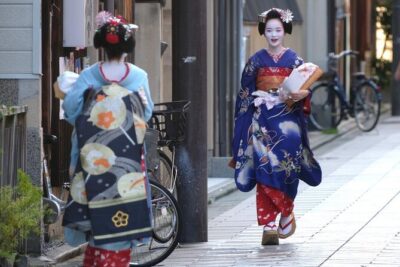
Kyoto Gion: 2-Hour Geisha Culture & History Walking Tour
Read our review →Browse the lists this tour appears in