
Reviewed · KYOTO WALKING TOURS
Kyoto Late Bird Walking Tour
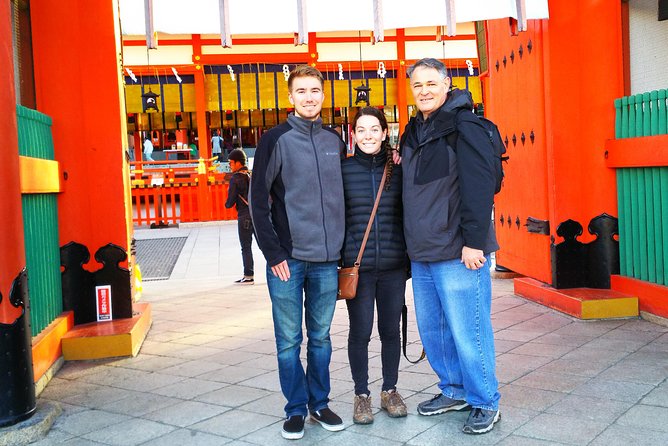
Kyoto’s most famous sights make more sense when you link them with a good local guide. This private afternoon tour takes you from the red torii gates of Fushimi Inari to the old streets of Gion, with Yasaka Pagoda and Yasaka Shrine along the way.
I like two things here. First, you see several major sights in about four hours without joining a large group. Second, the guides add a human touch: Saori is praised for her friendly conversation and strong English, while Mitsue is known for keeping the pace relaxed. The possible drawback is the public transport cost, which is not included and adds ¥850 per person.
Key points
- Private group format: You tour only with your own party, a useful choice for families, couples, or friends.
- Afternoon start: Meet at Kyoto Station at 2 pm, then spend the afternoon and early evening around Kyoto’s southern and eastern sights.
- Four distinct stops: Fushimi Inari, Yasaka Pagoda, Yasaka Shrine, and Gion each offer a different view of Kyoto.
- Public transport is part of the plan: Bring a loaded IC card and budget ¥850 per person for fares.
- Guides shape the experience: Saori, Meg, Mitsue, Key, and Kazu have all led this outing, with an emphasis on conversation and clear explanations.
- Gion sightings are not guaranteed: You may see geisha or maiko, but the district is worth visiting even if you do not.
Why this four-hour Kyoto route works
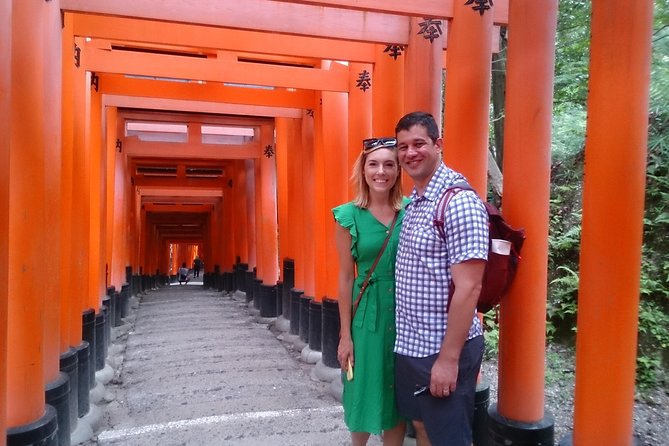
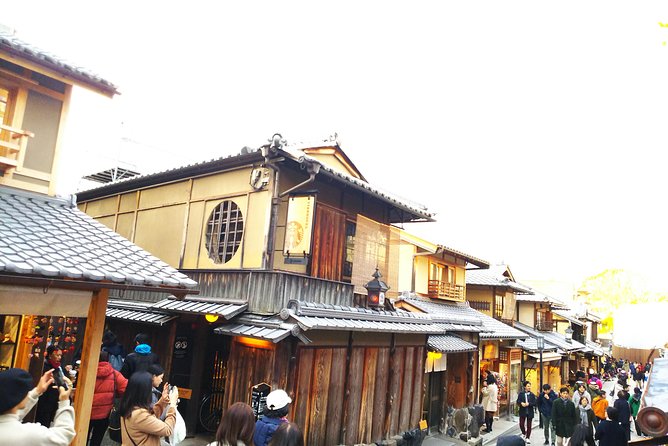
This is a smart route for a first or second visit to Kyoto. It covers a major shrine, a famous pagoda, one of the city’s best-known Shinto sites, and the traditional streets of Gion. You are not simply ticking off distant attractions by car. You use public transport and walk between places, which gives the afternoon a more local rhythm.
The tour begins at 2 pm from Kyoto Station. That timing matters. You avoid an early morning start, yet still reach Gion later in the day, when the old wooden streets can feel especially atmospheric. The exact light and crowds will vary, and the schedule does not promise a sunset, but the afternoon plan gives you a pleasant change from the usual dawn-to-dusk sightseeing routine.
Because this is a private activity, the guide can speak directly with your group. That makes a real difference if you want to ask questions, move at a relaxed pace, or spend a little longer at a place that interests you. The published duration is about four hours, so this is a focused outing rather than a full-day tour.
More walking tours in Kyoto:
- Kyoto Geisha Walking Tour: Gion District & Hidden Gems
★ 4.7 · 3,273 reviews - Kyoto: Gion Magical Night Walking Tour with Geisha Trivia
★ 4.9 · 2,393 reviews - Kyoto: Gion Geisha District Walking Tour – Stories of Geisha
★ 4.7 · 2,187 reviews
Fushimi Inari’s thousand red gates
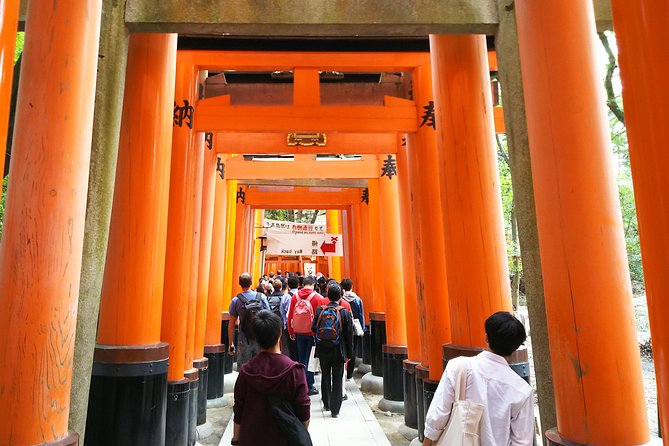
The first stop is Fushimi Inari-taisha, one of Kyoto’s most recognizable sights. Its long corridors of vermilion torii gates climb through the wooded shrine grounds. Worshippers donated the gates to show thanks for good fortune received from the deity enshrined here, giving the site its famous repeated pattern of red gateways.
You have about one hour here. That is enough to see the best-known section and understand why the shrine is so popular, though it is not enough for an extended exploration of every path. Fushimi Inari covers a large area, and your guide will help you make sensible use of the time rather than leaving you to guess where to go.
The shrine is free to enter, which helps the overall value of the tour. The main cost is your time and the train fare needed to reach it. Public transport is built into the route, not an optional extra, so arrive prepared with a loaded IC card. One person who arrived late specifically advised bringing one, after taking several trains with the guide.
That detail is useful. Kyoto’s transport system is manageable, but a ready-to-use IC card saves you from stopping to buy individual tickets. The tour price does not cover the fares, and the stated transport cost is ¥850 per person.
Yasaka Pagoda and Kyoto’s old streets
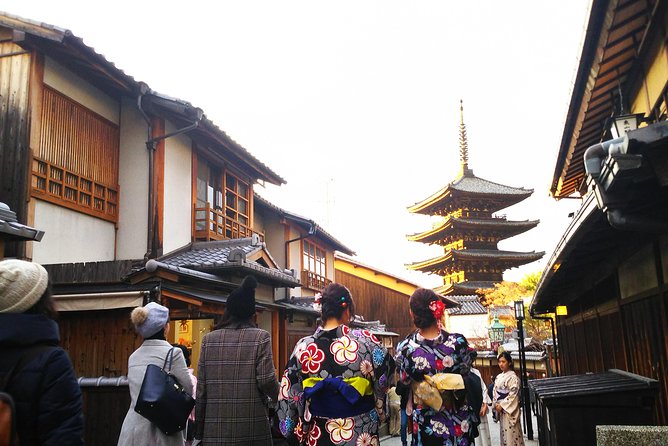
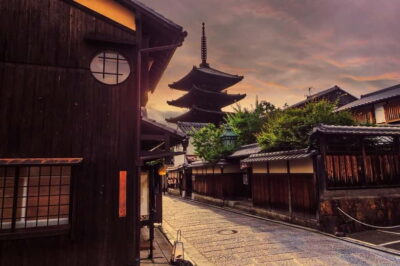
Next comes Yasakanoto, usually called Yasaka Pagoda. The pagoda was originally built in 592 and rebuilt in 1440. From the surrounding streets, it gives you one of the classic Kyoto views: a traditional wooden neighborhood framed by the tall pagoda.
The stop lasts about 30 minutes. That is a good length for photographs and a short explanation of the area. Do not expect a long temple visit here. The attraction is the pagoda’s exterior presence and the old-style streets around it.
This part of the route also shows why a guide can be useful. Kyoto’s eastern districts are full of narrow lanes and similar-looking streets. A guide can point out the best views and keep the route moving without making you study a map at every corner.
The area is popular with photographers, so timing and weather will affect how peaceful it feels. The tour requires good weather, and that makes sense for an itinerary built around walking, outdoor shrine grounds, and street views. If poor weather cancels the experience, you can choose another date or receive a full refund.
Yasaka Shrine and its beauty deity
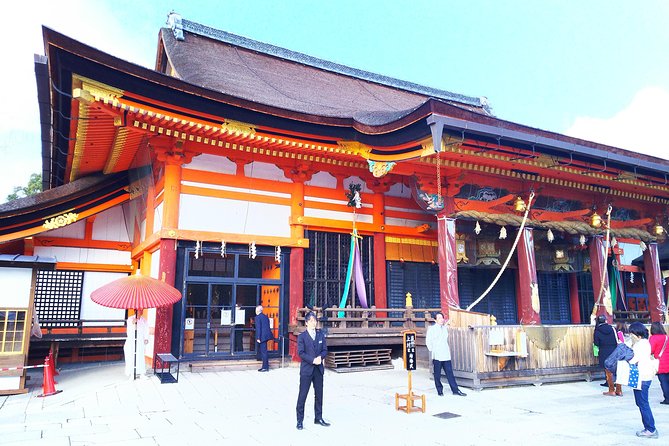
The tour then spends about 20 minutes at Yasaka Shrine, once known as Gion Shrine. The name Gion came from this shrine, which gives the visit a useful connection to the district you will explore later.
The shrine’s main deity is described as powerful, and a beauty deity is also enshrined here. That second detail helps explain why Yasaka Shrine attracts people interested in beauty and personal wishes, not only those visiting for architecture or religious history.
Twenty minutes is brief, but appropriate for a broad half-day route. You can take in the main setting and hear the guide explain what you are seeing before moving on. If you prefer to linger at shrines, this may feel rushed. The trade-off is that you get four different parts of Kyoto in one afternoon.
I like this kind of pacing for a first visit. You gain a useful overview, then can return later to the places that caught your attention. The tour is not designed for slow photography at every stop, nor does it include food or drinks, so plan another meal or snack stop around it.
Same city, a completely different kind of day:
- PERFECT KYOTO 1-Day Bus Tour
★ 5.0 · 13,518 reviews - Kyoto: Fushimi Inari, Kinkakuji, Bamboo Grove 1 Day Bus Tour
★ 4.8 · 4,316 reviews - Kyoto: Tea Ceremony in a Traditional Tea House in Kiyomizu
★ 4.9 · 3,519 reviews - Kyoto: Tea Ceremony Ju-An at Jotokuji Temple
★ 4.9 · 3,207 reviews
Gion after dark begins to approach
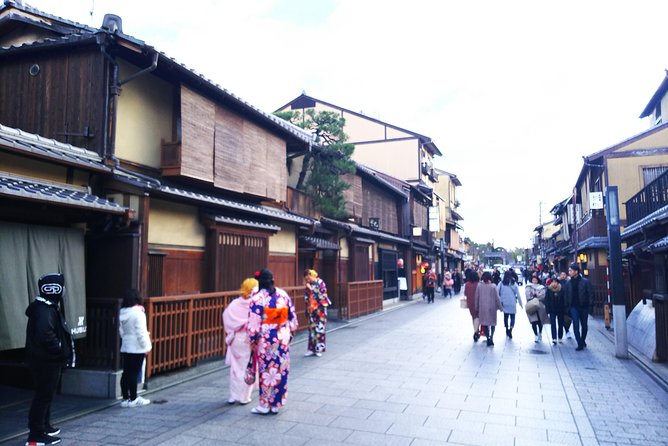
The final major stop is Gion, where about 50 minutes are set aside for a stroll. This district is known for its preserved old-style houses and its connection to geisha culture. You may see geisha or maiko moving through the area, but the encounter is purely a matter of chance. The tour promises the chance to look, not a scheduled meeting.
That distinction matters. Do not book this outing on the assumption that a geisha sighting is guaranteed. Gion remains worthwhile for its traditional streets and atmosphere even when no performers appear. One afternoon group was fortunate enough to see both geisha and trainees, while another guide translated a humorous paper wish at nearby Yasui Konpira-gu during a slightly expanded route.
The supplied schedule lists Gion as the final stop, but that extra shrine appears in one guided outing, not as a guaranteed part of every tour. Treat it as a possible variation rather than part of the promised route.
Your guide can also help you understand the difference between the visual appeal of Gion and the working culture behind it. The old houses are not simply a backdrop for photographs. They are part of a district associated with traditional entertainment, and a respectful, low-key approach is important. The tour gives you a chance to see the area without turning the visit into a rushed photo hunt.
Guides who make the difference
The strongest feature of this experience is the guide rather than any single admission ticket. Several guides are associated with the tour, including Kazu or Kaz, Saori, Key, Mitsue, and Meg. Your booking may assign one of them, but the available information does not promise a particular guide.
Saori is described as enthusiastic, an excellent English and Japanese speaker, and an easy conversationalist. Her time studying in the United States helped her relate naturally to personal stories and questions. That can be especially helpful if you prefer a tour that feels like a conversation rather than a lecture.
Mitsue is associated with a welcoming, relaxed walking pace. That is a good fit if you want time to look around without being hurried from one landmark to the next. Meg is noted for meeting the group at the agreed train-station point and explaining the sights clearly along the way.
Kazu is also praised for waiting patiently when a participant arrived late and for making the train connections workable. Key is described as an exceptional guide. These details suggest that the company’s strongest asset is its personal service, but you should still allow extra time to reach Kyoto Station. A guide may wait, yet late arrival can shorten your own tour.
What the $86.49 price really buys
At $86.49 per person, the tour is not the cheapest way to see Kyoto. The shrines and Gion do not charge an admission fee for this outing, and you still pay your own public transport fare. Food and drinks are also excluded.
The value comes from the private format and the guide’s time. If you are traveling with several people, group discounts may improve the price. You avoid the uncertainty of a large group, and you can ask questions throughout the afternoon. A private guide is also useful if someone in your party has limited mobility or limited eyesight, both of which are listed as supported needs.
The route is not stroller accessible, so families with very young children should take that seriously. Animals and pets are allowed, but the narrow streets, shrine grounds, and public transport still require sensible handling. Most people can participate, yet this is a walking and transit-based outing, not a vehicle tour.
For a solo visitor, the per-person cost may feel high. For a couple, family, or group of friends, the private setting can make the calculation more reasonable. You are paying for orientation, local explanation, and a smooth afternoon route rather than entrance tickets.
Timing, transport, and the practical details
Meet at Kyoto Station at 2 pm. The experience ends back at the meeting point, so allow time after the tour if you have a dinner reservation or evening train. The outing lasts about four hours, though walking and public transport connections can make the afternoon feel full.
Bring a loaded IC card if possible. The public transport fare is listed as ¥850 per person, and that cost is separate from the tour price. Wear shoes suitable for walking, though the supplied information does not state a required dress code or a precise walking distance.
The activity is offered as a mobile-ticket experience, and confirmation is received when you book. It is private, so only your group participates. Group discounts are available, but the exact discount depends on the booking details.
Cancellation is free up to 24 hours before the start time for a full refund. Changes or cancellations made less than 24 hours before the start are not accepted for a refund. Since the tour requires good weather, a provider cancellation for poor conditions results in a different date or a full refund.
Who should book this Kyoto afternoon?
I would choose this tour if you want a private introduction to eastern Kyoto and do not want to plan several train rides and walking links yourself. It suits first-time visitors who want the big sights explained, as well as repeat visitors who prefer a guide to add context to familiar names.
It is also a good match for people who enjoy conversation. The guides are not simply there to point toward a gate or pagoda. The strongest impressions come from the relaxed pace, personal exchanges, and small details such as translating a paper wish or helping you navigate the trains.
You may want another option if you need a completely flexible schedule, want to spend hours at Fushimi Inari, or are mainly interested in food. No meals are included, and the four-hour plan keeps moving. Families with strollers should also look elsewhere because the activity is not stroller accessible.
Should you book it?
Book this tour if you value a private guide, want four major Kyoto stops in one afternoon, and are comfortable using public transport. The route gives you Fushimi Inari’s torii gates, Yasaka Pagoda’s classic view, Yasaka Shrine’s religious setting, and Gion’s traditional streets without the work of arranging each connection yourself.
Skip it if the $86.49 price feels too high for sights that are free to enter, or if you want a slow, unstructured day. Keep your expectations realistic about geisha sightings, bring ¥850 for transport, and load your IC card before meeting at Kyoto Station. For a small group seeking helpful explanations and an easy afternoon plan, the private format makes the cost easier to justify.
FAQ
Where does the Kyoto Late Bird Walking Tour start?
The tour starts at Kyoto Station in Kyoto, Japan, at 2 pm.
How long does the tour last?
The experience lasts approximately four hours and ends back at the meeting point.
Is this a private tour?
Yes. Only your group participates in the activity.
What public transport cost should I expect?
Public transportation costs ¥850 per person and is not included in the tour price. A loaded IC card is recommended.
Are food and drinks included?
No. Food and drinks are not included.
Can I cancel for a full refund?
Yes, if you cancel at least 24 hours before the local start time. Poor weather cancellations by the provider offer a different date or a full refund.
Newest Kyoto experiences on the site
- Treasures of Kyoto: Gion & historical Walking Tour★ 5.0 · 6 reviews
- Whisk Your Own Matcha: A Zen Matcha Experience at Temple★ 3.6 · 7 reviews
- Kyoto tea town for matcha lovers★ 5.0 · 16 reviews
- Uji: Private immersion into Kyoto’s tea and reglious culture★ 5.0 · 17 reviews
- Kyoto Matcha Green Tea Tour★ 4.5 · 23 reviews
- Uji and Wazuka Matcha Farm Half Day Private Guided Tour★ 5.0 · 21 reviews
- Utilising upcycled Matcha! Creating matcha incense (Uji, Kyoto)★ 5.0 · 6 reviews
- Sacred Temple Yoga Experience in Japan★ 5.0 · 3 reviews
Kyoto Walking Tours, compared.
Kyoto Geisha Walking Tour: Gion District & Hidden Gems
Read our review →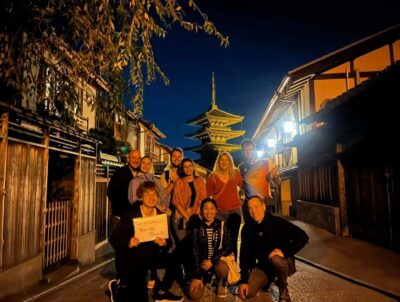
Gion Magical Night Walking Tour with Geisha Trivia
Read our review →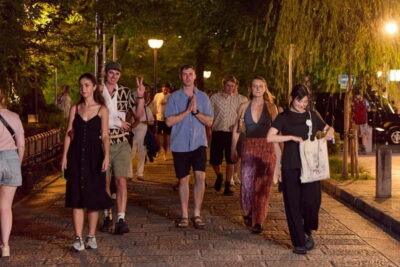
Gion Geisha District Walking Tour – Stories of Geisha
Read our review →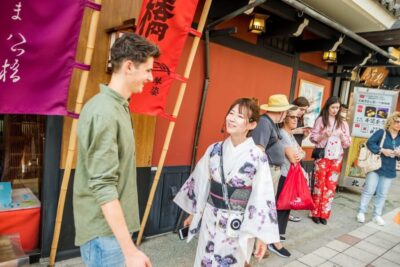
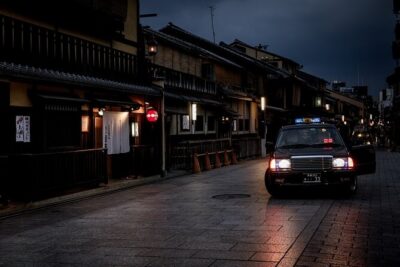
Kyoto Gion Geisha District Walking Tour – The Stories of Geisha
Read our review →
Nishiki Market Brunch Walking Tour (7 Tastings + Brunch)
Read our review →
Kyoto Arashiyama Walking Tour: Bamboo, Monkeys, Gardens & Secrets
Read our review →
Kyoto Gion: 2-Hour Geisha Culture & History Walking Tour
Read our review →Browse the lists this tour appears in