Reviewed · GUIDED
Kyoto 8hr Private Tour with Government-Licensed Guide
Kyoto is easiest to understand when someone helps you connect the quiet temple garden with the busy market street beside it. This private 8-hour walking tour lets you choose four to six places from a long list, then work with a licensed English-speaking guide to build a day around your interests.
I like the freedom to choose between famous sights such as Kiyomizu-dera and Kinkakuji, or quieter corners such as Kennin-ji and Otagi Nenbutsu-ji. I also like the practical help from guides such as Karkoo Tanigawa, Ichiro, and Shu, who have been praised for accommodating groups and handling two full days of sightseeing with care.
The main catch is the word walking. Transportation, admission fees, lunch, and personal costs are extra, and four to six Kyoto sights can cover a lot of ground. You need to choose sensibly, or your day may become a string of hurried stops.
Key points to know before booking
- You choose four to six sights: Build the day around temples, shrines, markets, gardens, or historic neighborhoods that match your interests.
- A licensed English-speaking guide leads the way: Your guide contacts you after booking to help plan the route.
- The day is on foot: Pickup and drop-off take place on foot within a designated area of Kyoto, and transportation costs are separate.
- The famous sights come with extra fees: Kiyomizu-dera, Nijo Castle, Kinkakuji, Ginkakuji, Arashiyama-area temples, and many other sites charge admission.
- The price is $201.46 per person: That can be fair for a private group needing local planning, but admission, meals, and transport raise the final cost.
- Advance planning matters: Reservations should be made at least two weeks ahead, and the tour is often booked about 69 days before the date.
Why a private Kyoto day can work so well
Kyoto has no shortage of famous places. The hard part is choosing a group of them that makes sense in one day.
Fushimi Inari is in the southeast. Arashiyama is on the western edge of the city. Kinkakuji is in the north, while Ginkakuji and Nanzenji sit along the eastern hills. Trying to see all of these in eight hours would leave little time for anything but transport and quick photographs.
That is where a private guide helps. You can explain what matters to you, then settle on four to six places instead of following a fixed route. A first visit might center on Kiyomizu-dera, Gion, Nishiki Market, and Nijo Castle. A garden-focused day could include Ryoan-ji, Kinkakuji, Daitoku-ji, and Myoshinji. A scenic western Kyoto day could focus on Arashiyama, Tenryu-ji, the bamboo groves, and one or two quieter temples.
I would not treat the long list of possible stops as a promise to see them all. It is better understood as a menu. The tour becomes useful when you pick a clear theme and accept that four strong stops are better than ten rushed ones.
A few more Kyoto tours worth putting on the shortlist
- PERFECT KYOTO 1-Day Bus Tour
★ 5.0 · 13,518 reviews - Kyoto: Fushimi Inari, Kinkakuji, Bamboo Grove 1 Day Bus Tour
★ 4.8 · 4,316 reviews - Kyoto: Tea Ceremony in a Traditional Tea House in Kiyomizu
★ 4.9 · 3,519 reviews
What the guide adds to Kyoto’s famous sights
The guides are licensed local English speakers, and the strongest praise centers on their flexibility and personal help. Karkoo Tanigawa is specifically praised for assisting a group of six adults, while Ichiro and Shu are described as professional and willing to go beyond the basic route.
That matters in Kyoto. A temple can look lovely in a photograph yet mean little without context. A guide can explain why a site matters, point out details you might walk past, and help you understand the difference between a Zen temple, a Shinto shrine, an imperial residence, and a preserved entertainment district.
The guide also helps with the day’s rhythm. Kiyomizu-dera and Fushimi Inari can be busy. Gion and Pontocho are best treated as places to stroll slowly rather than boxes to check. Nishiki Market rewards a curious appetite, while a garden such as Ryoan-ji needs quiet time.
Once your reservation is made, the guide contacts you to plan a personalized route. If you already know your four to six choices, send them. If not, explain your interests, such as old architecture, Japanese gardens, religious sites, food, photography, or traditional neighborhoods, and ask for a suggested plan.
Kiyomizu-dera, Gion, and the eastern side of old Kyoto
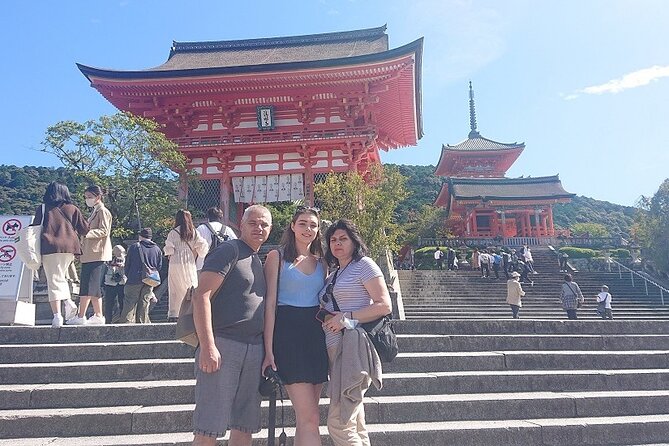
Kiyomizu-dera is one of the clearest choices for a first Kyoto day. The temple is associated with the historic Higashiyama area, and its elevated setting gives the visit a strong sense of place. Admission is not included, and you should allow enough time to walk through the grounds rather than treating it as a quick photo stop.
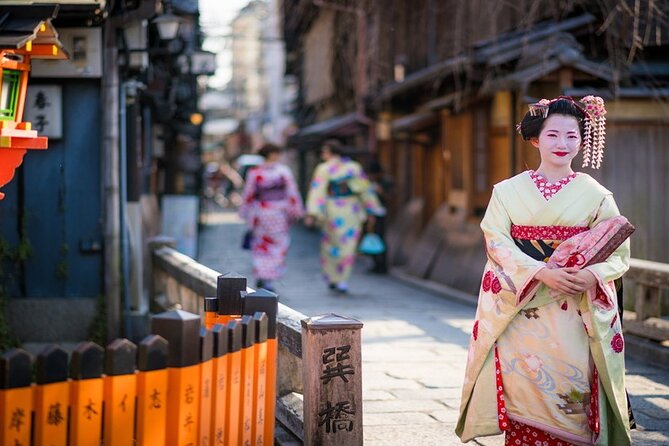
From here, the Higashiyama district offers a more intimate view of old Kyoto. Traditional streets and preserved buildings lead toward Gion, the city’s best-known geisha district. A guide is useful in Gion because the narrow lanes can be confusing, and because respectful behavior matters in a residential area tied to working performers.
Kennin-ji is another eastern Kyoto option. It sits close to the Hanamikoji and Shijo streets, yet its temple grounds offer a calmer walk and two dry gardens. The visit can suit you if you want an important temple without making the whole day about the largest tourist sights.
Sanjusangendo gives the eastern route a different focus. The temple is known for its 1,001 statues of Kannon, the Buddhist figure associated with mercy. Its visit is more about the interior collection than a broad garden, so it pairs well with Kiyomizu-dera or Gion.
Fushimi Inari and the south side of the city
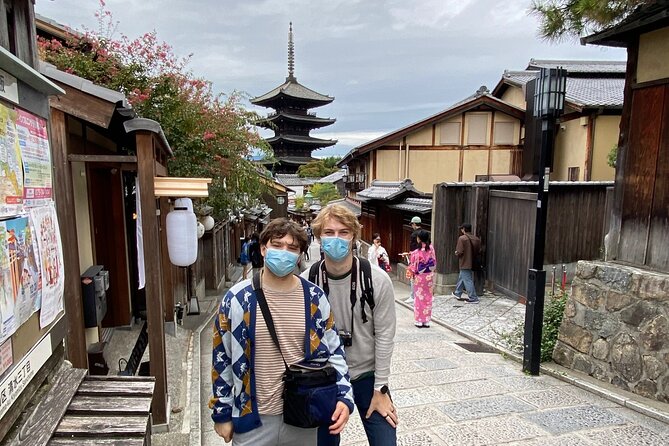
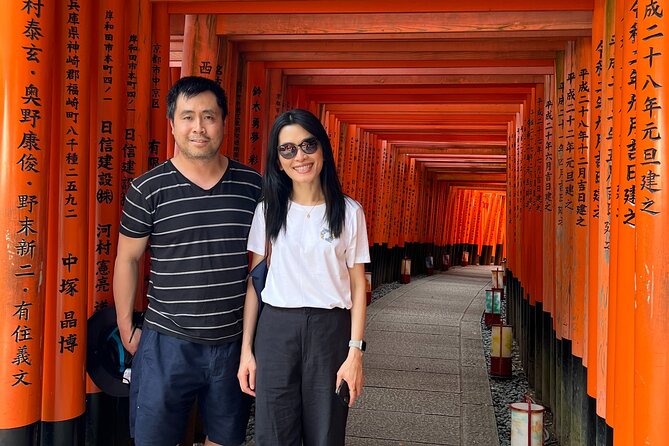
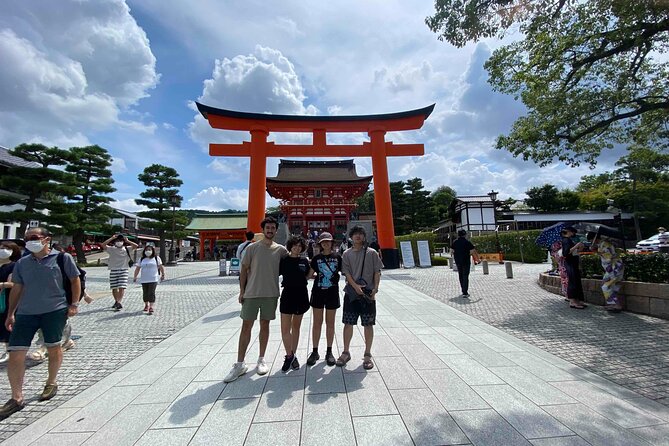
Fushimi Inari-taisha is famous for its long corridors of red torii gates. It is one of Kyoto’s most recognizable sights, and it can make a memorable start to the day.
The shrine grounds stretch up Mount Inari, so the amount of walking depends on how far you go. The supplied plan lists only a short stop for this attraction, but a meaningful visit can take longer if you walk beyond the first gate-lined section. Ask your guide how much time fits your chosen route.
Tofuku-ji is another southeastern choice. It is a large Zen temple especially known for autumn color. Its scale and seasonal appeal make it a good match for visitors who want temple architecture and gardens without staying only in the central districts.
Toji offers a different kind of historic setting. Founded soon after Kyoto became Japan’s capital, the temple is tied to the early Heian period. It can work well with Fushimi Inari or Tofuku-ji because all three lie in the southern part of the city, although your exact route and transport costs need to be planned with the guide.
Same city, a completely different kind of day:
- Kyoto Geisha Walking Tour: Gion District & Hidden Gems
★ 4.7 · 3,273 reviews - Kyoto: Tea Ceremony Ju-An at Jotokuji Temple
★ 4.9 · 3,207 reviews - Kyoto: Gion Magical Night Walking Tour with Geisha Trivia
★ 4.9 · 2,393 reviews - Kyoto: 45-Minute Tea Ceremony Lesson Experience
★ 4.3 · 2,378 reviews
Nijo Castle and the imperial residences
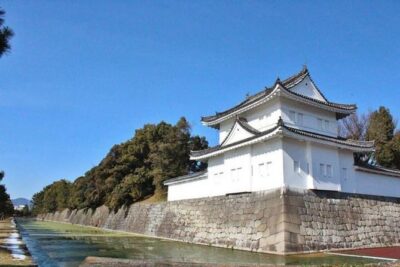
Nijo Castle gives you a change of pace from temple grounds. Built in 1603 as the Kyoto residence of Tokugawa Ieyasu, the castle represents the political power of the Edo period. Admission is extra, and you should confirm how much time your guide recommends for the buildings and grounds.
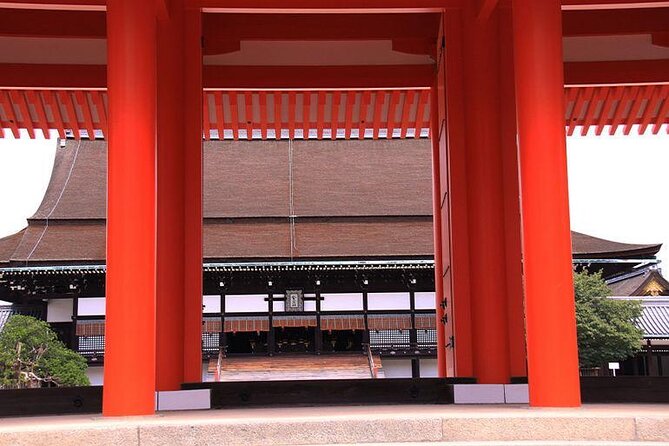
The Kyoto Imperial Palace offers another view of the city’s past. It was the residence of Japan’s Imperial Family until 1868, when the emperor and capital moved to Tokyo. The spacious setting is quite different from the compact lanes of Gion or the crowded approach to Kiyomizu-dera.
Shugakuin Imperial Villa and Katsura Imperial Villa are more specialized choices. Both are linked to imperial design and gardens, but they are not the obvious quick stops for a first-time route. If you choose one, make it a central part of the day rather than adding it to a packed list.
Katsura is known for its architecture and garden design. Shugakuin is spread across upper, middle, and lower villa areas. These choices suit you if Japanese design is your main interest and you are prepared to give up several more famous sites.
The northern temple circuit
Kinkakuji, the Golden Pavilion, is one of Kyoto’s signature sights. The upper two floors are covered in gold leaf, and the building is viewed as part of a garden setting. Admission is extra, and the stop can be fairly brief if you only want the main view.
I would pair Kinkakuji with nearby Ryoan-ji rather than sending it across town to an unrelated district. Ryoan-ji is home to Japan’s best-known rock garden, a restrained place that rewards a slower look. The contrast is useful: Kinkakuji offers visual drama, while Ryoan-ji asks you to pay attention to space, stone, and empty ground.
Ninna-ji is another northern option. Founded in 888, it is the head temple of the Omuro school of Shingon Buddhism and is listed as a UNESCO World Heritage site. Its historic importance and broad grounds make it a worthwhile alternative if you have already seen the city’s most familiar temples.
Daitoku-ji and Myoshinji are large temple complexes with many subtemples. Daitoku-ji is associated with the Rinzai school of Zen, while Myoshinji includes about 50 subtemples in addition to its main buildings. These sites make more sense for someone who wants to explore Kyoto’s religious institutions rather than simply collect famous names.
Arashiyama, bamboo, and the western temples
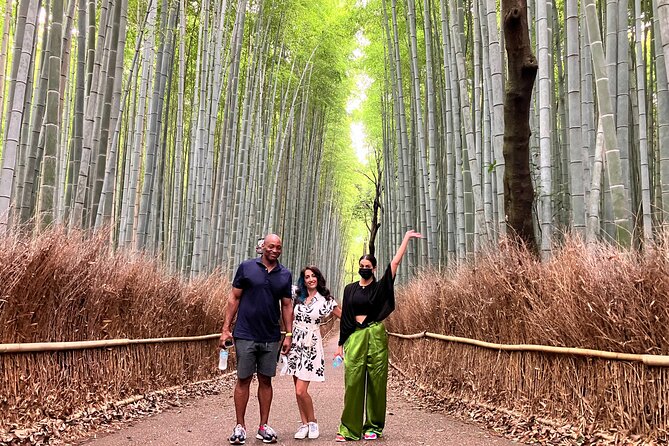
Arashiyama is one of the most appealing choices for a full day, but it is also one of the easiest places to rush. The area has a scenic riverfront, the Togetsukyo Bridge, bamboo paths, and several important temples and gardens.
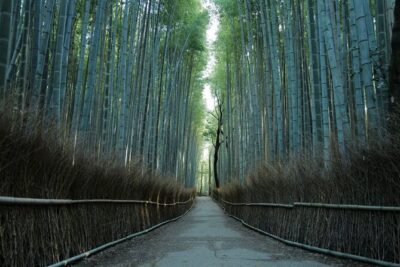
Tenryu-ji is the major temple in the district and a UNESCO World Heritage site. It gives you temple buildings, gardens, and a direct connection to Arashiyama’s cultural importance. The bamboo groves are nearby and offer a short walk, though the paths can feel crowded at popular times.
The Togetsukyo Bridge is Arashiyama’s best-known landmark. It crosses the river and provides a broad view of the surrounding hills. It is a good place to pause, but it should not replace time at Tenryu-ji or one of the smaller temples.
Okochi Sanso Garden sits beyond the bamboo groves. It was the former villa of actor Okochi Denjiro and includes gardens and buildings. Admission is extra, so it is best for you if gardens appeal more than adding another temple.
Jojakko-ji, Nisonin, Gio-ji, Adashino Nenbutsu-ji, and Otagi Nenbutsu-ji offer quieter alternatives within the wider Arashiyama and Saga area. Jojakko-ji and Nisonin are hillside temples with trees, moss, and understated buildings. Gio-ji is known for its moss garden and small thatched structures.
Adashino Nenbutsu-ji is tied to stone memorials for the dead and sits near the preserved Saga-Toriimoto street. Otagi Nenbutsu-ji is famous for its 1,200 stone figures, each with a different expression. These are strong choices if you want more than the standard bridge, temple, and bamboo combination.
Daikaku-ji, once a detached palace for Emperor Saga, adds another historic stop in northern Saga. You can also consider Yoshimine-dera in the western mountains, though that choice may make the day less efficient if you have already selected central Kyoto sights.
Ginkakuji, Nanzenji, and the eastern mountain route
Ginkakuji, the Silver Pavilion, was built as the retirement villa of shogun Ashikaga Yoshimasa. Despite its name, it is not covered in silver. The appeal lies in its Zen setting, gardens, and connection to the eastern hills.
Nanzenji is one of Kyoto’s major Zen temples. Its grounds sit at the base of the Higashiyama mountains and include the striking Nanzenji aqueduct. Eikando, formally Zenrinji, lies north of Nanzenji and is especially known for autumn color and evening illumination.
These three make a natural eastern route, but admission fees apply at the sites that charge them. If you choose Ginkakuji, Nanzenji, and Eikando, you may want to skip Kiyomizu-dera or Gion on the same day unless your guide confirms the timing works.
Nishiki Market, Pontocho, and a taste of city life
Nishiki Market is known as Kyoto’s Kitchen. It runs along a narrow, five-block shopping street lined with more than 100 shops and restaurants. This is the place to add food and local shopping to a temple-heavy day.
You should not expect a full market meal to fit neatly into a short stop. If you want to sample food, browse carefully, or buy gifts, tell the guide in advance. Nishiki can become the most enjoyable part of the day when you give it enough time.
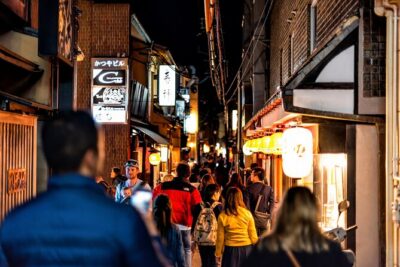
Pontocho is a narrow dining lane between Shijo-dori and Sanjo-dori, near the Kamogawa River. It is most useful as an evening-oriented walking area, though it can also add atmosphere to a central Kyoto route. Restaurants may have their own policies and costs, so lunch or dinner is not part of the tour price.
Price, pace, and what you pay separately
At $201.46 per person, this is not a bargain walking tour for a solo visitor. It can make better financial sense for a private group that wants a guide focused only on its interests, especially when the day would otherwise require separate research and route planning.
The price includes the licensed local English-speaking guide and the custom planning for four to six selected sites. It does not include transportation, entrance fees, lunch, or personal expenses. There is no private vehicle, so you need to budget for trains, buses, taxis, or other local transport as needed.
The value depends on how well you use the private format. Choose nearby sites, prepare a short list of priorities, and be honest about your walking pace. A group of six, like the party helped by Karkoo Tanigawa, may find the personal planning especially useful.
Free cancellation is available up to 24 hours before the start time. Changes made inside that period are not accepted, and the service recommends reserving at least two weeks ahead. The tour is private, only your group participates, and service animals are allowed.
Who should book this Kyoto tour
I would choose this tour if you want a full day shaped around your own interests, need help making sense of Kyoto’s many districts, or are traveling with family or friends who do not want a fixed group schedule.
It is also a good fit if you want a guide for four or five major stops and would rather learn as you walk than read a guidebook while moving between sites. The praise for Karkoo Tanigawa, Ichiro, and Shu suggests that the human side of the experience is a major strength.
I would not choose it if you want a vehicle, dislike walking, or hope to see most of Kyoto’s major sights in one day. Admission and transport costs also make the final spend higher than the advertised tour price.
FAQ
How long is the Kyoto private tour?
The tour lasts approximately eight hours.
How many sites can I choose?
You can customize the day around four to six sites from the available choices.
Is transportation included?
No. Transportation fees are separate, and the tour does not include a private vehicle. Pickup and drop-off take place on foot within the designated Kyoto area.
Are entrance fees included?
No. Entrance fees are generally separate. Guide entry fees are covered only for sights listed in the available selection.
Is the tour private?
Yes. Only your group participates, and multiple tour groups cannot be combined.
How far in advance should I reserve?
You should reserve at least two weeks ahead. The experience is booked about 69 days in advance on average.
Should you book it?
Book this tour if you want Kyoto tailored to you, especially if you can narrow your interests to four or six sensible stops. Ask the guide to build a route that keeps nearby districts together, and arrange your transportation card and local currency before the day begins, as one group did before setting out with Karkoo Tanigawa.
Skip it if you want a low-cost introduction, a private car, or a fixed sightseeing checklist. For everyone else, the strongest reason to book is not the number of places offered. It is the chance to turn Kyoto’s enormous menu of temples, shrines, gardens, markets, and old streets into one manageable day.
Newest Kyoto experiences on the site
- Treasures of Kyoto: Gion & historical Walking Tour★ 5.0 · 6 reviews
- Whisk Your Own Matcha: A Zen Matcha Experience at Temple★ 3.6 · 7 reviews
- Kyoto tea town for matcha lovers★ 5.0 · 16 reviews
- Uji: Private immersion into Kyoto’s tea and reglious culture★ 5.0 · 17 reviews
- Kyoto Matcha Green Tea Tour★ 4.5 · 23 reviews
- Uji and Wazuka Matcha Farm Half Day Private Guided Tour★ 5.0 · 21 reviews
- Utilising upcycled Matcha! Creating matcha incense (Uji, Kyoto)★ 5.0 · 6 reviews
- Uji Tea Ceremony and UNESCO Heritage Walking Tour★ 5.0 · 20 reviews
Guided, compared.
Kyoto Early Morning Tour with English-Speaking Guide
Read our review →
Kyoto 6hr Private Tour with Government-Licensed Guide
Read our review →Early Morning Tour with English-Speaking Guide
Read our review →
Nijo-jo Castle and Ninomaru Palace Guided Tour
Read our review →
Kyoto Gion Night Walk & Geisha District Guided Tour
Read our review →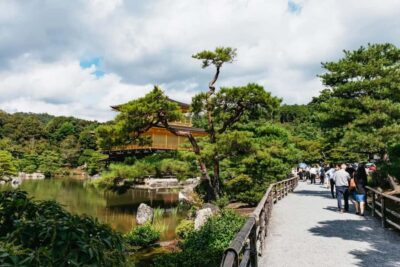
Nijo Castle, Kiyomizu & Fushimi Inari Guided Tour
Read our review →