

Reviewed · KYOTO KIMONO RENTALS
Kyoto 6hr Private Guided Tour & Kimono Experience
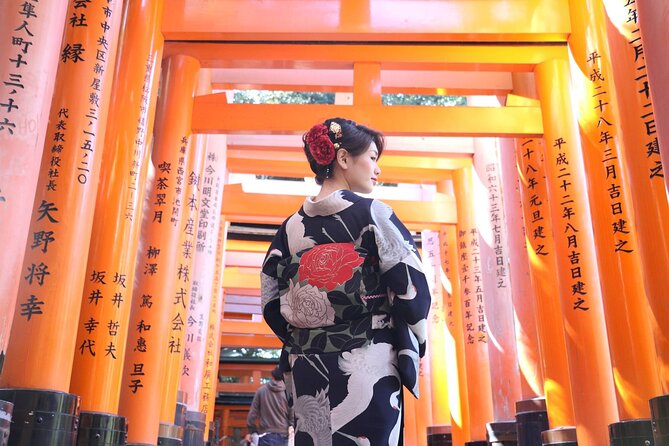
Fushimi Inari is more than a quick photo beneath red torii gates, and this tour is built around that idea. You begin with a standard kimono fitting at Wargo Kyoto Gion, then spend the rest of your roughly six hours with a licensed English-speaking guide and two or three Kyoto sights you choose.
I like the freedom to shape the day around your interests, and I like the chance to ask what the shrine symbols, temple gardens, and local customs actually mean. A guide such as Yasuko can also help you move through Fushimi Inari’s crowds with less fuss. The main catch is simple: transportation, admission, lunch, and personal costs are extra, so the $162.52 price is not the full day’s bill.
Key points to know before booking
- Choose two or three stops: The long list of Kyoto sights is a menu, not a promise that you will visit them all.
- Start in a kimono: The standard Wargo plan gives you a simple introduction to wearing one, with sizes listed for women from 150 to 170 centimeters and men from 165 to 200 centimeters.
- Focus on Fushimi Inari: Your guide can explain the shrine’s symbols and its links to local culture instead of leaving you with only a photograph.
- Plan for extra costs: You pay separately for transportation, entrance fees, lunch, and other personal expenses.
- Private means your party: The activity is described as private, with only your group participating, despite other material referring to groups of up to 15.
- Leave time for crowds: An early visit to Fushimi Inari is sensible, especially if you want clearer photographs and easier walking.
Why the kimono fitting changes the start of the day
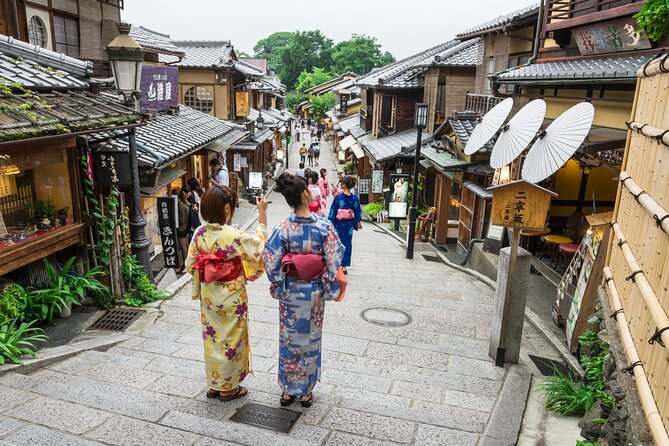
The first hour takes place at Wargo Kyoto Gion Store, where you use the Standard Kimono Plan. This is a budget-level introduction rather than a formal cultural course, but it gives the outing a distinctly Kyoto beginning.
You can expect simple designs that mix cute and graceful details. Staff dress you as best they can if the fit is not exact, which matters because the listed size ranges are limited. Women are listed at 150 to 170 centimeters, and men at 165 to 200 centimeters.
I would treat the kimono as part of the experience, not as a reason to book the tour by itself. The plan does not promise an elaborate wardrobe, hair styling, photography session, or formal tea activity. It does give you a chance to walk into Kyoto’s temple districts dressed in traditional clothing, provided the size works for you.
Ask about comfort before choosing a walking-heavy plan. A kimono can make a long outing feel different from a normal sightseeing day, and Kyoto’s temple grounds often include steps, paths, and uneven surfaces. The supplied details do not specify how long you keep the kimono or whether changing takes place before the sightseeing portion, so confirm that timing when your guide contacts you.
More kimono and yukata rentals in Kyoto:
- Kimono Tea Ceremony at Kyoto Maikoya, NISHIKI
★ 5.0 · 911 reviews - Kyoto: Kimono Rental with Hairstyling and Accessories
★ 4.8 · 653 reviews - Kyoto: Kimono Tea Ceremony at Orizuruya Gion
★ 4.9 · 618 reviews
How to choose the right two or three sights
The itinerary lists far more places than you can reasonably see in six hours. That is useful because Kyoto offers several possible themes, but it can also confuse you if you arrive expecting a grand circuit of every temple and neighborhood.
Your guide helps you settle on two or three sights. Think in clusters rather than trying to cross the whole city. Fushimi Inari fits naturally with Tofuku-ji or another southeastern Kyoto stop. Kiyomizu-dera works well with Gion, Kennin-ji, or Nishiki Market. Kinkaku-ji and Ryoan-ji sit in a different part of the city from Fushimi Inari, so putting them together can mean more time in transit.
This choice is the tour’s best feature. You can favor major landmarks, quieter temple grounds, gardens, shopping, or a mixture. Tell the guide what you already plan to see, how much walking you want, and whether the kimono should shape the route.
The tour includes a meet-up with your guide on foot. A private vehicle is not included, and transportation fees are yours to cover. That makes the route choice important. A well-planned pair of nearby sights will give you more actual sightseeing time than a scattered list of famous names.
Fushimi Inari, with more than a red-torii photograph
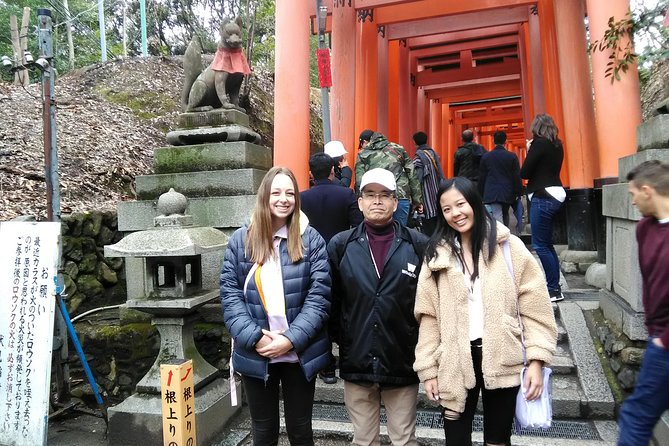
Fushimi Inari-taisha is the clearest match for the tour’s central promise. Most people recognize the long corridors of vermilion torii gates, but the shrine also offers symbols, customs, and connections to local culture that are easy to miss when you are moving through alone.
Your guide explains what you are seeing and how the shrine fits into Japanese religious life. The exact route and depth of the visit will depend on your chosen timing, but the aim is to help you notice more than the most photographed gate.
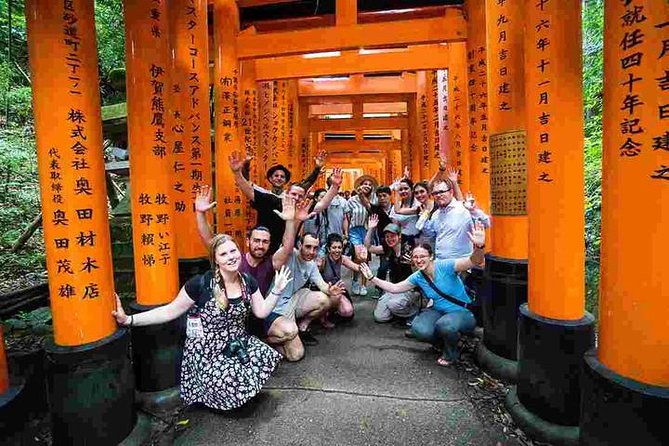
Crowds matter here. One visitor specifically praised guide Yasuko for making a short visit feel relaxed and for helping the group move smoothly through the human flow. That is practical help, not just background information. Another useful tip is to go early, since the shrine fills by midday and photographs become harder.
The one-hour Fushimi Inari portion listed in the plan is enough for a focused introduction, but not for every path and upper section. If your main goal is a long walk through the torii, say so before the route is fixed. If you want only the key approach and an explanation of the shrine, one hour may suit you well.
Kinkaku-ji and Ginkaku-ji, two very different pavilions
Kinkaku-ji, the Golden Pavilion, is formally Rokuon-ji, a Zen temple whose top two floors are covered in gold leaf. It is one of Kyoto’s most instantly recognizable sights, so it makes sense for a first visit.
The listed time at Kinkaku-ji is only 15 minutes, and admission is not included. That is enough for a brisk look and an explanation, but you should not expect a slow garden visit or a long period of quiet reflection. Its popularity also means the experience can feel more like a planned viewpoint than a secluded temple stop.
Ginkaku-ji, the Silver Pavilion, offers a different mood. It was built as Ashikaga Yoshimasa’s retirement villa and later became a Zen temple. Despite its name, it is not covered in silver. Its gardens and setting provide the stronger reason to visit.
Putting both pavilions into one short outing may appeal to architecture fans, but you will need to accept quick visits and transportation between districts. If you have only one choice, tell your guide whether the bright landmark of Kinkaku-ji or the more restrained setting of Ginkaku-ji better fits your taste.
A few more Kyoto tours worth putting on the shortlist
- PERFECT KYOTO 1-Day Bus Tour
★ 5.0 · 13,518 reviews - Kyoto: Fushimi Inari, Kinkakuji, Bamboo Grove 1 Day Bus Tour
★ 4.8 · 4,316 reviews - Kyoto: Tea Ceremony in a Traditional Tea House in Kiyomizu
★ 4.9 · 3,519 reviews - Kyoto Geisha Walking Tour: Gion District & Hidden Gems
★ 4.7 · 3,273 reviews
Honen-in, Nanzen-ji, and Tofuku-ji for temple atmosphere
Honen-in begins with a scenic approach leading to a moss-covered gate. That entrance gives the visit a sense of arrival before you even reach the inner grounds. The listed 15-minute stop is brief, but it can work if you want a quick look at one of Kyoto’s more atmospheric temple approaches.
Nanzen-ji is one of the major Zen temples at the foot of the Higashiyama mountains. Its spacious grounds make it a better choice if you want room to walk and a larger temple complex rather than one single famous object.
Tofuku-ji lies in southeastern Kyoto and is especially known for autumn color. The timing matters here. A short stop outside the peak season still offers the temple grounds, but the reason many people choose it is strongest when the trees are showing their seasonal color.
These three stops make sense for someone who wants temple grounds and a slower feel. They are less useful if your priority is checking off Kyoto’s most famous single sights. Since each listed visit is around 15 minutes, tell your guide if you need longer in gardens or want to enter paid areas.
Gardens at Taizo-in, Ryoan-ji, and Shugakuin
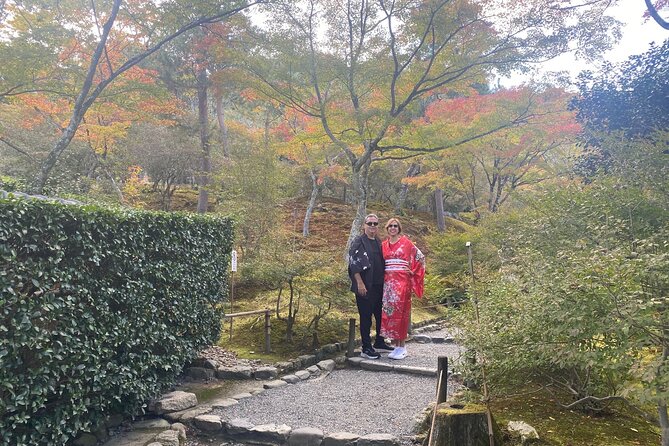
Taizo-in is a subtemple of Myoshin-ji, and its garden is recommended in every season. This is a good pick if you want a garden-centered visit without making the day about a major city landmark.
Ryoan-ji contains Japan’s best-known rock garden. Its fame brings crowds, but the garden remains a worthwhile place to consider how much meaning can be suggested with very few elements. The listed itinerary repeats Ryoan-ji, which appears to be a duplication rather than two separate visits, so confirm the exact plan with your guide.
Shugakuin Imperial Villa was built in the 17th century for Emperor Gomizuno and is now managed by the Imperial Household Agency. It includes Upper, Middle, and Lower Villas. The tour details do not promise entry into every section, and the listed 15-minute duration is too short for a full visit, so ask exactly what your stop will cover.
These choices suit you if you care more about gardens, design, and imperial or Zen settings than shopping. They also show why the guide’s planning matters. A short list of names can look easy on paper, but the sites are spread across Kyoto.
Kiyomizu-dera, Gion, and Kennin-ji
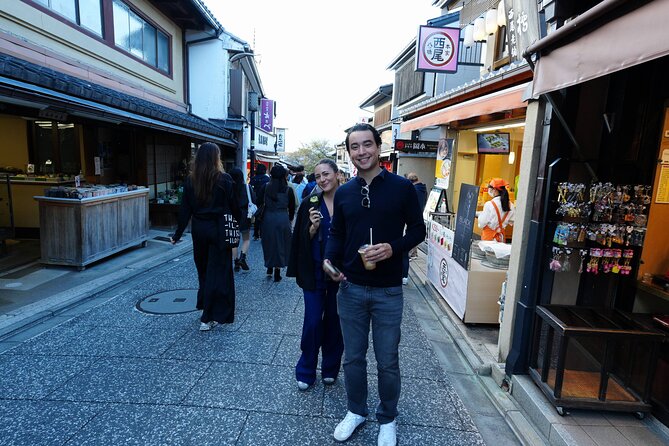
Kiyomizu-dera is one of Kyoto’s most popular temples. A 10-minute listing here suggests a quick orientation rather than the full one-hour guided temple visit also mentioned in the description. Treat that difference as something to clarify before booking.
The temple is a strong choice if you want a landmark with broad recognition and a connection to Kyoto’s eastern districts. Pairing it with Gion keeps the day focused. Gion’s narrow lanes can be confusing for a first-time visitor, and a guide can point out less obvious corners while explaining how the district functions today.
Kennin-ji sits close to Hanamikoji and Shijo streets but has spacious grounds of its own. Its two dry gardens provide a calmer counterpoint to the surrounding city. The listed time is only one minute, which is plainly too short for a meaningful visit, so do not assume every duration in the long itinerary is fixed. Your chosen two or three stops should be confirmed in detail.
Nishiki Market, Pontocho, and Nijo Castle
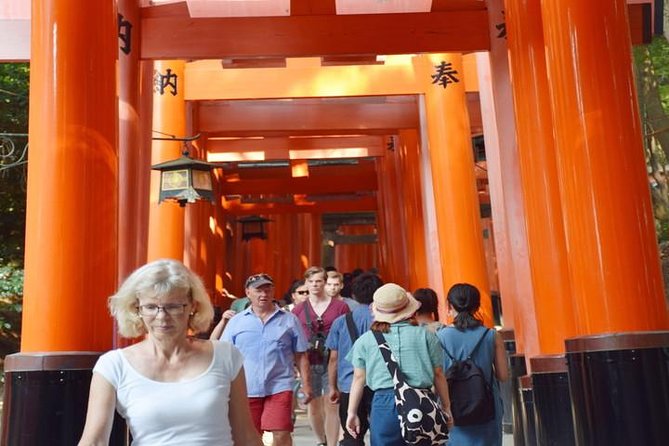
Nishiki Market is a narrow, five-block shopping street known as Kyoto’s Kitchen. More than 100 shops and restaurants sell food and other goods. A 10-minute stop gives you a taste of the market, but it is not enough time for a leisurely meal or careful browsing.
Lunch is not included, so Nishiki can be useful if you want to buy food on your own, though your short schedule may limit how much you can enjoy. Ask whether your guide can build in enough time to eat rather than treating the market as a quick photo stop.
Pontocho is a narrow dining alley beside the Kamogawa River and one of Kyoto’s atmospheric evening areas. The supplied plan does not give a duration, so the actual time there will depend on your selected route and start time.
Nijo Castle was built in 1603 as Tokugawa Ieyasu’s Kyoto residence and is now a UNESCO World Heritage site. The listed stop is 10 minutes, with admission extra. That is a very quick introduction to a large historic property, so choose it only if you mainly want orientation or a first look.
Arashiyama, Byodo-in, and the cost of distance
The Togetsukyo Bridge is Arashiyama’s best-known landmark, and the nearby bamboo paths offer a short walk through tall groves. These are appealing sights, but they can consume a large share of a six-hour outing when combined with stops elsewhere in Kyoto.
Byodo-in is in Uji, outside central Kyoto, and the tour specifically warns that extra travel time is expected. Its Phoenix Hall is a National Treasure and part of a UNESCO World Heritage site. That makes it a serious choice for architecture and religious art, but not an easy add-on to Fushimi Inari, Kiyomizu-dera, and Nishiki Market.
Kokedera, also called Saiho-ji or the Moss Temple, is another specialized choice. The supplied details identify it as a UNESCO World Heritage site but do not include a full visit duration or explain admission arrangements. Ask your guide what access is possible before making it one of your two or three selections.
What $162.52 per person really covers
At $162.52 per person, the price buys a private, guided planning service, the licensed English-speaking guide, and the standard kimono experience. It does not cover your transportation, temple tickets, lunch, or personal purchases.
The value depends on how much you want help making sense of Kyoto. If you can plan your own route, use public transportation confidently, and only want a kimono rental, the price may feel high. If you have limited time and want a local guide to select two or three places, explain what you are seeing, and help you handle a crowded shrine, the cost becomes easier to defend.
The private format matters. Only your group participates, so you can ask questions without keeping pace with strangers. The material also mentions a small-group limit of 15, which conflicts with the separate statement that this is a private activity. Confirm that your booking is private for your party, as the private description is the one that best matches the customizable format.
Group discounts may be available. Since admission and transport vary by route, calculate the likely extras before you commit.
Timing, clothing, and other practical details
The experience lasts about six hours, but the start time may vary. The information also says the estimated kimono experience lasts about one hour from the tour start, so confirm the exact meeting time and order of activities after booking.
Confirmation arrives within 48 hours, subject to availability. You meet the guide in Kyoto on foot, and the activity is near public transportation. Service animals are allowed, and most people can participate, though the details do not provide a specific accessibility assessment for kimono dressing, temple steps, or walking routes.
You can cancel for a full refund up to 24 hours before the local start time. Changes made inside that window are not accepted, and late cancellations are not refunded.
I would wear practical shoes and keep your plans flexible. The supplied information does not promise a private vehicle, reserved entry, or a meal, so build your day around walking, public transit, and extra ticket costs.
Who should book this Kyoto experience
I would recommend it to first-time Kyoto visitors who want cultural explanation rather than a string of photographs. It also suits couples, families, and private groups that cannot agree on a single fixed sightseeing list, since the guide helps you choose two or three places.
It is especially useful if Fushimi Inari is high on your list and you want more than the torii-gate viewpoint. The help provided by Yasuko, including guiding a group through heavy crowds, shows the kind of practical benefit you can gain from a local escort.
I would hesitate if you want a slow, full visit to many temples. The long list of possible stops can create false expectations, and several listed durations are only 10 or 15 minutes. I would also hesitate if your main goal is a premium kimono photo session, since only the standard plan is included.
Should you book it?
Book this tour if you value a flexible route, an English-speaking guide, and a more meaningful visit to Fushimi Inari, with a kimono fitting to set the tone. Choose your sights in advance by area, then ask the guide to confirm travel time, admission costs, and how long you can spend at each place.
Skip it if you prefer to plan every stop yourself or want a full day devoted to one district. At $162.52 per person before transport and entry fees, the tour earns its price through guidance and flexibility, not through a large number of included attractions.
FAQ
How long does the Kyoto kimono and sightseeing experience last?
The experience lasts approximately six hours. The kimono portion is estimated at about one hour from the tour start, but the exact start time and sequence should be confirmed.
How many sights can I visit?
You choose two or three sights from the available Kyoto options with your guide. The long list of places is not a promise that every stop will be visited.
Is this a private tour?
Yes. The activity is described as private, with only your group participating. Another description refers to a maximum group size of 15, so confirm the group arrangement when your booking is confirmed.
Is transportation included?
No. You meet the guide in Kyoto on foot, and transportation fees are not included. A private vehicle is also not included.
Are temple entrance fees included?
No. Entrance fees, lunch, and personal expenses are extra. Guide entry fees are covered only for sights listed in the tour information.
What kimono sizes are available?
The listed range is 150 to 170 centimeters for women and 165 to 200 centimeters for men. If the fit is not exact, professional staff will dress you as well as possible.
Can I cancel for a full refund?
Yes, if you cancel at least 24 hours before the local start time. Cancellations or changes made less than 24 hours before the experience are not accepted for a refund.
Newest Kyoto experiences on the site
- Treasures of Kyoto: Gion & historical Walking Tour★ 5.0 · 6 reviews
- Whisk Your Own Matcha: A Zen Matcha Experience at Temple★ 3.6 · 7 reviews
- Kyoto tea town for matcha lovers★ 5.0 · 16 reviews
- Uji: Private immersion into Kyoto’s tea and reglious culture★ 5.0 · 17 reviews
- Kyoto Matcha Green Tea Tour★ 4.5 · 23 reviews
- Uji and Wazuka Matcha Farm Half Day Private Guided Tour★ 5.0 · 21 reviews
- Utilising upcycled Matcha! Creating matcha incense (Uji, Kyoto)★ 5.0 · 6 reviews
- Uji Tea Ceremony and UNESCO Heritage Walking Tour★ 5.0 · 20 reviews
Kyoto Kimono Rentals, compared.
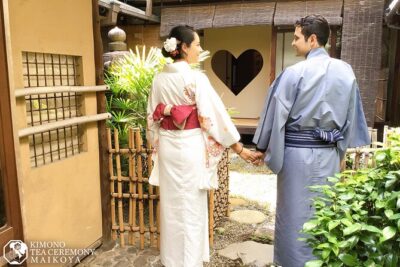
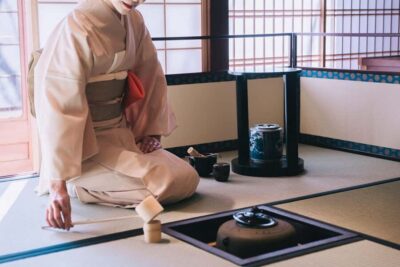
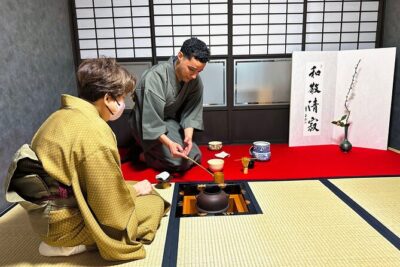
KYOTO Tea Ceremony with kimono near by Imamiya Jinjya Shrine
Read our review →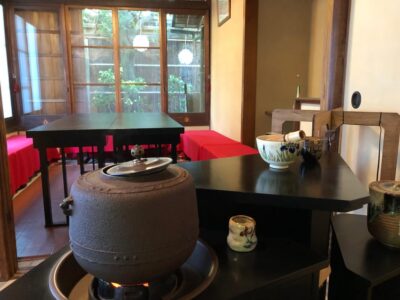
Kimono and Tea Ceremony Experience at Cultural Asset
Read our review →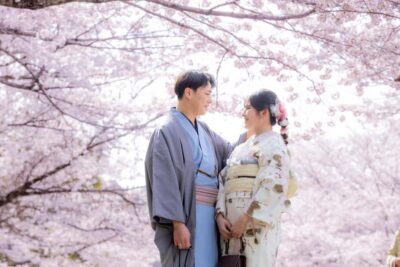
Family-Friendly Kimono & Yukata Experience at WARGO
Read our review →
1 Day Traditional Japanese Kimono Rental Experience
Read our review →Browse the lists this tour appears in