
Reviewed · GION DISTRICT TOURS
Kioto: Gion Tour, recorrido a pie (Español/Castellano)
Gion is far more than a pretty street where you hope to spot a Geisha. This two-hour Spanish tour traces three of Kyoto’s traditional entertainment districts, explains the wooden Machiya homes and the lives of Maiko and Geiko, and adds places many visitors walk past without noticing. José has earned especially warm praise for his friendly, flexible explanations and patience with questions.
I like the small group, limited to six people, and the route’s focus on Pontocho, Gion Kobu, and Gion Higashi rather than only the best-known lane. I also like the chance to ask about daily life in Japan, from a guide who can explain local customs through personal experience. The main consideration is that Hanamikoji-dori is not included, and no Maiko or Geiko sighting is promised.
Key points at a glance
- Three hanamachi in two hours: Visit Pontocho, Gion Kobu, and Gion Higashi instead of seeing only one corner of Gion.
- A Spanish-speaking guide: José is named in several especially positive comments, with Juan also praised for detailed explanations.
- A 3.3-kilometer walking route: Expect about two miles on foot, with comfortable shoes essential.
- Historic details beyond the postcard view: Learn about Machiya houses, preserved neighborhoods, Maiko and Geiko routines, and Kyoto’s past.
- Yasaka Shrine and the Gion Festival: Visit the former Gion Shrine if time allows, with an explanation of the festival’s origins.
- Small-group conversation: With no more than six participants, you can ask questions instead of simply following a script.
Why Gion makes a better walking tour than a quick photo stop
Gion can look simple at first: wooden buildings, narrow lanes, lanterns, and visitors waiting for a glimpse of a Geisha. The real pleasure comes from learning what you are seeing. A Machiya house is not just an attractive old building, and a quiet alley may belong to a traditional entertainment district with strict customs and a long past.
This tour gives you a useful frame for the area. You learn how Kyoto developed, why Gion became important, and how the hanamachi system works. The guide also explains Maiko and Geiko life, including their routines, practices, and place within Kyoto’s traditional culture.
I like that the tour does not treat Gion as a stage set. It connects the streets to ordinary life in Japan and gives you room to ask about whatever catches your eye. That personal approach matters in a district where small details are easy to miss.
The format suits curious visitors who prefer conversation to a large group lecture. A maximum of six people means the guide can pause, clarify a point, or answer a question without holding up a crowd. José is praised for checking that everyone understands, while Juan is noted for revealing passages and details that are easy to miss alone.
More ways to walk Gion:
- Kyoto Geisha Walking Tour: Gion District & Hidden Gems
★ 4.7 · 3,273 reviews - Kyoto: Gion Magical Night Walking Tour with Geisha Trivia
★ 4.9 · 2,393 reviews - Kyoto: Gion Geisha District Walking Tour – Stories of Geisha
★ 4.7 · 2,187 reviews
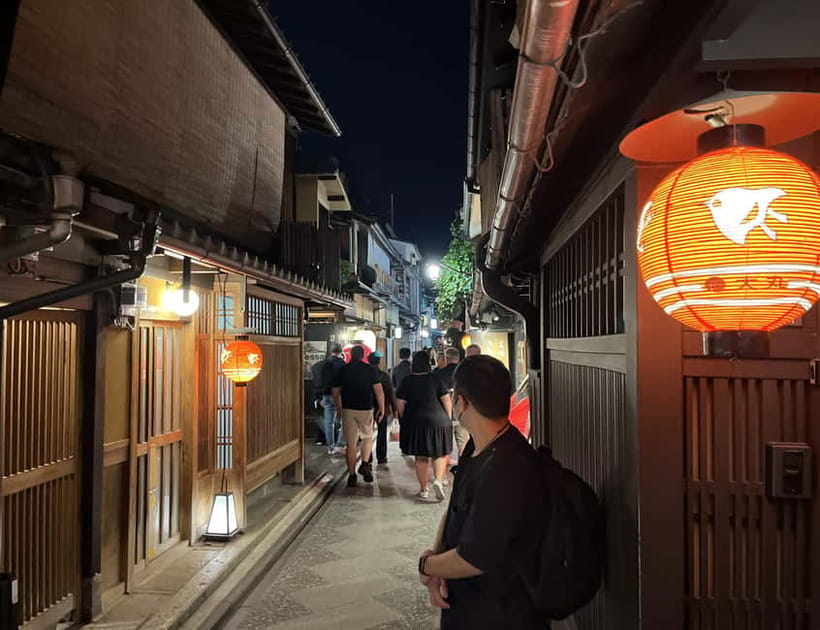
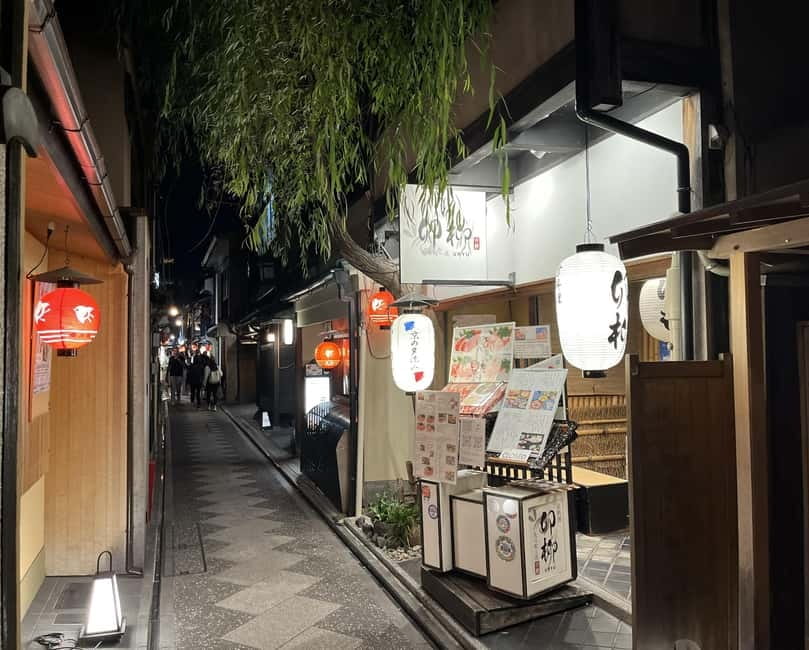
Pontocho Alley and the first look at Kyoto’s hanamachi
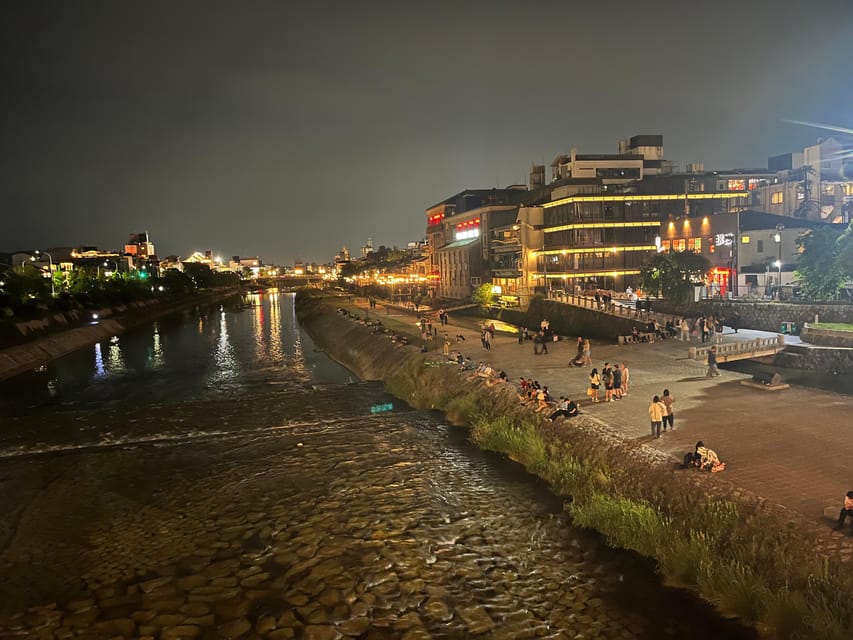
The route begins at Pontocho Alley, one of the best-known traditional entertainment areas in central Kyoto. You then pass the Pontocho Kaburenjo, a significant stop for understanding the cultural life of the district.
This opening section helps you see the difference between simply walking through an old lane and understanding its purpose. The hanamachi are not ordinary residential neighborhoods. They are districts connected with traditional arts, dining, performances, and the working lives of Maiko and Geiko.
The guide explains the surrounding area as you walk, rather than saving all the information for one long talk. That keeps the tour connected to what you are looking at. If a building, alley, or custom raises a question, this is the sort of small-group setting where you can ask immediately.
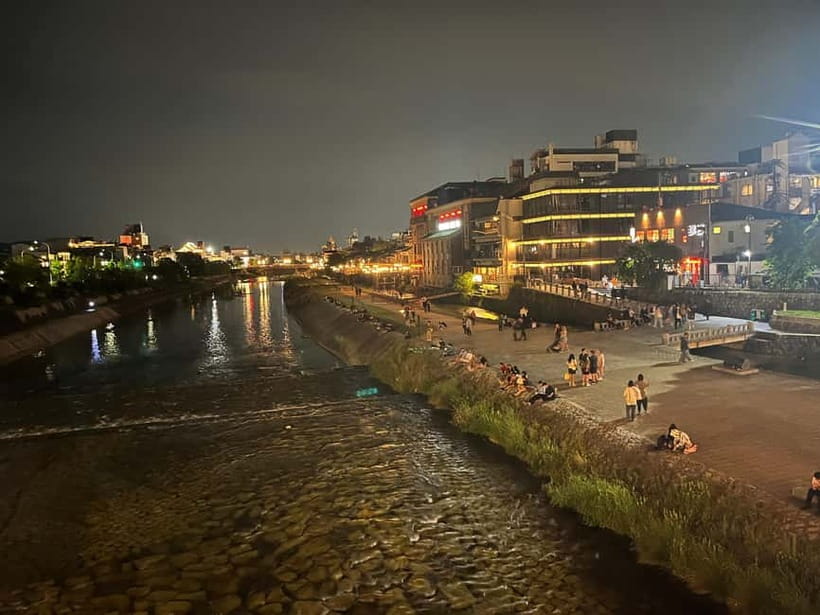
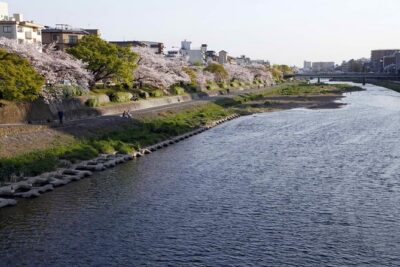
The route also includes the Kamogawa River, along with the Yagi-san and Kita-san statues. These stops add local context and give the walk a change of pace. You will not spend the entire two hours in a single narrow lane, which is helpful if you want a broader sense of downtown Kyoto.
Sanjo Ohashi, Yamato Dori, and the move toward Gion Kobu
From Pontocho, the walk continues toward Sanjo Ohashi, the Sanjo Bridge, and Yamato Dori. These parts of the route help link the entertainment districts with the wider city.
The bridge is also practical for orientation. You get a sense of how the river and central streets connect the different sections of Kyoto. The tour is not simply a loop through one photogenic neighborhood. It shows how Pontocho and Gion relate to each other within the city.
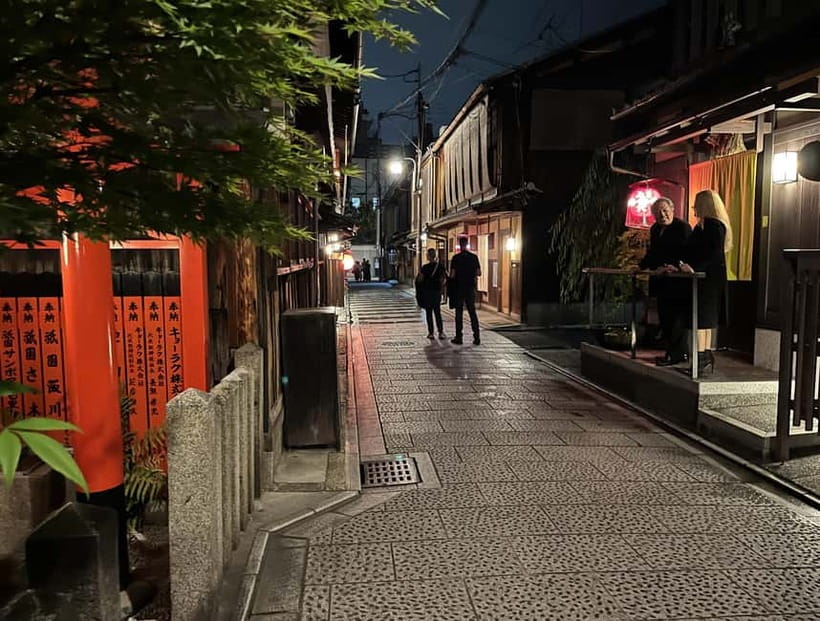
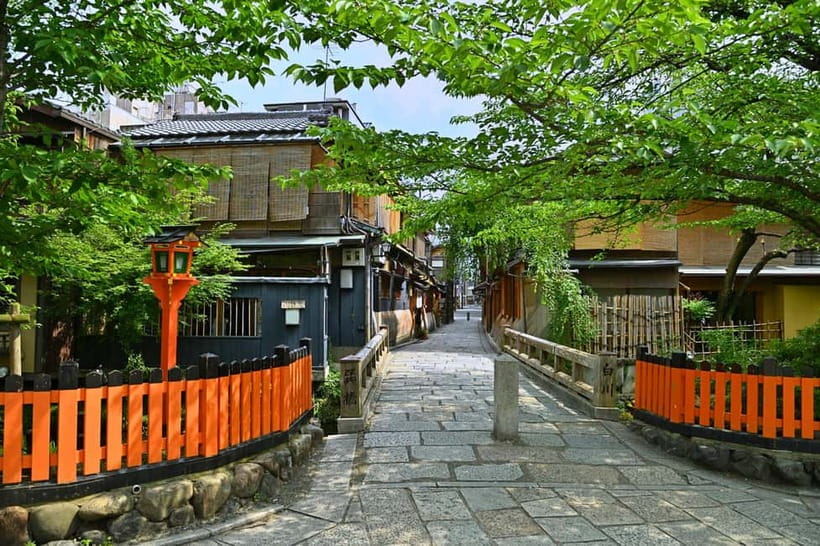
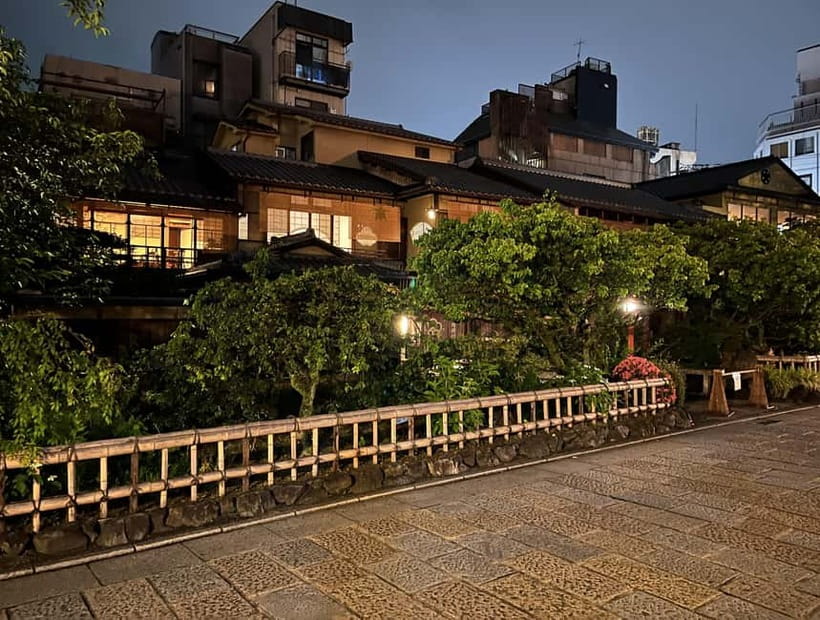
Next comes Gion Kobu, including Gion Shinbashi Dori and Gion Shirakawa. The northern section of Gion Kobu includes nationally preserved historic neighborhoods, making this one of the most atmospheric parts of the walk.
Here, the wooden Machiya houses and carefully maintained streets are part of a living district, not just scenery. Your guide explains the area’s history and the traditional entertainment culture that shaped it. You also learn more about Maiko and Geiko, including their daily routines and professional practices.
This is where the guide’s personal style can make a difference. The information is not limited to dates and labels. José is praised for explaining small details in a way that changes how you look at Gion, while Juan is praised for a high level of knowledge and for pointing out less obvious passages.
Tatsumi Jinja and Tatsumi Bridge
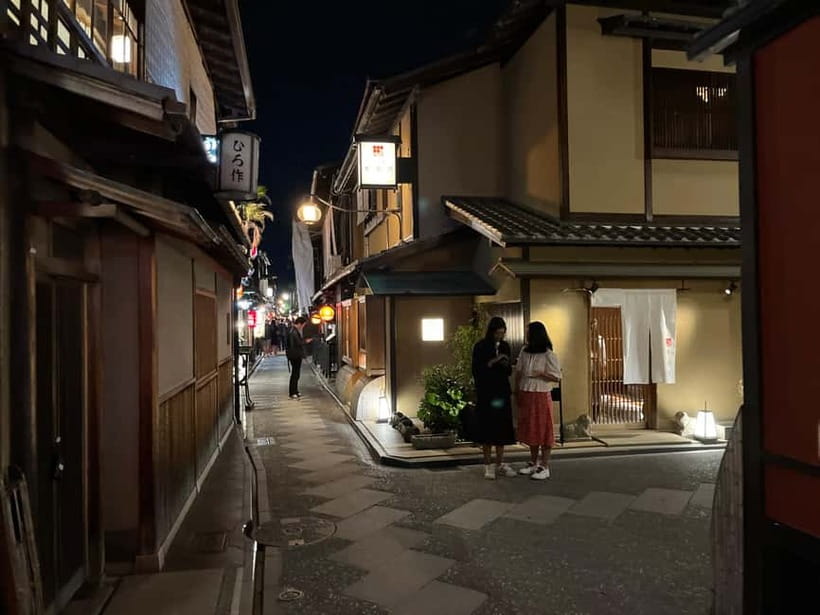
Tatsumi Jinja and Tatsumi Bridge are smaller stops, but they fit the character of this route. They bring you into the quieter, more intimate corners associated with Gion Kobu.
A short visit here is useful because Gion’s appeal often lies in transitions between major sights. You move from a bridge to a shrine, from a preserved lane to a traditional facade, and the guide explains how these pieces fit together.
Do not expect a large attraction with a long visit at every stop. This is a walking and interpretation tour. The value comes from the connections between places, and from learning why a modest shrine or bridge matters within the district.
The 3.3-kilometer route also means you should plan for steady walking. At roughly two miles, it is manageable for most people who are comfortable on foot, but this is not a sit-down sightseeing experience. Wear proper shoes, carry water, and bring sun protection. An umbrella is sensible in Kyoto’s changeable weather.
A few more Kyoto tours worth putting on the shortlist
- PERFECT KYOTO 1-Day Bus Tour
★ 5.0 · 13,518 reviews - Kyoto: Fushimi Inari, Kinkakuji, Bamboo Grove 1 Day Bus Tour
★ 4.8 · 4,316 reviews - Kyoto: Tea Ceremony in a Traditional Tea House in Kiyomizu
★ 4.9 · 3,519 reviews - Kyoto: Tea Ceremony Ju-An at Jotokuji Temple
★ 4.9 · 3,207 reviews
Gion Higashi and the parts many visitors miss
The tour continues into Gion Higashi, one of Kyoto’s five hanamachi. Seeing it alongside Pontocho and Gion Kobu gives you a more useful comparison than visiting one district alone.
You can learn how each area fits into Kyoto’s traditional entertainment culture while noticing differences in streets and atmosphere. The tour’s aim is not to promise access to private spaces. It is to explain the public streets respectfully and help you understand the work and customs connected with them.
This is also a good point to remember the tour’s limits. Hanamikoji-dori is not part of the itinerary. If that famous street is high on your list, you will need to visit it separately. The route instead favors Pontocho, Gion Kobu, Gion Shinbashi, Gion Shirakawa, Tatsumi Jinja, Tatsumi Bridge, and Gion Higashi.
That choice may please you if you have already seen the standard Gion photographs and want more context. If this is your first and only visit to Gion, you may want to add Hanamikoji on your own before or after the tour.
Yasaka Shrine and the story behind Gion
The walk includes Yasaka Shrine, formerly called Gion Shrine, if time allows. This is one of the most useful historical links on the route because the district’s name comes from the shrine.
The shrine and the Gion Festival both reach back more than 1,100 years in the explanation provided on the tour. The Gion Festival is one of Japan’s three most famous and important festivals, so even a short introduction adds weight to what you are seeing.
I like this part because it turns a visit to a shrine into a lesson about the city. You are not only looking at a religious site. You are learning how the shrine, the neighborhood, and one of Japan’s major festivals connect.
The words if time allows matter. The tour covers several districts and a fair amount of ground in two hours, so the exact amount of time at Yasaka Shrine can vary. Keep your expectations flexible, especially if the group has many questions or the pace changes.
What the Spanish guide adds
The tour is conducted in Spanish, and the guide’s willingness to explain personal and cultural details is a major part of its appeal. José is specifically praised for being warm, approachable, flexible with timing, and open to questions. One Spanish beginner also managed well, with English explanations available when needed.
That makes this a strong choice if you understand Spanish but are not fully fluent. You should still book it expecting Spanish as the main language, but the guide appears able to clarify points when a participant needs help.
The emphasis on questions is important. You can ask about something you see, Japanese daily life, Kyoto history, Maiko and Geiko customs, or a detail that seems confusing. This is more useful than a tour where the guide delivers a fixed speech and moves on.
Guides can change, so José is not guaranteed. Juan is also praised for a very high level of knowledge and for showing less obvious routes. The safest expectation is a Spanish-speaking local guide who can discuss the listed subjects and respond to your interests.
Timing, group size, and the optional Gion Gallery visit

The tour lasts two hours and comes in a small group of no more than six participants. That size is a real advantage in narrow streets. It also keeps questions practical and makes it easier for the guide to notice when someone needs a slower explanation or a short pause.
The 9:45 and 12:30 departures can include a free visit to the Gion Gallery if you want to extend the experience. This is optional, and the tour already has a full route, so ask the guide about it at the beginning if it interests you.
A night tour may offer a different feel from a daytime walk. One especially positive experience focused on the nighttime atmosphere of Gion and learning about Maiko. Still, the supplied details do not promise a night departure for every booking, so check the available starting time before you reserve.
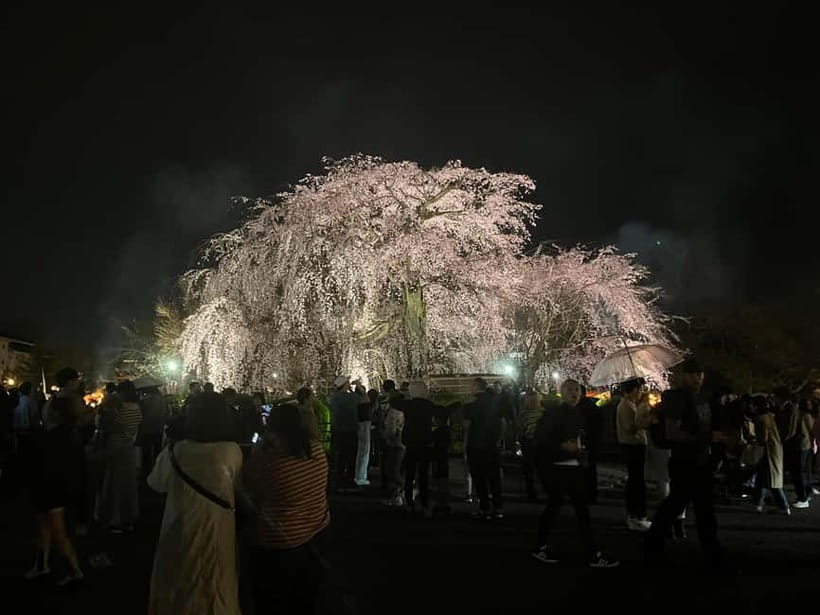
During cherry blossom season, roughly late March to early April, the route changes slightly to show blossoms around Gion. That is a nice seasonal benefit, though exact views depend on the timing of the bloom.
Is $35 a fair price?
At $35 per person, this tour offers good value if you want interpretation in Spanish and prefer a small group. You are paying for two hours with a local guide, a planned route through three hanamachi, and the chance to ask questions that a self-guided walk cannot answer as easily.
The price is less compelling if you only want photographs or plan to rush through Gion independently. No extra services are included, and there is no guaranteed Maiko or Geiko sighting. You are also not getting a meal, paid attraction, or private transport.
The value lies in context. A guide can explain why the streets matter, how the districts function, and what you should notice. For many people, that makes the difference between seeing old buildings and understanding the neighborhood.
Free cancellation up to 24 hours before the tour and the option to reserve now and pay later make the booking less rigid. These policies are useful if your Kyoto schedule is still shifting.
Who should book this Gion walk?
I would recommend it to Spanish-speaking visitors who want cultural background, a small group, and a chance to ask many questions. It is especially useful early in a Kyoto visit, when the explanations can help you make sense of later walks through Gion and other historic districts.
It also suits returning visitors who have already seen the obvious streets and want Pontocho, Gion Kobu, and Gion Higashi explained in one route. Families and friends may appreciate the relaxed conversation, provided everyone can handle 3.3 kilometers of walking.
I would think twice if your main goal is a guaranteed encounter with a Geisha. The tour cannot promise that, and responsible sightseeing should not treat Maiko or Geiko as photo opportunities. I would also reconsider if Hanamikoji-dori is your must-see stop, since it is specifically excluded.
Should you book the Kyoto Gion Spanish tour?
Book it if you want Gion explained rather than merely photographed. The combination of three hanamachi, Yasaka Shrine, historic lanes, and a small Spanish-speaking group gives you a fuller view of Kyoto’s traditional districts for a reasonable price.
Choose another option, or plan an extra self-guided walk, if you need Hanamikoji-dori, a guaranteed Maiko sighting, or a longer visit at any one attraction. For everyone else, this is a focused and personal way to learn why Gion remains one of Kyoto’s most meaningful neighborhoods.
FAQ
Is the tour conducted in Spanish?
Yes. The live tour guide speaks Spanish. English clarification may be available when needed, but Spanish is the main language.
How long is the Kyoto Gion tour?
The tour lasts two hours.
How far do you walk?
The route covers about 3.3 kilometers, or roughly two miles.
How many people can join the group?
The group is limited to six participants.
Which areas are included?
The route includes Pontocho, Gion Kobu, and Gion Higashi. It also passes Pontocho Kaburenjo, the Kamogawa River, Sanjo Ohashi, Yamato Dori, Gion Shinbashi Dori, Gion Shirakawa, Tatsumi Jinja, Tatsumi Bridge, and Yasaka Shrine if time allows.
Is Hanamikoji-dori included?
No. Hanamikoji-dori is not included in the itinerary.
Will I see a Maiko or Geiko?
A Maiko or Geiko sighting cannot be guaranteed.
What should I bring?
Bring comfortable shoes, a sun hat, an umbrella, sunscreen, and water.
Can I cancel the booking?
Yes. You can cancel up to 24 hours in advance for a full refund. You can also reserve now and pay later.
Newest Kyoto experiences on the site
- Treasures of Kyoto: Gion & historical Walking Tour★ 5.0 · 6 reviews
- Whisk Your Own Matcha: A Zen Matcha Experience at Temple★ 3.6 · 7 reviews
- Kyoto tea town for matcha lovers★ 5.0 · 16 reviews
- Uji: Private immersion into Kyoto’s tea and reglious culture★ 5.0 · 17 reviews
- Kyoto Matcha Green Tea Tour★ 4.5 · 23 reviews
- Uji and Wazuka Matcha Farm Half Day Private Guided Tour★ 5.0 · 21 reviews
- Utilising upcycled Matcha! Creating matcha incense (Uji, Kyoto)★ 5.0 · 6 reviews
- Sacred Temple Yoga Experience in Japan★ 5.0 · 3 reviews
Gion District Tours, compared.
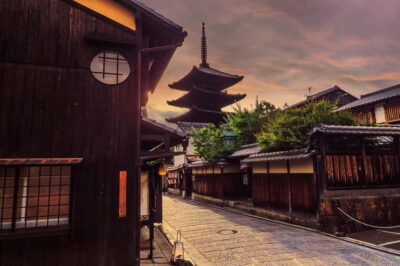
Kyoto Geisha Walking Tour: Gion District & Hidden Gems
Read our review →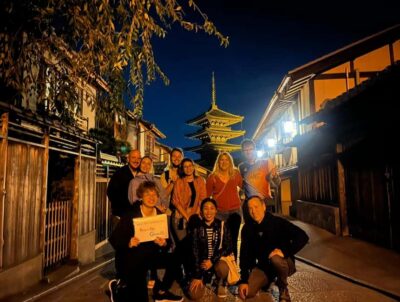
Gion Magical Night Walking Tour with Geisha Trivia
Read our review →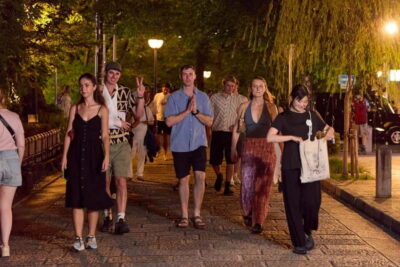
Gion Geisha District Walking Tour – Stories of Geisha
Read our review →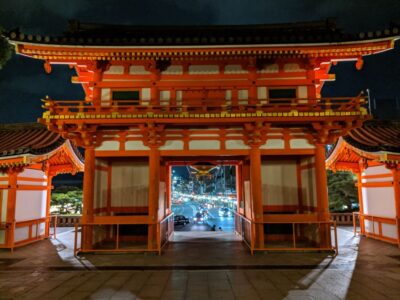
Best of Kyoto: Gion, Geisha, Pagodas & Cobblestones
Read our review →
Kyoto Night Foodie Tour in Gion (9+ dishes + 6 Sake tastings)
Read our review →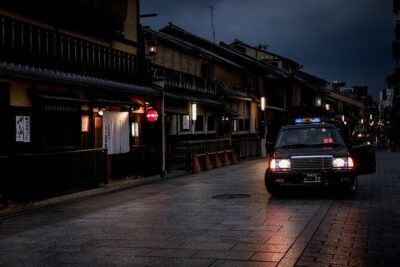
Kyoto Gion Geisha District Walking Tour – The Stories of Geisha
Read our review →
Kyoto Gion: 2-Hour Geisha Culture & History Walking Tour
Read our review →Browse the lists this tour appears in