Reviewed · GUIDED
Guide tour of Japanese bathing culture at Funaoka Onsen
Funaoka Onsen is not simply a place to get clean. It is a lesson in how Japan turns bathing into a calm, careful daily ritual. Guide Atsuki starts with the basics, then helps you put them into practice at one of Kyoto’s best-known public bathhouses.
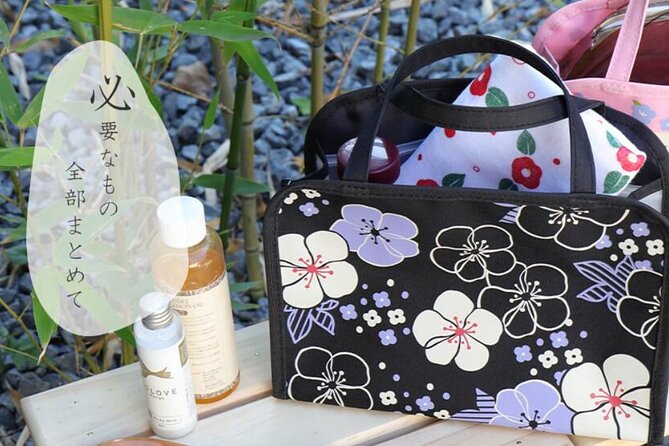
I like the small maximum of five people, which leaves room for questions, and the smart two-part format: history and etiquette first, bathing second. I also like that you take home a guide to proper bathing, so the lesson can help you at other bathhouses in Japan.
The main consideration is simple but important: bathing is nude and separated by gender. Couples will bathe apart, and anyone uncomfortable with communal bathing may prefer to visit only Sarasa Nishijin or skip the experience.
Key points to know before booking
- Atsuki leads the tour: You get a local Japanese guide who explains the customs and bathing steps.
- The first stop is a former bathhouse: Sarasa Nishijin is now a cafe, giving the introduction a fitting setting.
- Funaoka Onsen is the main event: You receive instruction before spending about an hour bathing there.
- Nude bathing is required: The bathing areas are divided by gender, with no mixed bathing.
- The group is very small: A maximum of five people makes this more personal than a large cultural tour.
- English may be limited: Atsuki is not very strong in English, so patience and attention during the demonstration will help.
Why Japanese bathing culture is worth learning
A public bath can feel intimidating if you do not know the routine. You may wonder where to undress, when to wash, what to do with your towel, or how to enter the tubs without making a social mistake. This tour removes much of that worry before you step into the bathhouse.
The value is not just practical. Japanese bathing culture has its own ideas about cleanliness, relaxation, respect, and shared space. The important distinction is that you wash before entering the communal bath. The tub is for soaking and unwinding, not for scrubbing.
That may sound obvious once explained, but it is easy to miss when you are alone in an unfamiliar bathhouse. A clear introduction lets you pay attention to the pleasure of the experience instead of trying to decode every step.
Atsuki also explains health benefits and the meaning behind Japanese bathing customs. The introduction gives you a better sense of why people make time for this ritual, rather than treating the bath as a quick stop between sightseeing plans.
More onsen soaks near Kyoto:
- Kyoto: Hike and Hot Springs in Kurama
★ 5.0 · 49 reviews
Starting at Sarasa Nishijin, a cafe in a former bathhouse
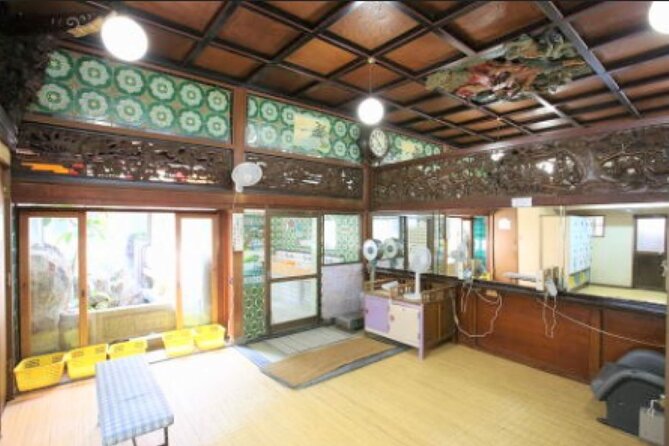
The experience begins at Sarasa Nishijin, a cafe created from a former public bathhouse. That setting is more than a convenient place to meet. It gives you a physical connection to the subject before you visit Funaoka Onsen.
You spend about 15 minutes here while learning about the history of Japanese public baths and the proper way to bathe. The cafe setting makes the first lesson relaxed. You can sip a drink, listen to Atsuki, and get your basic questions answered before changing clothes at the bathhouse.
I like this opening because it separates explanation from action. You do not have to learn etiquette while standing in an unfamiliar changing room. You have time to understand the sequence and the reasons behind it.
The short length is also worth noting. Fifteen minutes is enough to set the stage, but not enough for a long historical lecture. If you want an academic study of Japanese bathing, this will feel brief. If you want useful context before trying the bath yourself, the pace should work well.
Sarasa Nishijin is also a good reminder that public baths are part of everyday life, not only a special attraction for visitors. The tour uses the former bathhouse as a bridge between old customs and present-day Kyoto.
Learning the bathing steps before entering Funaoka Onsen
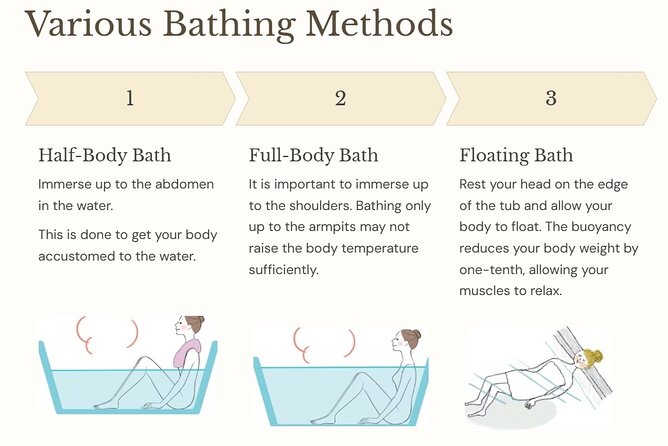
At Funaoka Onsen, Atsuki uses materials to explain the bathing method in more detail. This is where the tour becomes especially useful for a first visit.
You learn the expected order of activities and the small habits that help everyone share the space comfortably. The guide also explains what to do before entering the baths and how to behave once you are inside.
The instruction is designed to make you feel at ease. That matters because the biggest barrier for many first-time bathers is not the hot water. It is the fear of doing something wrong in a quiet, unfamiliar place.
The guide’s presence gives you a chance to check anything that was unclear at Sarasa Nishijin. You can ask about etiquette, timing, and the practical details of the process. Since the group is limited to five people, the experience is set up for direct help rather than a speech delivered to a crowd.
You should keep the English note in mind. Atsuki is a local Japanese guide, but the description says his English is not very strong. The tour is still designed for international participants, yet you may need to listen closely, watch demonstrations, and ask short, clear questions.
That language limitation is not a reason to dismiss the tour, but it is a reason to set realistic expectations. If you need highly detailed English explanations of every cultural point, this may not be the best fit. If your main goal is practical guidance before bathing, the format remains appealing.
Spending an hour at Kyoto’s Funaoka Onsen
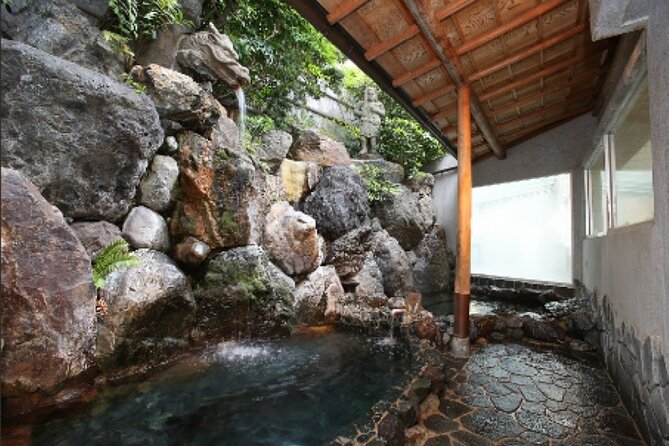
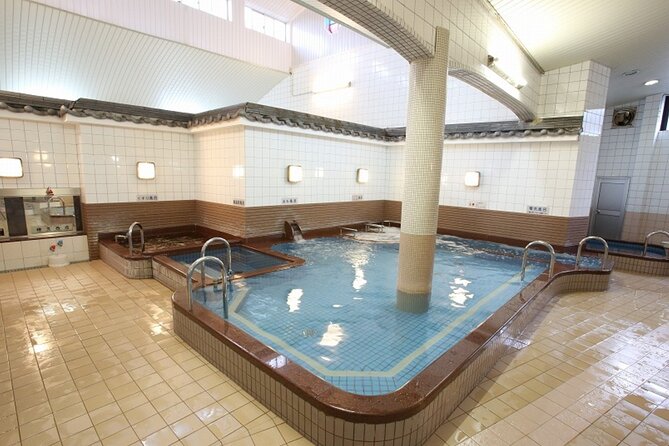
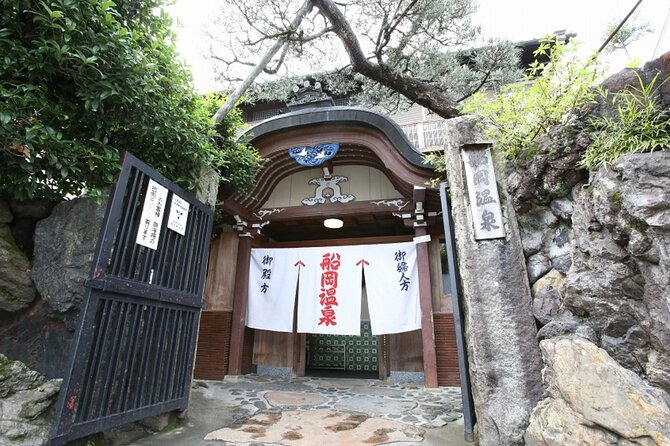
The bathing portion lasts about one hour. Funaoka Onsen is a long-loved Kyoto bathhouse with an interesting story, including how its founders competed with traditional geothermal hot spring facilities. That background gives the place more character than a generic spa visit.
You are not simply shown the building and sent on your way. After the explanation, you try the bathing method yourself. The lesson becomes useful because you immediately apply it in a real public bath.
Expect the bathing areas to be strictly separated by gender. You must bathe nude, and swimsuits are not part of this experience. Couples will not share the same bathing area. This is essential information, not a minor footnote, so decide in advance if the arrangement suits you.
For solo visitors, the gender-separated layout can make the experience feel less awkward. You can focus on your own routine without needing to manage a shared bathing experience with a partner. For couples, it is worth discussing the separation before booking.
The one-hour duration gives you time to bathe at a calm pace rather than rushing through the process. Still, the exact amount of time spent in any particular bath is up to you. You should follow your own comfort level and leave the water if you feel unwell.
The activity information specifically advises against participation for people with serious heart or lung disease, recent gastrointestinal bleeding, advanced malignant tumors, or severe anemia. You should also skip the experience if you have a fever, feel unwell, have consumed alcohol, or have been told by a doctor not to use hot springs.
Those restrictions are sensible for a hot bathing activity. This is not the place to test your limits after a long day of drinking or sightseeing. If you have a medical concern, ask your doctor before booking.
A few more Kyoto tours worth putting on the shortlist
- PERFECT KYOTO 1-Day Bus Tour
★ 5.0 · 13,518 reviews - Kyoto: Fushimi Inari, Kinkakuji, Bamboo Grove 1 Day Bus Tour
★ 4.8 · 4,316 reviews - Kyoto: Tea Ceremony in a Traditional Tea House in Kiyomizu
★ 4.9 · 3,519 reviews - Kyoto Geisha Walking Tour: Gion District & Hidden Gems
★ 4.7 · 3,273 reviews
What makes this different from visiting a bathhouse alone
You can visit a Japanese public bath without a guide, and doing so may cost less than $45.72. The added price here pays for preparation, cultural context, and reassurance.
For a first-time bather, that support can be worth more than the admission itself. You get an explanation at a former bathhouse cafe, a take-home guide, a lesson at Funaoka Onsen, and help with the process before you bathe.
I see the tour as a practical orientation rather than a luxury spa package. You are paying to understand a custom and gain confidence using it again. The bathing method and etiquette apply to other Japanese hot springs and public baths, so the lesson can continue helping you after this one visit.
The value is strongest if you are curious but nervous. It is weaker if you already know Japanese bathhouse etiquette or simply want a quiet soak without instruction.
The average booking lead time is about 34 days, which suggests you should plan ahead, especially if your Kyoto schedule is tight. Confirmation arrives at booking, the ticket is mobile, and the activity is near public transportation. The meeting point is Funaoka Onsen at 82-1 Murasakino Minamifunaokacho in Kyoto’s Kita Ward, and the tour ends back there.
Who will enjoy this Kyoto experience most
This tour is a good match for a first-time visitor who wants to try a public bath but does not know the rules. It also suits anyone interested in wellness, mindfulness, local customs, or the everyday side of Japanese culture.
Solo visitors may find the guided format especially useful. You do not need a companion to figure out the routine, and the small group lets you ask questions without feeling lost in a large class.
It also works well after a day of shrine visits. The bathing portion offers a slower change of pace from sightseeing, though you should not arrive after drinking alcohol or while feeling ill.
History-minded visitors will appreciate the setting and the story of Funaoka Onsen. The tour gives you more than a checklist of instructions. It explains how public bathing developed and why this particular bathhouse matters in Kyoto.
This is less suitable for anyone who wants mixed-gender bathing, swimsuit bathing, or a private bath. It is also not ideal if you need a fluent English-speaking guide for complex explanations.
Practical details that affect your decision
The full activity lasts about 90 minutes, including roughly 15 minutes at Sarasa Nishijin and one hour at Funaoka Onsen. The remaining time allows for the transition and instruction.
The group maximum is five people. That is a meaningful advantage here because bathing etiquette is easier to learn in a quiet group than in a packed lecture. It also means availability may be limited, so booking well before your preferred date is wise.
The price is $45.72 per person. I would call that fair for someone who wants both a cultural explanation and a guided first bath. It is not the cheapest way to enter a public bath, but it includes the teaching that makes the visit less stressful and more useful later.
You can cancel for a full refund up to 24 hours before the local start time. Changes or cancellations made within 24 hours are not accepted for a refund.
Most people can participate, and the experience is near public transportation. The activity returns to the starting point, so you do not need to arrange a separate ending location.
Should you book the Funaoka Onsen tour?
Book it if you want a clear introduction to Japanese bathing, especially if this is your first public bath. The combination of Sarasa Nishijin, Atsuki’s instruction, the small group, and a full visit to Funaoka Onsen gives you both cultural context and practical help.
Think twice if nude communal bathing makes you uncomfortable, if you want to bathe with your partner, or if you need very fluent English guidance. In those cases, the format may not suit you.
For everyone else, this is a thoughtful way to move beyond temples and sightseeing photos. You learn a local custom, try it in a respected Kyoto bathhouse, and leave with knowledge you can use elsewhere in Japan.
FAQ
Where does the bathing culture tour begin?
The meeting point is Funaoka Onsen at 82-1 Murasakino Minamifunaokacho, Kita Ward, Kyoto, 603-8225, Japan.
Where does the tour end?
The activity ends back at the meeting point at Funaoka Onsen.
How long does the experience last?
The tour lasts approximately 1 hour and 30 minutes. About 15 minutes are spent at Sarasa Nishijin and about one hour at Funaoka Onsen.
Who leads the experience?
The guide is Atsuki, a local Japanese guide. The activity information notes that his English is not very strong.
Is bathing at Funaoka Onsen nude?
Yes. Nude bathing is required, and the bathing areas are separated by gender.
Can couples bathe together?
No. The bathing areas are divided by gender, so couples will bathe separately.
How many people can join the tour?
The maximum group size is five people.
Is the ticket available on a phone?
Yes. The experience includes a mobile ticket, and confirmation is provided when you book.
Can I cancel for a refund?
Yes. You can cancel at least 24 hours before the local start time for a full refund. Cancellations or changes made less than 24 hours before the start are not accepted for a refund.
Newest Kyoto experiences on the site
- Treasures of Kyoto: Gion & historical Walking Tour★ 5.0 · 6 reviews
- Whisk Your Own Matcha: A Zen Matcha Experience at Temple★ 3.6 · 7 reviews
- Kyoto tea town for matcha lovers★ 5.0 · 16 reviews
- Uji: Private immersion into Kyoto’s tea and reglious culture★ 5.0 · 17 reviews
- Kyoto Matcha Green Tea Tour★ 4.5 · 23 reviews
- Uji and Wazuka Matcha Farm Half Day Private Guided Tour★ 5.0 · 21 reviews
- Utilising upcycled Matcha! Creating matcha incense (Uji, Kyoto)★ 5.0 · 6 reviews
- Sacred Temple Yoga Experience in Japan★ 5.0 · 3 reviews
Guided, compared.
Kyoto Early Morning Tour with English-Speaking Guide
Read our review →
Kyoto 6hr Private Tour with Government-Licensed Guide
Read our review →Early Morning Tour with English-Speaking Guide
Read our review →
Nijo-jo Castle and Ninomaru Palace Guided Tour
Read our review →
Kyoto Gion Night Walk & Geisha District Guided Tour
Read our review →
Nijo Castle, Kiyomizu & Fushimi Inari Guided Tour
Read our review →