Reviewed · GUIDED
Enjoy Kyoto in Style with a Minivan & Guide!
Kyoto’s biggest challenge is not finding beautiful sights. It is fitting them together without losing half your day to crowded buses, confusing train changes, and slow traffic. This private minivan tour tackles that problem by linking Fushimi Inari, Kinkakuji, and Arashiyama in about four hours.
I like the private format, which lets your guide adjust the pace and, when possible, add a local stop. I also like the human touch: guides such as Naoki and Waka have helped families, couples, and short-stay visitors get more from a tight schedule. The main drawback is time. Thirty minutes at Fushimi Inari and Kinkakuji is enough for a taste, not a full visit.
Key points to know
- A private minivan covers three far-flung Kyoto sights without making you manage buses and trains between them.
- The route can be changed to suit your interests, an advantage for families, couples, and repeat visitors.
- Naoki and Waka are among the named guides, with English-language guiding available.
- The three planned stops vary in pace: 30 minutes at Fushimi Inari, 30 minutes at Kinkakuji, and 45 minutes in Arashiyama’s Bamboo Forest.
- Pickup and return are at Kyoto Station, but the meeting spot can take a little finding.
- At $263.56 per person, the value is strongest for groups that care more about time and comfort than the lowest possible cost.
Why a private van makes sense in Kyoto
Kyoto’s famous sights are spread across the city. Fushimi Inari is in the southeast, Kinkakuji is in the northwest, and Arashiyama sits farther west. On public transport, each leg can mean a train or bus, a walk, and time spent checking directions.
This tour puts your group in a minivan with a driver and guide. You are not sharing the vehicle with strangers, and you do not need to work out the next connection while trying to keep a family or small group together. That matters most when you have only one afternoon in town.
The tour lasts about four hours. That makes it a useful overview rather than a slow temple day. You can see three of Kyoto’s best-known sights, get an introduction to the city, and still have time for another plan later.
The price is listed at $263.56 per person. That is a serious fare compared with taking local trains and buses, so this is not the choice for someone determined to spend as little as possible. The calculation changes if your group values a private vehicle, a driver who knows the roads, and a guide who can explain what you are seeing.
The private setup also gives you more control. The route can be changed according to your wishes, and guides have adjusted the pace at the sights. That flexibility is a real benefit, though you should be realistic about what can fit into four hours.
A few more Kyoto tours worth putting on the shortlist
- PERFECT KYOTO 1-Day Bus Tour
★ 5.0 · 13,518 reviews - Kyoto: Fushimi Inari, Kinkakuji, Bamboo Grove 1 Day Bus Tour
★ 4.8 · 4,316 reviews - Kyoto: Tea Ceremony in a Traditional Tea House in Kiyomizu
★ 4.9 · 3,519 reviews
Starting at Kyoto Station’s MK Taxi stand
The meeting point is the MK Taxi VIP Station at Kyoto Station’s Hachijo Exit, listed with the Kyoto sightseeing reception and the ibis Styles Kyoto Station. The activity returns to this same meeting point at the end.
Give yourself extra time to find it. One useful detail is that the spot is across the street from the train station, next to the ibis hotel, rather than simply inside the main station concourse. That distinction can save you from wandering through Kyoto Station with luggage or a phone held up for directions.
Confirmation arrives within 48 hours of booking, subject to availability. Since the tour is often booked about 17 days ahead, reserving before your visit is sensible if your schedule is tight.
Your guide meets you before the drive begins. Waka has been praised for contacting the group beforehand and making sure the meeting instructions were clear. Naoki has also led several tours, providing English and Japanese guidance and adapting explanations for adults and children.
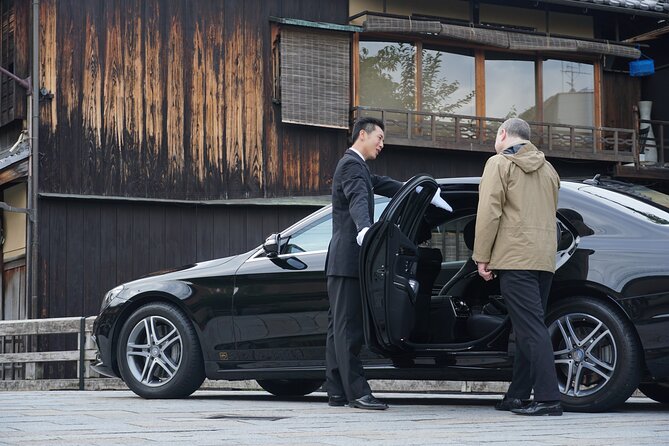
The vehicle is one of the central reasons to book this experience. You get a comfortable minivan rather than a crowded city bus. The driver handles the roads while the guide focuses on the sights, local customs, and your questions.
Fushimi Inari, 30 minutes among the torii gates
Fushimi Inari-taisha is the first planned stop. Admission is free, and the main visual draw is the long run of orange torii gates climbing into the wooded hills behind the shrine.
With only 30 minutes, you will be seeing the lower section rather than making a serious climb through the entire shrine complex. That is not a flaw if your goal is a quick introduction and memorable photographs. It is a limitation if Fushimi Inari is high on your personal list and you want to walk well beyond the first gates.
Your guide can give the shrine more meaning than a quick photo stop. Fushimi Inari is dedicated to Inari, associated with rice, commerce, and prosperity, and the fox figures around the shrine are traditionally linked with that deity. The tour information does not promise a particular explanation or route, so ask your guide what can fit into the available time.
The stop is free, which helps the overall value. You can walk, take photographs, and get a sense of the shrine without paying an entrance fee. Still, remember that the scheduled stop is short, and the road time between Kyoto’s districts is part of the four-hour clock.
Kinkakuji, the Golden Pavilion in a tight half hour
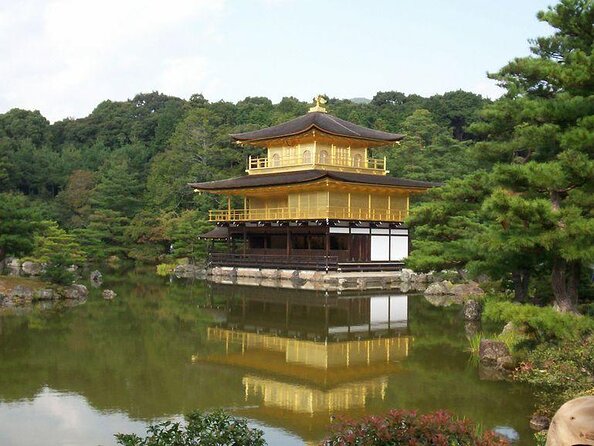
Kinkakuji, commonly called the Golden Pavilion, is the second stop. Admission is included, and you get about 30 minutes to walk around the grounds.
The pavilion is one of Kyoto’s most instantly recognizable sights. Its gold-covered upper levels reflect in the pond, creating the classic view most people associate with the temple. The setting is carefully arranged, so even a short visit can deliver a strong visual impression.
Thirty minutes works for the main pond view, the pavilion, and a portion of the grounds. It does not allow for a leisurely temple visit or a long pause at every garden feature. I would treat this as a focused stop: listen to the guide, take in the view, and keep moving when the group needs to stay on schedule.
Admission being included removes one small task at the gate. More important, the guide can help explain the site rather than leaving you to identify the building from a photograph. Ask questions if you want context about the pavilion, its religious setting, or the garden design.
The fixed stop is also a reminder to set priorities before you begin. If Kinkakuji matters more to you than Arashiyama, tell the guide early. The route is flexible, but flexibility works best when you explain what you want before the clock gets tight.
Same city, a completely different kind of day:
- Kyoto Geisha Walking Tour: Gion District & Hidden Gems
★ 4.7 · 3,273 reviews - Kyoto: Tea Ceremony Ju-An at Jotokuji Temple
★ 4.9 · 3,207 reviews - Kyoto: Gion Magical Night Walking Tour with Geisha Trivia
★ 4.9 · 2,393 reviews - Kyoto: 45-Minute Tea Ceremony Lesson Experience
★ 4.3 · 2,378 reviews
Arashiyama’s Bamboo Forest, with 45 minutes to walk
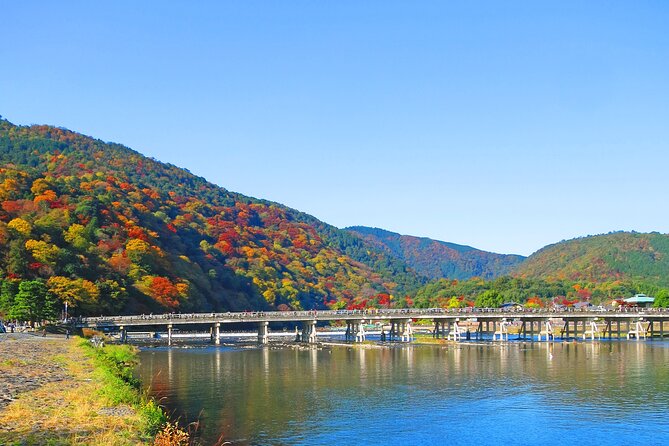
Arashiyama gets the longest scheduled stop, about 45 minutes. The focus is the Bamboo Forest, where tall green stalks form a narrow walking route that feels very different from the open grounds at Kinkakuji and the torii tunnel at Fushimi Inari.
Admission is free. The attraction is the walk itself, along with the changing light and the height of the bamboo. Forty-five minutes gives you time to enter the grove, take photographs, and walk at an easy pace, though it is not enough to explore all of Arashiyama.
The area offers more than bamboo, but the supplied plan centers on the forest. If you want additional Arashiyama sights, ask what can be added without putting the rest of the tour at risk. The tour allows destination changes, but three major areas in four hours leave little spare time.
One guide, Naoki, has taken groups to see bamboo beyond the most familiar path. That kind of adjustment may be possible, but it should be treated as a request rather than a guaranteed feature. Your final route depends on timing, traffic, and what you choose to prioritize.
Arashiyama is also a good place to notice the difference between a private tour and a fixed group outing. Your guide can help with photographs and keep the walk moving at your pace. A family with children may need a shorter route, while a couple focused on photos may prefer to spend every available minute among the bamboo.
What the guides add to a fast tour
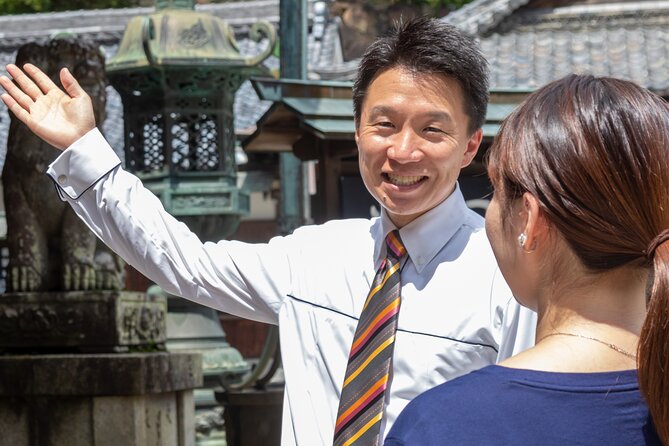
A four-hour route can easily become a parade of photo stops. The guide is what turns it into a useful introduction to Kyoto.
Naoki has been described as patient, funny, and comfortable speaking English and Japanese. He has answered questions about Kyoto’s culture, helped families keep children interested, and added stops such as sake tasting or quieter places with seasonal blossoms when time allowed.
Waka has taken a personal approach before the tour begins, checking meeting details and asking about interests and preferences. That early contact is helpful when you are arriving in an unfamiliar station and want to avoid a rushed start.
The names matter because guide quality is central here. You are paying not just for transport, but for someone to interpret the temples, adjust the pace, and help you make choices. Guides may vary by date, so you should not assume you will receive Naoki or Waka specifically unless the operator confirms it.
English ability has been praised, and the tour suits people who want explanations rather than a silent drive. If you are interested in food, photography, religious customs, or local neighborhoods, say so at the beginning. The more clearly you state your interests, the easier it is to shape a short private tour around them.
Comfort, traffic, and the value of saved time
The strongest practical reason to choose this outing is saved time. Kyoto’s bus network can be slow, especially when many people are heading toward the same major sights. A private vehicle does not remove traffic, but a local driver can choose roads and handle the driving while you focus on the city.
The minivan is described as comfortable and, in one account, luxurious. That makes a difference if you are touring after a long train journey, traveling with older family members, or carrying the mental load of navigation.
There is a tradeoff. A vehicle cannot drive directly through every temple approach or bamboo path. You still need to walk at each stop, and the four-hour duration includes travel between districts. The driver may avoid some delays, but nobody can guarantee clear roads in Kyoto.
The private format means only your group participates. That gives you room to ask questions and make reasonable adjustments. It also means the cost is not spread across a large coach group, which helps explain the higher per-person price.
At $263.56 per person, I would compare the cost with what a private taxi and separate guide might cost for your party, but the supplied information does not give a separate fare breakdown. The clearest value is convenience: one booking, one vehicle, one guide, and three major areas in a half day.
Group discounts are available, so the price may work better for a larger party than for one or two people. If you are traveling alone, this will be an expensive way to see Kyoto. If you are splitting the cost among a private group and have limited time, the convenience becomes easier to justify.
Who should book this Kyoto outing?
I would look closely at this tour if you have only one afternoon in Kyoto, are visiting from a cruise or tight multi-city schedule, or want to see the city without mastering its transit system first.
It also suits families. The private van avoids the strain of keeping children together on several buses and trains, while the guide can adjust explanations and pace. One family with children found that the guide kept them engaged, which is useful when three temples and shrines might otherwise blur together.
Couples who want photographs may also benefit. Guides have helped with pictures and adjusted the walking pace, though you should ask for enough photo time before setting off.
This is less suitable if you want long, quiet visits at each place. Fushimi Inari and Kinkakuji each receive only 30 minutes, and Arashiyama receives 45 minutes. You will see the highlights, but you will not explore every path, garden, or side building.
Repeat visitors may like the ability to change destinations. If you have already seen Kinkakuji, you can ask whether another Kyoto stop better matches your interests. The operator allows changes, but the total time remains about four hours.
Booking details and cancellation terms
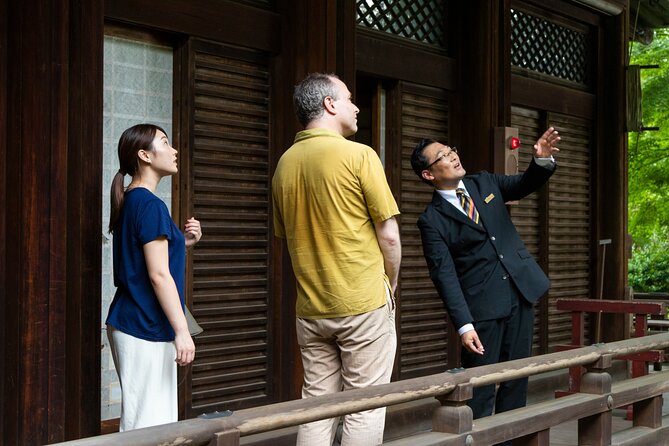
The tour offers pickup and mobile ticketing, and it ends at the same Kyoto Station meeting point. Most people can participate, and the activity is private for your group.
Free cancellation is available if you cancel at least 24 hours before the local start time. Cancellations or changes made less than 24 hours ahead are not accepted for a refund. Confirmation is sent within 48 hours, subject to availability, so do not leave a very tight schedule until the last minute.
Should you book it?
Book this tour if time, comfort, and a private guide matter more to you than the cheapest transport. It gives you a practical first look at Fushimi Inari, Kinkakuji, and Arashiyama, with a driver, a minivan, and room to shape the route around your group.
Think twice if your main goal is a slow temple day. The route is ambitious, and the stop lengths are short. For a first visit with only four hours available, though, Kyoto MK offers a sensible way to cover three distant sights without turning your afternoon into a transit exercise.
FAQ
How long does the Kyoto minivan tour last?
The tour lasts approximately four hours.
Which Kyoto sights are included?
The planned stops are Fushimi Inari-taisha Shrine, Kinkakuji Temple, and Arashiyama’s Bamboo Forest.
How much time is planned at each stop?
The schedule allows about 30 minutes at Fushimi Inari, 30 minutes at Kinkakuji, and 45 minutes in Arashiyama.
Can the destinations be changed?
Yes. The route can be changed according to your wishes, although the total tour time remains about four hours.
Is this a private tour?
Yes. Only your group participates in the activity.
Where does the tour start?
It starts at the MK Taxi VIP Station at Kyoto Station’s Hachijo Exit, near the Kyoto sightseeing reception and across from the station next to the ibis Styles Kyoto Station.
Where does the tour finish?
The activity ends back at the same meeting point.
What is the cancellation policy?
You can cancel for a full refund up to 24 hours before the experience start time. Cancellations or changes made less than 24 hours before the start are not accepted for a refund.
Newest Kyoto experiences on the site
- Treasures of Kyoto: Gion & historical Walking Tour★ 5.0 · 6 reviews
- Whisk Your Own Matcha: A Zen Matcha Experience at Temple★ 3.6 · 7 reviews
- Kyoto tea town for matcha lovers★ 5.0 · 16 reviews
- Uji: Private immersion into Kyoto’s tea and reglious culture★ 5.0 · 17 reviews
- Kyoto Matcha Green Tea Tour★ 4.5 · 23 reviews
- Uji and Wazuka Matcha Farm Half Day Private Guided Tour★ 5.0 · 21 reviews
- Utilising upcycled Matcha! Creating matcha incense (Uji, Kyoto)★ 5.0 · 6 reviews
- Uji Tea Ceremony and UNESCO Heritage Walking Tour★ 5.0 · 20 reviews
Guided, compared.
Kyoto Early Morning Tour with English-Speaking Guide
Read our review →
Kyoto 6hr Private Tour with Government-Licensed Guide
Read our review →Early Morning Tour with English-Speaking Guide
Read our review →
Nijo-jo Castle and Ninomaru Palace Guided Tour
Read our review →
Kyoto Gion Night Walk & Geisha District Guided Tour
Read our review →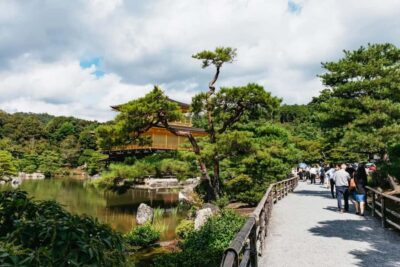
Nijo Castle, Kiyomizu & Fushimi Inari Guided Tour
Read our review →