
Reviewed · NARA DAY TRIPS
From Kyoto / Osaka: Kyoto Must-see Spots & Nara Park One Day Tour
Nara’s bowing deer and Kyoto’s endless orange torii gates are the headline acts here, but the real trick is fitting Nara and Kyoto into one day without wrestling with several train lines. I like the air-conditioned transport and the lively guides, with Mia, Fiona, Amy, Laura, Tina, and Fiona among the guides praised for clear directions and good local tips.
I also like the range: deer, Shinto shrines, bamboo, Zen gardens, a historic bridge, and a playful textile display. The tradeoff is simple: this is a quick sampler, not a slow cultural walk. Stops are short, the group can reach 45 people, and some of the Arashiyama sights are viewed at a brisk pace.
Key points at a glance
- Nara Park comes first: Spend about an hour with free-roaming deer and the park’s temple setting.
- Fushimi Inari gets 70 minutes: Walk beneath the famous vermilion torii gates at Japan’s head Inari shrine.
- Arashiyama takes up the second half: See the bamboo grove, Nonomiya Shrine, Kimono Forest, Tenryu-ji, Rilakkuma Tea House, and Togetsukyo Bridge.
- The price is transport-focused value: At $60 per person, your air-conditioned vehicle and guide do much of the day’s logistical work.
- Bring extra money for lunch and Tenryu-ji: Lunch is not included, and the temple ticket costs 500 yen.
- Expect a big-group rhythm: You get helpful coordination and free time, but not constant guiding at every sight.
What this Kyoto and Nara day tour is really designed to do
This tour is built for you if your Japan schedule is tight. In roughly nine hours, it links two major destinations that are awkward to combine on your own: Nara, east of Osaka and Kyoto, and Arashiyama, on Kyoto’s western side.
That route covers a lot of ground. You are not spending half a day at one temple, and you will not have time to wander every lane around Arashiyama. Instead, you get a guided transfer between major sights, a set amount of free time at each stop, and a vehicle that keeps the day moving.
The $60 price is reasonable for this purpose. The admissions are mostly free, and public transport could cost less if you planned carefully. But the value is in avoiding transfers, figuring out station exits, and coordinating Nara with western Kyoto in one day. You are paying for simplicity, time control, and a guide who keeps a large group on schedule.
The tour is offered from Kyoto or Osaka, and some departures can be useful as a practical transfer between the two cities. One person used it to move between Kyoto and Osaka with luggage, but you should tell the operator in advance if you plan to bring large bags. The same applies to a stroller.
More day trips down to Nara:
- Osaka/Kyoto:Kinkakuji,Arashiyama,FushimiInariShrine,NaraPark
★ 4.1 · 1,596 reviews - Kyoto/Osaka: Nara, Fushimi Inari Taisha, Arashiyama Bus Tour
★ 4.7 · 1,275 reviews - Osaka/Kyoto: Arashiyama, Nara & Fushimi Inari Shrine w/Lunch
★ 4.4 · 754 reviews
Nara Park: one hour with deer and old temples
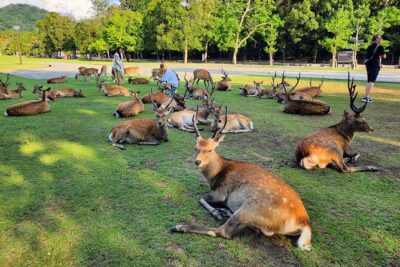
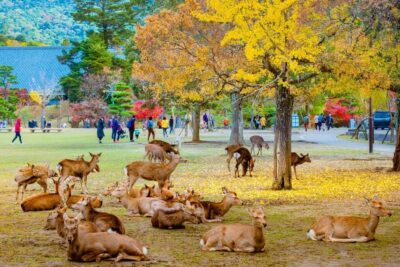
Nara Park covers about 660 hectares, so the one-hour stop only gives you a taste. Still, it is enough time to meet the park’s most famous residents, the free-roaming deer.
The deer are accustomed to people and may bow in hopes of receiving food. Feeding them can be a charming family experience, especially for children, but keep your attention on what you are doing. The animals are eager, and your biscuits will not last long.
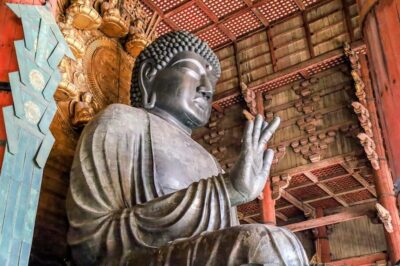
The park is more than a deer stop. It is one of Nara’s oldest public spaces, surrounded by major Buddhist temples and historic sites. However, this tour does not include the Great Buddha. If seeing that famous statue is important to you, plan a separate Nara visit rather than assuming it is part of this outing.
That limitation is worth knowing before you book. The Nara section gives you deer, open parkland, and a sense of the temple district. It is not a full tour of Nara’s major monuments.
Your guide will help with meeting times and return points, which matters in a broad park where it is easy to stop for one more photograph. Guides praised on this route, including Amy, Mia, Fiona, and Tina, are especially noted for keeping people together and explaining the next step clearly.
Fushimi Inari: 1 hour and 10 minutes under the torii gates
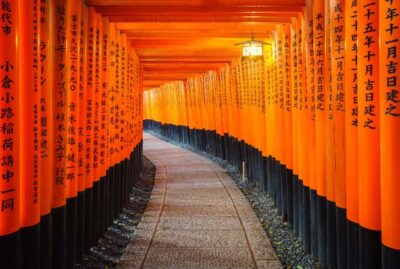
Fushimi Inari Taisha is the head shrine of the roughly 30,000 Inari shrines found across Japan. Inari is associated with rice, and the shrine’s famous Senbon Torii route winds through thousands of vermilion gates.
The first stretch is the part most people recognize from photographs. The gates create a bright corridor up the wooded hillside, and the effect is striking even when the path is crowded.
You have about 70 minutes here. That is enough to pass through the lower torii and climb for a while, but not enough for a full mountain circuit. Wear shoes you can walk in, and listen closely for the meeting time. Fushimi Inari is a place where a few extra minutes of wandering can quickly become a missed departure.
This is one stop where your own priorities matter. If you want photographs, use the early part of the visit. If you want more walking, go beyond the first dense line of gates, where the mood can become quieter. You probably will not reach the highest points during this scheduled stop.
One useful point from the tour feedback is that some people wanted more time here and less time in the bamboo grove. That tells you how to use your hour: decide in advance if Fushimi Inari is your main goal, then make the first part of the stop count.
Arashiyama Bamboo Forest: beautiful, brief, and busy
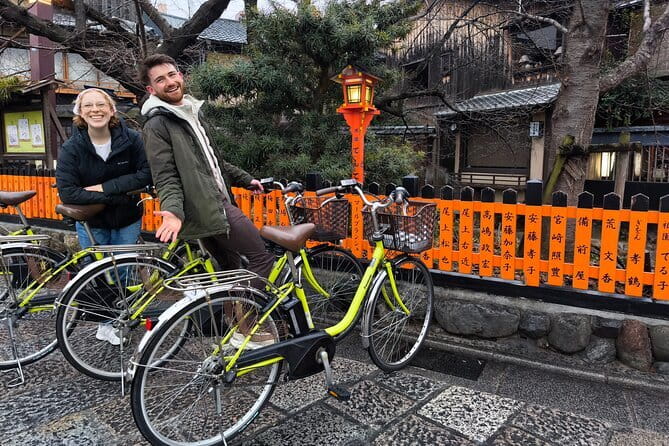
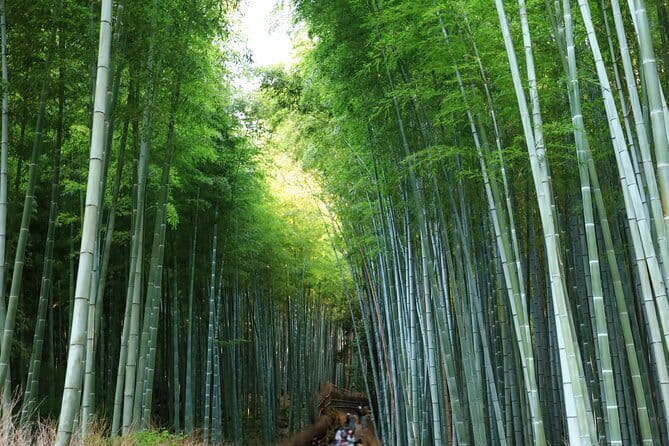
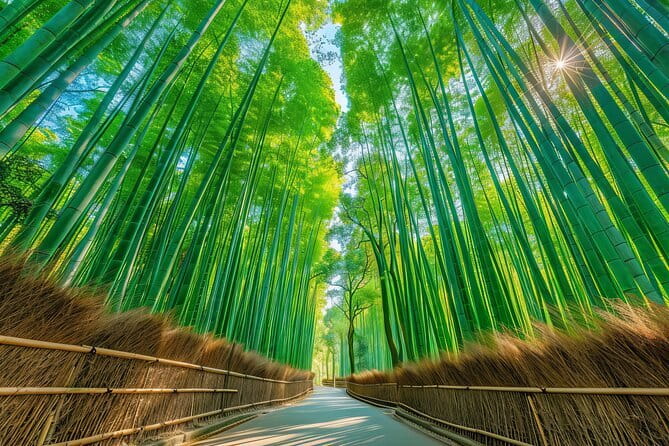
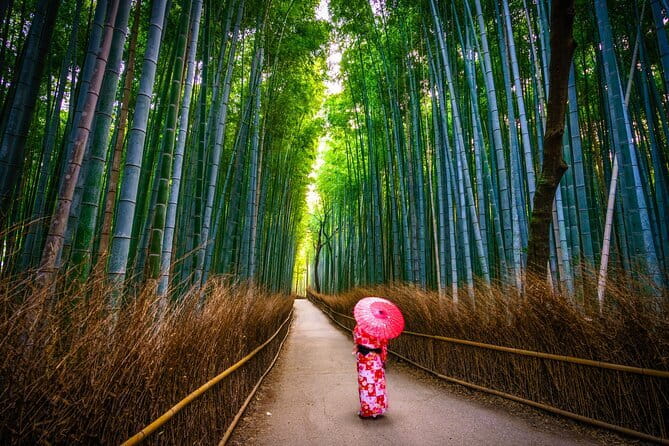
Arashiyama is the largest section of the day, but it is divided among several small sights. The Bamboo Forest receives about 50 minutes, making it one of the longer walks on the schedule.
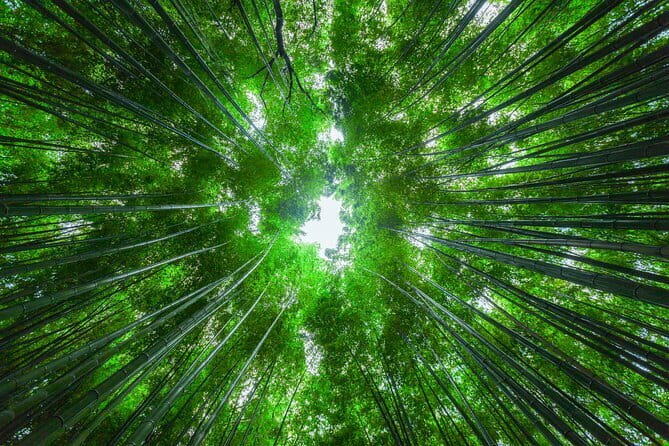
The tall bamboo stalks create a cool, green corridor that feels very different from Fushimi Inari’s orange gates. It is a classic Kyoto scene, and you will want to look upward as well as ahead. The main path is popular, so do not expect complete silence or a private woodland walk.
The short Arashiyama introduction is listed at 10 minutes, followed by separate stops at the bamboo grove and nearby attractions. In practice, you should think of this as a walking cluster rather than a series of fully guided visits.
This part of the tour rewards a quick pace. You may have time for photographs and a calm look at the bamboo, but not for every side path. One person felt the forest received more time than Fushimi Inari, while another appreciated the chance to see the major sights in a single day. Both reactions make sense. The schedule favors breadth over lingering.
More days that pair Kyoto with Osaka:
- One-Day Tour of Kyoto’s Highlights from Osaka/Kyoto
★ 4.5 · 1,092 reviews - Full Day Guided Tour to Kyoto and Nara from Osaka by Van
★ 5.0 · 420 reviews - Nara Afternoon Tour from Kyoto or Osaka
★ 4.5 · 390 reviews - Kyoto Morning Tour from Kyoto or Osaka
★ 4.0 · 281 reviews
Nonomiya Shrine and the quieter details of Arashiyama
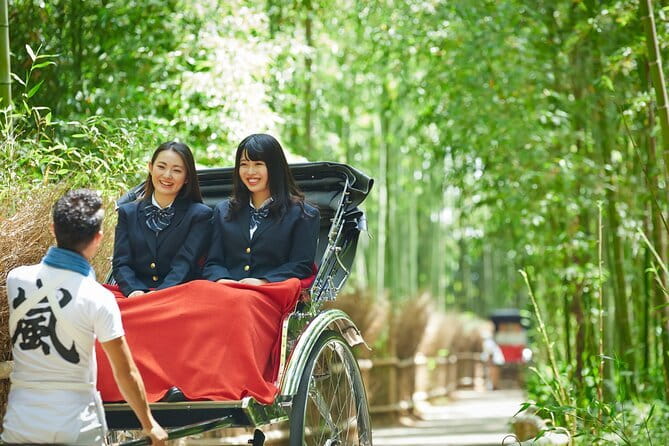
Nonomiya Shrine receives about 20 minutes. It is a small Shinto shrine with a distinctive black torii gate, unlike the vermilion entrance associated with many Japanese shrines.
The shrine is tied to the Arashiyama area and makes a useful contrast with Fushimi Inari. Here, the interest is not scale. It is the restrained design, the dark gate, and the sense of a smaller sacred site tucked into a popular sightseeing district.
Twenty minutes is enough for a look, a few photographs, and a short explanation from your guide. It is not enough for a long ritual visit or extended quiet time. If your interest runs toward traditional architecture and religious customs, listen carefully to the guide’s explanation because the stop itself is compact.
Kimono Forest: a colorful modern stop
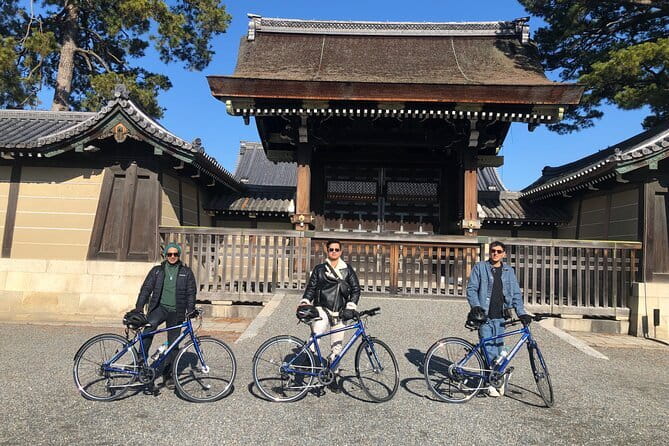
The Kimono Forest is an outdoor art installation made from about 600 clear acrylic cylinders, each roughly two meters high. The cylinders display colorful kimono fabrics in different designs.
This is a sharp change of mood from the bamboo and shrine stops. It is more modern, decorative, and easy to photograph. The 20-minute visit gives you time to walk among the cylinders and take in the patterns without committing a large part of the day.
Not everyone will rank it among Kyoto’s essential sights. If your personal list centers on temples and historic architecture, you may prefer more time at Fushimi Inari or Tenryu-ji. If you enjoy design, textiles, and unusual public art, it adds variety to the route.
That choice is part of the tour’s compromise. The schedule includes several quick stops so you see more, but each one receives less attention than it would on a private tour.
Tenryu-ji: the 500-yen question
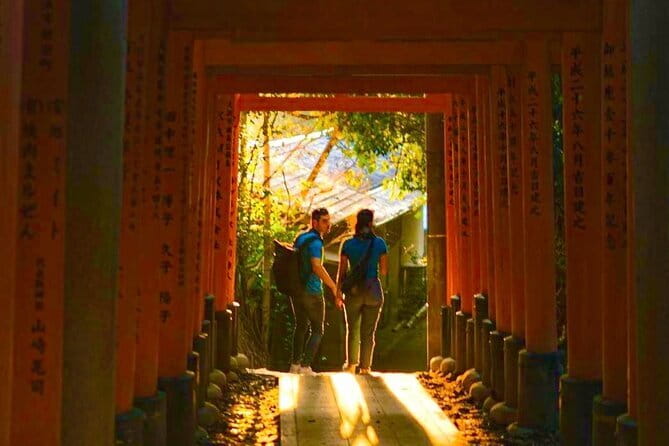
Tenryu-ji is a UNESCO World Heritage Site and the top-ranked temple among Kyoto’s five great Zen temples. It is one of the most important stops in Arashiyama, especially if you care about Japanese gardens, Zen architecture, and religious history.
The scheduled visit is about 20 minutes, and the admission ticket is not included. The extra cost is 500 yen.
You should clarify with your guide how the stop will work on your departure. The published plan includes Tenryu-ji, but one account reported that the temple was not visited, while another wished the tour had spent more time there instead of at Kimono Forest. This is the clearest point of uncertainty in the day.
If Tenryu-ji is a priority, say so early and ask where the group will enter. Twenty minutes is already short for a major temple complex, and you may need to choose between the garden, buildings, and photographs. The tour can introduce you to Tenryu-ji, but it is not designed as a full temple visit.
Rilakkuma Tea House and Togetsukyo Bridge
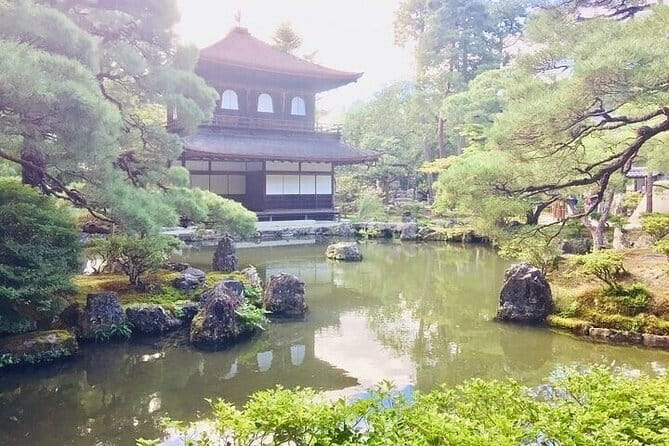
The Rilakkuma Tea House gets about 15 minutes. Rilakkuma means bear in a relaxed mood, and the cafe and shop use that gentle bear theme throughout. This is a light, commercial stop rather than a major historic sight.
You may enjoy it if you like Japanese character goods, themed cafes, or a quick browse for souvenirs. If not, treat it as an optional-looking pause within the wider Arashiyama walk. The tour information does not include a meal here, and lunch is not included in the price.
Togetsukyo Bridge receives another 15 minutes. Originally built during the Heian Period, from 794 to 1185, the bridge was most recently rebuilt in the 1930s. It crosses the Katsura River and is Arashiyama’s best-known landmark.
The bridge stop is mainly about the view and orientation. You can photograph the river, bridge, and surrounding hills, then get a feel for the area’s old pleasure-district setting. Fifteen minutes is enough for a look, but not for a long riverside walk.
Because lunch is on your own, Arashiyama may also be your chance to find food if timing allows. Do not count on a relaxed restaurant meal. Ask your guide for practical suggestions, as several guides on this route have helped with food and shopping advice.
Guides, group size, and how much guiding you get
The guide can make or break a day with this many stops. The strongest reports describe guides who are lively, organized, and good at explaining meeting points. Tina, for example, was praised for sending clear directions and maps, while Fiona and Amy were noted for keeping the mood upbeat and communicating well.
The guide names connected with this route include Mia, Fiona, Amy, Laura, Tina, Theodore, Tracy, Willa, Frederick, and Christine. Your guide is not guaranteed in advance, but these examples give you a sense of the service style: practical instructions, local background, and energetic coordination.
Do not expect a private walking tour. With a maximum of 45 people, the guide cannot give a detailed talk at every shrine or keep everyone in one tight group through every path. Much of the experience works like this: the guide explains the site, leads you to the general area, sets a meeting time, and gives you free time to explore.
That arrangement suits independent people who can follow directions. It may frustrate you if you want a continuous history lesson or personal attention at each stop. The bus seats have also been described as narrow and less comfortable for larger bodies, so keep that in mind during a full nine-hour day.
Who should book this $60 tour
I would choose this tour if you are staying in Osaka or Kyoto for a short time and want the major images of the region in one day. It is also a good fit for first-time visitors who do not want to plan a complicated route across Nara and Kyoto.
Families may like the deer, the simple transport plan, and the variety of stops. The tour can also help if one member of your group has difficulty walking, though you should discuss that in advance. A guide helped one family arrange a front-of-bus seat and offered assistance, but the schedule still involves walking at shrines, through the bamboo area, and around Arashiyama.
I would not choose it if your main goal is slow temple study, a long Fushimi Inari hike, or a relaxed meal. You would be better served by visiting fewer places independently. The same goes for anyone who dislikes fixed meeting times or large groups.
You receive a mobile ticket, an air-conditioned vehicle, and a guide. Lunch, temple admission, and personal purchases are extra. Free cancellation is available until 24 hours before the start time, which gives you some flexibility if your plans change.
Should you book the Kyoto and Nara day tour?
Book it if you want maximum sightseeing with minimum transport planning. Nara Park, Fushimi Inari, and Arashiyama are all worthwhile, and the tour gives you a workable first look at each for $60.
Go in with the right expectations. You are buying an efficient sampler with an energetic guide, not an intimate cultural walk. Protect your favorite stop by using its time well, keep track of the meeting point, and ask directly about Tenryu-ji when the day begins.
For a first visit, a tight schedule, or a Kyoto to Osaka travel day, I think the convenience is worth the compromise. For a slower, more thoughtful look at Kyoto’s temples and gardens, choose fewer sights and take the trains yourself.
FAQ
How long does the Kyoto and Nara tour last?
The experience lasts approximately nine hours.
What places are included?
The route includes Nara Park, Fushimi Inari Taisha, Arashiyama, the Arashiyama Bamboo Forest, Nonomiya Shrine, Arashiyama Kimono Forest, Tenryu-ji Temple, Arashiyama Rilakkuma Tea House, and Togetsukyo Bridge.
Is lunch included?
No. Lunch is not included, so you should budget for food during the day.
Is the Tenryu-ji admission fee included?
No. The Tenryu-ji ticket costs 500 yen and is paid separately.
How many people can join the tour?
The tour has a maximum of 45 participants.
Can I bring a stroller or large luggage?
You should tell the operator when booking if you plan to bring a stroller or large luggage.
What is the cancellation policy?
You can cancel at least 24 hours before the experience start time for a full refund. Cancellations or changes made less than 24 hours before the start time are not accepted for a refund.
Newest Kyoto experiences on the site
- Treasures of Kyoto: Gion & historical Walking Tour★ 5.0 · 6 reviews
- Whisk Your Own Matcha: A Zen Matcha Experience at Temple★ 3.6 · 7 reviews
- Kyoto tea town for matcha lovers★ 5.0 · 16 reviews
- Uji: Private immersion into Kyoto’s tea and reglious culture★ 5.0 · 17 reviews
- Kyoto Matcha Green Tea Tour★ 4.5 · 23 reviews
- Uji and Wazuka Matcha Farm Half Day Private Guided Tour★ 5.0 · 21 reviews
- Utilising upcycled Matcha! Creating matcha incense (Uji, Kyoto)★ 5.0 · 6 reviews
- Sacred Temple Yoga Experience in Japan★ 5.0 · 3 reviews
Nara Day Trips, compared.
Kinkakuji,Arashiyama,FushimiInariShrine,NaraPark
Read our review →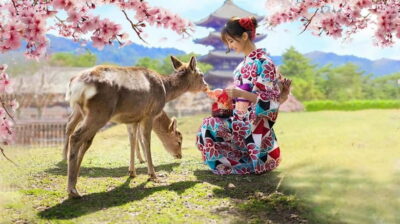
Nara, Fushimi Inari Taisha, Arashiyama Bus Tour
Read our review →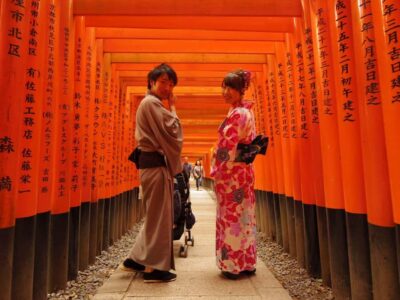
Arashiyama, Nara & Fushimi Inari Shrine w/Lunch
Read our review →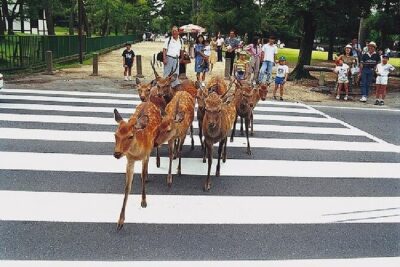
Full Day Guided Tour to Kyoto and Nara from Osaka by Van
Read our review →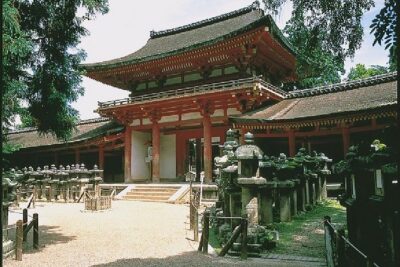
Browse the lists this tour appears in