
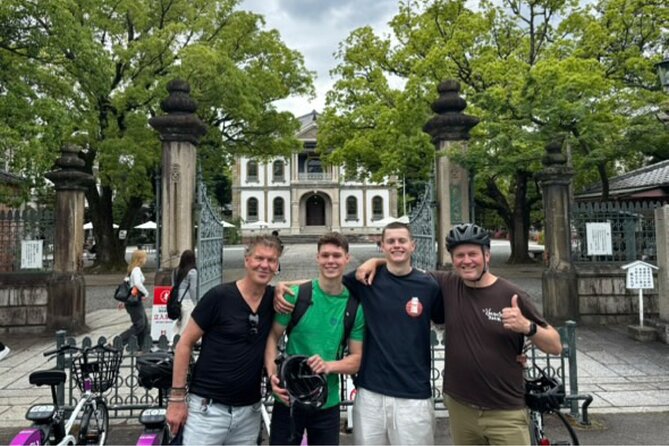
Reviewed · KYOTO CYCLING TOURS
No. 1 E-Bike Tour for Up to 5 Guests in Kyoto with a Local!
Kyoto is easier to read from a bicycle seat, and this tour gives you a lively cross-town route without asking you to pedal hard. You’ll move from Nishi Honganji and old Nintendo to Gion, Heian Shrine, Nanzenji, and the Kamo River, with a local guide explaining what you are seeing along the way.
I like the small five-person limit, which keeps the ride personal, and I like the mix of famous sights and quieter city details. The stop beside the Kamo River is a welcome pause. The main consideration is timing: four hours is enough for an overview, but not enough for long visits inside every temple.
Key points at a glance
- Electric bicycles make a broad Kyoto route manageable, especially for riders who want to cover several districts without a hard workout.
- The group is limited to five people, giving you more room to hear the guide and ask questions.
- Yuki is the guide named in the tour information, and language preferences may be available if arranged before booking.
- The route links major sights with local details, including the old Nintendo headquarters in Kagiyacho and the Lake Biwa Canal.
- The Kamo River provides a simple finishing pause, with time to relax by the water or cool your feet.
- The price is $99.08 per person, including the bike, helmet, and cycling guide.
Why this Kyoto bike route works
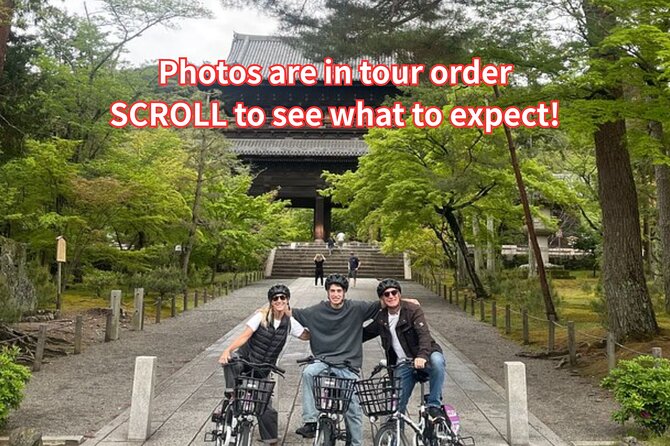
This is not a temple tour with a few minutes of cycling between stops. It is a moving look at Kyoto, where the route itself becomes part of the experience. You pass through ordinary streets, historic districts, waterways, and major religious sites in one afternoon.
The electric bicycle matters here. Kyoto is spread across a broad area, and walking between Nishi Honganji, Gion, Nanzenji, and the Kamo River would take much longer. With motor assistance, you can cover ground while still moving slowly enough to notice buildings, riverside paths, and seasonal plants.
The tour begins at 1 p.m. and lasts about four hours. That makes it a useful choice for your first or second day in Kyoto, when you want to get a sense of the city before deciding where to return for a longer visit.
The group limit is five people. That is small enough for direct conversation, but the ride is still shared, so you should expect the pace and stops to suit the group as a whole.
More bike days around Kyoto:
- Hidden Kyoto E-Biking tour
★ 5.0 · 1,843 reviews - Bike Tour Exploring North Kyoto plus Lunch
★ 5.0 · 1,087 reviews - Arashiyama Bamboo Forest & Hidden Gems Bike Tour (Early Bird)
★ 5.0 · 613 reviews
Meeting Yuki and getting set up
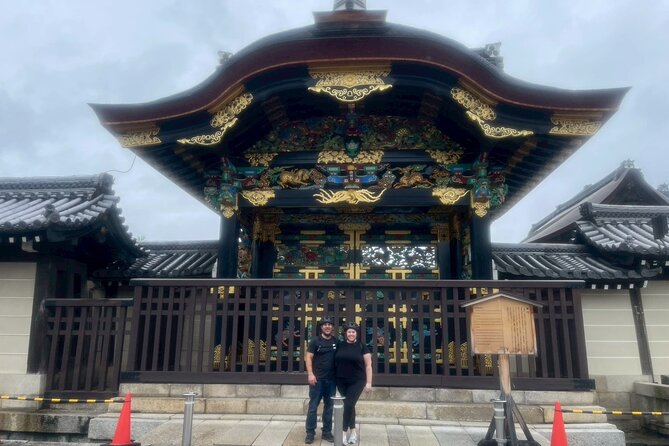
You meet at the Clew share-cycle port in front of Seikouin Wagatazizou, behind the hotel area near 570 Higashishiokōjichō. The listed meeting point is also given as Times Car Rental at 682 Higashishiokōjichō, Shimogyo Ward.
The opening briefing takes about 15 minutes. You will go over cycling hand signals before setting off, an important part of riding as a small group through Kyoto. A helmet, bicycle rental, and cycling guide are included.
The guide named in the tour information is Yuki. One rider accidentally called Yuki by another name, and Yuki corrected it with good humor. That small exchange suggests the friendly, personal tone you can expect, though the exact guide may depend on the date of your booking.
If you prefer a particular language, contact the operator before reserving. Some guides may speak German, Dutch, Bangladeshi, Hindu, or Urdu, as listed in the tour details. Since language availability is not guaranteed for every departure, ask before you pay.
Nishi Honganji gives the ride a serious start
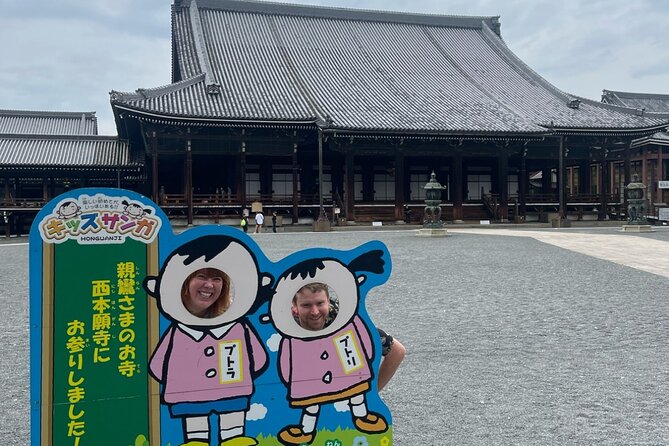
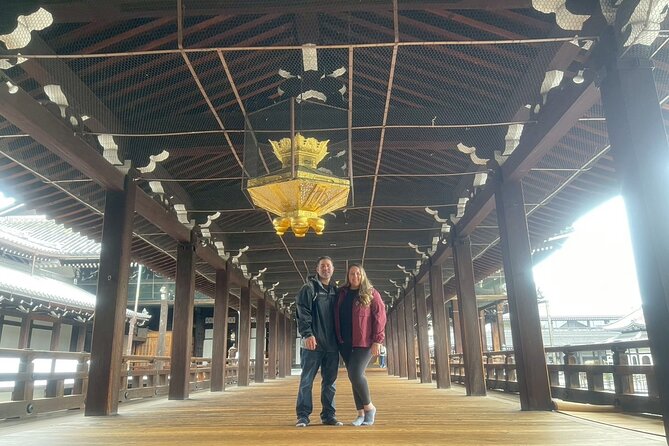
The first major stop is Nishi Honganji, the head temple of the Jodo Shinshu Hongwanji-ha sect. Its historic buildings are registered as a UNESCO World Heritage site.
You get about 30 minutes here. That is enough to take in the scale of the temple buildings and hear why the site matters, though it is not a full temple study. If Nishi Honganji is high on your Kyoto list, mark it for a separate return visit so you can explore without watching the clock.
Starting here is smart. It places Kyoto’s religious history early in the route, before the ride turns toward neighborhoods, waterways, and street scenes. The stop also helps you see that Kyoto is not only a collection of postcard lanes. Large temple grounds and major religious institutions remain part of the working city.
Kagiyacho adds an unexpected Nintendo stop
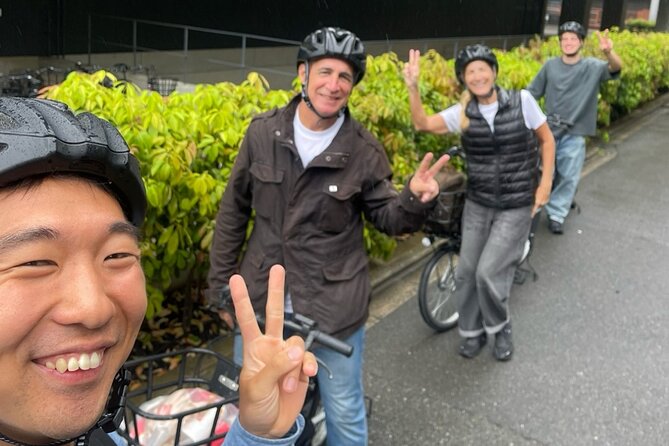
The route then passes through Kagiyacho, a local area where the old headquarters of Nintendo catches your eye. You do not come for a museum visit, and the tour does not describe an inside visit. The point is the building and its place in Kyoto’s modern cultural story.
This is one of the route’s more unusual details. Many Kyoto sightseeing plans focus only on shrines, gardens, and old wooden streets. Seeing the former Nintendo headquarters gives you a quick reminder that the city’s identity also includes businesses and popular culture.
The stop lasts about 20 minutes. You may find this part more interesting if you enjoy seeing how famous companies fit into the city around them, rather than treating Kyoto as a place frozen in the past.
Same city, a completely different kind of day:
- PERFECT KYOTO 1-Day Bus Tour
★ 5.0 · 13,518 reviews - Kyoto: Fushimi Inari, Kinkakuji, Bamboo Grove 1 Day Bus Tour
★ 4.8 · 4,316 reviews - Kyoto: Tea Ceremony in a Traditional Tea House in Kiyomizu
★ 4.9 · 3,519 reviews - Kyoto Geisha Walking Tour: Gion District & Hidden Gems
★ 4.7 · 3,273 reviews
Gion Shirakawa slows the pace
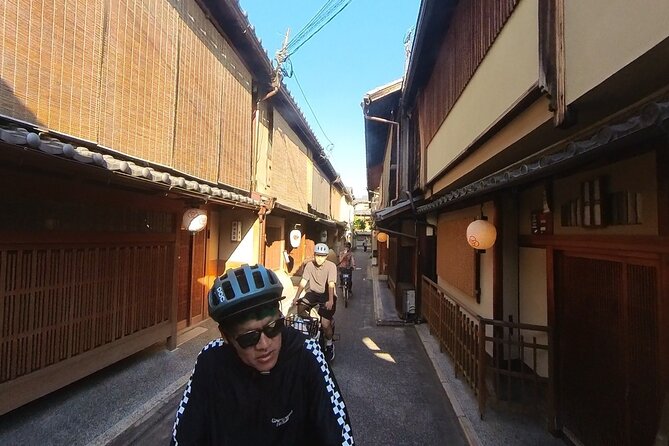
Next comes Gion, especially the street along the Shirakawa area. This district developed as a chaya-machi, a tea-house neighborhood, and is known for old buildings beside the river.
You have about 30 minutes here. The route gives you time to take in the traditional architecture and seasonal plants, including cherry blossoms when they are in season. The river setting helps explain why this part of Kyoto feels different from the broad temple compounds earlier in the ride.
Gion is one of Kyoto’s most recognizable areas, so it can be busy and popular. The advantage of arriving by bicycle is that you can connect it to the rest of the route instead of spending your whole afternoon in one district. The drawback is that a short stop cannot reveal every side of Gion. Treat this as an introduction, not a complete visit.
The Lake Biwa Canal explains Kyoto’s water supply
The ride continues toward Nanzenji through the Lake Biwa Canal. The first canal stop lasts about 20 minutes, followed by a longer 50-minute section at another point near Nanzenji.
The canal links Kyoto with Lake Biwa and helped provide water for the city. Its engineering also deals with the change in elevation between Kyoto and Lake Biwa. You do not need to be an engineering fan to appreciate the canal. It is a calm, useful part of the route that shows how Kyoto developed through infrastructure as well as temples.
This is where the electric bicycle feels especially practical. You can follow the waterway at an easy pace and shift from city streets to a more open setting without spending your energy on every incline.
The 50-minute canal stop is one of the longer pauses on the tour. That gives the guide room to explain the waterway and lets you enjoy the surroundings instead of rushing through for a photograph.
Heian Shrine brings a bold change of scale
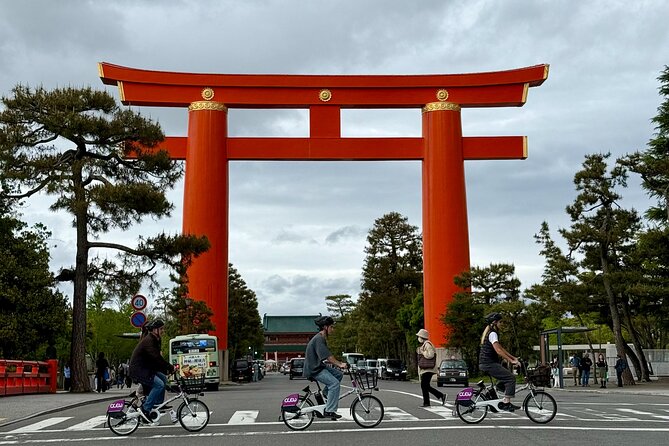
Heian Shrine appears on the route between the canal and Nanzenji. The shrine was established to mark the 1,100th anniversary of the capital’s move to Heian-kyo. Emperor Kanmu, the 50th emperor, is enshrined there, and the large red torii is one of the most visible features.
The schedule does not give a separate duration for this stop, so do not plan on an extended shrine visit. You will get the main visual impression and historical context as part of the ride.
The shrine is a useful contrast with Gion and Nanzenji. Gion offers a close view of traditional streets and riverfront buildings. Heian Shrine gives you a much grander sense of scale, marked by its prominent red gate.
Nanzenji provides the temple centerpiece
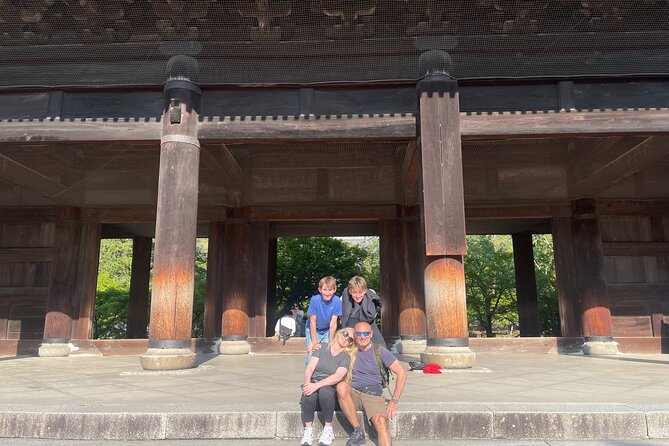
Nanzenji is the final major temple stop and lasts about 20 minutes. It is regarded as especially important among Kyoto’s Five Mountains, and its main temple and gate make a strong impression.
The grounds also include a beautiful structure connected with the Lake Biwa Canal. That link makes Nanzenji a natural point on this particular route. You see religious history and modern-era water engineering in the same area, rather than treating them as separate parts of Kyoto.
Twenty minutes goes quickly. You can expect an orientation and time to look around, not a long, unhurried temple visit. If you want to study Nanzenji’s grounds carefully, return later on your own.
The Kamo River is a cool finish
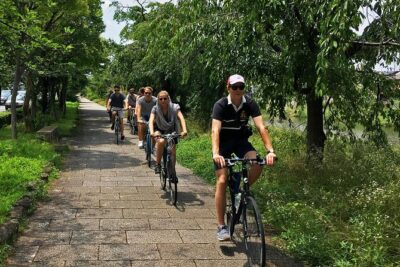
The final scenic stop is the Kamogawa River. You have about 10 minutes to relax along the river, cycle on the riverbank, or put your feet in the water to cool down.
That short pause is well placed after several hours of riding. It gives the tour a quiet ending instead of finishing at the last temple and sending you straight back to the starting point.
The river stop is also practical. Kyoto can feel warm during the cycling season, and even a brief break by the water can make the return ride more pleasant. The activity ends back at the original meeting point, where you return the bicycle.
Is $99.08 a fair price?
At $99.08 per person, this is not the cheapest way to see Kyoto. It becomes better value if you want a local guide, an electric bicycle, and a route that links several districts in one afternoon.
You are paying for more than bike hire. The fee includes the bike, helmet, cycling guide, hand-signal briefing, and the planning that connects Nishi Honganji, Gion, Heian Shrine, Nanzenji, the canal, and the Kamo River.
The value is strongest for a small party that wants a private-feeling outing without arranging its own route. For one person or a pair on a tight budget, public transport and self-guided sightseeing may cost less. You would also lose the guide’s stories and the convenience of moving between these areas by bicycle.
The tour is often booked about 18 days ahead, so it is sensible to reserve early if your Kyoto dates are fixed. Free cancellation is available until 24 hours before the start time. The tour depends on good weather, and poor weather may lead to a new date or a full refund.
Who should book this ride?
I would choose this tour if you want to see a wide slice of Kyoto in one afternoon and prefer local explanation to a rented bicycle and a map. It suits couples, families with older children, and friends who enjoy moving between famous sights rather than staying in one temple district.
Children under 10 may take part if they are taller than 140 centimeters and can ride a bicycle. They pay the same fee as adults. The maximum is five people, so a family or small private party can fill most or all of the available places.
This is not the right pick if you want long, quiet visits at every temple, a dedicated Gion-only walk, or a serious cycling workout. The electric assistance keeps the route approachable, while the four-hour schedule favors variety over depth.
Final call: book it for range and local context
Book this ride if you want Kyoto’s major sights tied together by a practical, human-scale route. The old Nintendo headquarters, the canal, and the Kamo River keep it from feeling like a basic temple checklist.
Skip it if you already have detailed plans for each stop or prefer to set your own pace inside temple grounds. For everyone else, the combination of five-person groups, electric bicycles, Yuki’s local guidance, and a broad route makes $99.08 a reasonable price for a first look at Kyoto.
FAQ
How long does the Kyoto e-bike tour last?
The experience lasts approximately four hours.
What time does the tour start?
The listed start time is 1 p.m.
Where does the tour begin?
You meet at a Clew share-cycle port in front of Seikouin Wagatazizou, near 570 Higashishiokōjichō. The meeting information also lists Times Car Rental at 682 Higashishiokōjichō in Shimogyo Ward.
Where does the tour finish?
The tour ends back at the meeting point, where you return the bicycle.
How many people can join?
The tour has a maximum of five people.
Is the bicycle included in the price?
Yes. Bike rental, use of the bicycle, a cycling guide, and a helmet are included.
Which places does the route visit?
The route includes Nishi Honganji, Kagiyacho and the old Nintendo headquarters, Gion, the Lake Biwa Canal, Heian Shrine, Nanzenji Temple, and the Kamogawa River.
Can children join the tour?
Children under 10 can participate if they are at least 140 centimeters tall and can ride a bicycle. They pay the same fee as adults.
Can I request a specific guide language?
You can contact the operator before booking about language preferences. Some guides may speak German, Dutch, Bangladeshi, Hindu, or Urdu.
What happens if the weather is poor?
The experience requires good weather. If it is canceled because of poor weather, you will be offered another date or a full refund.
Newest Kyoto experiences on the site
- Treasures of Kyoto: Gion & historical Walking Tour★ 5.0 · 6 reviews
- Whisk Your Own Matcha: A Zen Matcha Experience at Temple★ 3.6 · 7 reviews
- Kyoto tea town for matcha lovers★ 5.0 · 16 reviews
- Uji: Private immersion into Kyoto’s tea and reglious culture★ 5.0 · 17 reviews
- Kyoto Matcha Green Tea Tour★ 4.5 · 23 reviews
- Uji and Wazuka Matcha Farm Half Day Private Guided Tour★ 5.0 · 21 reviews
- Utilising upcycled Matcha! Creating matcha incense (Uji, Kyoto)★ 5.0 · 6 reviews
- Sacred Temple Yoga Experience in Japan★ 5.0 · 3 reviews
Kyoto Cycling Tours, compared.
Arashiyama Bamboo Forest & Hidden Gems Bike Tour (Early Bird)
Read our review →
5 Top Highlights of Kyoto Full Day Bike Tour (E-bike option)
Read our review →
Full Day Biking Tour Exploring the Best of Kyoto
Read our review →
Afternoon Kyoto Bike Tour: Bamboo Forest, Monkeys & Hidden Spots
Read our review →
South Kyoto in a Nutshell: Gentle Backstreet Bike Tour!
Read our review →Browse the lists this tour appears in