
Reviewed · KYOTO SUSHI MAKING CLASSES
Private Art Sushi Roll Class in Kyoto
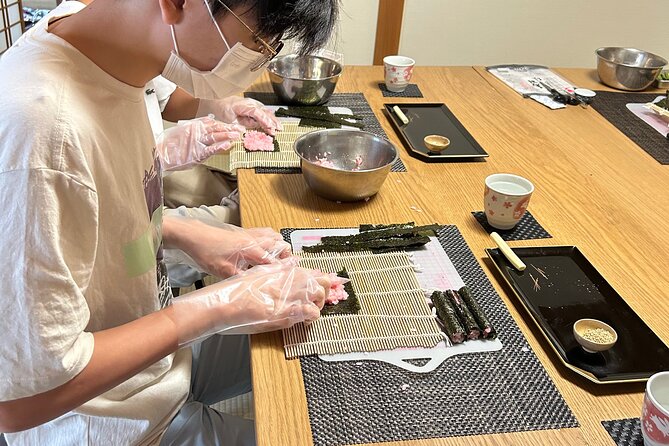
The clever part of this Kyoto class is that you are not simply rolling sushi. You are building a picture inside it, layer by layer, then slicing the finished roll to reveal a peach-flower pattern. Aya Ito leads the class in English, with her husband Manabu helping with photos and cleanup.
I like the private format, which lets your group work at its own pace and ask questions without sharing the table with strangers. I also like the traditional setting and clothing, plus the useful booklet and certificate at the end. The main catch is time: one hour moves quickly, and the class may suit people with a little kitchen confidence better than complete beginners.
- Make a peach flower inside one sushi roll using edible, plant-based colors.
- Learn from Aya Ito in English, with Manabu Ito helping during the class.
- Wear a kimono or traditional clothing in a Japanese home with a tatami room.
- Choose vegan or vegetarian ingredients when needed.
- Receive tea or coffee, bottled water, a booklet, and a certificate as part of the class.
- Bring socks, arrive before the 4:30 pm start, and remember that late arrivals over 15 minutes cannot join.
Building a Peach Flower Inside Sushi
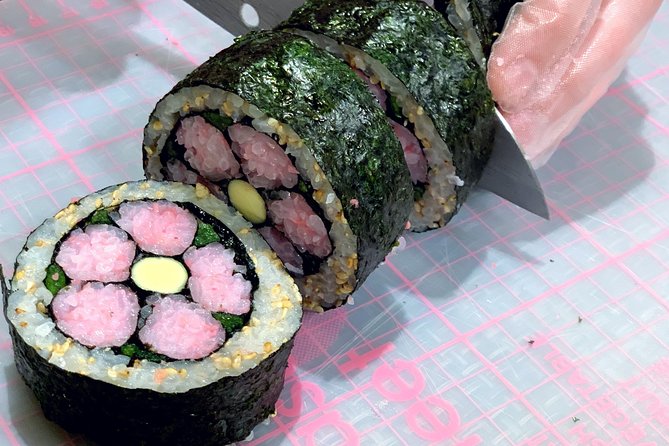
Kazarimaki means decorative sushi rolling. Instead of placing a simple filling in the center, you arrange colored rice and other ingredients so the cross-section forms an image. In this class, that image is a peach flower.
The design is made with edible colors taken from plants. That detail matters if you want something more thoughtful than a novelty photo. You are learning how Japanese cooks use shape, color, and careful assembly to turn a familiar food into a small piece of edible art.
You will work with traditional sushi ingredients, with vegan and vegetarian choices available. The finished roll is meant to look good when sliced, but it is also food to eat. This gives the class a nice balance: part craft lesson, part cooking class, and part cultural activity.
Do not expect to master every style of artistic sushi in 60 minutes. The class focuses on one design, and the short format is best understood as an introduction. You learn the basic method, complete a full project, and leave with enough information to try it again at home.
A Private Class With Aya and Manabu Ito
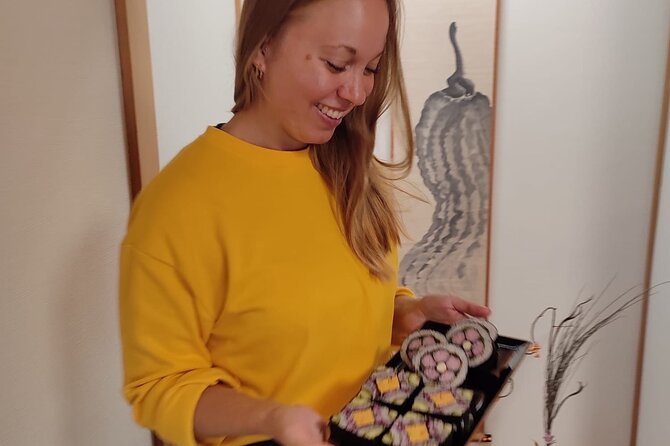
Your instructor is Aya Ito, an English-speaking host who leads the sushi lesson and explains the steps. Her husband, Manabu Ito, helps with practical matters such as taking photographs and handling cleanup. That division of work lets Aya keep her attention on the food and on your group.
English ability is important here because the design depends on sequence. You need to know which pieces go where, how much rice to use, and how tightly to shape the roll. The available feedback describes Aya’s instructions as clear and easy to follow, though one account suggests that people with some sushi-making experience may find the pace more comfortable.
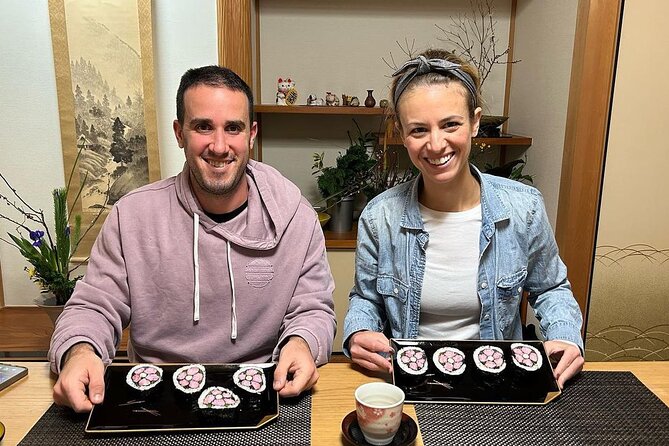
The private setup is useful for families, couples, and small groups with different confidence levels. You can ask for a repeated explanation, help with shaping, or advice about making the roll at home. A shared class might be cheaper, but it would not offer the same control over the pace.
If you are traveling with teenagers or grandparents, this is one of the more practical cooking activities in Kyoto. Everyone can take part at the same table, and the result gives the group a shared project rather than a demonstration where only one person handles the food.
Children under 18 must attend with a parent or guardian aged 21 or older. Babies and toddlers may sit or sleep on the tatami mat, which can make the class easier for a family with a very young child, though the one-hour activity is still most rewarding for people who can participate.
More sushi making classes in Kyoto:
- Sushi Making in Kyoto! Same-day bookings welcome!
★ 5.0 · 713 reviews - The Original Small-Group Sushi Making Class in Kyoto
★ 5.0 · 436 reviews - Kyoto: Small-Group Authentic Sushi Making Workshop
★ 5.0 · 137 reviews
Entering the Traditional Home Near Nijo Castle
The class takes place at SAKURA Experience Japanese Culture Nijo Home, at 660 Izumicho in Kyoto’s Nakagyo Ward. The meeting point is near public transportation, and the experience begins at 4:30 pm before ending at the same location.
This is not a large cooking school with a busy commercial feel. The setting is a Japanese home with a tatami room, which gives the activity a more personal character. You are not only learning a recipe. You are also being shown how a host welcomes visitors into a traditional domestic space.
You will be offered a kimono if you are a woman, or other traditional garments if you are a man or child. Wearing the clothing makes the class feel more connected to Japanese customs, but it also adds a practical requirement: bring socks. Shoes are removed, and the tatami room cannot be entered barefoot.
Plan your route carefully. If you arrive more than 15 minutes late, you cannot join the class. Since the entire lesson lasts about an hour, a late start would also affect the instructor and the rest of your private group.
How the 60 Minutes Usually Work
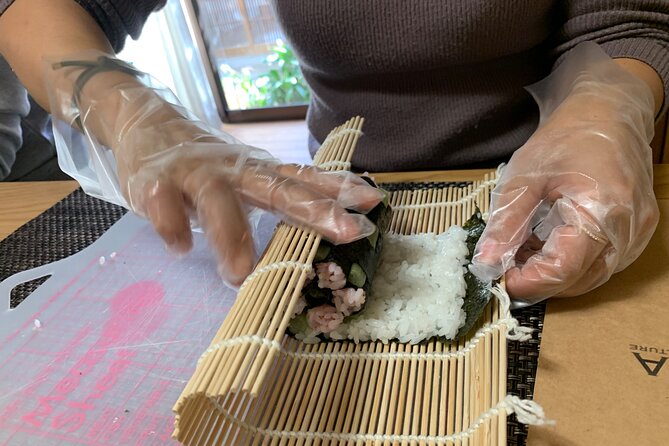
The class is short, so the sequence is focused. You will begin with an explanation of artistic sushi and the design you are about to create. Aya then guides you through the ingredients and the order in which each part must be assembled.
The most important skill is not ordinary sushi rolling. It is measuring and placement. Each colored strip must be positioned so that the peach flower appears when the roll is cut. Too much rice can blur the pattern, while uneven pressure can distort the shape.
You will use edible materials and natural food colors. The experience is designed so beginners can follow the process, but you should still expect to pay attention. This is not a class where you can casually watch and copy at the last moment.
Once the internal design is assembled, you will shape and roll the sushi. The final cut is the reveal. A roll that looks plain from the outside can show a clear flower inside, which is the satisfying payoff of the careful preparation.
Tea or coffee and bottled water are included. All sushi ingredients are also supplied, so you do not need to shop, bring cooking equipment, or prepare anything ahead of time. At the end, you receive a booklet and a certificate. The booklet is especially useful because it gives you a reference for trying the design again at home.
Why the Home Practice Matters
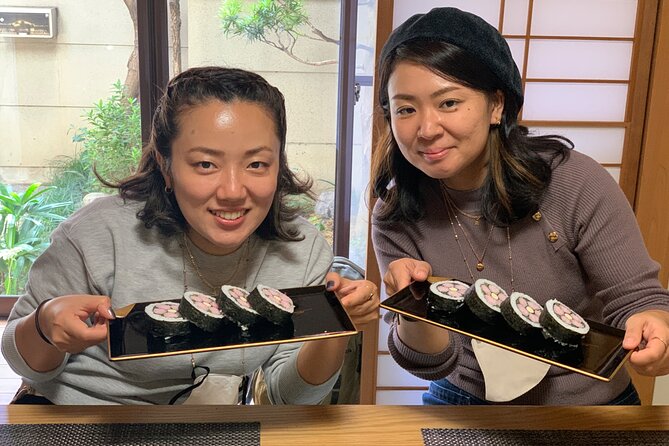
The strongest reason to choose this class is that the finished skill can travel home with you. Standard sushi-making lessons often teach rolling technique, but kazarimaki adds a design system. Once you understand how the inner pieces are arranged, you can experiment with other patterns.
The class also gives you a clear project to repeat. You are not merely sampling food or watching a professional prepare it. You make one complete roll yourself, then leave with written guidance.
That said, your home version may take some trial and error. The cut face of decorative sushi depends on careful assembly and pressure. The short lesson teaches the main idea, but it cannot cover every possible problem or design in depth.
I would treat the booklet as a useful starting point rather than a full cookbook. If you enjoy cooking and like practical souvenirs, it adds real value. If you prefer to eat sushi rather than make it, the certificate and printed material may matter less.
More craft workshops in Kyoto:
- Kyoto: 45-Minute Tea Ceremony Lesson Experience
★ 4.3 · 2,378 reviews - Ramen Cooking Class at Ramen Factory in Kyoto
★ 5.0 · 1,937 reviews - Kyoto : Chopsticks Making Workshop in Gion with Engraving Option
★ 5.0 · 958 reviews - Kyoto: Samurai Sword Class by Experts in Traditional Arts
★ 4.9 · 657 reviews
Vegan, Vegetarian, and Family Considerations
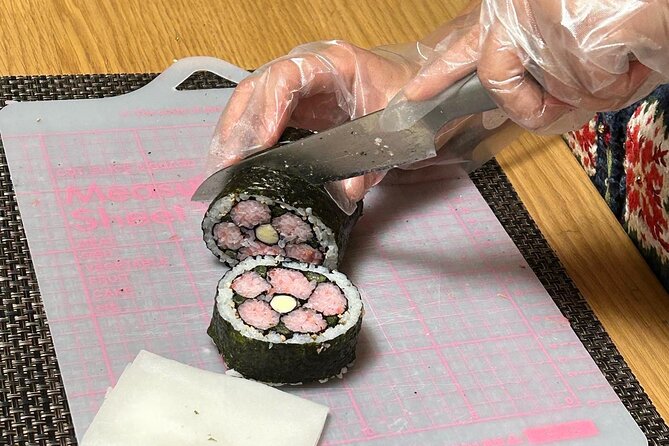
The class includes vegan and vegetarian options. If that is important to you, specify your needs when booking or before the class so the ingredients can be prepared appropriately. The available details do not list every filling, so you should not assume that all dietary requests beyond vegan and vegetarian choices are covered.
The activity is suitable for families, and the private format means your group does not need to adjust to strangers. Teenagers can take part directly, while grandparents can enjoy the social side and help with the assembly. Young children may sit on the tatami, but toddlers may not gain much from the technical part of the lesson.
The traditional clothing can make this a memorable family photo opportunity. Keep in mind that the class still involves careful handling of food and a timed sequence. A family with very young children may need one adult to supervise while others roll.
What the $93.32 Price Includes
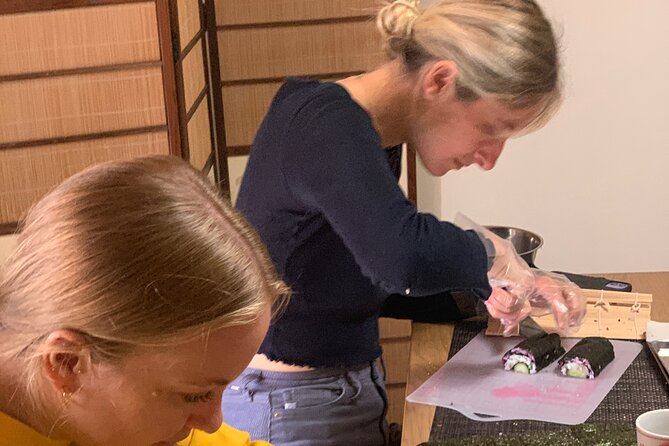
At $93.32 per person, this is not a budget lunch activity. The price makes more sense when you count what is included: a private instructor, all sushi ingredients, traditional clothing, tea or coffee, bottled water, a booklet, and a certificate.
The private group is the key value. You are paying for personal attention and for an activity designed around your own party, not simply for a plate of sushi. That makes the cost easier to justify for couples or families who want a special Kyoto memory and prefer not to join a larger class.
Group discounts are available, though the exact reduction is not stated. If you are booking for several people, check the total before deciding. The class is also booked around six days ahead on average, so it is sensible to reserve early if the 4:30 pm time fits your plans.
The certificate is a pleasant extra rather than the main reason to book. The real value is the hands-on lesson and the chance to repeat it at home. If you only want to taste sushi, a restaurant will give you more food for less money. If you want an activity that combines cooking, design, clothing, and a private host, this price is more reasonable.
The Main Strengths and Limits
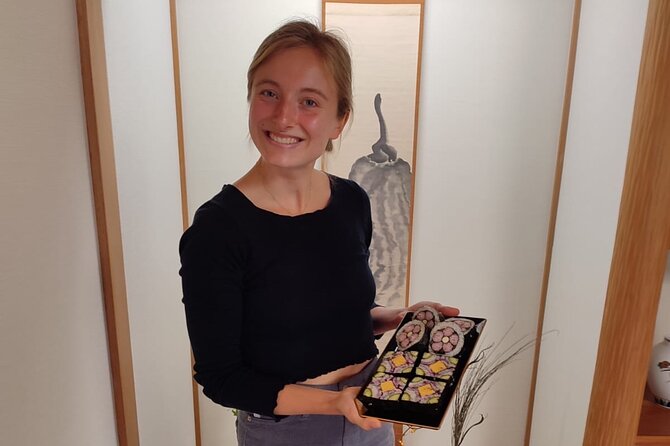
The strongest parts are clear. Aya’s patient instruction and English explanations help you follow a detailed process. The private setting keeps the class friendly and flexible. The home atmosphere gives the activity a personal touch that a standard cooking studio may not provide.
The help from Manabu is another practical benefit. He can take pictures while you work and handle cleanup, leaving Aya free to teach. For a family or couple, that means you can keep your hands on the sushi instead of stopping to manage the camera.
The class also has limits. One hour is enough to make one design, but not enough for a long lesson on Japanese cuisine. If you want a broad introduction to sushi, knife skills, sauces, fish selection, or many kinds of rolls, this is too narrow.
The decorative pattern can be challenging. One available account found the class fun and the host welcoming, but suggested it may be better for people who already know a little about sushi. I would not let that stop a beginner from booking, but I would arrive ready to listen closely and follow the order of each step.
The rating is 4.9 from 13 ratings, with 100 percent recommending the activity. That is a strong signal, though the sample is small. The praise centers on clear instruction, warm hosting, an enjoyable family experience, and the ability to recreate the sushi at home.
Practical Details Before You Book
The experience is confirmed at booking and uses a mobile ticket. It is near public transportation, but you should still allow enough time to locate the home before the 4:30 pm start.
Wear or pack socks. This is the easiest detail to overlook, and you cannot enter the tatami room barefoot. Comfortable clothing is also sensible under the traditional garments, though no special cooking equipment is required.
Cancellation is free if you cancel at least 24 hours before the local start time. Cancellations or changes made less than 24 hours ahead are not accepted for a refund. That policy gives you some flexibility, but the final day is not the time to wait for a weather or schedule decision.
The activity returns to the meeting point, so you do not need to arrange a separate end location. Because it is private, only your group participates.
Who Should Book This Kyoto Class
I would recommend it to couples, families, and small groups who want a short, social activity with a clear finished result. It is especially good for people who enjoy crafts, food photography, Japanese customs, or cooking souvenirs they can recreate at home.
It also suits visitors who have already seen temples and gardens and want an indoor activity that feels connected to local life. The traditional home, tatami room, clothing, and host-led format give it more character than a quick restaurant meal.
I would think twice if you want a relaxed, unstructured cooking session. The peach-flower pattern requires attention, and the one-hour schedule leaves little spare time. It is also not the right choice if your main goal is to eat a large meal or study many forms of sushi.
Should You Book the Private Art Sushi Roll Class?
Book this class if you want to make something unusual, take home a repeatable skill, and share the activity with your own group. Aya and Manabu Ito provide a personal setting, and the peach-flower design gives you a clear goal from the moment you sit down.
Skip it if you prefer a broad Japanese cooking course or simply want a low-cost meal. For everyone else, the combination of edible art, traditional clothing, English instruction, and a private home setting makes this a worthwhile one-hour Kyoto experience, provided you bring socks and arrive on time.
FAQ
Where does the sushi class take place?
The class takes place at SAKURA Experience Japanese Culture Nijo Home, 660 Izumicho, Nakagyo Ward, Kyoto, 604-0015, Japan.
What time does the activity start?
The class starts at 4:30 pm and ends back at the meeting point after about one hour.
Is the class private?
Yes. Only your own group participates in the activity.
What sushi design will I make?
You will make a peach-flower pattern sushi roll using edible materials and natural food colors.
Are vegan and vegetarian options available?
Yes. Vegan and vegetarian options are available as part of the class.
What should I bring?
Bring socks because shoes are removed and socks are required for entry into the tatami room. Also arrive no more than 15 minutes after the start time, since later arrivals cannot join.
Newest Kyoto experiences on the site
- Treasures of Kyoto: Gion & historical Walking Tour★ 5.0 · 6 reviews
- Whisk Your Own Matcha: A Zen Matcha Experience at Temple★ 3.6 · 7 reviews
- Kyoto tea town for matcha lovers★ 5.0 · 16 reviews
- Uji: Private immersion into Kyoto’s tea and reglious culture★ 5.0 · 17 reviews
- Kyoto Matcha Green Tea Tour★ 4.5 · 23 reviews
- Uji and Wazuka Matcha Farm Half Day Private Guided Tour★ 5.0 · 21 reviews
- Utilising upcycled Matcha! Creating matcha incense (Uji, Kyoto)★ 5.0 · 6 reviews
- Sacred Temple Yoga Experience in Japan★ 5.0 · 3 reviews
Kyoto Sushi Making Classes, compared.
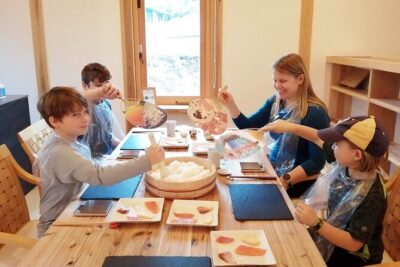
The Original Small-Group Sushi Making Class in Kyoto
Read our review →
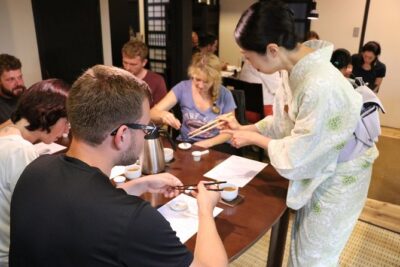
Sushi – Authentic Japanese Cooking Class – the best souvenir from Kyoto!
Read our review →
Private Kyoto Sushi Cooking Class & Tea Ceremony with Emika
Read our review →
Enjoy Sushi & Market Tour! Best for Family & Couple!
Read our review →
Sushi or Traditional Japanese Cuisine in a Kyoto Home with Emika
Read our review →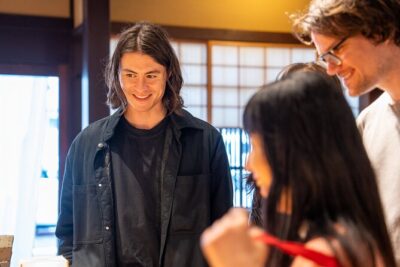
Kyoto Sushi Making Experience with a Professional Sushi Chef
Read our review →Browse the lists this tour appears in