Reviewed · GUIDED
Kyoto Highlights & Hidden Gems in Nature (Private Van Eng-Guide)
Kyoto’s best surprise here is not the Golden Pavilion or the famous red gates. It is the sudden shift from packed sightseeing streets to quiet mountain roads, old cedar trees, and small temples where you may have a few peaceful minutes to yourself. Guide Daiki Fukashi drives you across the city and into the northern countryside, explaining Buddhist and Shinto traditions in English.
I like two things right away: the private van saves serious time, and the route reaches places that are awkward by bus. I also like the flexible spirit of the day. Daiki has adjusted visits for weather, crowds, and personal interests, and the air-conditioned van gives families and small groups a welcome break.
The main drawback is time. Six hours is a lot of ground for Kyoto, but it also means short stops. Fifteen minutes at a temple or five minutes at an overlook may feel rushed, and the advertised price requires careful checking because it is shown as $230.61 per group up to one person, while the tour is described and priced as a private vehicle experience.
Key points at a glance
- A private van crosses all of Kyoto: You can connect Kinkakuji, Arashiyama, the northern mountains, Heian Shrine, and Fushimi Inari without changing buses.
- Daiki Fukashi guides in fluent English: He drives, walks with you at stops, and explains Kyoto’s Buddhist and Shinto customs.
- The northern Arashiyama route is the real prize: Gio-ji, Otagi Nenbutsu-ji, mountain roads, and Kitayama cedar country offer a quieter side of Kyoto.
- Major sights are included: You visit the Golden Pavilion, Arashiyama Bamboo Forest, Fushimi Inari, and the huge Heian Jingu torii.
- The day mixes scenery with history: You get city views, Hozu Gorge, sacred trees, shrines, temple gardens, and old streets.
- Admission costs extra: Total temple and attraction fees are about ¥1,400 per person, in addition to the tour price.
Why a private van changes your Kyoto day
Kyoto looks compact on a map, but its sights are spread across the city. Kinkakuji is in the north, Arashiyama lies to the west, Fushimi Inari sits far to the southeast, and the cedar country reaches beyond the usual sightseeing circuit.
By public transport, those connections can consume much of your day. A private van lets you move directly between them, with pickup and drop-off anywhere in Kyoto City. Fuel, tolls, and parking are included, so you are not handling each small transport cost as you go.
The value depends on your group. At $230.61 per group, the cost can make sense for several people sharing one vehicle. A family of four or a small group can get a better deal than four separate private taxis and gain a guide at the same time. If you are alone, the per-person value is less compelling, though the convenience remains strong.
The van is described as comfortable and air-conditioned. That matters in Kyoto’s hot months, after temple paths, and for families with children. You also avoid returning to a central station every time you want to change districts.
The tradeoff is that driving does not turn Kyoto into a quick checklist. Traffic and walking still take time. The route covers a great deal, but some stops are brief. Think of this as a broad introduction to Kyoto with several carefully chosen pauses, not a slow temple study tour.
A few more Kyoto tours worth putting on the shortlist
- PERFECT KYOTO 1-Day Bus Tour
★ 5.0 · 13,518 reviews - Kyoto: Fushimi Inari, Kinkakuji, Bamboo Grove 1 Day Bus Tour
★ 4.8 · 4,316 reviews - Kyoto: Tea Ceremony in a Traditional Tea House in Kiyomizu
★ 4.9 · 3,519 reviews
Kinkakuji begins with Kyoto’s most famous shine
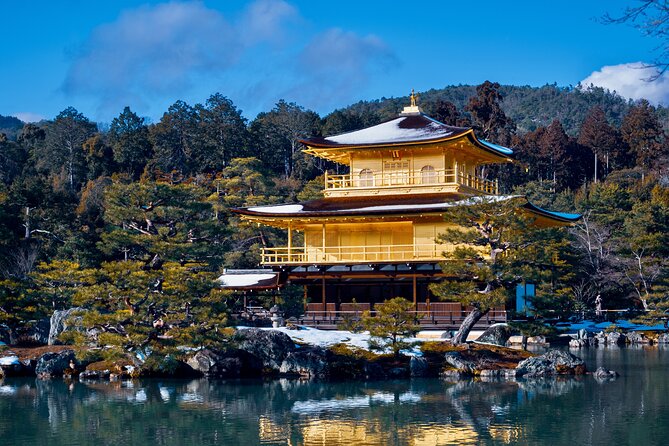
Your first major stop is Kinkakuji, the Golden Pavilion. The three-story pavilion reflects in a pond, and its gold exterior makes it one of Kyoto’s easiest sights to recognize.
You have about 45 minutes here, with admission paid separately. That is enough to follow the main route through the garden and see the pavilion from the classic viewpoints, but not enough for an unhurried visit if the grounds are crowded.
This is likely to be one of the busiest stops. The private van gets you there without the long public bus ride from central Kyoto, but it cannot remove the crowds inside the temple grounds. I would bring your camera, enjoy the view, and save your patience for the quieter places later.
Daiki’s background in Buddhism and Japanese history adds useful context here. The pavilion is more than a pretty building, and a guide can help connect its design and setting to Kyoto’s religious traditions.
Northern Arashiyama offers a quieter side of the famous district
Arashiyama is often reduced to one bamboo path and a river view. This tour goes farther into the district, where small temples and old streets give you a better sense of the area.
Gio-ji is a short 15-minute stop. Its moss-covered garden, thatched hut, and bamboo setting pack several familiar Japanese images into a small space. The visit is quick, but the compact scale is part of its appeal. It feels more intimate than the major temple compounds.
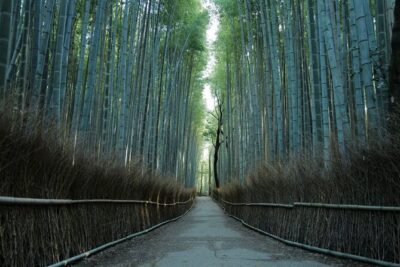
Next comes the Arashiyama Bamboo Forest, with another 15 minutes to walk its famous path. The bamboo is beautiful, but this is not a long forest hike. You get the central experience, hear the stalks moving in the wind, and learn about bamboo’s place in Japan, including the connection explained by Daiki to Edison’s early work with electric light.
Crowds can change the mood. One day the path may feel calm, and another day it may be full of people stopping for photos. One useful feature of the private format is flexibility. One tour day avoided the bamboo path because it was too crowded, choosing to protect the overall experience rather than force a poor visit. You should discuss this kind of change with Daiki if the path is packed.
Otagi Nenbutsu-ji follows, also for about 15 minutes. This temple sits in the northern part of historic Arashiyama, an area known for older Kyoto views and fewer crowds than the central bamboo district. Its many stone figures give the visit a different character from Kinkakuji’s polished grandeur.
Admission is not included at the Arashiyama temples. Keep some yen ready, and ask Daiki about the order of stops if opening hours or seasonal conditions affect the route.
Mountain roads reveal Kyoto beyond the postcard view
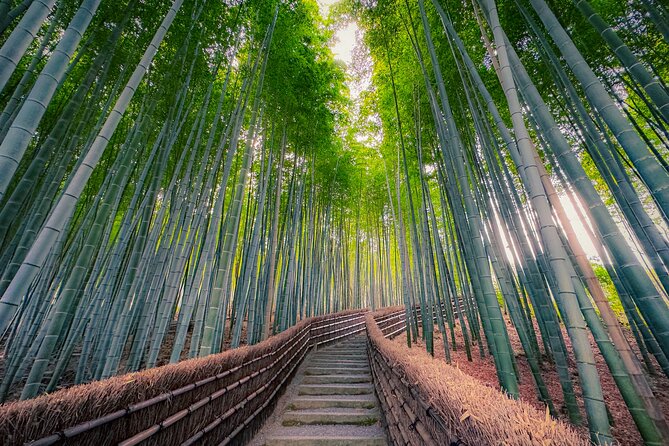
The Arashiyama-Takao Parkway is one of the most distinctive parts of the outing. The toll road climbs through mountain scenery and is lined with roughly 2,000 cherry trees in April and maple trees in November.
This is where the van matters most. The road reaches viewpoints and countryside that would be difficult to combine with the city temples on a normal bus day. The drive itself receives about 45 minutes, allowing the outing to shift from cultural sightseeing to a scenic mountain ride.
At Mount Ogura Observatory, the stop is only about five minutes, but the view reaches across Kyoto. Hozukyo Observatory gives you a look at the Hozu Gorge, known for its fast-flowing river and traditional boat rafting.
Do not expect a long walk or a formal lookout visit at either point. These are quick photo pauses. Their value comes from contrast: after temple walls and city streets, you see Kyoto as a basin surrounded by mountains.
The route continues toward Nakagawa Hachimangu Shrine, another brief five-minute stop. The shrine serves as a local guardian, and its old Japanese cedar is treated as a sacred presence. You can touch the tree and take part in a simple local custom centered on its spirit.
That moment gives the day a more personal feel. You are not only looking at famous buildings. You are seeing how a small community connects place, trees, and worship.
Same city, a completely different kind of day:
- Kyoto Geisha Walking Tour: Gion District & Hidden Gems
★ 4.7 · 3,273 reviews - Kyoto: Tea Ceremony Ju-An at Jotokuji Temple
★ 4.9 · 3,207 reviews - Kyoto: Gion Magical Night Walking Tour with Geisha Trivia
★ 4.9 · 2,393 reviews - Kyoto: 45-Minute Tea Ceremony Lesson Experience
★ 4.3 · 2,378 reviews
Kitayama cedar country is the tour’s most unusual stop
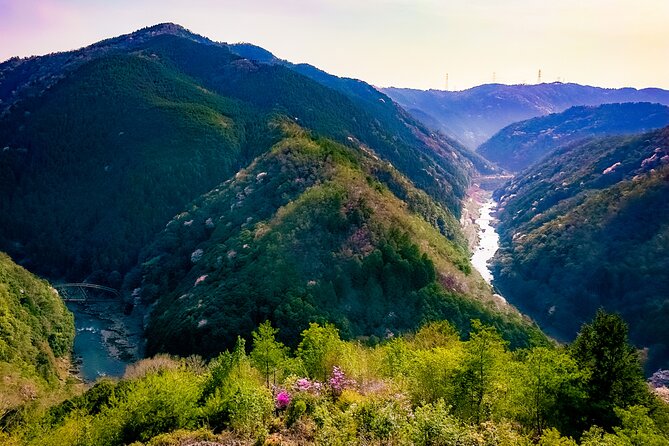
Kitayama Big Daisugi is the most remote point on the route. The area is reached by a narrow cliff road in the northern part of Arashiyama, away from the normal sightseeing circuit.
The stop lasts about 10 minutes, so you will not be hiking through the forest for hours. Still, the giant platform cedar trees offer something you will not find at the standard Kyoto sights. The trees are shaped by local forestry traditions and create a striking view in a quiet rural setting.
This is also the part most dependent on road conditions, weather, and the guide’s judgment. The itinerary notes that seasonal or other circumstances can change the route. That is reasonable here. A narrow mountain road is not the place to force a stop when conditions are poor.
If your idea of Kyoto is only gold leaf, red gates, and bamboo, this section broadens the picture. The city’s cultural identity reaches into the surrounding mountains, where sacred trees and working forests still matter.
A car ride through old geisha streets
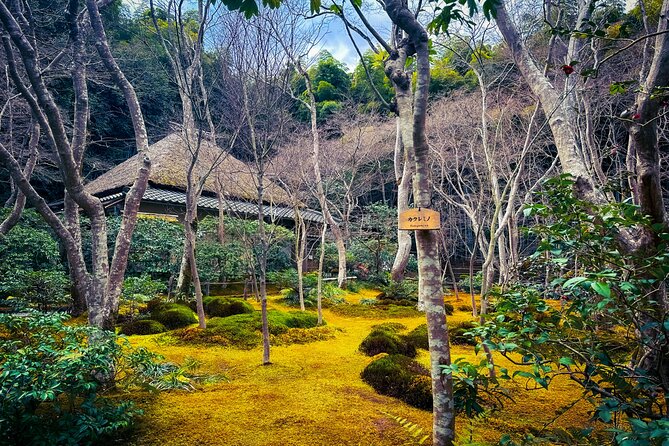
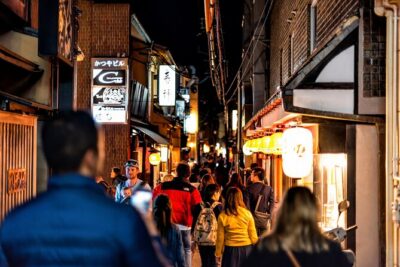
The tour also passes through a 600-year-old street associated with geishas. You see it from the van rather than walking through a crowded lane.
That approach is practical, especially on a packed afternoon. You can take photos from the car, but you must ask permission before photographing geishas. This is an important point. A private vehicle can reduce congestion, but it does not remove the need for courtesy.
Because this is a drive-by experience, do not book the tour expecting a long cultural walk through the district. It is a short look at an old Kyoto street woven into a wider city tour.
Heian Jingu and Fushimi Inari finish the route
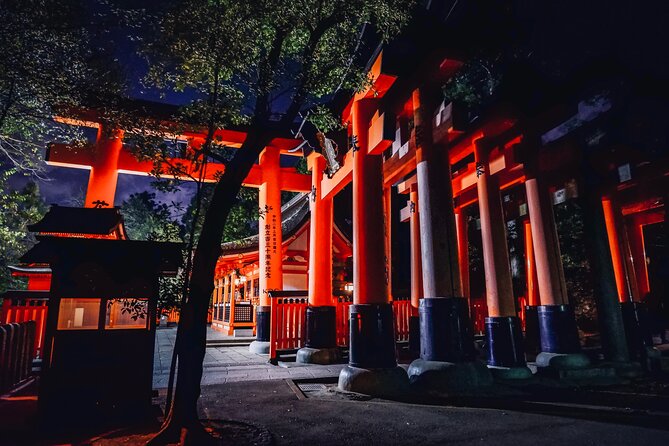
The enormous torii of Heian Jingu is a quick five-minute stop. At 24.4 meters, it is one of the largest shrine gates in Japan and an easy landmark for a photograph.
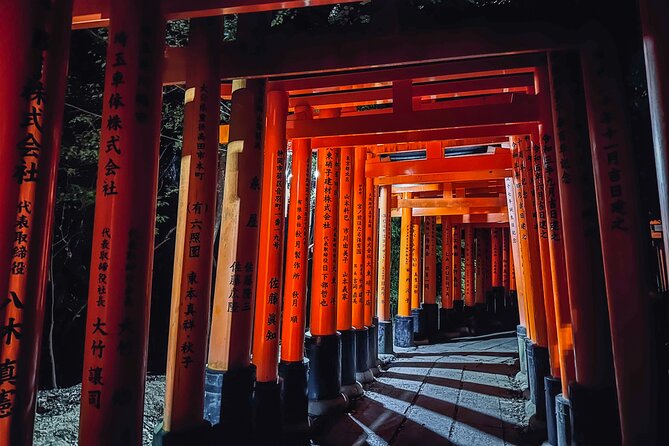
The gate gives you a sense of scale before the final major stop, Fushimi Inari-taisha. Here you have about 40 minutes to walk beneath the famous vermilion torii gates. More than 10,000 gates now line the shrine’s paths, donated over time by individuals and businesses.
Forty minutes is enough to enter the tunnel of gates and feel its rhythm, but not enough to climb the entire mountain route. Wear shoes you can walk in, and use the time well. You do not need to reach the upper shrine paths to understand why Fushimi Inari is so memorable.
Timing can shape this stop. A late afternoon or evening visit may feel calmer than the middle of the day, and the route can look very different when crowds thin. One account of the experience found a nighttime visit especially effective. The exact timing can vary, so ask Daiki how the day’s order will work.
Fushimi Inari is free to enter. It is also one of the busiest places in Kyoto, so the private van’s drop-off and pickup are useful. You avoid one more complicated transfer at the end of a long day.
Daiki’s guiding style and flexibility
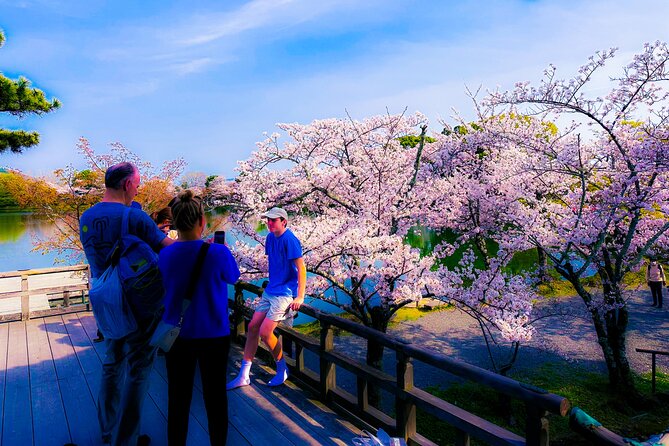
Daiki Fukashi is both driver and guide. He speaks fluent English, explains Buddhism and Japanese history, and walks with you at the stops. That combination is important because the day includes many short visits. Without context, the route could feel like a series of photo stops.
The strongest part of his role is flexibility. The schedule can change for weather, crowd levels, closing times, or your interests. A previous outing continued successfully despite rain, and the guide adjusted the experience to suit the group. Another group found him willing to consider sights beyond the listed route.
You should still set expectations clearly before departure. Tell Daiki if you care most about temples, scenery, photography, family pacing, or avoiding stairs. Some temple grounds involve walking and steps, though you can ask to skip difficult sections.
The private format means only your group participates. That makes conversation easier and allows the day to feel less mechanical. It also means the quality of your experience depends heavily on the communication between you and Daiki.
What the six-hour schedule really feels like
The start time is 1:00 p.m., and the tour lasts about six hours. That creates a late afternoon route into evening, which can work well for changing light and cooler mountain air.
The schedule is full:
- Kinkakuji receives about 45 minutes.
- Gio-ji, the bamboo path, and Otagi Nenbutsu-ji each receive about 15 minutes.
- The mountain parkway takes about 45 minutes.
- The observatories and local shrine are quick photo stops.
- Fushimi Inari receives about 40 minutes.
These times show the tour’s purpose. You are sampling many parts of Kyoto rather than spending half a day at one temple. If you love lingering over gardens, this may feel too fast. If you have limited time and want to see the city’s major sights plus the countryside, the pace is a strong advantage.
The route may change by season. Cherry trees are a highlight in April, maples in November, and weather can affect mountain roads and temple visits. Kyoto’s popular sites are never guaranteed to be quiet, but the northern stops give the guide more ways to find a calmer experience.
Price, admission fees, and who gets the best value
The advertised price is $230.61 per group up to one person, with the private vehicle format described elsewhere as suitable for a group. Because the wording is unusual, confirm the exact passenger allowance and final price before booking.
The tour includes the van, pickup and drop-off within Kyoto City, guide service, fuel, tolls, and parking. Entrance fees are extra, totaling about ¥1,400 per person. Kinkakuji and some smaller temples require admission, while the bamboo path, viewpoints, Heian torii, and Fushimi Inari do not.
I see the best value for families, couples, or small groups who would otherwise spend a day piecing together buses and taxis. You are paying for time, door-to-door movement, local guidance, and access to the northern roads.
Solo visitors should compare the price with a regular group tour or public transport day. The private setting is pleasant, but the cost is harder to spread across several people.
Who should book this Kyoto tour?
I would choose this outing if you have one day in Kyoto and want a wide sweep of the city. It suits families, older visitors who prefer a vehicle between walks, small groups, and anyone staying outside the central sightseeing area.
It is also a good match if you have already seen the basic central temples and want mountain scenery, local shrines, old cedar trees, and a less familiar side of Arashiyama.
I would hesitate if you want a slow, scholarly visit to each temple. The stops are short, and the itinerary covers a lot of ground. I would also check the stair situation in advance if anyone in your group has mobility concerns.
Free cancellation is available up to 24 hours before the start time. After that, refunds and changes are not accepted. The tour is near public transport, service animals are allowed, and most people can take part, with some walking and stairs at temple sites.
Should you book it?
Book this tour if your priority is seeing more of Kyoto without losing a full day to transfers. Daiki’s easygoing guiding style, air-conditioned van, and willingness to adjust the route are real advantages.
The best reason to go is the combination of major sights and northern mountain stops. Kinkakuji and Fushimi Inari give you the classic Kyoto images, while Kitayama cedar country, Nakagawa Hachimangu, and the quieter Arashiyama temples give the day its character.
Skip it if you want long visits, a fixed walking tour, or the lowest possible cost for one person. For a group that values comfort, local explanation, and efficient sightseeing, this is a strong way to fit a surprisingly large piece of Kyoto into six hours.
FAQ
How long does the Kyoto private van tour last?
The experience lasts about six hours and starts at 1:00 p.m.
Where can pickup and drop-off take place?
Pickup and drop-off are offered anywhere in Kyoto City.
Who guides the tour?
Daiki Fukashi is the guide and driver. He provides the tour in fluent English and explains Buddhism, Japanese history, and the places visited.
Are entrance fees included?
No. Total admission fees are approximately ¥1,400 per person. Fuel, tolls, parking, the private van, and guide service are included.
Is the Arashiyama Bamboo Forest included?
Yes. The route includes about 15 minutes on the iconic bamboo path, though the order or exact visit can change because of crowds, weather, or other conditions.
Does the tour include Fushimi Inari Shrine?
Yes. You have about 40 minutes at Fushimi Inari-taisha, including time to walk beneath its famous torii gates.
Can the itinerary change?
Yes. Parts of the route may change by season or other circumstances. You can also ask the guide about avoiding some stairs or adjusting the visit to your interests.
Newest Kyoto experiences on the site
- Whisk Your Own Matcha: A Zen Matcha Experience at Temple★ 3.6 · 7 reviews
- Treasures of Kyoto: Gion & historical Walking Tour★ 5.0 · 6 reviews
- Kyoto tea town for matcha lovers★ 5.0 · 16 reviews
- Uji: Private immersion into Kyoto’s tea and reglious culture★ 5.0 · 17 reviews
- Kyoto Matcha Green Tea Tour★ 4.5 · 23 reviews
- Uji and Wazuka Matcha Farm Half Day Private Guided Tour★ 5.0 · 21 reviews
- Utilising upcycled Matcha! Creating matcha incense (Uji, Kyoto)★ 5.0 · 6 reviews
- Sacred Temple Yoga Experience in Japan★ 5.0 · 3 reviews
Guided, compared.
Kyoto Early Morning Tour with English-Speaking Guide
Read our review →
Kyoto 6hr Private Tour with Government-Licensed Guide
Read our review →Early Morning Tour with English-Speaking Guide
Read our review →
Nijo-jo Castle and Ninomaru Palace Guided Tour
Read our review →
Kyoto Gion Night Walk & Geisha District Guided Tour
Read our review →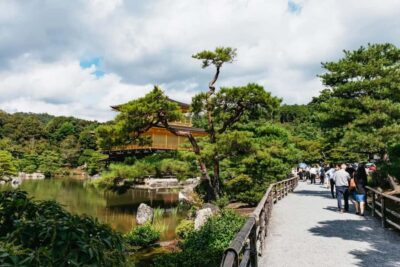
Nijo Castle, Kiyomizu & Fushimi Inari Guided Tour
Read our review →