
Reviewed · KYOTO WALKING TOURS
Kyoto : Private Custom Walking Tour With A Local Guide
Kyoto can feel like a grand puzzle of temples, shrines, lanes, gardens, and museums. This private walking tour gives you a local guide to help fit the pieces together, from the torii gates of Fushimi Inari to Gion streets and quieter corners most first-time visitors might miss.
I like the flexible route, which can be shaped around temples, food, museums, children, or your own walking speed. I also like the practical local advice, including restaurant suggestions, transport tips, and help with tickets. The main drawback is that attraction tickets, food, drinks, and most local transport cost extra, so the final price can rise beyond the $62 tour fee.
I especially like that the guides adjust to real conditions. Kevin changed his route to cope with Kyoto heat, while Jerome adapted a Gion visit for children. A short two-hour booking can introduce the city, but if you want several districts and indoor stops, book closer to the full eight hours.
Key points at a glance
- A route made for you: Choose famous sights, local neighborhoods, museums, food stops, or a mix.
- Useful first-day orientation: Your guide can explain Kyoto’s layout, transport, shrine customs, and where to spend later days.
- Strong history and culture focus: Guides explain the difference between temples and shrines, geisha culture, sake, architecture, and local customs.
- Good for families: The pace and stops can change around children, heat, and energy levels.
- Private from $62 per person: You get a guide for your own group, though entrance fees and some transport are extra.
- Flexible length: Pick anywhere from two to eight hours, depending on how much of Kyoto you want to cover.
Why a private walk helps in Kyoto
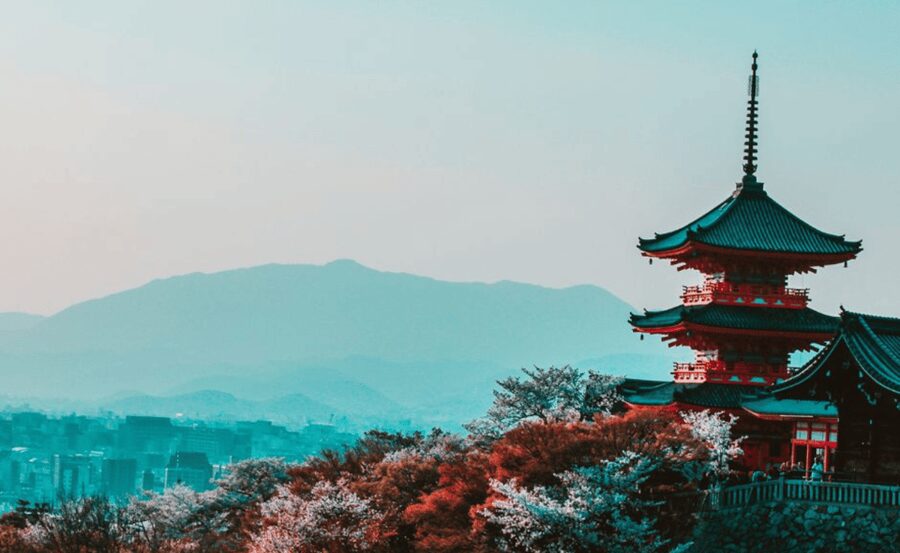
Kyoto is not difficult because it lacks things to do. It is difficult because it has too many worthwhile things packed into separate areas. Fushimi Inari, Kiyomizu-dera, Gion, the Philosopher’s Path, and the northern temple districts do not form one tidy sightseeing loop.
A private guide helps you choose instead of trying to collect every famous name in one exhausting day. You can focus on the parts of Kyoto that match your interests, then save other districts for later.
I see this as an orientation tour as much as a sightseeing tour. A good guide can explain how Kyoto fits together, show you how to use the city’s public transport, and suggest places to eat or visit after the walk. Anne and her son found that their tour gave them a useful sense of the city areas and helped them decide how to spend the following days.
That benefit is easy to underestimate. Once you understand the difference between a shrine and a temple, or why certain streets attract visitors, Kyoto becomes less like a list of names and more like a place you can read.
More walking tours in Kyoto:
- Kyoto Geisha Walking Tour: Gion District & Hidden Gems
★ 4.7 · 3,273 reviews - Kyoto: Gion Magical Night Walking Tour with Geisha Trivia
★ 4.9 · 2,393 reviews - Kyoto: Gion Geisha District Walking Tour – Stories of Geisha
★ 4.7 · 2,187 reviews
Choosing between two and eight hours
The two-hour option works best as a focused introduction. You might choose one area, such as Gion, or ask for a short orientation around sights near your accommodation. It is also a good choice if you have limited time or want help deciding what to do next.
The tradeoff is simple: two hours goes quickly in Kyoto. Ian showed one guest the requested areas and more, but the guest wished they had booked longer. That is a useful warning if you want several temples, a museum, a meal stop, and time for questions.
A half-day gives you more breathing room. You can connect two nearby areas, pause for coffee, and allow time for explanations without racing from gate to gate. Sophie’s outing included coffee, Daimonji, the Philosopher’s Path, Ginkakuji, a café stop, and advice for the rest of her stay. That sort of day needs more than a quick introduction.
The full eight-hour option suits you if Kyoto is a main focus of your trip. A longer day can combine major sights with local streets, a quiet river walk, a sake visit, and food recommendations. Russell’s day included temples, shrines, a sake tasting, a quiet river, pizza, and ramen. Your own route will depend on the interests you give the guide in advance.
Building your own Kyoto route

The best feature here is the ability to state what you want before meeting your guide. You can ask for temples, shrines, architecture, history, food, family-friendly stops, photography, or a museum visit.
You can also ask for a certain mood. Perhaps you want a first look at Kyoto’s famous sights without spending the whole day inside crowded tourist zones. Perhaps you prefer a slower walk through Gion, with time to notice wooden buildings and cultural details. Or you may want a broad introduction so you can return to particular places later.
Your guide can visit the exterior of monuments and museums as part of the walk. A museum visit may also be arranged if you mention it ahead of time. Since attraction tickets are not included, ask the guide or booking team to help with desired admissions and confirm the cost before the day.
This planning matters because Kyoto’s major areas have different demands. Fushimi Inari involves a long uphill route if you continue beyond the lower torii gates. Gion and the historic lanes around Kiyomizu-dera involve crowds and uneven walking surfaces. A museum or café stop can give you a break, especially in summer.
Fushimi Inari and the famous torii gates
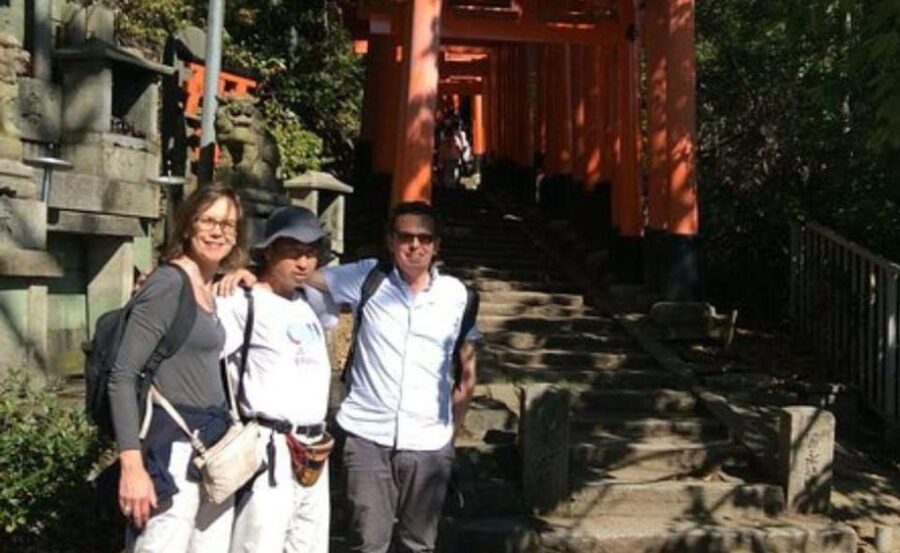
Fushimi Inari is one of Kyoto’s signature sights, with rows of orange torii gates climbing the wooded hillside. The lower section is the easiest part to fit into a shorter outing, while walking farther uphill takes more time and energy.
A guide adds value here by giving the place context instead of treating it as a photo backdrop. Wajid explained the shrine and its symbolism while leading a full Kyoto day, then connected the visit with Sanjusangendo, Kiyomizu-dera, Sannenzaka, Ninenzaka, and Maruyama Park.
That kind of sequence makes sense if you want an introduction to eastern Kyoto. The drawback is that this side of the city can involve substantial walking, and the most famous areas can feel crowded. Tell your guide about mobility limits, children, heat, or the amount of uphill walking you want.
Same city, a completely different kind of day:
- PERFECT KYOTO 1-Day Bus Tour
★ 5.0 · 13,518 reviews - Kyoto: Fushimi Inari, Kinkakuji, Bamboo Grove 1 Day Bus Tour
★ 4.8 · 4,316 reviews - Kyoto: Tea Ceremony in a Traditional Tea House in Kiyomizu
★ 4.9 · 3,519 reviews - Kyoto: Tea Ceremony Ju-An at Jotokuji Temple
★ 4.9 · 3,207 reviews
Kiyomizu-dera, Sanjusangendo, and historic streets
Kiyomizu-dera is a major temple area, but the experience is not limited to the temple itself. The approach through Sannenzaka and Ninenzaka gives you traditional streets, shops, and many places for photographs. Your guide can help you notice cultural details rather than simply point toward the next landmark.
Sanjusangendo offers a different kind of visit, with its famous rows of 1,001 Buddha statues. Wajid’s explanation helped connect the vast interior with the wider religious life of Kyoto. This is the sort of detail that can transform a quick stop into a more meaningful one.
The practical issue is pace. These areas can fill much of a day when you include walking, explanations, photographs, and possible entrance lines. If you want both Fushimi Inari and eastern Kyoto, ask for enough time rather than trying to squeeze them into a short booking.
Gion, Maruyama Park, and geisha culture
Gion is a strong choice if you want Kyoto’s traditional side without making the day only about temples. The district is linked with geisha culture, old streets, restaurants, and the careful etiquette that comes with visiting residential and working areas.
Jerome adapted a Gion tour for children, showing that the area can work for families when the guide keeps the pace lively and chooses suitable stops. Maruyama Park adds open space and a change from narrow lanes. Wajid also used the park to explain geisha culture and pointed out a Pokémon manhole, a small modern detail that children may appreciate.
I would choose Gion for an evening or half-day focus, especially if you want cultural explanation mixed with street scenes. You should still expect walking and crowds, and you should follow your guide’s advice about respectful behavior and photography.
The Philosopher’s Path and Ginkakuji
The Philosopher’s Path offers a calmer route beside a canal, with a more relaxed feel than Kyoto’s busiest temple approaches. It works well for you if you want conversation, scenery, and a slower rhythm.
Sophie’s route paired it with Ginkakuji, also known as the Silver Pavilion, after a climb toward Daimonji. Kevin explained the difference between temples and shrines before the walk, then shared information in measured amounts. That point matters. A guide who talks constantly can make a walk tiring, while one who knows when to pause lets you notice the setting.
This area is a good fit for visitors interested in architecture, religion, and daily life rather than only famous photo spots. It may be less suitable if you want a compact route with little walking, since the combination can involve hills and a substantial distance.
Local food, cafés, and useful advice
Food is not included, but food advice is one of the most useful parts of a private local tour. Guides can suggest places for udon, ramen, pizza, or other meals based on your preferences. Erin’s guide finished the walk near an udon restaurant, while another full-day route ended with ramen recommended by the guide’s wife.
These details are helpful because restaurant choice in Kyoto can be confusing. A guide may also know when a café is a sensible rest stop. Sophie’s tour began at AG Coffee in Sakyo and included another café stop later, a smart approach during a hot Kyoto day.
You pay for your own food and drinks, but you gain a chance to ask practical questions: What should I eat in this neighborhood? Which area suits dinner? Where can I return without spending an hour guessing? For many people, that advice adds real value to the tour.
What the $62 price really gets you

At $62 per person, the tour is not an all-inclusive sightseeing package. You are paying mainly for a private guide, a custom route, walking time, and help shaping your Kyoto experience.
The value depends on how well you use the private format. If you arrive with no preferences and book only two hours, the tour may feel like a brief introduction. If you tell the guide what you care about and use four to eight hours to connect several related stops, the price becomes easier to justify.
You still need to budget for attraction tickets, meals, drinks, and local transportation. The activity includes walking and may include public transport, but the conditions also state that local transport around the city is not included. Confirm exactly what is covered for your chosen option, especially if your route crosses several districts.
A private group is useful for couples, families, and solo visitors who want questions answered without keeping up with strangers. It is also valuable when one member of the group needs a slower pace or more breaks.
Guide quality and language choices
The available languages are English, Spanish, French, and Italian. You receive a live guide rather than an audio recording or fixed script.
Several guides have received particular praise for different strengths. Maria brings more than 25 years of life in Japan and explains temple history, culture, and economics. Terry helped connect shrine and temple history with the wider city. Jerome is noted for practical tips, flexibility, and family-friendly pacing.
Kevin adjusted a route for intense summer heat, while Gef combined interest in Japan, architecture, and a relaxed manner. Kenta has been praised for making a busy Kyoto day easier to manage and for sharing broad local knowledge. These examples suggest that guide style can differ, so tell the operator what kind of experience you want.
If you care strongly about a language, subject, or pace, state it when booking. The tour is private and customizable, but the supplied details do not promise a specific guide by name.
Heat, hills, and walking comfort
Kyoto can be hot, and several routes include hills, long streets, or temple approaches. Kevin changed the plan during hot weather, and Mary Candice appreciated that her guide kept her twin boys cool and occupied.
You should give the guide an honest idea of your walking ability and energy level. A private tour makes it easier to pause, shorten a route, choose an indoor visit, or swap a steep section for a less demanding area. This flexibility is one of the main reasons to choose private guiding.
Wheelchair access is listed as available, but individual temple grounds, streets, hills, and buildings may still vary. Ask about the exact route you want before booking if accessibility is important to you.
The tour includes hotel pickup when your accommodation is in Kyoto city. Otherwise, you meet in Kyoto at an agreed location. Food, drinks, attraction tickets, and local transport are not included.
Who should book this tour
I would recommend it most for a first visit to Kyoto, especially if you want help making sense of the city before exploring alone. Families also have a strong reason to choose it because the guide can adjust the pace and stops.
It suits solo visitors who want local conversation, couples who want a route built around their interests, and repeat visitors who would rather explore a specific neighborhood than repeat the standard checklist.
I would think twice if you prefer a fixed schedule with all admissions and transport bundled into one price. This is a guide service, not a packaged coach tour. You need to communicate your interests and keep money aside for extras.
Should you book the Kyoto private walking tour?
Book it if you value personal attention, local explanations, and a route that can change during the day. The strongest benefits are the private format, flexible length, family-friendly pacing, and practical advice about food and later sightseeing.
For the best value, book at least four hours, send your priorities in advance, and ask about tickets and transport before you start. A two-hour route is fine for orientation, but it is too short for several major districts.
With free cancellation up to 24 hours before the experience and a reserve-now, pay-later option, the booking terms offer some flexibility. At $62 per person, this is a sensible choice when you want Kyoto to feel less confusing and more personal, but it is not the right pick if you want every expense included.
FAQ
How long does the private Kyoto walking tour last?
You can book a tour lasting from two to eight hours. Starting times depend on availability.
What languages are available?
Live guides are available in English, Spanish, French, and Italian.
Is the tour private?
Yes. The experience is for a private group rather than a shared group.
Can I choose what to see?
Yes. The tour can be customized around the sights, neighborhoods, venues, and interests you request.
Can the tour include a museum?
Yes. Tell the guide or booking team ahead of time if you want to include a museum visit. Museum admission is not included.
Is hotel pickup available?
Hotel pickup is available when your accommodation is located in Kyoto city.
Are attraction tickets included?
No. Tickets to attractions are not included, though the team can help you book tickets for desired visits.
Are food and drinks included?
No. You pay separately for food and drinks.
Is the tour wheelchair accessible?
Yes, the activity is listed as wheelchair accessible. Ask about the exact route if you plan to visit areas with hills, steps, or uneven streets.
Newest Kyoto experiences on the site
- Treasures of Kyoto: Gion & historical Walking Tour★ 5.0 · 6 reviews
- Whisk Your Own Matcha: A Zen Matcha Experience at Temple★ 3.6 · 7 reviews
- Kyoto tea town for matcha lovers★ 5.0 · 16 reviews
- Uji: Private immersion into Kyoto’s tea and reglious culture★ 5.0 · 17 reviews
- Kyoto Matcha Green Tea Tour★ 4.5 · 23 reviews
- Uji and Wazuka Matcha Farm Half Day Private Guided Tour★ 5.0 · 21 reviews
- Utilising upcycled Matcha! Creating matcha incense (Uji, Kyoto)★ 5.0 · 6 reviews
- Sacred Temple Yoga Experience in Japan★ 5.0 · 3 reviews
Kyoto Walking Tours, compared.
Kyoto Geisha Walking Tour: Gion District & Hidden Gems
Read our review →
Gion Magical Night Walking Tour with Geisha Trivia
Read our review →
Gion Geisha District Walking Tour – Stories of Geisha
Read our review →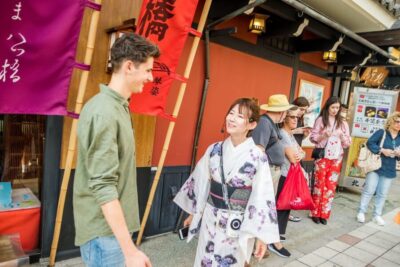
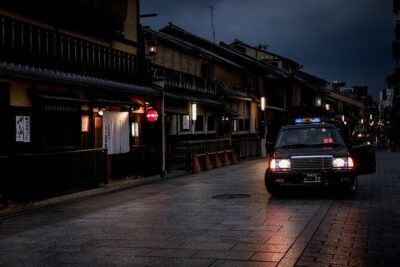
Kyoto Gion Geisha District Walking Tour – The Stories of Geisha
Read our review →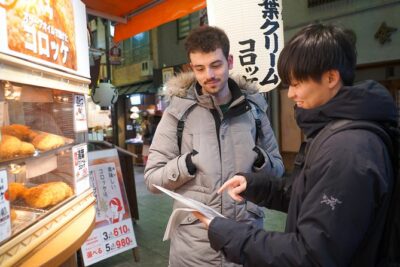
Nishiki Market Brunch Walking Tour (7 Tastings + Brunch)
Read our review →
Kyoto Arashiyama Walking Tour: Bamboo, Monkeys, Gardens & Secrets
Read our review →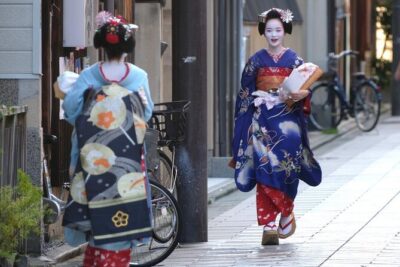
Kyoto Gion: 2-Hour Geisha Culture & History Walking Tour
Read our review →Browse the lists this tour appears in