
Reviewed · GION DISTRICT TOURS
Best of Kyoto: Gion, Geisha, Pagodas & Cobblestones
Kyoto’s Gion district takes on a different character after dark. Lanterns glow against wooden townhouses, the narrow lanes quiet down, and the famous geisha quarter feels less like a sightseeing circuit and more like a living neighborhood. This two-hour walk links Gion with Higashiyama, giving you temples, shrines, pagoda views, and an introduction to geiko and maiko culture for $24.
I like the calmer evening timing, especially if this is your first night in Kyoto. I also like the guides’ practical touch: Karim, Kevin, Janelle, Ben, and others are praised for clear explanations, relaxed conversation, and suggestions for food and drinks afterward. The main consideration is that night brings darker stretches, colder weather in winter, and no guarantee that you will see a geisha or maiko.
Key points at a glance
- A strong first-night introduction: The walk gives you a quick sense of Kyoto’s historic center, religious traditions, and Gion customs.
- Four distinctive cultural stops: Yasaka Shrine, Ninenzaka, Hōkan-ji Temple, and Yasui Kompira-Gu each add a different piece to the evening.
- Gion after the day crowds: Later hours make the narrow streets quieter and more atmospheric.
- Geiko and maiko explained with care: The tour places their training, work, and status in context rather than treating them as photo opportunities.
- Guide quality matters here: Karim, Kevin, Janelle, Ben, Salomé, Hina, and others have been praised for warmth, humor, pacing, and useful local knowledge.
- Good value at $24: You pay for a live guide and a focused walk, not meals, transport, or entry to a special performance.
Why Gion is better after dark
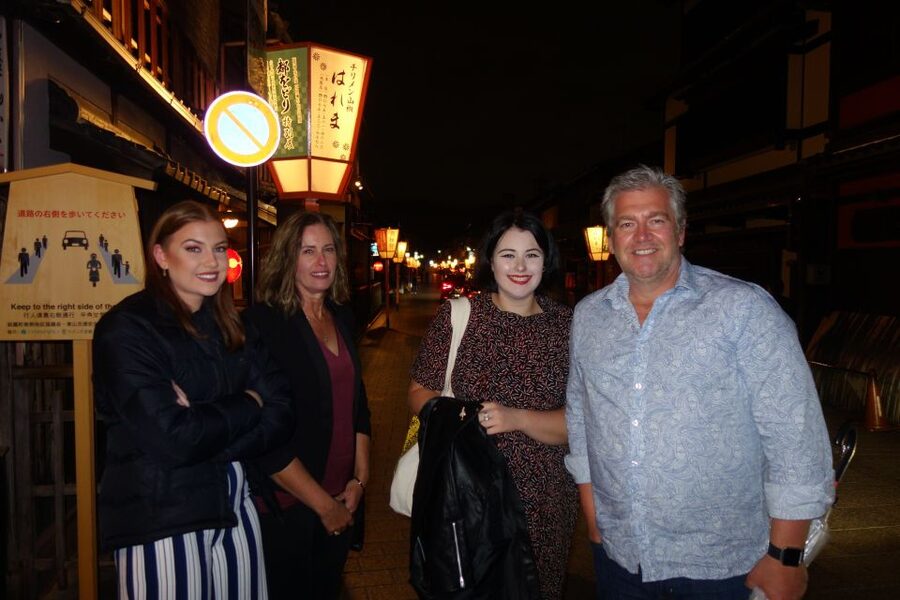
Gion is famous for its wooden buildings, teahouses, lanterns, and geiko culture. During the day, the area can feel crowded and hurried. At night, the pace changes. The streets are still active, but you have a better chance to notice the details: a small sign above a doorway, the warm light inside a traditional building, or the sharp contrast between a quiet lane and a brightly lit shrine.
That change in mood is the main reason to choose this tour instead of simply walking through Gion on your own during daylight. Your guide helps you understand what you are seeing without turning every stop into a lecture. Several guides are praised for keeping the information easy to follow, using stories and, in some cases, visual material on a tablet.
I would book this early in your Kyoto stay. It gives you a useful map of the Gion and Higashiyama area, along with advice on places to eat and drink afterward. Then you can return later with a better sense of where you are and how to behave respectfully.
More ways to walk Gion:
- Kyoto Geisha Walking Tour: Gion District & Hidden Gems
★ 4.7 · 3,273 reviews - Kyoto: Gion Magical Night Walking Tour with Geisha Trivia
★ 4.9 · 2,393 reviews - Kyoto: Gion Geisha District Walking Tour – Stories of Geisha
★ 4.7 · 2,187 reviews
Starting at Yasaka Shrine
The walk begins from one of two meeting points near Kyoto Gion, including the area by the Tsuruha Drug Yasaka Shrine Store and FamilyMart. Check the exact meeting point for your selected option. This matters because the meeting location can vary, and arriving late or failing to locate the guide does not qualify for a refund.
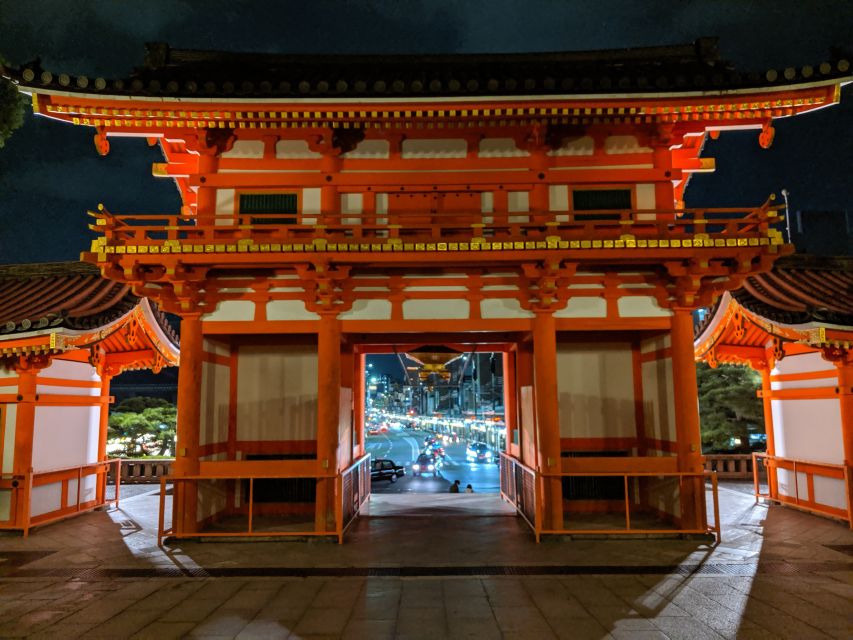
From there, the group heads to Yasaka Shrine, where the guide spends about 20 minutes explaining the site. A shrine visit at night feels different from a daytime temple stop. Lanterns and illuminated structures give the grounds a softer mood, while the reduced noise helps you focus on the rituals and customs your guide describes.
This is a useful first stop because it provides religious and cultural context for the rest of the walk. You are not only seeing attractive buildings. You are learning how Shinto spaces differ from Buddhist temples and how these places fit into Kyoto life.
The guide may also help you understand how to act at a shrine. That is valuable for first-time visitors, since small customs are easy to miss when you are exploring alone. The tour does not turn the visit into a formal religious ceremony, but it gives you enough background to look with more understanding.
Ninenzaka and the old hillside lanes

The route continues to Ninenzaka, with roughly 20 minutes of guided exploration. This is one of Higashiyama’s best-known historic streets, lined with traditional buildings and stone paving. The area is photogenic, but its appeal is not only visual. The street helps you picture how Kyoto’s older districts were built around walking, small shops, temples, and hillside routes.
At night, Ninenzaka can be especially atmospheric. You may find fewer people than during the busiest daytime hours, though quiet is not guaranteed. The tradeoff is visibility. Some sections are darker, and the stone pavement calls for sensible shoes and a little attention as you walk.
Your guide’s role here is important. Without context, Ninenzaka can become a short photo stop. With explanation, the buildings, slope, and connection to nearby religious sites make more sense. The comfortable pace also leaves room for questions, which is helpful if you want to ask about Japanese architecture, local customs, or the difference between tourist areas and working neighborhoods.
Hōkan-ji and the Yasaka Pagoda photo stop
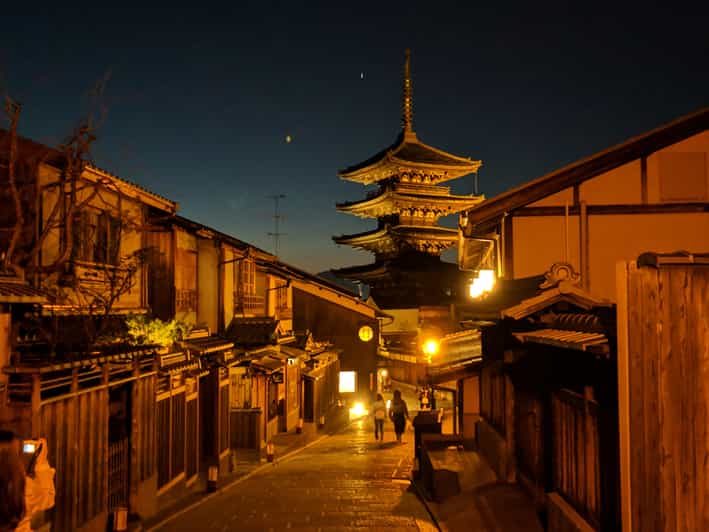
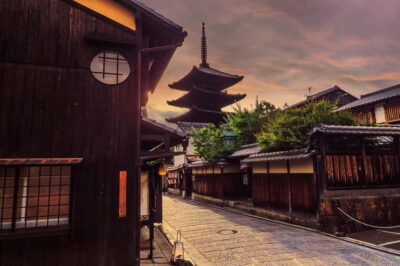
The next stop is Hōkan-ji Temple, best known for its Yasaka Pagoda. About 20 minutes are set aside for a photo stop. The pagoda is one of the most recognizable sights in Higashiyama, and its height gives the surrounding lanes a strong visual focus.
Night lighting changes the view. The pagoda can appear more dramatic against the dark sky, and the nearby wooden buildings help create the classic Kyoto scene many people hope to photograph. Your guide can point out good angles and explain the place, but this part is still mainly about seeing and photographing the exterior.
Do not expect a long temple visit here. The itinerary labels it a photo stop, so this is not the portion of the tour for an extended look inside the grounds. That is not a serious weakness, but it is worth knowing if you want detailed temple architecture or a lengthy visit at every location.
More geisha and maiko evenings in Kyoto:
- Night Walk in Gion: Kyoto’s Geisha District
★ 4.5 · 2,003 reviews - Kyoto Gion Geisha District Walking Tour – The Stories of Geisha
★ 5.0 · 1,441 reviews - Kyoto Gion: 2-Hour Geisha Culture & History Walking Tour
★ 5.0 · 1,186 reviews - Kyoto Gion Night Walk & Geisha District Guided Tour
★ 5.0 · 786 reviews
A quieter pause at Yasui Kompira-Gu
The walk then reaches Yasui Kompira-Gu Shrine, with about 15 minutes for a visit. This stop adds another side of Kyoto’s religious culture and breaks up the better-known Gion and pagoda views.
The shrine is also useful as a quieter point in the route. You can listen, ask questions, and take in the atmosphere without the same visual pressure as the famous streets. Guides often explain local customs and religious practices in a way that connects the site to daily life, rather than presenting it as a list of dates and names.
Because the stop is short, you should not expect a full historical presentation. Think of it as a focused visit that helps broaden the tour beyond the postcard views of Gion.
Forty-five minutes in Gion
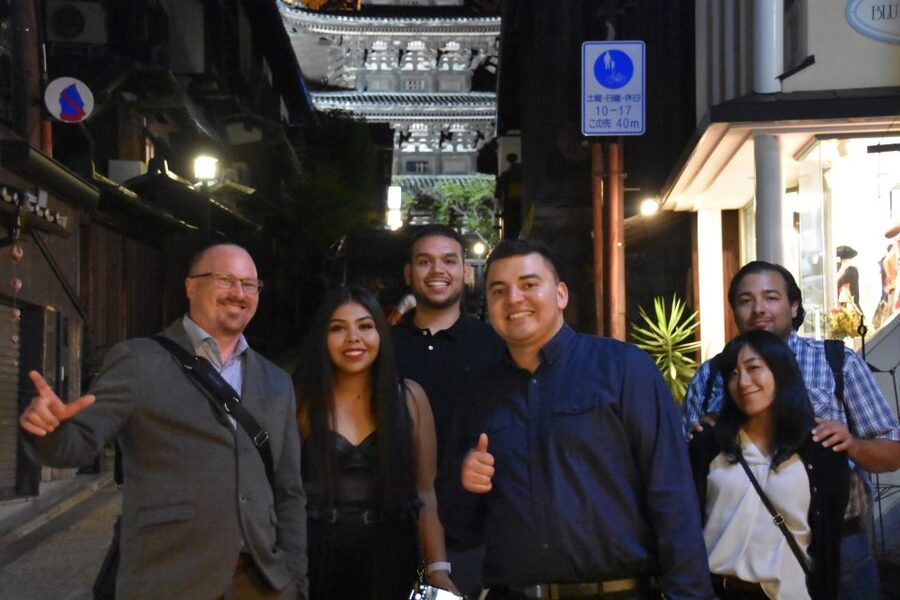
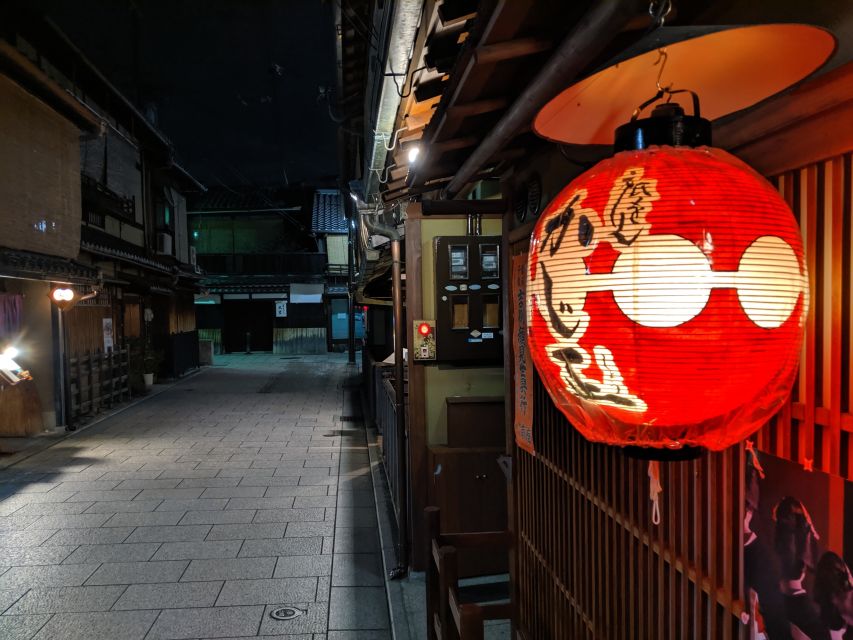
The longest part of the walk is the final 45-minute guided tour through Gion. This is where the pieces come together: the traditional streets, the teahouse district, the evening atmosphere, and the explanation of geiko and maiko life.
Gion is not a theme park built for visitors. It is a working district, and that calls for restraint. Your guide can help you understand which areas are appropriate for photographs and how to avoid disturbing people who live and work there. This is one of the strongest reasons to take a guided walk rather than charging through the lanes with a camera.
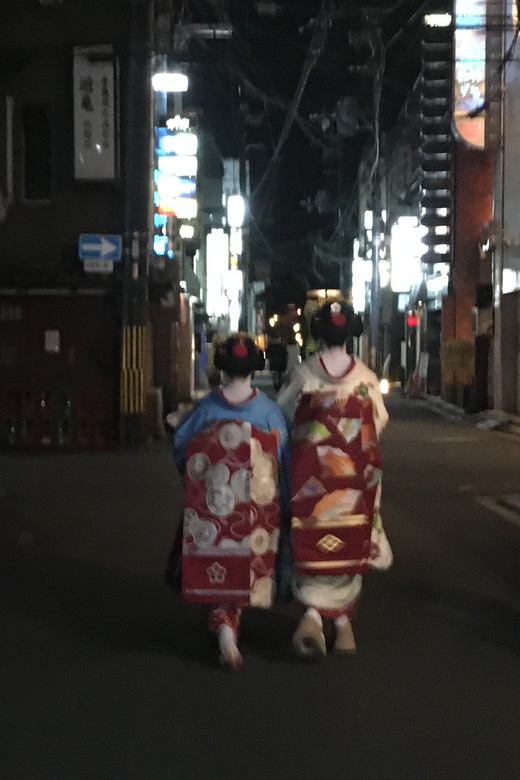
The geisha discussion is handled as a cultural subject, not a hunt for a costume photo. You learn about geiko, the Kyoto term for a fully trained geisha, and maiko, an apprentice. The most useful explanations place their work and training in context, including the discipline and education involved.
You might see geiko or maiko during the final part of the walk. Some groups have seen several, while others may not see any. Treat that as a possibility, not the purpose of the tour. If you do encounter them, follow your guide’s advice and keep your distance. A respectful sighting is far better than turning a person on the way to work into a public spectacle.
The guides make the biggest difference
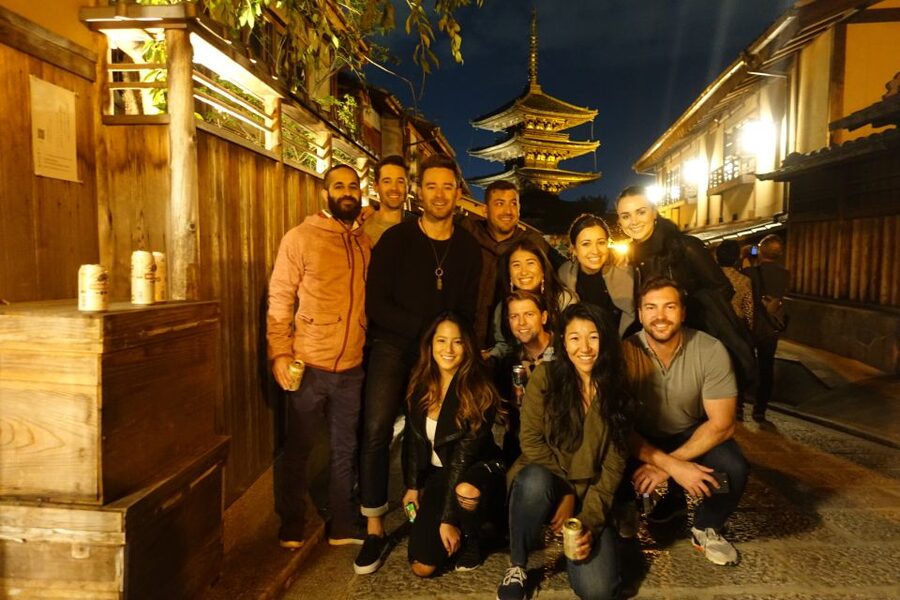
This is a simple walking route, so the guide shapes much of the experience. The strongest praise goes to guides who balance information with conversation. Karim is often described as friendly, funny, and careful when explaining Gion culture. Kevin is praised for pacing, patience, and the ability to answer questions without overwhelming the group.
Janelle, also spelled Janiel in some feedback, is noted for her warmth and engaging stories. Ben has used high-quality slides on a tablet to explain history and Japanese life, which can help when a building or custom is difficult to understand from the street. Salomé, Hina, Amir, Masu, and other guides are also described as entertaining and well prepared.
The guide language options are English and French. Since the exact guide is not guaranteed, you should think of the experience as a well-structured walk with a live local guide rather than booking around one specific person. Still, the repeated praise for different guides suggests that the operator has several strong personalities available.
Private and small-group options are available. A smaller group can make a real difference in Gion, where narrow lanes and quiet spaces are not well suited to a large crowd. It also gives you more chances to ask about food, religion, Japanese life, or the geiko world.
What $24 gets you
At $24 per person, this is good value if you want interpretation rather than transport or a meal. You receive a two-hour guided walk through two of Kyoto’s most important historic districts, with several major sights included.
The price does not cover food or drinks. That is fine, since the route ends with recommendations for somewhere to eat or have a drink. You can use those suggestions to continue the evening, though the cost of that meal is separate.
The value is strongest for first-time visitors. A self-guided walk costs less, of course, but you would need to research the history, shrine etiquette, geiko vocabulary, and neighborhood layout yourself. For a modest fee, the guide gives you a framework and helps you avoid common mistakes.
It is less useful if you already know Gion well or want a specialist photography tour. It also does not include an indoor geiko performance, a meal, or private access to a teahouse. Book it for context and atmosphere, not exclusivity.
Practical advice before you book
Wear comfortable shoes. The route is on foot and includes old streets, stone paving, and darker sections. In winter, bring a warm layer. Cold weather does not stop the tour, and the evening can feel much colder than expected once you are walking slowly.
Arrive early and confirm the meeting point. You receive the guide’s phone number, and WhatsApp is recommended if you have trouble finding the group. If you are lost, call at least 10 minutes before the start. Late arrivals and people who cannot find their guide are not refunded.
The exact starting time depends on availability. Since the atmosphere is part of the appeal, an evening departure is the natural choice. Late tours can be quieter, but they may also have less light and fewer open shops.
Free cancellation is available up to 24 hours before departure, and you can reserve now while paying later. That flexibility is useful when your Kyoto schedule is still changing.
Who will enjoy this Kyoto night walk
I would recommend this tour to first-time visitors who want an easy introduction to Gion without spending half a day on a formal sightseeing program. It also suits anyone curious about geiko and maiko culture but unsure how to approach the subject respectfully.
It works well for couples, families with older children, and solo visitors who prefer company at night. Small groups and private bookings are worth considering if you want more conversation or have specific questions.
You may want a different experience if you dislike walking, want extensive time inside temples, or expect a guaranteed geisha sighting. The tour offers atmosphere and explanation, but it cannot control who appears on the street or how busy the district will be.
Should you book Best of Kyoto: Gion, Geisha, Pagodas & Cobblestones?
Book it if you want to get your Kyoto bearings on the first night, see Gion when the streets are calmer, and learn how to read the district with respect. The route covers a lot in two hours, and $24 is fair for the guide’s time and local explanation.
The best reason to go is not the promise of spotting a geiko. It is the chance to understand what you are seeing, from shrine customs to wooden streets and the demanding world of Kyoto’s maiko and geiko. If your schedule allows only one guided walk in Kyoto, this is a sensible, atmospheric choice.
FAQ
How long does the Gion and Higashiyama walking tour last?
The tour lasts two hours.
What places does the tour visit?
The route includes Yasaka Shrine, Ninenzaka, Hōkan-ji Temple and its pagoda, Yasui Kompira-Gu Shrine, and the Gion district.
Is the tour available in English?
Yes. Live guides are available in English and French.
Is the tour private or shared?
Private and small-group options are available, depending on the option you book.
Are food and drinks included?
No. Food and drinks are not included, but the guide can offer suggestions for places to eat or have a drink afterward.
Will I definitely see a geisha or maiko?
No. You might see geiko or maiko during the Gion portion, but sightings are not guaranteed.
Where does the tour meet?
There are two starting location options near Kyoto Gion. The exact meeting point may vary depending on the booking option.
What happens if I cannot find the guide?
Your guide’s phone number is shared with you. If you have trouble finding the meeting point, call the guide at least 10 minutes before the start, with WhatsApp recommended. Late arrivals or people unable to find the guide are not eligible for a refund.
Newest Kyoto experiences on the site
- Treasures of Kyoto: Gion & historical Walking Tour★ 5.0 · 6 reviews
- Whisk Your Own Matcha: A Zen Matcha Experience at Temple★ 3.6 · 7 reviews
- Kyoto tea town for matcha lovers★ 5.0 · 16 reviews
- Uji: Private immersion into Kyoto’s tea and reglious culture★ 5.0 · 17 reviews
- Kyoto Matcha Green Tea Tour★ 4.5 · 23 reviews
- Uji and Wazuka Matcha Farm Half Day Private Guided Tour★ 5.0 · 21 reviews
- Utilising upcycled Matcha! Creating matcha incense (Uji, Kyoto)★ 5.0 · 6 reviews
- Sacred Temple Yoga Experience in Japan★ 5.0 · 3 reviews
Gion District Tours, compared.
Kyoto Geisha Walking Tour: Gion District & Hidden Gems
Read our review →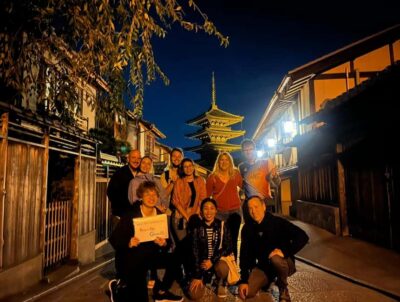
Gion Magical Night Walking Tour with Geisha Trivia
Read our review →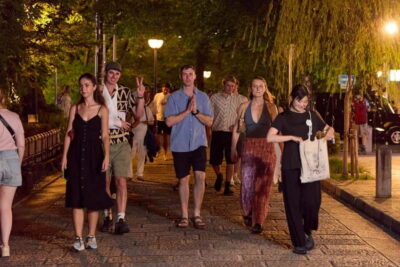
Gion Geisha District Walking Tour – Stories of Geisha
Read our review →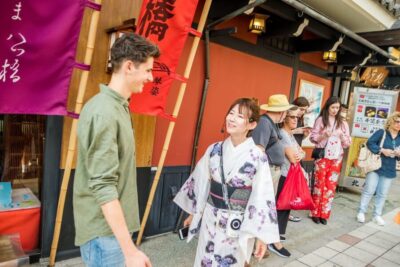
Kyoto Night Foodie Tour in Gion (9+ dishes + 6 Sake tastings)
Read our review →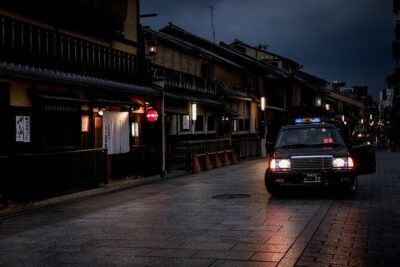
Kyoto Gion Geisha District Walking Tour – The Stories of Geisha
Read our review →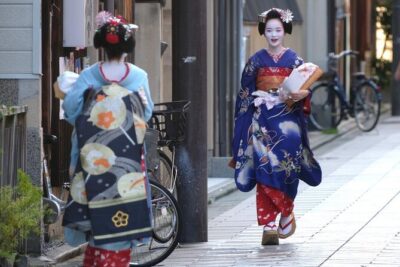
Kyoto Gion: 2-Hour Geisha Culture & History Walking Tour
Read our review →
Chopsticks Making Workshop in Gion with Engraving Option
Read our review →Browse the lists this tour appears in