
Reviewed · KYOTO CALLIGRAPHY CLASSES
Kyoto: Sumi Ink and Brush Calligraphy Experience
The most satisfying part of this sumi ink experience is the slow start: you grind water and ink on a stone, notice the fragrance, then watch a dark pool form under your brush. This is not a rushed souvenir stop. It gives you time to handle the tools and learn why traditional ink work begins with preparation.
I like the step-by-step teaching and the fact that you make a finished shikisi board rather than leaving with only practice sheets. I also like the small group limit of six, which should make it easier to ask for help. The main drawback is the short 50-minute schedule. You will learn the basics, but you will not become a calligraphy expert in one sitting.
Key details before you book
- Grinding the ink is part of the experience: You use an inkstone and water instead of ready-made sumi ink, with its fragrance and changing shades.
- Two brush methods are taught: You practice soku-hitsu with the side of the brush and choku-hitsu with the brush held upright.
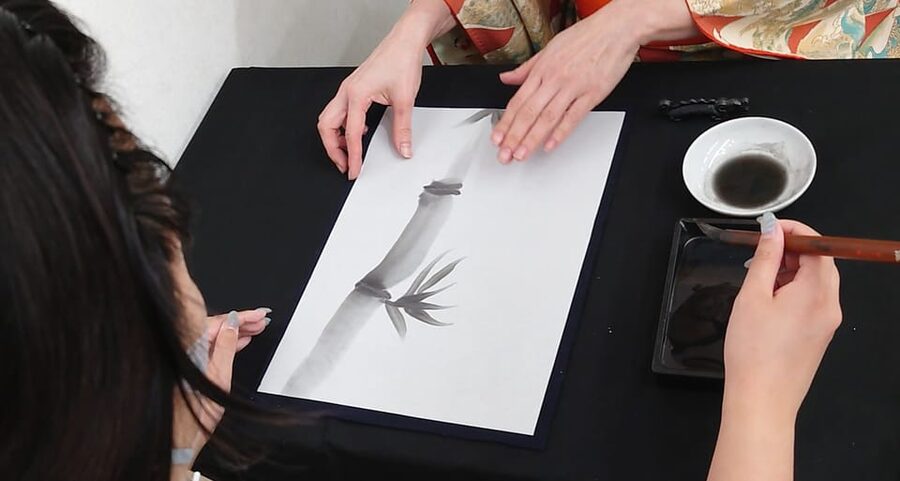
- Bamboo is your main subject: You apply the new strokes to a shikisi board, a firm board designed for Japanese calligraphy and painting.
- You finish with kanji: The suggested characters are 竹 for bamboo and 和 for harmony, though you can ask the guide about other requests.
- Your artwork comes home with you: The finished board is made to display as a reminder of your time in Japan.
- The class is small and bilingual: Up to six people can attend, with instruction in English and Japanese.
Starting with water, ink, and an inkstone
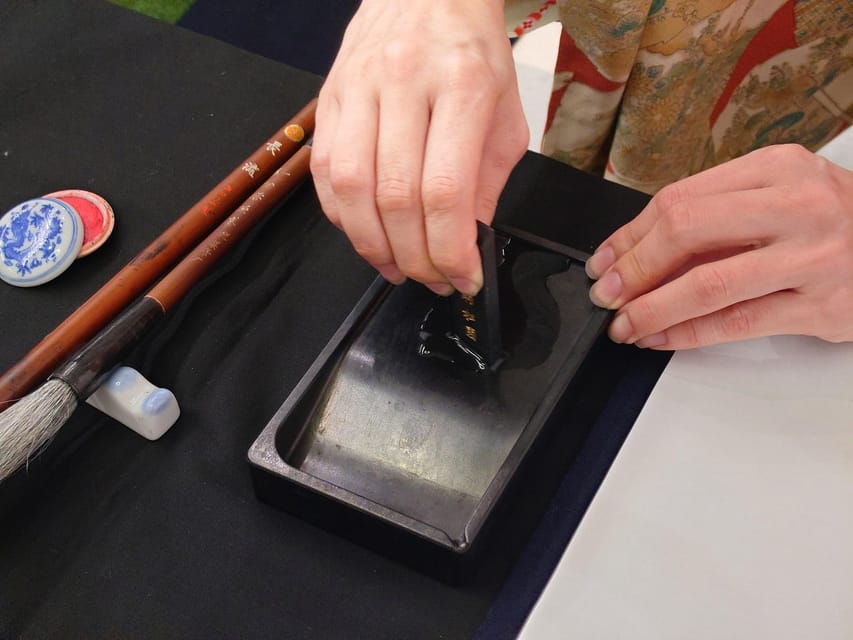
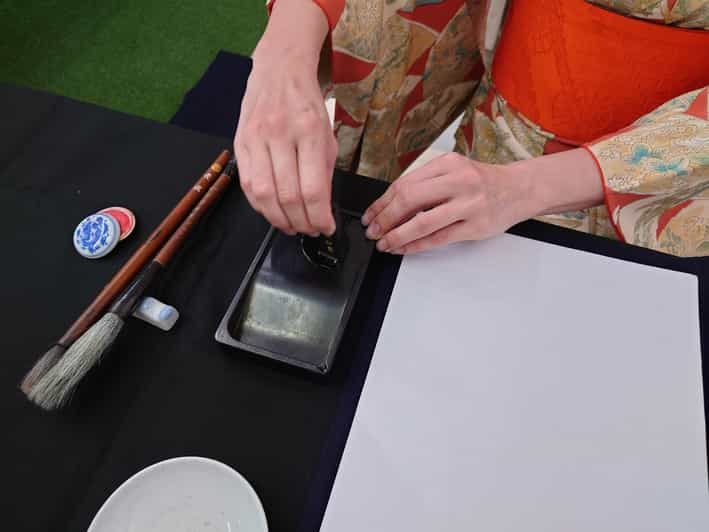
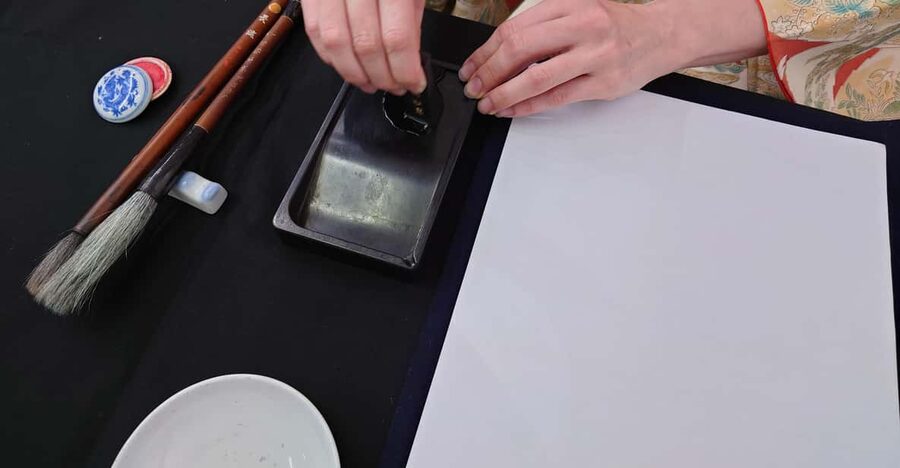
This class begins with sumi ink in its traditional form. Instead of handing you a bottle of prepared ink, the instructor gives you an inkstone, called a suzuri, and lets you grind the ink yourself with water.
That small act changes the pace of the class. You have to slow down and pay attention to the movement of the ink stick, the surface of the stone, and the scent rising from the mixture. The color is not simply black in a flat, factory-made way. As you add water and work the ink, you can create different shades for lighter or darker strokes.
For me, this is one of the strongest reasons to choose this class over a quick brush-painting activity. You are not only copying a design. You are taking part in the preparation that makes the design possible.
The drawback is that the ink-grinding stage takes time from a 50-minute session. That is not wasted time, but it does mean you should arrive ready for a calm, focused lesson rather than a long art workshop. If your main goal is to produce a large painting, this class may feel brief.
The necessary tools are prepared for you, including the brushes, inkstone, ink materials, and board. You do not need to bring calligraphy supplies or buy anything before arriving.
More calligraphy classes in Kyoto:
- Kyoto: Calligraphy class at Buddhist temple in city center
★ 5.0 · 167 reviews - Kyoto: Japanese Calligraphy Class
★ 4.8 · 89 reviews - Kyoto: Japanese Calligraphy Workshop
★ 4.7 · 84 reviews
Learning the two brush techniques
Once your ink is ready, the class moves to brush control. You first practice soku-hitsu, using the side of the brush. This helps you create broader marks and learn how pressure and angle affect the result.
You then practice choku-hitsu, holding the brush upright. The change feels simple, but it gives you a different kind of line. The upright brush is better suited to controlled strokes, while the side of the brush can create wider marks and more variation.
This practice section matters because bamboo is built from separate kinds of marks. The stalk, joints, leaves, and darker accents each ask for a slightly different touch. The instructor demonstrates the techniques, then gives you time to repeat them.
That teaching style is a good fit if you have no art background. You do not need prior calligraphy experience, and the class does not expect you to arrive knowing how to hold the brush. The instruction is described as step by step, with enough practice before you move to the final board.
The strongest teaching qualities reported for this activity are patience, clear communication, and a friendly manner. One participant specifically found the teacher patient and easy to understand. Another said the instructor was skillful, kind, and enjoyable to spend time with. Those details matter in a class where a small correction in hand position can change the entire stroke.
No individual instructor name is provided, so you cannot request a particular teacher based on the supplied information. The available instruction is in English and Japanese.
Painting bamboo on a shikisi board
After practicing on the provided materials, you draw bamboo on your shikisi board. Bamboo is a sensible subject for a first sumi lesson because it relies on clean strokes, spacing, and changes in pressure rather than a long list of colors.
The board gives your work a proper finished surface. You are not simply practicing on disposable paper and walking away with ink-stained fingers. The bamboo becomes the main image on an object you can display at home.
You should keep your expectations sensible. The goal is not a museum-quality painting. The value is in learning how the brush responds and seeing your own marks take shape. Small irregularities are part of the result, especially when you are using a traditional brush and ink mixture for the first time.
I like this part because it turns the lesson into a personal souvenir. A purchased print can remind you of Japan, but a board you made yourself carries a clearer memory of the afternoon. The finished work also gives you something more specific to show than a standard shop-bought keepsake.
The class provides an apron so your clothing is protected. You should still wear comfortable clothes, since you will be working with ink and handling art materials. The activity takes place indoors, so weather should not affect the lesson itself.
Adding characters for bamboo and harmony
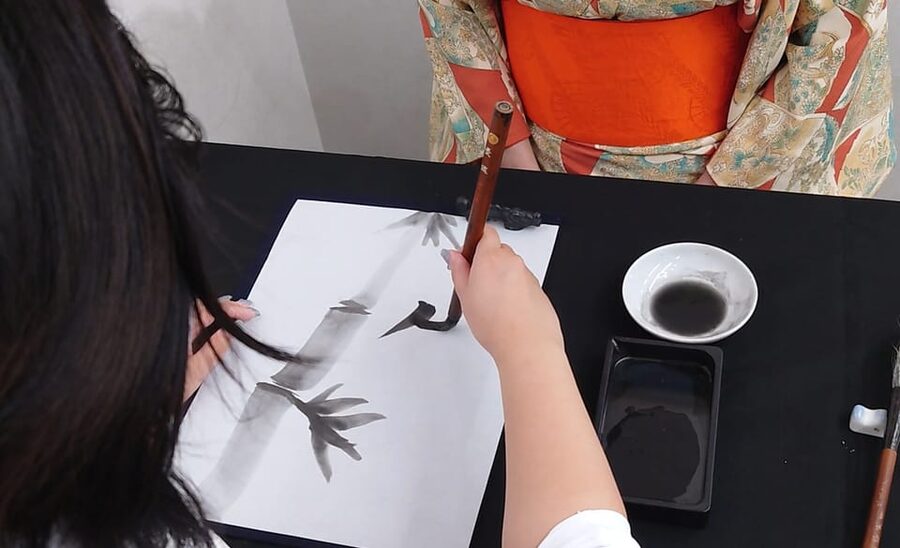
The final stage is calligraphy. You can write characters beside the bamboo you have drawn, giving the board a balance of image and text.
The suggested characters are 竹, meaning bamboo, and 和, meaning harmony. These are useful choices for a first piece because they connect directly to the subject and to a broad idea of Japanese aesthetics. If you have another request, you can ask the guide, who will write the character for you.
You practice the characters several times before placing them on the finished board. That practice is important. The board is the part you take home, so you get a chance to become familiar with the shape before making the final marks.
This is also the moment to think about what you want your souvenir to say. Choosing 竹 keeps the design simple and connected to the painting. Choosing 和 gives the piece a broader meaning. If you cannot decide, the standard options remove the pressure.
Do not expect a long lesson in Japanese language or kanji. The activity is centered on brush technique, bamboo painting, and creating the board. The characters add a personal finish, but they are not presented as a full language class.
A few more Kyoto tours worth putting on the shortlist
- PERFECT KYOTO 1-Day Bus Tour
★ 5.0 · 13,518 reviews - Kyoto: Fushimi Inari, Kinkakuji, Bamboo Grove 1 Day Bus Tour
★ 4.8 · 4,316 reviews - Kyoto: Tea Ceremony in a Traditional Tea House in Kiyomizu
★ 4.9 · 3,519 reviews - Kyoto Geisha Walking Tour: Gion District & Hidden Gems
★ 4.7 · 3,273 reviews
What the 50-minute schedule feels like
Fifty minutes is enough for a focused introduction. The class has a clear rhythm:
- You settle in and use the prepared tools.
- You grind the sumi ink with water on the suzuri.
- You practice soku-hitsu with the side of the brush.
- You practice choku-hitsu with the brush upright.
- You draw bamboo on the shikisi board.
- You practice and add your chosen characters.
- You take the finished board home.
The short format works well in a busy Japan itinerary. You can fit it between sightseeing plans without giving up half a day. It also keeps the session approachable for anyone who wants to try calligraphy but does not want a long formal course.
The tradeoff is that each stage must move along. You will have practice time, but not endless time to redo the final design. Arriving late would be especially unhelpful because the activity depends on a sequence. The instructions ask you to arrive on time, and I would treat that as important rather than optional.
If you want a relaxed creative pause, 50 minutes is enough. If you hope to produce several paintings, test many ink shades, or receive a long technical critique, choose a longer workshop if one is available.
Small-group teaching and the meeting point
The class is limited to six participants. That is a useful number for brush instruction. You should be able to see the demonstration, follow along, and ask a question without competing with a large crowd.
A small group can also make the session feel less exposed. Beginners sometimes worry that everyone else will be more skilled. Here, the stated format is designed for people with no prior calligraphy experience, and the lesson begins with basic brush methods.
The meeting point is near the giant crab sculpture of Kani Doraku. This is the landmark you should use when finding the starting place. The supplied details do not give a full street address or transportation directions, and transportation to the venue is not included, so check the exact meeting instructions before setting out.
There is one practical inconsistency in the supplied accessibility information. The activity is marked as wheelchair accessible in one place, but it is also listed as unsuitable for wheelchair users and people with mobility impairments. If accessibility affects your booking, contact the provider before paying and ask for a clear answer about the entrance, seating, and workspace.
Is $49 a fair price?
At $49 per person, this is not the cheapest way to spend 50 minutes in Kyoto. You are paying for instruction, prepared tools, the inkstone, the shikisi board, and the finished artwork you take home.
The value is strongest if you care about the process. Grinding traditional ink, learning two brush techniques, and receiving guidance on bamboo gives the session more substance than a simple photo opportunity. The board also means part of the price goes toward a usable souvenir rather than only access to a demonstration.
The price is less compelling if you only want a quick introduction to Japanese writing. You could see kanji and buy calligraphy-related souvenirs for less. You would not, however, get the tactile work of preparing ink, practicing brush pressure, and making your own board.
I would compare the $49 cost with other hands-on activities in your itinerary, not with the price of a shop souvenir. For a small-group lesson with an instructor and materials included, it is a reasonable spend if you value a personal keepsake.
Who will enjoy this class most
I would recommend this experience to you if you want a quiet cultural activity with a clear beginning and end. It suits first-time visitors who want to try a traditional Japanese art without committing to a full course.
It is also a good choice for:
- People who enjoy making their own souvenirs
- Couples or friends looking for a shared indoor activity
- Families with participants who can sit and focus for 50 minutes
- Beginners who want patient, guided instruction
- Anyone curious about the difference between prepared ink and ink ground by hand
You may want to skip it if you dislike careful, repetitive practice or want a high-energy activity. It is also a poor fit if you need a long session to work slowly, since the class has several stages to complete.
Comfortable shoes, a hat, sunscreen, water, and comfortable clothes are listed as suggested items. The hat and sunscreen matter more for getting to the venue than for the indoor lesson. An apron is lent to you, which lowers the risk of marking your clothes, but sensible clothing remains the wise choice.
Booking, cancellation, and timing
You can cancel up to 24 hours in advance for a full refund. The reserve-now, pay-later option lets you hold a place without paying immediately, which is useful when your Japan schedule is still changing.
Starting times vary, so check availability for your date. Since the session is only 50 minutes and late arrival can disrupt the sequence, leave enough time to locate the meeting point near Kani Doraku.
The activity takes place indoors and does not include transportation. English and Japanese are the available languages. The small group limit is six people, so popular time slots may have limited space.
My recommendation: book it for the process, not just the picture
I would book this class if you want to slow down, work with traditional materials, and take home something you made yourself. The ink-grinding stage, patient step-by-step teaching, and combination of bamboo painting with calligraphy give the short session a clear purpose.
I would pass if your main goal is an extended art course or a polished professional painting. The 50-minute format offers an introduction, not mastery. Also confirm the exact meeting details and accessibility arrangements before booking, since the supplied information gives conflicting wheelchair guidance.
For most first-time beginners, the best reason to choose this activity is simple: you leave with more than a souvenir. You leave with a small understanding of how ink, brush, pressure, and patience work together.
FAQ
How long does the sumi ink and brush calligraphy activity last?
The activity lasts 50 minutes.
What does the $49 price include?
The price includes the necessary calligraphy tools, an inkstone for grinding sumi ink, a shikisi board, and guidance on brush techniques and bamboo drawing.
Do I need previous calligraphy experience?
No. Prior calligraphy experience is not required.
Can I take my finished artwork home?
Yes. You can take home the completed shikisi board and display it as a souvenir.
Which characters can I write?
The suggested characters are 竹, meaning bamboo, and 和, meaning harmony. You can ask the guide about other character requests.
Is the activity taught in English?
Yes. Instruction is available in English and Japanese.
Where is the meeting point?
The meeting point is near the giant crab sculpture of Kani Doraku.
Can I cancel the booking?
Yes. You can cancel up to 24 hours in advance for a full refund. You can also reserve now and pay later.
Newest Kyoto experiences on the site
- Treasures of Kyoto: Gion & historical Walking Tour★ 5.0 · 6 reviews
- Whisk Your Own Matcha: A Zen Matcha Experience at Temple★ 3.6 · 7 reviews
- Kyoto tea town for matcha lovers★ 5.0 · 16 reviews
- Uji: Private immersion into Kyoto’s tea and reglious culture★ 5.0 · 17 reviews
- Kyoto Matcha Green Tea Tour★ 4.5 · 23 reviews
- Uji and Wazuka Matcha Farm Half Day Private Guided Tour★ 5.0 · 21 reviews
- Utilising upcycled Matcha! Creating matcha incense (Uji, Kyoto)★ 5.0 · 6 reviews
- Sacred Temple Yoga Experience in Japan★ 5.0 · 3 reviews
Kyoto Calligraphy Classes, compared.
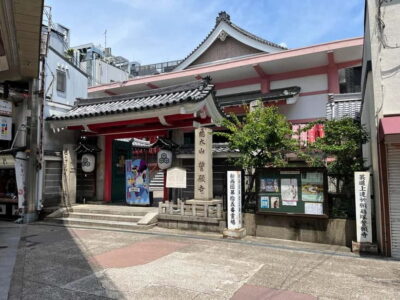
Calligraphy class at Buddhist temple in city center
Read our review →
Kyoto Ninenzaka : Japanese Calligraphy Class in Townhouse
Read our review →
Private Japanese Calligraphy in Kyoto – Learn Shodō with a Master
Read our review →
Japanese Calligraphy – Shodo – Lesson (near Kyoto Station)
Read our review →
Browse the lists this tour appears in