
Reviewed · NIJO CASTLE TOURS
Kyoto: Nijo Castle and Kyoto Imperial Palace Guided Tour
Kyoto’s old power struggle comes into focus on this tour: Nijo Castle represents the shogun’s authority, while the Kyoto Imperial Palace reflects the emperor’s courtly world. I like the sharp contrast between the two sites, and I like having a guide explain the politics, art, and architecture instead of simply walking past grand gates.
I also like the small group, limited to nine people, and the fact that guides such as Goku, Kayo, Nene, and Taku have been praised for answering questions and adapting to different interests. The main drawback is that the Imperial Palace visit may focus heavily on exterior views, and most of the tour takes place outdoors.
Key points at a glance
- Two sides of old Kyoto: Compare the shogun’s Nijo Castle with the emperor’s former residence.
- A compact group: With no more than nine participants, questions are easier to ask and the guide can adjust the pace.
- A history-led walk: Expect discussion of politics, Japanese culture, architecture, and the changing roles of emperors and shoguns.
- Ninomaru Palace included: The Nijo Castle admission covers Ninomaru Palace and the Art Gallery as well as the castle grounds.
- Seasonal garden views: The Imperial Palace gardens are especially appealing in spring, when blossoms add color to the formal setting.
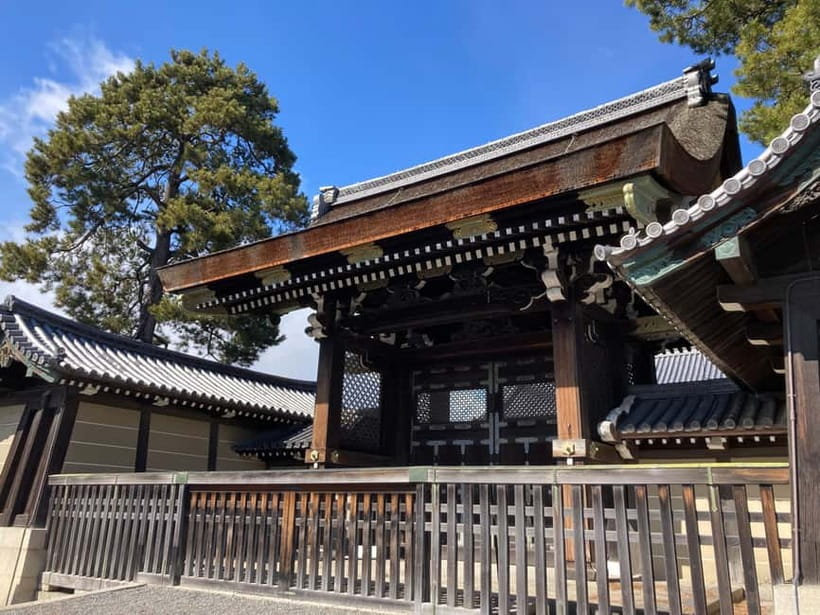
- A central meeting point: The tour begins at the Nakadachiuri Gate of the Kyoto Imperial Palace before continuing on foot.
Kyoto’s old power centers in one morning
This three-hour walking tour links two places that tell different parts of Japan’s story. At Nijo Castle, you see the world of the Tokugawa shogunate, the military government that held power while the emperor remained in Kyoto. At the Imperial Palace, you encounter the ceremonial and cultural center of the imperial court.
I find that pairing useful because it gives you a framework for understanding Kyoto. Instead of treating each monument as an isolated stop, you can compare how power was displayed. The castle used scale, controlled movement, lavish decoration, and defensive planning. The palace presents a quieter style, with broad grounds, restrained buildings, and gardens shaped around seasonal beauty.
The guide is central to the experience. Goku has received especially strong praise for explaining shoguns, emperors, Japanese culture, and difficult historical questions in clear English. Kayo has been noted for combining humor with detailed explanations, while Nene and Taku have been praised for their patience, local advice, and ability to answer questions.
Those names matter because the quality of this tour depends heavily on who leads it. The format is not an audio guide with a fixed script. It works best when you ask questions and take advantage of the small group.
More Nijo Castle visits:
- Kyoto: Nijo-jo Castle and Ninomaru Palace Guided Tour
★ 4.7 · 1,020 reviews - Kyoto: Nijo Castle, Kiyomizu & Fushimi Inari Guided Tour
★ 4.7 · 700 reviews - Kyoto: Nijo, Kinkaku-ji, Arashiyama, Kiyomizu & Fushimi Inari
★ 5.0 · 699 reviews
Starting at Kyoto Imperial Palace
The meeting point is the Nakadachiuri Gate of the Kyoto Imperial Palace. You receive information in advance about what your guide looks like and what they will be wearing, which is helpful at a large public site with several gates and open spaces.
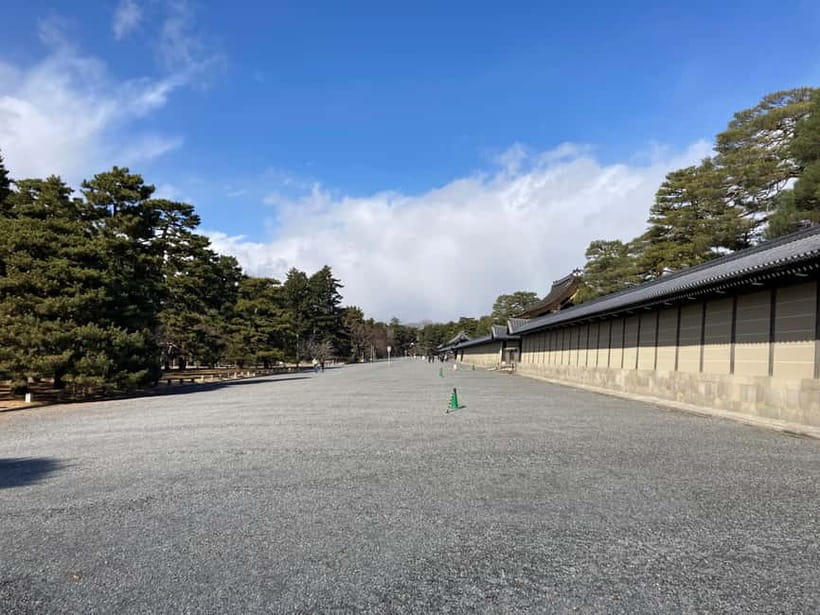
The palace grounds offer a calm beginning. The setting is spacious, formal, and carefully ordered, with gardens designed to show the changing seasons. In spring, flowering trees can make the visit especially attractive. In other seasons, the appeal comes more from the layout, traditional architecture, and quiet sense of ceremony.
Your guide explains the role of the palace in Kyoto’s political and cultural life. This is where the tour can add real value. Without context, you may notice gates, roofs, courtyards, and gardens but miss how they relate to court life and Japanese ideas of refinement.
There is one important limitation. One participant specifically found the Imperial Palace visit less satisfying because the buildings could only be viewed from the exterior. You should set your expectations accordingly. This is not a promise of extensive indoor palace access. If you mainly want to enter historic rooms, Nijo Castle provides the stronger interior visit.
What the Imperial Palace gardens add
The palace gardens give the tour breathing room between history lessons. You can look at the relationship between buildings, paths, ponds, planted areas, and open court spaces while the guide explains why seasonal change matters so much in Japanese design.
The gardens are not presented as a wild nature walk. Their beauty comes from composition and restraint. You might notice how views are framed, how space is kept open around important structures, and how flowering plants or autumn color change the mood of the grounds.
I like this part for visitors who need a slower start to Kyoto. The palace setting is less visually crowded than some of the city’s most famous religious sites. It also gives you a chance to ask broader questions about Japanese tradition, architecture, or the relationship between the imperial court and the military government.
Bring a camera. Also bring cash, as both are listed among the useful items for the activity. Since the tour is mainly outside, your comfort will depend on the day’s conditions, though no specific weather plan is provided.
Walking from the palace toward Nijo Castle
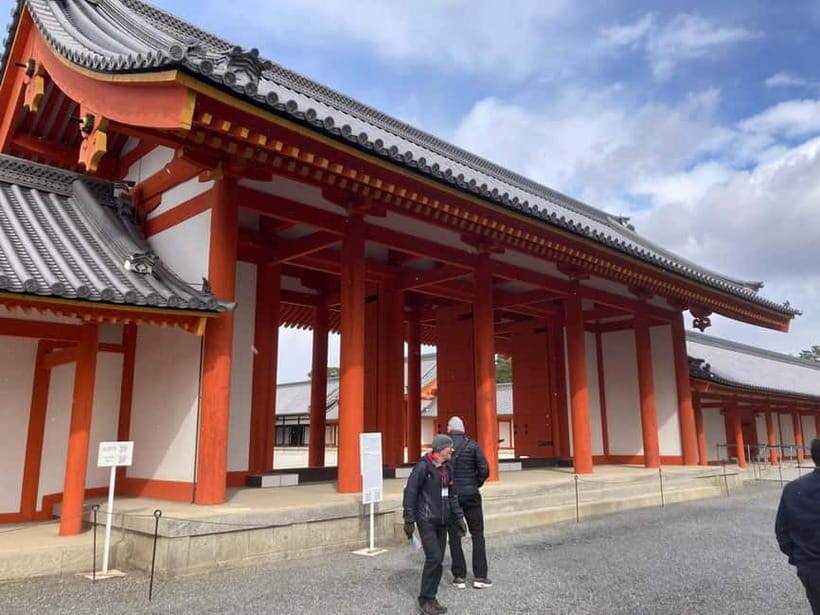
The route includes a walk of about 20 minutes between the Imperial Palace and Nijo Castle. That transfer is part of the experience rather than dead time. Guides have used it to discuss Japanese and Western culture, Kyoto neighborhoods, traditional townhouses, and local life.
I like this transition because it connects the monuments to the city around them. You are not simply being moved from one ticket gate to another. You get a look at ordinary Kyoto streets and may see a location known for cherry blossoms.
The walk also affects how you should plan your morning. Wear comfortable shoes and be ready to spend most of the three hours on foot. The activity is described as a walking tour, not a vehicle-based excursion. One review referred to transportation as comfortable, but the main published details emphasize walking, so you should not book this expecting a private ride between the sites.
This portion may be less appealing if you want nonstop monument time. On the other hand, it helps break up the formal visits and gives the guide room to explain the city beyond its famous buildings.
More Imperial Palace and villa visits:
- Kyoto: Imperial Palace & Nijo Castle Guided Walking Tour
★ 4.7 · 453 reviews - Kyoto Imperial Palace & Nijo Castle Guided Walking Tour – 3 Hours
★ 4.5 · 106 reviews - Nijo Castle and Imperial Palace Visit with Guide
★ 5.0 · 53 reviews - Kyoto: Discover Every Bit of Kyoto Imperial Palace
★ 4.4 · 21 reviews
Entering Nijo Castle, the shogun’s showpiece
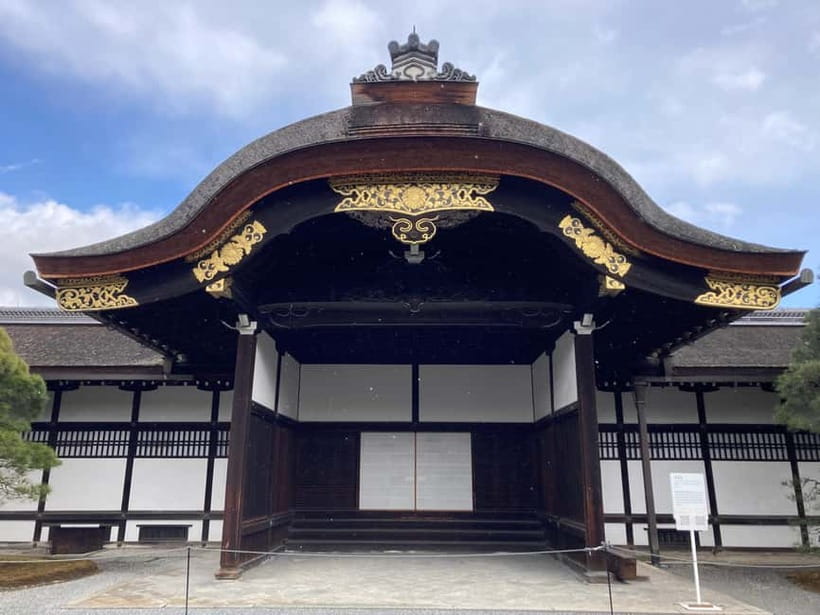
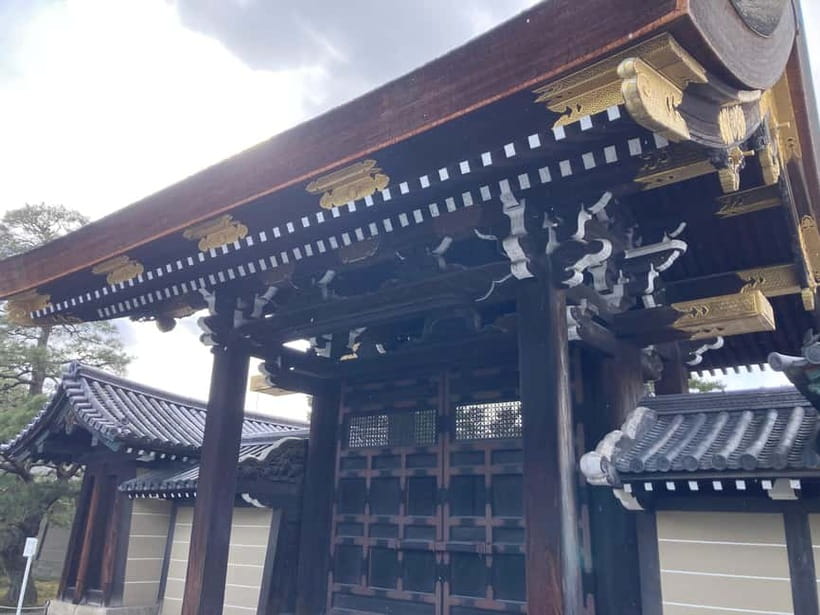
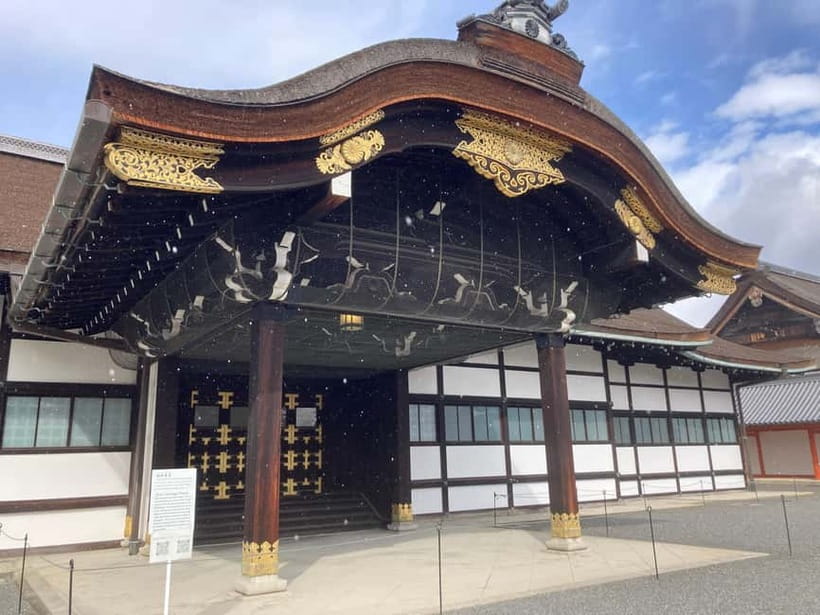
Nijo Castle was built by Tokugawa Ieyasu and is the tour’s clearest expression of political authority. Its purpose was not only practical. The castle also communicated status, control, and the reach of the shogunate.
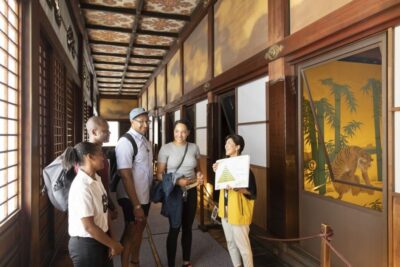
Inside Ninomaru Palace, the decorative program matters. Lavish interiors and detailed artwork were designed to impress people entering the shogun’s domain. A guide can point out how architecture directed movement and how decoration supported the message of power.
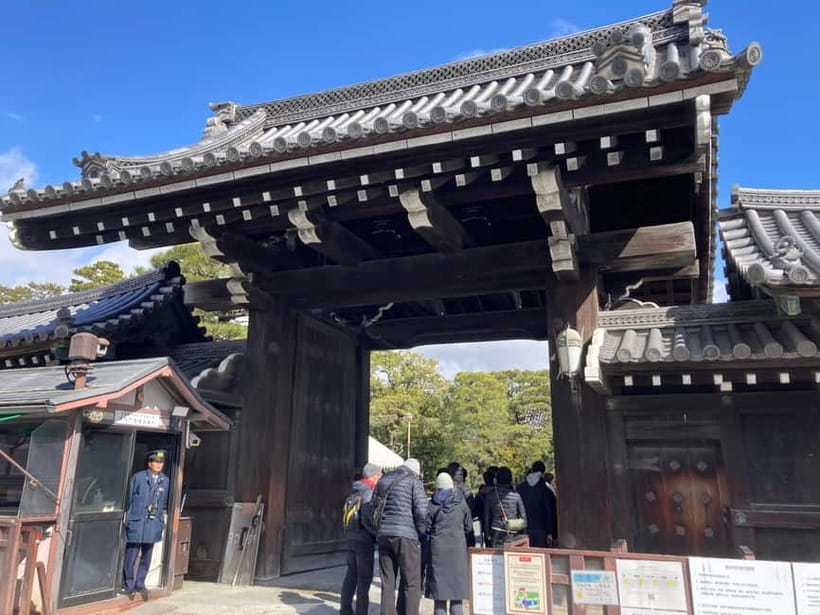
The included admission covers Nijo Castle, Ninomaru Palace, and the Art Gallery. That makes this more than a quick look at an outside wall or gate. You have access to the part of the complex that best shows the contrast between military government and courtly Kyoto.
The guide’s explanation is especially useful here. Goku has been praised for giving detailed background on the shoguns and the political events surrounding the castle. Other guides, including Kayo and Taku, have been praised for connecting history with architecture and art.
I would give Nijo Castle the edge if you want interior access and a clearer sense of how a ruling elite presented itself. The castle can feel more structured and forceful than the Imperial Palace, which is exactly why the pairing works.
Why the political contrast matters
Kyoto can overwhelm you with temples, shrines, gardens, and old streets. This tour gives you a political thread to follow. You learn to read the city through the tension between imperial tradition and shogunal rule.
At Nijo Castle, authority is made visible through grandeur and control. At the Imperial Palace, power appears more restrained, tied to ritual, lineage, and cultural continuity. The guide helps connect those differences to the political climate of each period.
The strongest guides also handle questions outside the basic sightseeing script. Goku was praised for discussing the relationship between Japan and the United States after World War II. That kind of question-and-answer exchange can make the tour feel more useful than a simple list of construction dates.
You should still know what this tour is not. It is not a full survey of Kyoto’s temples, food, geisha districts, or modern culture. It concentrates on two major political and architectural sites, with some neighborhood context along the way.
Small groups and guide quality
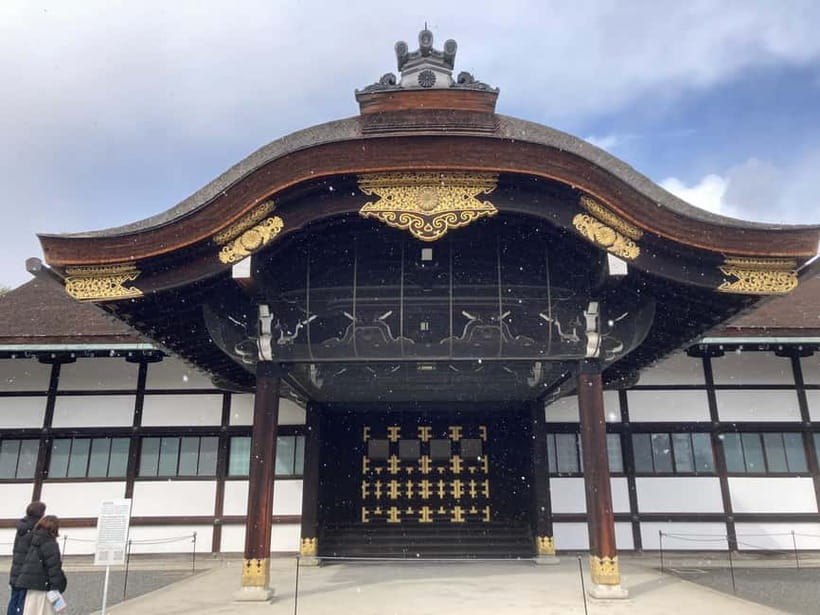
The group limit of nine is one of the best features. You are less likely to lose the guide in a crowd, and you can ask questions without holding up a large party.
The guides named in the feedback bring different strengths. Goku is repeatedly praised for his depth of knowledge, strong English, energy, and willingness to answer difficult questions. Kayo is described as informative and funny, with a talent for keeping three hours moving quickly. Nene is praised for kindness, clarity, and flexibility, including stepping in when another guide became ill. Taku is noted for local tips, photography help, and patient answers.
That range is worth keeping in mind. A private guide is not guaranteed, and the exact guide can affect the tone of your visit. Still, the small-group setup gives any guide better room to tailor the experience.
This format suits solo visitors particularly well. One solo participant received help taking photos, and another had what was effectively a one-person tour when no other people joined at that time. Families with older children may also like it, especially if the guide can shift between political history, architecture, and practical questions.
Price, timing, and what you receive
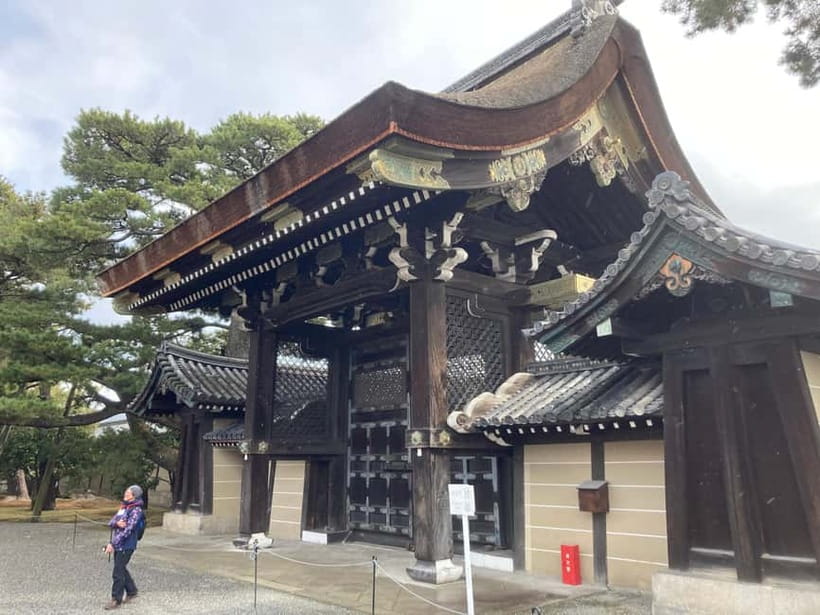
At $63 per person, the tour is not the cheapest way to enter these sites. You are paying for the admissions, an English-speaking guide, a three-hour walking route, and the chance to ask questions in a small group.
The value is strongest if you want interpretation. If you are comfortable reading signs, using a guidebook, and exploring at your own pace, you may prefer to visit independently. If you want help understanding the political story and architectural details, the guide can make the admission fees work harder.
The three-hour length is sensible. It is long enough to see both sites without turning the morning into an exhausting full-day program. The main tradeoff is pace. You will not have unlimited time for photography, quiet garden wandering, or lingering in every room.
The activity offers free cancellation up to 24 hours before the start time and allows you to reserve now and pay later. Starting times vary, so you need to check availability for your date.
Who should book this tour
I would choose this for a first visit to Kyoto if you want a clear introduction to the city’s political past. It is also a good fit if you enjoy asking questions, comparing architectural styles, and learning why a site mattered rather than simply collecting photographs.
It suits solo visitors, couples, families with older children, and small groups who prefer a personal guide. The multilingual option is useful: tours may be available in English, French, Spanish, Japanese, Portuguese, and Russian.
You should think twice if you dislike walking or want extensive indoor palace access. Pregnant women are specifically listed as unsuitable for the activity, and shorts are not allowed. Since the tour is largely outdoors, anyone who prefers a climate-controlled museum visit may find the format less comfortable.
Practical ways to get more from the visit
Arrive ready for a walking morning. Comfortable footwear matters more here than dressing for a formal palace visit. Bring a camera and cash, and avoid shorts because they are not allowed.
Ask the guide to explain the difference between the emperor’s role and the shogun’s role. That question ties both sites together and can help you understand why Kyoto remained so important even when military leaders controlled the government.
If you are interested in photography, say so early. Guides such as Taku have helped solo participants with photos, and other guides have adjusted the balance between history and picture-taking.
Save local questions for the final part of the tour. Guides have offered restaurant suggestions and neighborhood advice, including ramen recommendations near a hotel. Those tips may be as useful as the formal history lesson, especially if this is one of your first days in Kyoto.
Should you book it?
Book this tour if you want Nijo Castle and Kyoto Imperial Palace explained as two parts of one political story. The small group, included Nijo Castle admissions, and strong record of guide-led explanation make $63 a fair price for visitors who value context.
Skip it if you mainly want to explore alone, spend long stretches photographing gardens, or enter more Imperial Palace interiors. For most first-time visitors who want a focused morning with a lively guide, this is a useful and well-balanced introduction to old Kyoto.
FAQ
How long is the Kyoto Nijo Castle and Imperial Palace tour?
The tour lasts three hours.
How much does the tour cost?
The price is $63 per person.
Where does the tour meet?
The meeting point is the Nakadachiuri Gate of the Kyoto Imperial Palace.
Which sites are included?
The tour visits Kyoto Imperial Palace and Nijo Castle. Nijo Castle admission includes Ninomaru Palace and the Art Gallery.
Is the tour conducted in English?
English is available. Other listed languages are French, Spanish, Japanese, Portuguese, and Russian.
How large is the group?
The group is limited to nine participants.
Is the Imperial Palace interior included?
The provided details do not promise interior access to the Imperial Palace. You should expect to view the palace buildings from the outside while exploring the grounds and gardens.
What should I bring?
Bring a camera and cash.
Can I cancel the booking?
You can cancel up to 24 hours in advance for a full refund. The activity also offers reserve now and pay later booking.
Newest Kyoto experiences on the site
- Treasures of Kyoto: Gion & historical Walking Tour★ 5.0 · 6 reviews
- Whisk Your Own Matcha: A Zen Matcha Experience at Temple★ 3.6 · 7 reviews
- Kyoto tea town for matcha lovers★ 5.0 · 16 reviews
- Uji: Private immersion into Kyoto’s tea and reglious culture★ 5.0 · 17 reviews
- Kyoto Matcha Green Tea Tour★ 4.5 · 23 reviews
- Uji and Wazuka Matcha Farm Half Day Private Guided Tour★ 5.0 · 21 reviews
- Utilising upcycled Matcha! Creating matcha incense (Uji, Kyoto)★ 5.0 · 6 reviews
- Uji Tea Ceremony and UNESCO Heritage Walking Tour★ 5.0 · 20 reviews
Nijo Castle Tours, compared.
Nijo-jo Castle and Ninomaru Palace Guided Tour
Read our review →
Nijo Castle, Kiyomizu & Fushimi Inari Guided Tour
Read our review →
Nijo, Kinkaku-ji, Arashiyama, Kiyomizu & Fushimi Inari
Read our review →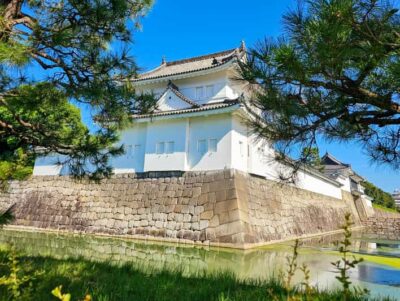
Imperial Palace & Nijo Castle Guided Walking Tour
Read our review →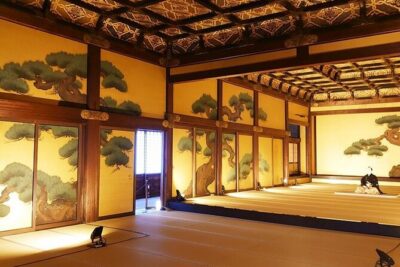
Nijo Castle World Heritage Guided Tour with Admission
Read our review →
Kyoto Imperial Palace & Nijo Castle Guided Walking Tour – 3 Hours
Read our review →
Nijo Castle and Imperial Palace Visit with Guide
Read our review →
Golden Pavilion, Nijo Castle, & Nishiki Market Half day tour
Read our review →Browse the lists this tour appears in