
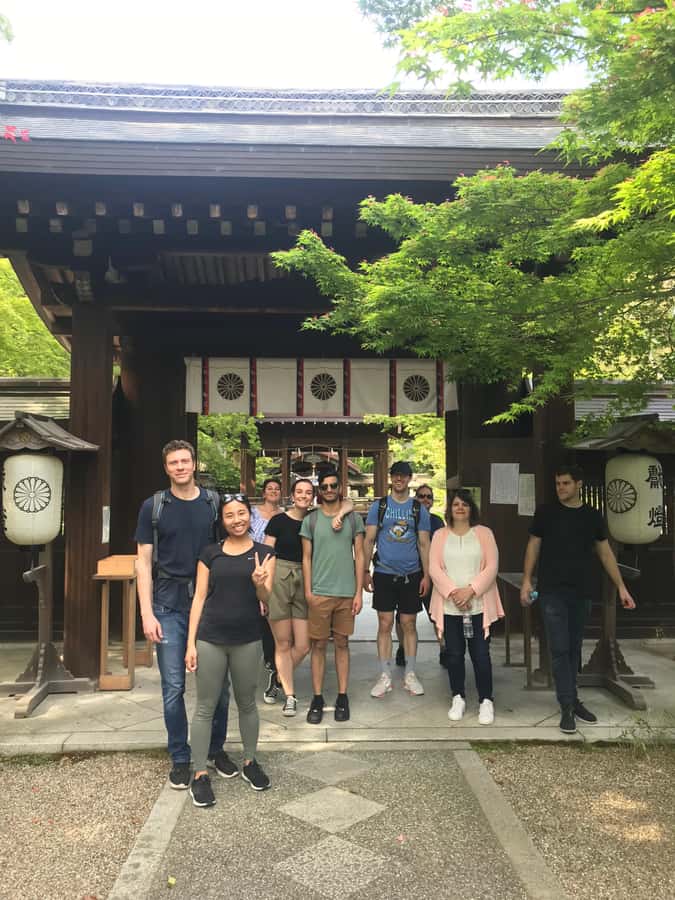
Reviewed · GION DISTRICT TOURS
Cycle Kyoto’s Hidden Gems & Gion Stroll
Kyoto reveals itself beautifully from a bicycle. You pedal beside the river, pass peaceful neighborhoods and university grounds, and reach places that can be awkward to connect on foot. The route includes the Imperial Palace, a Zen temple, and Shimogamo Shrine, followed by a short walk through Gion or Pontocho.
I like the mix of major sights and quiet corners, and I like the small tea-and-sweets stop at a traditional shop. Guides such as Benjamin, Ko, Claire, and Mr. Go are praised for being kind, patient, and helpful with families. The main caution is simple: you need to ride confidently, and children under nine cannot join.
Key points at a glance
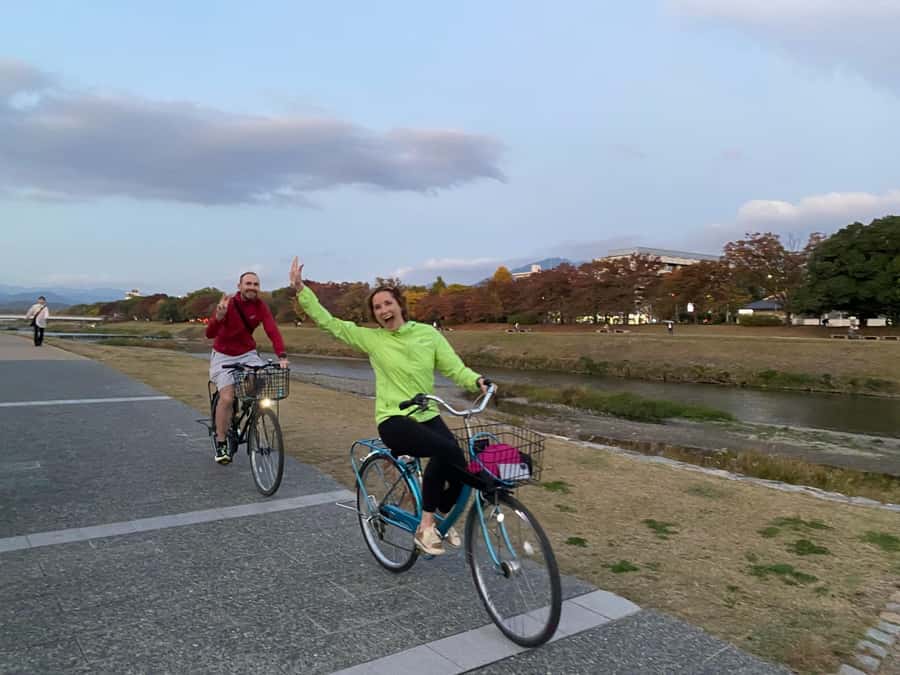
- Riverside cycling: Start with a calm road beside the water, then follow scenic river paths back toward central Kyoto.
- Three very different Kyoto sights: See the Imperial Palace, a Zen temple, and the forested grounds of Shimogamo Shrine.
- Tea and Japanese sweets: A traditional snack-shop stop gives the ride a pleasant cultural pause.
- Gion or Pontocho walk: Finish among Kyoto’s famous Flower Towns, with an explanation of geisha culture.
- Family-friendly pace: Stops are frequent enough for a relaxed ride, though every participant must be comfortable on a bicycle.
- $73 value: The price includes the rental bike, tea, sweets, guide, and a roughly four-hour experience, with electric bikes costing 1,000 yen more.
Why a bike is a smart way to see Kyoto
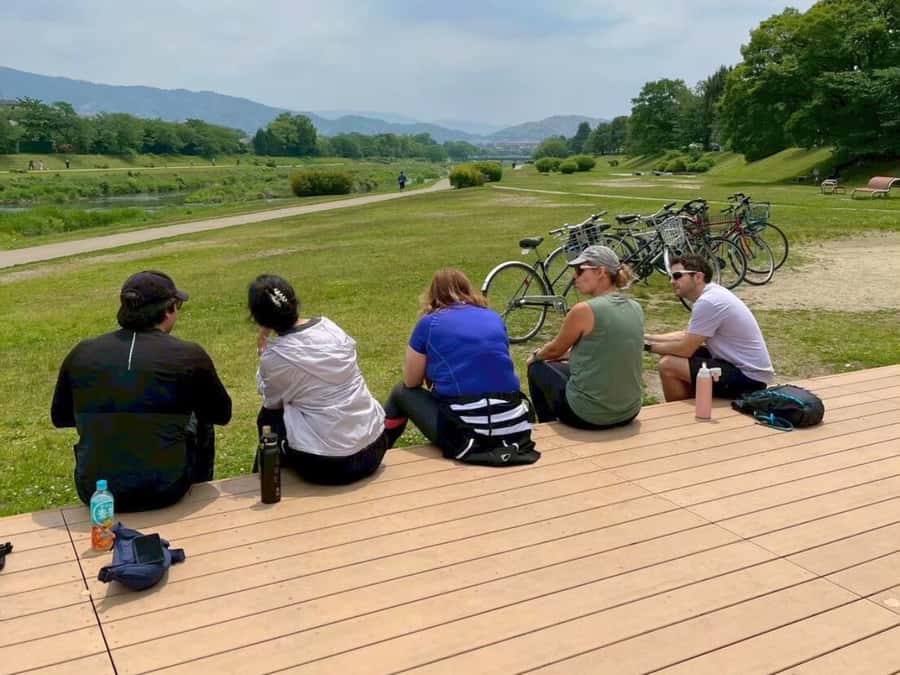
Kyoto’s famous sights are spread across the city. Walking between them can eat up a good part of your day, while buses may be crowded and slow. A bicycle gives you a better sense of how the city fits together.
This route is not built around one grand attraction. Its pleasure comes from the links between places: water, trees, small shrines, residential streets, university campuses, and broad palace grounds. You get moving air on a warm, humid day, along with a look at parts of Kyoto that are easy to miss from a bus window.
The ride is described as 3.5 hours, followed by a 30-minute town walk. In practical terms, plan on close to four hours. That makes it a substantial half-day activity, not a quick orientation ride. You return the bicycle at the original meeting point before heading into Gion or Pontocho on foot.
More ways to walk Gion:
- Kyoto Geisha Walking Tour: Gion District & Hidden Gems
★ 4.7 · 3,273 reviews - Kyoto: Gion Magical Night Walking Tour with Geisha Trivia
★ 4.9 · 2,393 reviews - Kyoto: Gion Geisha District Walking Tour – Stories of Geisha
★ 4.7 · 2,187 reviews
Meeting at Sanjo Ohashi
The starting point is the kneeling man statue at the southeast corner of the Sanjo Ohashi intersection. From the east end of Sanjo Ohashi Bridge, cross the street and look for the statue.
This location is central, but the instructions matter. If you arrive by subway, it is quicker to come up to street level first, then find the intersection and statue. Give yourself a little extra time because busy Kyoto crossings can make a simple meeting point less obvious than it sounds.
The tour ends back here after the walking section. That is useful if you have a hotel, restaurant, or train connection nearby, though you should not schedule anything too tightly. Cycling, sightseeing stops, tea, and the Gion walk all work better with a bit of breathing room.
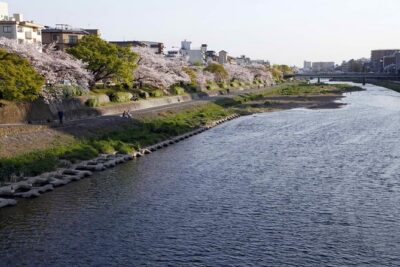
Following Kyoto’s riverside roads
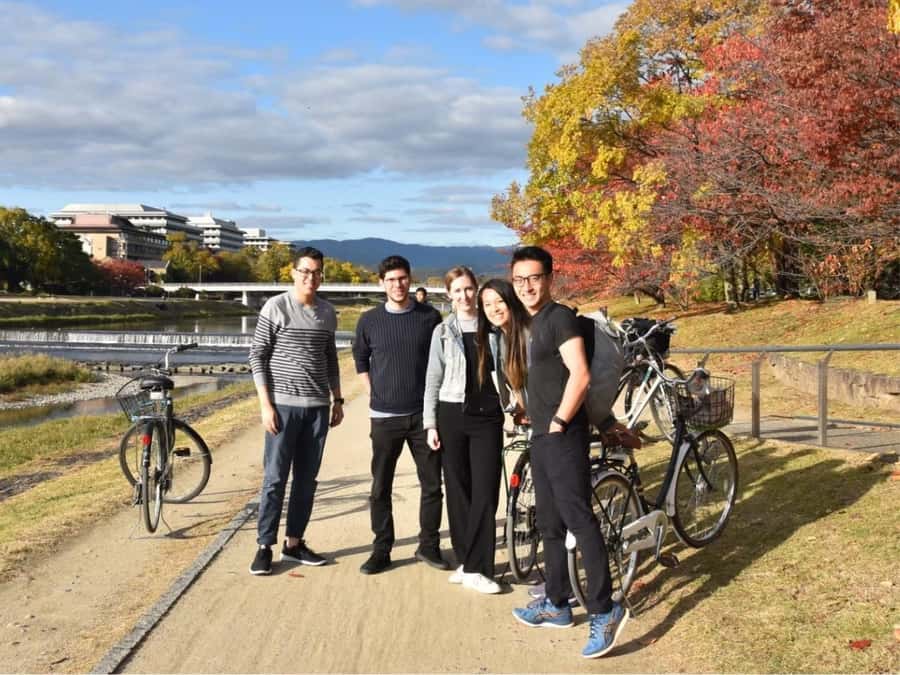
The opening stretch is peaceful and practical. You begin beside the river, where the ride quickly feels removed from the traffic and shopping streets of central Kyoto.
The river route is one of the strongest parts of the experience. You can enjoy the outdoors without committing to a difficult ride through crowded streets. The guides choose roads and paths that help you see the city at a slower pace, with stops built in for photos and explanations.
An early stop is a lesser-known shrine where you can try pure natural spring water. This is a small moment, but it gives the tour a local texture. You are not simply checking off famous buildings. You are stopping at a place tied to everyday Kyoto and taking a proper pause before the longer ride.
The route also passes through quiet residential areas and university campuses. These sections help you see Kyoto as a working city, not just an open-air museum. You might find these quieter stretches especially welcome after time around the main temple districts.
The Imperial Palace and a Zen temple
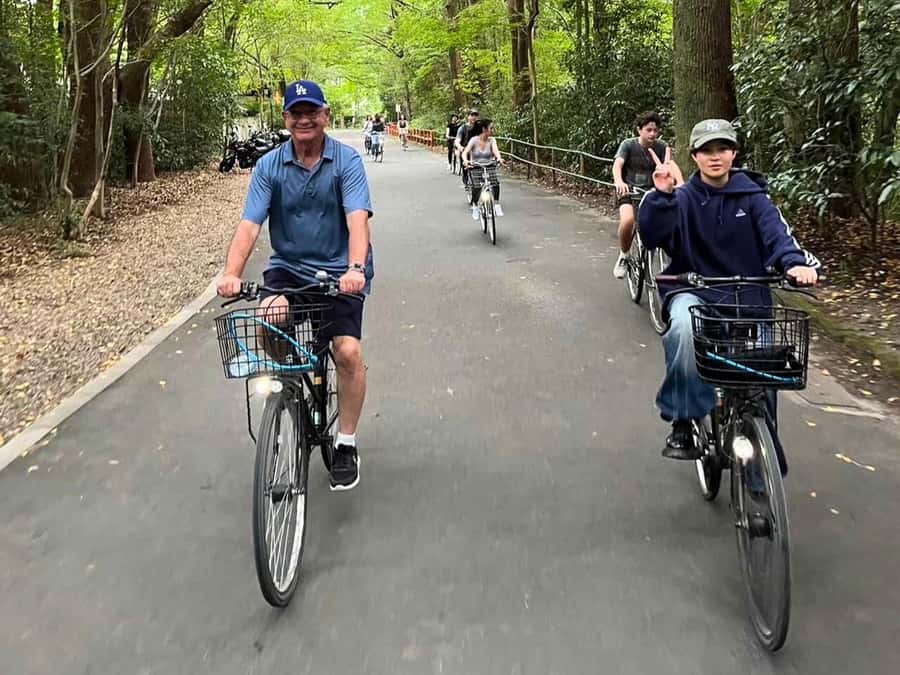
The Imperial Palace provides the grandest setting on the route. Its large grounds offer space, formality, and a change of scale from the narrow streets around central Kyoto.
The visit is not presented as a long palace tour with an extensive interior program. Instead, the palace works as one important stop during a broader city ride. That is a benefit if you want variety and steady movement. If your main goal is detailed palace interpretation, you may want a separate visit.
The Zen temple offers a different mood. Its appeal comes from calm design and religious atmosphere rather than size alone. The experience pairs well with the palace because the two places show different sides of Kyoto: imperial power at one stop, quiet Buddhist practice at the next.
Exact temple destinations can vary. The tour notes that the destinations are examples, and the plan may change in rain. That flexibility is worth keeping in mind. You should expect the same general idea, a mix of important sites and quieter places, rather than a rigid checklist of named stops.
More bike days around Kyoto:
- Hidden Kyoto E-Biking tour
★ 5.0 · 1,843 reviews - Bike Tour Exploring North Kyoto plus Lunch
★ 5.0 · 1,087 reviews - Arashiyama Bamboo Forest & Hidden Gems Bike Tour (Early Bird)
★ 5.0 · 613 reviews - 5 Top Highlights of Kyoto Full Day Bike Tour (E-bike option)
★ 5.0 · 511 reviews
Shimogamo Shrine and its old forest
Shimogamo Shrine is one of the tour’s most meaningful stops. It is a UNESCO World Heritage site, but its appeal is not limited to its official status.
The shrine is set among a primitive forest, giving you shade, trees, and a sense of age after the open ride through the city. The buildings provide the visual focus, while the forest changes the feel of the visit. You get a place for a calm walk and photos without leaving the city.
This is also where the bicycle format pays off. The route connects Shimogamo with the Imperial Palace and the central river roads in one flowing outing. Reaching these places independently is possible, but a bicycle and guide reduce the work of planning the order, finding the quieter approaches, and deciding how much time to spend at each stop.
You should still expect a sightseeing ride rather than a long shrine study. The route has several destinations, so the time at each one is likely to be focused. If you want a slow, detailed look at every building, book extra time to return on your own.
The river junction and the ride back
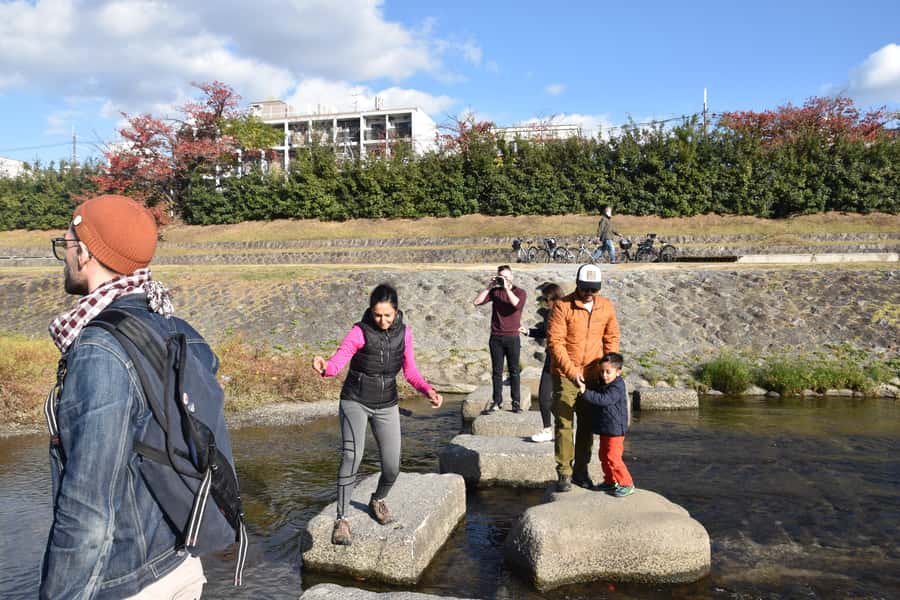
After Shimogamo Shrine, the route continues to a distinctive river junction point. Here, separate waterways meet, creating a memorable place to pause and understand Kyoto’s waterways as part of the city’s design.
The return follows a scenic riverside route, described as lighted up and refreshing. This should be one of the most pleasant stretches of the ride, especially after several stops. You are back in motion, but the setting remains open and green rather than crowded.
The tour’s rhythm matters here. You get movement, then a shrine or temple, then more movement. That pattern keeps the outing from feeling like a long lecture or a chain of rushed photo stops. Claire’s ride, for example, was praised for a useful frequency of stops, with enough pauses to enjoy the sights without losing the pleasure of cycling.
Tea, Japanese sweets, and a traditional pause
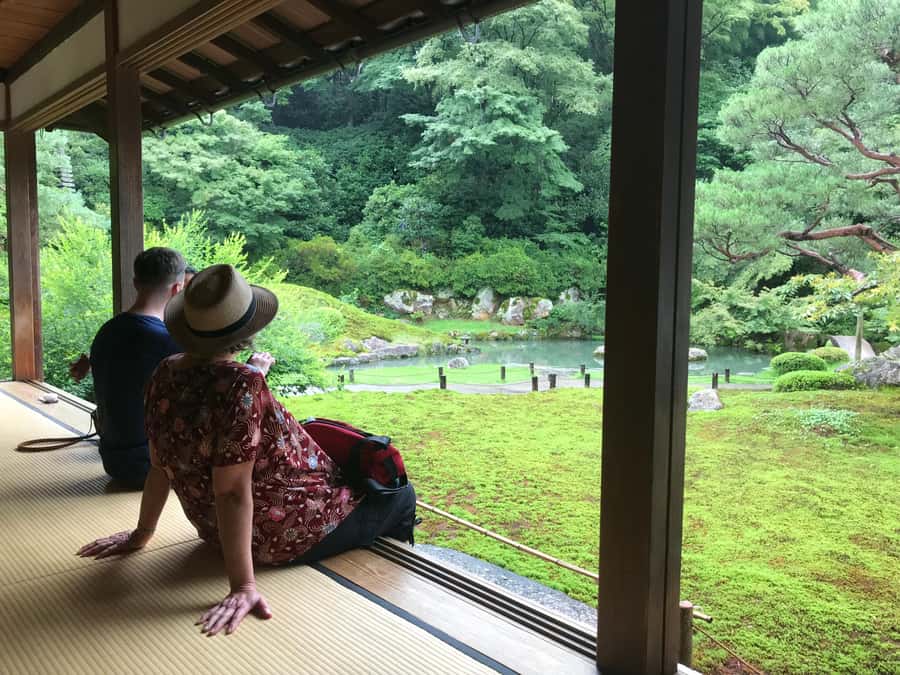
Tea and Japanese sweet snacks are included at a traditional snack shop. This is more than a minor refreshment, especially if you book the tour on a warm day.
Ko’s route included tea and a sweet in a typical teahouse setting, giving the group a chance to sit and take in a small part of Kyoto’s food culture. You do not need a formal tea ceremony to appreciate this kind of stop. A simple cup of tea and a seasonal sweet can make the itinerary feel more connected to local customs.
Bring water anyway. The ride takes place outdoors, and Kyoto can be hot and humid. Comfortable shoes, weather-appropriate clothing, and a camera are sensible choices. Large bags and luggage are not allowed, so carry only what you need for the ride.
Gion, Pontocho, and Kyoto’s Flower Towns
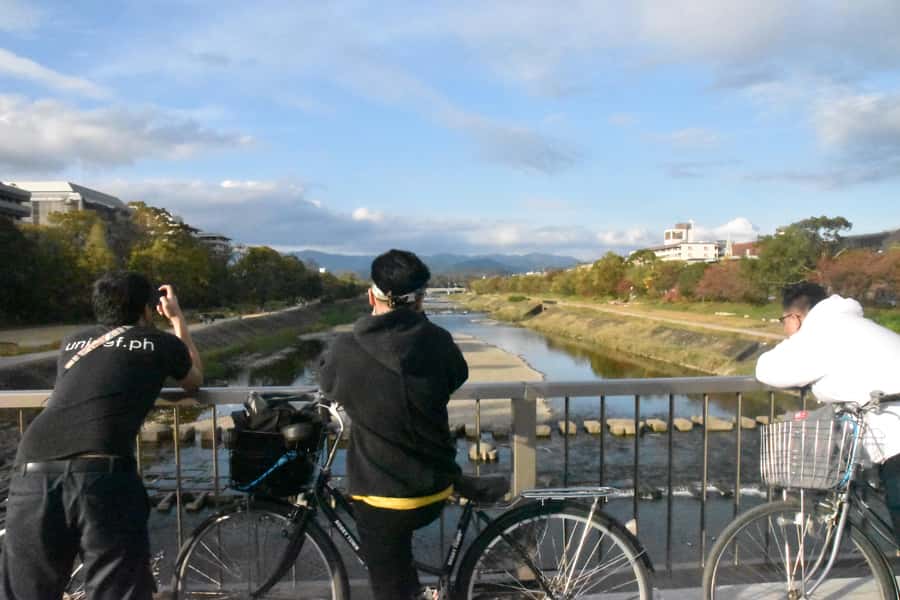
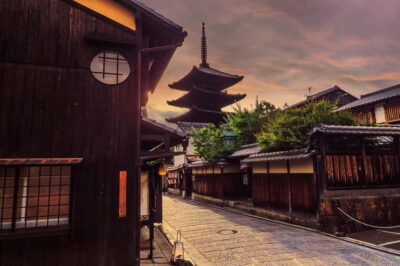
After returning the bicycles, you take a 30-minute walk through either Gion or Pontocho. These are among Kyoto’s most photogenic areas, with narrow streets, traditional buildings, restaurants, and places connected to the geisha world.
The guide explains the culture and system of geisha, including the role of the Flower Towns. That context is useful because the streets can otherwise seem mysterious or purely decorative. You get a clearer idea of how these entertainment districts function and why they remain important to Kyoto.
You might spot a geisha, but it is not guaranteed. Treat that possibility as a bonus, not the purpose of the walk. The better reason to join is to see the streets with some explanation and to learn how to look respectfully in an area where local residents and working professionals share the same narrow lanes.
The short walking section also gives you a chance to ask for restaurant and bar suggestions. The guide can recommend places based on your requests, which is practical at the end of a ride when you may want lunch, dinner, or a drink nearby. The recommendations are part of the conversation rather than a separate meal included in the price.
Guides and the feel of the ride
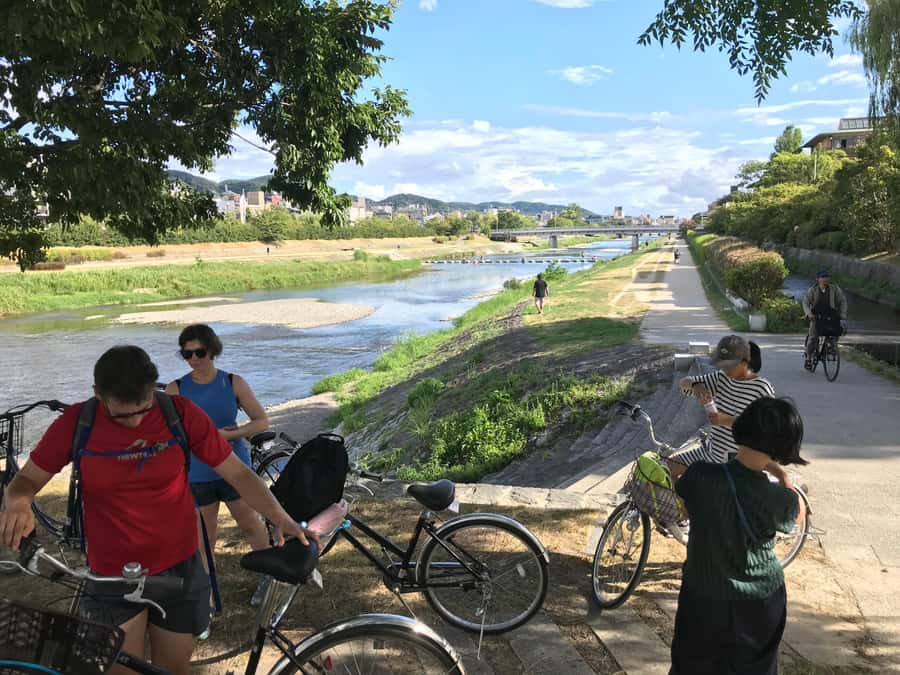
The guide is a major part of this experience. Benjamin is described as kind, helpful, and strong on local explanations. Ko is praised for informative guidance and for making the tea stop enjoyable. Claire is noted for a friendly manner and for choosing a good balance between major sights and quiet places.
Mr. Go is especially suitable for families with younger riders. He is described as patient and kind with children aged nine and ten, which matters because a family bicycle outing can quickly become stressful if the pace is too fast or the instructions are unclear.
The praise is consistent on the points that matter most: friendly care, clear explanations, and help reaching places you may not find easily alone. Still, guide assignments can change, so you should not book solely to meet one specific person. Expect an English-language tour, with the guide shaping the exact stops and explanations.
Is $73 a fair price?
At $73 per person, the cost is reasonable for a guided outing of about four hours. The rental bicycle, guide, tea, Japanese sweets, and visits to the listed outdoor sites are included. You also get the planning work, route finding, and local recommendations.
The value is strongest if you want several parts of Kyoto in one morning or afternoon. You would otherwise need to research a cycle route, rent a bicycle, work out how to connect the palace and Shimogamo Shrine, and decide where to stop for a local snack.
The price is less compelling if you already know Kyoto well, own a bicycle, and prefer to set your own pace. It is also not the right choice if you want a long visit inside one temple or a formal geisha performance. This is a guided city ride with cultural stops, not a deep specialist tour of one subject.
An electric bike costs an extra 1,000 yen, paid on the spot. Consider that option if you are concerned about the length of the ride or Kyoto’s heat. The standard bikes are described as pleasant to ride, but you must be comfortable making the full route on two wheels if you do not choose the upgrade.
Who should book this Kyoto ride?
I would recommend it to families with children aged nine and older, couples who want an active half-day, and first-time visitors who prefer a broad introduction to Kyoto rather than a single major temple. It also suits anyone who wants a break from packed sightseeing streets.
You should be able to ride a bicycle confidently. The tour is not suitable for people who cannot ride, and it is not designed for pets, smoking, luggage, or large bags. Wear shoes you can pedal in comfortably and dress for the weather.
The tour operates rain or shine, with alternative temple or shrine plans possible in wet conditions. That makes a waterproof layer sensible. It also means you should be ready for a slightly different route if the weather changes.
Should you book it?
Book this tour if you want to see Kyoto by moving through it, not just walking from one famous gate to the next. The river roads, Shimogamo’s forest, tea stop, and Gion walk create a varied half-day with plenty of local detail.
Skip it if you dislike bicycles, need a fully fixed itinerary, or want long, quiet visits at just one or two sights. For most active visitors, the $73 price buys a useful combination of transport, guidance, refreshments, and access to quieter corners of the city. The electric-bike option is a sensible extra if heat or hills concern you.
FAQ
How long does the experience last?
The bicycle portion lasts 3.5 hours, followed by a 30-minute walk through Gion or Pontocho. Plan for roughly four hours in total.
Where does the tour start?
It starts at the kneeling man statue at the southeast corner of the Sanjo Ohashi intersection. From the east end of Sanjo Ohashi Bridge, cross the street to find the statue.
Where does the tour end?
The activity ends back at the meeting point after the cycling and walking portions.
What sights are included?
The route includes the Imperial Palace, a famous Zen temple, Shimogamo Shrine, riverside roads, a shrine with natural spring water, university campuses, residential areas, and a river junction point. The destinations are examples and may change.
Is Shimogamo Shrine included?
Shimogamo Shrine is part of the planned route. It is a UNESCO World Heritage site with a primitive forest and traditional buildings.
Is the Gion walk always in Gion?
The walking portion takes place in Gion or Pontocho. The guide will explain the Flower Towns and geisha culture.
Is tea included?
Yes. Japanese tea and Japanese sweet snacks at a traditional snack shop are included.
Can children join?
Children under nine cannot join. The experience is suitable for families with children aged nine and older, provided everyone can ride a bicycle.
Can I use an electric bike?
Yes. An electric bike is available for an extra 1,000 yen, paid on the spot.
What happens if it rains?
The experience operates rain or shine. The tour may use alternative temple or shrine plans in rainy conditions.
What should I bring?
Bring comfortable shoes, a camera, water, and clothing suited to the weather. Pets, smoking, luggage, and large bags are not allowed.
Is the tour offered in English?
Yes. English is the listed tour language.
Can I cancel for a full refund?
You can cancel up to 24 hours in advance for a full refund.
More Walking Tours in Kyoto
- Night Walk in Gion: Kyoto’s Geisha District
★ 4.5 · 2,003 reviews - Kyoto Gion Geisha District Walking Tour – The Stories of Geisha
★ 5.0 · 1,441 reviews - Nishiki Market Brunch Walking Tour (7 Tastings + Brunch)
★ 5.0 · 1,355 reviews - Kyoto Arashiyama Walking Tour: Bamboo, Monkeys, Gardens & Secrets
★ 5.0 · 1,216 reviews
Newest Kyoto experiences on the site
- Whisk Your Own Matcha: A Zen Matcha Experience at Temple★ 3.6 · 7 reviews
- Treasures of Kyoto: Gion & historical Walking Tour★ 5.0 · 6 reviews
- Kyoto tea town for matcha lovers★ 5.0 · 16 reviews
- Uji: Private immersion into Kyoto’s tea and reglious culture★ 5.0 · 17 reviews
- Kyoto Matcha Green Tea Tour★ 4.5 · 23 reviews
- Uji and Wazuka Matcha Farm Half Day Private Guided Tour★ 5.0 · 21 reviews
- Utilising upcycled Matcha! Creating matcha incense (Uji, Kyoto)★ 5.0 · 6 reviews
- Sacred Temple Yoga Experience in Japan★ 5.0 · 3 reviews
Gion District Tours, compared.
Kyoto Geisha Walking Tour: Gion District & Hidden Gems
Read our review →
Gion Magical Night Walking Tour with Geisha Trivia
Read our review →
Gion Geisha District Walking Tour – Stories of Geisha
Read our review →
Best of Kyoto: Gion, Geisha, Pagodas & Cobblestones
Read our review →
Kyoto Night Foodie Tour in Gion (9+ dishes + 6 Sake tastings)
Read our review →
Kyoto Gion Geisha District Walking Tour – The Stories of Geisha
Read our review →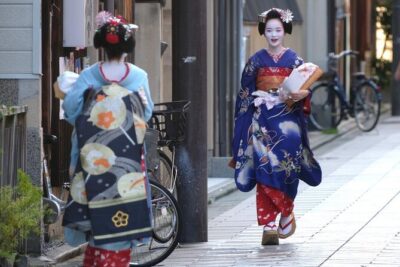
Kyoto Gion: 2-Hour Geisha Culture & History Walking Tour
Read our review →Browse the lists this tour appears in