
Reviewed · KYOTO CYCLING TOURS
Kyoto: Hidden Gems E-Bike Tour with Local Japanese Guide
Kyoto’s best moments are often found between the famous sights. This small-group e-bike tour follows the Kamo River, quiet streets, temple lanes, and the Philosopher’s Path before reaching Ginkaku-ji, Nanzen-ji, and Heian Jingu. It covers a lot without turning the morning into a race.
I like the easy pace and the human side of the ride. Aska, or another friendly Japanese guide such as Tai, Natsuki, or Tatsuya, can explain local culture in fluent English while chatting about life in Japan and abroad. I also like that the route gives you time for coffee, souvenirs, and matcha crepes near Ginkaku-ji.
The main consideration is cycling in a real city. You’ll use quiet river paths, but also roads with traffic and areas full of pedestrians. You should be a confident cyclist who can brake, steer, and stop calmly around people.
Key points to know before booking
- A three-and-a-half-hour ride with real variety: River paths, city streets, temples, shrines, a canal route, and time to browse near Ginkaku-ji.
- An unusually personal guide experience: Aska founded the tour, while other young Japanese guides may lead groups. Several have lived in the United States or the United Kingdom.
- Electric bikes make the hills manageable: The motor helps on uphill stretches, making the ride practical for moderately fit visitors.
- A maximum of eight people: Small groups make it easier to ask questions and adjust the pace at stops.
- The route is not crowd-free: Some locations can be busy, especially on Saturdays and during autumn leaf color, so you still need city-riding confidence.
- Good value at $75: The price includes the e-bike, helmet, guide, entry ticket, and parking fees, but not food or water.
Why an e-bike works so well in Kyoto
Kyoto is compact on a map, but its temples are spread across several districts. Walking between them can eat up much of your day, while buses may be slow on crowded roads. An e-bike gives you a middle option: you cover useful ground, feel the air along the river, and avoid spending the entire morning in a vehicle.
The electric assistance matters most when the route rises toward northeastern Kyoto. You still pedal, but you do not need to attack every slope. One rider described needing only a gentle amount of effort, and that matches the practical appeal here. You can arrive at a temple ready to look around instead of hot and worn out.
The bike also lets you see ordinary Kyoto between the headline sights. You pass streets, waterways, shops, and residential areas that are easy to miss from a bus. That everyday view is a major part of the experience, not just transportation between temples.
You do need to know how to ride a bicycle. This is not a sightseeing vehicle with a seat and a driver. The tour provider warns that it cannot accept responsibility for injuries or accidents, so take that seriously. Comfortable shoes and clothes are essential, and high heels, large bags, and oversize luggage are not allowed.
More bike days around Kyoto:
- Hidden Kyoto E-Biking tour
★ 5.0 · 1,843 reviews - Bike Tour Exploring North Kyoto plus Lunch
★ 5.0 · 1,087 reviews - Arashiyama Bamboo Forest & Hidden Gems Bike Tour (Early Bird)
★ 5.0 · 613 reviews
Meeting near Gojo and setting off toward the Kamo River
You meet at a rental cycling shop in the Gojo area. The shop is about six minutes from Kyoto Station by train or roughly 20 minutes on foot. The tour lasts about 210 minutes, usually described as three to three and a half hours, and ends back at the bike shop.
The opening section is simple but important. You collect your electric bike and helmet, then get used to the controls before setting off. One useful suggestion from the ride experience is to allow a few extra minutes at the start for bike adjustment and a look at the route. That can make the first traffic section feel much easier.
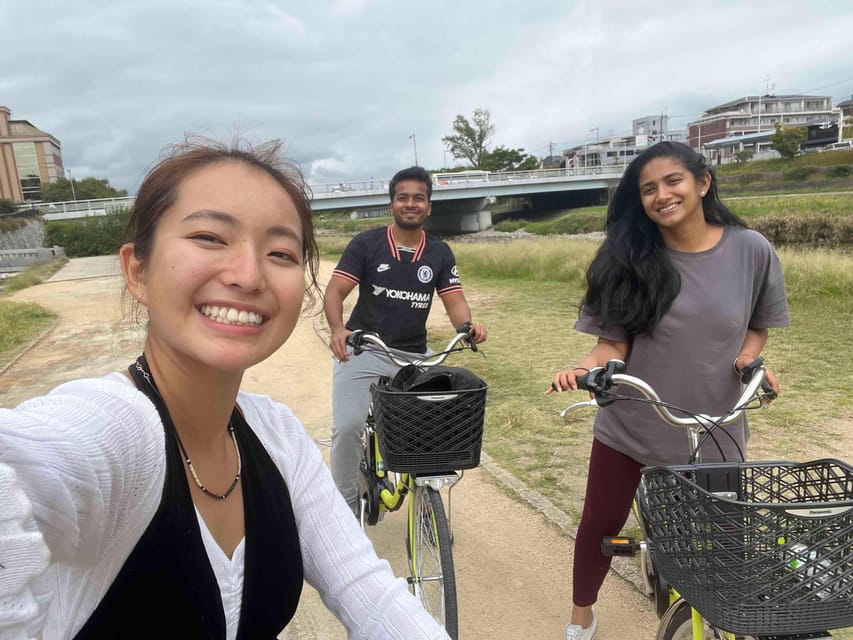
The group is limited to eight people. That is small enough for the guide to keep an eye on the line and answer questions without using a microphone. Groups may be as small as one person, and a very small group can make the pace feel especially relaxed. The guide may be Aska, the founder, or another Japanese guide from the team.
Aska has studied and lived in both North Carolina and London. Her international background helps with cross-cultural questions, while her Japanese roots give the tour a local voice. The other guides are described as friendly young Japanese people who have also lived abroad. You are likely to get practical conversation as well as facts about temples.
Kamo River: a calm start with a little balance required
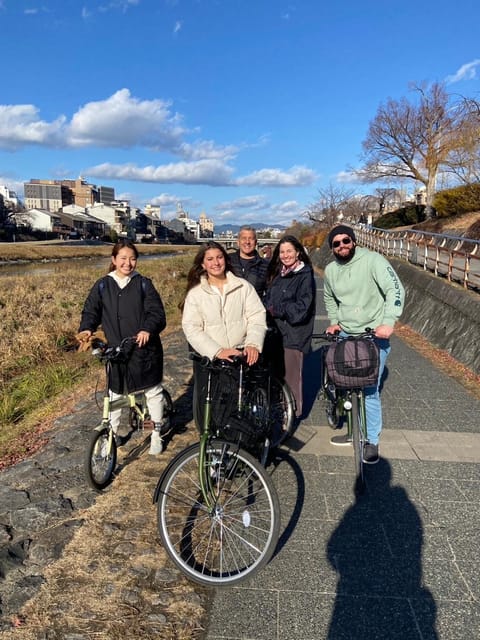
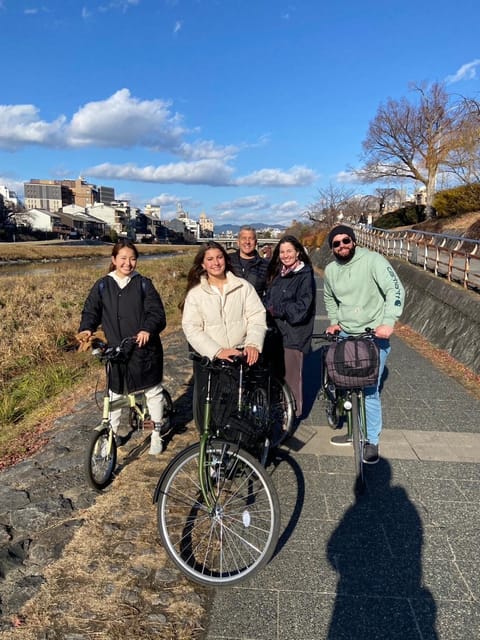
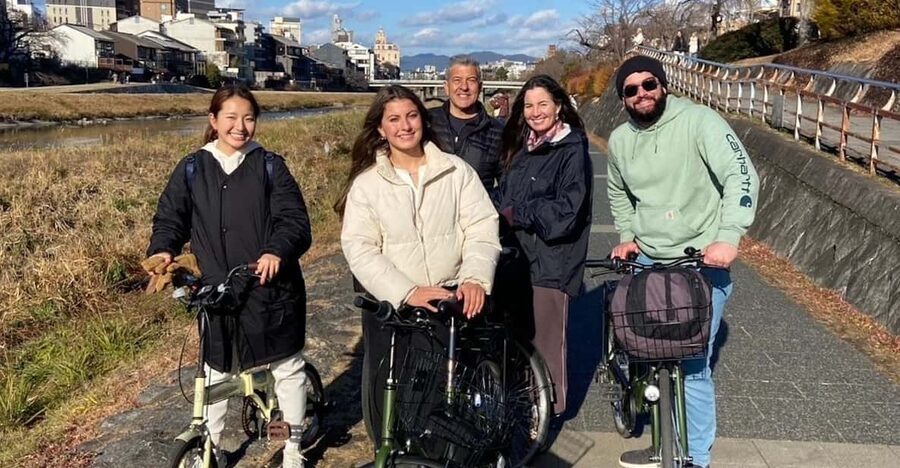
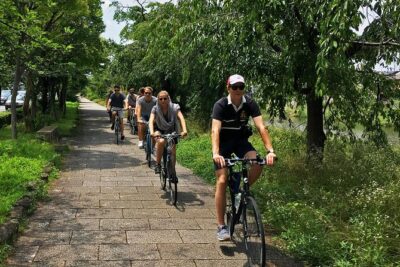
The ride first heads toward Ginkaku-ji, or the Silver Pavilion, along the Kamo River. This is one of the most enjoyable parts of the route because the city quickly feels less enclosed. You get open views, water, bridges, and a chance to settle into the bike.
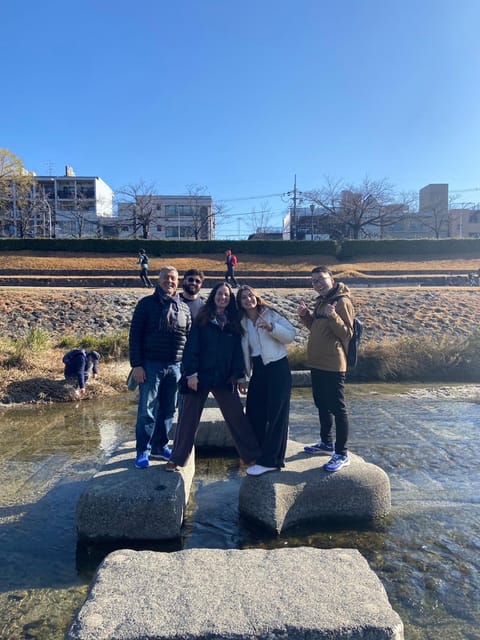
A playful feature is crossing the river by stepping across stones. You can enjoy this as a short break from riding, although take care on wet surfaces and do not treat it as a test of athletic skill. The river section is peaceful, but the full route is not a continuous bike path. You will also use roads and encounter pedestrians.
This mixture is worth understanding before you book. The ride can feel safe and comfortable when you follow the guide and stay alert, but it is not suited to someone who wobbles, freezes at intersections, or has not ridden for years. One useful rule is to leave space, keep your speed controlled, and expect people to move unpredictably near popular sights.
Ginkaku-ji and time for a snack
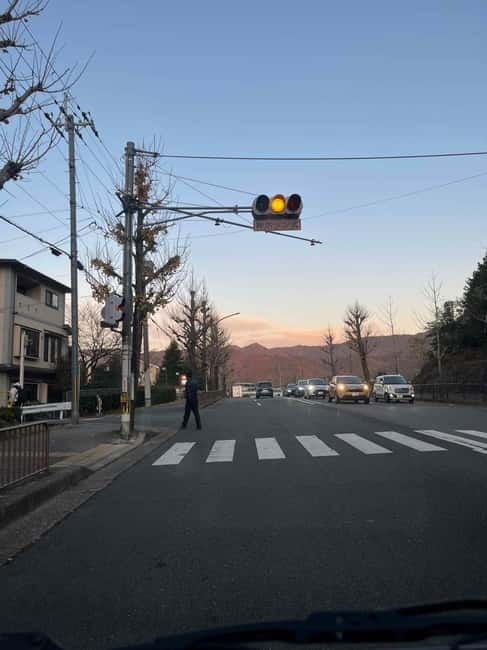
Ginkaku-ji is the first major temple visit. Despite its common English name, the Silver Pavilion is not covered in silver. Its appeal comes from the quiet temple grounds, carefully shaped gardens, and the way the setting works with the surrounding hills.
The visit gives you a proper sightseeing pause after the opening ride. The entry ticket is included, which makes the $75 price easier to assess. You are not paying only for a bicycle rental. You are also paying for a guide, the organized route, parking fees, and admission to the included site.
Near the temple is a shopping street where you have free time. You can look for souvenirs, stop for coffee, or try a matcha crepe. This is a useful touch because the tour does not force every minute into a lecture or a photo stop. You get room to browse and decide what interests you.
Food and water are not included. Bring water, especially in July, August, and other hot periods. The route has been enjoyed in very warm weather, but heat can change a pleasant cycling trip into hard work. If you are sensitive to sun or humidity, an earlier starting time may be the better choice when available.
Same city, a completely different kind of day:
- PERFECT KYOTO 1-Day Bus Tour
★ 5.0 · 13,518 reviews - Kyoto: Fushimi Inari, Kinkakuji, Bamboo Grove 1 Day Bus Tour
★ 4.8 · 4,316 reviews - Kyoto: Tea Ceremony in a Traditional Tea House in Kiyomizu
★ 4.9 · 3,519 reviews - Kyoto Geisha Walking Tour: Gion District & Hidden Gems
★ 4.7 · 3,273 reviews
The Philosopher’s Path and the northern Higashiyama route
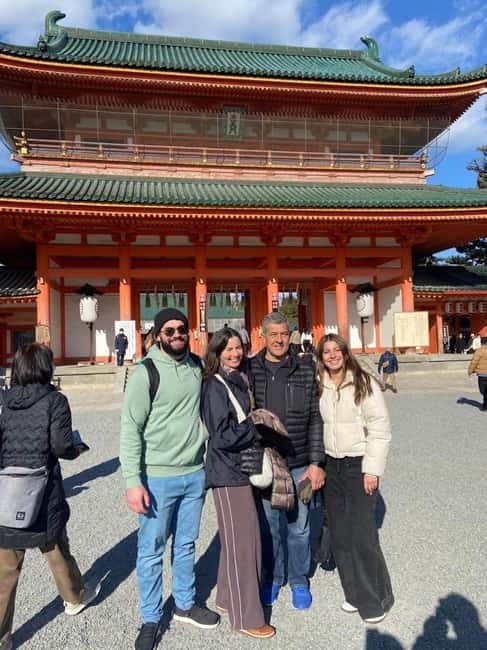
After Ginkaku-ji, you cycle along the Philosopher’s Path toward Nanzen-ji. This famous walking route follows a canal and is particularly attractive when trees are changing color or flowering. It is not a place for speed. You may need to slow down, give way, and occasionally walk the bike if people fill the path.
The reward is the change in mood. The Kamo River section feels open and urban, while the canal route feels shaded and quiet. You see Kyoto as a connected district rather than a list of isolated ticket gates.
The guide’s role is especially useful here. Aska and the other guides provide historical, geographic, and cultural background without trying to fill every second with facts. You can ask about Japanese customs, food, local places, or plans for the rest of your visit. Several riders valued getting suggestions for where to eat and what to see after the tour.
During autumn leaf season, this area can be busy. A Saturday at peak color may mean weaving carefully through pedestrians near the temples. The tour avoids the most crowded parts of central Kyoto, but less crowded does not mean empty. If you want complete solitude, choose an early morning departure and prepare for a slower ride.
Nanzen-ji: grand scale and a memorable aqueduct
Nanzen-ji gives the route a change of scale. The temple grounds are known for their large gates and spacious setting, and the guide can explain the site’s place in Kyoto’s religious and cultural story. You are not simply stopping for a quick photograph. The schedule allows time to look around.
An aqueduct near Nanzen-ji is one of the details that can surprise you. Its brick arches bring an industrial touch to an otherwise traditional temple area. It is a good example of why cycling works here: you can connect a major temple with a less expected local feature without making a separate bus trip.
The tour description refers to the views around Nanzen-ji as a highlight, and the stop does provide a strong visual change from the river and canal. Still, do not expect a long, private temple visit. You are moving through a three-hour route with several destinations, so the guide has to balance sightseeing with riding.
Heian Jingu brings the route to a wide finish
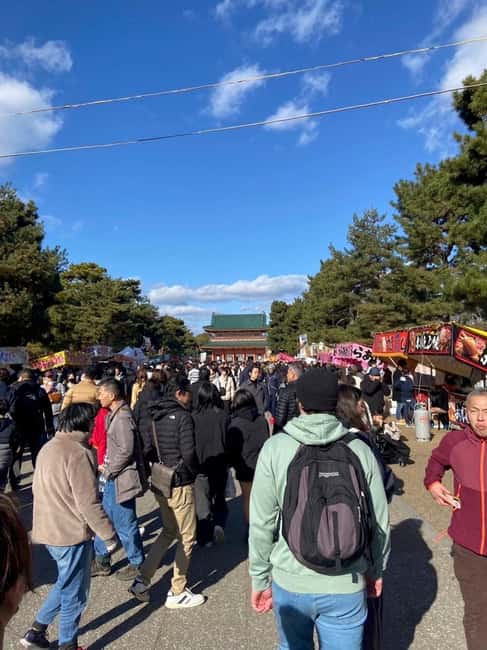
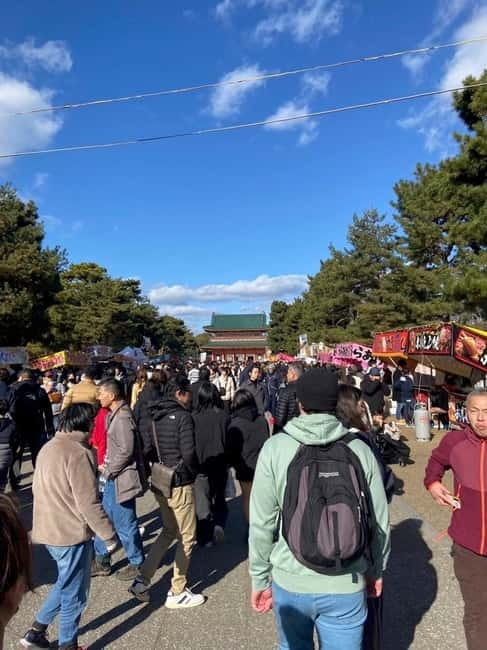
The final major stop is Heian Jingu Shrine. Its broad grounds and large vermilion entrance give the last part of the tour a grand finish. After the narrower Philosopher’s Path and temple lanes, the open shrine setting feels spacious.
This stop also rounds out the cultural picture. You have seen a Buddhist temple at Ginkaku-ji, the temple grounds and aqueduct near Nanzen-ji, and a Shinto shrine at Heian Jingu. That range helps you understand that Kyoto sightseeing is not only about collecting famous buildings. It is about seeing how religious spaces, canals, gardens, and modern city life fit together.
The entry ticket included with the tour is a practical benefit, but the exact use of tickets can depend on the day’s route and site access. The tour information confirms an included entry ticket, not a separate admission for every possible area. Ask the guide if you want to know what is covered at a particular stop.
Guide quality is central to the experience
The bicycle is useful, but the guide is what gives the ride its character. Aska started the tour with an interest in reducing the environmental cost of sightseeing and connecting people from different countries. Her studies in sociology and international relations also shape the kind of conversation you can have on the road.
Her English is described as excellent, and the route is guided in English. You can expect explanations about the temples, Japanese culture, and the city, but also a more informal exchange. That makes this a good choice if you want to ask questions rather than listen to a long prepared speech.
Other guides may lead the tour, including Tai, Natsuki, Tatsuya, or another team member. The consistent theme is a friendly Japanese guide with experience abroad. The exact personality will vary, so do not book only because you expect one specific person unless you have confirmed the guide in advance.
The social side matters too. You may be riding with up to seven other people, and the group can become chatty during breaks. If you want a private, silent ride, this may feel too social. If you enjoy meeting people and leaving Kyoto with a local contact, it fits very well.
Is $75 a fair price for 210 minutes?
At $75 per person, this sits above a simple bicycle rental but below the cost of a private full-day guide. For the price, you receive the electric bike, helmet, guide, parking fees, and an entry ticket. You also get a planned route that links several parts of northeastern Kyoto without working out the roads yourself.
The strongest value comes if you would otherwise rely on taxis or buses between Ginkaku-ji, Nanzen-ji, and Heian Jingu. You save time and gain a local escort. The ride also gives you a better view of the spaces between attractions.
The value is weaker if you already know Kyoto well, dislike cycling near traffic, or plan to spend only a few minutes at each temple. It is also not a food tour. You pay for your own drinks, snacks, and souvenirs, so carry some money and water.
Cancellation is flexible up to 24 hours before the tour for a full refund, and you can reserve now and pay later. If rain threatens, the group may use raincoats or reschedule. At the end, you can ask about keeping the bike for the rest of the day at an additional fair rental price, subject to arrangement.
Who should book this Kyoto e-bike tour?
I would choose this for a first or second visit when you want to see well-known sights without spending the whole day in central crowds. It suits moderately fit adults, couples, solo visitors, and families with children aged 12 or older who can ride confidently.
It is especially good for you if you want:
- A friendly English-speaking Japanese guide
- A small group rather than a large coach
- A balance of riding, temple visits, and free time
- A greener way to move around Kyoto
- Help planning other places to eat and visit
- A gentle electric boost on uphill sections
I would look elsewhere if you cannot ride a bike, need wheelchair access, are pregnant, have low fitness, or have the listed medical concerns of diabetes or altitude sickness. The tour is also not suitable for children under 12 or people over 95.
My verdict: book it for movement, conversation, and variety
This tour earns its price by combining transportation, sightseeing, and local conversation in one tidy half-day. I like the river ride, the included temple admission, and the chance to see Kyoto outside the usual bus-and-station routine.
Book it if you can ride steadily in city conditions and want a guide who treats Kyoto as a living place, not a museum route. Choose an early departure for cooler temperatures and lighter crowds if that option is available. Skip it if you want a completely traffic-free cycle path or a slow, highly detailed temple tour. For the right cyclist, it is one of the most efficient and enjoyable ways to meet northeastern Kyoto.
FAQ
How long does the Kyoto e-bike tour last?
The tour lasts about 210 minutes, or roughly three to three and a half hours.
Where does the tour begin?
You meet the guide at a rental cycling shop in the Gojo area. The meeting point is about six minutes from Kyoto Station by train or 20 minutes on foot.
Where does the tour end?
The tour ends at the rental bike shop. You can ask about continuing to rent the bike for the rest of the day.
Which places does the tour visit?
The route includes the Kamo River, Ginkaku-ji, the Philosopher’s Path, Nanzen-ji, and Heian Jingu Shrine.
Is the tour conducted in English?
Yes. The live guide speaks English.
How many people are in the group?
The group is limited to eight participants.
What is included in the price?
The price includes the electric bike, helmet, tour guide, an entry ticket, and parking fees.
Are food and drinks included?
No. Water and food are not included, so you should bring or buy your own refreshments.
What should I wear and bring?
Wear comfortable clothes and comfortable shoes. High heels, large bags, and oversize luggage are not allowed.
What happens if it rains?
The tour may use raincoats or reschedule if it rains. You can cancel up to 24 hours in advance for a full refund.
Newest Kyoto experiences on the site
- Treasures of Kyoto: Gion & historical Walking Tour★ 5.0 · 6 reviews
- Whisk Your Own Matcha: A Zen Matcha Experience at Temple★ 3.6 · 7 reviews
- Kyoto tea town for matcha lovers★ 5.0 · 16 reviews
- Uji: Private immersion into Kyoto’s tea and reglious culture★ 5.0 · 17 reviews
- Kyoto Matcha Green Tea Tour★ 4.5 · 23 reviews
- Uji and Wazuka Matcha Farm Half Day Private Guided Tour★ 5.0 · 21 reviews
- Utilising upcycled Matcha! Creating matcha incense (Uji, Kyoto)★ 5.0 · 6 reviews
- Sacred Temple Yoga Experience in Japan★ 5.0 · 3 reviews
Kyoto Cycling Tours, compared.
Arashiyama Bamboo Forest & Hidden Gems Bike Tour (Early Bird)
Read our review →
5 Top Highlights of Kyoto Full Day Bike Tour (E-bike option)
Read our review →
Full Day Biking Tour Exploring the Best of Kyoto
Read our review →
Afternoon Kyoto Bike Tour: Bamboo Forest, Monkeys & Hidden Spots
Read our review →
South Kyoto in a Nutshell: Gentle Backstreet Bike Tour!
Read our review →Browse the lists this tour appears in