Reviewed · GUIDED
Tour in Kyoto with a Goverment Certified Tour Guide
Kyoto’s big appeal is packed into this ambitious day: red torii gates at Fushimi Inari, temple views from Kiyomizu-dera, the lanes of Gion, Nishiki Market, and the bamboo of Arashiyama. I like the custom itinerary and the chance to ask a local guide to shape the day around your interests. I also like that guides such as Andrea, Roberto, and Robert have helped visitors with history, cultural context, accessibility needs, and even bullet-train tickets.
The catch is serious: organization has been uneven. Some excellent days have been reported, but other bookings involved late starts, unclear meeting instructions, merged groups, missed stops, or a guide who did not appear. At $110 per person, this can be good value when the day runs well, but you should confirm the meeting point, pickup, guide contact, and expected group size before you commit.
Key points to know before booking
- Nine famous Kyoto stops are possible on paper, but six to eight hours is not enough for a relaxed visit to all of them.
- Fushimi Inari and Arashiyama are the strongest outdoor highlights, with the red gates and bamboo paths providing the most memorable scenery.
- The private-tour promise needs clarification, since solo visitors and couples may be combined with other groups.
- Transportation and several entrance fees are extra, including the stated $8 Ginkaku-ji admission and guide transportation costs of about $5 to $8.
- Andrea, Roberto, and Robert are names worth requesting, based on the strongest guide experiences connected with this activity.
- Crowds and traffic can reshape the day, especially during busy seasons, so treat the schedule as a framework rather than a guarantee.
A big Kyoto day, with a packed route
This is designed as a full-day introduction to Kyoto rather than a slow, single-neighborhood walk. The route links the city’s most famous sights, from the southern torii gates of Fushimi Inari to the western hills of Arashiyama.
That reach is useful if you have only one day. You can see the major postcard sights without spending hours building your own route. The tradeoff is pace. Each listed stop receives about 30 minutes to one hour, and moving between distant areas takes time, normally by public transportation or other transport arranged at your expense.
The tour description also allows customization. You can focus more on temples, traditional neighborhoods, food, photography, or cultural activities, depending on your interests and available time. Still, do not assume that every extra activity, such as calligraphy, kimono dressing, tea, a rickshaw ride, or illuminated temples at night, is part of the standard day. Those ideas appear in the broad experience description, but the timed itinerary centers on the nine sightseeing locations.
A few more Kyoto tours worth putting on the shortlist
- PERFECT KYOTO 1-Day Bus Tour
★ 5.0 · 13,518 reviews - Kyoto: Fushimi Inari, Kinkakuji, Bamboo Grove 1 Day Bus Tour
★ 4.8 · 4,316 reviews - Kyoto: Tea Ceremony in a Traditional Tea House in Kiyomizu
★ 4.9 · 3,519 reviews
Fushimi Inari and the red torii gates
Fushimi Inari-taisha is a strong opening stop. Its hillside path is lined with thousands of orange-red torii gates, creating the familiar tunnel effect seen in photographs of Kyoto.
You receive about an hour here, with no admission fee listed. That is enough to enter the shrine grounds and walk partway through the gates, but not enough for a thorough climb. If you want the full hill experience, tell the guide early. The path becomes more strenuous as it rises, and a short stop will only give you a taste.
This is one of the places where a guide adds real value. The shrine is dedicated to Inari, associated with rice and prosperity, and the fox figures around the grounds have religious meaning. A good guide can explain those details instead of leaving you with a series of attractive photos and no context.
Go early if you can. The schedule may not guarantee an early start, and delays here matter because every later stop becomes harder to fit in.
Kiyomizu-dera and the Higashiyama slopes
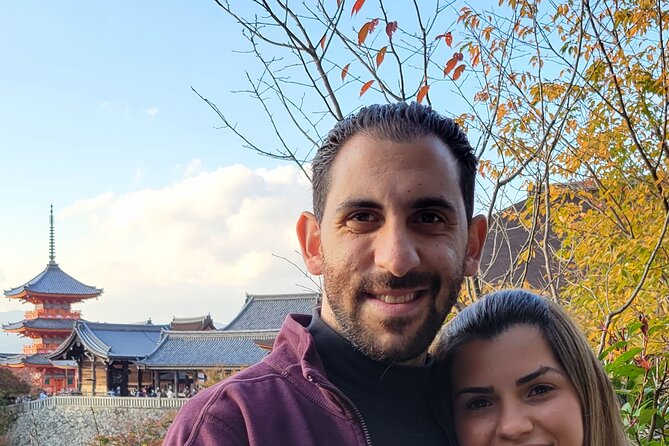
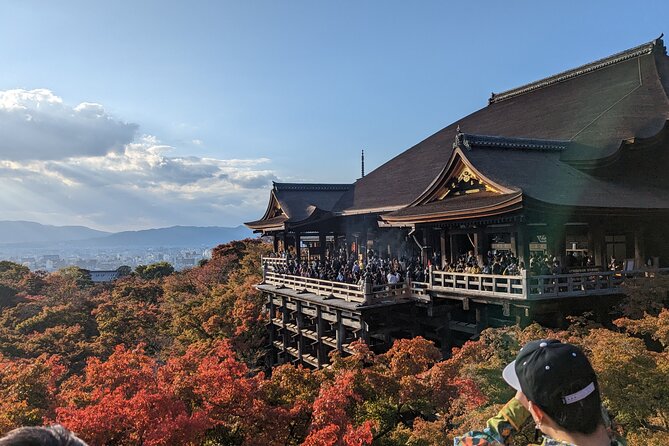
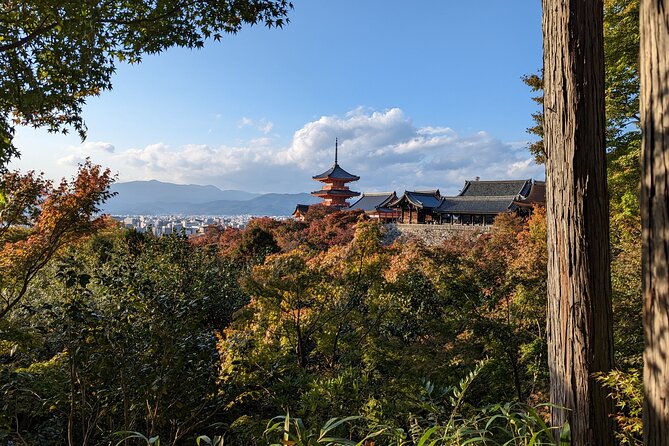
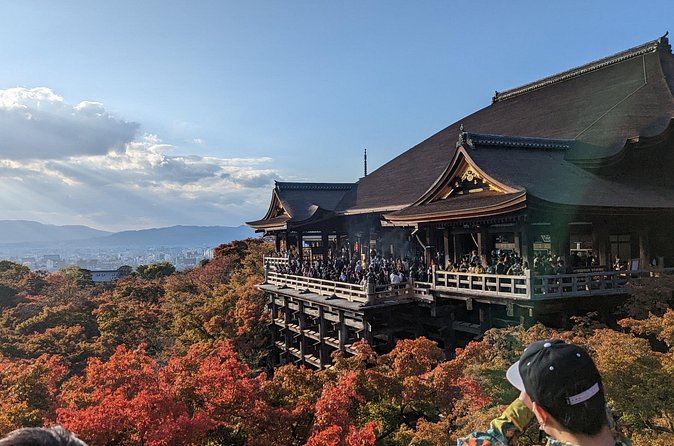
Kiyomizu-dera sits above Kyoto’s Higashiyama district and is one of the city’s most recognizable temples. The large wooden stage and hillside setting make this a scenic stop, while the approach leads through traditional streets filled with shops and food stands.
The planned visit lasts about one hour, with no admission fee shown for this stop. You should still expect slopes, steps, and plenty of foot traffic. One person described the day as involving a lot of walking, and that is a fair warning for anyone with limited stamina.
Kiyomizu-dera works well with a guide because the temple grounds have several religious features and legends competing for your attention. Ask for time to look beyond the main view. The surrounding Higashiyama streets can be as enjoyable as the temple itself, but a tight schedule may push you onward before you have had time to browse.
Nijo Castle and the cost of adding major sights
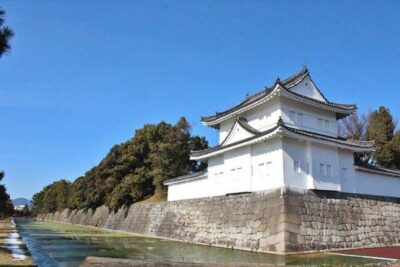
Nijo Castle brings a different side of Kyoto. Instead of a hilltop shrine or Zen garden, you get a former seat of political power with grand rooms, painted interiors, and the famous nightingale floors designed to make a sound underfoot.
The planned visit is one hour, but admission is not included. The same applies to Ginkaku-ji, so ask the guide or operator exactly which entrance costs you will pay on the day. The supplied information specifically lists Ginkaku-ji at $8 per person, while Nijo Castle is also marked as excluded without a price.
These extra costs are modest compared with the tour price, but they affect value. At $110, you are paying mainly for the guide and the convenience of a planned route, not for a bundled admission package. If you would rather keep expenses low, ask to prioritize the free shrine and neighborhood stops.
Same city, a completely different kind of day:
- Kyoto Geisha Walking Tour: Gion District & Hidden Gems
★ 4.7 · 3,273 reviews - Kyoto: Tea Ceremony Ju-An at Jotokuji Temple
★ 4.9 · 3,207 reviews - Kyoto: Gion Magical Night Walking Tour with Geisha Trivia
★ 4.9 · 2,393 reviews - Kyoto: 45-Minute Tea Ceremony Lesson Experience
★ 4.3 · 2,378 reviews
Gion, where the atmosphere matters more than a checklist
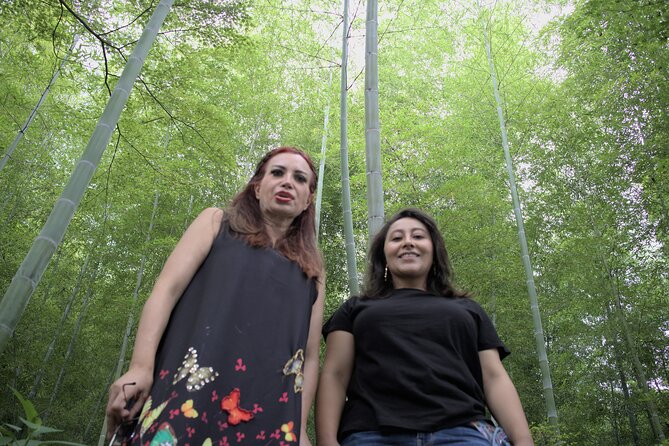
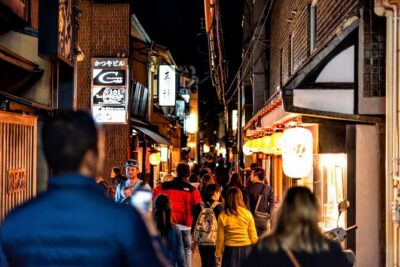
Gion is Kyoto’s traditional entertainment district, known for wooden architecture, narrow lanes, tea houses, and geisha culture. A one-hour visit gives you time to walk through the area and hear about its customs, but it does not turn the district into a scheduled performance.
Keep expectations sensible. Gion is a living neighborhood, not a stage set. A respectful guide should explain local etiquette and help you appreciate the architecture without encouraging intrusive photography or pursuit of people working in the area.
This is also a useful place to slow down. The route has many major sights, and Gion gives you a chance to notice details such as tiled roofs, wooden facades, and quiet side streets. If you are more interested in daily culture than checking off temples, ask to give Gion extra time.
Nishiki Market and the practical side of lunch
Nishiki Market is the food-focused stop. It stretches across several blocks and sells local ingredients, prepared snacks, traditional goods, and small treats. The listed visit lasts about an hour, and admission is free.
Food and drinks are not included. That is not a problem, since sampling something at the market is part of the appeal, but you should budget separately. You may want to ask the guide which foods are easiest to try during a short visit, especially if you have dietary restrictions.
The market can become crowded, and the narrow passage does not suit a large group moving as one unit. This is one reason the promised group size matters. A private couple with a guide can stop easily; a group of 20 or 30 people cannot. If the operator combines several bookings, Nishiki becomes more of a hurried walk than a relaxed food stop.
Kinkaku-ji, the Golden Pavilion
Kinkaku-ji is the visual showstopper of the northern route. The gold-covered pavilion reflects in its pond, with carefully arranged gardens around it. The view is immediate and photogenic, but the main path can feel quick because you generally see the pavilion from the garden route rather than wander freely through the building.
The planned time is one hour, and no admission fee is included in the supplied cost details. Confirm the current amount before departure. This stop is worth keeping if you want Kyoto’s most famous temple image, but it is not the best place to linger if your priority is quiet contemplation.
Traffic between western and northern Kyoto can consume time. If the day starts late, Kinkaku-ji may compete with Arashiyama and Tenryu-ji for the final hours.
Ginkaku-ji and a more restrained kind of beauty
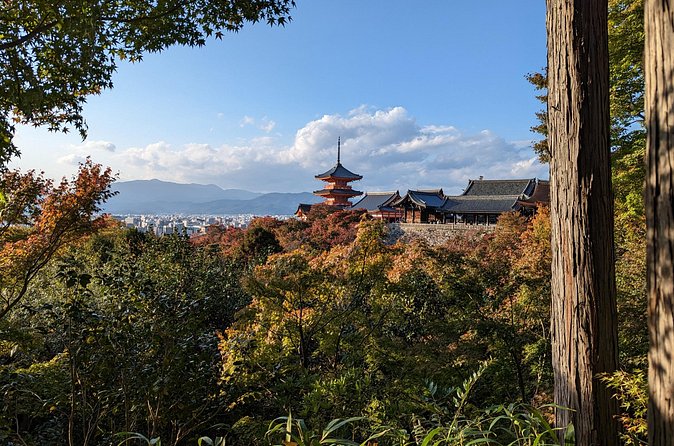
Ginkaku-ji, the Silver Pavilion, is not actually covered in silver. Its appeal comes from its Zen gardens, understated wooden buildings, and calm setting rather than glitter.
Admission is specifically listed as $8 per person and is not included. The stop is allotted one hour, which can work well if you enjoy gardens and temple design. It is less immediately dramatic than Kinkaku-ji, so you may prefer to choose one if time is short.
This is a good example of why customization matters. If you like religious art, gardens, and architecture, Ginkaku-ji may be more rewarding than another quick photo stop. If you have only one day and want the broadest range of sights, ask the guide how it affects the rest of the route.
Arashiyama bamboo and Tenryu-ji
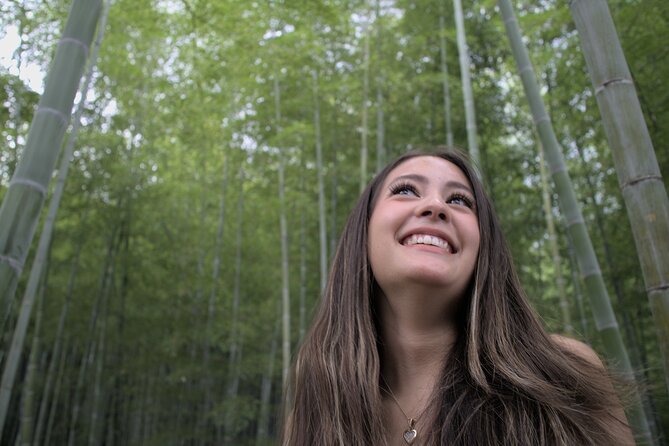
Arashiyama is the western district’s major attraction. The bamboo forest provides the famous green corridor, while Tenryu-ji adds a major Zen temple and garden nearby.
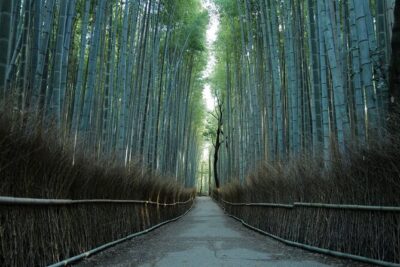
Only 30 minutes is allotted to the forest. That is enough to enter the bamboo path and take photos, but it will feel brief if the area is crowded. The forest is not a long, remote trail. It is a popular public path where bottlenecks can slow you down.
Tenryu-ji also receives about 30 minutes, and admission is not included. If you want both the temple grounds and the bamboo path, keep expectations realistic. One strong experience described Arashiyama as a favorite stop and included the monkey park, but the monkey park is not listed in this standard itinerary. Do not assume it is included. Ask before booking if that is important to you.
For many people, Arashiyama is the day’s best finish. The mix of bamboo, temple grounds, and mountain setting feels different from central Kyoto. The problem is distance. A late start or long delays earlier in the day can reduce this section to a quick visit.
What the guides add when the day works
The best part of this experience is the human layer. Andrea has been praised for patience, clear explanations, and adapting a day to individual needs. Roberto has led long sightseeing days and helped with practical tasks such as buying bullet-train tickets. Robert has been described as especially strong on religion, mythology, and Kyoto’s historic sites.
Those strengths matter because Kyoto’s temples can blur together without context. A good guide explains why a shrine uses fox imagery, how a Zen garden differs from a shrine compound, and why Gion’s traditions still shape the neighborhood.
The guide can also save you planning time. The transport network can be confusing, and a guide who is comfortable with trains and local routes may help you move between distant stops. Still, transportation fees are not included, and the guide’s own transport costs are listed separately at roughly $5 to $8.
The private-tour promise deserves careful checking
The activity is described as private, but solo visitors and couples may be asked to join another solo visitor or couple. Several difficult experiences involved larger group combinations, including one group of more than 30 people. That is a major difference from a true private tour.
A merged group changes almost everything: walking speed, time at each sight, food stops, and the chance to customize. It also makes a nine-stop schedule even less realistic. If privacy matters, send a written message before the cancellation deadline and ask for confirmation that your group will remain private.
Meeting arrangements also deserve attention. Some people had clear, successful days, while others waited at the wrong place or did not find the guide. One useful precaution is to confirm the exact meeting point, start time, pickup area, guide name, and emergency contact through the booking message system. Do not rely on a vague instruction such as Kyoto Station without a specific exit or landmark.
Pickup is offered, but the details are not broad enough to assume every Kyoto-area hotel or nearby city is covered. Pickup from Osaka’s Tempozan area was specifically disputed, with the operator stating that pickup is offered within Kyoto only. Confirm your location in writing.
Is $110 good value?
At $110 per person, this can be fair value if you want an organized introduction and a guide who gives the temples some meaning. The price becomes more attractive for a small group that uses the customization option well and visits several areas in one day.
It is less convincing if you expect every listed stop, private transportation, entrance fees, meals, and a guaranteed hotel pickup. None of those extras are fully included. You will pay for food, local transport, and at least the stated Ginkaku-ji admission, while Nijo Castle and Tenryu-ji also show excluded admission.
The 3.5 rating indicates an uneven experience overall. The high praise centers on individual guides, personal attention, useful history, and thoughtful help with special needs. The low scores focus on no-shows, late cancellations, unclear communication, and last-minute changes. That pattern makes the operator, not Kyoto itself, the main risk.
Who should book this Kyoto day?
I would consider it for a first visit when you have only one full day and want an expert to connect distant sights. It can suit couples, families, and people who prefer conversation and flexibility over a fixed coach itinerary. It may also help if you want assistance with accessibility needs, since one guide successfully adapted the day for disabilities.
I would be cautious if you need a guaranteed private tour, a precise nine-stop schedule, or a pickup from outside Kyoto. Independent visitors who are comfortable with trains can see many of these places themselves, often with more time at fewer sights. You may get better value by choosing two or three areas and visiting them slowly.
The free-cancellation rule helps: you can cancel at least 24 hours before the start for a full refund, while cancellations or changes inside 24 hours are not accepted. The experience also requires a minimum number of participants and may be changed or refunded if that minimum is not met.
Should you book it?
Book this only after confirming the operational details in writing. Ask for the exact meeting place, whether pickup applies to your address, whether your booking will stay private, which guide is assigned, and which stops are realistic for your date.
If you receive clear answers and can accept a flexible route, the tour could give you a useful, wide-ranging day, especially with Andrea, Roberto, or Robert. If the response is vague, or if you need reliable timing for a train or flight, choose a more tightly managed tour or plan Kyoto yourself. The sights are excellent. The question is whether the company can deliver the day it describes.
FAQ
How long does the Kyoto tour last?
The scheduled duration is approximately 6 to 8 hours.
What places are included in the route?
The route lists Fushimi Inari-taisha Shrine, Kiyomizu-dera Temple, Nijo Castle, Gion, Nishiki Market, Kinkaku-ji, Ginkaku-ji, Arashiyama Forest, and Tenryu-ji Temple.
Is the tour private?
It is described as a private activity, but solo visitors and couples may be asked to join another solo visitor or couple. Confirm the expected group size before booking.
Is hotel pickup included?
Pickup is offered, but the coverage is not universal. The operator specifies pickup within Kyoto and does not offer pickup from Osaka’s Tempozan area.
Are transportation costs included?
No. Transportation fees are excluded, and the guide’s transportation costs are listed at about $5 to $8. Your own transportation fees are also excluded.
Are entrance fees included?
No. Ginkaku-ji admission is listed separately at $8 per person. Nijo Castle, Ginkaku-ji, and Tenryu-ji are marked as having admission fees not included.
Are food and drinks included?
No. Food and drinks are personal expenses and are not included in the tour price.
Can the itinerary be customized?
Yes. The tour allows customization based on your expectations and the time available, although the number of stops may be affected by crowds, traffic, and delays.
What is the cancellation policy?
You receive a full refund if you cancel at least 24 hours before the start time. Cancellations or changes made less than 24 hours before the start are not refunded or accepted.
Newest Kyoto experiences on the site
- Treasures of Kyoto: Gion & historical Walking Tour★ 5.0 · 6 reviews
- Whisk Your Own Matcha: A Zen Matcha Experience at Temple★ 3.6 · 7 reviews
- Kyoto tea town for matcha lovers★ 5.0 · 16 reviews
- Uji: Private immersion into Kyoto’s tea and reglious culture★ 5.0 · 17 reviews
- Kyoto Matcha Green Tea Tour★ 4.5 · 23 reviews
- Uji and Wazuka Matcha Farm Half Day Private Guided Tour★ 5.0 · 21 reviews
- Utilising upcycled Matcha! Creating matcha incense (Uji, Kyoto)★ 5.0 · 6 reviews
- Sacred Temple Yoga Experience in Japan★ 5.0 · 3 reviews
Guided, compared.
Kyoto Early Morning Tour with English-Speaking Guide
Read our review →
Kyoto 6hr Private Tour with Government-Licensed Guide
Read our review →Early Morning Tour with English-Speaking Guide
Read our review →
Nijo-jo Castle and Ninomaru Palace Guided Tour
Read our review →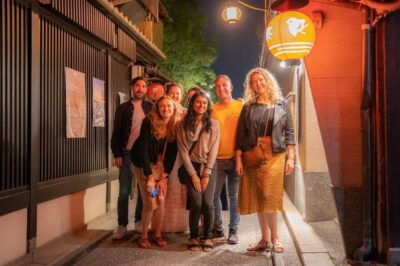
Kyoto Gion Night Walk & Geisha District Guided Tour
Read our review →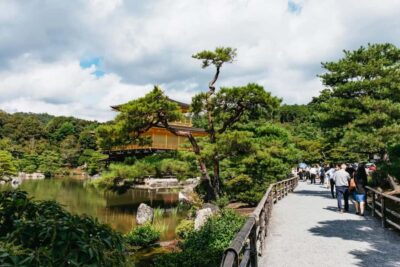
Nijo Castle, Kiyomizu & Fushimi Inari Guided Tour
Read our review →