
Reviewed · KYOTO CYCLING TOURS
Secret Eastern Kyoto Biking Adventure
Kyoto is easier to understand from a bicycle seat. This small-group ride links Gion’s old lanes, major shrines, eastern temples, and quiet backstreets in roughly two to two and a half hours, with a stop for matcha at Murin-an Garden. You cover ground quickly without being shut inside a bus.
I like two things here: the group is capped at four people, and the route mixes famous sights with lesser-known corners such as the Keage Tunnel and Murin-an. I also like the cultural explanations and the chance to drink real green tea while looking over a Japanese garden.
The main consideration is physical effort. You need moderate fitness, and the tour description gives both a two-hour-thirty-minute estimate and a reference to a three-hour ride, so allow extra time. Some temple stops are brief, too, making this better for an overview than for long, unhurried visits.
Key points at a glance
- Four-person maximum: Expect a small group rather than a rolling crowd.
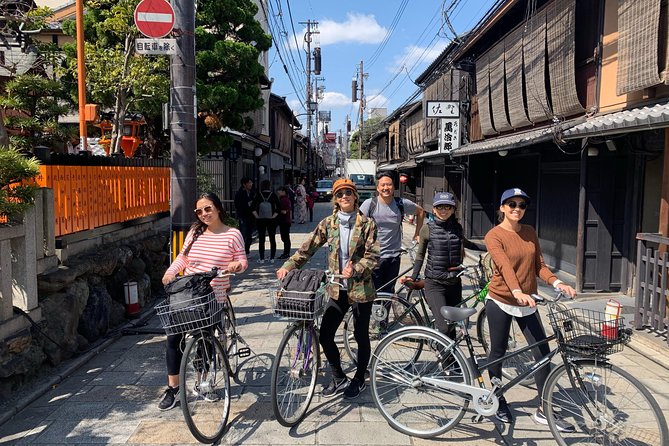
- Backstreet route: The ride is designed to avoid busy roads and save time between sights.
- Murin-an matcha stop: Your admission includes a garden visit and local green tea.
- Eastern Kyoto focus: The route connects Gion, Heian Shrine, Nanzenji, Maruyama Park, and several smaller stops.
- Guide-led cultural context: Japanese staff explain Kyoto customs and culture as you ride.
- Moderate physical demand: Cycling is the main activity, and young children need a special bike if one is available.
Why a bicycle works so well in eastern Kyoto
Eastern Kyoto is packed with places that look close on a map but are separated by traffic, hills, temple grounds, and crowded main streets. A bus can be slow, while walking from Gion to the temples around Nanzenji takes time you may prefer to spend sightseeing.
This route uses quieter backstreets to connect the major stops. That matters because the ride itself becomes part of the experience. You see Kyoto at street level, pass through changing neighborhoods, and get a more useful sense of how the city fits together.
You are not simply pedaling from one famous gate to the next. The guide adds explanations about Japanese and Kyoto culture along the way, which helps make sense of what you are seeing. The supplied description specifically emphasizes keeping the ride interesting with plenty of cultural detail.
The group size is one of the strongest features. With a maximum of four people, you should have a better chance to hear the guide, ask questions, and keep a comfortable pace. One particularly positive account names Ben as a guide who allowed the group to go at its own pace. Guide assignments can change, but that gives you a useful idea of the personal style this experience aims for.
More bike days around Kyoto:
- Hidden Kyoto E-Biking tour
★ 5.0 · 1,843 reviews - Bike Tour Exploring North Kyoto plus Lunch
★ 5.0 · 1,087 reviews - Arashiyama Bamboo Forest & Hidden Gems Bike Tour (Early Bird)
★ 5.0 · 613 reviews
Starting near Sanjo and entering Gion
The meeting point is at 117 Keihan Sanjo Kita Building in Ohashicho, Higashiyama Ward, Kyoto 605-0009. It is near public transportation, which makes the start practical if you are staying around central Kyoto or Gion.
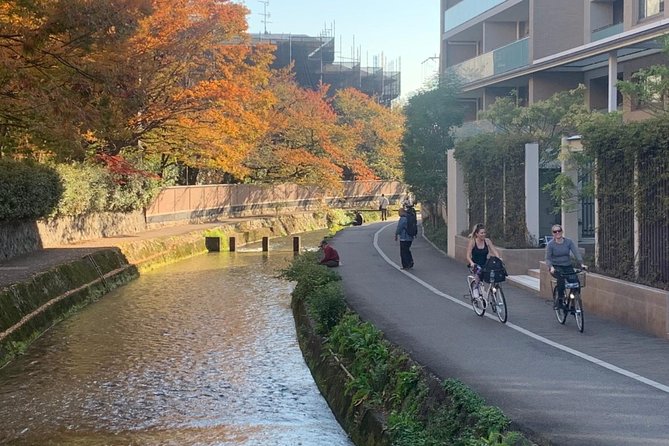
The first sights are in Gion. Shirakawa Minami Avenue is a handsome historic street and a popular setting for wedding photographs. Expect a short stop of about five minutes, enough for pictures and a quick introduction rather than a detailed walk through the district.
Tatsumi Bridge comes next, also with about five minutes for photographs. This is a good early pause because you can settle into the bicycle and begin to see how the guide handles the group. The stop is brief, so have your camera ready before you arrive.
Gion is a valuable opening because it gives you one of Kyoto’s most recognizable scenes right away. The tradeoff is that you will not spend long exploring its lanes on foot. If you want a slow look at every corner, return later on your own.
Heian Shrine and the Keage Tunnel
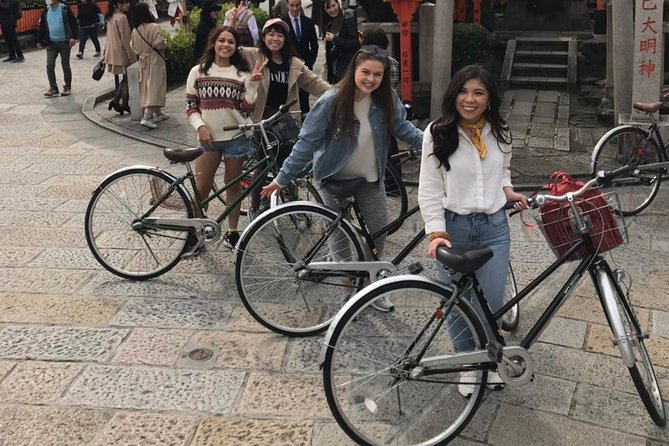
Heian Shrine receives about twenty minutes, making it one of the longer sightseeing stops. Its huge torii gate is among Kyoto’s most familiar landmarks, and the shrine gives the ride a grand architectural moment after the narrower streets of Gion.
I like the contrast. You move from traditional lanes and a small bridge to a broad, formal shrine entrance. The stop is still compact, so the guide’s explanation will help you focus on the main features instead of trying to take in everything at once.
The route then reaches Nejirimampo, also called the Keage Tunnel. The description presents it as a striking tunnel in eastern Kyoto, with about five minutes to look around. This is one of the route’s more unusual details, since it breaks up the temple-and-shrine pattern with an unexpected piece of Kyoto infrastructure.
You should think of this section as a visual sampler. It gives you several distinct views in quick order, but it is not designed for lengthy photography sessions or a full shrine visit.
Nanzenji and the cultural heart of the ride
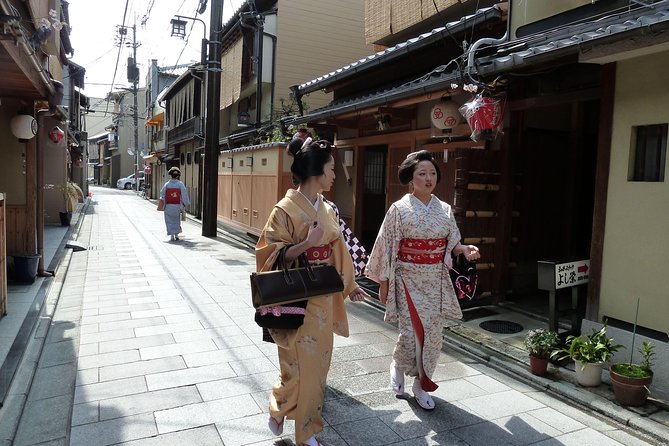
Nanzenji receives roughly twenty minutes and is described as one of the leading temples in eastern Kyoto. Even with a short visit, the setting gives you a stronger sense of Kyoto’s religious tradition and temple architecture.
The route also includes an unnamed temple with an emperor’s sign and another stop described as a huge gate and temple. Since the exact names and timing are not specified, the schedule may depend on the guide’s route and the day’s conditions. Treat these as added sights rather than guaranteed long visits.
That uncertainty is worth noting, but it does not weaken the basic plan. The ride groups several major religious sites in one compact loop, giving you enough context to decide which ones deserve a longer return visit.
For me, this is where a small group helps most. Temple spaces can be confusing when you are on your own, especially when you are trying to understand the difference between a gate, a shrine, a Buddhist temple, and a garden. A guide can point out what matters before you move on.
Same city, a completely different kind of day:
- PERFECT KYOTO 1-Day Bus Tour
★ 5.0 · 13,518 reviews - Kyoto: Fushimi Inari, Kinkakuji, Bamboo Grove 1 Day Bus Tour
★ 4.8 · 4,316 reviews - Kyoto: Tea Ceremony in a Traditional Tea House in Kiyomizu
★ 4.9 · 3,519 reviews - Kyoto Geisha Walking Tour: Gion District & Hidden Gems
★ 4.7 · 3,273 reviews
Murin-an Garden and the included matcha
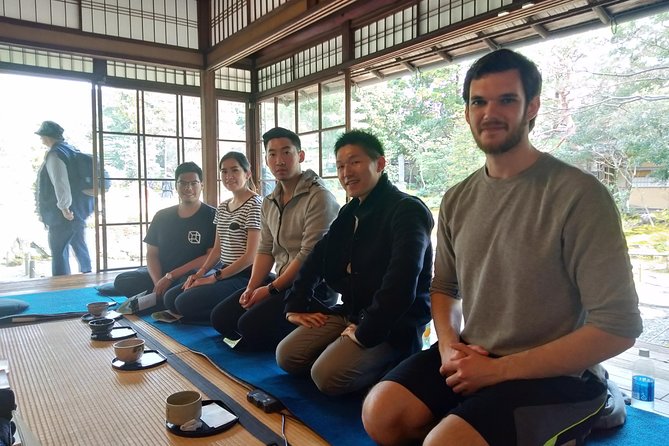
Murin-an is the tour’s most distinctive stop. You spend about twenty minutes here, and admission includes local matcha tea. The combination of garden views and green tea gives the ride a pause that is more than a quick photo stop.
This is also the point where the experience feels less like a checklist of landmarks. You get time to sit, look, and connect the garden setting with an everyday Japanese custom. The description calls the garden hidden and exquisite, but keep your expectations measured: twenty minutes is enough for a taste, not a full garden study.
The included tea adds value to the $119 price. Admission, a guide, bicycle use, and a small-group route are bundled into an experience that would be harder to arrange efficiently on your own. If you already plan to visit several of these places independently, the cost may feel high. If you want a guided introduction with transport by bike between sights, the price is easier to justify.
The tea stop also gives you a break from continuous cycling. That matters on a ride whose duration may approach three hours according to the tour description, despite the stated approximate duration of two to two and a half hours.
Maruyama Park and the path toward Yasui-Konpiragu
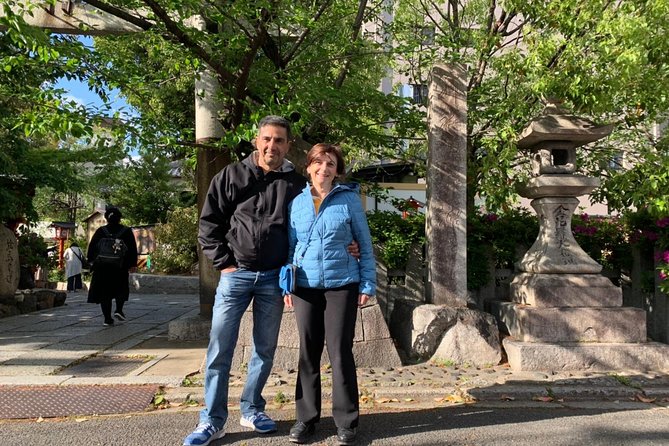
Maruyama Park is a short five-minute stop. It is known for its cherry blossoms and has a garden with a pond, so the scenery changes again after the temples and city streets.
The timing is seasonal in value. During cherry blossom season, the park is likely to be a major visual highlight. Outside that period, the pond and garden still provide a pleasant pause, but you should not book the tour solely for blossoms unless your dates match the season.
Nenenokomichi follows, with about five minutes to appreciate its scenery and interesting path. This is another quick street-level look at the eastern districts. The route also lists an unnamed famous Kyoto tower, though no exact timing is provided.
Yasui-Konpiragu is another brief stop, lasting about five minutes. Its notable feature is a large rock. The stop is unusual enough to add variety, though you will have little time for a detailed visit.
These short pauses show the tour’s purpose clearly. You are sampling many corners of eastern Kyoto rather than settling into one temple complex. I would bring a phone or camera with a quick-access setting, since you will often have only a few minutes to frame a picture.
Kennin-ji and the return through Gion
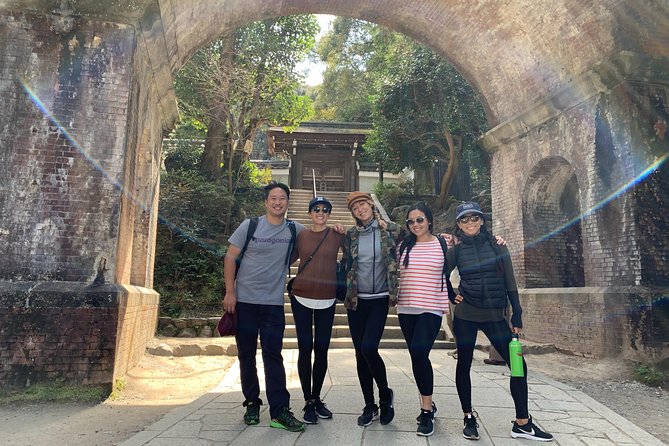
Kennin-ji is the final named temple stop, with about five minutes for its large gardens and paths. That is enough to see the character of the grounds, but not enough for a full temple visit.
The route then returns to Gion, described as the geisha district. Ending where you began is convenient, especially if you have evening plans nearby. It also lets you compare the district after seeing more of eastern Kyoto, when its narrow streets and traditional buildings may have greater context.
The activity ends back at the starting meeting point. That makes planning simple, but you should not count on being dropped at a separate hotel or attraction.
What $119 gets you
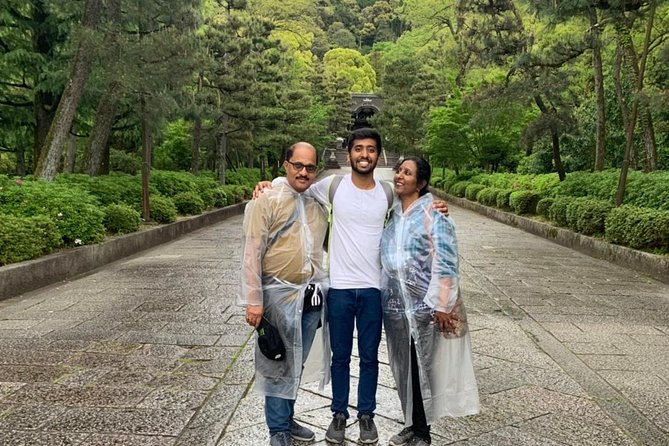
At $119, this is not the cheapest way to see Kyoto. The value comes from combining several services: a guide, bicycle transportation, a route through many districts, small-group attention, temple and shrine sightseeing, and matcha at Murin-an.
I see the price as fair for someone with limited time who wants a guided first look at eastern Kyoto. The bike saves effort between stops, and the group size is unusually small. The route would take more planning if you tried to reproduce it alone.
The value is weaker for someone who prefers long temple visits or already knows Kyoto well. Several stops last only five minutes, and the tour is built around seeing many places rather than studying each one. You are paying for the route and the explanations as much as for admission.
The mobile ticket is useful for a quick booking process, and confirmation is provided at booking. Free cancellation is available if you cancel at least 24 hours before the local start time. Changes or cancellations inside that window are not accepted, and the activity requires a minimum number of participants, so a cancellation by the operator can result in another date or a full refund.
Fitness, children, and group size
You need moderate physical fitness for this ride. The source information does not give a distance, bike model, or detailed terrain notes, so I would not assume the route is effortless. The duration alone means you should be comfortable cycling for a sustained period.
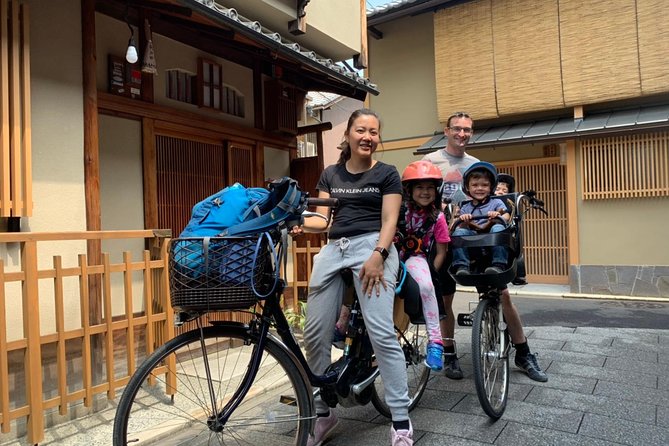
Children aged one to three may join, but they require a special bike. An additional fee of ¥2,500 per bike is charged on the day, if that bike is available. Since availability is not guaranteed, families should confirm this point before relying on the arrangement.
The four-person maximum is ideal for couples, families, or a small circle of friends who want a more personal outing. It also means the experience may feel less anonymous than a large group tour. If you need a very slow pace, tell the guide at the start. The account involving Ben specifically highlights the ability to ride at the group’s own pace.
Who should book this Kyoto ride
I would recommend it most strongly to first-time visitors with a short stay. You get Gion, Heian Shrine, Nanzenji, Murin-an, Maruyama Park, Yasui-Konpiragu, Kennin-ji, and several extra sights in one organized outing.
It also suits you if you like learning while moving. The guide’s cultural explanations are a central part of the experience, not a small extra. The ride is useful for people who want help understanding Kyoto rather than simply collecting photographs.
You may want another kind of tour if you dislike bicycles, need long breaks, or want extended time inside each temple. The short stops can feel rushed if your main goal is detailed temple architecture or garden photography.
I would also avoid treating this as a purely casual spin around town. The tour is scenic, but it is still an active sightseeing experience. Plan around the longer duration suggested in the description, and wear clothing suited to cycling.
Should you book the Secret Eastern Kyoto Biking Adventure?
Book it if you want an efficient, personal introduction to eastern Kyoto and like the idea of moving through the city by bicycle. The four-person limit, cultural guidance, quieter streets, and matcha stop at Murin-an give it more substance than a simple photo ride.
Skip it if you want to linger at every temple or if moderate cycling is not comfortable for you. At $119, the strongest value goes to visitors who have limited time and appreciate having the route, transport, and explanations handled for them. For that audience, this is a smart way to see a lot of Kyoto without spending the day stuck in traffic.
FAQ
Where does the bike tour start?
It starts at 117 Keihan Sanjo Kita Building, Ohashicho, Higashiyama Ward, Kyoto 605-0009. The meeting point is near public transportation.
Where does the activity end?
The tour ends back at the same meeting point.
How long does the tour last?
The approximate duration is listed as two hours to two and a half hours. The description also refers to a three-hour bike ride, so allow extra time beyond the shorter estimate.
How many people can join?
The activity has a maximum of four participants.
Can young children join the tour?
Children aged one to three are allowed to join, but they need a special bike. The additional charge is ¥2,500 per bike on the day, subject to availability.
Is green tea included?
Yes. The Murin-an stop includes admission and local matcha tea.
Newest Kyoto experiences on the site
- Treasures of Kyoto: Gion & historical Walking Tour★ 5.0 · 6 reviews
- Whisk Your Own Matcha: A Zen Matcha Experience at Temple★ 3.6 · 7 reviews
- Kyoto tea town for matcha lovers★ 5.0 · 16 reviews
- Uji: Private immersion into Kyoto’s tea and reglious culture★ 5.0 · 17 reviews
- Kyoto Matcha Green Tea Tour★ 4.5 · 23 reviews
- Uji and Wazuka Matcha Farm Half Day Private Guided Tour★ 5.0 · 21 reviews
- Utilising upcycled Matcha! Creating matcha incense (Uji, Kyoto)★ 5.0 · 6 reviews
- Sacred Temple Yoga Experience in Japan★ 5.0 · 3 reviews
Kyoto Cycling Tours, compared.
Arashiyama Bamboo Forest & Hidden Gems Bike Tour (Early Bird)
Read our review →
5 Top Highlights of Kyoto Full Day Bike Tour (E-bike option)
Read our review →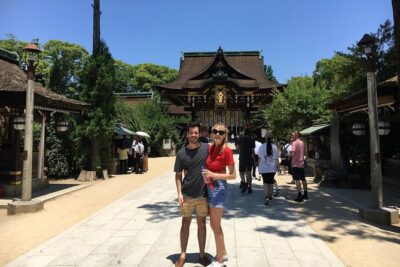
Full Day Biking Tour Exploring the Best of Kyoto
Read our review →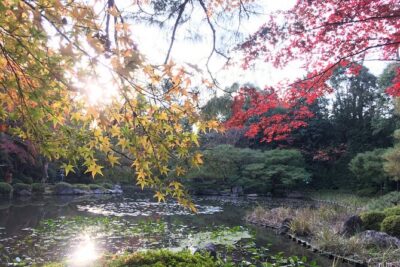
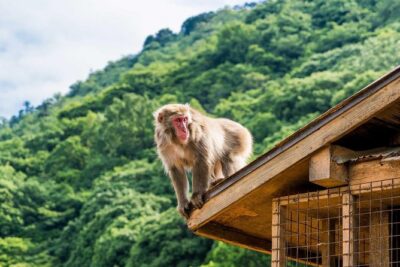
Afternoon Kyoto Bike Tour: Bamboo Forest, Monkeys & Hidden Spots
Read our review →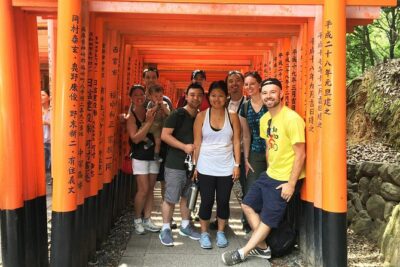
South Kyoto in a Nutshell: Gentle Backstreet Bike Tour!
Read our review →Browse the lists this tour appears in