
Reviewed · KYOTO CYCLING TOURS
The Beauty of Kyoto by Bike: Private Tour
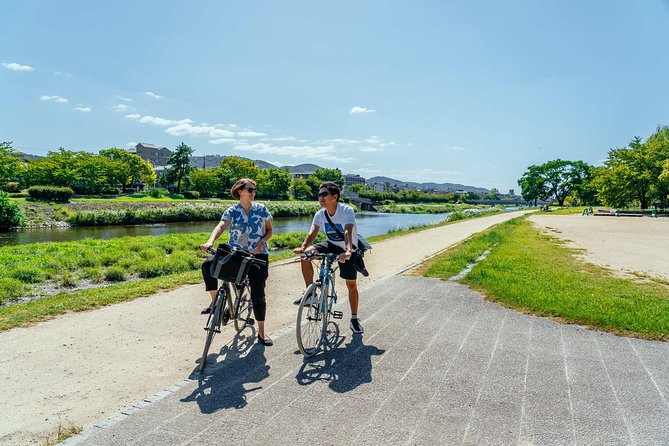
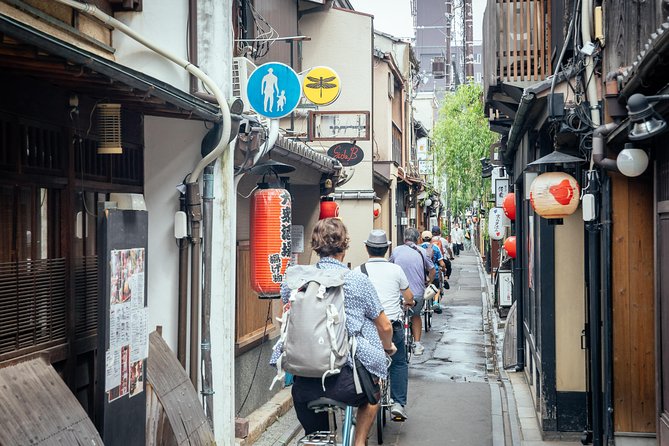
Kyoto makes far more sense from a bicycle seat. You can slip through traditional lanes, follow the Kamogawa River, and reach corners that buses cannot. This private ride gives your guide time to shape the route around your interests, rather than rushing a fixed group from one stop to the next.
I like the chance to see several sides of Kyoto in a short time, from Gion’s old streets to quieter residential areas and riverside paths. I also like the personal advice you take away, including ideas for where to eat and what to see during the rest of your stay. The main consideration is traffic: cycling demands attention, and the ride may suit adults and confident children better than very young riders.
Key points to know before booking
- A private guide sets the pace: Your group rides alone, with time for questions, photo stops, and route changes.
- The route mixes famous and ordinary Kyoto: Gion, the Philosopher’s Path, Kamogawa River, and possible stops near the Imperial Palace show different sides of the city.
- You cover ground without sitting on a bus: A bicycle reaches narrow streets and riverside routes that larger vehicles cannot.
- Guide quality is a major strength: Eiji, Sebastian, Naoki, and Noaki are praised for clear English, humor, flexibility, and local insight.
- The two-and-a-half-hour length works well early in a trip: You get a useful orientation without giving up a full day.
- Traffic is part of the bargain: The ride is easy for many people, but you should be comfortable handling a bicycle in an urban setting.
Why a private bicycle is a smart way to see Kyoto
Kyoto’s major sights are spread across a wide area. A bus can take you between them, but it often leaves you waiting, standing, or stuck on busy roads. Walking gives you a closer look, but you cannot cover as much ground in 150 minutes.
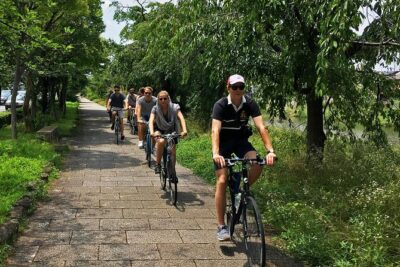
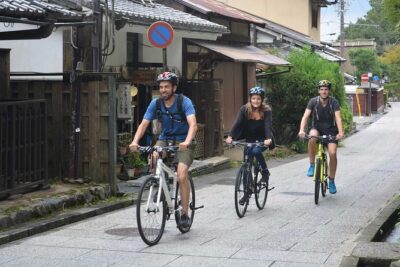
A bike offers a useful middle ground. You move quickly enough to connect separate districts, yet slowly enough to notice small shrines, old homes, bridges, waterways, and side streets. Your guide can pause to explain what you are seeing instead of delivering a speech while the group hurries behind.
The private format matters here. If you want more time in Gion, a stop along the river, or a particular visit to the Philosopher’s Path, you can ask. Guides have adjusted routes to suit requests, and some have stayed beyond the promised time. That sort of flexibility is difficult on a large group excursion.
The ride is listed at $162.05 per person. That is not a budget activity, especially if you are traveling alone. For two or more people, the price buys a private experience rather than a seat in a large group, plus bicycle rental, a local drink or snack, and a guide focused only on you. Group discounts are available, so the value improves as your party grows.
More bike days around Kyoto:
- Hidden Kyoto E-Biking tour
★ 5.0 · 1,843 reviews - Bike Tour Exploring North Kyoto plus Lunch
★ 5.0 · 1,087 reviews - Arashiyama Bamboo Forest & Hidden Gems Bike Tour (Early Bird)
★ 5.0 · 613 reviews
Starting at J-Cycle on Nakanonochō
You meet outside J-Cycle Biking Rental at 192 Nakanonochō in Kyoto’s Shimogyo Ward. The activity also finishes at this meeting point, and hotel pickup and drop-off are not included.
Allow a few minutes at the start to get settled on the bike and hear the guide’s plan. Eiji has been praised for getting riders organized quickly, while other guides have taken time to discuss bike preferences and route requests. The bicycles are included, and some rides have used electric bikes when requested, though you should confirm availability rather than assume one is guaranteed.
This opening is practical rather than scenic, but it keeps the tour simple. You do not have to find a distant hotel pickup or spend time collecting riders around Kyoto. The meeting point is near public transportation, which helps if you are coming from another part of the city.
Since the tour is private, use the beginning to speak up. Tell your guide if you want temples, traditional streets, riverside views, residential neighborhoods, or a gentler pace. The more specific you are, the more useful the route can become.
Gion and the Shirakawa River
Gion is Kyoto’s best-known traditional district, and the small Gion Shinbashi area along the Shirakawa River is one of its most attractive sections. Here you can expect old wooden facades, narrow lanes, and a quieter waterway setting than the larger streets nearby.
A bike lets you approach this area without treating it as a quick photo stop from a coach. Your guide can point out details in the streetscape and explain how the district fits into Kyoto’s older entertainment quarters. The stop is scheduled for about 10 minutes, so think of it as an introduction rather than a full exploration of Gion.
That short timing is both a strength and a limit. You get a taste of the district while saving time for other parts of Kyoto, but you will not have an extended visit for shopping, temple interiors, or a long meal. If Gion is your main reason for booking, tell your host in advance and ask how much time can be given to it.
Cycling also requires care here. Gion has narrow streets and people moving in many directions, so follow your guide and ride at a considerate speed. This is not a place to race between stops.
The Philosopher’s Path and northern Higashiyama
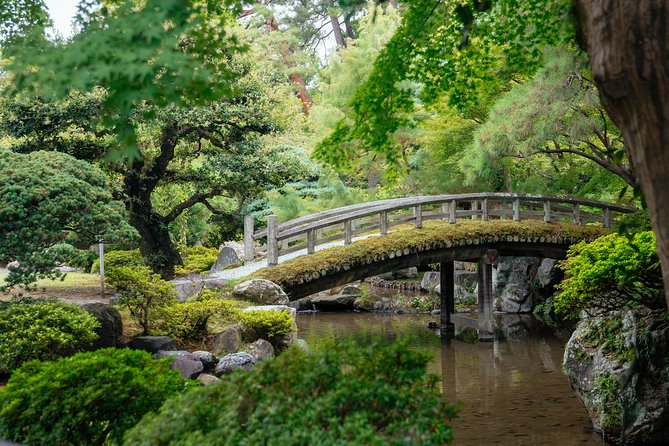
The Philosopher’s Path is a pleasant stone route through northern Higashiyama. It is known for its calm setting and connection to the traditional temple district, but the bike experience depends on conditions and the guide’s chosen route.
The scheduled stop is about 10 minutes, which may mean a brief ride or pause rather than a long walk along the entire path. One guide adjusted the outing to include it after a direct request, so it is worth bringing up if this is high on your list. The private setup gives you a better chance of fitting in such a preference than a fixed group route.
You should also ask whether you will ride beside the path or stop and walk part of it. The supplied details do not promise a specific amount of cycling on the stone section. That small uncertainty is normal for a private route, since the host may change stops according to time, traffic, and your interests.
Still, this is one of the tour’s best contrasts. After urban streets and famous districts, the Philosopher’s Path offers a slower, more reflective section. You get a sense of how Kyoto’s temples and residential quarters blend together instead of seeing each sight as an isolated attraction.
Same city, a completely different kind of day:
- PERFECT KYOTO 1-Day Bus Tour
★ 5.0 · 13,518 reviews - Kyoto: Fushimi Inari, Kinkakuji, Bamboo Grove 1 Day Bus Tour
★ 4.8 · 4,316 reviews - Kyoto: Tea Ceremony in a Traditional Tea House in Kiyomizu
★ 4.9 · 3,519 reviews - Kyoto Geisha Walking Tour: Gion District & Hidden Gems
★ 4.7 · 3,273 reviews
Kamogawa River and the everyday city
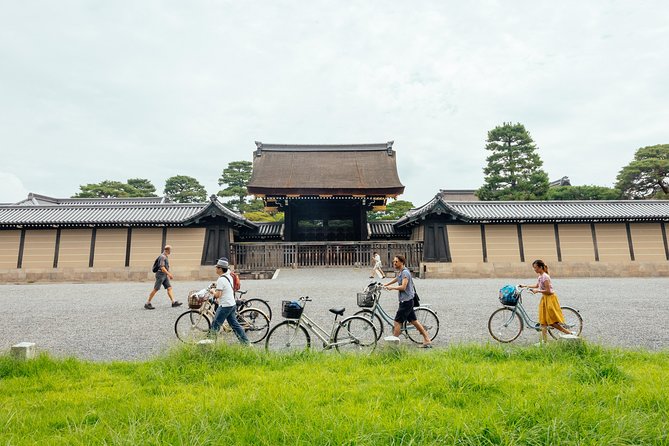
The Kamogawa River runs through Kyoto Prefecture and is one of the tour’s most useful orientation points. The scheduled visit lasts about 20 minutes, longer than the listed stops at Gion and the Philosopher’s Path.
This is where the bike format feels especially natural. Riverside riding gives you room to move, a change from narrow lanes, and a chance to see how the river cuts through daily Kyoto. Your guide can explain bridges, the waterway, and the parts of the city around it. One particularly personal touch from a guide included buying mochi for the riders to eat beside the river.
The Kamogawa stop is not just a postcard view. It helps you understand Kyoto’s layout. Once you know where the river lies, it becomes easier to orient yourself between central Kyoto, Gion, and the eastern districts. I find that kind of practical geography more useful than collecting a long list of disconnected monuments.
Do not expect a long riverside picnic or a full meal. The tour includes a local drink or snack, but the experience remains a moving city tour. If you want more time by the water, ask your host at the start.
Imperial Palace, residential streets, and possible extras
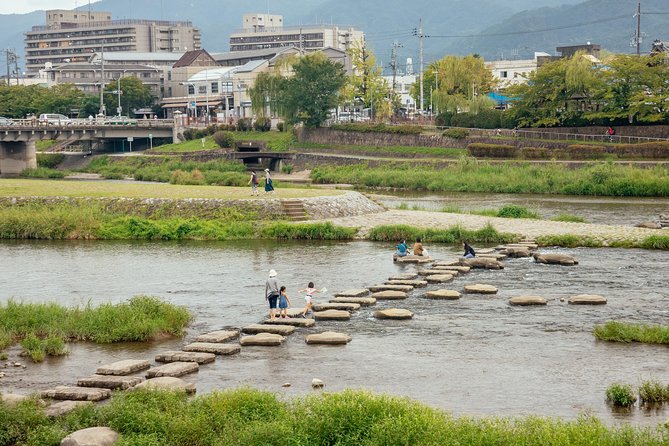
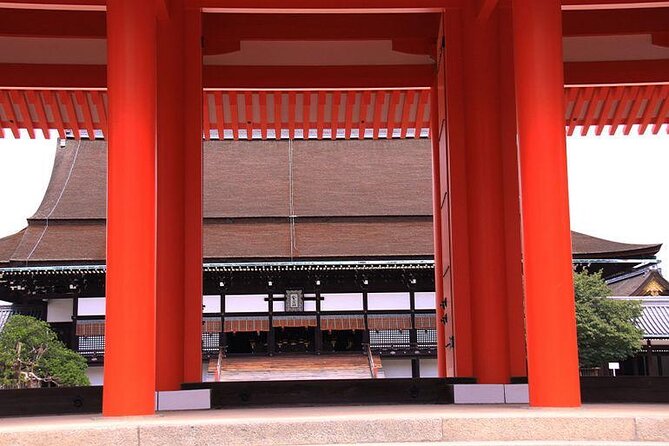
The overview includes Kyoto Imperial Palace among the possible sights, along with Pontocho District and Heian Shrine. The detailed route marks some additional stops as dependent on the host, so these places are not guaranteed on every departure.
That flexibility can work in your favor. Guides have taken groups through historic areas, upscale residential streets, and ordinary slice-of-life neighborhoods. This three-part mix gives the tour more character than a simple checklist of famous sights. You see Kyoto as a functioning city, not only as a collection of monuments.
The trade-off is certainty. If you need to visit one exact landmark, you should ask about it before the ride begins. A private tour gives you room to request changes, but it does not promise every named sight in the same 150-minute route.
Pontocho, Gion, the Imperial Palace area, the Philosopher’s Path, and Heian Shrine are separated across Kyoto. A bicycle helps connect them, but time and traffic still matter. The best plan is to choose two or three priorities, then let the guide fill the gaps with nearby streets and stops.
The guides make the biggest difference
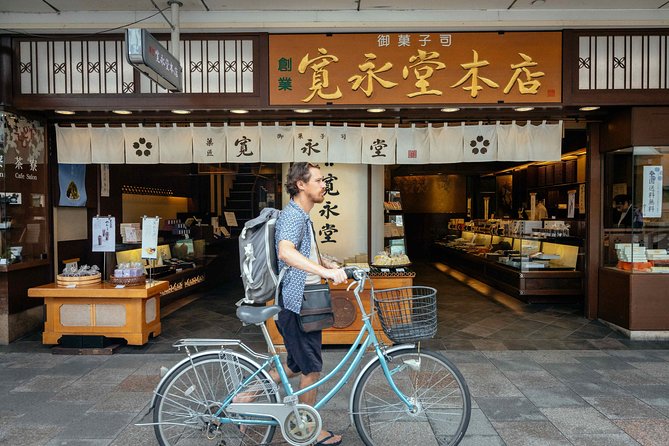
Several guides are identified in the experience details. Eiji is praised for humor, quick bike setup, helpful explanations, and taking photographs. Sebastian is described as friendly, easy to talk with, and strong on both history and local life. Naoki and Noaki are praised for excellent English, route skills, patience, and adapting the ride to requests.
Because the guide changes, the tone may vary. That is not necessarily a problem. One guide may focus more on stories and cultural background, while another may emphasize quiet streets, navigation, or practical tips. The common thread is personal attention, which is the main reason to choose the private version.
The guide can also help you plan the rest of your Kyoto stay. Ask for food suggestions, areas to revisit on foot, or advice on the best order for your other sightseeing. You are not simply paying for a ride. You are buying local context that can save time later.
The experience is carbon neutral, which adds a useful environmental benefit without changing the practical appeal. You still get around under your own power and avoid another vehicle-based tour.
Fitness, traffic, and family suitability
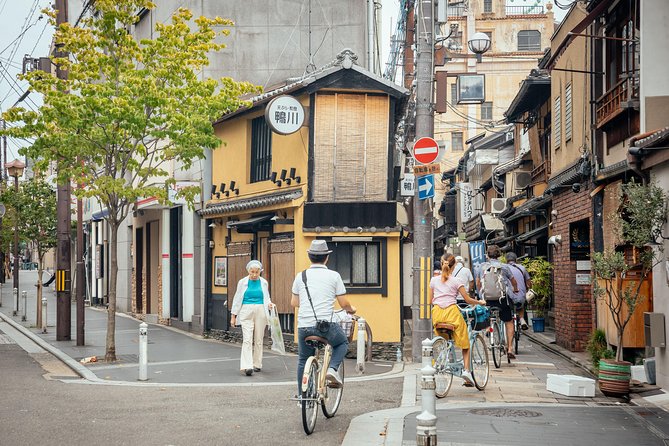
Most people can participate, but this is not a sightseeing bus with a bicycle parked for display. You need to ride for about two and a half hours, manage the bike in city traffic, and stay alert around pedestrians, crossings, and other cyclists.
One family completed the tour successfully, while also noting that the traffic may make it better suited to adults for safety reasons. Children who already ride confidently may do fine, but the supplied information does not give a minimum age or child-bike details. Ask the provider before booking for young children.
Electric bikes have been used when requested, and one rider found an e-bike helpful in warm weather. Since the standard inclusion is bike rental rather than a guaranteed electric bicycle, confirm this before paying if assistance matters to you.
Wear comfortable clothing and shoes, and bring water if you prefer to carry your own. The tour includes a drink or snack, but that is not a substitute for planning around Kyoto’s weather. A private guide can slow the pace, but cannot remove the need to cycle.
Timing, price, and cancellation
At 2 hours and 30 minutes, this works well as a first-day orientation or a focused break between longer temple visits. I especially like it near the beginning of a Kyoto stay, since the guide can help you understand where districts sit and suggest places for later.
The $162.05 per-person price is reasonable for a private activity if you value one-on-one attention and are traveling with a small group. It is less compelling if your only goal is to tick off major sights, since a self-guided rental or public bus will cost less. The benefit lies in the route planning, explanations, flexible pace, local snack, and ability to ask constant questions.
The tour has a 96 percent recommendation rate and a 4.8 rating from 47 reviews, which supports the idea that guide quality is usually strong. Still, a private experience is shaped by the individual host, the weather, traffic, and your own cycling comfort.
Free cancellation is available up to 24 hours before the local start time for a full refund. Changes or cancellations inside that window are not accepted for a refund.
Who should book this Kyoto bike tour?
Book it if you want to see Kyoto actively, cover several districts, and learn from a guide who can adjust the outing to your interests. It is especially useful for couples, families with confident cycling children, and small groups who want a private introduction rather than a fixed sightseeing circuit.
I would also choose it for a return visit. The ride can steer you toward less familiar streets and everyday neighborhoods instead of repeating only the most famous temples.
Skip it if cycling in traffic makes you uneasy, if you need a guaranteed visit to every named sight, or if $162.05 per person feels too high for a short activity. In those cases, walking tours, public transportation, or a longer private city tour may fit better.
For most active visitors, though, this is a smart Kyoto introduction. You get Gion, the Philosopher’s Path, Kamogawa River, and possible Imperial Palace or Pontocho stops, but the real reward is the connection between them. Book early if your schedule is fixed, since the experience is booked an average of 56 days ahead.
FAQ
Where does the Kyoto bike tour start and finish?
You meet outside J-Cycle Biking Rental at 192 Nakanonochō in Kyoto’s Shimogyo Ward. The activity ends back at the same meeting point.
How long does the private bike tour last?
The tour lasts approximately 2 hours and 30 minutes.
Is bicycle rental included?
Yes. Bike rental is included in the tour price. Some guides have accommodated requests for electric bikes, but an e-bike is not listed as a guaranteed inclusion.
Which sights are included?
The route includes or may include the Philosopher’s Path, Gion, Kamogawa River, Kyoto Imperial Palace, Pontocho District, and Heian Shrine. Some stops depend on the host, so ask about your priorities at the start.
Is this a private activity?
Yes. Only your group participates, and the guide’s attention is dedicated to your party.
Does the tour include hotel pickup?
No. Hotel pickup and drop-off are not included. You must make your own way to the J-Cycle meeting point, which is near public transportation.
Newest Kyoto experiences on the site
- Treasures of Kyoto: Gion & historical Walking Tour★ 5.0 · 6 reviews
- Whisk Your Own Matcha: A Zen Matcha Experience at Temple★ 3.6 · 7 reviews
- Kyoto tea town for matcha lovers★ 5.0 · 16 reviews
- Uji: Private immersion into Kyoto’s tea and reglious culture★ 5.0 · 17 reviews
- Kyoto Matcha Green Tea Tour★ 4.5 · 23 reviews
- Uji and Wazuka Matcha Farm Half Day Private Guided Tour★ 5.0 · 21 reviews
- Utilising upcycled Matcha! Creating matcha incense (Uji, Kyoto)★ 5.0 · 6 reviews
- Sacred Temple Yoga Experience in Japan★ 5.0 · 3 reviews
Kyoto Cycling Tours, compared.
Arashiyama Bamboo Forest & Hidden Gems Bike Tour (Early Bird)
Read our review →
5 Top Highlights of Kyoto Full Day Bike Tour (E-bike option)
Read our review →
Full Day Biking Tour Exploring the Best of Kyoto
Read our review →
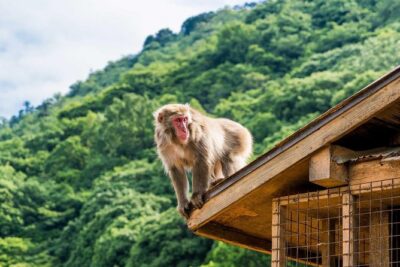
Afternoon Kyoto Bike Tour: Bamboo Forest, Monkeys & Hidden Spots
Read our review →
South Kyoto in a Nutshell: Gentle Backstreet Bike Tour!
Read our review →Browse the lists this tour appears in