
Reviewed · NARA DAY TRIPS
Nara Afternoon Tour from Kyoto or Osaka
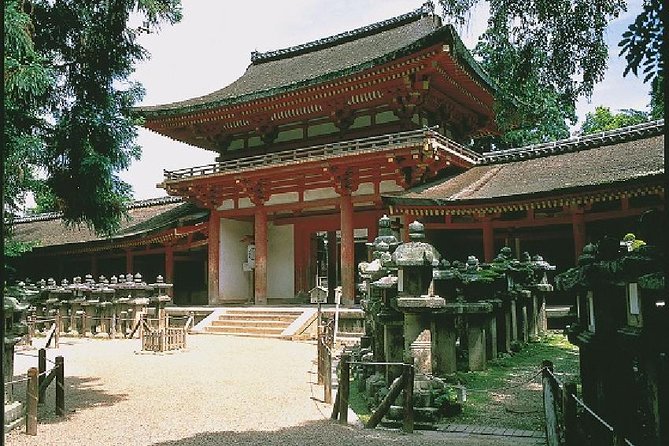
Nara’s biggest rewards arrive in quick succession: the huge bronze Buddha inside Todai-ji, deer wandering freely through the park, and the lantern-lined paths of Kasuga Grand Shrine. This afternoon trip gives you all three without asking you to plan train connections, bus routes, and temple tickets yourself.
I like the comfortable return transport and the English-speaking guide, especially when the guide is as clear and lively as Yuki, KC, Mo Mo, or the guide named Eksico in recent bookings. I also like the useful mix of Buddhist temple, Shinto shrine, and deer park. The main drawback is time. The walk from the bus parking area to Todai-ji takes about 25 minutes each way, so the sightseeing portion can feel rushed.
Key points to know before booking
- Todai-ji’s Great Buddha Hall is the main event: Admission is included, and the enormous wooden hall and bronze Buddha make this the strongest cultural stop.
- Nara Park is not a separate long stop: You see the deer around the route between attractions, but your time for feeding and wandering can be limited.
- Kasuga Shrine now includes a special sanctuary area: From January 2025, the visit is scheduled to include a closer look at the Main Sanctuary and its hanging lanterns, when operating conditions permit.
- The walking matters: Plan on roughly 25 minutes each way from the parking area to Todai-ji, along with additional walking at the temple and shrine.
- The group can reach 40 people: That keeps the cost manageable, but late arrivals or slower walkers can reduce your free time.
- The price buys convenience, not a leisurely visit: At $102.38 per person, transport, admissions, and a licensed English guide are included, but lunch and extra Kasuga attractions are not.
Why this half-day trip works well from Kyoto
Nara was Japan’s first permanent capital, founded in 710 under the name Heijo. Its temples helped make it a center of government and Buddhism before the capital moved away in 784. You feel that change in scale: Nara is calmer than Kyoto in many places, yet its main monuments are immense.
This tour begins in the afternoon at the Avanti Tour Desk near Kyoto Station. That meeting point is practical if you are staying in Kyoto or arriving by train. The return vehicle removes the need to work out a local route between Todai-ji, Nara Park, and Kasuga Shrine.
The stated duration is about 5 hours 40 minutes. That sounds generous until you account for the road journey, the transfer from the parking area, and the time needed to gather a group. You are buying a tidy introduction to Nara, not a full day with room for every temple, garden, and museum.
The bus is one of the strongest practical features. Several people praised its comfort, and one guide even had extra umbrellas ready during heavy rain. That matters on a hot afternoon or a wet one, when a long local transit connection would be tiring.
More day trips down to Nara:
- Osaka/Kyoto:Kinkakuji,Arashiyama,FushimiInariShrine,NaraPark
★ 4.1 · 1,596 reviews - Kyoto/Osaka: Nara, Fushimi Inari Taisha, Arashiyama Bus Tour
★ 4.7 · 1,275 reviews - Osaka/Kyoto: Arashiyama, Nara & Fushimi Inari Shrine w/Lunch
★ 4.4 · 754 reviews
Walking to Todai-ji and its giant Buddha
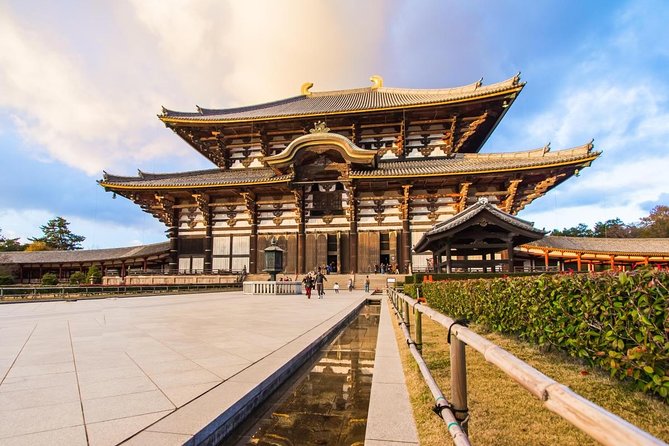
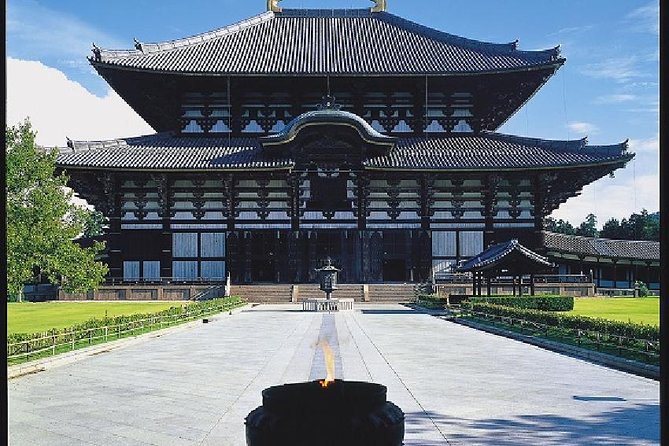
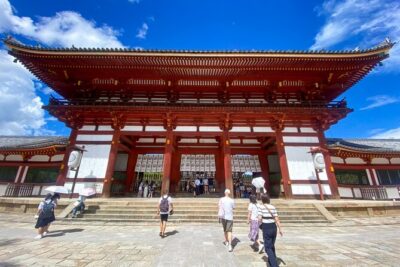
Todai-ji is the first major stop, with about 1 hour and 10 minutes scheduled and admission included. The temple dates from the Nara Period and is recognized as a World Heritage site. Its Great Buddha Hall is one of the world’s largest wooden buildings, and the scale is difficult to grasp until you are standing in front of it.
Inside, the bronze Great Buddha dominates the room. This is not a quiet little neighborhood temple. The statue, hall, and surrounding grounds were built to express the power of Buddhism in early Japan, and the result is deliberately overwhelming.
The guide adds useful context here. A good explanation turns the hall from a large wooden building into a statement about Nara’s role in Japan’s early government and religious life. Guides such as KC and Mo Mo were praised for explaining culture and temple traditions in clear English, while Yuki was repeatedly described as organized and informative.
The catch is the approach. The vehicle cannot drop you at the temple door, so you walk about 25 minutes one way from the parking area. This is not just a quick stroll. It is a serious part of the outing, especially in summer heat, rain, or for anyone with limited stamina.
That walk also affects your temple time. The advertised stop is 70 minutes, but part of that period can be used getting to the hall, listening to instructions, seeing the Buddha, and returning to the meeting point. Some tour times may leave you with roughly 45 minutes for the temple, nearby deer, and the walk back.
I would wear supportive shoes and avoid carrying more than you need. Keep track of the guide’s directions, because the group may have to move on a set schedule. If your priority is detailed temple study, a self-guided train trip lets you stay longer. If you want the main sight with transportation and admission handled, this stop delivers.
Nara Park and the famous deer
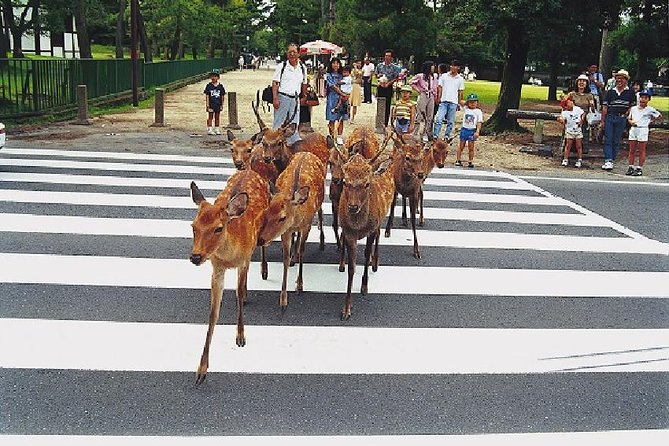
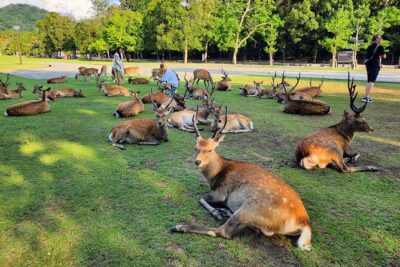
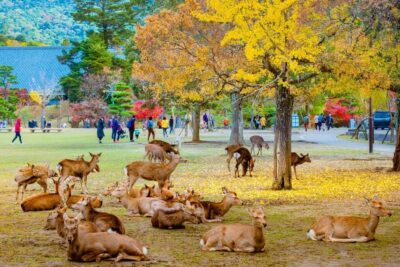
Nara Park covers about 1,250 acres and is home to more than 1,000 deer. The animals roam around the temple and shrine areas rather than sitting behind fences, which gives the park its special character.
The deer are associated with Kasuga Shrine, where they are traditionally regarded as messengers. You will see them grazing, wandering along paths, and approaching people for food. They are often described as gentle, but do not mistake that for completely tame. One recent experience found them more aggressive than expected, and the animals can become insistent when they think you are carrying treats.
If you want to feed them, buy the special deer crackers in the park and keep the feeding brief. The most important tip is to use your time wisely. This tour does not provide a long, separate deer-feeding session, and the guide may not stop to show you where to buy crackers before the group moves onward.
The deer may be the part children remember most, while the temple is usually the highlight for adults interested in Japanese art and religion. The problem is that these two attractions compete for the same limited minutes. You can spend time with the animals, but you may need to choose between feeding deer and lingering inside Todai-ji.
Some people love the chance to explore the park on their own using a map to return to the bus. Others find that arrangement confusing, especially if the meeting instructions are not clear. Stay alert to the group’s return time and confirm exactly where you need to meet. A few late arrivals can shorten the remaining shrine visit for everyone.
Kasuga Grand Shrine and its thousands of lanterns
The final main stop is Kasuga Grand Shrine, with about an hour scheduled and admission included. This Shinto shrine also belongs to the Nara Period and is a World Heritage site. Its identity is closely tied to the deer, which are treated as sacred messengers.
The shrine is known for more than 3,000 stone and bronze lanterns. The approach and surrounding grounds offer a different mood from Todai-ji. Instead of one huge interior hall and one enormous statue, you get a more gradual experience of paths, shrine buildings, and lanterns.
From January 2025, the tour is scheduled to enter the Main Sanctuary special visit area. This allows you to get closer to the sanctuary and view hanging lanterns along the corridor. That is a useful addition because it gives you access to a part of the shrine that can be missed on a quick walk through the grounds.
There is a qualification. Events or operational conditions can prevent entry to the special area. If that happens, the visit may switch to the Kasuga Taisha Museum or the Todai-ji Museum, and the tour price is not reduced. The Treasures Hall and Manyo Botanical Gardens are not included either.
The shrine stop can feel especially rushed if the first visit runs late. That is why clear group instructions matter. Some guides are praised for keeping people informed, while unclear directions have caused people to lose time finding the bus or rejoining the group.
More days that pair Kyoto with Osaka:
- One-Day Tour of Kyoto’s Highlights from Osaka/Kyoto
★ 4.5 · 1,092 reviews - Full Day Guided Tour to Kyoto and Nara from Osaka by Van
★ 5.0 · 420 reviews - Kyoto Morning Tour from Kyoto or Osaka
★ 4.0 · 281 reviews - Kyoto/Osaka: Kyoto and Nara Customized Private Guided Tour
★ 4.6 · 258 reviews
Guide quality and the 40-person group
The guide can shape this experience more than any other single factor. Strong guides such as Yuki, KC, Mo Mo, and other named staff have been praised for clear English, cultural explanations, humor, kindness, and good organization. One guide was even called a secret comedian, which gives you an idea of how much personality can improve a hot afternoon of walking.
The tour includes a National Government Licensed English Guide Interpreter fee. The quality of spoken English can still vary by individual guide, as can the amount of detail. Most of the positive experiences center on guides who explain the history while also giving timely directions about where to meet and how long you have.
The maximum group size is 40 people. That is not a small walking tour. You may be part of a compact bus group moving through busy temple grounds, and the guide cannot give each person personal attention.
A large group also makes punctuality important. If several people are late, the rest of the group may lose time at Kasuga Shrine. If you are traveling alone, stay near the group and listen carefully when the guide explains the return point. The tour is designed to keep people together, but you should still take responsibility for knowing where to go.
For a more personal pace, a private guide or independent train trip would be better. For a first look at Nara with an organized route, the group format is a fair trade.
What the $102.38 price really covers
At $102.38 per person, this is not the cheapest way to reach Nara. You can arrange a lower-cost independent visit by train, then pay only for the admissions and local transport you choose. Some alternative tours also cost less and add a tea or matcha activity.
The price makes more sense if you value convenience. You receive return vehicle transport from Kyoto, admission to Todai-ji, admission to Kasuga Shrine, and an English guide. You do not have to connect the sights yourself, interpret the temple layout without help, or work out the return route after a long afternoon.
The value drops if your main goal is feeding deer for hours or examining every corner of Todai-ji. The schedule is built around seeing the principal sights, not lingering. Lunch, drinks, the Treasures Hall, and the Manyo Botanical Gardens cost extra or are not included.
There is also an Osaka departure option, but it involves additional transfers. An English-speaking assistant accompanies the group from Hotel Granvia Osaka to the Sunrise Tours Desk in Kyoto Avanti’s basement level, and later from Kintetsu Nara Station to Osaka Namba Station. The supplied details do not describe this as the same licensed guide service throughout, so check the departure option carefully before booking.
Who should book this Nara afternoon tour

I would choose this trip if you are staying in Kyoto and want Nara’s main sights without managing transportation. It suits first-time visitors, families who prefer an organized route, and anyone who wants historical explanation along with the scenery.
It is also a sensible choice if you have only one afternoon available. You will see the Great Buddha, encounter the famous deer, and visit one of Japan’s best-known Shinto shrines in a single outing.
I would hesitate if you dislike walking, need a slow pace, or want extensive time with the deer. The route includes a long walk from the parking area, and the schedule can become tighter when traffic or group delays interfere.
Children up to age five may join free, but they do not receive a bus seat unless you book the child rate. Anyone under 18 needs written parental permission, and anyone under 15, or not yet in middle school, must be accompanied by a parent or guardian.
The experience is near public transportation and most people can participate. Service animals are allowed. Still, the 25-minute walk each way to Todai-ji is the practical detail to consider first.
My booking verdict for this five-hour Nara visit
I would book this tour for efficient sightseeing, reliable transport, and the chance to hear useful explanations from a guide such as Yuki, KC, or Mo Mo. Todai-ji alone is worth seeing, and the deer and lanterns give the afternoon enough variety to feel like more than a temple transfer.
I would not book it expecting a relaxed day in Nara. The combination of a large group, long walking connection, and fixed departure times can make the visit feel hurried. If that sounds frustrating, take the train independently and give yourself the freedom to choose your own balance of Buddha, deer, shrine, lunch, and museums.
The cancellation terms are forgiving if your plans change: you can cancel for a full refund up to 24 hours before the local start time. Once inside that 24-hour window, changes and refunds are not accepted.
FAQ
How long does the Nara afternoon tour last?
The experience lasts approximately 5 hours and 40 minutes, including transport between Kyoto and Nara and the visits to Todai-ji and Kasuga Grand Shrine.
Where does the tour depart from in Kyoto?
Pickup is at the Avanti Tour Desk near Kyoto Station. Hotel pickup and drop-off are not included.
Is transportation included?
Yes. Return vehicle transportation and admission fees are included, along with the fee for the National Government Licensed English Guide Interpreter.
How much walking is required?
You walk about 25 minutes each way from the parking area to Todai-ji. Additional walking is required around Todai-ji, Nara Park, and Kasuga Grand Shrine.
Is feeding the deer included?
Nara Park is part of the sightseeing route, but deer food is not listed as an included item. You may buy food separately in the park, and the time available for feeding can be limited.
Is entry to the Kasuga Shrine special area guaranteed?
No. From January 2025, the itinerary includes the Main Sanctuary special visit area when possible. Events or operating conditions may lead to a visit to the Kasuga Taisha Museum or Todai-ji Museum instead, without a refund.
Can I cancel for a full refund?
Yes, if you cancel at least 24 hours before the experience start time. Cancellations or changes made less than 24 hours in advance are not refunded or accepted.
Newest Kyoto experiences on the site
- Treasures of Kyoto: Gion & historical Walking Tour★ 5.0 · 6 reviews
- Whisk Your Own Matcha: A Zen Matcha Experience at Temple★ 3.6 · 7 reviews
- Uji: Private immersion into Kyoto’s tea and reglious culture★ 5.0 · 17 reviews
- Kyoto tea town for matcha lovers★ 5.0 · 16 reviews
- Kyoto Matcha Green Tea Tour★ 4.5 · 23 reviews
- Uji and Wazuka Matcha Farm Half Day Private Guided Tour★ 5.0 · 21 reviews
- Utilising upcycled Matcha! Creating matcha incense (Uji, Kyoto)★ 5.0 · 6 reviews
- Sacred Temple Yoga Experience in Japan★ 5.0 · 3 reviews
Nara Day Trips, compared.
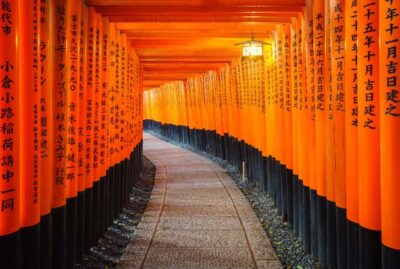
Kinkakuji,Arashiyama,FushimiInariShrine,NaraPark
Read our review →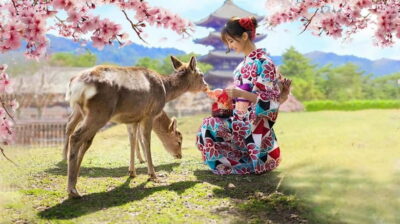
Nara, Fushimi Inari Taisha, Arashiyama Bus Tour
Read our review →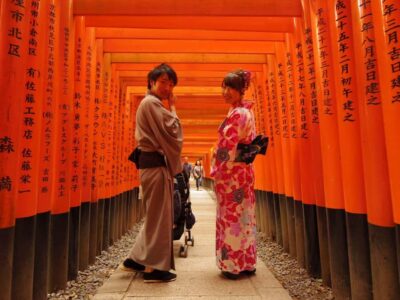
Arashiyama, Nara & Fushimi Inari Shrine w/Lunch
Read our review →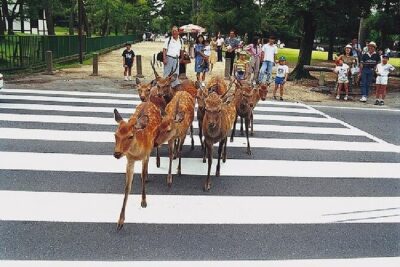
Full Day Guided Tour to Kyoto and Nara from Osaka by Van
Read our review →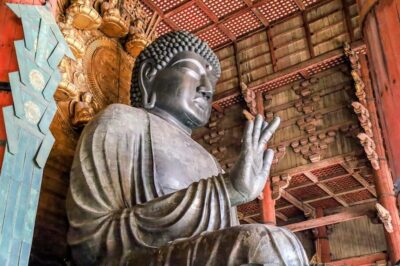
Nara Park, Osaka & Kobe from Kyoto Full Day tour
Read our review →Browse the lists this tour appears in