
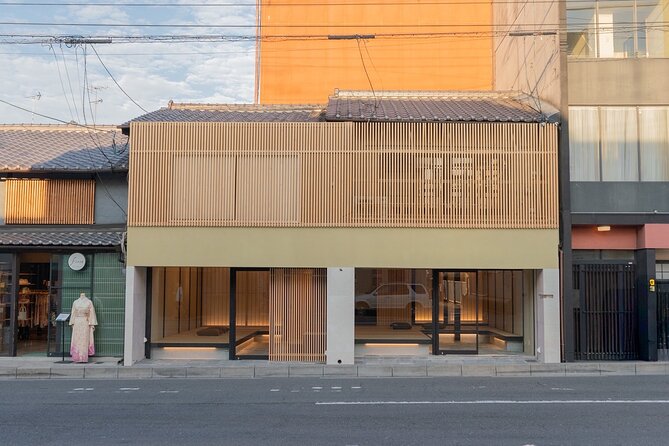
Reviewed · KYOTO CALLIGRAPHY CLASSES
【OKADA】Kyoto Japanese calligraphy experience (shodo)
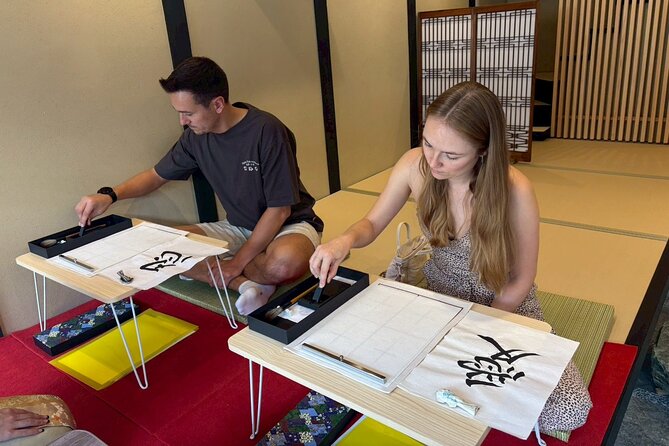
The best part of this Kyoto activity is that you do not just look at Japanese art. You make a piece yourself. In about an hour, an English-speaking instructor guides you through kanji meaning, brush handling, posture, and stroke order before you create a finished work on a shikishi board.
I like the calm, hands-on format, and I like that the finished piece is a useful souvenir rather than another small trinket. The patient teaching also works well for families. Two young instructors kept an 11-year-old and six-year-old twins involved, which says a lot about the workshop’s friendly pace.
The main consideration is time. One hour gives you a pleasant introduction, not a full study of shodo. You will also need to pay extra if you want to write on a folding fan or flat fan, and kimono rental is not included.
Key points to know before booking
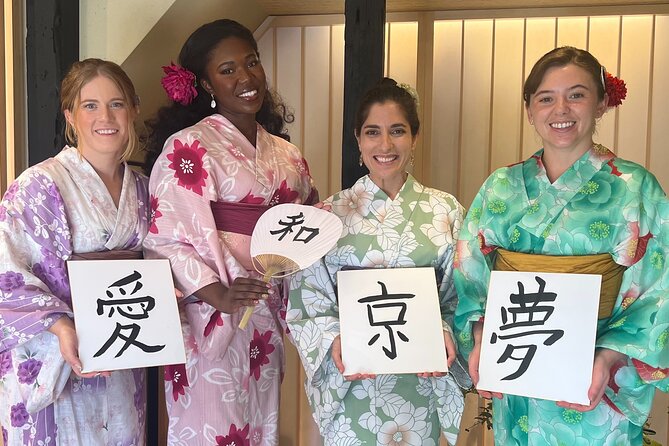
- Create a shikishi souvenir: Your finished calligraphy is mounted on a small board you can take home.
- English instruction: The lesson covers kanji meaning, posture, brush control, and stroke order without requiring Japanese language skills.
- Small maximum group: The activity accepts up to eight people, which allows for personal guidance.
- Good for children: Patient instructors have successfully kept an 11-year-old and six-year-old twins interested and involved.
- Optional fan designs: Add calligraphy to a sensu folding fan for ¥1,500 or an uchiwa flat fan for ¥800.
- Central Higashiyama setting: The meeting point is at 102 Tatsumichō, Higashiyama Ward, Kyoto, near public transportation.
Your first brush strokes in Kyoto
Japanese calligraphy, or shodo, can look intimidating when you see a practiced artist work. The brush seems to move with total confidence, and one wrong stroke can change a character’s meaning. This workshop takes away that pressure by starting with the basics.
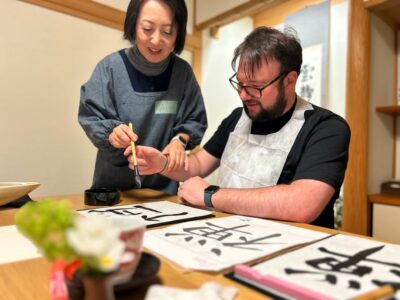
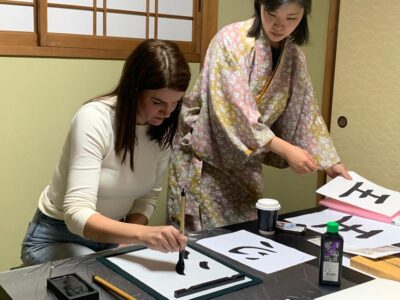
You learn how kanji characters carry meaning, then practice with a traditional fude brush and sumi ink. The instructor explains how to sit or stand, how to hold the brush, and how to control pressure as the tip moves across the paper.
That early guidance matters. Beginners often grip a brush too tightly or treat it like a pencil. Here, you get a chance to slow down and understand that a brushstroke has direction, weight, and rhythm. You are not simply copying a shape. You are learning why the shape is made in a particular order.
The class is designed for international visitors, and all instruction is available in English. You do not need to know Japanese, recognize kanji, or have any art training. Curiosity is enough.
More calligraphy classes in Kyoto:
- Kyoto: Calligraphy class at Buddhist temple in city center
★ 5.0 · 167 reviews - Kyoto: Japanese Calligraphy Class
★ 4.8 · 89 reviews - Kyoto: Japanese Calligraphy Workshop
★ 4.7 · 84 reviews
Understanding kanji before you write
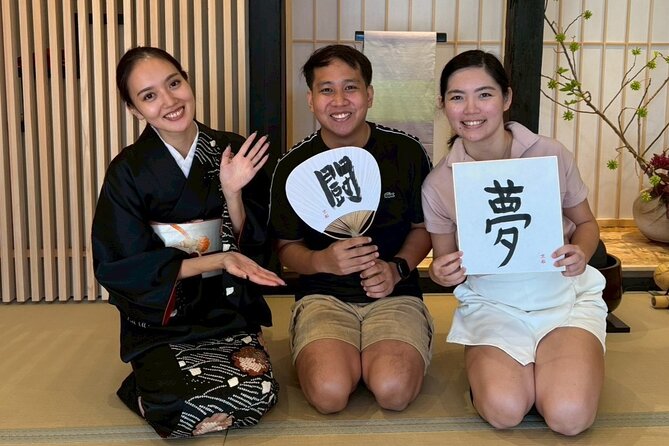
The lesson includes an introduction to the history and meaning of kanji characters. That gives your final artwork more purpose. Instead of selecting a design at random, you can think about what the character represents and why you want it as a memory of Kyoto.
The exact character choices are not specified, so you should expect the instructor to help you with the options available during the lesson. The important point is that the activity connects the written form with its meaning. A finished piece becomes more personal when you understand what you have made.
This is also a useful contrast with sightseeing in Kyoto. Temples and gardens show you centuries of Japanese culture, but a calligraphy lesson lets you take part in one small tradition. You leave with something made by your own hand, including the uneven strokes and small imperfections that prove it was not mass-produced.
I especially like this aspect for families. Children can connect with the characters as drawings first, then learn that each shape carries meaning. The instructors have been praised for keeping an 11-year-old and six-year-old twins engaged, patient, and encouraged throughout the session.
Practicing with brush, ink, and stroke order
After the introduction, you work with the traditional materials: brush, ink, and paper. Practice sheets are included, so you can try the movements before committing to your final piece.
The practice stage is important because sumi ink behaves differently from a normal pen or marker. Your brush may create a fine line, a heavier mark, or a softer edge depending on pressure and ink. You get room to make mistakes before working on the shikishi board.
Stroke order is another key part of the lesson. The instructor shows you how to build the character step by step. Following the correct order helps the character look balanced, but it also gives the activity a clear structure. You are not left to guess where the brush should go next.
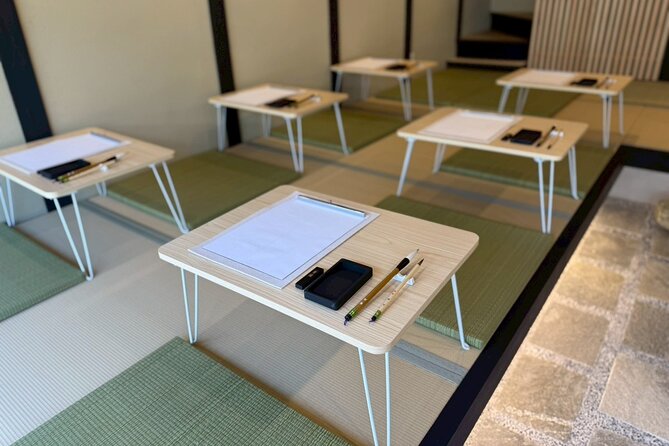
The small group limit of eight people is a practical advantage. It does not guarantee private instruction, but it gives the class a more personal feel than a large demonstration. You can ask for help with posture or brush technique, and the instructor can watch your progress.
The workshop is described as relaxed and friendly, which suits the subject. Calligraphy rewards patience. If you rush, the ink and brush reveal it. A calm hour can feel like a useful pause in a busy Kyoto schedule.
Making your final work on a shikishi board
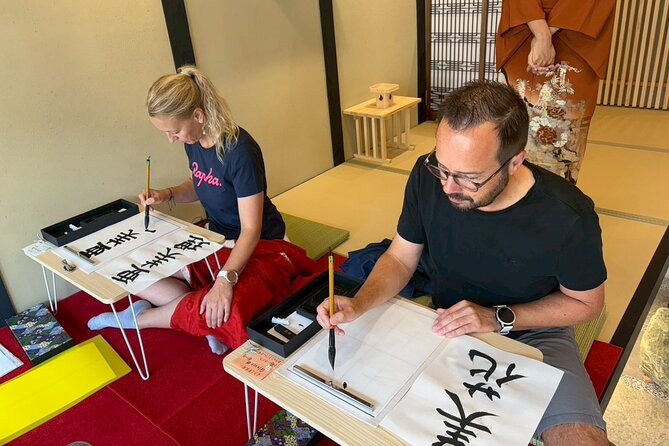
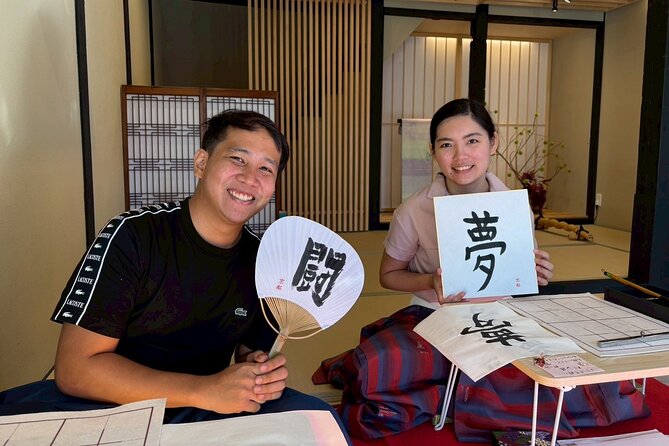
Once you have practiced, you create an original calligraphy piece on a shikishi board. This is the main payoff of the class. The board is included in the base price and goes home with you.
A shikishi board is a firm presentation surface commonly used for Japanese artwork and signed messages. It is more substantial than a loose sheet of practice paper, so your final work feels ready to display or give as a gift.
You should not expect museum-quality calligraphy after one short class. The value is in the process and in the personal connection to the piece. Your work will show that you learned to handle the brush, manage the ink, and form a character under guidance.
The instructors’ encouragement is a strong part of the experience. One review describes the guides as patient, professional, and kind, while another notes that the finished artwork became a special memory of Kyoto. Those comments point to the right expectation: this is an approachable cultural lesson, not a serious examination of artistic skill.
If you are taking the class with a partner or family, the final board also gives everyone a clear keepsake. You can compare styles, talk about the meanings you chose, and remember the small details of the lesson later in your trip.
A few more Kyoto tours worth putting on the shortlist
- PERFECT KYOTO 1-Day Bus Tour
★ 5.0 · 13,518 reviews - Kyoto: Fushimi Inari, Kinkakuji, Bamboo Grove 1 Day Bus Tour
★ 4.8 · 4,316 reviews - Kyoto: Tea Ceremony in a Traditional Tea House in Kiyomizu
★ 4.9 · 3,519 reviews - Kyoto Geisha Walking Tour: Gion District & Hidden Gems
★ 4.7 · 3,273 reviews
Adding a sensu or uchiwa fan
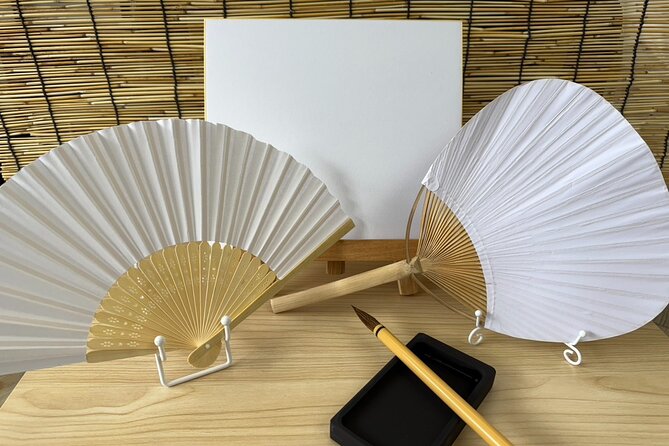
The standard activity includes the shikishi board, but you can pay extra to write on a Japanese fan.
A sensu folding fan costs ¥1,500. It folds into a compact shape and makes a practical gift or keepsake. An uchiwa flat fan costs ¥800. The flat fan is the less expensive option and may appeal if you want a larger, simpler surface.
These add-ons are not necessary for a satisfying class. The included board already gives you a finished souvenir. I would consider a fan if you are buying a gift, want a distinctly Japanese object, or enjoy the idea of using your calligraphy on something functional.
The additional charge is reasonable compared with the main activity, but you should decide before you arrive if your budget is tight. The listed price of $45.81 per person covers the workshop, materials, practice sheets, instructor, and one shikishi board. Fan writing costs extra.
Kimono rental is also separate, listed at ¥5,000 or more. The calligraphy plan does not include kimono. If you want photographs in traditional clothing, treat that as an additional purchase rather than part of the lesson.
What the $45.81 price buys you
At $45.81 per person, this is not the cheapest short activity in Kyoto. Its value depends on how much you want a guided cultural lesson and a substantial souvenir.
You are paying for an English-speaking instructor, all brush and ink materials, practice sheets, instruction in basic technique, and one shikishi board. You also get a planned activity that is easy to join without previous experience.
The small maximum group makes the price easier to justify. With no more than eight participants, the instructor has a fair chance to provide individual corrections and encouragement. That matters in calligraphy, where a small adjustment in grip or pressure can change the result.
The activity also fills a useful gap in a Kyoto itinerary. It lasts about one hour, so it does not take up an entire morning or afternoon. You can pair it with sightseeing in Higashiyama, though transportation to and from the venue is your responsibility.
I would book it for the experience and the finished artwork, not just for the materials. If you only want a cheap souvenir, a shop will cost less. If you want to understand the basics of brush writing and make something yourself, the price is more sensible.
Finding the Higashiyama meeting point
The workshop starts and ends at OKADA Kyoto Calligraphy Experience, 102 Tatsumichō, Higashiyama Ward, Kyoto, postal code 605-0855. The location is near public transportation, but the activity does not include transport.
Your confirmation is provided at booking, so check the meeting instructions and allow enough time to reach the address. The plan ends back at the same meeting point. There is no transfer to another part of Kyoto afterward.
The central location makes this easy to combine with other plans, but you should avoid booking another activity too tightly against it. A one-hour class is approximate, and you may want a few minutes afterward to collect your work and make any decisions about a fan add-on.
Because the class takes place in Higashiyama, it can fit well into a day focused on Kyoto’s older streets and cultural sights. The exact walking route from nearby transport is not provided, so use the address and your booking details rather than relying on a general neighborhood name.
Who will enjoy this one-hour class
This is a strong choice for first-time visitors who want more than photographs of Kyoto. You get an activity with a clear beginning, guided practice, and a finished result.
Families are well suited to the format. The instructors have experience keeping young children interested, and the activity is described as suitable for all ages. Children may need help with brush control, but they do not need prior knowledge or formal art skills.
Couples and friends can also make good use of the hour. Each person creates an individual work, so the class gives you something to discuss and compare without turning into a competition.
Solo participants should feel comfortable booking as well. The small group setting and English instruction make it possible to join without bringing a companion.
I would be less likely to recommend it to someone seeking advanced calligraphy training. The workshop introduces the art and gives you a guided first attempt. It is not presented as a long technical course, and the one-hour length limits how much detailed practice you can receive.
Practical limits to keep in mind
The activity has free cancellation up to 24 hours before the start time. If you cancel less than 24 hours before the activity, you do not receive a refund, and changes made inside that period are not accepted. The cut-off uses local Kyoto time.
Most people can participate, but the available information does not provide detailed accessibility specifications. If you have a particular mobility, seating, or hand-movement concern, contact the provider before booking.
The class includes materials, but transportation does not come with the booking. Kimono rental is also not included. You should also remember that the standard souvenir is the shikishi board, while the two fan options cost extra.
The activity is booked, on average, 14 days ahead. That is a useful planning signal, especially if you have fixed dates in Kyoto. The maximum group is eight, so popular time slots may not remain open close to your visit.
Should you book the OKADA calligraphy experience?
Book this activity if you want a calm, beginner-friendly way to participate in Japanese culture. The strongest reasons are the patient English instruction, the manageable one-hour length, the included shikishi board, and the fact that children can take part successfully.
I would especially recommend it for families, couples, and solo visitors who want a personal souvenir with a story behind it. Add a sensu or uchiwa fan if you want a gift or a more distinctive keepsake, but do not feel that you need the upgrade.
Skip it if you want advanced instruction, a long workshop, or a kimono package built into the price. For everyone else, $45.81 buys more than a craft project. It gives you a focused hour with traditional tools, patient guidance, and a piece of Kyoto you made yourself.
FAQ
How long does the Japanese calligraphy experience last?
The activity lasts approximately one hour.
Where does the activity take place?
It starts and ends at OKADA Kyoto Calligraphy Experience, 102 Tatsumichō, Higashiyama Ward, Kyoto, 605-0855, Japan.
Is transportation included?
No. Public transportation to and from the venue is not included.
Is the instruction available in English?
Yes. All instruction is available in English, and an English-speaking instructor is included.
Do I need previous calligraphy experience?
No. The activity is designed for beginners, and no prior experience is needed.
What materials are included?
The activity includes a traditional brush, ink, paper, practice sheets, and other calligraphy materials.
Do I get to take home my calligraphy?
Yes. One shikishi board is included, and you can take your finished work home.
Can I write calligraphy on a Japanese fan?
Yes. Writing on a sensu folding fan costs an additional ¥1,500. Writing on an uchiwa flat fan costs an additional ¥800.
Is kimono rental included?
No. Kimono rental is separate and costs ¥5,000 or more.
What is the cancellation policy?
You can cancel for a full refund up to 24 hours before the experience start time. Cancellations or changes made less than 24 hours before the start time are not accepted for a refund.
Newest Kyoto experiences on the site
- Whisk Your Own Matcha: A Zen Matcha Experience at Temple★ 3.6 · 7 reviews
- Treasures of Kyoto: Gion & historical Walking Tour★ 5.0 · 6 reviews
- Kyoto tea town for matcha lovers★ 5.0 · 16 reviews
- Uji: Private immersion into Kyoto’s tea and reglious culture★ 5.0 · 17 reviews
- Kyoto Matcha Green Tea Tour★ 4.5 · 23 reviews
- Uji and Wazuka Matcha Farm Half Day Private Guided Tour★ 5.0 · 21 reviews
- Utilising upcycled Matcha! Creating matcha incense (Uji, Kyoto)★ 5.0 · 6 reviews
- Sacred Temple Yoga Experience in Japan★ 5.0 · 3 reviews
Kyoto Calligraphy Classes, compared.
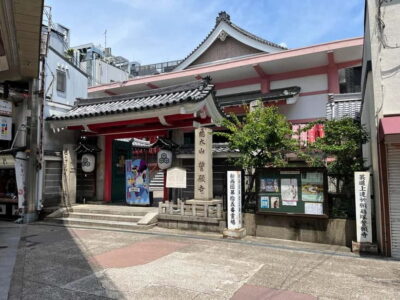
Calligraphy class at Buddhist temple in city center
Read our review →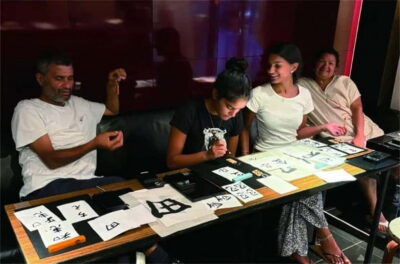
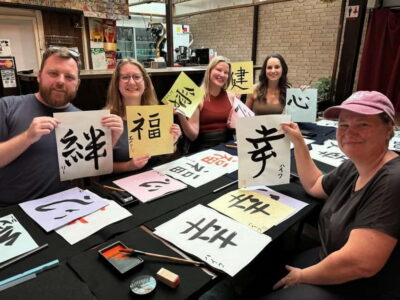
Kyoto Ninenzaka : Japanese Calligraphy Class in Townhouse
Read our review →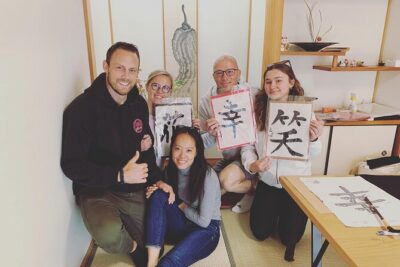
Private Japanese Calligraphy in Kyoto – Learn Shodō with a Master
Read our review →
Japanese Calligraphy – Shodo – Lesson (near Kyoto Station)
Read our review →
Browse the lists this tour appears in