
Reviewed · KYOTO WALKING TOURS
Kyoto Early Riser Golden One-Day Walking Tour
Kyoto is spread out, and this tour tackles its biggest sights in one long, well-planned day. You’ll move from the vermilion gates of Fushimi Inari to the bamboo lanes of Arashiyama, then on to Ryoanji, Kinkakuji, and Nishiki Market with a private guide who handles the route.
I like the one-to-one attention and the chance to ask questions as you go. I also like that you use public transportation, which gives you a practical feel for getting around Kyoto instead of seeing the city only through a tour bus window.
The trade-off is simple: this is a full eight hours with plenty of walking and several train, subway, bus, trolley, or taxi connections. You’ll see a lot, but this is not a slow temple day. The extra entrance fees, transportation, and meals also come out of your pocket.
Key points to know before booking
- Five major Kyoto stops in one day: Fushimi Inari, Arashiyama, Ryoanji, Kinkakuji, and Nishiki Market.
- Private guiding only: Your group travels together, so the pace and conversation can be adjusted to your interests.
- Public transport is part of the experience: Expect local trains, subways, buses, and possibly other city transport rather than private touring throughout.
- The best guides add practical help: Guides such as Tomoko, Meg, Keiko, Sumiko, and Kazuo have helped with restaurant choices, translation, photos, and route planning.
- Budget beyond the tour price: Add ¥1,670 per person for transportation, ¥1,100 for Ryoanji, and the cost of meals.
- Plan for an active day: The operator recommends moderate fitness, and several people needed rest stops, especially in hot weather or with knee problems.
What this private Kyoto day is really trying to do
This tour is built for the visitor with one precious day in Kyoto. Instead of choosing between Fushimi Inari in the south and Arashiyama and Kinkakuji in the west and north, you cover all of them in one sweep.
That makes the tour useful, but also ambitious. Kyoto’s famous sights are not clustered around one central square. The guide’s real job is not just to explain a temple. It is to keep the day moving, make the transport changes understandable, and help you avoid wasting time on wrong turns.
Because the tour is private, you can ask for more history, more local customs, fewer shopping stops, or a slower pace. Past guides have also adjusted for heat, injuries, and the needs of older family members. That flexibility is one of the strongest reasons to consider paying for a private day.
The tour begins at Kyoto Station Building at 8 a.m. and returns to the meeting point. A morning start matters here. Fushimi Inari and Arashiyama are major draws, and an early beginning gives you a better chance of seeing them before the day feels fully crowded.
More walking tours in Kyoto:
- Kyoto Geisha Walking Tour: Gion District & Hidden Gems
★ 4.7 · 3,273 reviews - Kyoto: Gion Magical Night Walking Tour with Geisha Trivia
★ 4.9 · 2,393 reviews - Kyoto: Gion Geisha District Walking Tour – Stories of Geisha
★ 4.7 · 2,187 reviews
Fushimi Inari and the long corridor of red gates
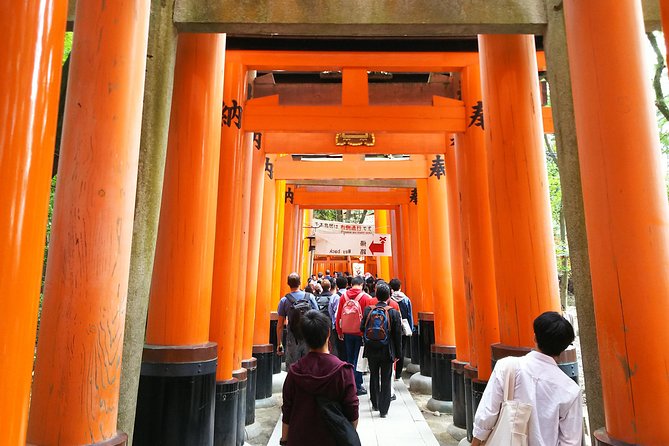
Fushimi Inari-taisha is the dramatic opening act. Its famous torii gates form a striking orange-red corridor up the wooded slopes behind the shrine. Worshippers donated the gates in thanks for good fortune, so the path is also a record of devotion and gratitude.
You have about one hour here. That is enough to walk through the most famous gate sections, take photographs, and hear the basics of Inari worship and the shrine’s role. It is not enough for a full climb through the entire mountain complex, so don’t expect to explore every path.
The color and repetition make this one of Kyoto’s easiest sights to remember. Your guide can add context that a quick photo stop misses, including why the gates are there and how the shrine connects religious practice with everyday hopes for prosperity.
Wear shoes that can handle uneven walking. Even if you do not go far uphill, this is not a flat station-side attraction. The hour can pass quickly, especially if you stop often for pictures.
Arashiyama’s bamboo forest and the cost of popularity
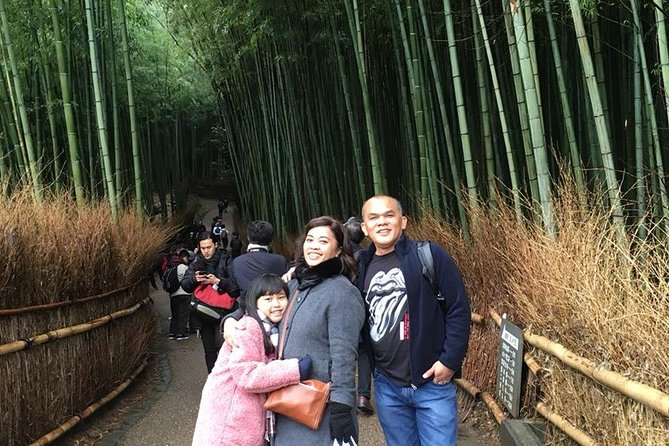
Arashiyama brings a different mood. The bamboo stalks rise high on both sides of the path, with green filtered light and the sound of leaves and trunks moving in the breeze. It is a beautiful place, but the famous lane is also one of Kyoto’s most photographed settings.
You have about 70 minutes. That gives you time to walk through the main bamboo area and enjoy the setting without turning the stop into an exhausting hike. Your guide can point out how to approach the area and help you use the time well.
The main limitation is that one hour does not cover all of Arashiyama. The district has more than its bamboo grove, but this itinerary focuses on the iconic path rather than a broad visit to the wider area.
I would treat this stop as a scenic highlight, not a quiet retreat. The bamboo is lovely, yet you should expect other people and keep your expectations realistic. The private format helps because you can ask questions and move on when you feel you have had enough, rather than waiting for a large group.
Ryoanji and the stillness of the rock garden
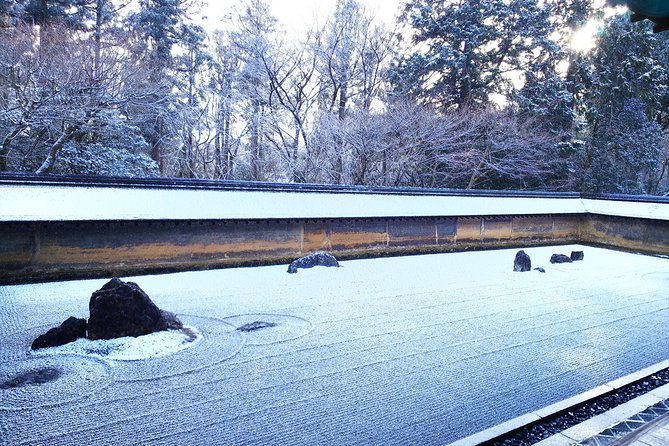
Ryoanji offers a sharp change of pace. Its Zen rock garden uses a small number of stones set in pale gravel. The design is spare, controlled, and meant to be viewed rather than rushed through.
You have 50 minutes here, and the entrance fee is not included. The current listed cost is ¥1,100 per person. That extra charge is modest compared with the tour price, but you should include it in your day’s budget.
Your guide can help you understand why the garden matters without telling you exactly what you are supposed to feel. The simplicity is the point. After the color of Fushimi Inari and the height of Arashiyama’s bamboo, Ryoanji gives you a place to slow your eyes down.
This is one of the stops where a guide can add real value. A short explanation of Zen design and the garden’s place in Kyoto’s culture helps you notice more than rocks and gravel. Still, the visit is brief, so anyone wanting a long, reflective temple stay may find the schedule too tight.
Same city, a completely different kind of day:
- PERFECT KYOTO 1-Day Bus Tour
★ 5.0 · 13,518 reviews - Kyoto: Fushimi Inari, Kinkakuji, Bamboo Grove 1 Day Bus Tour
★ 4.8 · 4,316 reviews - Kyoto: Tea Ceremony in a Traditional Tea House in Kiyomizu
★ 4.9 · 3,519 reviews - Kyoto: Tea Ceremony Ju-An at Jotokuji Temple
★ 4.9 · 3,207 reviews
Kinkakuji, Kyoto’s Golden Pavilion
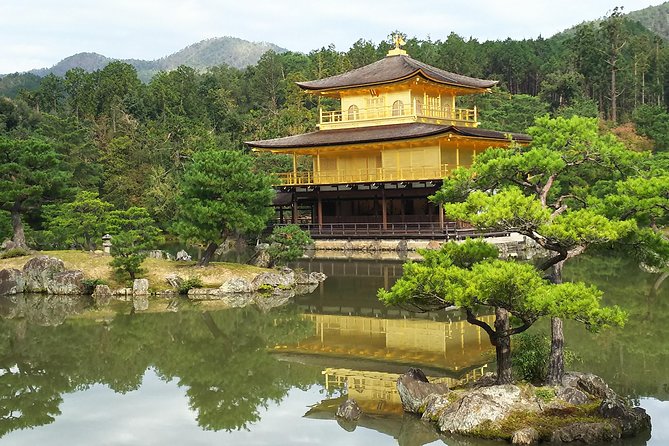
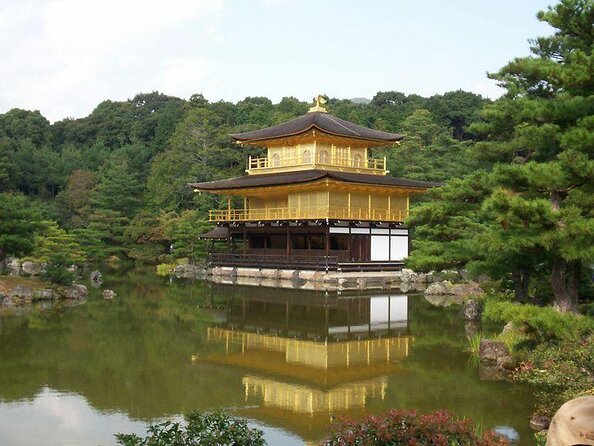
Kinkakuji is the visual prize for many people. The Golden Pavilion reflects in the pond, and its gilded exterior gives the temple an almost unreal appearance. It is a popular stop, but the view earns its place on a first Kyoto visit.
You have about 50 minutes, with admission not included. The listed itinerary does not give an entrance price for Kinkakuji, so check the current cost when planning your budget.
The visit follows a set viewing route, and you should expect other people around the pond and gardens. This is not a temple where you wander freely through every interior space. The appeal is the building, its setting, and the gardens around it.
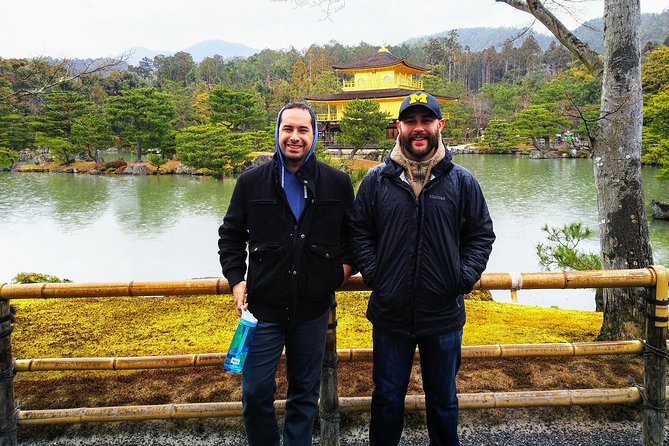
Several guides have made this stop more useful by explaining its connection to Zen and samurai culture. You’ll also have time for photographs. If you care about pictures, tell your guide early. Guides such as Keiko have helped with family photos, and that sort of small service can make a private tour feel personal rather than merely efficient.
Nishiki Market, where Kyoto becomes edible
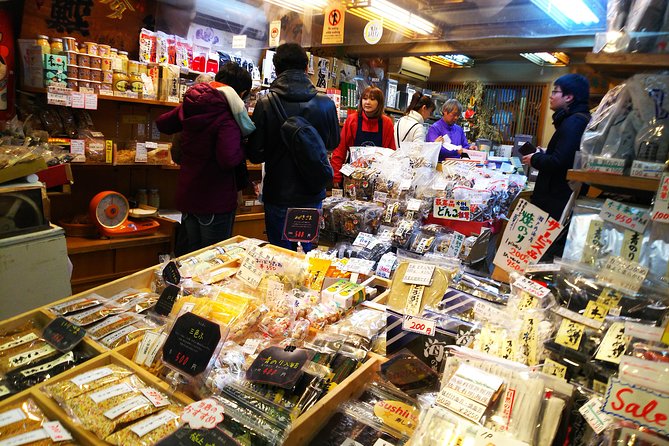
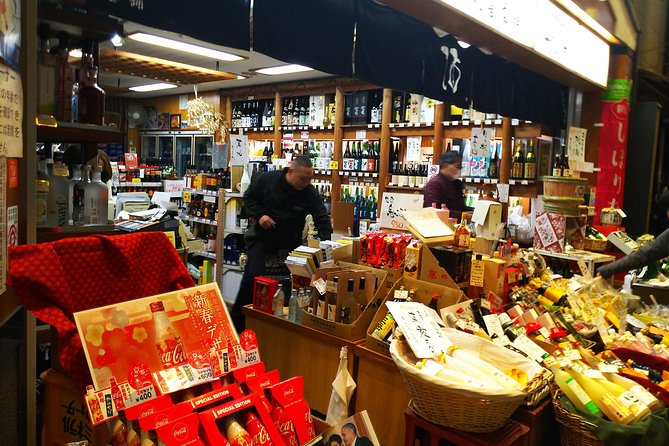
Nishiki Market is the tour’s most street-level stop. The market runs along a 390-meter shopping street with 126 shops and has served Kyoto residents for about 400 years. You can look for pickles, unusual Kyoto vegetables, prepared foods, and other local specialties.
The visit lasts about 40 minutes. That is enough for a quick walk and some tasting, but not enough for a long meal or a careful browse through every shop. Meals are not included, so ask your guide how to use this stop if food is a major reason you booked.
This is also a useful place for translation and local advice. One guide helped a group understand how to order at a sushi restaurant, while other guides recommended lunch spots ranging from local restaurants to conveyor-belt sushi. Those suggestions can save you from choosing a meal at random in a crowded tourist area.
I like the contrast here. The temples show Kyoto’s ceremonial side, while Nishiki shows how the city eats and shops. It is a short stop, but it gives the day a more everyday feel.
Why the private guide matters
The guide is the main value of this experience. The sites themselves are easy to identify, but the day involves a lot of decisions: which train or bus to take, when to pause, where to eat, how long to spend at each place, and how to adjust if the weather turns unpleasant.
The guides named in the feedback include Sumiko Yoshikawa, Tomoko, Toshi, Hiro, Satomi, Masa, Chie, Hironori, Fujihara, Keiko, Kazuo, Tohru Shimigaki, Naoko, Meg, Michiko, Matsumoto, Yuka, and Nozomi. Availability is not guaranteed, so you should not book on the assumption that one particular person will lead your day unless the operator confirms it.
The strongest pattern is practical care. Some guides have arranged rest stops in intense August heat. One helped a visitor with a knee injury find lifts or escalators. Another helped a group reach the train station safely. Several acted as informal photographers, and multiple guides offered lunch and dinner suggestions.
A guide such as Kazuo, a retired English teacher, has also helped visitors feel comfortable using Kyoto’s subway and buses. That is valuable if you still need to travel independently after the tour. By the end of the day, you should have more confidence reading the rhythm of Kyoto’s public transport.
Transport, walking, and the real pace of the day
The listed public transportation cost is ¥1,670 per person. That fare is separate from the tour price and reflects an important part of the day. You may use a mix of train, subway, bus, trolley, and taxi connections, depending on the route and conditions.
This is not a vehicle-based sightseeing tour. You’ll walk through shrine grounds, temple compounds, market lanes, stations, and connecting streets. The operator recommends moderate physical fitness and warns that quite a bit of walking is involved.
The pace can be adjusted because the tour is private, but the route still covers a lot of ground. If you have knee trouble, tell the guide at the start. If you are visiting in summer, plan for heat and accept that rest breaks may reduce time at some sights.
Comfortable shoes matter more than stylish ones. Carry water, leave room in your schedule for transport changes, and avoid arriving with the idea that every stop will be leisurely. The day works best when you see it as a guided orientation to Kyoto’s major districts.
What $119.30 gets you, and what it does not
The price is $119.30 per person. For a private eight-hour day with a professional guide, that can be fair value, especially for a family or small group that would otherwise spend hours planning routes and researching each site.
The tour price does not cover public transportation, meals, or the ¥1,100 entrance fee for Ryoanji. Kinkakuji admission is also not listed as included. Group discounts may be available, so families and larger private parties should check the final rate rather than judging the value only from the per-person figure.
You are mainly paying for planning, commentary, flexibility, and time saved. If you are comfortable navigating Kyoto alone and enjoy researching temples, you can visit these places independently for less. If you have one day, limited mobility, or several family members with different interests, the private format becomes more useful.
The tour is booked an average of 84 days in advance, which suggests you should reserve early if your Kyoto dates are fixed. Confirmation arrives at booking, and mobile tickets are available.
Who should book this day
I would recommend this tour to first-time Kyoto visitors who want the major sights without building a complicated transport plan. It is also a good fit for families, couples, and small groups who want to ask questions freely and pause when needed.
It suits you especially well if you want help with:
- Understanding shrine and temple customs
- Using Kyoto’s public transportation
- Choosing a local lunch
- Translating while shopping or ordering food
- Adjusting the pace for heat, age, or a minor injury
- Learning enough about the city to explore on your own later
I would be cautious if you dislike busy sightseeing days or prefer to spend half a day at one temple. You will not have unlimited time at any stop, and the combination of walking and transport can feel tiring.
The tour also requires good weather. If poor weather causes cancellation, you can receive a different date or a full refund. For a full refund after booking, cancel at least 24 hours before the start time. Changes or cancellations inside that window are not accepted.
Should you book the Kyoto Early Riser tour?
Book it if this is your first Kyoto visit and you want Fushimi Inari, Arashiyama, Ryoanji, Kinkakuji, and Nishiki Market in one organized day. The private guide, local transport practice, restaurant advice, and ability to slow down for your group make the $119.30 price easier to justify.
Skip it if you have several days in Kyoto and prefer unhurried temple visits. But if your time is short, this tour gives you a strong first look at the city, with enough explanation to make the famous sights feel like more than a checklist.
FAQ
How long does the tour last?
The tour lasts approximately eight hours. It begins at Kyoto Station Building and ends back at the same meeting point.
Is this a private tour?
Yes. Only your group participates, so you can ask questions freely and discuss adjustments to the pace with your guide.
Which places are included?
The route includes Fushimi Inari-taisha Shrine, Arashiyama, Ryoanji Temple, Kinkakuji Temple, and Nishiki Market Shopping District.
Are transportation and entrance fees included?
No. Public transportation costs ¥1,670 per person. Ryoanji admission costs ¥1,100 per person, and meals are also excluded. Kinkakuji admission is not listed as included.
How physically demanding is the day?
You should have moderate physical fitness and be ready for quite a bit of walking. The route includes shrine and temple grounds, market streets, and public transportation connections.
What happens if the weather is poor?
The experience requires good weather. If the operator cancels because of poor weather, you will be offered another date or a full refund. You can cancel at least 24 hours before the start time for a full refund.
Newest Kyoto experiences on the site
- Treasures of Kyoto: Gion & historical Walking Tour★ 5.0 · 6 reviews
- Whisk Your Own Matcha: A Zen Matcha Experience at Temple★ 3.6 · 7 reviews
- Kyoto tea town for matcha lovers★ 5.0 · 16 reviews
- Uji: Private immersion into Kyoto’s tea and reglious culture★ 5.0 · 17 reviews
- Kyoto Matcha Green Tea Tour★ 4.5 · 23 reviews
- Uji and Wazuka Matcha Farm Half Day Private Guided Tour★ 5.0 · 21 reviews
- Utilising upcycled Matcha! Creating matcha incense (Uji, Kyoto)★ 5.0 · 6 reviews
- Sacred Temple Yoga Experience in Japan★ 5.0 · 3 reviews
Kyoto Walking Tours, compared.
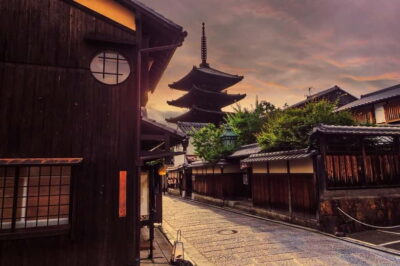
Kyoto Geisha Walking Tour: Gion District & Hidden Gems
Read our review →
Gion Magical Night Walking Tour with Geisha Trivia
Read our review →
Gion Geisha District Walking Tour – Stories of Geisha
Read our review →
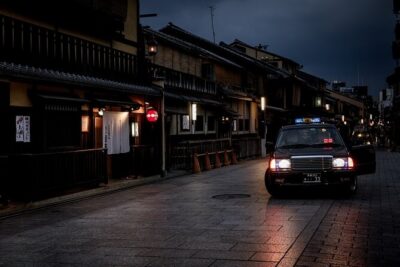
Kyoto Gion Geisha District Walking Tour – The Stories of Geisha
Read our review →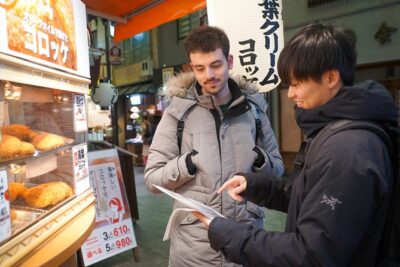
Nishiki Market Brunch Walking Tour (7 Tastings + Brunch)
Read our review →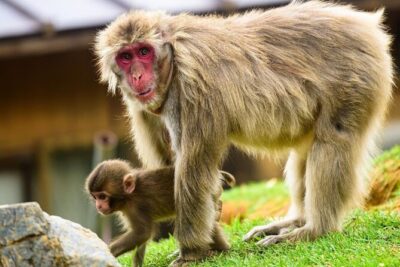
Kyoto Arashiyama Walking Tour: Bamboo, Monkeys, Gardens & Secrets
Read our review →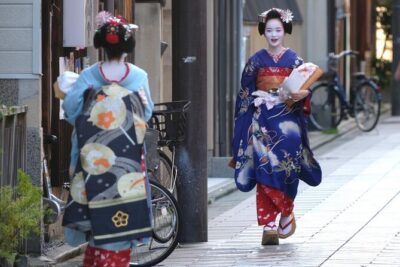
Kyoto Gion: 2-Hour Geisha Culture & History Walking Tour
Read our review →Browse the lists this tour appears in